Published: September 26, 2026
Last updated: September 26, 2026
Next review: September 2027, or sooner if major acne or pigmentation guidance changes
Written and source checked by: Adel Galal, Founder and Lead Writer at NextFitLife
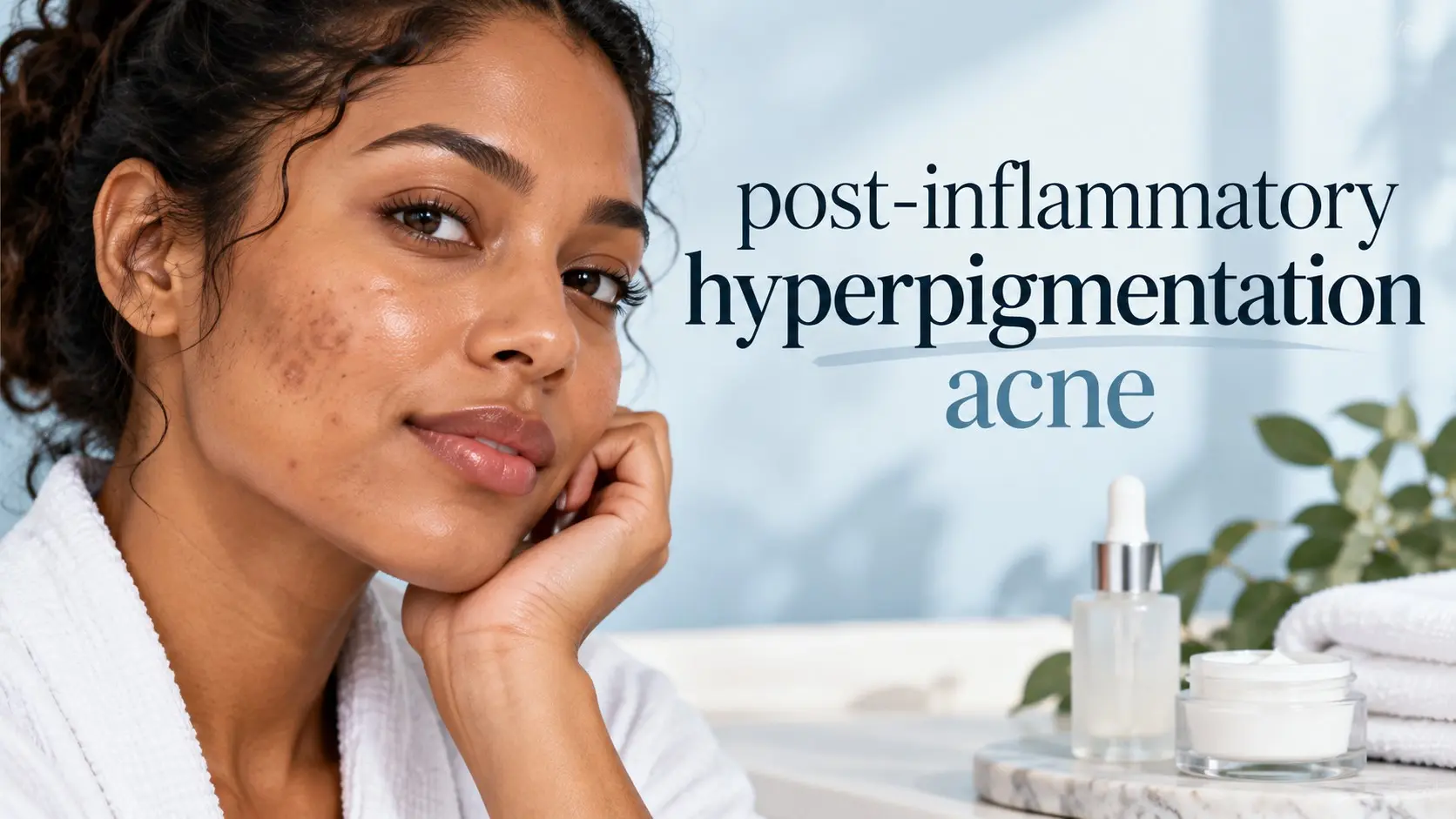
Those flat brown, dark brown, gray, or blue gray marks left after a pimple are often post-inflammatory hyperpigmentation acne, usually shortened to PIH.
They are not the same thing as an acne scar.
That distinction changes the treatment plan because PIH is a color change, while a true scar changes skin texture.
The most effective approach is not to attack the dark spot with every brightening product you can find. Control new acne first, protect the skin from light, then use one or two treatments that fade pigment without creating more inflammation.
That last part matters.
Skin irritation itself can trigger or deepen post acne hyperpigmentation, especially in people whose skin develops dark marks easily.
Medical notice: I am not a dermatologist or a doctor, and this content does not replace professional medical advice. What I share comes from real life experience, extensive research, and consultation with healthcare providers. Always consult qualified medical professionals for diagnosis and treatment of any health condition. See a dermatologist for deep or painful acne, scarring, rapidly worsening pigmentation, unusual skin changes, pregnancy related treatment questions, or a skin problem that is not improving.
Quick Answer: What Helps Acne Hyperpigmentation?
Post-inflammatory hyperpigmentation acne improves best when you prevent new inflamed pimples while gently fading the marks that already exist.
A useful plan usually includes evidence based acne treatment, daily broad spectrum sunscreen, a noncomedogenic moisturizer, and a pigment friendly ingredient such as azelaic acid or an appropriate topical retinoid.
For people with medium to deeper skin tones or persistent pigmentation, a well matched tinted sunscreen containing iron oxides can add protection against visible light.
Avoid picking, harsh scrubs, strong home peels, and stacking several irritating acids. The goal is less inflammation, not more.
For a wider guide to acne, pigmentation, sensitive skin, sunscreen, and treatment ingredients, visit the NextFitLife Skin Health Guide.
Table of Contents
- What PIH looks like
- PIH versus acne scars
- Why acne leaves dark marks
- Why skin tone matters
- 11 smart treatment steps
- A simple morning routine
- A simple evening routine
- How long PIH takes to fade
- Pregnancy and acne marks
- When to see a dermatologist
- Common PIH mistakes
- References and Sources
- Continue Reading on NextFitLife
- About the Author
- Frequently Asked Questions
What Does Post-Inflammatory Hyperpigmentation Look Like?
Post-inflammatory hyperpigmentation is extra pigment left after inflammation or injury to the skin.
After acne clears, you may notice a completely flat mark where the pimple used to be.
The mark may look:
- Light brown
- Medium brown
- Dark brown
- Gray brown
- Blue gray
The color depends partly on your skin tone and partly on where the pigment sits in the skin.
More superficial epidermal pigment usually looks brown.
Deeper dermal pigment can look gray, blue gray, or gray brown and tends to be slower to fade.
Is It PIH or an Acne Scar?
Look at texture before color.
| Skin Change | What It Looks Like | Main Issue | Typical Approach |
|---|---|---|---|
| PIH | Flat brown, dark brown, gray, or blue gray mark | Extra melanin after inflammation | Acne control, photoprotection, pigment treatment |
| Post inflammatory erythema | Flat red or pink mark | Persistent vascular redness after inflammation | Gentle skin care, acne control, time, selected professional treatment |
| Atrophic acne scar | Indented, pitted, rolling, or depressed area | Structural loss of tissue | Dermatologist directed scar treatment |
| Raised scar | Firm or raised tissue | Excess scar tissue | Professional assessment and treatment |
The American Academy of Dermatology specifically describes flat PIH marks as different from acne scars.
That is good news because flat pigment often fades over time, while true scars usually need a different approach.
Why Does Acne Leave Dark Marks?
A pimple is an inflammatory event.
Inflammatory signals stimulate melanocytes, the skin cells that produce melanin.
The skin can respond by producing or depositing more pigment around the healing acne lesion.
If inflammation stays mainly near the surface, the pigment tends to sit in the epidermis.
If inflammation damages the lower epidermis, pigment can fall deeper into the dermis and become trapped inside macrophages.
Deeper pigment is harder to remove.
This is one reason severe, repeatedly picked, or long lasting acne can leave more stubborn marks.
Why Is PIH More Noticeable in Skin of Color?
PIH can affect any skin tone.
It is often darker, more noticeable, and more persistent in skin of color.
This is not because darker skin is unhealthy.
Melanocytes in melanin rich skin can produce a stronger pigment response after inflammation.
That creates a practical treatment problem.
The acne needs enough treatment to stop new inflammation, but an overly irritating routine can create even more pigmentation.
The answer is not weaker treatment.
The answer is effective treatment with good irritation control.
11 Smart Steps for Post-Inflammatory Hyperpigmentation Acne
1. Control Active Acne First
This is the foundation.
You can fade old acne dark spots for months, but the routine will feel unsuccessful if new inflamed pimples keep creating new marks.
Current American Academy of Dermatology acne guidance supports treatments including:
- Benzoyl peroxide
- Topical retinoids
- Salicylic acid
- Azelaic acid
- Prescription topical treatments
- Oral antibiotics when appropriate
- Hormonal therapy for selected patients
- Isotretinoin for severe or treatment resistant acne
The best choice depends on the acne type and severity.
Deep painful nodules, cysts, scars, or persistent inflammatory acne deserve professional care rather than endless product switching.
If clogged pores and closed comedones are part of the problem, read the NextFitLife Whiteheads Guide.
2. Use Sunscreen Every Morning
Sunscreen is part of PIH treatment.
Ultraviolet exposure can darken existing pigmentation and make it last longer.
Choose a broad spectrum sunscreen that your skin tolerates and that you can use consistently.
SPF 30 or higher is a practical starting point for daily facial use.
If you have acne prone skin, a lightweight or noncomedogenic sunscreen may feel easier to wear consistently.
The perfect sunscreen on paper is useless if you hate it enough to skip it.
3. Consider Tinted Sunscreen for Visible Light
This is one of the more useful updates in PIH care.
Visible light can stimulate pigmentation, particularly in darker skin tones.
Tinted sunscreens containing iron oxides or other pigment based visible light filters have better evidence for visible light protection than standard untinted sunscreens alone.
This does not mean everybody must wear a tinted formula.
Shade match matters.
A sunscreen that looks orange, gray, chalky, or unnatural on your skin may be worn too thinly or not at all.
Choose one you will actually use.
4. Use Azelaic Acid When Acne and Dark Marks Overlap
Azelaic acid for PIH makes sense because it can address both acne and uneven pigmentation.
AAD includes azelaic acid among recommended acne therapies.
For someone who has mild acne plus dark marks, it can simplify the routine by giving one product more than one job.
Azelaic acid can still sting, tingle, or dry the skin.
Start slowly if your skin is sensitive.
Use moisturizer.
Do not assume burning means the ingredient is working faster.
5. Consider a Topical Retinoid When Appropriate
Topical retinoids are among the most useful treatments when active acne and PIH exist together.
Examples include adapalene, tretinoin, tazarotene, and trifarotene.
They help treat acne and can improve uneven pigmentation over time.
The limit is irritation.
Retinoids can cause dryness, redness, peeling, and burning, particularly early in treatment.
If your skin is pigment prone, severe irritation is counterproductive.
A practical start may mean using the retinoid on fewer nights, applying a moisturizer, and increasing use only when the skin remains comfortable.
Topical retinoids should not be used during pregnancy without specific medical direction.
6. Use Benzoyl Peroxide to Prevent New Marks Indirectly
Benzoyl peroxide does not primarily fade melanin.
Its value is upstream.
By reducing inflammatory acne, it can reduce the number of new PIH marks that form.
The AAD gives benzoyl peroxide a strong recommendation for acne treatment.
But high strength or frequent use can irritate some skin.
More is not automatically better.
Use the amount and frequency needed to control acne while protecting your skin barrier.
7. Use Hydroquinone Carefully
Hydroquinone is an established treatment for hyperpigmentation.
It works by reducing melanin production and can help epidermal PIH.
It does not treat the acne causing new marks.
That is its main limitation in acne related PIH.
DermNet recommends stopping hydroquinone if no benefit is seen after about three months and discontinuing it if significant irritation develops.
Prescription strength use, widespread treatment, prolonged use, or combination formulas are better managed with a dermatologist.
Hydroquinone should be avoided during pregnancy.
8. Keep Acids and Brightening Products in Perspective
Ingredients used for uneven pigmentation can include:
- Vitamin C
- Niacinamide
- Kojic acid
- Arbutin
- Licorice derived ingredients
- Cysteamine
- Glycolic acid
- Salicylic acid
Some can help.
You do not need all of them.
Using a salicylic cleanser, glycolic toner, vitamin C serum, retinoid, strong spot treatment, and home peel at the same time is not an advanced routine.
It is a difficult irritation experiment.
Choose products with a clear job.
9. Protect the Skin Barrier
This is less glamorous than buying a pigment serum, but it matters.
A comfortable skin barrier makes it easier to continue acne treatment long enough to work.
Your basic routine may need only:
- A gentle cleanser
- One main active treatment
- A noncomedogenic moisturizer
- Sunscreen
If your skin feels raw, burns when water touches it, flakes heavily, or stays bright red, reduce the irritation load.
For a simple barrier friendly routine, see Healthy Skin 101.
10. Stop Picking and Squeezing
Picking keeps inflammation alive.
It also adds mechanical injury to a follicle that is already inflamed.
That can increase the chance of:
- A darker mark
- A longer lasting mark
- Infection
- An indented scar
- A raised scar in susceptible skin
A hydrocolloid patch can sometimes help because it gives your fingers something else to do.
It does not cure deep acne.
11. Treat Procedures With Respect
Chemical peels, lasers, light devices, and other procedures can help selected cases.
They can also make PIH worse.
That risk matters most when treatment creates too much inflammation in pigment prone skin.
A 2024 systematic review of PIH treatment in skin of color found improvement with several approaches, including topical retinoids and laser treatment, but also reported PIH exacerbation after some laser procedures.
Do not treat an expensive device as automatically better than a well tolerated topical plan.
If you are considering a peel or laser, look for a dermatologist or clinician experienced with your skin tone and the exact procedure being used.
A Simple Morning Routine for Acne and PIH
| Step | What to Use | Why |
|---|---|---|
| 1 | Gentle cleanser | Removes sweat and surface oil without scrubbing |
| 2 | Azelaic acid or another suitable treatment | Targets acne and pigmentation when appropriate |
| 3 | Noncomedogenic moisturizer | Supports treatment tolerance |
| 4 | Broad spectrum sunscreen | Reduces UV related darkening |
| 5 | Tinted sunscreen when suitable | Adds visible light protection when pigmentation is a concern |
You do not need both a standard sunscreen and a tinted sunscreen if one suitable product already gives you the protection and cosmetic finish you need.
A Simple Evening Routine
- Remove makeup and sunscreen gently.
- Wash with a mild cleanser.
- Use one main acne or pigment treatment.
- Apply moisturizer.
If a retinoid is your main evening active, you may not need an acid toner on the same night.
If your skin is sensitive, begin with only a few treatment nights each week.
Consistency matters more than turning every night into a chemical peel.
How Should You Introduce New Products?
One at a time.
That sounds slow until you compare it with spending three weeks recovering from a damaged barrier.
| Stage | Plan |
|---|---|
| Stage 1 | Establish cleanser, moisturizer, and sunscreen |
| Stage 2 | Add one acne or pigment active |
| Stage 3 | Increase frequency only when the skin stays comfortable |
| Stage 4 | Add another treatment only when it has a clear purpose |
If you are unsure whether a product is suitable for acne prone skin, the Non-comedogenic Skincare Meaning Guide explains what that label does and does not promise.
How Long Does Acne PIH Take to Fade?
Think in months, not days.
Epidermal PIH can gradually fade over several months.
Some acne related epidermal marks can remain visible for up to about a year.
Deeper dermal pigment can persist much longer, sometimes for years.
The depth of pigment, skin tone, sun exposure, ongoing acne, picking, and treatment irritation can all affect the timeline.
This is why the first month of acne treatment can feel strange.
You may notice fewer new pimples while the old marks still look almost the same.
That does not automatically mean the routine has failed.
Take one photo each month in similar lighting.
Daily mirror checking is a poor way to judge slow pigment change.
Does Sunscreen Actually Prevent PIH?
Photoprotection has some of the strongest prevention evidence available.
A 2025 systematic review looked at PIH prevention in skin of color.
Sunscreen was the only preventive measure that consistently reduced PIH across the included studies.
There is an important limit to that finding.
Almost all of the PIH in those studies followed laser procedures rather than acne.
So the review supports the importance of photoprotection but should not be presented as proof that sunscreen alone prevents every acne mark.
This is the sort of evidence detail that matters.
Is Tinted Sunscreen Better Than Regular Sunscreen for PIH?
For some people, yes.
Standard broad spectrum sunscreen protects against ultraviolet radiation.
A well formulated tinted product containing iron oxides can add protection against pigmentation triggered by visible light.
A 2026 review focused on PIH in skin of color describes tinted iron oxide and pigment containing sunscreens as the best supported strategy for visible light driven pigmentation.
The practical problem is shade match.
A darker or lighter tint that looks wrong is difficult to use generously.
If a tinted product does not suit your complexion, use a broad spectrum sunscreen you can wear consistently and discuss other pigment control options with a dermatologist.
Should You Exfoliate PIH Every Day?
No.
Daily aggressive exfoliation is not required for pigment to fade.
Acids can be helpful when selected for a reason, but piling several exfoliating products onto acne prone skin increases the risk of irritation.
Warning signs that the routine is too aggressive include:
- Persistent burning
- Stinging from water or moisturizer
- Heavy peeling
- Cracked skin
- Swelling
- A painful rash
- Darkening that follows irritation
Simplify the routine if that happens.
What Home Remedies Should You Avoid?
I would not put kitchen chemistry on inflamed acne.
Avoid:
- Lemon juice
- Baking soda
- Undiluted vinegar
- Toothpaste
- Rubbing alcohol
- Harsh sugar or salt scrubs
- Bleach
- Garlic
- Strong essential oils used undiluted
- High strength home chemical peels
A product does not become safe for facial skin because it came from a kitchen.
Burns and irritation can leave darker PIH than the original pimple.
What Changes During Pregnancy?
Pregnancy changes which acne and pigment treatments are appropriate.
The American Academy of Dermatology advises avoiding several acne medicines during pregnancy, including oral isotretinoin, tazarotene, and spironolactone.
Topical retinoids such as tretinoin and adapalene are also generally avoided.
Hydroquinone is usually avoided during pregnancy because of substantial systemic absorption and limited pregnancy safety data.
Azelaic acid is commonly considered one of the more pregnancy compatible acne options.
Benzoyl peroxide and limited salicylic acid use may also be considered in some situations, but discuss your routine with your obstetric clinician or dermatologist rather than relying on the word “natural” on a label.
When Should You See a Dermatologist?
You do not need to wait until the skin is badly scarred.
Arrange professional care when:
- New dark marks keep appearing despite a consistent routine
- Acne is deep, painful, or cystic
- You see indented or raised scars
- PIH is getting darker rather than lighter
- The marks are blue gray and persistent
- Your treatments repeatedly cause dermatitis
- You cannot tell whether the problem is PIH, melasma, PIE, or another pigment condition
- You want hydroquinone, a peel, laser treatment, or another procedure
- Acne affects your confidence, sleep, school, work, or mental health
- You are pregnant and need acne treatment
AAD specifically notes that persistent dark spots after acne can signal significant inflammation and are a reasonable reason to see a dermatologist.
Teen readers can also use the NextFitLife Teen Acne Treatment Guide for a simpler age specific routine.
Seven Mistakes That Keep PIH Around Longer
1. Treating Pigment but Ignoring New Acne
If new pimples keep forming, new marks will keep appearing.
2. Skipping Sunscreen
UV exposure can darken existing PIH.
3. Using Too Many Actives
More irritation can mean more pigmentation.
4. Calling Every Mark a Scar
Flat color changes and structural scars are different problems.
5. Picking Pimples
Picking adds inflammation and physical injury.
6. Changing Products Every Week
PIH fades slowly.
A routine needs enough time to show whether it is helping.
7. Treating Stronger as Better
A painful peel, burning serum, or high strength acid is not automatically more effective.
A treatment only helps if your skin can tolerate it long enough to use it properly.
A Practical PIH Checklist
- Confirm the mark is flat pigment rather than a scar.
- Control active acne.
- Stop squeezing and picking.
- Use broad spectrum sunscreen daily.
- Consider a tinted iron oxide sunscreen when visible light is a concern.
- Use one main pigment treatment.
- Use moisturizer to reduce irritation.
- Introduce retinoids or acids slowly.
- Avoid harsh home remedies.
- Take monthly photos instead of judging the skin every day.
- See a dermatologist when acne or pigmentation keeps worsening.
Conclusion
Post-inflammatory hyperpigmentation acne usually responds best to a calm two track strategy.
Stop the acne that keeps creating new marks, then help old pigment fade without irritating the skin.
For many people, that means a simple cleanser, an appropriate acne treatment, azelaic acid or a suitable retinoid, moisturizer, and consistent sunscreen.
A tinted iron oxide sunscreen can add useful visible light protection when pigment is a major concern.
Avoid picking, aggressive peels, and crowded routines that leave the skin burning.
Your next step: look at your current routine and give every product one clear job. If you cannot explain whether it controls acne, treats pigment, protects the barrier, or protects from light, you probably do not need it.
References and Sources
- American Academy of Dermatology.
Acne Clinical Guideline. Current evidence based recommendations covering benzoyl peroxide, topical retinoids, salicylic acid, azelaic acid, antibiotics, hormonal therapies, isotretinoin, and combination acne treatment.Source:
https://www.aad.org/member/clinical-quality/guidelines/acne
- American Academy of Dermatology.
Acne Scars: Signs and Symptoms. Explains the difference between true acne scars and flat post inflammatory hyperpigmentation marks.Source:
https://www.aad.org/public/diseases/acne/derm-treat/scars/symptoms
- DermNet.
Postinflammatory Hyperpigmentation. Covers epidermal and dermal pigment, skin tone, sun exposure, hydroquinone, azelaic acid, tretinoin, vitamin C, chemical peels, and procedure related worsening.Source:
https://dermnetnz.org/topics/postinflammatory-hyperpigmentation
- Mar K, Khalid B, Maazi M, et al.
Treatment of Post Inflammatory Hyperpigmentation in Skin of Colour: A Systematic Review. This open access systematic review analyzed 48 studies involving 1,356 participants with skin of color and compared topical and procedural treatments.Source:
https://pmc.ncbi.nlm.nih.gov/articles/PMC11514325/
- Mar K, Maazi M, Khalid B, et al.
Prevention of Post Inflammatory Hyperpigmentation in Skin of Colour: A Systematic Review. Published in 2025. This open access review found sunscreen to be the most consistent preventive measure among the included studies, while also showing important limitations in the evidence base.Source:
https://pmc.ncbi.nlm.nih.gov/articles/PMC12062726/
Continue Reading on NextFitLife
- Skin Health Guide
for acne, pigmentation, oily skin, sensitive skin, sunscreen, retinoids, skin of color, and healthy skin basics - Healthy Skin 101
for cleanser, moisturizer, sunscreen, skin barrier care, active ingredients, and simple morning and evening routines - Non-comedogenic Skincare Meaning
for acne prone product labels, clogged pores, moisturizers, sunscreens, and realistic expectations - Whiteheads Guide
for closed comedones, salicylic acid, adapalene, benzoyl peroxide, azelaic acid, and avoiding dark marks - Best Acne Treatment for Teens
for a simple acne routine, product order, dark marks, treatment timelines, and when professional care is needed
About the Author
Adel Galal is the founder and lead writer of NextFitLife. His personal interest in health, fitness, nutrition, skincare, wellness, and healthy aging spans more than 30 years, and his health and wellness writing experience spans more than 15 years.
Before focusing on NextFitLife, Adel spent 29 years working as an IT Manager for the Nestlé Egypt Region. His professional background includes information systems, data analysis, structured review, planning, problem solving, and information management.
He applies those research skills to consumer health writing by comparing current medical guidance, checking claims against open clinical sources, separating realistic treatment benefits from marketing promises, and making limitations clear when evidence is incomplete.
For this article, Adel reviewed current American Academy of Dermatology guidance, DermNet clinical information, systematic reviews of PIH treatment and prevention in skin of color, and recent evidence on visible light and pigment protection.
Adel is not a dermatologist, physician, pharmacist, aesthetic practitioner, or other licensed healthcare professional. NextFitLife provides general educational information and does not replace dermatologic diagnosis, prescription treatment, pregnancy care, or individualized medical advice.
Learn more about Adel Galal, NextFitLife, sourcing standards, corrections, and the site's editorial approach on the About Us page.
Frequently Asked Questions
What is post-inflammatory hyperpigmentation acne?
Post-inflammatory hyperpigmentation acne describes flat dark marks that remain after acne inflammation heals. They are caused by excess melanin produced or deposited after inflammation.
Is post inflammatory hyperpigmentation an acne scar?
No. PIH is usually a flat color change. A true acne scar changes the skin's structure and may be indented, pitted, rolling, or raised.
Does acne PIH go away?
Yes, many epidermal PIH marks fade over time. Some can take many months. Deeper dermal pigment can persist much longer.
How long does acne hyperpigmentation take to fade?
Many superficial acne marks gradually improve over several months and can remain visible for up to about a year. Deeper gray or blue gray pigment can take years to fade.
What is the best treatment for acne hyperpigmentation?
There is no single best product for everyone. A strong plan controls active acne, uses consistent sunscreen, limits irritation, and adds an appropriate pigment treatment such as azelaic acid, a topical retinoid, or dermatologist directed hydroquinone when suitable.
Does azelaic acid help post inflammatory hyperpigmentation?
Yes. Azelaic acid can help acne and can also improve dark marks, which makes it useful when breakouts and PIH occur together.
Do retinoids help acne dark spots?
Topical retinoids treat acne and can improve hyperpigmentation over time. They can also irritate the skin, so gradual use and moisturizer can be important.
Can benzoyl peroxide fade PIH?
Benzoyl peroxide is mainly an acne treatment rather than a pigment treatment. Its PIH benefit is indirect because controlling inflamed acne can reduce new dark marks.
Does hydroquinone help acne marks?
Hydroquinone can help epidermal hyperpigmentation by reducing melanin production. It does not treat active acne, and prolonged or prescription strength treatment is better supervised by a dermatologist.
Does sunscreen help acne dark spots?
Yes. Sunscreen helps reduce UV related darkening of PIH. Consistent photoprotection is an important part of pigment treatment.
Is tinted sunscreen better for PIH?
Tinted sunscreens containing iron oxides can provide additional visible light protection, which may be useful for pigment prone skin and many people with skin of color.
Can I use salicylic acid for PIH?
Salicylic acid is more useful for clogged pores and acne than as a primary pigment treatment. Controlling acne can indirectly reduce the formation of new PIH.
Does vitamin C help PIH?
Vitamin C is used in some pigmentation routines and can support a more even appearance, but formulation, concentration, stability, skin tolerance, and the rest of the routine matter.
Does niacinamide help acne marks?
Niacinamide may support the skin barrier and may help uneven pigmentation in some people. It should be viewed as a supportive ingredient rather than a guaranteed dark spot treatment.
Why does picking pimples cause dark spots?
Picking adds inflammation and physical injury to an already inflamed acne lesion. That can stimulate more pigment and increase the risk of both PIH and permanent scars.
Can chemical peels make PIH worse?
Yes. Chemical peels can help selected cases, but excessive inflammation or an unsuitable peel can trigger more hyperpigmentation, particularly in pigment prone skin.
Can laser treatment make PIH worse?
Yes. Lasers can improve selected pigmentation problems, but systematic reviews have also documented worsening PIH after some laser treatments. Experience with the patient's skin tone and the specific device matters.
Can I use retinoids during pregnancy?
Topical retinoids are generally avoided during pregnancy. Discuss acne and pigmentation treatment with your obstetric clinician or dermatologist.
Can I use hydroquinone during pregnancy?
Hydroquinone is generally avoided during pregnancy because systemic absorption is relatively high and pregnancy safety information is limited.
When should I see a dermatologist for acne PIH?
See a dermatologist when acne is deep or painful, dark marks keep accumulating, scars are developing, pigmentation is worsening, treatments cause repeated irritation, or you are considering hydroquinone, chemical peels, lasers, or prescription acne treatment.

Health & wellness writer with 30+ years of experience in nutrition, fitness, and healthy aging. Founder of NextFitLife.com — evidence-based health guidance.