Published on: October 14, 2026
Updated on: October 14, 2026
Written and source-checked by: Adel Galal, Founder and Lead Writer at NextFitLife
Medical review status: This article has not been medically reviewed by a doctor or registered dietitian.
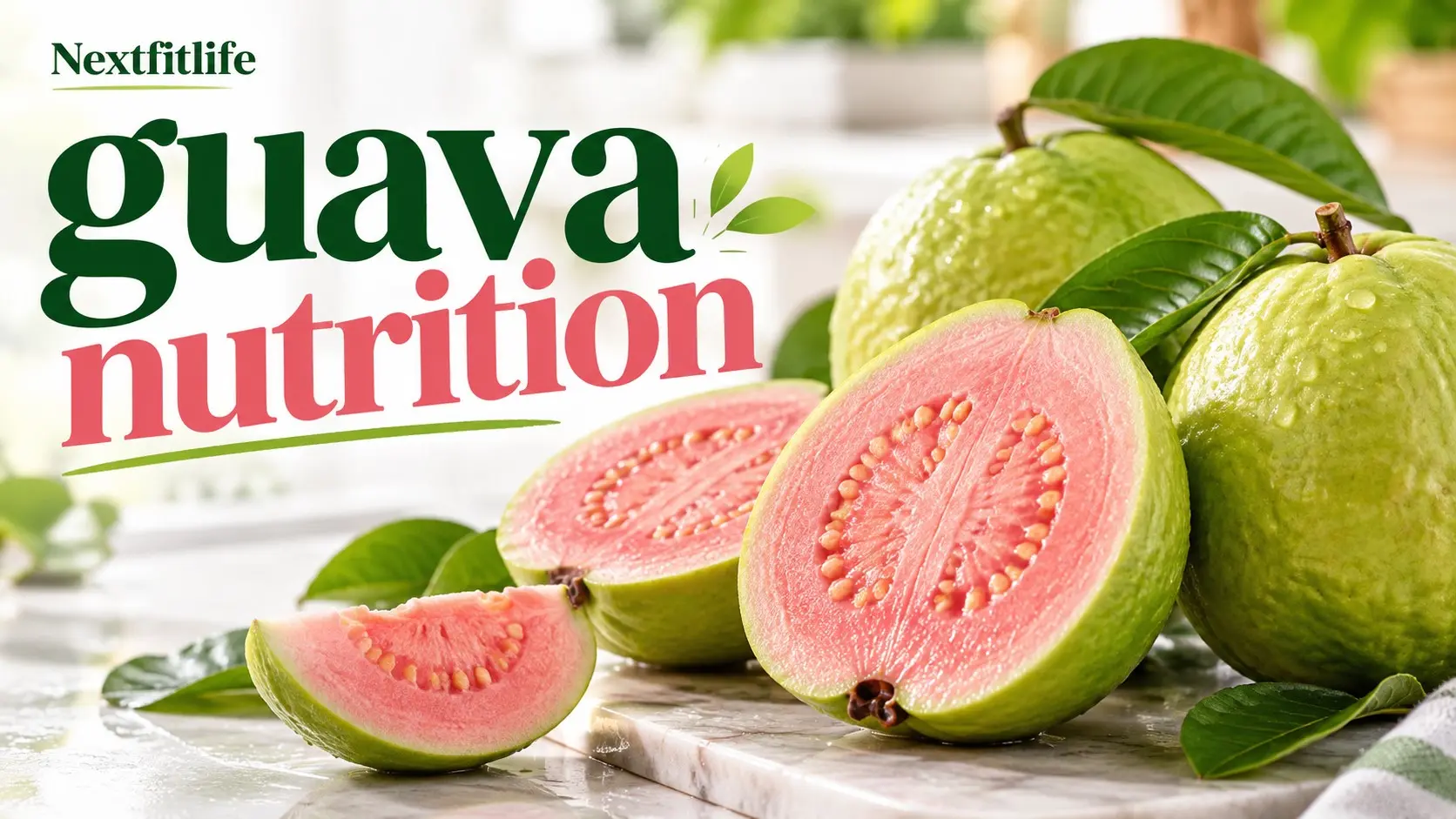
Guava nutrition stands out for two simple reasons: guava gives you a lot of vitamin C and dietary fiber in a modest amount of food. One small raw guava provides about 37 calories, 3 grams of fiber, and about 126 milligrams of vitamin C.
For most people, I would choose the whole fruit rather than juice, nectar, jam, or a sweetened guava drink. You keep the fibre, get the natural texture of the fruit, and make portion size much easier to judge.
Quick answer:
Guava is a nutrient-dense tropical fruit rich in vitamin C and fibre. It also provides potassium, folate, natural carbohydrates, and small amounts of protein and other nutrients. Eat it whole when possible, including the edible skin and seeds if you enjoy them.
This article is for general information and education. It does not replace medical advice, diagnosis, or treatment.
There is plenty of hype around guava. Some of it comes from studies on guava leaves or concentrated extracts, then gets repeated as if researchers studied a bowl of fresh fruit. I will keep those things separate because food and concentrated herbal products are not the same.
You can explore more everyday fruit choices in the NextFitLife Fruits and Vegetables Hub or browse the Nutrition and Vitamins Hub.
Table of Contents
- Guava nutrition facts at a glance
- 17 essential guava nutrition facts
- Calories and portion size
- Vitamin C
- Fibre and digestion
- Potassium and folate
- Protein and carbohydrate
- Whole fruit and juice
- Blood sugar
- Weight management
- Skin and seeds
- Pink and white guava
- Cooking and vitamin C
- Guava leaves and extracts
- Eight easy serving ideas
- How much guava to eat
- How to choose and store guava
- Guava safety
- References and Sources
- Internal Links and Hub
- About the Author
- Frequently Asked Questions
What Are the Guava Nutrition Facts?
Nutrition numbers make more sense when the serving size is clear.
A small reference guava weighs about 55 grams of edible fruit, while one cup of raw guava is about 165 grams. That is why one website may show about 37 calories and another may show more than 100 calories. They may both be correct because they are describing different portions.
| Nutrient | 1 Small Guava About 55 g |
1 Cup Raw Guava About 165 g |
Why It Matters |
|---|---|---|---|
| Calories | About 37 | About 112 | Helps you compare realistic portions |
| Carbohydrate | About 7.9 g | About 23.6 g | Includes natural fruit sugars and fiber |
| Fiber | About 3.0 g | About 8.9 g | Supports normal digestion and fullness |
| Total sugars | About 4.9 g | About 14.7 g | Naturally occurring fruit sugar |
| Protein | About 1.4 g | About 4.2 g | Higher than many fruits, but still modest |
| Vitamin C | About 126 mg | About 377 mg | Supports collagen formation, normal immune function, and plant iron absorption |
| Potassium | About 229 mg | About 688 mg | Supports normal nerve, muscle, and fluid balance |
| Folate | About 27 mcg | About 81 mcg | Supports normal cell division and blood formation |
These are reference values for common raw guava. The exact numbers change with fruit size, variety, ripeness, and how much of the fruit you eat.
The FDA Daily Value for fibre is 28 grams, vitamin C is 90 milligrams, potassium is 4,700 milligrams, and folate is 400 micrograms DFE. That means a cup of raw guava is especially notable for vitamin C and fibre.
17 Essential Guava Nutrition Facts
1. Guava Gives You a Lot of Nutrition for Few Calories
Start with the simplest number. The calories in guava are modest.
A small guava has about 37 calories, while a cup has about 112. That leaves room for useful amounts of fibre, vitamin C, potassium, and folate without turning the fruit into a calorie dense snack.
This does not make guava a weight loss drug. It simply makes whole guava easy to fit into many balanced eating patterns.
2. Vitamin C Is the Nutrient That Really Stands Out
If I had to pick one reason guava deserves attention, it would be its vitamin C.
One small guava provides about 126 milligrams. For comparison, the National Institutes of Health lists a daily recommended amount of 90 milligrams for adult men and 75 milligrams for adult women.
Vitamin C helps your body make collagen. It supports normal immune function and improves the absorption of iron from plant foods.
That last use is practical. Guava can pair well with lentils, beans, chickpeas, leafy greens, and other sources of plant iron.
If you want to understand low vitamin C intake in more detail, read our Vitamin C Deficiency guide.
3. Guava Is a Serious Fiber Fruit
A cup of raw guava provides almost 9 grams of dietary fiber. The FDA Daily Value is 28 grams.
That means one cup provides close to one third of the Daily Value.
Fiber supports normal bowel function and helps food feel more filling. High fiber eating patterns also support digestive and metabolic health.
If your current diet is low in fibre, do not jump from very little fibre to a huge amount in one day. NIDDK recommends increasing fibre gradually so your digestive system has time to adjust.
For more practical food choices, visit our Gut Health Foods and Digestion guide.
4. Guava Can Fit Into a Constipation-Friendly Diet
Guava is not a constipation treatment by itself, but its fibre makes it useful in a diet built around fibre-rich foods and enough fluid.
NIDDK recommends adequate fibre and liquids as part of normal constipation care.
If constipation is severe, new, persistent, painful, linked with blood in the stool, or paired with unexplained weight loss, do not rely on fruit alone. Those situations deserve medical advice.
5. Guava Provides Useful Potassium
A cup supplies roughly 688 milligrams of potassium.
Potassium helps with normal muscle function, nerve signals, and fluid balance. Foods rich in potassium can also form part of a heart healthy eating pattern.
This does not mean guava treats high blood pressure. The sensible claim is simpler: guava contributes potassium as part of an overall healthy diet.
6. Guava Adds Folate Too
One cup provides about 81 micrograms of folate.
Folate is needed for normal cell division and blood formation. It is particularly important before and during pregnancy, although guava alone does not provide all the folate needed during pregnancy.
People who are pregnant or planning pregnancy should follow professional guidance about folic acid or prenatal supplements rather than relying on fruit alone.
7. Guava Has More Protein Than Many People Expect
A cup of guava provides about 4.2 grams of protein.
That is interesting for a fruit, but I would not call guava a high protein food. Four grams is useful, yet it is far below what you would get from Greek yogurt, eggs, fish, poultry, beans, lentils, tofu, or similar foods.
If you are interested in how different fruits compare, see our High Protein Fruits guide.
8. Guava Still Contains Carbohydrate and Natural Sugar
Healthy food is not carbohydrate-free food.
A small guava contains about 8 grams of carbohydrate. A cup contains roughly 24 grams, including about 15 grams of natural sugars.
The fruit also gives you fibre and micronutrients, which is very different from getting the same amount of sugar from a soft drink or candy.
9. Whole Guava Is Usually Better Than Guava Juice
This is one of the easiest choices to make.
Choose whole guava more often than guava juice.
The whole fruit keeps its natural fiber and requires chewing, which helps make the portion feel more substantial. Juice is easy to drink quickly, and a glass can contain the carbohydrate from several pieces of fruit.
The American Diabetes Association notes that whole fresh fruit is a good fruit choice and that juice portions are small because they are less filling.
A smoothie is a little different. If you blend the whole edible fruit and keep all the pulp, much of the fiber remains. Portion size still matters because drinks are easy to consume quickly.
10. Guava Nectar Is Not the Same Thing as Fresh Guava
The word “guava” on a drink does not make the drink nutritionally equal to fruit.
Guava nectar, fruit drinks, sweetened juice blends, syrups, and bottled beverages may contain added sugars or other ingredients. Read the Nutrition Facts panel and ingredient list.
If the goal is everyday nutrition, fresh guava is the simpler choice.
11. Guava Can Fit Into a Diabetes Eating Plan
Fruit contains carbohydrates, so it still counts when you manage blood sugar.
The American Diabetes Association lists fresh, frozen, and canned fruit without added sugar among good fruit choices. Whole fruit is also more filling than juice for the amount of carbohydrate it provides.
If you use insulin or another treatment that requires carbohydrate counting, count the portion you actually eat. Do not assume fruit carbohydrate does not matter because the food is healthy.
You can find broader guidance in our Diabetes and Blood Sugar Management Hub.
12. Guava Can Support a Weight Management Diet Without Being a Fat Burner
No fruit melts body fat.
Guava can still be useful because it combines modest calories with a good amount of fibre, water, and volume. Those traits make whole fruit easier to use as a filling snack than many highly processed foods.
Weight change still depends on the wider eating pattern, activity, sleep, medicines, health conditions, and energy intake.
For a broader approach, visit our Weight Loss and Metabolism Food Guide.
13. Guava Skin Is Edible
You do not have to peel a guava.
Guava skin is edible. Wash the fruit under running water, remove damaged areas, slice it, and see whether you enjoy the texture.
Some varieties have softer skin than others. If you do not like it, peeling the fruit is fine. Nutrition should still fit your taste.
14. Guava Seeds Are Edible Too
Guava seeds are also edible.
They are firmer than the flesh, so texture is the main issue. You can eat them with the fruit, or strain them from a recipe when you want a smoother result.
There is no need to remove every seed for nutrition reasons.
15. Pink Guava and White Guava Are Both Good Choices
Do not turn fruit colour into a contest.
Pink guava and white guava differ in colour, flavour, texture, and plant compounds. Pink flesh gets part of its colour from carotenoid pigments.
Both can be part of a healthy diet. The better guava is usually the one that is fresh, ripe, affordable, and enjoyable enough that you will actually eat it.
16. Cooking Can Lower Some Vitamin C
Vitamin C is sensitive to heat and storage.
The National Institutes of Health notes that prolonged storage and cooking can reduce the vitamin C content of foods. That does not make cooked guava unhealthy, but raw guava is an easy way to keep more of its original vitamin C.
If vitamin C is your main reason for eating guava, include some raw fruit rather than cooking all of it.
17. Guava Fruit and Guava Leaf Extract Are Not the Same Evidence
This is where many online articles lose me.
Research on guava leaves, guava leaf tea, concentrated extracts, animals, or cells in a laboratory should not automatically be turned into a claim about eating fresh guava.
Those products use different plant parts and different doses. Some studies may be interesting, but they do not prove that eating a guava treats diabetes, cures diarrhea, lowers blood pressure, prevents cancer, or replaces medical care.
The proven nutrition of the fruit is already strong. There is no need to stretch it.
What Are the Main Guava Fruit Benefits?
The most defensible guava fruit benefits come from the nutrients the fruit actually provides.
| Benefit Area | What Guava Provides | What That Means |
|---|---|---|
| Normal immune function | Very high vitamin C | Supports normal immune function but does not prevent every infection |
| Digestion | High fibre content | Supports bowel regularity as part of a fibre-rich diet |
| Plant iron absorption | Vitamin C | Helps your body absorb nonheme iron from plant foods |
| Heart healthy eating | Fiber and potassium | Fits an eating pattern built around whole plant foods |
| Weight management | Fiber, water, modest calories | Can be a filling whole fruit choice |
| Normal collagen formation | Vitamin C | Provides a nutrient needed to make collagen |
Notice what is missing from that table: miracle claims.
Guava does not need them.
Does Guava Boost Immunity?
It is more accurate to say that guava supports normal immune function because it is rich in vitamin C.
Vitamin C is required for normal immune function, but a vitamin C-rich fruit does not make you immune to infections.
That may sound less dramatic than “immune booster,” yet it is a much better way to understand food.
Can Guava Improve Skin Health?
Guava provides vitamin C, and your body needs vitamin C to make collagen.
That gives guava a clear nutrition link to normal skin structure.
It does not prove that eating guava clears acne, removes wrinkles, fades scars, or treats a skin condition. Those claims need their own evidence.
Food supports the body. It does not replace dermatology treatment when a medical skin problem needs care.
Eight Easy Ways to Eat Guava
1. Eat It Fresh
Wash the fruit, cut it into wedges, and eat it with the skin and seeds if you enjoy them.
For me, this is the default because nothing needs to be added.
2. Add Guava to Plain Yogurt
Dice ripe guava over plain yogurt or Greek yogurt.
The fruit brings fiber and carbohydrate, while the yogurt adds a more substantial source of protein.
3. Mix It Into Oatmeal
Fresh guava works with oats, milk or yogurt, nuts, and seeds.
Try the fruit first before adding honey or another sweetener. Ripe guava may already give you enough sweetness.
4. Make a Simple Fruit Bowl
Pair guava with berries, kiwi, orange, melon, or whatever fresh fruit you have.
Variety gives you a broader mix of nutrients than chasing one “best” fruit every day.
5. Serve Guava With Beans or Lentils
This is one of my favourite nutrition pairings on paper because it has an obvious reason behind it.
Beans and lentils provide plant iron. Guava provides a large amount of vitamin C, which helps your body absorb that plant iron.
6. Use Guava in a Savoury Salsa
Dice guava with tomato, onion, lime, cilantro, and chilli if you like heat.
Serve it with fish, chicken, beans, tofu, or a grain bowl.
7. Blend the Whole Fruit
If you want a drink, blend the whole edible fruit rather than straining away the pulp.
You still need to watch the portion, but keeping the pulp means keeping more of the fruit's fibre.
8. Freeze Ripe Guava
Cut ripe guava into pieces and freeze it before it becomes overripe.
The frozen pieces work well in smoothies or can be thawed for cooked dishes.
How Much Guava Should You Eat?
There is no special daily guava requirement.
One small fruit makes an easy snack. A cup is a larger serving with close to 9 grams of fiber and about 24 grams of carbohydrate.
If you rarely eat high fiber foods, begin with a smaller amount and see how your digestive system responds.
If you count carbohydrate for diabetes, use the portion that fits your personal meal plan.
You also do not need several guavas in one sitting simply because the first one was healthy. More food is still more food.
How Do You Choose a Ripe Guava?
Ripeness depends partly on the variety, so color alone is not a perfect test.
A ripe guava usually smells fragrant and gives a little when pressed gently. Very hard fruit may need more time, while very soft fruit with leaking juice or large damaged areas may be past its best.
Let firm guavas ripen at room temperature. Once ripe, refrigeration can slow further softening.
Cut fruit should be refrigerated promptly in a clean covered container.
Should You Wash Guava Before Cutting It?
Yes.
The FDA advises washing fresh produce thoroughly under running water before preparing or eating it. Do not wash fruit with household soap or detergent.
Wash guava even if you plan to peel it. A knife can move dirt or microbes from the outside surface into the flesh as you cut.
Who Should Be More Careful With Guava?
People Who Need to Limit Potassium
Guava provides a meaningful amount of potassium.
Some people with kidney disease or other conditions are told to follow a specific potassium limit. If that applies to you, use the amount recommended by your kidney care team or registered dietitian instead of assuming every fruit portion is suitable.
People Who Count Carbohydrate
Guava is nutritious, but its carbohydrate still counts.
This matters when you use insulin or another treatment that requires meal based carbohydrate decisions.
People Who Are Not Used too Much Fibre
A large serving can add a lot of fibre at once.
If you suddenly increase fibre, you may notice gas, fullness, or bloating. Increase it gradually and drink suitable fluids unless a medical condition requires fluid restriction.
People Using Guava Leaves or Extracts as Supplements
Eating fruit and taking a concentrated herbal product are different choices.
If you plan to use guava leaf tea, capsules, or concentrated extracts for a health condition, discuss that separately with a qualified healthcare professional or pharmacist, especially if you are pregnant, breastfeeding, use prescription medicines, or have a chronic medical condition.
Guava Nutrition Myths Worth Dropping
Myth 1: Guava Burns Belly Fat
No food targets fat from one part of the body.
Whole guava can fit into a weight management diet because it is high in fiber and modest in calories, but it does not melt body fat.
Myth 2: Guava Cures Diabetes
No.
Fresh guava can fit into many diabetes eating plans. It does not replace medication, glucose monitoring, professional nutrition care, or other treatment.
Myth 3: More Vitamin C Is Always Better
Your body needs vitamin C, but more is not endlessly better.
Guava already provides a large amount. There is no reason to turn a vitamin C rich fruit into an excuse for unnecessary high dose supplements.
Myth 4: Guava Juice Is the Same as Guava Fruit
It is not.
Whole fruit keeps its natural structure and fiber. Juice is easier to consume quickly and may provide less fiber per serving.
Myth 5: Every Guava Study Proves a Benefit of Eating Guava
Definitely not.
Always check whether researchers studied fresh fruit, leaves, tea, an extract, animals, or laboratory cells. Those are different exposures and cannot be treated as the same evidence.
Conclusion: Make Guava Nutrition Practical
The best part of guava nutrition is not a miracle claim. It is the simple combination of vitamin C, fiber, potassium, folate, fruit carbohydrate, and relatively few calories.
Start with the whole fruit. Wash it, try the edible skin and seeds, and use a portion that fits the rest of your meal. If you enjoy guava, add it to your fruit rotation instead of treating it like medicine.
Your next step is simple: choose one fresh guava, eat it whole, and see whether it earns a regular place in your diet.
References and Sources
- National Institutes of Health, Office of Dietary Supplements. Vitamin C Fact Sheet for Consumers. Information on vitamin C needs, immune function, collagen formation, plant iron absorption, cooking losses, and safety.
https://ods.od.nih.gov/factsheets/VitaminC-Consumer/ - U.S. Food and Drug Administration. Daily Value on the Nutrition and Supplement Facts Labels. Reference values for fibre, vitamin C, potassium, folate, and other nutrients.
https://www.fda.gov/food/nutrition-facts-label/daily-value-nutrition-and-supplement-facts-labels - American Diabetes Association. Fruit. Guidance on fresh fruit, carbohydrate counting, juice portions, and fruit choices for diabetes.
https://diabetes.org/food-nutrition/reading-food-labels/fruit - National Institute of Diabetes and Digestive and Kidney Diseases. Eating, Diet, and Nutrition for Constipation. Guidance on dietary fibre, fluids, and gradual increases in fibre intake.
https://www.niddk.nih.gov/health-information/digestive-diseases/constipation/eating-diet-nutrition - U.S. Food and Drug Administration. Selecting and Serving Produce Safely. Guidance on washing and handling fresh fruits and vegetables.
https://www.fda.gov/food/buy-store-serve-safe-food/selecting-and-serving-produce-safely - University Hospitals Health System, using USDA nutrient data. Guavas, Common, Raw, One Fruit Without Refuse. Reference nutrition values for raw guava.
https://www.uhhospitals.org/health-information/health-and-wellness-library/article/nutritionfacts-v1/guavas-common-raw-1-fruit-without-refuse
Internal Links and Hub
- Fruits and Vegetables Nutrition Hub
- Nutrition and Vitamins Hub
- Gut Health Foods and Digestion Guide
- Diabetes and Blood Sugar Management Hub
- Weight Loss and Metabolism Food Guide
- Vitamin C Deficiency Guide
- High Protein Fruits Guide
- Exotic Fruits Guide
About the Author
Adel Galal is the founder and lead writer of NextFitLife. He writes about health, fitness, foods and nutrition, healthy aging, and everyday wellness.
His work focuses on comparing credible medical, government, and nutrition sources, explaining what the evidence does and does not show, and turning complex health information into clear steps readers can actually use.
I am not a dermatologist or a doctor, and this content does not replace professional medical advice. What I share comes from real-life experience, extensive research, and consultation with healthcare providers. Always consult qualified medical professionals for diagnosis and treatment of any health condition.
Adel is also not a registered dietitian. Nutrition needs can change with age, pregnancy, medicines, kidney disease, diabetes, digestive conditions, allergies, and other health factors.
Learn more about Adel Galal, NextFitLife, and the site's editorial approach on the About Us page.
Frequently Asked Questions
What is the main nutritional benefit of guava?
Guava is especially rich in vitamin C and fiber. It also provides potassium, folate, carbohydrate, and small amounts of protein and other nutrients.
How much vitamin C is in one guava?
A small raw guava weighing about 55 grams provides roughly 126 milligrams of vitamin C. Actual amounts vary with fruit size, variety, ripeness, and storage.
Is guava high in sugar?
A small guava contains about 5 grams of naturally occurring sugar, while one cup has roughly 15 grams. The whole fruit also provides fibre, water, vitamins, and minerals.
Can people with diabetes eat guava?
Fresh guava can fit into many diabetes eating plans, but it still contains carbohydrates. Portion size matters, especially for people who count carbohydrates or use insulin.
Should I eat guava with the skin?
Guava skin is edible. Wash the fruit well under running water before eating or cutting it. You can remove the skin if you do not enjoy its texture.
Can you eat guava seeds?
Yes. Guava seeds are edible, although they are firmer than the flesh. You can eat them with the fruit or remove them when a recipe needs a smoother texture.
Is guava juice as healthy as whole guava?
Whole guava is usually the better everyday choice because it keeps the fruit's natural fibre and is more filling. Juice is easier to drink quickly and portion sizes are smaller.
Does guava help with constipation?
Guava is high in fibre, so it can be part of a diet that supports normal bowel movements. Persistent or severe constipation still needs proper medical assessment.
Is pink guava healthier than white guava?
Both can be nutritious choices. Different guava varieties vary in colour, flavour, texture, and plant compounds, but you do not need to choose one colour to get the basic nutritional benefits of the fruit.
Does guava help with weight loss?
Guava does not burn body fat. Whole guava can fit into a weight management diet because it provides fiber and volume for a modest number of calories.
Is guava leaf tea the same as eating guava?
No. Guava leaves, teas, and concentrated extracts are different products from fresh guava fruit. Research on a leaf extract should not automatically be treated as evidence for eating the fruit.

Health & wellness writer with 30+ years of experience in nutrition, fitness, and healthy aging. Founder of NextFitLife.com — evidence-based health guidance.