Published on: October 14, 2026
Updated on: October 14, 2026
Written and source checked by: Adel Galal, Founder and Lead Writer at NextFitLife
Medical review status: This article has not been medically reviewed by a dermatologist or doctor.
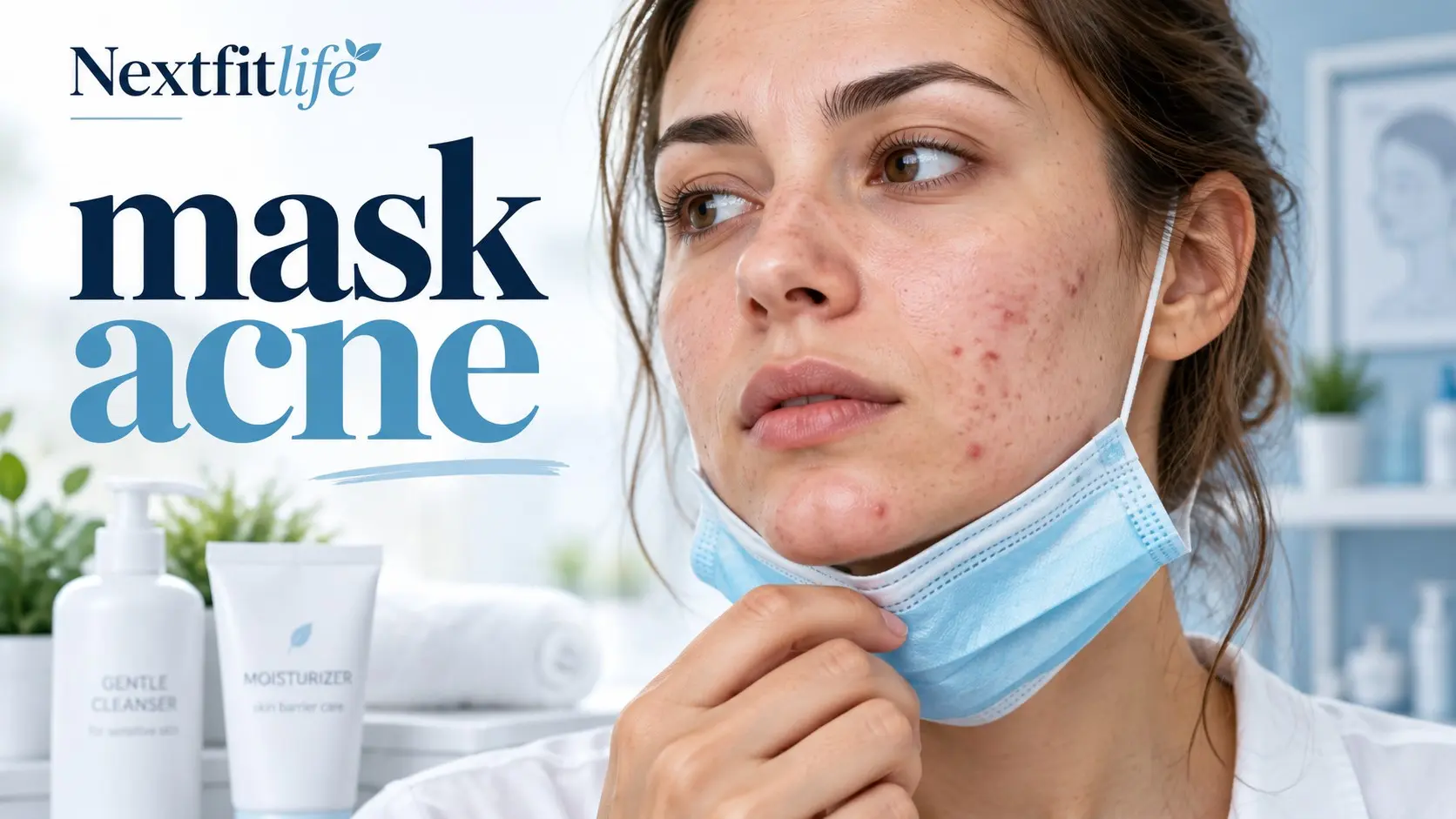
Mask acne usually improves when you reduce friction and trapped moisture, clean the skin gently, use noncomedogenic products, and treat real acne without overloading irritated skin with too many active ingredients.
The first step, though, is making sure the bumps are actually acne. A rash that burns, itches, flakes, or gathers around the mouth may be dermatitis, rosacea, or another skin problem that needs a different plan.
Quick answer:
For mask acne, use a gentle cleanser, a light noncomedogenic moisturizer, a clean and properly fitting mask, and one acne treatment that matches your breakout. Reduce irritating products if the skin becomes raw, burning, or flaky. Do not compromise the fit of a protective respirator to make skincare easier.
This article is for general information and education. It does not replace medical advice, diagnosis, or treatment.
If you already struggle with clogged pores or facial acne, visit the NextFitLife Skin Health Hub. If your skin is burning, peeling, or stinging beneath the mask, our Damaged Skin Barrier guide may be a better starting point than another acne treatment.
Table of Contents
- What mask acne really is
- How to tell acne from irritation
- 13 essential treatment and prevention steps
- Gentle cleansing
- Moisturizer
- Acne treatment
- Mask fit and cleanliness
- Makeup and skincare
- Long work shifts
- Which acne treatment fits each breakout
- A simple morning and night routine
- N95 and respirator safety
- Common mask acne mistakes
- When to see a dermatologist
- References and Sources
- Internal Links and Hub
- About the Author
- Frequently Asked Questions
What Is Mask Acne?
Mask acne, sometimes called maskne, describes acne that appears or becomes worse in areas covered by a face mask or respirator.
Dermatology sources often describe this pattern as acne mechanica. Pressure, rubbing, heat, humidity, sweat, oil, and prolonged occlusion can create a difficult environment for acne-prone skin.
The cheeks, chin, jaw, sides of the nose, and areas beneath the mask edges are common trouble spots because these are the places where fabric moves or pressure builds.
That does not mean masks make every person develop acne. People who already clog easily or have inflammatory acne may notice the problem more.
It also does not mean your face is dirty.
Scrubbing harder is rarely the fix.
Why Can a Mask Make Acne Worse?
A mask changes the environment directly over your skin.
Warm breath raises humidity beneath the covering. Sweat can remain against the skin. The mask moves when you speak, breathe, smile, or turn your head, while the nose bridge and edges add pressure.
DermNet notes that face masks can affect the skin through increased heat, humidity, follicular occlusion, changes in sebum, friction, and pressure.
| Mask Factor | What Happens | Better Response |
|---|---|---|
| Friction | Repeated rubbing irritates acne-prone skin | Improve fit and reduce unnecessary movement |
| Humidity | Breath and sweat create a warm damp space | Use clean masks and gentle after wear cleansing |
| Pressure | Mask edges press on the same areas for hours | Use the correct fit and approved size or model |
| Product buildup | Heavy makeup and skincare sit beneath an occlusive layer | Keep the covered routine simple |
| Existing acne | A vulnerable area receives more friction and moisture | Continue suitable evidence-based treatment |
Is It Really Mask Acne or Something Else?
This is the part many articles rush through.
A bump beneath a mask is not automatically acne. Several conditions can appear in the same area, and the wrong treatment can make them more irritated.
Blackheads and Whiteheads Point More Toward Acne
True acne can produce whiteheads, blackheads, red pimples, pus filled spots, and deeper tender bumps.
If clogged pores are part of the picture, read our Whiteheads Treatment guide. It explains why a closed comedone behaves differently from a rash.
Burning and Scaling Suggest Irritation
If the skin mainly burns, stings, feels raw, or develops dry, scaly patches exactly where the mask rubs, think beyond acne.
Irritant contact dermatitis can develop when friction, pressure, moisture, and repeated exposure damage the skin barrier.
Using more salicylic acid on raw skin is not automatically better treatment.
Small Bumps Around the Mouth May Be Perioral Dermatitis
Perioral dermatitis can look surprisingly similar to acne. It usually causes small acne-like bumps around the mouth, and sometimes around the nose or eyes. The skin may also itch, burn, feel tight, or become dry and flaky.
If normal acne treatment repeatedly makes the rash worse, stop assuming every bump is a clogged pore.
Flushing and Burning May Point Toward Rosacea
Rosacea can cause persistent redness, flushing, burning, stinging, and acne like bumps.
A mask can aggravate rosacea too, so location alone cannot make the diagnosis.
13 Essential Mask Acne Treatment and Prevention Steps
1. Cleanse Gently Instead of Scrubbing
Your face does not need to feel squeaky clean.
Use a mild facial cleanser and lukewarm water. Wash with your fingertips rather than a rough cloth or scrub brush.
For acne-prone skin, the American Academy of Dermatology recommends gentle cleansing rather than repeated washing and hard scrubbing.
Scrubbing gives already irritated, masked skin one more source of friction.
2. Keep Using Moisturizer
Oily skin still needs a healthy barrier.
A light noncomedogenic moisturizer can reduce dryness and help skin tolerate acne treatment. AAD specifically recommends moisturizer for acne prone skin because common treatments such as benzoyl peroxide, salicylic acid, and topical retinoids can dry or irritate the skin.
If labels confuse you, see our Noncomedogenic Skincare Meaning guide.
For oily skin, a light gel or lotion may feel easier beneath a mask than a very heavy cream.
3. Use One Acne Treatment With a Clear Purpose
The current AAD acne guideline supports several topical therapies, including benzoyl peroxide, topical retinoids, salicylic acid, and azelaic acid.
That does not mean your face needs all of them tonight.
When skin is already dealing with hours of friction and humidity, adding several strong products at once makes irritation more likely and makes it difficult to tell which product is helping.
Start with a treatment that matches the kind of acne you have, then adjust based on tolerance and results.
4. Stop Strong Actives When the Skin Becomes Raw
This point deserves its own section because it prevents a common mistake.
AAD mask guidance recommends stopping irritating products while damaged mask skin heals. This can include salicylic acid, scrubs, peels, and some other active products.
If your skin becomes painful, cracked, strongly burning, or visibly raw, repairing the barrier becomes more urgent than adding another acne ingredient.
Our Damaged Skin Barrier guide explains the difference between normal treatment dryness and skin that needs a simpler routine.
5. Match the Active Ingredient to the Breakout
Different acne patterns respond to different tools.
| Main Concern | Common Option | Important Note |
|---|---|---|
| Whiteheads and blackheads | Salicylic acid or a suitable topical retinoid | Reduce use if masked skin becomes irritated |
| Red inflammatory pimples | Benzoyl peroxide is one evidence based option | It may irritate skin and can bleach fabrics |
| Mixed clogged and inflamed acne | A topical retinoid may be part of treatment | Introduce carefully because irritation is possible |
| Acne plus lingering marks | Azelaic acid is another guideline supported option | Treatment still needs to match skin tolerance |
| Deep painful nodules | Professional acne treatment | Do not rely on repeated over the counter experiments |
That table is a guide, not a personal prescription.
6. Keep the Morning Routine Simple
Under a mask, I prefer fewer layers.
A practical morning routine is a gentle cleanser when needed, a suitable moisturizer, and sun protection where appropriate. Then give the products time to settle before putting on the mask.
If you are wearing a tight fitting occupational respirator, there is an extra safety issue. Skin products must not interfere with the respirator seal.
I will cover that separately below because respiratory protection comes before skincare convenience.
7. Wash After Heavy Sweat Without Overwashing
After hours of heat and sweating, gentle cleansing can remove oil, sweat, makeup, and residue.
One wash is enough.
If you have already cleansed several times that day and your face feels tight or sore, another strong foaming cleanser may add irritation rather than solve it.
8. Change Wet, Dirty, or Damaged Masks
A mask that becomes wet or dirty should not stay pressed against acne prone skin longer than necessary.
For an N95 respirator, current CDC guidance says to replace it when it becomes wet, dirty, damaged, or can no longer maintain a snug fit.
Do not wash an N95 unless its manufacturer specifically designed it for that process. Standard disposable N95 respirators should not be put in a washing machine, oven, or microwave.
9. Fix Unnecessary Rubbing
A loose mask that slides around can rub the same areas all day.
An overly tight ordinary face covering can create needless pressure.
The goal is a secure and comfortable fit appropriate for the mask you are using.
For occupational respirators, however, never loosen the device until it stops sealing just to make your skin more comfortable. Ask your respiratory protection program about another approved size or model.
10. Reduce Heavy Makeup Beneath the Mask During a Flare
If your chin and cheeks are actively breaking out, this is a good time to simplify what sits beneath the mask.
AAD recommends skipping makeup over mask irritated skin when possible. If you do wear makeup, choose products labeled noncomedogenic or designed not to clog pores.
Remember that makeup is not the only product that reaches the area. Sunscreen, moisturizer, beard oils, hair products, and styling products can migrate onto the cheeks and jaw too.
11. Take Mask Breaks Only Where Removal Is Safe
A skin care break should never create a respiratory hazard.
If you are wearing a mask because of infection risk, workplace exposure, dust, particles, chemicals, or another hazard, remove it only in a location where doing so is allowed and safe.
The right mask acne prevention plan works around required protection rather than weakening it.
12. Keep Your Hands Away From the Pimples
A mask hides a breakout, but that does not make squeezing safer.
Picking increases inflammation and raises the chance of lasting red or dark marks and scars.
If red marks remain after pimples flatten, read our Post-Inflammatory Erythema Acne guide.
13. Treat the Pattern, Not Just the Location
A chin breakout beneath a mask may be friction-related. It may also be hormonal acne, shaving irritation, product related acne, folliculitis, or another condition.
Location is a clue, not a diagnosis.
Our Jawline Acne Causes guide explains why lower face acne needs more than one explanation.
What Is the Best Mask Acne Treatment?
There is no single product that wins for every person.
The best mask acne treatment depends on what the bumps actually are.
Benzoyl Peroxide
Benzoyl peroxide is one of the strongly recommended acne treatments in the current AAD guideline.
It is particularly useful in inflammatory acne treatment plans, but it can cause dryness and irritation. If the covered skin is already burning from friction, adding more benzoyl peroxide is not always the immediate answer.
There is also a practical issue: benzoyl peroxide can bleach colored fabric.
Salicylic Acid
Salicylic acid helps unclog pores and is included in current AAD acne recommendations.
It can be useful when whiteheads and clogged pores dominate. The catch is irritation. AAD's mask specific guidance advises cutting back products such as leave on salicylic acid when the skin becomes irritated under a mask.
Adapalene and Other Topical Retinoids
Topical retinoids are core evidence-based acne treatments.
Adapalene can help blackheads, whiteheads, and pimples, but starting too aggressively may lead to dryness and irritation.
If you already tolerate a retinoid, do not automatically use more because you started wearing a mask.
If you are pregnant or trying to become pregnant, discuss your acne treatment with your obstetrician or dermatologist. AAD guidance says most experts recommend stopping adapalene during pregnancy, and pregnancy can change which acne medicines are appropriate.
Azelaic Acid
Azelaic acid is another topical option supported by the AAD acne guideline.
It can help acne and may also be useful when post-acne discoloration is part of the problem.
Again, the best option depends on skin sensitivity and diagnosis. An ingredient being evidence based does not mean everyone should use it in the same way.
A Simple Mask Acne Routine
Complicated skincare is especially hard to manage when half your face is covered for hours.
Morning
- Cleanse gently if needed.
- Use one prescribed or planned morning acne treatment when appropriate.
- Apply a light noncomedogenic moisturizer.
- Use suitable broad-spectrum sun protection on exposed skin.
- Let skincare settle before putting on the mask.
After Mask Wear
- Remove the mask with clean hands.
- Gently cleanse sweaty or oily skin.
- Use moisturizer if the skin feels dry or tight.
- Replace or clean the mask according to its type and instructions.
Night
- Remove makeup and sunscreen gently.
- Cleanse.
- Apply the acne treatment that belongs in your plan.
- Moisturize.
If you already follow a cycling approach with acids or retinoids, our Skin Cycling Routine guide explains why irritated skin should not be forced through a calendar of strong actives.
What Should You Do If Mask Acne Treatment Burns?
Do not interpret burning as proof that an acne product is working.
A little dryness can happen with some acne treatments. Strong burning, painful peeling, cracking, swelling, or a persistent raw feeling is different.
AAD recommends stopping irritating products while damaged mask skin heals.
Go back to the basics:
- A gentle cleanser
- A simple moisturizer
- Suitable sun protection
- No scrubbing
- No peel
- No extra acid just because the breakout is frustrating
Then reassess what the bumps actually are.
Can Moisturizer Make Mask Acne Worse?
The wrong moisturizer can feel heavy, but skipping moisturizer completely is not automatically better.
AAD specifically recommends moisturizer for people using drying acne treatments.
Look for terms such as noncomedogenic, oil-free, or won't clog pores. Then judge how the finished product behaves on your own skin.
A noncomedogenic label is useful, but it is not a guarantee that no individual will ever break out from the product.
What If You Wear an N95 for an Entire Work Shift?
This is where ordinary beauty advice becomes a safety issue.
A tight fitting N95 must seal against the face to work correctly. CDC guidance says to check for gaps each time you put it on, and a respirator that does not seal properly should not be treated like an ordinary loose face covering.
NIOSH also warns that residual lotion, cream, ointment, and makeup can interfere with the fit and seal of a filtering facepiece respirator.
If you wear an N95 or another tight-fitting respirator at work:
- Follow the manufacturer's instructions.
- Follow your workplace respiratory protection program.
- Apply permitted moisturizer early enough for residue to absorb.
- Do not place unapproved padding beneath the sealing surface.
- Do not loosen the respirator until it leaks just to reduce skin pressure.
- Ask about another approved size or model if fit causes repeated skin injury.
- Remove respiratory protection only where it is safe and permitted.
Healthcare staff and other long shift workers may also find our Skincare Routine for Shift Workers useful.
Can You Put Petroleum Jelly Under an N95?
Be careful with anything placed along the seal.
NIOSH notes that residual ointment, cream, lotion, makeup, and some thick products can interfere with a tight-fitting respirator seal. Some manufacturers specifically advise against thick petroleum-based products where the respirator contacts the skin.
If pressure injury is becoming a problem, do not invent your own barrier system beneath the respirator.
Ask occupational health, your respirator program manager, or the manufacturer which skin protection options are compatible with your specific device.
Does the Mask Material Matter?
For ordinary non-occupational face coverings, comfort, fit, cleanliness, moisture, and friction can all affect the skin.
AAD recommends a snug but comfortable fit that does not constantly slide over the face.
For a respirator, however, filtration and seal matter more than choosing whatever fabric feels softest.
Do not downgrade required respiratory protection because another material seems kinder to acne.
Seven Mask Acne Mistakes That Slow Progress
1. Washing Five Times a Day
Excess washing adds irritation. Gentle cleansing is enough.
2. Using a Rough Facial Scrub
Friction is already one problem. Adding more friction is poor logic.
3. Starting Several New Acne Treatments Together
If your skin becomes red and sore, you will not know which product caused it.
4. Assuming Every Chin Bump Is Mask Acne
Hormonal acne, folliculitis, dermatitis, shaving irritation, and perioral dermatitis can affect the same area.
5. Wearing Heavy Makeup Beneath an Active Flare
Simplify the covered area while the skin settles.
6. Reusing a Wet or Damaged Disposable Mask
Follow the replacement guidance for the exact mask or respirator you use.
7. Picking Because Nobody Can See the Pimple
The mask hides the spot. It does not protect you from inflammation, marks, or scars caused by squeezing.
How Long Does Mask Acne Take to Clear?
There is no honest, universal countdown.
AAD advises giving a suitable acne treatment time to work. Improvement with acne treatment usually takes weeks rather than days.
The timeline also depends on what you are actually treating. Irritant dermatitis may improve after the trigger and irritating products are reduced, while true acne needs ongoing treatment to prevent new lesions.
If you are switching products every three days, you are making progress harder to judge.
When Should You See a Dermatologist?
Professional care makes sense when acne is deep, painful, scarring, repeatedly worsening, or not improving with a consistent plan.
Get the diagnosis checked sooner if:
- The rash burns or itches more than it behaves like acne
- The skin is cracked, bleeding, crusted, or infected
- Bumps cluster around the mouth, nose, or eyes
- You have persistent flushing or eye symptoms
- Every bump looks almost identical and very itchy
- You develop nodules or cysts
- Acne is leaving scars
- Skin damage prevents safe respirator use
- Your normal acne treatment keeps making the condition worse
One of the most useful questions in skincare is not “What stronger product should I buy?”
Sometimes it is “Am I treating the right condition?”
Mask Acne Prevention: What Matters Most?
Mask acne prevention is less about finding a special maskne serum and more about reducing avoidable irritation.
Keep the mask clean and appropriate for its job. Use gentle skincare. Moisturize. Avoid unnecessary rubbing. Keep makeup light in the covered zone when breakouts are active. Use evidence-based acne treatment only when the bumps are actually acne.
And protect the skin barrier.
That last part is simple to miss because acne makes people want to dry the skin out. In reality, an irritated barrier can make the whole routine harder to tolerate.
Conclusion: Treat Mask Acne Without Fighting Your Skin
The best mask acne plan is not the harshest one. It is the plan that reduces friction, protects the skin barrier, keeps required respiratory protection working correctly, and uses the right acne treatment for the type of breakout you actually have.
Start tonight by simplifying your routine. Look closely at the bumps, stop unnecessary scrubbing, and choose one evidence based treatment only if the pattern really looks like acne.
If your skin mainly burns, flakes, itches, or keeps getting worse, stop treating the word “maskne” and get the actual condition identified.
References and Sources
- American Academy of Dermatology. Acne Clinical Guideline. Current recommendations for topical and systemic acne treatments.
https://www.aad.org/member/clinical-quality/guidelines/acne/ - American Academy of Dermatology. Face Mask Skin Problems: DIY Treatment. Guidance for acne, raw irritated skin, skincare, makeup, and mask-related problems.
https://www.aad.org/public/everyday-care/injured-skin/burns/face-mask-skin-problems-treatment - American Academy of Dermatology. 10 Ways to Prevent Face Mask Skin Problems. Guidance on gentle cleansing, moisturizer, fit, and acne prone skin.
https://www.aad.org/public/everyday-care/skin-care-secrets/face/prevent-face-mask-skin-problems - DermNet. Skin Reactions to Face Masks. Overview of acne mechanica, friction, pressure, humidity, dermatitis, and rosacea flares.
https://dermnetnz.org/topics/skin-reactions-to-face-masks - CDC and NIOSH. How to Use Your N95 Respirator. Current guidance on respirator seal, fit checks, and replacement.
https://www.cdc.gov/niosh/ppe/php/n95-use/ - CDC and NIOSH. Skin Irritation From Prolonged Use of Tight-Fitting Respirators. Guidance on friction, moisture, skin care products, and respirator seal.
https://www.cdc.gov/niosh/bulletin/2020/skin-irritation-respirators.html - American Academy of Dermatology. Red Rash Around Your Mouth Could Be Perioral Dermatitis. Guidance on an acne-like condition that commonly affects the mouth area.
https://www.aad.org/public/diseases/a-z/perioral-dermatitis
Internal Links and Hub
- Skin Health Hub
- Healthy Skin 101
- Damaged Skin Barrier Guide
- Noncomedogenic Skincare Meaning
- Whiteheads Treatment Guide
- Jawline Acne Causes
- Post Inflammatory Erythema Acne
- Skin Cycling Routine for Beginners
- Skincare Routine for Shift Workers
About the Author
Adel Galal is the Founder and Lead Writer at NextFitLife. He writes about health, fitness, nutrition, skin care, healthy aging, and everyday wellness.
His approach is practical: compare recognized medical and dermatology sources, separate evidence from marketing claims, and turn complicated information into clear steps that readers can use.
I am not a dermatologist or A doctor, and this content does not replace professional medical advice. What I share comes from real-life experience, extensive research, and consultation with healthcare providers. Always consult qualified medical professionals for diagnosis and treatment of any health condition.
This article has not been medically reviewed by a dermatologist. Persistent, severe, painful, scarring, infected, or unusual acne like eruptions deserve professional assessment.
Learn more about Adel Galal and NextFitLife on the About Us page.
Frequently Asked Questions
What causes mask acne?
Mask acne can develop or worsen when friction, pressure, heat, humidity, sweat, oil, and prolonged mask contact affect acne-prone skin. This pattern is often described as acne mechanica.
How do I get rid of mask acne?
Use gentle cleansing, a noncomedogenic moisturizer, a clean, properly fitting mask, and one suitable acne treatment. Reduce irritating products if the skin becomes raw, burning, or flaky.
Is salicylic acid good for mask acne?
Salicylic acid is an evidence-based acne treatment that can help with clogged pores. If mask wear has made your skin irritated or raw, reduce irritating products until the skin settles.
Does benzoyl peroxide help mask acne?
Benzoyl peroxide is a guideline supported acne treatment and can help inflammatory pimples. It can also cause dryness or irritation, so the skin barrier and overall routine matter.
Can I use adapalene for mask acne?
Adapalene is a topical retinoid used for blackheads, whiteheads, and pimples. It may irritate skin when first introduced, and people who are pregnant or trying to become pregnant should discuss retinoid use with a qualified clinician.
Can moisturizer make mask acne worse?
A heavy product may not suit every person, but skipping moisturizer is not automatically better. A light noncomedogenic moisturizer can help protect the skin barrier and improve tolerance of drying acne treatments.
Should I stop wearing a mask because of acne?
Do not remove required respiratory protection solely because of acne. Adjust skincare around the mask, and seek occupational or medical help if skin damage makes safe mask or respirator use difficult.
Can I put petroleum jelly under an N95?
Do not place products along an N95 sealing surface without checking manufacturer and workplace guidance. NIOSH notes that residual ointment, cream, lotion, and makeup can interfere with respirator fit and seal.
How can I tell mask acne from dermatitis?
Blackheads, whiteheads, and typical pimples support acne. Burning, itching, scaling, raw patches, or a rash without comedones can point toward irritation or another condition.
Can mask acne leave dark or red marks?
Inflamed acne can leave flat red, pink, brown, or darker marks after a pimple heals. Picking and repeated inflammation can increase the chance of lingering marks.
When should I see a dermatologist for mask acne?
Seek professional care for deep or painful acne, scarring, persistent rashes, infection, severe irritation, unusual bumps, or acne that does not improve with a consistent treatment plan.

Health & wellness writer with 30+ years of experience in nutrition, fitness, and healthy aging. Founder of NextFitLife.com — evidence-based health guidance.