✍️ By Adel Galal |
📅 Last Updated: May 13, 2026 |
🔗 Part of the Belly Fat Loss Guide
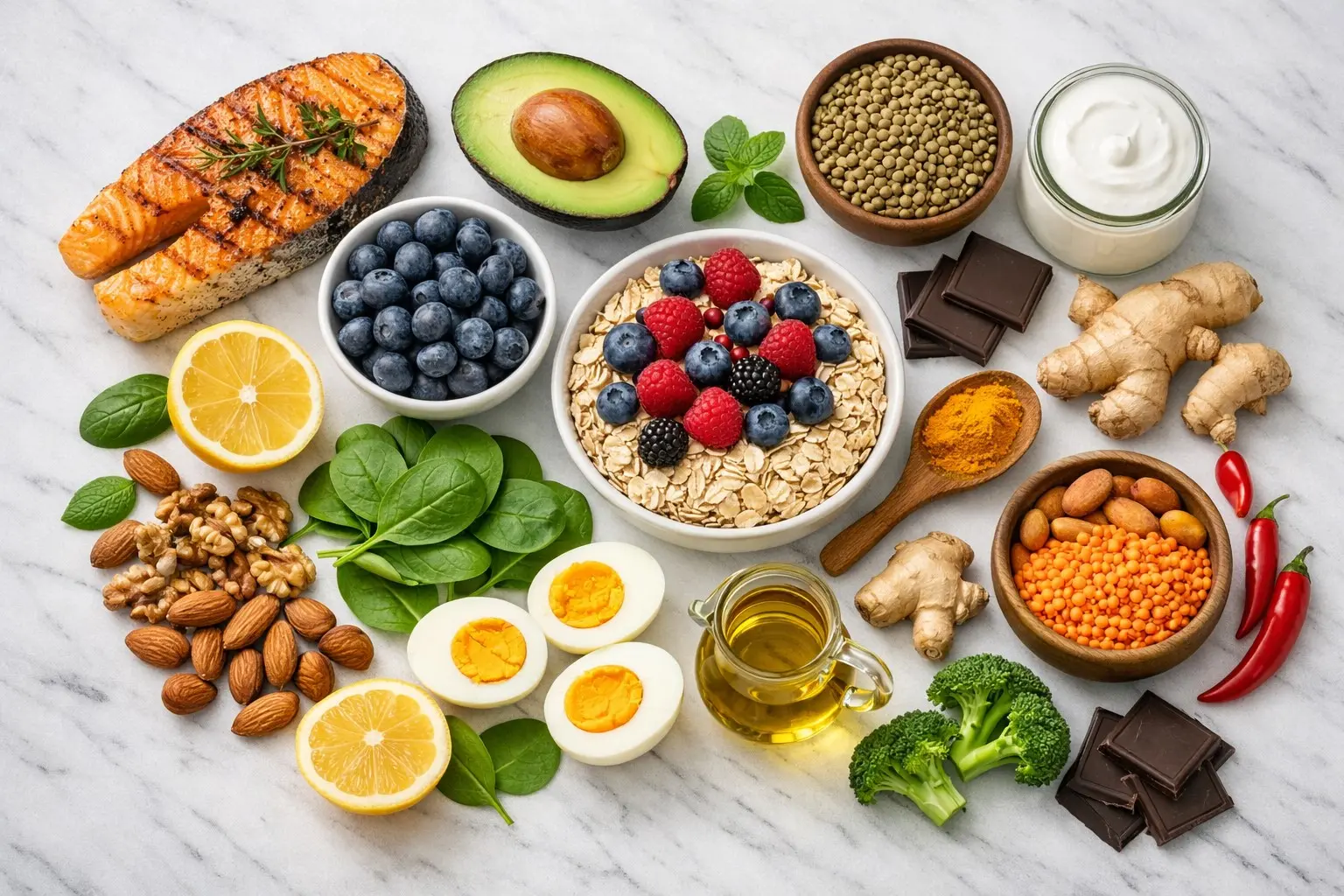
Not all calories are created equal — and not all foods affect belly fat equally. Visceral fat, the deep abdominal fat wrapped around your organs, is metabolically active and responds powerfully to specific dietary choices. Certain foods reduce fat-storing hormones like insulin, lower chronic inflammation, boost thermogenesis, and directly target visceral fat deposits in ways that generic "eat less" advice cannot replicate.
This guide covers the 20 best foods to burn belly fat, each supported by peer-reviewed clinical research updated through 2026. We also flag where evidence is strong versus emerging — so you make genuinely informed decisions rather than follow viral food lists. For the full strategy, see our complete belly fat loss guide.
🔬 Why Certain Foods Target Belly Fat Specifically?
Visceral fat cells have more cortisol receptors, insulin receptors, and inflammatory signalling pathways than subcutaneous fat. Foods that lower insulin spikes, reduce chronic inflammation, improve cortisol regulation, and boost fat oxidation have an outsized effect on abdominal fat compared to fat elsewhere in the body.
Quick Navigation — Jump to Any Food
2. Eggs
3. Greek Yogurt
4. Avocado
5. Blueberries
6. Leafy Greens
7. Oats
8. Lentils & Beans
9. Chilli Peppers
10. Extra-Virgin Olive Oil
12. Ginger
13. Turmeric
14. Quinoa
15. Sweet Potatoes
16. Barley
17. Broccoli & Cruciferous Veg
18. Apple Cider Vinegar
19. Dark Chocolate (85%+)
20. Cottage Cheese
1. Fatty Fish - Omega-3s That Directly Reduce Abdominal Fat
Why It Works?
Salmon, sardines, mackerel, and herring are among the most powerful foods for targeting visceral fat. They deliver EPA and DHA omega-3 fatty acids — compounds that activate fat-burning genes (PPARα and UCP1), reduce visceral adipose tissue inflammation, and significantly improve insulin sensitivity. Insulin resistance is the primary biological driver of visceral fat accumulation, making omega-3s uniquely effective at the root cause level.
What the Latest Research Says about
A 2022 peer-reviewed meta-analysis confirmed that omega-3 PUFA supplementation significantly reduced abdominal fat mass and fat percentage in overweight individuals on a weight-loss programme. A separate PLOS ONE meta-analysis of 21 randomized controlled trials found fish oil combined with lifestyle modification significantly reduced waist circumference (SMD = −0.23, P = 0.008) and waist-to-hip ratio (SMD = −0.52, P < 0.0005). A 2025 PMC review further confirms that omega-3 PUFAs reduce adipose tissue inflammation, improving metabolic signalling in visceral fat cells.
Honest Evidence Note: Omega-3s enhance abdominal fat loss when combined with a calorie deficit and exercise — they are not a standalone fat-burning supplement. Isolated fish oil studies without diet intervention show weaker effects.
How to Eat It: 2–3 servings per week (140g portions). Bake, grill, or steam — avoid frying. Best options: wild Atlantic salmon, canned sardines in olive oil, Atlantic mackerel. If you do not eat fish, algae-based omega-3 supplements provide the same EPA/DHA source.
2. Eggs - The Highest Satiety Breakfast for Fat Loss
Why It Works?
Whole eggs are among the most satiating foods per calorie available. They are rich in high-quality complete protein, with a high thermic effect — 20–30% of their calories are burned during digestion. Eggs suppress ghrelin (the hunger hormone) while increasing peptide YY and GLP-1, the satiety hormones that signal fullness to the brain. This hormonal combination leads to naturally lower caloric intake throughout the entire day following an egg breakfast.
What the Research Says
A landmark study in the International Journal of Obesity found that obese participants who ate eggs for breakfast consumed significantly fewer calories over the following 36 hours compared to those who ate a calorie-identical bagel breakfast. Egg-breakfast participants also showed greater reductions in waist circumference over 8 weeks. Do not fear the yolk — egg yolks contain choline, which specifically supports liver fat metabolism.
How to Eat Them: 2–3 whole eggs for breakfast, 4–5 days per week. Scrambled, boiled, or poached with spinach and avocado creates a nutritionally complete belly-fat-fighting meal.
3. Greek Yogurt - Protein + Probiotics + Calcium Triple Action
Why It Works?
Full-fat or low-fat Greek yogurt delivers a powerful triple combination: high protein (17–20g per 200g serving), calcium — linked to reduced fat absorption and increased fat oxidation — and live probiotic cultures that support gut microbiome diversity. Gut microbiome composition is now firmly established as linked to visceral fat levels. Individuals with higher gut bacterial diversity consistently show lower visceral fat deposits.
What the Research Says
A major Harvard cohort study found that people who regularly consumed yogurt gained significantly less abdominal weight over 20 years. Rush University Medical Center research confirms: eating yogurt regularly has been found to be helpful in reducing belly fat, with the effect attributed to a combination of protein, probiotics, and calcium working synergistically.
How to Eat It: 200g of plain Greek yogurt daily — choose brands with live cultures (Lactobacillus acidophilus, Bifidobacterium). Add blueberries and walnuts for a complete anti-visceral-fat breakfast. Avoid flavoured yogurts — they typically contain 20–25g of added sugar per serving.
4. Avocado - Monounsaturated Fats for Visceral Fat Redistribution
Why It Works?
Avocados are one of the richest sources of monounsaturated fatty acids (MUFAs) and fibre — both shown to improve fat distribution away from visceral stores. Oleic acid activates fat-burning pathways and reduces visceral adipose tissue inflammation. Avocados also provide potassium and magnesium, two minerals that reduce cortisol-driven belly fat storage.
What the Latest Research Says — Including the Conflicting Evidence
A 2021 randomized controlled trial from the University of Illinois found that women who consumed one avocado daily for 12 weeks showed a meaningful reduction in visceral abdominal fat and the ratio of visceral to subcutaneous fat. However, the larger 2022 HAT Trial found that adding one avocado daily to a habitual diet for 6 months did not significantly reduce visceral adipose tissue volume compared to controls.
Honest Evidence Note: Avocados work best when they replace high-saturated-fat or high-refined-carb foods — not when added as extra calories on top of an existing diet. Substitution, not addition, is the key principle.
How to Eat It: Half to one avocado per day, replacing saturated fat sources such as butter and processed spreads. Slice onto eggs, blend into smoothies, or use as a spread instead of mayonnaise.
5. Blueberries - Anthocyanins That Boost Fat Oxidation by Up to 43%
Why It Works?
Blueberries contain anthocyanins — the purple-blue pigment compounds that improve insulin sensitivity and shift the body's fuel preference toward burning fat instead of glucose. These compounds may also directly reduce visceral fat deposits and lower the inflammatory markers associated with abdominal obesity.
What the Latest Research Says
A 2023 randomized human study published in Nutrients found that consuming approximately 1 cup of wild blueberries daily for just two weeks increased fat oxidation rate during moderate exercise by 19.7% to 43.2% while simultaneously lowering carbohydrate utilization — demonstrating a direct shift toward fat as the primary fuel source. Wild blueberries contain 2× the anthocyanin content of cultivated blueberries.
How to Eat Them: 1 cup (150g) of fresh or frozen wild blueberries daily. Add to Greek yogurt, oatmeal, or protein shakes for a combined belly-fat-fighting breakfast.
6. Leafy Greens - Volume Foods That Crowd Out Fat-Storing Meals
Why It Works?
Spinach, kale, Swiss chard, rocket, and romaine lettuce are among the lowest-calorie, high-volume foods available. Their combination of high fibre, magnesium, folate, and vitamin K supports insulin sensitivity, reduces chronic inflammation, and promotes powerful satiety — making it physically difficult to overeat when leafy greens fill half your plate. Harvard gastroenterologist Dr. Saurabh Sethi specifically identifies leafy greens as one of the top foods that reduce visceral fat naturally.
How to Eat Them: Leafy greens should comprise at least half of every main meal plate. Eating vegetables first before protein and carbohydrates has been shown to reduce total meal caloric intake by 12–23%.
7. Oats - Beta-Glucan Fibre That Eliminates Insulin Spikes
Why It Works?
Whole rolled oats contain beta-glucan — a soluble fibre that forms a viscous gel in the gut, dramatically slowing glucose absorption and flattening post-meal insulin spikes. Since insulin is the primary fat-storage hormone, keeping it consistently low prevents new visceral fat from being deposited. Beta-glucan also feeds beneficial gut bacteria, further supporting the gut microbiome–visceral fat connection.
What Dietitians Say in 2026
EatingWell's March 2026 dietitian review — citing multiple controlled studies — confirms oats as one of the top carbohydrates specifically for visceral fat loss, particularly effective when substituted for refined breakfast cereals and white bread.
How to Eat Them: 80g of rolled oats (not instant) for breakfast. Top with blueberries, walnuts, and cinnamon for a triple-action belly-fat-fighting start. Avoid flavoured oat packets — they typically contain 12–20g of added sugar per serving.
8. Lentils and Beans - Resistant Starch, Protein, and Fibre Combined
Why It Works?
Lentils and beans provide a unique and powerful combination: resistant starch, soluble fibre (16g per cooked cup of lentils), and plant protein (18g per cup). Resistant starch bypasses small intestine digestion, feeds beneficial gut bacteria, and generates short-chain fatty acids (SCFAs) that improve insulin sensitivity and reduce visceral fat inflammation.
What the Research Says
EatingWell's 2026 dietitian consensus shows that women who consume beans consistently have smaller waistlines and less body fat than those who eat them infrequently. Lentils specifically demonstrate moderate-to-strong evidence for visceral fat reduction through improved insulin sensitivity across multiple controlled trials.
How to Eat Them: 150–200g of cooked lentils, chickpeas, black beans, or kidney beans 4–5 times per week. Replace white rice or pasta portions with lentils to dramatically reduce the glycaemic impact of your meals.
9. Chilli Peppers - Capsaicin Targets Abdominal Fat Oxidation Specifically
Why It Works?
Capsaicin — the heat compound in chilli peppers — activates thermogenic receptors (TRPV1) in fat cells that increase energy expenditure and fat oxidation. Research shows capsaicin specifically enhances abdominal fat oxidation, suppresses appetite through gut satiety signals, and reduces post-meal insulin secretion — a key mechanism for preventing new visceral fat deposits.
What the Research Says
Multiple clinical reviews confirm that regular capsaicin intake — even in non-burning amounts — increases thermogenesis and reduces abdominal fat over 12-week periods. BodySpec's 2026 evidence scorecard rates capsaicin as having moderate-strength evidence for enhancing abdominal fat oxidation, making it one of the stronger spice-based interventions available.
How to Eat Them: Add fresh or dried chilli flakes to eggs, soups, stir-fries, and marinades daily. If you cannot tolerate heat, cayenne pepper capsules standardized to 30,000–40,000 Scoville units deliver the same capsaicin dose without the burning sensation.
10. Extra-Virgin Olive Oil - Polyphenols and MUFAs at the Core of the Mediterranean Diet
Why It Works?
Extra-virgin olive oil (EVOO) is the cornerstone of the Mediterranean diet — the most comprehensively studied dietary pattern for reducing visceral fat. EVOO contains oleocanthal (natural anti-inflammatory comparable to 10% of a standard ibuprofen dose), hydroxytyrosol (reduces visceral fat inflammation), and oleic acid MUFAs that improve adiponectin levels — a hormone that promotes belly fat breakdown.
What the Research Says
Johns Hopkins research confirms that the Mediterranean diet approach — heavy in olive oil, fish, and vegetables — consistently outperforms low-fat diets for both total weight loss and visceral fat reduction specifically. Participants following low-carb Mediterranean-style eating lost an average of 10 pounds more than those on low-fat diets.
How to Use It: 1–2 tablespoons of cold-pressed EVOO daily. Use as a salad dressing or drizzle over cooked vegetables. Do not heat above 190°C — high heat degrades the polyphenols that provide most of the visceral fat benefits.
11. Walnuts and Almonds - Anti-Inflammatory Fats That Reduce Cortisol
Why It Works?
Walnuts contain significant ALA (plant-based omega-3) alongside polyphenols that reduce systemic inflammation. Almonds provide magnesium — a mineral that regulates cortisol production and directly influences visceral fat storage — plus fibre and protein that create lasting satiety. Research also shows that a portion of nut calories is not absorbed because of incomplete cell wall digestion, making their effective caloric content lower than listed.
How to Eat Them: A small handful (30g) of mixed walnuts and almonds daily as a snack or breakfast topping. Pre-portion into 30g bags — nuts are calorie-dense, and portion control is critical.
12. Ginger - Gingerols Reduce Inflammation and Improve Insulin Response
Why It Works?
Fresh ginger contains gingerols and shogaols — bioactive compounds with proven anti-inflammatory, thermogenic, and insulin-sensitizing effects. By reducing inflammatory markers (CRP, IL-6, TNF-alpha) that drive cortisol-induced belly fat, ginger addresses the inflammatory root cause of visceral fat accumulation. It is particularly effective for stress-related and post-menopausal abdominal weight gain.
What the Research Says
Ginger supplementation studies show significant reductions in fasting blood glucose and insulin resistance — the two most direct biological precursors to visceral fat. Combining ginger with turmeric creates a synergistic anti-inflammatory effect more powerful than either compound alone.
How to Eat It: 2–4g of fresh ginger daily. Grate into stir-fries, soups, or hot water as a tea. Always combine with turmeric and black pepper for a synergistic anti-inflammatory effect.
13. Turmeric - Curcumin Reduces the Inflammation That Creates Belly Fat
Why It Works?
Turmeric's active compound, curcumin, is one of the most potent natural inhibitors of NF-κB — the master inflammatory signalling pathway that drives visceral fat accumulation. Chronic low-grade inflammation keeps cortisol elevated and visceral fat cells in permanent "storage mode." Curcumin disrupts this cycle by deactivating the inflammatory genes that prevent fat cells from releasing stored fat.
The Critical Absorption Fact
Raw turmeric has very poor bioavailability. Adding a pinch of black pepper to any turmeric-containing meal increases curcumin absorption by 2,000% — a critical detail that most turmeric articles omit entirely.
How to Eat It: 1 tsp of turmeric powder always paired with a pinch of black pepper. Add to scrambled eggs, soups, rice dishes, and golden milk. For therapeutic effect, consider a curcumin supplement with piperine standardised to 95% carcinoids.
14. Quinoa - The Only Complete Protein Grain for Blood Sugar Stability
Why It Works?
Quinoa is the only grain that provides all nine essential amino acids — making it a complete protein (8g per cooked cup) alongside 5g of fibre and significant magnesium. Magnesium helps the body use insulin effectively, preventing the insulin surges that drive visceral fat storage. Quinoa's protein-fibre combination produces a markedly lower glycaemic response than white rice or pasta.
What Dietitians Say in 2026
EatingWell's 2026 dietitian review places quinoa in the top tier of carbohydrates for visceral fat reduction: "Unlike most grains, it provides solid protein along with fibre, which aids appetite control and prevents fat from accumulating around the waist."
How to Eat It: Replace white rice portions with quinoa 3–4 times per week. Use as a salad base or cook as a high-protein breakfast porridge topped with blueberries and walnuts.
15. Sweet Potatoes - Beta-Carotene Linked to Lower Visceral Fat Levels
Why It Works?
Sweet potatoes are rich in beta-carotene, an antioxidant carotenoid specifically associated with reduced visceral fat levels in clinical research. They also provide resistant starch (when cooled after cooking), potassium, and a significantly lower glycaemic index than white potatoes — preventing the blood sugar spikes that trigger insulin-driven belly fat storage.
How to Eat Them: Baked or boiled sweet potato (200g serving) 3–4 times per week as a carbohydrate replacement. Cool in the fridge for 12+ hours after cooking to maximize resistant starch content, then reheat to consume — this dramatically increases the prebiotic fibre benefit.
16. Barley - The Highest Beta-Glucan Grain for Visceral Fat
Why It Works?
Barley contains more beta-glucan soluble fibre per serving than oats, making it one of the most powerful carbohydrate choices for visceral fat reduction. Beta-glucan dramatically lowers the glycaemic impact of a meal, feeds beneficial gut bacteria, and reduces bile acid reabsorption — indirectly lowering LDL cholesterol alongside visceral fat. EatingWell's 2026 dietitian review specifically highlights barley's superior fibre content for belly fat reduction.
How to Eat It: Pearl or hulled barley added to soups, stews, and grain salads 2–3 times per week. A barley-and-vegetable soup is one of the most gut-microbiome-supporting, belly-fat-fighting meals you can make.
17. Broccoli and Cruciferous Vegetables - Sulforaphane Targets Visceral Fat Inflammation
Why It Works?
Broccoli, cauliflower, Brussels sprouts, and cabbage contain sulforaphane — a compound that activates the Nrf2 pathway, reducing oxidative stress and inflammation specifically in visceral fat tissue. They are also among the highest-volume, lowest-calorie foods available (broccoli is just 34 calories per 100g) and provide glucosinolates that support liver detoxification — critical for metabolizing visceral fat efficiently.
How to Eat It: At least one 200g serving of cruciferous vegetables daily. Lightly steam rather than boil — boiling destroys up to 77% of sulforaphane content. Eating raw broccoli or very lightly steaming it maximizes the enzymatic activation of sulforaphane.
18. Apple Cider Vinegar - Acetic Acid Proven to Reduce Waist Circumference
Why It Works?
Apple cider vinegar contains acetic acid, which suppresses fat-storing genes, improves post-meal insulin sensitivity, and activates AMPK — the body's cellular energy-sensing enzyme that shifts metabolism toward fat burning. It is one of the few dietary agents with direct clinical evidence for reducing waist circumference and visceral fat volume specifically.
What the Latest Research Says
A 2025 meta-analysis identified 30ml (2 tablespoons) daily as the optimal dose for meaningful waist circumference reduction in overweight adults. A Japanese randomized controlled trial showed participants consuming 1–2 tablespoons of ACV daily for 12 weeks had significantly reduced visceral fat, waist circumference, and BMI compared to placebo controls.
Always Dilute: Never drink undiluted ACV — it erodes tooth enamel and can damage the esophagus. Always dissolve in at least 250ml of water. Use a straw to protect teeth.
How to Use It: 1–2 tbsp in 250ml water, 15–20 minutes before meals. Also works excellently as a salad dressing base mixed with EVOO, lemon juice, and herbs.
19. Dark Chocolate (85%+) - Flavanols That Reduce Stress-Driven Belly Fat
Why It Works?
High-cacao dark chocolate (85% and above) contains flavanols that reduce cortisol — the stress hormone most directly responsible for triggering visceral fat storage. It also contains magnesium, iron, and theobromine — a compound that improves blood flow and supports metabolic function. Below 70% cacao, the sugar content outweighs the flavanol benefits entirely, so cacao percentage matters critically.
How to Eat It: 1–2 small squares (20–30g) of 85%+ dark chocolate daily as a post-meal treat — replacing high-sugar desserts with something that provides genuine metabolic benefits.
20. Cottage Cheese - High Casein Protein for Overnight Fat Burning
Why It Works?
Cottage cheese is one of the high-protein, lowest-calorie dairy foods available — 200g provides 25g of protein with approximately 200 calories. Its primary protein is casein — a slow-digesting protein that keeps amino acids circulating in the bloodstream for 5–7 hours, preserving lean muscle mass overnight while the body burns fat during sleep. Calcium in cottage cheese also enhances fat oxidation, particularly when combined with a calorie-restricted diet.
How to Eat It: 200g of low-fat cottage cheese before bedtime or as a mid-afternoon protein source. Combine with cucumber slices, blueberries, or a sprinkle of cinnamon for additional flavour and benefit.
2026 Evidence Strength Scorecard - All 20 Foods
Prioritize foods with the highest evidence strength first. Emerging evidence foods are still beneficial — they simply have fewer large-scale trials confirming the effect.
List of Best Foods to Burn Belly Fat
| # | Food | Primary Mechanism | Evidence Strength | Best For |
|---|---|---|---|---|
| 1 | Fatty Fish | Omega-3 reduces visceral fat + inflammation | ★★★ High | Visceral fat + insulin resistance |
| 2 | Eggs | Highest satiety per calorie | ★★★ High | Breakfast hunger control |
| 3 | Greek Yogurt | Protein + probiotics + calcium | ★★ Moderate | Gut microbiome + satiety |
| 4 | Avocado | MUFA redistributes visceral fat | ★ Mixed | Replace saturated fats |
| 5 | Blueberries | Anthocyanins boost fat oxidation 19–43% | ★★ Moderate | Fat oxidation during exercise |
| 6 | Leafy Greens | Volume eating + insulin sensitivity | ★★★ High | Overall calorie reduction |
| 7 | Oats | Beta-glucan eliminates insulin spikes | ★★★ High | Blood sugar stability |
| 8 | Lentils & Beans | Resistant starch + fibre + protein | ★★ Moderate | Insulin sensitivity |
| 9 | Chilli Peppers | Capsaicin thermogenesis | ★★ Moderate | Abdominal fat oxidation |
| 10 | Olive Oil (EVOO) | Polyphenols + MUFA adiponectin boost | ★★ Moderate | Mediterranean diet base |
| 11 | Walnuts & Almonds | ALA omega-3 + magnesium cortisol control | ★ Emerging | Stress belly fat |
| 12 | Ginger | Gingerols anti-inflammatory + insulin | ★ Emerging | Inflammation-driven belly fat |
| 13 | Turmeric | Curcumin NF-κB inhibition | ★ Emerging | Cortisol + chronic inflammation |
| 14 | Quinoa | Complete protein + magnesium, insulin control | ★★ Moderate | Blood sugar + insulin control |
| 15 | Sweet Potatoes | Beta-carotene + resistant starch | ★★ Moderate | Carb replacement + gut health |
| 16 | Barley | Highest beta-glucan grain | ★★ Moderate | Gut bacteria + glycaemic control |
| 17 | Broccoli | Sulforaphane reduces visceral inflammation | ★ Emerging | Liver detox + inflammation |
| 18 | Apple Cider Vinegar | Acetic acid reduces waist circumference | ★ Emerging | Pre-meal insulin control |
| 19 | Dark Chocolate 85%+ | Flavanols reduce cortisol | ★ Emerging | Stress-driven belly fat |
| 20 | Cottage Cheese | Casein protein overnight fat burning | ★★ Moderate | Sleep-time muscle preservation |
The Perfect Anti-Belly-Fat Day Using These 20 Foods
| ☀️ Breakfast | Rolled oats + wild blueberries + walnuts + cinnamon + lemon water |
| 🕙 Mid-Morning | 2 boiled eggs + green tea |
| 🌿 Lunch | Grilled salmon + leafy green salad with EVOO + lemon + quinoa |
| 🌞 Afternoon | 200g Greek yogurt + blueberries + 30g almonds |
| 🌙 Dinner | Lentil + barley + broccoli soup with ginger + turmeric + black pepper |
| 🍫 Evening | 2 squares dark chocolate 85%+ + peppermint tea |
| 🌛 Before Bed | 200g cottage cheese + cinnamon |
Continue Your Belly Fat Loss Journey
📚 Related Guides in This Series
- 15 Healthy Drinks to Reduce Belly Fat — The best beverages to pair with this food plan
- 10 Exercises to Lose Belly Fat at Home — The workouts that maximize the effect of this diet
- Lose Belly Fat Without Exercise — Diet and lifestyle methods for rest days
- Simple Meal Plan for Weight Loss — A full week structured around these 20 foods
- Complete Belly Fat Loss Hub — Every guide in one place
Adel Galal
Health & Fitness Writer | NextFitLife.com
Adel specializes in evidence-based nutrition and fat loss strategies, with a focus on visceral fat reduction supported by current peer-reviewed research. His articles bridge clinical science and practical daily habits for real, sustainable results. Learn more →
References & Sources
- Ramel A, et al. The effect of omega-3 fatty acid supplementation on weight loss and abdominal fat. Nutrición Hospitalaria, 2022.
- Munro IA, Garg ML. Does fish oil have an anti-obesity effect? Meta-analysis of 21 RCTs. PLOS ONE, 2015.
- PMC Review. Omega-3 polyunsaturated fatty acids and adipose tissue inflammation. July 2025.
- The University of Illinois. Avocados change belly fat distribution in women — controlled RCT. 2021.
- Rebello CJ, et al. Effect of incorporating 1 avocado per day versus habitual diet on visceral adiposity — HAT Trial. JAHA, 2022.
- Lynn A., et al. Wild blueberries increase fat oxidation by 19–43% during moderate exercise. Nutrients, 2023.
- EatingWell Dietitian Review. The best carbs to eat if you are trying to lose visceral fat. March 2026.
- Johns Hopkins Medicine. 8 ways to lose belly fat and live a healthier life. Updated 2025.

Health & wellness writer with 30+ years of experience in nutrition, fitness, and healthy aging. Founder of NextFitLife.com — evidence-based health guidance.