
Published: September 1, 2026
Updated: November 15, 2026
Written and source checked by: Adel Galal. This is educational information. It has not been medically reviewed by a licensed healthcare professional and does not replace personal medical care.
Quick answer
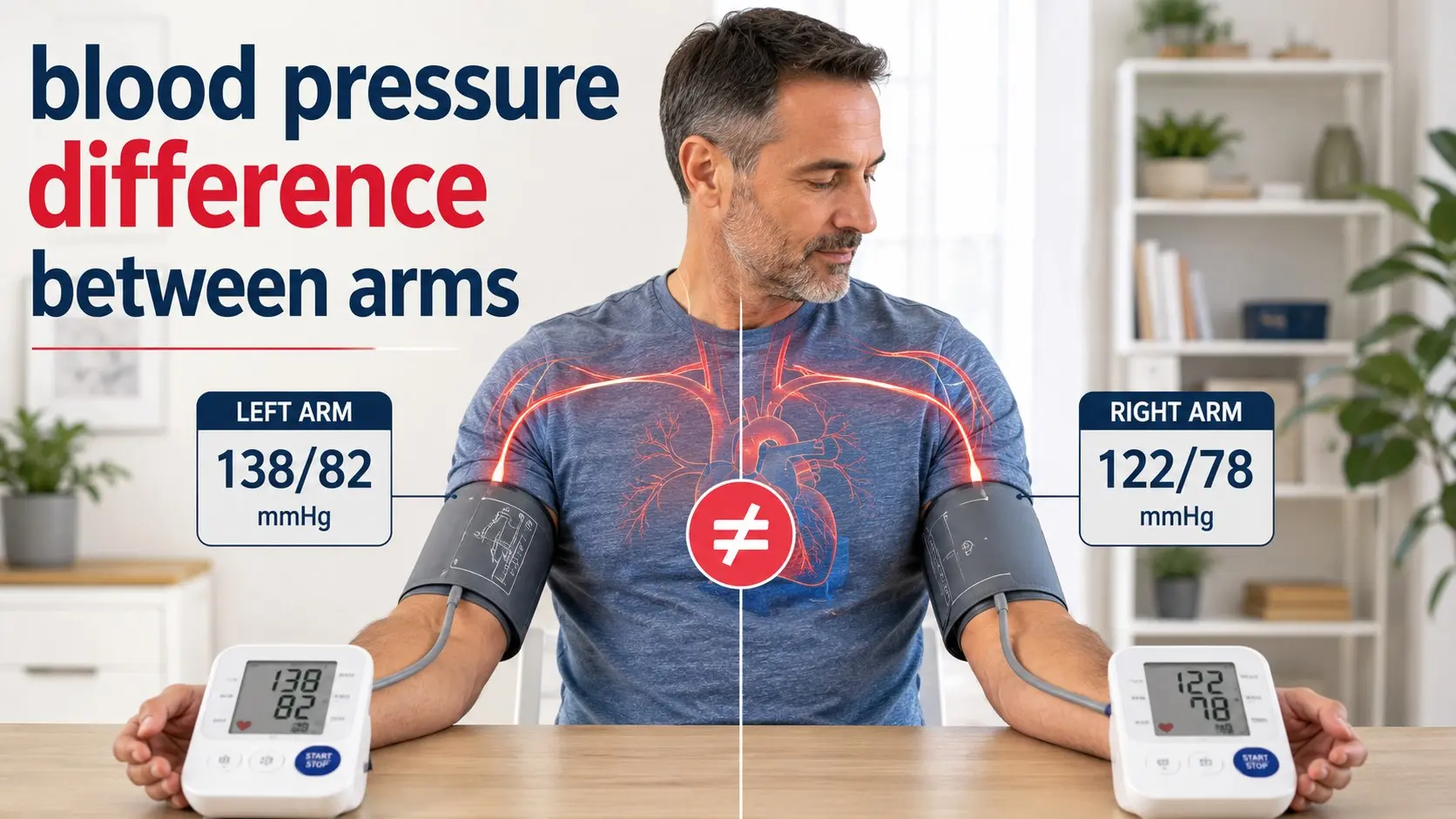
A blood pressure difference between arms can reflect normal change, measurement technique or a health problem. A lasting gap needs context; it does not prove a blocked artery. This guide explains the meaning of a repeated difference. Use our both-arm measurement and recording guide for the practical steps.
When to seek emergency help
Call 911 in the US, or your local emergency number, for sudden severe chest or back pain, severe breathing trouble, fainting or new weakness or speech trouble. Do not wait for an arm comparison to confirm an emergency.
For nonpregnant adults, AHA advises emergency help when the top pressure is above 180 and/or the bottom is above 120 with concerning symptoms such as chest pain, breathing trouble, weakness or vision changes. Without symptoms, repeat after at least one minute; if still that high, contact your healthcare professional as soon as possible. Pregnancy needs separate advice.
In this guide
- One gap versus a repeated pattern
- What 10 and 15 mmHg mean
- Why the higher arm matters
- What a clinician may assess
- Questions to ask
A pattern matters more than one pair
Two readings taken minutes apart are not a perfect side-by-side test. Pressure changes over time, and cuff fit or arm position can affect a result. First check that a difference remains with good technique.
There are two questions: “Are the readings accurate?” and “What does a confirmed gap mean for me?” The second depends on symptoms, history and an examination. A home cuff cannot answer it alone.
Why both 10 and 15 mmHg appear in advice
These thresholds serve different purposes. Neither is a diagnosis.
| Threshold | Source | Meaning |
|---|---|---|
| 10 mmHg | INTERPRESS-IPD research | A proposed upper normal limit for risk assessment, not proof of artery disease. |
| More than 15 mmHg | NICE guidance | Repeat both arms. If the gap remains above 15 on the second measurement, use the higher arm for later checks. |
INTERPRESS-IPD combined data from 24 studies with more than 53,000 people. Larger systolic gaps were associated with higher cardiovascular risk. This does not mean a gap caused the disease or reveals the cause in an individual.
NICE provides a practical action rule when assessing possible hypertension. Repeat checking helps confirm a finding, while using the higher arm helps avoid underestimating pressure. Do not use either number to choose medicine or scans by yourself.
Why using the higher arm matters
The AHA measurement statement supports using the higher-reading arm when a persistent difference is present. Using only the lower arm may underestimate pressure for clinical decisions.
Imagine that one arm is higher on several properly taken checks. Choosing the lower result because it looks better could hide useful information. Ask your clinician to confirm which arm to use, then use that label in your log.
Both readings may still be high, or one may be low. The gap is only part of the picture. Our guide to the bottom blood pressure number explains another part of the reading.
Can the difference signal an artery problem?
Sometimes. The AHA statement notes that large differences can occur with upper-body artery obstruction, among other causes. The cuff cannot locate a blockage or prove one is present.
A clinician can confirm the readings, check pulses and examine the arms. Symptoms, history and overall cardiovascular risk guide the need for further tests. A scan is not an automatic next step for every different reading.
Describe symptoms such as arm pain during use or a change in color or temperature, and explain when they started. Sudden serious symptoms need urgent assessment rather than a routine log review.
Questions to take to your clinician
- Is the difference confirmed with the right cuff and setup?
- Which arm should I use at home?
- Are the overall readings within my agreed target?
- Do my symptoms or examination suggest a need for tests?
- When should I contact you about new results?
Bring the full log and your medicine list. Do not change doses because the lower arm looks normal. Food and lifestyle information, such as our DASH diet guide, can support discussion but does not replace care for a confirmed problem.
What about a 20- or 30-point gap?
A repeated systolic gap this large is above the NICE repeat-check threshold and should be discussed with a healthcare professional. If it comes with sudden serious symptoms, seek emergency help instead of continuing to measure.
The gap alone cannot show how urgent every case is. The actual pressure and symptoms matter too. Agree on a plan suited to your health, especially if you have known heart, kidney or blood-vessel disease.
Make a clear care plan
Confirm the pattern, agree on which arm to use and ask what changes need a call. Keep measurement technique separate from diagnosis. Explore related topics in our heart and cardiovascular hub.
Sources
- NICE NG136: Hypertension in adults, recommendation 1.2.1
- AHA: Home Blood Pressure Monitoring
- AHA scientific statement: Measurement of Blood Pressure in Humans
- INTERPRESS-IPD: Interarm differences and cardiovascular outcomes
- AHA: When to call 911 about high blood pressure
Frequently asked questions
Does a 10 mmHg gap prove heart disease?
No. It is a research-based proposed upper normal systolic limit for risk assessment, not a diagnosis.
What does NICE advise above 15 mmHg?
Repeat both-arm measurements. If the gap remains more than 15 mmHg on the second measurement, later checks should use the higher arm.
Does every lasting difference need a scan?
No. A clinician confirms the readings and considers symptoms, examination and history before deciding on tests.
Can I stop medicine if the lower arm is normal?
Do not stop or change medicine based on an arm comparison. Discuss readings and treatment with your healthcare professional.