Published – February 5 Last Updated: February 5, 2026
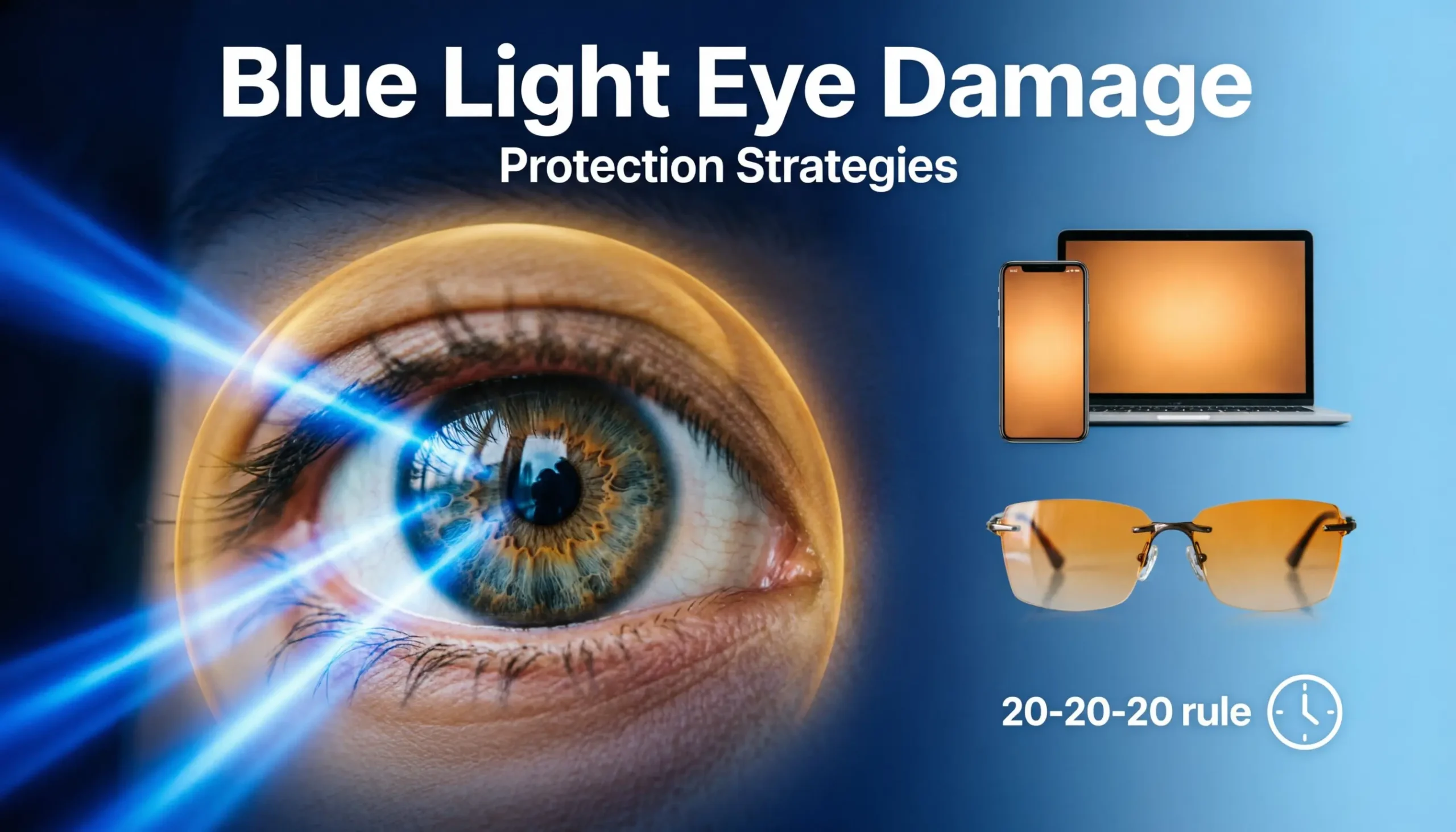
Worried about blue light eye damage from your screens? You’re not alone! Blue light is everywhere—smartphones, computers, and LED lights. Many people fear it’s harming their eyes. But what does science say?
This guide gives you the truth about blue light and practical ways to protect your eyes:
- What blue light really is
- Does it damage your eyes?
- Are blue light glasses worth it?
- Simple protection strategies
- Screen settings that help
Let’s separate fact from fear!
→ Complete guide: Complete Guide to Eye Health: Vision Care, Prevention & Wellness
What Is Blue Light and Blue Light Eye Damage?
Blue light is a type of light on the visible spectrum. Let’s break this down simply.
The Light Spectrum
Visible light has different colours:
- Red (longest wavelength, lowest energy)
- Orange, Yellow, Green
- Blue
- Violet (shortest wavelength, highest energy)
Blue light characteristics –
- Wavelength: 380-500 nanometers
- High-energy visible (HEV) light
- Harder for the eyes to focus
- Scatters more easily than other colours
Where Blue Light Comes From
Natural sources –
- The sun (biggest source by far!)
- Sky (why it looks blue)
Artificial sources –
- LED lights, fluorescent lights
- Computer screens, Smartphones
- Tablets, TVs, E-readers
Important – Screens emit much less blue light than the sun!
Blue Light Isn’t All Bad
Blue light has benefits:
- Regulates the sleep-wake cycle
- Boosts alertness and mood
- Helps memory and cognitive function
- Essential for seeing clearly
The problem – Too much at the wrong time (especially in the evening).
Does Blue Light Actually Cause Eye Damage?
Let’s look at what science really says about blue light eye damage.
The Truth About Permanent Blue Light Eye Damage
Current research shows –
- No evidence that screen blue light causes permanent eye damage
- No proof that it causes macular degeneration in humans
- Screen levels are too low to cause retinal harm
- Sun exposure is a much bigger concern
The American Academy of Ophthalmology states, “Blue light from computer screens and digital devices does not lead to eye disease.”
But (important qualifier) – Long-term studies are still ongoing.
What Blue Light DOES Affect
While not causing permanent blue light eye damage, it can:
1. Disrupt sleep
Suppresses melatonin production
- Keeps you awake
- Reduces sleep quality
- Most significant effect!
2. Causes eye strain
- Contributes to digital eye strain
- Makes focusing harder
- Part of computer vision syndrome
3. Affects circadian rhythm
- Confuses the body about the time of day
- May affect overall health long-term
The Sleep Connection
This is the main concern with blue light.
How it works –
- Blue light signals “daytime” to your brain
- Stops melatonin production
- Evening screen use = poor sleep
Studies show –
- 2 hours of screen use before bed significantly delays sleep
- Reduces REM sleep
- Leads to grogginess the next day
→ Related – Digital Eye Strain: Symptoms, Causes, and Relief Strategies
Blue Light Glasses – Protection Against Blue Light Eye Damage?
Blue light glasses are heavily marketed. But do you need them?
What Are Blue Light Glasses?
Special lenses that:
- Block or filter blue light
- Usually have a yellow or amber tint
- Some are clear with coating
- Variation in filtering strength (5% to 95%)
Marketed to – Computer users, gamers, and anyone using screens extensively.
The Evidence on Blue Light Eye Damage Prevention
What research shows –
Potential benefits
- May reduce some digital eye strain symptoms
- I can improve my sleep if worn before bed
- Might reduce glare
Limited benefits
- Don’t prevent blue light eye damage (no damage to prevent!)
- May not reduce strain more than proper habits
- Benefits are often small or inconsistent in studies
Science is mixed. Some people swear at them. Studies show modest effects.
Who Might Benefit?
Consider blue light glasses if –
- You have significant eye strain despite good habits
- You work long hours at screens (8+ hours)
- You use screens heavily before bed (and can’t stop)
- You’re sensitive to glare
Skip them if –
- You can limit evening screen use
- Your eye strain improves with breaks and ergonomics
- You’re looking for a magic fix
- Budget is tight (other strategies are free!)
What Experts Say
The American Academy of Ophthalmology –
- Doesn’t endorse blue light glasses for eye protection
- Says they aren’t necessary for eye health
- May help with sleep if worn in the evening
Bottom line – Won’t hurt, might help a bit, but not essential for preventing blue light eye damage.
Built-In Screen Protection Features
Good news! You don’t need to buy anything to protect your eyes from screens.
Night Mode/Night Shift
Available on most devices –
What it does
- Reduces blue light emission
- Shifts the screen to warmer colours (more orange/yellow)
- Make the screen easier on the eyes at night
How to enable
iPhone/iPad – Settings → Display & Brightness → Night Shift
Android – Settings → Display → Night Light
Windows – Settings → System → Display → Night light
Mac – System Preferences → Displays → Night Shift
When to use
- Enable 2-3 hours before bedtime
- Some people use it all day
- Adjust intensity to preference
Reading Mode and Dark Mode
Many devices have –
- Reading mode: Reduces blue light, adjusts brightness
- Dark mode: Reduces overall light emission
When to use
- Dark mode: Low-light environments, evening
- Light mode: Better for most people during the daytime
Adjust Screen Settings
Simple but effective –
Brightness
- Match brightness to surrounding light
- Too bright = strain; Too dim = also strain
- Adjust throughout the day
Colour temperature
- Make the screen “warmer” (more yellow/orange)
- Less blue light
- Easier on the eyes, better for the evening
Font and text size
- Increase text size
- Use clear fonts
- Good contrast reduces strain
Simple Habits to Prevent Blue Light Eye Damage
The most effective strategies are completely free!
The 20-20-20 Rule
Your most powerful tool –
- Every 20 minutes
- Look at something 20 feet away
- For 20 seconds
This matters more than blue light filters!
Limit Evening Screen Time
This is THE most important blue light strategy.
Try to
- Stop screens 1-2 hours before bed
- Use blue light filters if you must use screens
- Dim screen brightness in the evening
- Switch to activities like reading, talking, and relaxing
This improves sleep more than any glasses or filters!
Position Screens Properly
Reduce overall strain –
- 20-26 inches from eyes
- Top at or below eye level
- Reduce glare
- Clean the screen regularly
Take Real Breaks
Step away from screens –
- Every hour, it takes 5-10 minutes
- Get up and move
- Look at distant objects
- Give your eyes complete rest
Use Good Lighting
Ambient light matters –
- Don’t use screens in a dark room
- Avoid bright lights behind the screen
- Use soft, indirect lighting
- Reduce contrast between the screen and the environment
Blink More and Stay Hydrated
Conscious blinking –
- People blink 66% less at screens
- Causes dry eyes
- Blink fully and often
Hydration
- Drink 8-10 glasses daily
- Reduces dry eye symptoms
- Supports overall eye health
→ More tips: Dry Eye Syndrome: Causes, Symptoms, and Natural Remedies
Protection for Different Screen Users
Different activities need different approaches.
Office Workers
All day at the computer
- Use night mode even during the day (if comfortable)
- Position monitor properly
- Take breaks religiously
- Consider computer glasses
- Get regular eye exams
Gamers and Students
Extended sessions
- Take breaks between matches/levels or study sessions
- Use game mode with reduced blue light
- Dim room lights (but not too dark)
- Limit late-night use
- Stay hydrated
Children’s Screen Protection
Young eyes are more sensitive
- Limit recreational screen time
- Enforce break rules
- No screens 1 hour before bed
- Outdoor play daily (natural light is good!)
- Model good habits yourself
UV Light vs. Blue Light Eye Damage
Important distinction – UV and blue light are different!
UV Light IS Dangerous
UV radiation from the sun
- Causes real eye damage
- Linked to cataracts
- Linked to macular degeneration
- Requires protection
Protection
- Wear UV-blocking sunglasses outdoors
- 99-100% UVA and UVB protection
- Every day, year-round
- Even on cloudy days
This matters much more than screen blue light!
→ Complete UV guide: UV Protection for Eyes: Complete Guide to Sun Safety
The Bottom Line on Blue Light Eye Damage
Let’s summarize what you need to know.
What Science Confirms
Confirmed
- Blue light disrupts sleep (evening exposure)
- Contributes to digital eye strain
- Part of computer vision syndrome
Not confirmed
- Permanent blue light eye damage from screens
- Causes macular degeneration
- Requires special glasses to prevent damage
Most Effective Strategies (Ranked)
- Limit evening screen use (biggest impact on sleep)
- Follow the 20-20-20 rule (biggest impact on eye strain)
- Use night mode/filters (moderate help)
- Take regular breaks (very important)
- Proper screen setup (reduces overall strain)
- Blue light glasses (modest help for some)
When to See a Doctor
See an eye doctor if
- Eye strain despite good habits
- Vision changes
- Persistent headaches
- Eye pain
- Difficulty focusing
Most digital eye issues improve with better habits, not special products.
Your Blue Light Protection Action Plan
Start This Week
✅ Enable night mode on all devices
✅ Set screens to auto-adjust brightness
✅ Start 20-20-20 rule (set timer)
✅ Stop screens 1 hour before bed
✅ Check screen position (arm’s length, eye level)
Build Over This Month
✅ Take 10-minute breaks every hour
✅ Use blue light filters consistently
✅ Adjust workspace lighting
✅ Practice conscious blinking
✅ Evaluate if blue light glasses help (optional trial)
Long-Term Success
✅ Evening screen limits become routine
✅ The 20-20-20 rule is automatic
✅ Good sleep hygiene always
✅ Regular breaks during screen work
✅ Annual eye exams
✅ UV protection outdoors (more important!)
Frequently Asked Questions
Can blue light from screens blind you?
No. Current evidence shows that screen blue light doesn’t cause blindness or macular degeneration. UV light from the sun is the real concern regarding blue light eye damage.
Should I wear blue light glasses all day?
Not necessary. If you choose to wear them, evening use before bed may be most beneficial for sleep.
Do all screens emit the same blue light?
No. LED screens emit more than older screens. But even LED blue light is much less than sunlight.
Is blue light worse than UV light?
No! UV light is far more dangerous. Always protect from UV outdoors.
Can I get blue light eye damage from my phone?
Current evidence says no. Phones don’t emit enough blue light to cause eye damage.
Should kids avoid blue light?
Kids should limit screen time for many reasons (sleep, development, activity). Blue light is just one factor. Use filters and enforce bedtime limits.
Do blue light glasses help with headaches?
They might help some people with screen-related headaches, but proper breaks and ergonomics usually help more.
Conclusion
The truth about blue light eye damage is less scary than marketing suggests!
Key facts
- Screens don’t cause permanent eye damage
- Blue light mainly affects sleep
- Simple habits protect your eyes better than products
- Evening screen limits are most important
- Blue light glasses may help, but aren’t essential
Most important actions
- Stop screens 1-2 hours before bed
- Use 20-20-20 rule
- Enable night mode/filters
- Take regular breaks
- Protect from UV (sun) outdoors
Remember:
- Marketing creates a fear of selling products
- Good habits beat products every time
- Sleep disruption is the real concern
- UV protection matters more than blue light
- Your eyes are tougher than you think!
Protect eyes from screens with smart habits, not just glasses!
References
- American Academy of Ophthalmology (AAO)
- “Blue light from computer screens and digital devices does not lead to eye disease.”
- https://www.aao.org/eye-health/tips-prevention/are-computer-glasses-worth-it
- Harvard Medical School, Division of Sleep Medicine
- https://www.health.harvard.edu/staying-healthy/blue-light-has-a-dark-side
- World Health Organization (WHO)
- https://www.who.int/news-room/fact-sheets/detail/blindness-and-visual-impairment
- Blue Light and Digital Eye Strain Study
- https://www.ncbi.nlm.nih.gov/pmc/articles/PMC6288536/
Medical Disclaimer
This article is for information only. It does not replace medical advice. If you have eye concerns or vision problems, consult an eye doctor.

Adel Galal is a health and wellness writer with over 30 years of experience studying and writing about health, fitness, nutrition, and healthy living. He is the founder of NextFitLife.com, where he shares practical, evidence-based guidance to support long-term health at any age. Adel’s mission is simple:
to help people make smarter health choices that fit real life, at any age.