Last updated: August 8, 2026
Next review: August 2027, or sooner if laboratory, bone-disease, cancer, or hypercalcemia guidance changes
Written and source checked by: Adel Galal, Founder and Editor of NextFitLife
Medical review status: Written and source checked using current NHS laboratory guidance, MedlinePlus, National Cancer Institute, and NHS oncology guidance. This article has not been medically reviewed by a physician, oncologist, hematologist, endocrinologist, orthopedic oncologist, or medical laboratory professional.
Can a Bone Profile Blood Test Detect Cancer?
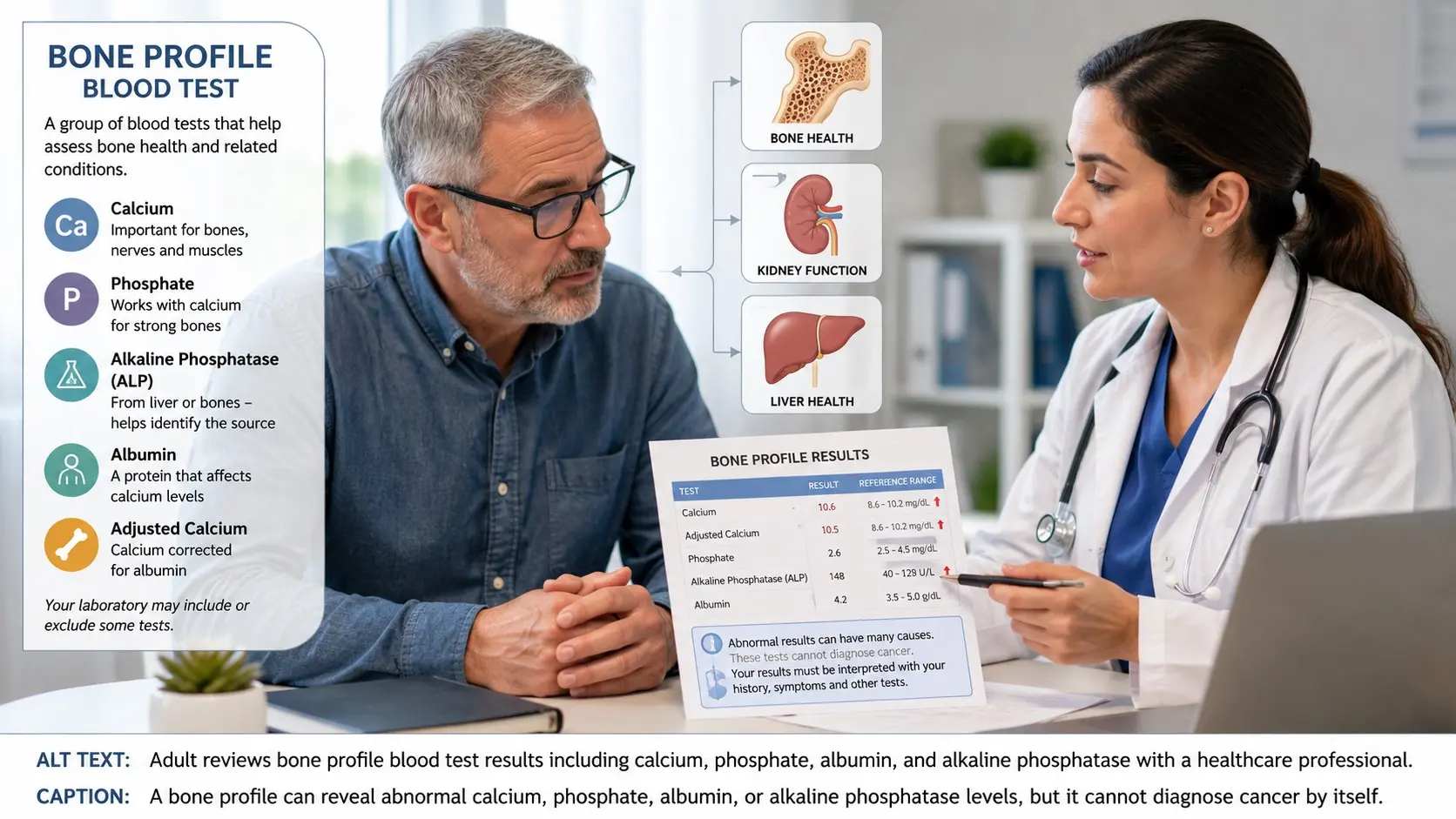
No. A bone profile blood test cannot diagnose cancer on its own. It can show abnormal levels of substances such as calcium, phosphate, albumin, and alkaline phosphatase, or ALP. Those abnormalities may occur with many non-cancer conditions and sometimes with cancers that affect bone, calcium regulation, the liver, kidneys, or blood-forming tissues.
The most useful interpretation depends on which component is abnormal, how abnormal it is, whether the result persists, symptoms, medical history, other blood tests, and imaging when clinically indicated.
An abnormal bone profile can be a clue that more evaluation is needed. It is not a cancer screening test, tumor marker, staging test, or substitute for imaging and biopsy.
For broader test-interpretation guidance, visit the Medical Tests & Screenings Hub.
When Abnormal Bone Results Need Urgent Medical Attention
Seek urgent medical care if abnormal calcium or bone-related results occur with:
- new confusion or severe drowsiness
- repeated vomiting or inability to keep fluids down
- severe dehydration
- fainting, chest pain, or serious palpitations
- marked or rapidly worsening weakness
- a suspected fracture after minor injury
- new severe back pain with weakness, numbness, difficulty walking, or bladder or bowel changes
The last group of symptoms can indicate spinal cord compression in someone with known or suspected cancer and requires urgent assessment.
Medical and Editorial Notice
This article is for general education. A bone profile result cannot be interpreted safely without the laboratory reference range, symptoms, medicines, supplements, kidney and liver function, medical history, and other test results.
Adel Galal is a health and wellness writer and editor. He is not a physician, oncologist, hematologist, endocrinologist, orthopedic oncologist, pharmacist, or medical laboratory professional.
Read the Editorial Policy, Medical Review Policy, and Corrections Policy.
What Is a Bone Profile Blood Test?
A bone profile is a group of routine biochemistry tests used mainly to assess calcium and phosphate metabolism and to look for biochemical clues to bone, parathyroid, liver, or kidney problems.
The exact panel is not identical in every laboratory. This is important when comparing results online.
Several NHS laboratories define a standard bone profile as a combination of calcium, adjusted calcium, albumin, phosphate, and alkaline phosphatase. Some laboratories also include total protein or globulins.
A bone profile is not the same as a bone-density scan, bone scan, CT scan, MRI, PET scan, or biopsy.
What Does a Bone Profile Usually Include?
| Test | What it helps assess | Can it diagnose cancer? |
|---|---|---|
| Calcium | Calcium regulation, parathyroid function, kidney and vitamin D related disorders | No |
| Adjusted calcium | Estimated calcium after accounting for albumin | No |
| Albumin | Protein status and interpretation of total calcium | No |
| Phosphate | Bone-mineral, kidney, parathyroid, and vitamin D regulation | No |
| Alkaline phosphatase, or ALP | Activity from tissues including bone and liver | No |
Vitamin D and PTH are not automatically part of a standard bone profile. The University Hospitals of North Midlands laboratory specifically lists calcium, adjusted calcium, albumin, phosphate, and ALP and notes that magnesium, PTH, and vitamin D need to be requested separately.
This corrects a common online misconception that every “bone profile” automatically includes vitamin D.
Why Can a Bone Profile Blood Test Not Detect Cancer by Itself?
The components of a bone profile are nonspecific. The same abnormal result can occur for many unrelated reasons.
For example, high ALP may come from bone or liver. High calcium may result from primary hyperparathyroidism, dehydration, medicines, supplements, kidney problems, or cancer. Low albumin can occur with liver disease, kidney disease, inflammation, poor nutrition, or serious illness.
A cancer diagnosis generally requires evidence that identifies a specific disease process. Depending on the suspected cancer, that may involve imaging, pathology from a biopsy, blood or urine studies, molecular testing, or another targeted investigation.
For broader cancer-screening and diagnosis principles, visit the Cancer Awareness & Prevention Hub.
Can High Calcium on a Bone Profile Be a Sign of Cancer?
It can be associated with cancer, but high calcium is not a cancer diagnosis.
Primary hyperparathyroidism is a common cause of persistent hypercalcemia and is usually caused by a benign parathyroid adenoma rather than cancer. Other causes include dehydration, medicines, excessive calcium or vitamin D products, kidney dysfunction, granulomatous disease, prolonged immobility, and inherited calcium disorders.
When calcium is truly high, parathyroid hormone, or PTH, is often an important next test. A suppressed PTH can direct attention toward non-parathyroid causes, including malignancy, while an elevated or inappropriately normal PTH often points toward a parathyroid-mediated cause.
Read the revised guide High Calcium Levels and Cancer: What Your Blood Test May Mean for a more detailed explanation.
Does High Alkaline Phosphatase Mean Cancer?
No. Alkaline phosphatase is found in several tissues, especially the liver, bile ducts, and bones.
MedlinePlus explains that an ALP result alone cannot identify which tissue is producing the enzyme. A high value may occur with liver disease, bile-duct problems, bone disorders, healing fractures, growth in children and adolescents, and some cancers.
Because ALP can come from both liver and bone, clinicians may review:
- other liver tests such as GGT, ALT, AST, and bilirubin
- calcium and phosphate
- symptoms and examination findings
- previous ALP measurements
- ALP isoenzymes or bone-specific ALP in selected cases
- imaging when clinically indicated
A standard total ALP result does not tell you whether the source is bone cancer, bone metastasis, liver disease, or a benign bone process.
For broader liver-related context, visit the Liver Health Hub.
What Can an Abnormal Phosphate Result Mean?
Phosphate is regulated by the kidneys, parathyroid hormone, vitamin D, diet, and bone metabolism.
High or low phosphate can occur with kidney disease, parathyroid disorders, vitamin D problems, malnutrition, shifts during acute illness, some medicines, or other metabolic conditions.
An abnormal phosphate result does not identify cancer.
Kidney function is often important when phosphate or calcium is abnormal. See the Kidney Health & Disease Hub for general background.
Why Do Albumin and Total Protein Matter?
Albumin binds some of the calcium circulating in the blood. An abnormal albumin level can therefore change total calcium without causing the same change in biologically active ionized calcium.
Some laboratories also include total protein or globulins in a bone profile. Abnormal protein results can occur with liver disease, inflammation, dehydration, immune disorders, kidney disease, and plasma-cell disorders.
One abnormal protein result cannot diagnose multiple myeloma or another cancer.
Can a Bone Profile Show Bone Metastases?
A bone profile may contain abnormalities in someone with bone metastases, but it cannot confirm that cancer has spread to bone.
Possible abnormalities can include elevated ALP or calcium in some circumstances. However:
- many people with bone metastases do not have high calcium
- ALP can rise from non-cancer bone disease or liver disease
- normal bone-profile results do not rule out bone metastases
- abnormal results do not show where a lesion is located
Evaluation of suspected bone metastases may require targeted imaging based on the known cancer, symptoms, and clinical question.
For general bone-health information, visit the Bone & Joint Health Hub.
Can a Bone Profile Detect Primary Bone Cancer?
No. Primary bone cancers such as osteosarcoma, chondrosarcoma, and Ewing sarcoma are not diagnosed with a routine bone profile.
The National Cancer Institute notes that blood tests such as ALP and LDH can sometimes be abnormal in people with osteosarcoma or Ewing sarcoma, but ALP is not a reliable indicator of bone cancer. ALP can also rise normally during childhood growth or while a fracture is healing.
When primary bone cancer is suspected, evaluation may involve:
- clinical examination
- X-ray
- MRI or CT
- other imaging where appropriate
- biopsy performed or planned by an experienced specialist team
A biopsy is generally required to establish the diagnosis of a primary bone malignancy.
Can a Bone Profile Detect Multiple Myeloma?
No. A bone profile alone cannot diagnose multiple myeloma.
Myeloma can sometimes cause high calcium, kidney impairment, anemia, bone pain, fractures, or abnormal blood proteins. When the clinical picture raises concern, clinicians may consider tests such as:
- complete blood count
- kidney function
- calcium
- serum protein electrophoresis
- immunofixation
- serum free light chains
- urine protein studies
- appropriate imaging
These tests are selected based on symptoms and other abnormalities rather than ordered automatically because one bone-profile value is abnormal.
How Can You Tell Whether High ALP Is From Bone or Liver?
You cannot reliably tell from total ALP alone.
If ALP is elevated, clinicians may compare it with other liver tests. A raised GGT alongside ALP may support a liver or bile-duct source. If liver tests are otherwise normal and symptoms suggest bone disease, further bone-focused evaluation may be considered.
ALP isoenzyme testing can sometimes help identify the tissue source, but it is not required in every case and may not be available in every laboratory.
Which Tests May Follow an Abnormal Bone Profile?
There is no single follow-up panel for everyone. The next step should address the specific abnormality.
| Finding | Possible follow-up | Why |
|---|---|---|
| High calcium | Repeat calcium, albumin, PTH, kidney function, vitamin D | Distinguishes parathyroid from non-parathyroid causes |
| High ALP | Liver tests, GGT, clinical review, selected bone tests | Helps determine whether the source is liver or bone |
| Abnormal phosphate | Kidney function, PTH, vitamin D, medicine review | Assesses mineral-regulation disorders |
| High total protein or globulin | Protein electrophoresis or related testing when appropriate | Looks for abnormal protein patterns |
| Bone pain or fracture | Targeted imaging | Assesses structural bone disease |
For general guidance on how laboratory results should be interpreted, use the Medical Tests & Screenings Hub.
Does an Abnormal Bone Profile Automatically Mean You Need a Scan?
No.
A CT scan, MRI, bone scan, PET scan, or X-ray should answer a specific clinical question. An isolated mildly abnormal calcium, ALP, phosphate, or albumin result does not automatically justify whole-body imaging.
Imaging becomes more relevant when there are findings such as:
- persistent localized bone pain
- an unexplained fracture
- known cancer with new skeletal symptoms
- persistent biochemical abnormalities with a suspected cause
- abnormal protein studies suggesting a plasma-cell disorder
- a suspicious mass or abnormal examination
What Symptoms Should Be Reported Promptly?
Contact a healthcare professional about persistent or unexplained:
- bone pain
- swelling or a lump near a bone
- fractures after minor injury
- unexplained weight loss
- persistent fatigue
- recurrent infections
- easy bruising or bleeding
- persistent thirst or frequent urination
- jaundice or other liver-related symptoms
These symptoms are nonspecific. They can occur with cancer and many non-cancer conditions.
What Should You Not Do With an Abnormal Bone Profile?
- Do not assume an abnormal result means cancer.
- Do not assume normal results rule out cancer.
- Do not treat total ALP as a bone-specific cancer marker.
- Do not assume vitamin D was measured unless it appears on the report.
- Do not diagnose bone metastases from calcium or ALP.
- Do not request whole-body imaging solely because one value is mildly abnormal.
- Do not stop prescribed calcium, vitamin D, or other medicines without professional advice.
- Do not use detoxes, fasting, or extreme diets to change laboratory values.
For general supplement guidance, see the Nutrition & Vitamins Hub.
Key Takeaway
Can a bone profile blood test detect cancer? No. It can reveal abnormalities that sometimes occur with cancer, but the results are not specific enough to diagnose cancer.
A typical bone profile looks at calcium, albumin, phosphate, and ALP. Some laboratories also include adjusted calcium, total protein, or globulins. Vitamin D and PTH usually require separate requests.
High ALP may come from liver or bone. High calcium has many causes, particularly primary hyperparathyroidism. Normal values do not rule out bone cancer or bone metastases.
The safest next step is to interpret the exact abnormal result in context and use targeted follow-up tests rather than assuming cancer. For broader navigation, return to the NextFitLife Health Hub.
References and Authoritative Sources
- University Hospitals of North Midlands NHS Trust: Bone Profile
- MedlinePlus: Alkaline Phosphatase Test
- MedlinePlus: Calcium Blood Test
- National Cancer Institute: Primary Bone Cancer
- Cambridge University Hospitals NHS: Metastatic Spinal Cord Compression
Source review date: August 8, 2026
These organizations do not endorse NextFitLife.
Frequently Asked Questions
Can a bone profile blood test detect cancer?
No. A bone profile may show abnormalities that need investigation, but it cannot diagnose cancer by itself.
What is included in a bone profile blood test?
The exact panel varies by laboratory. Common components include calcium, adjusted calcium, albumin, phosphate, and alkaline phosphatase. Some laboratories also include total protein or globulins.
Is vitamin D included in a bone profile?
Not necessarily. Many laboratories require vitamin D to be requested separately. Check the actual test report rather than assuming it was included.
Does high ALP mean bone cancer?
No. ALP can rise because of liver disease, bile-duct disease, bone disorders, healing fractures, growth, and other conditions. Additional tests are needed to identify the source.
Can high calcium mean cancer?
High calcium can occur with cancer, but primary hyperparathyroidism and several non-cancer conditions are also common explanations. Calcium alone cannot diagnose cancer.
Can normal bone-profile results rule out bone cancer?
No. Normal calcium, phosphate, albumin, or ALP results do not rule out primary bone cancer or bone metastases.
Can a bone profile diagnose multiple myeloma?
No. Myeloma assessment may require blood counts, kidney function, calcium, protein studies, free light chains, imaging, and other specialist tests.
What happens if a bone profile is abnormal?
The next step depends on which value is abnormal. A clinician may repeat testing, review liver and kidney function, check PTH or vitamin D, order protein studies, or request targeted imaging.
Is this article medically reviewed?
No. It was written and source checked using authoritative laboratory and cancer guidance but has not been medically reviewed by a licensed clinician.
Medical Disclaimer
NextFitLife provides general educational information. This article cannot diagnose cancer, bone disease, liver disease, kidney disease, hypercalcemia, or another cause of abnormal blood results. Seek professional assessment for persistent abnormalities, concerning symptoms, or urgent warning signs.

Health & wellness writer with 30+ years of experience in nutrition, fitness, and healthy aging. Founder of NextFitLife.com — evidence-based health guidance.