
Published: June 22, 2024
Last updated: August 23, 2026
Written by: Adel Galal, Founder and Lead Writer at NextFitLife
Source review: Checked against current pediatric, dental, government, and public health guidance.
Mouth ulcers in children are common.
They can also hurt a lot.
A small sore may make a child stop eating, avoid brushing, or refuse drinks.
Most simple ulcers heal on their own.
But not every sore is a simple canker sore.
Some are caused by a bite or sharp tooth.
Others may appear during a viral illness.
Repeated sores can sometimes point to another health issue.
This guide explains the common causes of mouth sores in children, what parents can safely do at home, what to avoid, and when a doctor or dentist should check the child.
Get urgent medical help now if your child has trouble breathing, serious trouble swallowing, severe weakness, severe dehydration, fast swelling of the face or neck, or looks very sick.
What Causes Mouth Ulcers in Children?
The most common causes of mouth ulcers in children include:
- Accidentally biting the cheek or tongue
- A sharp tooth or rough filling
- Braces or retainers rubbing the mouth
- A hard toothbrush
- Hot food that burns the mouth
- Sharp or rough food
- Canker sores in children
- Hand foot and mouth disease
- Herpes virus infection
- Some medicines
- Stress or tiredness in some children
- Low iron, vitamin B12, folate, or other nutrients in some children
- Less common digestive or immune conditions
Sometimes the cause is not clear.
This is common with aphthous ulcers, which are also called canker sores.
One or two small ulcers without fever are often simple canker sores.
Many sores with fever, swollen gums, a rash, or poor drinking need more attention.
What Does a Mouth Ulcer Look Like in a Child?
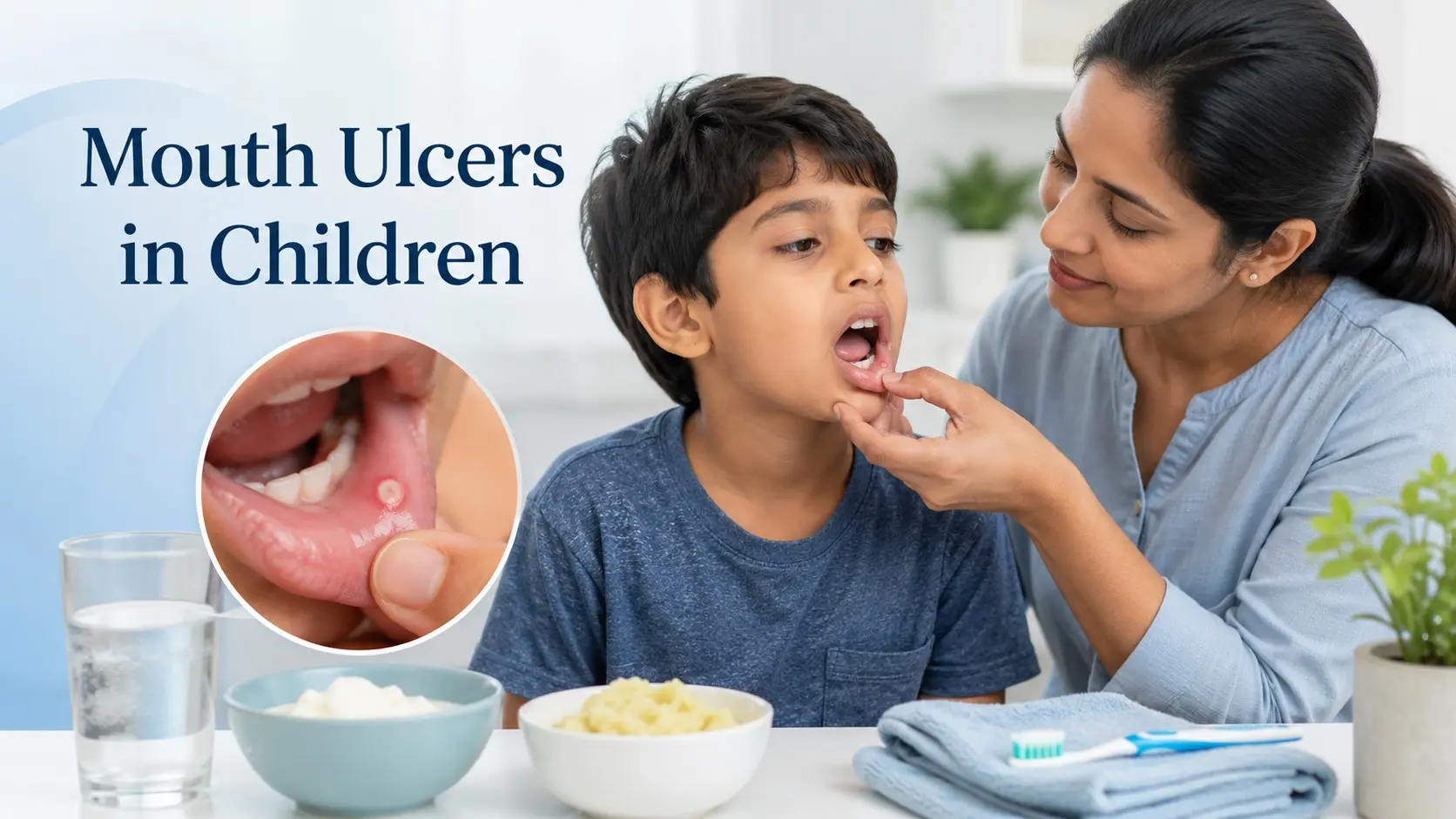
A typical mouth ulcer is a shallow sore inside the mouth.
It may be round.
The middle may look white, yellow, or gray.
A red edge may surround it.
It can appear on the:
- Inside of the lips
- Inside of the cheeks
- Tongue
- Gums
- Soft parts of the mouth
A child may say it burns or stings.
Young children may not explain the pain.
Instead, they may:
- Cry during meals
- Refuse food
- Refuse drinks
- Drool more than normal
- Touch their mouth
- Avoid brushing
- Wake because of pain
Mouth Ulcer, Cold Sore, or Thrush?
| Problem | Usual appearance | Usual place | Can it spread? |
|---|---|---|---|
| Canker sore | Small white or yellow sore with a red edge | Inside the mouth | No |
| Cold sore | Small grouped blisters | Often around the lips | Yes |
| Hand foot and mouth disease | Painful mouth sores with a skin rash | Mouth, hands, feet, and sometimes other areas | Yes |
| Thrush | White creamy patches | Tongue, cheeks, or other mouth areas | It is not a typical canker sore |
Oral thrush is not the same as a mouth ulcer.
Thrush often causes white patches rather than one small round sore.
A doctor should check suspected thrush in a baby or child.
9 Common Causes of Mouth Ulcers in Children
1. Cheek or Tongue Biting
A bite is a very common cause.
It may happen while a child eats, plays, sleeps, or falls.
The sore often appears in the same place as the injury.
A forgotten bite can look like a canker sore when it starts to heal.
2. Braces, Retainers, and Sharp Teeth
A sharp edge can rub the same area again and again.
The problem may come from:
- Braces
- A retainer
- A broken tooth
- A sharp tooth
- A rough filling
- A loose baby tooth
If the ulcer always appears in one place, check what is touching that area.
A dentist or orthodontist can correct many rubbing problems.
3. Toothbrush Injury
Hard brushing can hurt the soft lining of the mouth.
A toothbrush can also slip and scratch the gums or cheek.
Use a soft toothbrush.
Teach the child to brush slowly.
4. Hot or Rough Foods
Hot food can burn the mouth.
Hard chips, toast, or other rough food can scratch it.
The damaged area may later look white while it heals.
5. Canker Sores
Canker sores in children are painful sores that form inside the mouth.
They are also called aphthous ulcers.
They are not contagious.
A typical canker sore may have a pale center and a red edge.
Some children get only one.
Others get two or three.
There may be no clear reason.
Possible triggers can include a minor injury, stress, food irritation, family history, or nutrient problems.
6. Stress and Tiredness
Some children notice ulcers during busy or stressful times.
Examples include exams, travel, poor sleep, or illness.
This does not mean stress is always the cause.
It may simply be one trigger in a child who already gets ulcers.
7. Food Irritation
Some foods can sting an existing ulcer.
They may also trigger sores in some children.
Common irritants include:
- Orange
- Lemon
- Pineapple
- Tomato
- Vinegar
- Chili
- Very salty snacks
- Hard chips
Do not remove many healthy foods from a child's diet without medical advice.
8. Nutrient Problems
Some children with recurrent mouth ulcers may have low iron, vitamin B12, folate, zinc, or another nutrient issue.
This does not mean every ulcer is caused by a vitamin deficiency.
Do not start high-dose supplements just because a child has a mouth ulcer.
A doctor can decide if blood tests are needed.
9. Medicines
Some medicines can cause or worsen mouth sores.
If ulcers begin soon after a new medicine, contact the child's doctor or pharmacist.
Do not stop a prescribed medicine on your own.
How Can You Help a Child With a Mouth Ulcer?
There is no instant cure for most simple mouth ulcers.
The main goal is comfort.
The next goal is keeping the child hydrated.
1. Offer Cool Fluids
Cool drinks may hurt less.
Offer small sips often.
Water and milk may be easier than acidic juice.
A child who drinks well can usually cope better while the sore heals.
2. Give Soft Foods
Soft foods can make eating easier.
Try foods such as:
- Plain yogurt
- Oatmeal
- Mashed potato
- Soft rice
- Soft pasta
- Scrambled egg
- Banana
- Avocado
- Warm soup that is not hot
Do not worry if a sick child eats less for a short time.
Fluids are more important.
3. Avoid Foods That Sting
Temporarily avoid:
- Spicy food
- Sour food
- Citrus juice
- Very salty food
- Tomato sauce if it stings
- Hard chips
- Very hot food
- Very hot drinks
4. Keep Brushing Gently
Do not stop all oral care.
Use a soft toothbrush.
Brush slowly.
Try not to touch the sore with the brush.
See our oral hygiene guide for simple daily tooth and gum care.
5. Ask About Pain Medicine
Acetaminophen or ibuprofen may help some children.
The correct choice and dose depend on age, weight, health, and other medicines.
Follow the product instructions.
Ask a pediatrician or pharmacist if you are unsure.
Never give aspirin to a child unless a qualified doctor specifically tells you to do so.
6. Salt Water Rinse for Children Who Can Spit
An older child who can rinse and spit well may use a mild salt water rinse.
Do not use this in a child who may swallow the rinse.
Do not force a rinse if it hurts.
7. Ask Before Using Mouth Gels
Not every mouth gel is safe for every age.
This is important with numbing products.
Do not use benzocaine mouth products in children younger than two years.
For an older child, ask a doctor, dentist, or pharmacist which product is suitable.
What Should You Not Put on a Child's Mouth Ulcer?
A painful sore can make parents want a fast remedy.
But harsh products can burn or irritate a child's mouth.
Avoid putting these directly on the ulcer:
- Aspirin
- Lemon juice
- Vinegar
- Undiluted hydrogen peroxide
- Alcohol
- Essential oils
- Very strong salt mixtures
- Tooth whitening products
- Adult numbing gels without professional advice
- Harsh mouthwash
Do not use a product simply because it says natural.
Natural does not always mean safe for a child.
What About Honey?
Honey should never be given to a child younger than one year.
For older children, honey should not be treated as a proven cure for mouth ulcers.
Simple measures such as cool fluids and soft food are easier to use safely.
Why Does My Child Keep Getting Mouth Ulcers?
One ulcer now and then is common.
Recurrent mouth ulcers deserve a closer look when they are frequent, large, painful, or affect eating.
Possible reasons include:
- Repeated cheek biting
- A sharp tooth
- Braces rubbing
- Family tendency to canker sores
- Food irritation
- Stress
- Low iron
- Low vitamin B12
- Low folate
- Medicine effects
Less often, repeated oral ulcers can appear with conditions such as celiac disease, inflammatory bowel disease, or immune conditions.
This is not the usual cause.
Do not assume a child has one of these conditions because of one mouth sore.
Ask a pediatrician if ulcers keep returning or appear with other symptoms.
Symptoms to Tell the Doctor About
Mention symptoms such as:
- Weight loss
- Poor growth
- Long lasting diarrhea
- Ongoing belly pain
- Joint pain
- Unusual rashes
- Very low energy
- Pale skin
- Repeated fever
- Frequent infections
These details can help the doctor decide if tests are needed.
When Should You Call a Doctor or Dentist?
Contact a doctor or dentist if:
- The ulcer lasts more than about two weeks
- Ulcers keep returning
- There are four or more sores
- The child has fever
- The gums are red, swollen, or very sore
- Sores also appear outside the lips
- The child has a rash
- There is facial swelling
- There is a toothache with a sore near the tooth
- The child has a large lump under the jaw
- The sores began after a new medicine
- Pain makes eating or drinking very hard
- The child is losing weight
Signs of Dehydration in a Child With Mouth Sores
Mouth pain can make a child stop drinking.
Watch closely for dehydration.
Warning signs can include:
- Very little urine
- No urine for about eight hours
- Dark urine
- A very dry mouth
- No tears when crying
- Unusual sleepiness
- Weakness
- Poor drinking
Seek medical care quickly if you think the child is becoming dehydrated.
When Is It an Emergency?
Get urgent medical help if your child:
- Has trouble breathing
- Cannot swallow saliva
- Has fast swelling of the face or neck
- Is extremely weak
- Is hard to wake
- Looks very sick
- Has severe dehydration
- Has confusion
- Has a stiff neck with serious illness
Do not wait for an ulcer to heal if the child has a serious warning sign.
How Will a Doctor Check Mouth Ulcers in a Child?
Most children do not need complicated tests.
The doctor or dentist may first look at the mouth.
They may ask:
- When did the sore start?
- Is there one sore or many?
- Does the child have fever?
- Can the child drink?
- Is there a rash?
- Do the ulcers come back?
- Is a tooth or brace rubbing the area?
- Did a new medicine start recently?
- Are there stomach or bowel symptoms?
- Is the child growing normally?
If ulcers are frequent, a doctor may consider blood tests.
Testing may include checks for anemia or nutrient problems when the child's history suggests them.
Further testing depends on the child's symptoms.
Can Mouth Ulcers in Children Be Prevented?
You cannot prevent every mouth ulcer.
Simple steps may reduce some triggers.
- Use a soft toothbrush.
- Teach gentle brushing.
- Repair sharp teeth.
- Ask an orthodontist about braces that rub.
- Use orthodontic wax if the orthodontist recommends it.
- Help the child avoid chewing the cheek.
- Offer a balanced diet.
- Encourage enough sleep.
- Track repeat triggers.
- Wash hands well during viral outbreaks.
- Do not share toothbrushes.
- Keep regular dental visits.
Should You Give Vitamins to Prevent Mouth Ulcers?
Do not give high dose vitamins just to prevent ulcers.
A balanced diet is a better first step for most children.
If ulcers keep returning, ask the doctor if testing for iron, vitamin B12, folate, or other problems makes sense.
Supplements work best when there is a real need.
Simple Parent Checklist
- Look at how many sores are present.
- Check for fever.
- Check the hands and feet for a rash.
- Look for swollen or bleeding gums.
- Check whether a sharp tooth or brace is rubbing.
- Offer cool fluids often.
- Give soft food if the child wants to eat.
- Avoid spicy and acidic food.
- Watch how much the child urinates.
- Call a doctor if symptoms are severe, unusual, or not improving.
References and Sources
- American Academy of Pediatrics, HealthyChildren.org: Mouth UlcersPediatric guidance on canker sores, viral mouth sores, dehydration, home care, healing time, and when parents should contact a doctor.
- Centers for Disease Control and Prevention: Hand, Foot, and Mouth DiseasePublic health guidance on fever, painful mouth sores, skin rash, hydration, recovery, spread, and when a child needs medical care.
- National Institute of Dental and Craniofacial Research: Fever Blisters and Canker SoresNational Institutes of Health information explaining canker sores, cold sores, causes, symptoms, contagiousness, treatment, and when to seek care.
- NHS: Mouth UlcersPublic health guidance on common causes, expected healing, food irritation, dental triggers, self care, and when persistent ulcers need professional assessment.
- United States Food and Drug Administration: Benzocaine Safety in Infants and ChildrenFDA safety information about oral benzocaine products and the risk of methemoglobinemia, a rare but potentially serious blood condition.
Conclusion
Mouth ulcers in children are usually small and temporary.
A bite, canker sore, sharp tooth, braces, or a viral illness may be the cause.
Focus first on fluids.
Use soft foods.
Brush gently.
Avoid harsh home remedies.
Watch for fever, rash, swollen gums, poor drinking, or dehydration.
Take action today: Check your child's mouth, offer cool fluids, remove anything that may be rubbing the sore, and contact a pediatrician or dentist if the ulcer is severe, keeps returning, or is not healing.
Medical Disclaimer
This content is for general educational purposes and does not replace professional medical advice, diagnosis, or treatment. Consult an appropriately qualified healthcare professional for personal medical concerns. This article explains published guidance and does not provide a personal clinical assessment. Always consult qualified medical professionals for diagnosis and treatment of any health condition.
I am also not a pediatrician or dentist.
This guide gives general educational information only.
It cannot diagnose the cause of a child's mouth ulcer.
Children with severe pain, dehydration, fever, repeated ulcers, unusual rashes, immune problems, or other concerning symptoms should be assessed by a qualified healthcare professional.
Frequently Asked Questions About Mouth Ulcers in Children
What is the most common cause of mouth ulcers in children?
Common causes include canker sores, cheek biting, toothbrush injury, sharp teeth, braces, and viral illnesses. Sometimes the cause is not clear.
How long do mouth ulcers last in children?
Many simple canker sores heal in about one to two weeks. Contact a doctor or dentist if a sore lasts longer, becomes worse, or keeps returning.
Are mouth ulcers in children contagious?
Simple canker sores are not contagious. Viral illnesses that cause mouth sores, such as hand foot and mouth disease or herpes infection, can spread to other people.
Can hand foot and mouth disease cause mouth ulcers?
Yes. It can cause painful sores in the mouth. Children may also have fever and a rash on the hands and feet.
What is the safest relief for a child's mouth ulcer?
Offer cool fluids and soft food. Avoid spicy, salty, sour, and very hot foods. Use a soft toothbrush. Ask a doctor or pharmacist about age appropriate pain medicine if needed.
Can I use a numbing gel on my child's mouth ulcer?
Ask a doctor, dentist, or pharmacist first. Some numbing products are not safe for young children. Benzocaine mouth products should not be used in children younger than two years.
Can I give my child salt water for a mouth ulcer?
An older child who can rinse and spit may use a mild salt water rinse. Do not give a rinse to a young child who may swallow it.
Can vitamin deficiency cause mouth ulcers in children?
Repeated ulcers can sometimes occur with low iron, vitamin B12, folate, or other nutrient problems. A doctor can decide whether testing is needed.
Why does my child keep getting canker sores?
Repeated canker sores may be linked with mouth injury, family tendency, food irritation, stress, braces, nutrient problems, or another health issue. Ask a doctor or dentist if they are frequent.
When should I worry about mouth ulcers in my child?
Get medical advice if your child has many sores, fever, swollen gums, a rash, poor drinking, dehydration, facial swelling, weight loss, or an ulcer that does not heal.
When are mouth ulcers an emergency?
Get urgent help for trouble breathing, serious trouble swallowing, severe dehydration, fast swelling of the face or neck, severe weakness, confusion, or if the child looks very sick.

Health & wellness writer with 30+ years of experience in nutrition, fitness, and healthy aging. Founder of NextFitLife.com — evidence-based health guidance.