Published:
June 15, 2024
Last Updated:
August 22, 2026
Next Review:
August 2027, or sooner if important oral health, mouth ulcer, dental, medicine, or oral cancer guidance changes
Written and Source Checked by:
Adel Galal, Founder and Lead Writer of NextFitLife
Medical Review Status:
This article has not been formally reviewed by a physician, dentist, oral surgeon, pharmacist, oncologist, registered dietitian, or another licensed healthcare professional.
Eating may sting.
Drinking may hurt.
Even brushing your teeth may feel painful.
These sores are often called mouth ulcers.
Many are simple canker sores.
They often heal on their own.
But not every sore inside the mouth is the same.
A sharp tooth can cause one.
Braces can cause one.
Some people get repeated ulcers during stress.
Low iron, vitamin B12, folate, or other health problems can sometimes play a role.
Some medicines can cause mouth sores too.
A sore that does not heal needs more attention.
This guide explains common mouth ulcer causes, safe relief, healing time, prevention, and the signs that mean you should see a dentist or doctor.
Quick Answer: What Are Mouth Ulcers?
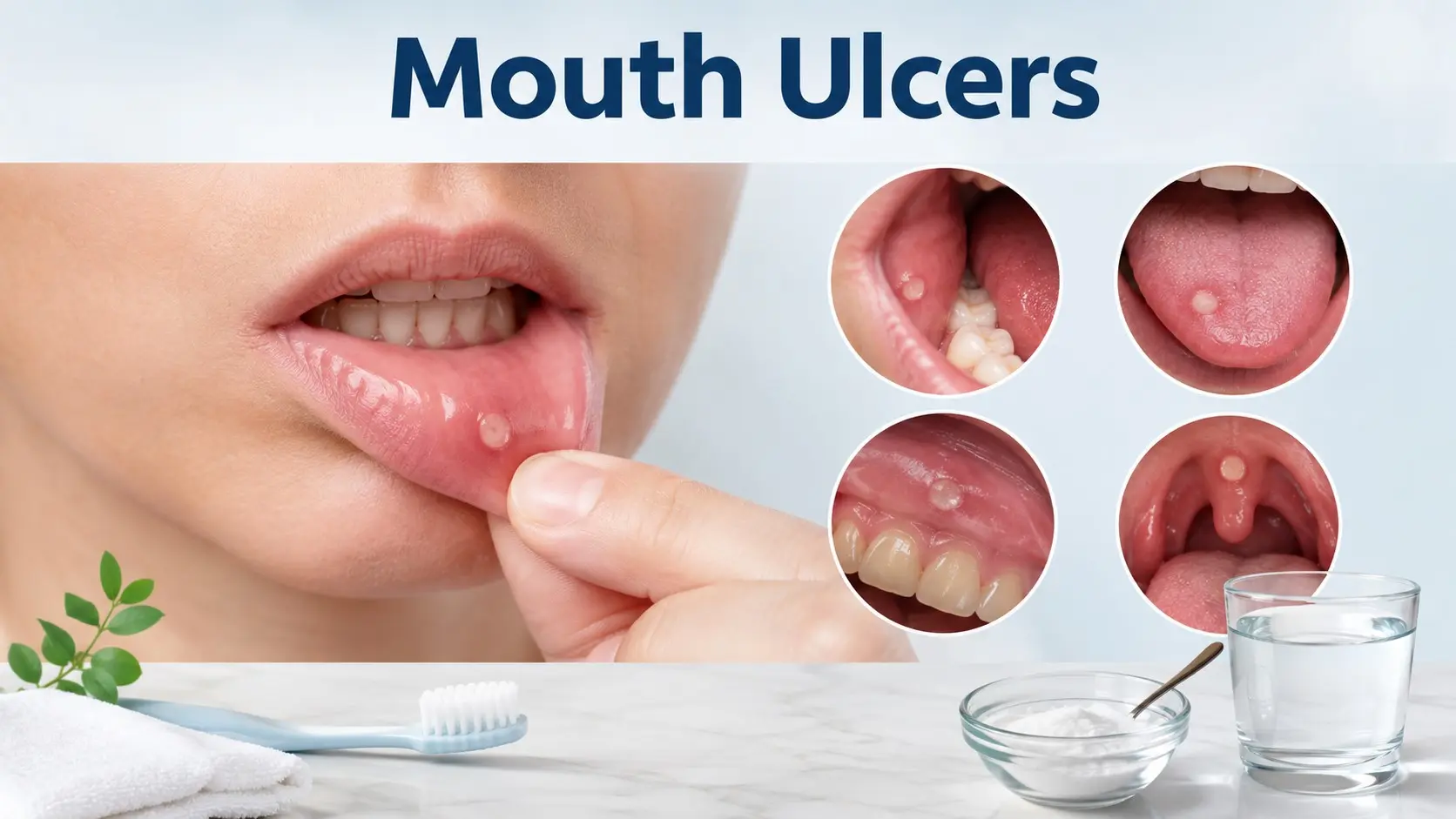
Mouth ulcers are open sores inside the mouth.
They may appear on the:
- Inner lips
- Inner cheeks
- Tongue
- Gums
- Floor of the mouth
- Soft palate
A common type is a canker sore, also called an aphthous ulcer.
Most small canker sores heal in about one to two weeks.
They are not contagious.
Cold sores are different.
Cold sores are usually caused by herpes simplex virus and can spread to other people.
See a dentist or doctor if a mouth ulcer does not heal within about two to three weeks, keeps coming back, is unusually large, bleeds, or comes with other concerning symptoms.
Medical note:
This content is for general educational purposes and does not replace professional medical advice, diagnosis, or treatment. Consult an appropriately qualified healthcare professional for personal medical concerns. This article explains published guidance and does not provide a personal clinical assessment. Always consult qualified medical professionals for diagnosis and treatment of any health condition.
Get Urgent Medical Help if These Signs Are Present
Most mouth ulcers are not emergencies.
Get urgent medical help if you have:
- Trouble breathing
- Severe swelling of the mouth, tongue, or throat
- Trouble swallowing fluids
- Signs of serious dehydration
- A severe allergic reaction
- A very high fever with severe illness
- Rapidly spreading swelling or infection
Children, older adults, and people with weak immune systems may become dehydrated more quickly when mouth pain prevents drinking.
What Do Mouth Ulcers Look and Feel Like?
A typical mouth sore may look round or oval.
It may have:
- A white center
- A yellow center
- A gray center
- A red border
It can feel:
- Sore
- Sharp
- Burning
- Stinging
- Tender
Some people feel tingling or burning before a canker sore appears.
Where Can Mouth Ulcers Appear?
They can form on many soft areas inside the mouth.
Common locations include:
- Inside the lower lip
- Inside the upper lip
- Inside the cheek
- On or under the tongue
- Near the gums
- On the soft palate
A tongue ulcer, cheek ulcer, gum ulcer, or lip ulcer may have different triggers.
Mouth Ulcer Versus Canker Sore Versus Cold Sore Versus Thrush
These terms do not all mean the same thing.
| Problem | Typical Location | Typical Look | Contagious? |
|---|---|---|---|
| Mouth ulcer | Inside the mouth | An open sore with appearance depending on the cause | Depends on the cause |
| Canker sore | Inside the mouth | Usually round with a white or yellow center and red edge | No |
| Cold sore | Usually on or around the lips | Often a group of fluid filled blisters | Yes |
| Oral thrush | Tongue, cheeks, palate and other areas | Often creamy white patches with irritated tissue | Not treated like a canker sore |
Are Canker Sores Herpes?
No.
Canker sores are not caused by herpes simplex virus.
They are not contagious.
Are Cold Sores Mouth Ulcers?
Cold sores are a different condition.
They are often called fever blisters.
They are usually caused by herpes simplex virus type 1.
They can spread to other people.
Read:
Herpes on Lip
.
What Are the Main Types of Canker Sores?
Minor Canker Sores
These are the most common.
They are usually small.
They often heal within one to two weeks.
They usually heal without a scar.
Major Canker Sores
These are larger and deeper.
They can hurt more.
They may take several weeks to heal.
Some can leave a scar.
Herpetiform Canker Sores
The name can be confusing.
These sores are not caused by herpes.
They are many tiny ulcers that may appear in groups.
They can join together into a larger sore.
What Causes Mouth Ulcers?
There is no single cause.
Sometimes the cause is obvious.
Sometimes it is not.
Common mouth ulcer causes include:
- Cheek biting
- Tongue biting
- Hard brushing
- Dental work
- Sharp teeth
- Broken fillings
- Braces
- Poorly fitting dentures
- Stress
- Tiredness
- Hormone changes
- Some food sensitivities
- Iron deficiency
- Vitamin B12 deficiency
- Folate deficiency
- Zinc deficiency in selected cases
- Some medicines
- Some digestive or immune conditions
One small ulcer after biting your cheek is different from repeated unexplained ulcers.
1. Mouth Injury and Dental Rubbing
Minor injury is a common trigger.
A sore may follow:
- Biting your cheek
- Biting your tongue
- Brushing too hard
- Dental treatment
- A sharp piece of food
- A broken tooth
- A rough filling
- A brace wire
- A denture edge
The sore should improve once the injury stops.
If one ulcer keeps forming in exactly the same place, ask a dentist to check for rubbing or a sharp edge.
2. Braces and Dentures
Braces can rub the cheek or lip.
Dentures can also cause repeated injury if they do not fit well.
A dentist or orthodontist may be able to:
- Adjust the appliance
- Smooth a sharp area
- Check the fit
- Recommend orthodontic wax when appropriate
Do not ignore repeated rubbing.
A sore cannot heal well if the same spot is injured every day.
3. Stress, Tiredness and Sleep
Stress does not cause every mouth ulcer.
But it can be a trigger for some people.
Ulcers may appear during:
- Work pressure
- Exams
- Travel
- Illness
- Emotional stress
- Poor sleep
A simple diary may help you see a repeated pattern.
Do not assume stress is the cause of an ulcer that keeps returning or does not heal.
4. Food and Mouth Irritation
Food can affect an ulcer in two ways.
Some foods may act as personal triggers.
Other foods simply sting a sore that is already there.
Common irritating foods include:
- Chili
- Hot sauce
- Citrus fruit
- Pineapple
- Tomato
- Vinegar
- Very salty snacks
- Sharp crisps
- Hard toast
Do not remove a long list of foods from your diet based on one ulcer.
Look for a repeated personal pattern.
5. Toothpaste and Mouthwash Irritation
Some people with repeated canker sores find certain mouth products irritating.
NHS advises avoiding toothpaste containing sodium lauryl sulphate when mouth ulcers are a problem.
Mayo Clinic also lists this ingredient as a possible trigger in some people.
If mouthwash burns, ask your dentist about a gentler option.
A product that feels strong is not always better.
6. Iron, Vitamin B12, Folate and Other Nutrients
Repeated mouth ulcers can sometimes occur with nutritional deficiencies.
Possible links include:
- Iron deficiency
- Vitamin B12 deficiency
- Folate deficiency
- Zinc deficiency
Do not guess from an ulcer alone.
Do not take large supplement doses just because you have a mouth sore.
A healthcare professional may suggest blood tests when ulcers are recurrent or when other symptoms point to a deficiency.
Other Signs That May Need a Blood Test
Tell your healthcare professional if recurrent ulcers happen with:
- Tiredness
- Pale skin
- Shortness of breath
- Dizziness
- A sore tongue
- Numbness or tingling
- Unexplained weight loss
For more information, visit the
Nutrition and Vitamins Hub
.
7. Medicines
Some medicines can cause mouth sores in some people.
NHS lists examples that include some:
- NSAID pain medicines
- Beta blockers
- Nicorandil
Other medicines and medical treatments can also affect the lining of the mouth.
Do not stop a prescribed medicine on your own.
Ask the doctor or pharmacist who manages the medicine.
A Useful Clue
Write down when the ulcer started.
Then ask:
Did I begin a new medicine shortly before it appeared?
Did my dose change?
Did several ulcers appear at the same time?
This information can help your clinician.
8. Health Conditions Linked With Repeated Mouth Ulcers
Most mouth ulcers are not caused by serious disease.
But repeated, severe, or unusual sores can sometimes occur with other conditions.
Examples include:
- Celiac disease
- Crohn's disease
- Ulcerative colitis
- Behçet disease
- Oral lichen planus
- Lupus
- Conditions that weaken the immune system
The ulcer alone cannot diagnose any of these conditions.
Other symptoms matter.
Tell a Doctor About Ulcers Elsewhere on the Body
NHS advises medical assessment when mouth ulcers occur with ulcers on other parts of the body or with painful swollen joints.
That pattern may need more investigation.
9. Hormone Changes
Hormone changes may trigger ulcers in some people.
Some people notice a pattern around the menstrual cycle.
Others notice changes during pregnancy.
This does not mean hormone changes explain every ulcer during pregnancy.
Tell a healthcare professional about severe or repeated mouth sores.
10. Sometimes There Is No Clear Cause
This is common.
You may eat well.
You may have no sharp tooth.
You may take no new medicine.
And a canker sore still appears.
The exact cause of many aphthous ulcers remains unclear.
That does not mean the pain is not real.
How Long Do Mouth Ulcers Last?
Many small canker sores heal within one to two weeks.
Pain may improve before the sore fully disappears.
Larger ulcers may take longer.
Major canker sores can take several weeks.
When Is Healing Too Slow?
Do not keep waiting forever.
NIDCR advises seeing a dentist or doctor when oral cancer warning symptoms last more than two weeks.
NHS specifically advises getting a mouth ulcer checked if it lasts longer than three weeks.
A simple rule is:
If a mouth ulcer is still there around two to three weeks later, arrange a dental or medical check.
How to Get Mouth Ulcer Pain Relief
There is no safe instant cure for most common canker sores.
But you can reduce pain while the mouth heals.
Useful mouth ulcer relief steps include:
- Rinse gently with salt water
- Drink cool fluids
- Choose soft foods
- Avoid spicy food
- Avoid acidic food
- Use a soft toothbrush
- Avoid rubbing the ulcer
- Ask a pharmacist about suitable pain relief
- Ask about a protective oral paste or gel
The aim is comfort.
Do not burn or scrape the sore in an attempt to make it heal faster.
Can You Use a Salt Water Rinse for Mouth Ulcers?
Yes.
NHS lists a salt water rinse as a simple mouth ulcer option.
How to Make It
- Put half a teaspoon of salt into a glass of warm water.
- Let the salt dissolve.
- Rinse the mouth gently.
- Spit the water out.
- Do not swallow it.
The rinse may soothe the mouth and help keep it clean.
It is not an instant cure.
Can Ice Help a Mouth Ulcer?
Cold can reduce pain for a short time.
You can try:
- Cool water
- Small ice chips
- Cold soft foods
Do not press sharp ice directly into the ulcer.
What Pharmacy Treatments Can Help Mouth Ulcers?
A pharmacist can help you choose an appropriate product.
Depending on the country and the person, options may include:
- Pain relief mouth gel
- Pain relief spray
- Pain relief mouthwash
- Protective oral paste
- Antimicrobial mouthwash
- Corticosteroid lozenges in suitable cases
- Saline mouthwash
Not every product is suitable for every person.
Age matters.
Pregnancy matters.
Other medicines matter.
Ask a pharmacist when you are unsure.
What About Severe or Recurrent Ulcers?
A dentist or doctor may prescribe stronger treatment.
This may include a corticosteroid medicine placed directly in the mouth.
Treatment depends on the cause and severity.
Can Pain Medicine Help?
Some people can use a normal pain medicine for short-term relief.
The right choice depends on:
- Age
- Pregnancy
- Kidney health
- Stomach problems
- Other medicines
- Allergies
Follow the label.
Ask a pharmacist if you are unsure.
Never put an aspirin tablet directly onto a mouth ulcer.
What Should You Eat With Mouth Ulcers?
Choose soft foods that do not sting.
Examples include:
- Plain yogurt
- Oatmeal
- Soft eggs
- Soft rice
- Soft pasta
- Mashed vegetables
- Banana
- Avocado
- Soup that is warm rather than hot
Drink enough fluid.
Pain should not stop you from drinking all day.
Foods That May Hurt While an Ulcer Heals
You may want to limit:
- Chili
- Hot sauce
- Lemon
- Orange
- Grapefruit
- Pineapple
- Tomato sauce
- Vinegar
- Very salty food
- Hard crisps
- Hard toast
- Very hot drinks
You can usually add these foods back after the ulcer heals.
What Should You Not Put on a Mouth Ulcer?
A burning remedy is not the same as healing.
Avoid placing these directly on a mouth ulcer:
- Lemon juice
- Vinegar
- Aspirin tablets
- Rubbing alcohol
- Essential oils
- Tooth whitening chemicals
- Strong homemade chemical mixtures
What About Hydrogen Peroxide?
Do not use undiluted hydrogen peroxide on a mouth ulcer.
Some medical references describe specific diluted preparations.
That does not mean stronger peroxide is better.
Ask a dentist, doctor, or pharmacist before using it as an oral treatment.
What About Honey or Herbal Remedies?
Do not rely on a natural product as a cure.
Natural does not always mean safe.
Some products can irritate the mouth or cause allergy.
Use treatments recommended by a qualified dental or medical professional when symptoms are severe.
Are Mouth Ulcers Contagious?
Most simple canker sores are not contagious.
You cannot normally catch one from:
- Kissing
- Sharing a cup
- Sharing food
But not every mouth lesion is a canker sore.
Cold sores caused by herpes simplex can spread.
Other infections can also cause mouth sores.
Correct identification matters.
Why Do My Mouth Ulcers Keep Coming Back?
Recurring mouth ulcers can have many triggers.
Possible reasons include:
- Repeated mouth injury
- Family tendency
- Stress
- Some food sensitivities
- Iron deficiency
- Vitamin B12 deficiency
- Folate deficiency
- Some medicines
- Celiac disease
- Inflammatory bowel disease
- Behçet disease
- Other immune conditions
If new ulcers start before old ones heal, or outbreaks keep returning, arrange an assessment.
Keep a Simple Ulcer Diary
Write down:
- Date
- Where the ulcer formed
- How long it lasted
- Food eaten before it appeared
- Recent dental work
- Stress
- Sleep
- Medicines
- Toothpaste
- Menstrual timing when relevant
A diary can reveal patterns.
It should not make you afraid of food.
Do Recurrent Mouth Ulcers Need Blood Tests?
Sometimes.
A clinician may consider blood tests when ulcers are severe, persistent, or keep returning.
Tests may look for:
- Anemia
- Iron deficiency
- Vitamin B12 deficiency
- Folate deficiency
- Other problems based on your symptoms
Testing should match your history.
Do not order a long list of supplements based on an ulcer alone.
Mouth Ulcers on the Tongue
A tongue ulcer may come from:
- Biting the tongue
- A sharp tooth
- A canker sore
- Hot food
- Another mouth condition
A tongue sore that keeps rubbing against a tooth needs a dental check.
A tongue ulcer that does not heal needs assessment.
Mouth Ulcers on the Gums
A sore close to the gums may not always be a simple canker sore.
Dental infections, gum disease, trauma, and other conditions can cause pain or sores.
See a dentist if you also have:
- Swollen gums
- A bad taste
- Tooth pain
- Pus near a tooth
- A loose tooth
- Facial swelling
Mouth Ulcers With Braces
Braces may rub the lip or cheek.
This can cause a repeated traumatic ulcer.
Ask your orthodontist whether orthodontic wax or an adjustment is appropriate.
Do not let a sharp wire keep cutting the same area.
Mouth Ulcers During Pregnancy
Some people notice mouth changes during pregnancy.
Hormones, tiredness, diet changes, or nutritional needs may contribute.
Do not start high dose supplements just because an ulcer appears.
Ask a dentist, doctor, or pharmacist what treatment is safe during pregnancy.
Persistent sores still need checking.
Mouth Ulcers in Children
Children get mouth ulcers too.
Common causes include:
- Mouth injury
- Canker sores
- Braces
- Some viral infections
A child who will not drink can become dehydrated.
Get medical advice if a child has many sores, high fever, a rash, trouble swallowing, signs of dehydration, or persistent ulcers.
Do not use adult numbing products in a child unless a qualified professional says they are safe.
Read the dedicated guide:
Causes of Mouth Ulcers in Children
.
Can a Mouth Ulcer Be a Sign of Oral Cancer?
Most mouth ulcers are not cancer.
But a sore that does not heal must be checked.
The National Institute of Dental and Craniofacial Research advises seeing a dentist or doctor for oral cancer warning symptoms that last more than two weeks.
NHS advises checking a mouth ulcer that lasts longer than three weeks.
Oral Cancer Warning Signs
Arrange a dental or medical assessment for:
- A mouth sore that does not heal
- A lump in the mouth
- A lump in the neck
- A thick area in the mouth
- A persistent red patch
- A persistent white patch
- Unexplained bleeding
- Persistent mouth pain
- Trouble swallowing
- A persistent change in voice
- Unexplained loose teeth
- Unexplained weight loss
Do not panic if you have one of these signs.
Many have non cancer causes.
The important step is getting the area examined.
Mouth Ulcer Versus Oral Cancer
You cannot always tell by looking.
A simple canker sore is often:
- Painful
- Round or oval
- White or yellow in the center
- Surrounded by a red edge
- Gone within one to two weeks
A suspicious lesion may:
- Fail to heal
- Change over time
- Form a lump
- Bleed
- Appear with a red or white patch
These are clues.
They are not a diagnosis.
A dentist or doctor needs to examine a persistent lesion.
How Do Dentists or Doctors Check Mouth Ulcers?
Many mouth ulcers can be assessed by looking at them.
A dentist or doctor may ask:
- When did it start?
- Has it happened before?
- Does it hurt?
- Is it getting larger?
- Does anything rub against it?
- Do you have other ulcers?
- Have you started a new medicine?
- Do you have digestive symptoms?
- Do you have fever?
- Have you lost weight?
The Examination May Include
- Looking at the ulcer
- Checking the tongue
- Checking the gums
- Checking teeth for sharp edges
- Checking dentures or braces
- Looking for red or white patches
- Checking for neck lumps
When Are Tests Needed?
Persistent or recurrent ulcers may lead to:
- Blood tests
- Tests for nutritional deficiency
- Tests for other medical conditions
- A specialist referral
- A biopsy when a persistent lesion looks unusual
Not every mouth ulcer needs a biopsy.
When Should You See a Dentist or Doctor?
Arrange an assessment if an ulcer:
- Lasts around two to three weeks or longer
- Keeps coming back
- Is larger than your usual ulcers
- Looks different from previous ulcers
- Keeps getting more painful
- Bleeds
- Occurs with a red or white patch
- Occurs with a mouth or neck lump
- Makes eating or drinking very difficult
- Occurs with fever
- Occurs with unexplained weight loss
- Occurs with sores elsewhere on the body
- Occurs with painful swollen joints
Also see a dentist if a sharp tooth, filling, brace, or denture keeps rubbing the area.
How Can You Prevent Mouth Ulcers?
You cannot prevent every ulcer.
But you can reduce some triggers.
1. Brush Gently
Use a soft toothbrush.
Do not scrub the lining of your mouth.
2. Fix Sharp Dental Edges
Ask a dentist to check:
- Sharp teeth
- Broken fillings
- Braces
- Crowns
- Dentures
3. Avoid Personal Food Triggers
Only avoid foods that show a clear repeated pattern.
4. Try Gentler Oral Products
If ulcers keep coming back, ask your dentist whether an SLS free toothpaste or a gentler mouthwash is worth trying.
5. Keep a Regular Sleep Routine
Poor sleep may be part of the pattern for some people.
6. Manage Stress
Try simple habits such as:
- Walking
- Regular sleep
- Slow breathing
- Taking breaks
- Talking with supportive people
7. Eat a Balanced Diet
A varied diet can help reduce the risk of nutritional deficiencies.
Do not use supplements as a substitute for testing when a deficiency is suspected.
8. Keep Regular Dental Visits
Dental checks can find:
- Sharp teeth
- Poorly fitting dentures
- Broken restorations
- Other mouth problems
A Simple Seven-Day Comfort Plan
This is a comfort plan.
It is not a cure for every cause.
Do not wait seven days if the ulcer has serious warning signs.
Day 1: Remove Irritation
Avoid spicy, acidic, rough, and very hot foods.
Day 2: Rinse Gently
Try a salt water rinse.
Day 3: Choose Soft Foods
Eat foods that do not scrape or sting the sore.
Day 4: Ask About Pain Relief
A pharmacist may suggest a suitable gel, spray, rinse, or protective paste.
Day 5: Look for Triggers
Think about stress, sleep, food, toothpaste, dental rubbing, and medicines.
Day 6: Check for Dental Rubbing
Look for a sharp tooth, brace, filling, or denture near the ulcer.
Day 7: Review Healing
The ulcer should be moving toward healing.
If it is getting worse, very painful, unusually large, or keeps returning, arrange professional care.
Common Myths About Mouth Ulcers
Myth: Every Mouth Ulcer Is Herpes
False.
Common canker sores are not caused by herpes.
Myth: Canker Sores Are Contagious
False.
Canker sores do not spread from person to person.
Myth: Lemon Juice Heals Mouth Ulcers Faster
False.
Acid can make the sore hurt more.
Myth: Aspirin Should Be Placed on the Ulcer
False.
Do not place aspirin directly on mouth tissue.
Myth: Every Mouth Ulcer Means Vitamin Deficiency
False.
Nutrient deficiency is only one possible factor.
Myth: Stress Is Always the Cause
False.
Stress may trigger ulcers in some people, but many other causes exist.
Myth: Mouth Cancer Always Hurts
False.
Some early mouth cancers may not be painful.
A persistent lesion should be checked even if it does not hurt.
Questions to Ask Your Dentist or Doctor
- What type of mouth ulcer does this look like?
- Could a sharp tooth or dental appliance be causing it?
- Do I need blood tests?
- Could I have an iron or vitamin deficiency?
- Could one of my medicines be causing the sore?
- What pain relief is safe for me?
- Should I change toothpaste?
- Do I need a prescription mouth treatment?
- When should I come back if it does not heal?
- Does this lesion need a biopsy?
Key Takeaway
Most mouth ulcers are painful but harmless.
Many common canker sores heal within one to two weeks.
Common triggers include injury, braces, sharp teeth, stress, some foods, nutritional deficiencies, medicines, and certain health conditions.
Simple care can reduce pain.
Use a soft toothbrush.
Choose soft food.
Try a salt water rinse.
Ask a pharmacist about suitable relief.
Do not burn the ulcer with harsh home remedies.
Most important, get a sore checked if it does not heal within about two to three weeks or if other warning signs are present.
How I Research Mouth Ulcers
I have spent more than fifteen years researching and writing about health and wellness.
I also bring more than thirty years of personal experience with fitness, nutrition, sleep habits, and everyday wellness.
Mouth ulcers look simple.
But the word ulcer covers several different problems.
That is why I start with the pattern.
Is the sore inside or outside the mouth?
Is there one sore or many?
Does a sharp tooth rub it?
Does it heal?
Does it keep returning?
Are there other symptoms?
That helps separate a common canker sore from an injury, infection, dental problem, deficiency, or another condition.
I also pay close attention to duration.
A common ulcer that heals is very different from a sore that stays for weeks.
Before focusing on NextFitLife, I spent twenty nine years in information technology management.
That background strengthened my skills in research, troubleshooting, data review, systems thinking, and comparing different possible explanations for the same symptom.
I use the same structured approach when researching oral health.
For this guide, I compared current public information from NHS, NIDCR, MedlinePlus, and Mayo Clinic.
I also reviewed oral cancer warning guidance so that common ulcers are explained without hiding the signs that deserve professional care.
My goal is not to diagnose a mouth lesion online.
My goal is to help readers understand what is common, what may provide safe comfort, and when a dentist or doctor should take a closer look.
References and High Authority Sources
This article was checked against these five public and accessible sources.
NHS
Mouth Ulcers.
This public health guide covers typical healing time, common causes, salt water rinses, pharmacy treatments, dental irritation, and signs that should be checked.
National Institute of Dental and Craniofacial Research
Fever Blisters and Canker Sores.
This resource explains the difference between contagious cold sores and non contagious canker sores, plus common triggers, symptoms, treatment, and when professional care is needed.
MedlinePlus
Canker Sores.
This National Library of Medicine resource explains aphthous ulcers, pain, triggers, nutritional links, healing, and common treatment approaches.
National Institute of Dental and Craniofacial Research
Oral Cancer.
This resource covers oral cancer warning symptoms, including a mouth sore, irritation, lump, or thick area that persists for more than two weeks.
Mayo Clinic
Canker Sore: Symptoms and Causes.
This resource explains minor, major, and herpetiform canker sores, possible triggers, healing times, nutritional links, dental irritation, and reasons to seek professional care.
Source Review Date:
August 22, 2026
These organizations do not endorse NextFitLife.
Conclusion
Most mouth ulcers heal without serious problems.
Common causes include small injuries, braces, sharp teeth, stress, some foods, nutritional deficiencies, medicines, and other health conditions.
For comfort, keep care gentle.
Use soft food.
Drink cool fluids.
Use a soft toothbrush.
Try a salt water rinse.
Ask a pharmacist about suitable pain relief.
Do not use harsh products to burn the sore away.
Your next step:
If your mouth ulcers keep returning, look for dental rubbing and keep a simple trigger diary. If one sore is still present after about two to three weeks, or you notice bleeding, a lump, a red or white patch, trouble swallowing, or unexplained weight loss, arrange a dental or medical examination.
Editorial Policies and Trust
Frequently Asked Questions About Mouth Ulcers
What are mouth ulcers?
Mouth ulcers are open sores inside the mouth. A common type is the canker sore, also called an aphthous ulcer.
What causes mouth ulcers?
Common causes and triggers include mouth injury, braces, sharp teeth, stress, some foods, nutritional deficiencies, medicines, and some digestive or immune conditions.
How long do mouth ulcers last?
Many small canker sores heal within one to two weeks. Larger sores can take longer.
When should I worry about a mouth ulcer?
Get a sore checked if it lasts around two to three weeks, keeps returning, is unusually large, bleeds, or comes with a lump, red or white patch, trouble swallowing, or unexplained weight loss.
Are mouth ulcers contagious?
Common canker sores are not contagious. Cold sores are different and can spread to other people.
Are canker sores the same as cold sores?
No. Canker sores occur inside the mouth and are not contagious. Cold sores usually form on or around the lips and are commonly caused by herpes simplex virus.
Are canker sores caused by herpes?
No. Canker sores are not caused by herpes simplex virus.
What does a canker sore look like?
A typical canker sore is round or oval with a white or yellow center and a red border.
How can I get mouth ulcer relief quickly?
Use gentle care such as a salt water rinse, cool drinks, soft food, a soft toothbrush, and suitable pharmacy pain relief.
Does salt water help mouth ulcers?
A warm salt water rinse is a common self-care option. Rinse gently and spit it out.
How much salt should I use for a mouth rinse?
NHS advises dissolving half a teaspoon of salt in a glass of warm water, rinsing the mouth, and spitting the solution out.
Can ice help mouth ulcer pain?
Cool water or small ice chips may numb pain for a short time.
What foods are best when I have a mouth ulcer?
Soft mild foods such as yogurt, oatmeal, eggs, soft rice, pasta, banana, avocado, and warm soup may be easier to eat.
What foods should I avoid?
Spicy, acidic, very salty, sharp, rough, or very hot foods can make an ulcer hurt more.
Can stress cause mouth ulcers?
Stress can trigger canker sores in some people, but it is not the only possible cause.
Can poor sleep cause mouth ulcers?
Tiredness and poor sleep may be part of the trigger pattern for some people, but repeated ulcers should not automatically be blamed on sleep.
Can vitamin deficiency cause mouth ulcers?
Repeated ulcers can sometimes occur with iron, vitamin B12, folate, or other nutritional deficiencies.
Should I take vitamin B12 for mouth ulcers?
Do not assume you need vitamin B12 from an ulcer alone. A healthcare professional can assess whether deficiency testing is appropriate.
Can iron deficiency cause recurring mouth ulcers?
Iron deficiency can be associated with recurring ulcers in some people. Blood testing may be appropriate when other signs of deficiency are present.
Can medicines cause mouth ulcers?
Yes. Some medicines can cause or trigger mouth sores. Do not stop prescribed medicine without speaking with your doctor or pharmacist.
Can braces cause mouth ulcers?
Yes. Braces can rub the cheek or lip. An orthodontist may recommend an adjustment or orthodontic wax.
Can dentures cause mouth ulcers?
Yes. Poorly fitting dentures can rub the mouth and create repeated sores.
Why do I keep getting ulcers in the same place?
Repeated ulcers in one spot may be caused by a sharp tooth, filling, brace, denture, or another source of repeated injury. Ask a dentist to check it.
Can toothpaste cause mouth ulcers?
Some people with recurrent ulcers may be sensitive to certain toothpaste ingredients. NHS advises avoiding sodium lauryl sulphate when mouth ulcers are a problem.
Can I put aspirin on a mouth ulcer?
No. Do not place an aspirin tablet directly on an ulcer because it can damage mouth tissue.
Can I put lemon juice on a mouth ulcer?
No. Lemon juice is acidic and can make the sore sting more.
Can I use hydrogen peroxide on a mouth ulcer?
Do not use undiluted hydrogen peroxide. Ask a dentist, doctor, or pharmacist before using peroxide based oral treatments.
Can mouth ulcers be caused by Crohn's disease?
Recurring mouth ulcers can occur in people with Crohn's disease, but an ulcer alone cannot diagnose it.
Can celiac disease cause mouth ulcers?
Yes. Repeated aphthous ulcers can occur with celiac disease in some people.
Can mouth ulcers be a sign of oral cancer?
Most mouth ulcers are not cancer. A persistent sore, lump, thick area, red or white patch, or unexplained bleeding should be checked.
How long should I wait before seeing a dentist?
Arrange an examination if the sore is still present after about two to three weeks or sooner if it is worsening or has concerning features.
Do recurring mouth ulcers need blood tests?
Sometimes. A healthcare professional may test for anemia, iron deficiency, vitamin B12 deficiency, folate deficiency, or other conditions based on your symptoms.
Can mouth ulcers happen during pregnancy?
Yes. Hormone changes and other factors may affect mouth symptoms during pregnancy. Ask a healthcare professional before using medicines or supplements.
When are mouth ulcers urgent?
Seek urgent help for trouble breathing, severe mouth or throat swelling, inability to swallow fluids, serious dehydration, or severe illness.
Medical Disclaimer
NextFitLife provides general educational and informational health content.
This article cannot diagnose a canker sore, oral infection, nutritional deficiency, inflammatory disease, oral thrush, oral cancer, or another cause of a mouth lesion.
Do not start high dose vitamins or stop prescribed medicine because of mouth ulcers without professional advice.
Do not place aspirin, lemon juice, vinegar, alcohol, undiluted peroxide, essential oils, or other harsh substances directly on a mouth ulcer.
A mouth sore that does not heal needs professional assessment.
Seek urgent medical care for trouble breathing, severe mouth or throat swelling, inability to swallow fluids, serious dehydration, or severe systemic illness.

Health & wellness writer with 30+ years of experience in nutrition, fitness, and healthy aging. Founder of NextFitLife.com — evidence-based health guidance.