Published: October 3, 2026
Written and Source Checked by: Adel Galal, Founder and Lead Writer at NextFitLife
Medical Review Status: This article has not been medically reviewed by a doctor, pulmonologist, cardiologist, gastroenterologist, emergency physician, respiratory therapist, pharmacist, or other licensed healthcare professional.
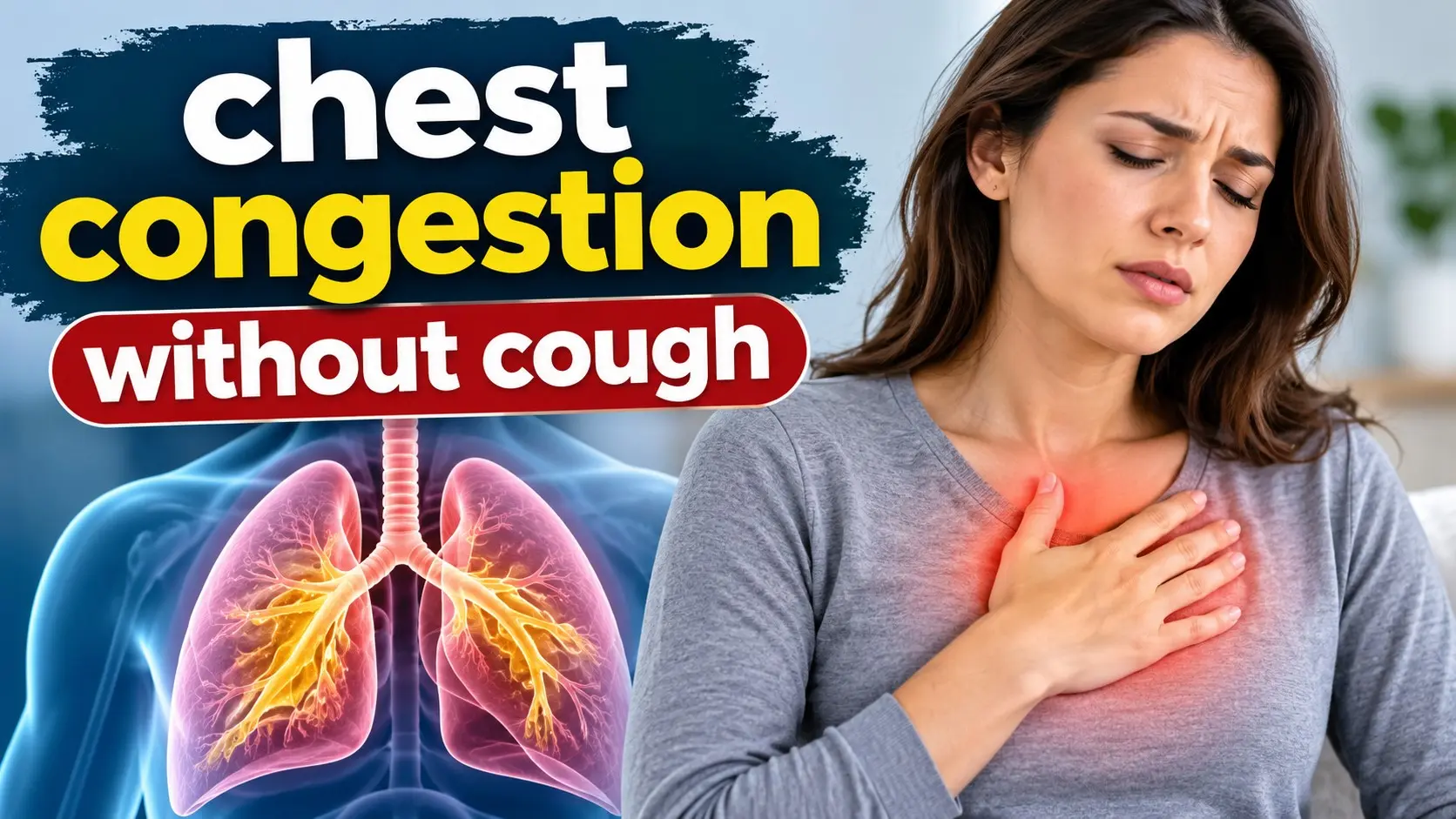
Chest congestion without cough does not always mean mucus is trapped in your lungs. The feeling may actually be tightness, pressure, wheezing, reflux, airway irritation, fluid buildup, or a chest wall problem.
The first job is to describe what you feel more clearly.
Quick answer: Chest congestion without cough can come from asthma, postnasal drainage, reflux, a recent respiratory illness, COPD, heart failure, chest wall tension, or dysfunctional breathing. New chest pressure, severe breathlessness, fainting, blue or gray lips, or discomfort spreading to the arm, jaw, back, or shoulder needs urgent medical care.
For a wider guide to breathing, mucus, asthma, COPD, lung tests, and warning signs, visit the NextFitLife Lung and Respiratory Health Hub.
Medical note: This content is for general educational purposes and does not replace professional medical advice, diagnosis, or treatment. Consult an appropriately qualified healthcare professional for personal medical concerns. This article explains published guidance and does not provide a personal clinical assessment. Always consult qualified medical professionals for diagnosis and treatment of any health condition.
Chest symptoms can come from the lungs, heart, digestive system, muscles, nerves, or other causes. New, severe, or unexplained chest symptoms should not be diagnosed from an online article.
Table of Contents
- What chest congestion really means
- 8 possible causes
- Asthma
- Lingering airway mucus
- Postnasal drainage
- Acid reflux
- COPD
- Heart failure
- Chest wall or muscle tightness
- Anxiety and dysfunctional breathing
- Can pneumonia occur without cough?
- Pulmonary embolism warning signs
- Heart attack warning signs
- Risk factors that change the picture
- What mild symptoms may allow at home
- When to book a medical visit
- When it is an emergency
- References and Sources
- Related NextFitLife guides
- About the author
- Frequently asked questions
What Does “Chest Congestion” Actually Mean?
This question matters more than it sounds.
Chest congestion is a description, not one diagnosis.
One person means mucus rattling in the chest. Another means a tight band around the ribs. Someone else means heaviness behind the breastbone or the feeling that a deep breath will not quite finish.
Those patterns point in different directions.
| What You Feel | Possible Direction | Useful Clue |
|---|---|---|
| Wet, rattling, or mucus feeling | Airway secretions or recent infection | Recent cold or respiratory illness |
| Tight or squeezed chest | Asthma, airway irritation, anxiety, or heart cause | Wheeze, triggers, exertion, or breathlessness |
| Burning behind the breastbone | Acid reflux | Meals, lying down, sour taste, regurgitation |
| Heavy chest with breathlessness | Heart or lung cause | Activity, lying flat, swelling, rapid change |
| Pain or tightness with movement | Chest wall or muscle problem | Tenderness or pain reproduced by motion |
| Air hunger with rapid breathing | Anxiety, dysfunctional breathing, asthma, or another cause | Trigger pattern and associated symptoms |
The lack of a cough helps narrow the possibilities.
It does not prove the problem is harmless.
8 Possible Causes of Chest Congestion Without Cough
1. Asthma Can Feel Like Tightness Instead of Cough
Asthma does not produce the same symptoms in every person.
The American Lung Association lists wheezing, cough, shortness of breath, and chest tightness among common asthma symptoms. Chest tightness can even be an early sign of a flare.
So a person can focus on chest tightness without cough and overlook asthma.
Common triggers include:
- Exercise
- Cold air
- Pollen
- Dust
- Respiratory infections
- Smoke
- Strong odors
- Chemical fumes
- Seasonal changes
If your chest feels tight during exercise, at night, in cold air, or after exposure to a repeatable trigger, asthma deserves consideration.
Asthma should not be diagnosed from symptoms alone. A healthcare professional may use your history, examination, and breathing tests such as spirometry.
Our Silent Asthma Guide explains why asthma can sometimes cause chest tightness and breathlessness without obvious wheezing.
2. Mucus Can Linger After a Respiratory Illness
Sometimes the sensation really is mucus.
A respiratory infection can irritate the airways and increase secretions. Different symptoms can settle at different speeds as you recover.
You might notice a mild heavy or wet chest even after the worst part of the illness has passed.
But there is a useful caution here.
Acute bronchitis normally involves cough. If you have persistent mucus in chest without cough, especially when there was no cough to begin with, do not automatically call it bronchitis.
Look at the full picture.
A mild symptom after a cold that gets better each day is different from:
- Increasing breathlessness
- New fever
- Chest pain
- Marked weakness
- Low oxygen when medically measured
- Symptoms that keep getting worse
If mucus and cough related topics are your main concern, the Lung and Respiratory Health Hub organizes NextFitLife guides on phlegm, catarrh, pneumonia, and respiratory infections.
3. Postnasal Drainage Can Feel Lower Than It Really Is
Not all “chest mucus” comes from the chest.
Allergies, rhinitis, sinus inflammation, and respiratory infections can increase mucus in the nose and upper airway. That mucus can move down the back of the throat.
Postnasal drip may cause:
- Throat clearing
- A sticky feeling behind the throat
- Hoarseness
- Runny nose
- Nasal blockage
- A feeling that mucus is sitting lower in the throat
Symptoms can feel worse when lying down.
If you have strong nasal symptoms and constant throat clearing, the sensation you call chest congestion may actually begin higher in the airway.
That matters because random chest medicines will not fix every upper airway problem.
4. Acid Reflux Can Mimic Chest Congestion
Reflux is another reason the word congestion causes confusion.
GERD commonly causes heartburn and regurgitation, but it can also cause chest pain, swallowing symptoms, hoarseness, and chronic throat or lung symptoms.
Clues include discomfort that:
- Appears after meals
- Gets worse after a large meal
- Becomes worse when you lie down
- Comes with a sour taste
- Comes with regurgitation
- Feels like burning behind the breastbone
Do not use an antacid as a test for whether chest symptoms are safe.
Heart related symptoms can resemble indigestion or heartburn.
If chest discomfort is new, severe, exertional, or occurs with sweating, nausea, breathlessness, or spreading pain, urgent medical assessment matters more than proving whether reflux is involved.
5. COPD Can Cause Tightness and Breathlessness
COPD symptoms often include cough and sputum, but they are not limited to those two symptoms.
The American Lung Association also lists shortness of breath, wheezing, chest tightness, difficulty taking a deep breath, and the feeling that you cannot breathe normally.
COPD becomes more relevant if you have:
- A current or past smoking history
- Long term secondhand smoke exposure
- Years of workplace dust or fumes
- Progressive breathlessness
- Repeated chest infections
- Wheezing
- Reduced ability to walk or climb stairs
No cough does not automatically rule COPD out.
But COPD also should not be diagnosed from one symptom.
A healthcare professional reviews risk factors and symptoms and may use spirometry to look for persistent airflow obstruction.
6. Heart Failure Can Cause True Congestion Without Requiring Cough
This is one of the most important distinctions in the article.
“Congestion” can refer to fluid buildup, not airway mucus.
With heart failure, the heart may not pump efficiently enough. Pressure can back up toward the lungs, making breathing harder.
The American Heart Association lists shortness of breath as a major symptom. Cough can occur, but it is not required.
Clues that make heart failure more concerning include:
- Breathlessness with normal activity
- Difficulty breathing while lying flat
- Needing more pillows to sleep comfortably
- Waking from sleep short of breath
- Swollen ankles or legs
- Sudden fluid related weight gain
- New fatigue
- A racing or pounding heartbeat
This is not a home remedy problem.
New or worsening symptoms need medical assessment.
7. Chest Wall or Muscle Tightness Can Feel Deep
The lungs are not responsible for every strange chest sensation.
Muscles, ribs, and the joints and cartilage around the breastbone can become sore after:
- Heavy lifting
- A new workout
- Repeated upper body exercise
- An awkward movement
- Direct impact
- Poorly tolerated posture
A chest wall cause becomes more likely when discomfort changes with movement or can be reproduced by pressing the sore area.
But “it hurts when I press it” does not safely rule out every heart or lung condition.
New unexplained chest discomfort deserves more caution when it occurs with breathlessness, sweating, dizziness, fainting, palpitations, or exertion.
If exercise is the setting, read the NextFitLife Chest Pain After Exercise Guide.
8. Anxiety and Dysfunctional Breathing Can Cause Real Chest Symptoms
Anxiety can change breathing.
You may breathe faster, take repeated deep breaths, tense your chest and shoulders, or become very aware of each breath.
This can produce:
- Chest tightness
- Air hunger
- A racing heart
- Lightheadedness
- Tingling in the hands
- The feeling that a breath will not finish
Those symptoms are real.
But anxiety should not become the automatic explanation for new breathing difficulty.
Asthma, heart disease, pulmonary embolism, infection, and other conditions can overlap with panic symptoms.
The safest approach is to consider the full pattern, especially when the symptoms are new, severe, recurrent, or different from your normal anxiety symptoms.
Can Pneumonia Occur Without a Cough?
Cough is common with pneumonia.
Still, not every person presents in the same way.
Older adults, people with weakened immune systems, and people with other health problems can have less typical symptoms.
Do not use the absence of cough as proof that pneumonia is impossible.
Seek medical assessment if chest discomfort or heaviness occurs with symptoms such as:
- Fever or chills
- Increasing breathlessness
- Marked weakness
- Confusion
- Chest pain with breathing
- Rapid deterioration
Could It Be a Pulmonary Embolism?
A pulmonary embolism is a blood clot blocking an artery in the lung.
Cough is not required.
The National Heart, Lung, and Blood Institute lists common symptoms including:
- Shortness of breath
- Pain with deep breathing
- Rapid breathing
- A faster heart rate
Other possible symptoms include lightheadedness, fainting, sweating, anxiety, or coughing with or without blood.
Risk is more concerning after:
- Recent surgery
- Long periods of immobility
- Previous deep vein thrombosis or pulmonary embolism
- Some cancers
- Known clotting disorders
- Long travel combined with other risk factors
Emergency warning: Sudden unexplained breathlessness with chest pain that becomes worse on a deep breath, fainting, coughing blood, a rapid heartbeat, or one swollen painful leg needs urgent emergency assessment.
Could “Congestion” Actually Be Heart Related Chest Pressure?
Yes.
People do not always describe heart symptoms as pain.
They may say:
- Pressure
- Tightness
- Heaviness
- Squeezing
- Fullness
- Burning
- Indigestion
Heart attack symptoms can also include shortness of breath, sweating, nausea, dizziness, faintness, unusual weakness, or discomfort in the arms, shoulders, back, neck, jaw, or upper stomach.
Some people have less obvious chest pain.
This includes some older adults, people with diabetes, and some women.
If the sensation is new, unexplained, or connected with exertion, do not assume the word “congestion” makes it respiratory.
For a fuller safety guide, read Chest Pain Left Side: What It Means and What to Do.
Which Risk Factors Make Chest Congestion More Concerning?
The same symptom deserves different levels of caution in different people.
| Risk Area | Examples | Why It Matters |
|---|---|---|
| Lung risk | Asthma, COPD, smoking, repeated lung infections, occupational dust or fumes | Raises the chance of an airway or lung cause |
| Blood clot risk | Recent surgery, prolonged immobility, previous clot, cancer, known clotting disorder | Raises concern for pulmonary embolism |
| Heart risk | Known heart disease, diabetes, high blood pressure, prior heart attack, heart failure | Lowers the threshold for cardiac assessment |
| Infection risk | Older age, weakened immune system, significant chronic disease | Infections may present less typically |
A risk factor does not prove the diagnosis.
It changes how quickly I would stop guessing.
What Can You Do at Home if Symptoms Are Mild?
Home care makes sense only when symptoms are mild, breathing is comfortable, there are no emergency warning signs, and the pattern fits a minor respiratory or upper airway problem.
Drink Normally
Normal hydration helps keep secretions from becoming excessively thick.
You do not need to force huge amounts of water.
People with heart or kidney conditions may have personal fluid limits.
Avoid Smoke and Strong Irritants
Cigarette smoke, vaping aerosols, chemical fumes, strong fragrances, and other irritants can make airway symptoms worse.
Rest During Recovery
If you are recovering from a minor respiratory illness, let activity build again as your breathing and energy improve.
Address Nasal Symptoms if They Are the Main Problem
If you mainly have a blocked nose, runny nose, and throat drainage, the upper airway may deserve more attention than the chest.
Saline nasal products are one simple option for some people.
Use Humidification Carefully
Dry air can irritate the nose and throat.
If you use a humidifier, clean it correctly because dirty devices can grow microorganisms.
Do not rely on very hot steam. Burns are possible, and steam does not diagnose or treat serious causes of chest symptoms.
Should You Take an Expectorant?
Only if mucus is actually the problem and the product is suitable for you.
Expectorants are designed to help respiratory secretions become easier to move.
They do not treat asthma, reflux, pulmonary embolism, heart failure, or muscle pain.
If you do not have a cough and are unsure whether there is any lower airway mucus, the word congestion alone is a weak reason to take one.
What About Decongestants?
Most common decongestants target swollen nasal passages.
That is different from treating chest pressure or lower airway disease.
Some decongestants can also affect heart rate or blood pressure.
Ask a pharmacist or clinician before using them if you have heart disease, high blood pressure, glaucoma, pregnancy, take prescription medicines, or are unsure which ingredients are in the product.
When Should You Book a Medical Appointment?
Arrange medical assessment when the sensation:
- Persists without a clear explanation
- Keeps returning
- Gets worse rather than better
- Occurs with wheezing
- Causes unexplained breathlessness
- Limits normal walking or exercise
- Wakes you at night
- Becomes worse when lying flat
- Comes with new ankle or leg swelling
- Occurs in someone with a significant smoking history
- Follows repeated respiratory infections
A healthcare professional may decide to check your oxygen level, lungs, heart, and vital signs.
Depending on the pattern, tests may include spirometry, an ECG, a chest X ray, blood tests, or other testing.
No single test is right for every person.
When Is Chest Congestion Without Cough an Emergency?
Seek emergency medical care now for:
- Severe or rapidly worsening shortness of breath
- New crushing, squeezing, tightening, or heavy chest pressure
- Chest discomfort spreading to the jaw, arm, shoulder, back, or neck
- Fainting or near fainting
- Blue, gray, or unusually pale lips or face
- New confusion
- Cold sweating with chest discomfort
- Coughing up blood
- Sudden sharp chest pain with difficulty breathing
- A very fast heartbeat with sudden breathlessness
- Breathlessness after recent surgery or prolonged immobility
- One swollen painful leg with sudden chest or breathing symptoms
Do not wait for a cough to appear.
If you are seriously unwell and emergency medical transport is available where you live, do not drive yourself.
A Better Way to Think About This Symptom
Ask yourself what “congested” actually means.
Is it mucus?
Is it a tight chest?
Is it burning?
Does breathing feel difficult?
Does it happen after meals, during exercise, when you lie flat, after smoke exposure, or during stress?
Does pressing or moving the chest change it?
Those details are much more useful than the word congestion alone.
Conclusion
Chest congestion without cough can describe several very different problems. Asthma, lingering mucus, postnasal drainage, reflux, COPD, heart failure, chest wall tightness, and dysfunctional breathing can all create chest sensations without a strong cough.
Your next step is to describe the sensation clearly and look at the pattern around it. Mild symptoms after a cold that steadily improve are very different from new pressure, unexplained breathlessness, swelling, fainting, or pain with breathing.
If the symptom is new, persistent, worsening, or difficult to explain, arrange medical assessment rather than treating “congestion” blindly.
References and Sources
- American Lung Association. Asthma Symptoms.
Updated April 28, 2026.
https://www.lung.org/lung-health-diseases/lung-disease-lookup/asthma/symptoms-diagnosis/symptoms - American Lung Association. COPD Symptoms.
https://www.lung.org/lung-health-diseases/lung-disease-lookup/copd/symptoms-diagnosis/symptoms - National Institute of Diabetes and Digestive and Kidney Diseases. Symptoms and Causes of GER and GERD.
https://www.niddk.nih.gov/health-information/digestive-diseases/acid-reflux-ger-gerd-adults/symptoms-causes - National Heart, Lung, and Blood Institute. Pulmonary Embolism.
https://www.nhlbi.nih.gov/health/pulmonary-embolism - American Heart Association. Heart Failure Signs and Symptoms.
Last reviewed May 29, 2025.
https://www.heart.org/en/health-topics/heart-failure/warning-signs-of-heart-failure
Continue Reading on NextFitLife
Use these related NextFitLife guides to understand breathing and chest symptoms in more detail:
- Lung and Respiratory Health Hub
- Silent Asthma: Symptoms, Testing, and Warning Signs
- Chest Pain Left Side: What It Means and What to Do
- Chest Pain After Exercise: Causes and Emergency Signs
About the Author
Adel Galal is the founder and lead writer of NextFitLife. His personal study and practical interest in health, fitness, nutrition, wellness, sleep, and healthy aging spans more than 30 years.
His work focuses on comparing health claims with recognized medical, government, and public health sources, making uncertainty clear, and turning complex information into practical language for everyday readers.
Adel is not a doctor, pulmonologist, cardiologist, gastroenterologist, emergency physician, respiratory therapist, pharmacist, or other licensed healthcare professional. NextFitLife content is informational and educational and does not replace diagnosis, emergency care, prescription treatment, or personal medical advice.
Learn more about Adel Galal, NextFitLife, source standards, and the site's editorial approach on the About Us page.
Frequently Asked Questions
Can you have chest congestion without coughing?
Yes. The sensation may come from mucus, asthma related tightness, reflux, COPD, postnasal drainage, heart failure, muscle tension, or another cause. The word congestion does not tell you which one is responsible.
What causes chest congestion without cough?
Possible causes include asthma, lingering airway secretions, postnasal drainage, acid reflux, COPD, heart failure, chest wall tightness, and dysfunctional breathing. Serious heart or lung conditions can also cause chest pressure or breathlessness without cough.
Can asthma cause chest congestion without coughing?
Yes. Asthma can cause chest tightness, wheezing, and shortness of breath even when cough is mild or absent. Asthma diagnosis usually requires a medical history and objective breathing tests.
Can acid reflux feel like chest congestion?
Yes. GERD can cause burning, chest discomfort, regurgitation, swallowing symptoms, hoarseness, and other upper chest or throat symptoms. New severe chest discomfort should not automatically be assumed to be reflux.
Can postnasal drip feel like chest congestion?
Yes. Mucus draining down the throat can create a clogged or sticky feeling that some people describe as chest congestion, especially when nasal blockage and throat clearing are present.
Can COPD cause chest tightness without a cough?
Yes. Cough and sputum are common in COPD, but some people notice shortness of breath, wheezing, difficulty taking a deep breath, or chest tightness. COPD requires professional diagnosis.
Can heart failure cause chest congestion without cough?
Yes. Fluid buildup related to heart failure can cause breathlessness even when cough is absent. Difficulty breathing when lying flat, swollen legs, rapid weight change, and nighttime breathlessness are important clues.
Can anxiety cause chest congestion?
Anxiety can produce chest tightness, rapid breathing, air hunger, tingling, dizziness, and a racing heart. New or severe symptoms should not be labeled anxiety until important medical causes have been considered.
Can you have pneumonia without a cough?
Yes, although cough is common. Older adults and people with weakened immune systems can sometimes have less typical pneumonia symptoms. Fever, breathlessness, weakness, confusion, or rapid worsening needs medical assessment.
Can a pulmonary embolism occur without coughing?
Yes. Common pulmonary embolism symptoms include sudden shortness of breath, pain with deep breathing, rapid breathing, and a faster heart rate. Cough is not required.
When should chest congestion without cough worry me?
Seek medical care when symptoms are persistent, recurrent, worsening, linked with wheezing or unexplained breathlessness, worse when lying flat, or accompanied by swelling, fever, or reduced ability to do normal activities.
When is chest congestion an emergency?
Seek emergency care for severe breathing trouble, new heavy or squeezing chest pressure, fainting, blue or gray coloring, coughing blood, sudden pain with breathing, or discomfort spreading to an arm, shoulder, back, neck, or jaw.
Should I take an expectorant if I have chest congestion but no cough?
Not automatically. Expectorants are intended for respiratory mucus. They will not treat asthma, reflux, heart failure, pulmonary embolism, or muscle pain. Identify what the symptom represents first.
How is unexplained chest congestion diagnosed?
A clinician may review the timing, triggers, medical history, medicines, smoking history, and associated symptoms, then examine the heart and lungs. Tests may include oxygen measurement, spirometry, an ECG, chest imaging, or blood tests depending on the suspected cause.

Health & wellness writer with 30+ years of experience in nutrition, fitness, and healthy aging. Founder of NextFitLife.com — evidence-based health guidance.