Published on: October 4, 2026
Next review: October 2027, or sooner if pregnancy nutrition guidance changes.
Written and source checked by: Adel Galal, Founder and Lead Writer at NextFitLife
Medical review status: This educational article has not been medically reviewed by a doctor or registered dietitian.
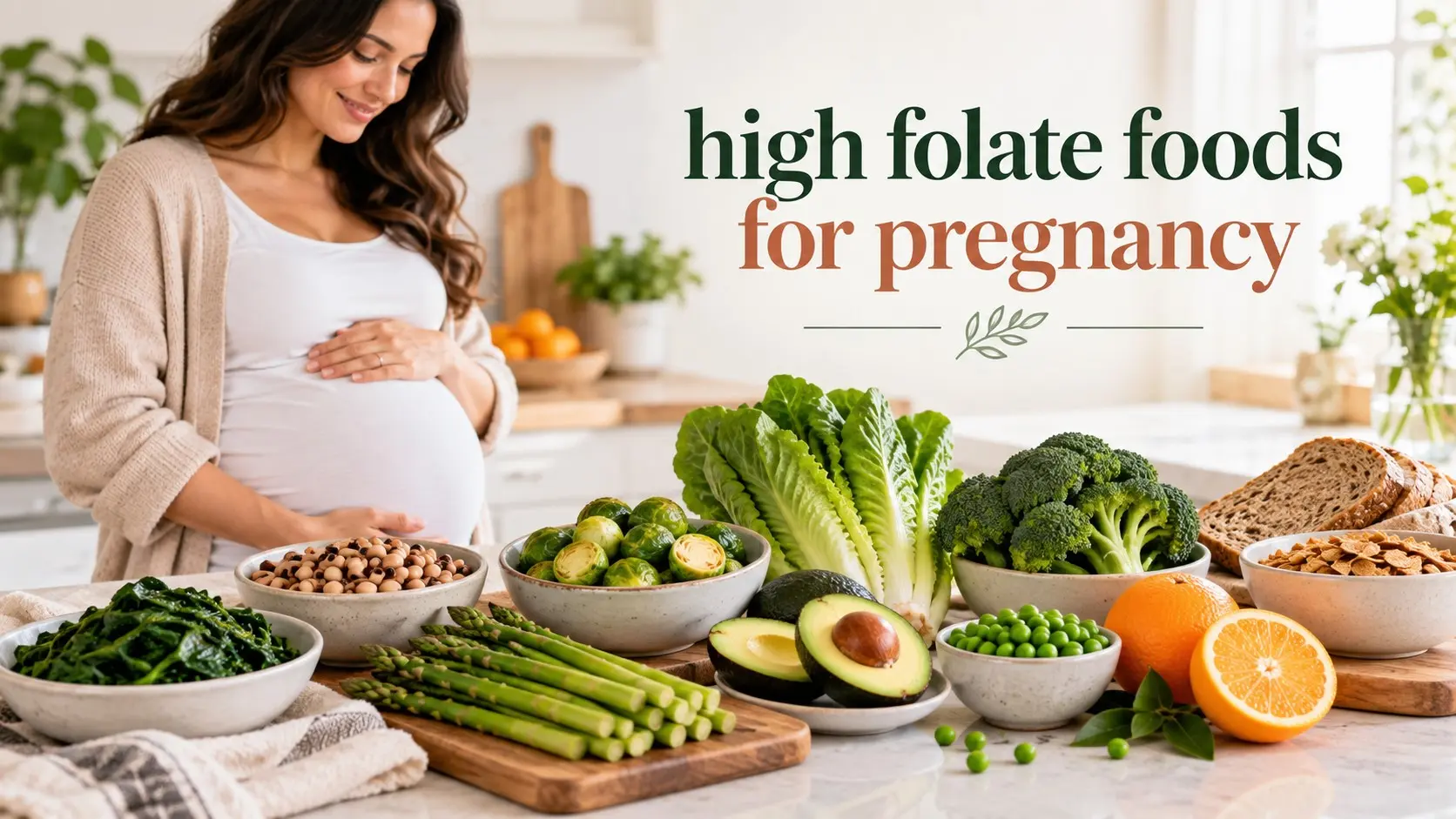
The best high folate foods for pregnancy include cooked spinach, beans, asparagus, Brussels sprouts, avocado, romaine lettuce, broccoli, peas, oranges, and fortified grain foods. They can add useful folate to everyday meals, but food does not replace the folic acid recommended before and during early pregnancy.
That last point matters.
I like a food first approach, but pregnancy is one time when “food first” should not turn into “food only.” Folate from food supports a healthy diet, while folic acid has a specific role in helping prevent serious birth defects of the brain and spine.
According to the NIH, the recommended folate intake during pregnancy is 600 micrograms of dietary folate equivalents, called DFE. CDC also recommends that women who can become pregnant get 400 micrograms of folic acid each day.
Those numbers are not a mistake. DFE accounts for the fact that your body handles natural food folate and folic acid differently.
Health note: This content is for general educational purposes and does not replace professional medical advice, diagnosis, or treatment. Consult an appropriately qualified healthcare professional for personal medical concerns. This article explains published guidance and does not provide a personal clinical assessment. Always consult qualified medical professionals for diagnosis and treatment of any health condition.
Table of Contents
- Quick Answer
- What folate does during pregnancy
- How much you need
- The 12 Smart Food Choices
- Spinach and leafy greens
- Black eyed peas and beans
- Fortified cereal
- Enriched rice
- Asparagus
- Brussels sprouts
- Enriched pasta
- Romaine lettuce
- Avocado
- Broccoli
- Green peas
- Oranges
- Daily Use
- A simple folate rich day
- Food labels and DFE
- Pregnancy Safety
- Why liver is not on the list
- Why folic acid still matters
- When you may need personal advice
- Questions and Next Steps
What does folate do during pregnancy?
Folate is vitamin B9. Your body uses it to make DNA and new cells, so it matters during times of fast growth.
Pregnancy is one of those times.
Folic acid is a form of folate used in vitamins and in some foods that have nutrients added to them. These are called fortified foods.
CDC states that folic acid is the form shown to help prevent neural tube defects. These are serious birth defects of the brain and spine. The neural tube forms very early in pregnancy, which is why folic acid advice starts before pregnancy when possible.
This is also why I would not wait for a positive pregnancy test before thinking about folic acid if pregnancy is possible or planned.
How much folate do you need while pregnant?
The NIH lists the pregnancy recommendation as 600 mcg DFE each day.
DFE means dietary folate equivalents. It is a way to count folate from food and folic acid from fortified food or supplements while allowing for differences in absorption.
CDC recommends 400 mcg of folic acid each day for women who can become pregnant. ACOG also advises taking a daily prenatal vitamin that contains at least 400 mcg of folic acid.
Think of the plan in two parts.
- Eat plenty of folate rich foods.
- Follow the folic acid advice given for pregnancy and pregnancy planning.
That is simpler than trying to make natural food folate do every job by itself.
Which high folate foods are best during pregnancy?
The table below uses values from the NIH Office of Dietary Supplements. Food values can vary a little with brand, type, portion, and preparation, but these numbers give you a useful way to compare common foods.
| No. | Food | Serving | Folate | Simple Use |
|---|---|---|---|---|
| 1 | Cooked spinach | 1/2 cup | 131 mcg DFE | Eggs, soup, pasta, or beans |
| 2 | Black eyed peas | 1/2 cup | 105 mcg DFE | Salads, rice bowls, or soup |
| 3 | Fortified breakfast cereal | 1 serving at 25% DV | 100 mcg DFE | Breakfast with milk or fruit |
| 4 | Enriched white rice | 1/2 cup cooked | 90 mcg DFE | With beans, vegetables, or protein |
| 5 | Cooked asparagus | 4 spears | 89 mcg DFE | Dinner, eggs, or pasta |
| 6 | Brussels sprouts | 1/2 cup cooked | 78 mcg DFE | Roasted or steamed with dinner |
| 7 | Enriched spaghetti | 1/2 cup cooked | 74 mcg DFE | With tomato sauce and vegetables |
| 8 | Romaine lettuce | 1 cup | 64 mcg DFE | Salad with beans and avocado |
| 9 | Avocado | 1/2 cup sliced | 59 mcg DFE | Toast, sandwiches, or bowls |
| 10 | Cooked broccoli | 1/2 cup | 52 mcg DFE | Rice, pasta, soup, or dinner |
| 11 | Green peas | 1/2 cup cooked | 47 mcg DFE | Soup, rice, pasta, or side dish |
| 12 | Orange | 1 small | 29 mcg DFE | Breakfast or snack |
Notice something useful here. You do not need one perfect food.
A normal day can bring folate from several places, and that is much easier to keep doing.
1. Cooked spinach gives a lot of folate in a small serving
Half a cup of cooked spinach provides about 131 mcg DFE. That makes spinach one of the strongest everyday vitamin B9 foods on the NIH list.
You do not need to eat a huge spinach salad. Add cooked spinach to eggs, soup, pasta, beans, or a simple rice bowl.
Raw spinach also contains folate, but cooking shrinks the leaves. That lets you fit more spinach into a small serving, which can be useful when your appetite is low.
2. Beans make folate easier to use in a real meal
Half a cup of cooked black eyed peas gives about 105 mcg DFE.
Kidney beans, chickpeas, lentils, and other pulses also add dietary folate. I like this group because beans can do several jobs at once. They give you folate, plant protein, fiber, and minerals while making a meal more filling.
Use them in soup, add them to a salad, or serve them with rice and vegetables.
If canned beans are easier, use them. Rinse them if you want to remove some of the liquid and sodium.
3. Fortified cereal can help on difficult mornings
Pregnancy nausea does not care how good your meal plan looks on paper.
On some mornings, a bowl of cereal may sound much easier than eggs and vegetables. That is fine.
A cereal fortified to 25% of the Daily Value provides about 100 mcg DFE in the NIH example. Brands vary, so check the label rather than assuming every cereal has the same amount.
This is where fortified foods can be useful. They provide folic acid along with the folate naturally found in the rest of your diet.
4. Enriched rice is easy to overlook
Half a cup of enriched cooked white rice in the NIH table provides about 90 mcg DFE.
That amount comes in part from folic acid added through enrichment.
There is no need to treat white rice as a special pregnancy food. The useful point is that foods already sitting in your kitchen may contribute more folate than you think.
Read the package because fortification rules differ by country and product.
5. Asparagus gives useful folate without a huge portion
Four cooked asparagus spears provide about 89 mcg DFE.
Roast them with dinner, cut them into an omelet, or mix them with pasta. If asparagus smells terrible to you right now because of pregnancy nausea, choose another food.
You have plenty of options.
6. Brussels sprouts are good, but you do not need to force them
Half a cup of cooked Brussels sprouts gives about 78 mcg DFE.
They work well roasted or steamed, but there is no prize for eating a vegetable you hate. Broccoli, spinach, beans, peas, or asparagus can fill the same practical role.
A food you enjoy enough to eat again is usually more useful than a food you bought because a list called it a superfood.
7. Enriched pasta can add folic acid quietly
Half a cup of enriched cooked spaghetti contains about 74 mcg DFE in the NIH table.
Pair it with tomato sauce, cooked spinach, broccoli, peas, or beans and you can bring several folate sources into one simple meal.
This is the kind of pregnancy nutrition I prefer to focus on. Ordinary meals matter more than perfect looking meal plans.
8. Romaine gives a salad more folate than many people expect
One cup of shredded romaine lettuce provides about 64 mcg DFE.
Make it the base rather than the whole meal. Add beans, avocado, another safe protein food, and vegetables you like.
Wash fresh produce well before eating it during pregnancy and follow local food safety advice.
9. Avocado works well when cooked greens do not
Half a cup of sliced avocado provides about 59 mcg DFE.
There is almost no work involved. Put it on toast, add it to a bean bowl, mash it into a sandwich, or serve it beside another meal.
This makes avocado useful when smell or texture changes make cooked vegetables hard to eat.
10. Broccoli is an easy freezer food
Half a cup of cooked frozen broccoli gives about 52 mcg DFE in the NIH table.
Fresh is not required.
Frozen vegetables can save time and cut food waste, which matters when your appetite changes from one day to the next. Add broccoli to rice, soup, eggs, or pasta.
11. Green peas make an easy backup
Half a cup of cooked green peas provides about 47 mcg DFE.
Keep a bag in the freezer and you always have a simple folate source ready. Peas can go into soup, pasta, rice, or a warm vegetable bowl in a few minutes.
12. Oranges are useful, but they are not the whole answer
A small orange provides about 29 mcg DFE.
That is less than spinach or beans, so I would treat oranges as a helpful extra rather than the main source of folate.
Whole oranges also provide vitamin C and fiber. They work well at breakfast or as a snack when heavier foods do not appeal.
What does a folate rich day look like?
You do not need to eat all 12 foods.
Here is a more useful way to build your day.
| Meal | Simple Choice | Folate Focus |
|---|---|---|
| Breakfast | Fortified cereal with fruit | Fortified cereal and orange |
| Lunch | Romaine bowl with beans and avocado | Romaine, beans, and avocado |
| Snack | Fruit or another food you tolerate well | Small extra contribution |
| Dinner | Rice or pasta with spinach and broccoli | Spinach, broccoli, and enriched grain |
This is why I would not spend the day counting every microgram.
Use several folate foods for pregnancy, keep your diet varied, and check your prenatal vitamin. That approach is easier to live with and follows the way pregnancy nutrition guidance is actually written.
What does DFE mean on a food label?
DFE means dietary folate equivalents.
The FDA uses DFE because your body absorbs folic acid more easily than the folate found naturally in food.
On a U.S. Nutrition Facts or Supplement Facts label, folate appears in mcg DFE. If some of that folate comes from added folic acid, the label also shows the amount of folic acid in parentheses.
There is a useful shortcut.
- 5% of the Daily Value or less is considered low.
- 20% of the Daily Value or more is considered high.
So when you compare two cereals or grain foods, turn the package around. The nutrition label tells you more than the front of the box.
Folate vs folic acid: which one matters more?
This should not be a contest.
Folate vs folic acid is really about where vitamin B9 comes from and how your body uses it.
Natural folate comes from foods such as vegetables, beans, peas, fruit, and nuts. Folic acid is used in supplements and many fortified grain foods.
CDC states that folic acid is the form proven to help prevent neural tube defects.
So my advice is not to choose one and reject the other. Eat foods rich in natural folate and follow current folic acid during pregnancy guidance.
Why food first does not mean food only during pregnancy
A good diet gives you more than folate.
Beans bring protein and fiber. Vegetables bring vitamins and plant compounds. Avocado adds unsaturated fat. Fruit brings vitamin C and other nutrients.
Food deserves a big place in the plan.
Still, ACOG recommends a daily prenatal vitamin with at least 400 mcg of folic acid. CDC also recommends 400 mcg of folic acid each day for women who can become pregnant.
That is why I would not tell a pregnant reader to swap the prenatal for a larger spinach salad.
Why is liver missing even though it is very high in folate?
This is where a simple “highest folate foods” list can go wrong.
Beef liver contains about 215 mcg DFE in a 3 ounce serving according to the NIH. That is more than any food in our table.
Yet I am not recommending it during pregnancy.
The NHS advises pregnant people to avoid liver and liver products because they contain high levels of preformed vitamin A. Too much preformed vitamin A can harm fetal development.
So the best pregnancy food is not always the food with the highest nutrient number.
Pregnancy safety comes first.
Can food alone give you enough folate?
A varied diet can provide a lot of folate, but pregnancy advice does not rely on food alone.
ACOG notes that it is hard to get enough folic acid from food alone and recommends a prenatal vitamin containing at least 400 mcg of folic acid.
This matters because the 600 mcg DFE pregnancy recommendation and the 400 mcg folic acid recommendation describe related, but different, parts of the plan.
Do not add extra folic acid tablets just to push the number higher. Some people need a higher prescribed amount because of their medical or pregnancy history, but that needs personal advice.
Who should ask about a different folic acid plan?
Talk with your obstetric clinician, midwife, doctor, pharmacist, or registered dietitian if you have a higher risk situation.
This can include a previous pregnancy affected by a neural tube defect, diabetes, some seizure medicines, or another medical reason that changes your folic acid needs.
Guidance for higher doses varies by health history and country. Do not choose a large dose on your own.
What if pregnancy nausea makes vegetables hard to eat?
Then stop trying to build every meal around vegetables.
A fortified cereal may work in the morning. Avocado on toast may feel easier than cooked greens. Beans in a mild soup may be easier than a large salad.
Your food tolerance can change quickly in pregnancy, and a useful plan should bend with it.
Keep a few easy choices around. Frozen peas, frozen broccoli, canned beans, enriched rice, cereal, oranges, and avocado take little work.
If nausea or vomiting is making it hard to keep food, fluids, or your prenatal vitamin down, contact your pregnancy care team.
Can vegetarians and vegans get enough folate from food?
Plant diets can contain plenty of natural folate because beans, lentils, peas, leafy greens, asparagus, avocado, broccoli, and many other plants contain vitamin B9.
Folate is not the only pregnancy nutrient to think about, though.
People eating vegan or restricted diets may need closer attention to vitamin B12, iron, iodine, calcium, vitamin D, choline, protein, and omega 3 fats.
Do not assume a diet is complete just because it is high in one nutrient.
Should you choose natural folate instead of folic acid?
No.
I would be wary of supplement marketing that tells pregnant readers that natural sounding automatically means better.
CDC states that folic acid is the type of folate shown to help prevent neural tube defects.
Natural food folate is still valuable. It simply does not cancel the reason folic acid is recommended.
Five common folate mistakes during pregnancy
- Trying to get everything from one food. A varied diet works better than forcing spinach into every meal.
- Skipping folic acid because your diet looks healthy. Food and folic acid have different roles in pregnancy guidance.
- Choosing liver because it tops a folate chart. Pregnancy guidance says to avoid liver because of its high vitamin A content.
- Assuming every cereal has the same folic acid. Fortification varies, so read the label.
- Taking more supplements without checking the total. Review your prenatal and any extra products together.
My food first rule for folate
I would keep this very simple.
Pick two or three folate foods you already enjoy. Put them into meals you already eat, then make sure your prenatal plan follows current folic acid guidance.
For example, add spinach to eggs, beans to lunch, and broccoli or asparagus to dinner. Tomorrow can look different.
That is much easier than trying to build a perfect pregnancy diet around a spreadsheet.
Conclusion
High folate foods for pregnancy are most useful when they fit into meals you can eat again and again. Spinach, beans, asparagus, avocado, broccoli, peas, romaine, oranges, and fortified grains all have a place.
Start with one simple change today. Add one useful folate food to your next meal, then check your prenatal label to make sure your folic acid plan also matches the advice from your pregnancy care team.
Related NextFitLife Guides and Hubs
- Nutrition and Vitamins Guide for vitamins, minerals, folate, supplements, and nutrient safety.
- Top 20 Healthy Foods for simple nutrient rich food choices.
- B12 Rich Foods for vitamin B12 food sources and pregnancy needs.
- Best Vitamin B Complex for folate, B vitamins, labels, and supplement safety.
- Nutrition Tips for Improving Your Health for practical everyday food habits.
About the Author
Adel Galal is the founder and lead writer of NextFitLife. He writes clear consumer health, nutrition, fitness, and wellness guides using recognized medical, public health, nutrition, and academic sources.
His aim is simple: turn dense health information into useful steps that people can understand and discuss with qualified healthcare professionals.
Adel is not a physician, dermatologist, registered dietitian, pharmacist, or other licensed healthcare professional. NextFitLife content is educational and should not replace personal medical or nutrition care.
Learn more about Adel Galal and NextFitLife on the About Us page.
Frequently Asked Questions
What are the best high folate foods for pregnancy?
Good choices include cooked spinach, black eyed peas, asparagus, Brussels sprouts, romaine lettuce, avocado, broccoli, peas, oranges, and fortified grain foods. Use several foods across the day rather than trying to depend on one source.
How much folate does a pregnant person need?
The NIH recommendation during pregnancy is 600 mcg DFE each day. CDC also recommends 400 mcg of folic acid daily for women who can become pregnant.
Is folate the same as folic acid?
Folate is the general name for forms of vitamin B9. Natural folate is found in foods, while folic acid is used in many vitamins and fortified foods.
Can I get enough folate from food while pregnant?
A healthy diet can provide a lot of natural folate, but pregnancy guidance also recommends folic acid. ACOG advises a prenatal vitamin with at least 400 mcg of folic acid.
Is spinach high in folate?
Yes. Half a cup of boiled spinach provides about 131 mcg DFE according to the NIH food table.
Are beans high in folate?
Yes. Half a cup of cooked black eyed peas provides about 105 mcg DFE. Kidney beans, chickpeas, lentils, and other pulses also contain folate.
Is avocado a good folate food during pregnancy?
Yes. Half a cup of sliced avocado provides about 59 mcg DFE and is easy to add to toast, salads, sandwiches, and bowls.
Why should pregnant people avoid liver if it is high in folate?
Liver is high in folate, but it is also very high in preformed vitamin A. NHS pregnancy guidance says to avoid liver and liver products because too much vitamin A can harm fetal development.
Do fortified cereals count as folate sources?
Yes. Many cereals contain added folic acid. The amount varies, so check the Nutrition Facts label and serving size.
What does mcg DFE mean?
Mcg DFE means micrograms of dietary folate equivalents. It lets food folate and folic acid be compared while accounting for differences in how the body absorbs them.
References and Sources
- Centers for Disease Control and Prevention, About Folic Acid
https://www.cdc.gov/folic-acid/about/
- NIH Office of Dietary Supplements, Folate Fact Sheet for Health Professionals
https://ods.od.nih.gov/factsheets/Folate-HealthProfessional/
- U.S. Food and Drug Administration, Folate and Folic Acid on Nutrition and Supplement Facts Labels
https://www.fda.gov/food/nutrition-facts-label/folate-and-folic-acid-nutrition-and-supplement-facts-labels
- American College of Obstetricians and Gynecologists, Healthy Eating During Pregnancy
https://www.acog.org/womens-health/faqs/healthy-eating-during-pregnancy
- NHS, Vitamins and Supplements in Pregnancy
https://www.nhs.uk/best-start-in-life/pregnancy/vitamins-and-supplements-in-pregnancy/

Health & wellness writer with 30+ years of experience in nutrition, fitness, and healthy aging. Founder of NextFitLife.com — evidence-based health guidance.