Published: October 3, 2026
Written and Source Checked by: Adel Galal, Founder and Lead Writer at NextFitLife
Medical Review Status: This article has not been medically reviewed by a doctor, registered dietitian, pharmacist, gastroenterologist, hematologist, or other licensed healthcare professional.
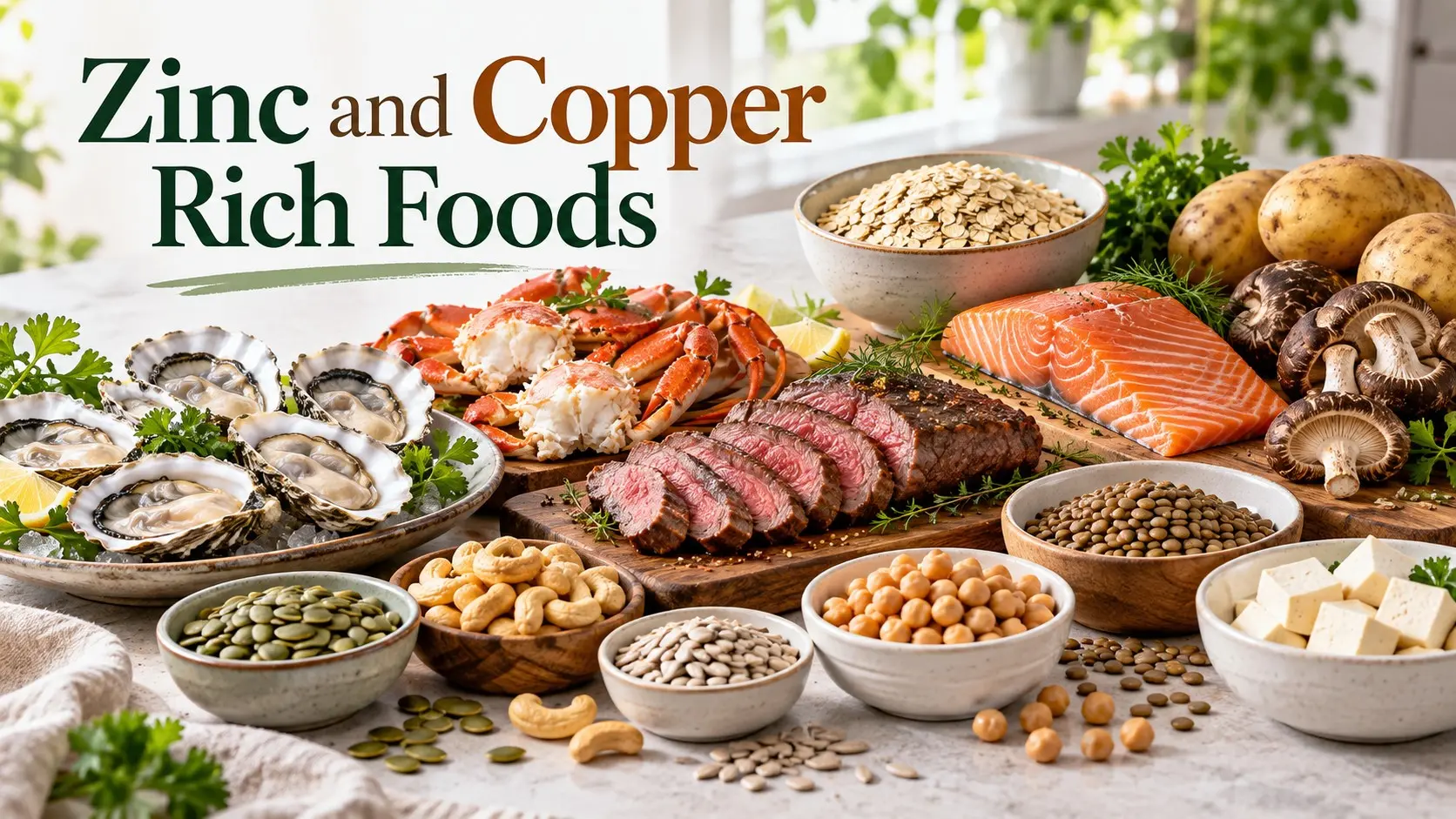
If you want more zinc and copper, start with food. Seafood, meat, beans, tofu, nuts, seeds, whole grains, mushrooms, and potatoes can cover a lot of ground without turning meals into mineral math.
The supplement story is different. Long term high zinc intake can reduce copper absorption, so taking more zinc is not always harmless.
Quick answer: Zinc and copper rich foods include oysters, crab, pumpkin seeds, cashews, sunflower seeds, chickpeas, lentils, tofu, oats, salmon, potatoes, mushrooms, and other varied whole foods. Most healthy adults do not need to calculate a special zinc to copper ratio. The bigger concern is taking high doses of zinc for long periods, which can reduce copper absorption.
For a wider guide to minerals, deficiencies, food sources, and supplement safety, visit the NextFitLife Nutrition and Vitamins Hub.
Medical note: This content is for general educational purposes and does not replace professional medical advice, diagnosis, or treatment. Consult an appropriately qualified healthcare professional for personal medical concerns. This article explains published guidance and does not provide a personal clinical assessment. Always consult qualified medical professionals for diagnosis and treatment of any health condition.
This article provides general nutrition education. It does not diagnose zinc or copper deficiency, interpret laboratory results, or prescribe a personal supplement dose.
Table of Contents
- What zinc and copper do
- How much adults need
- Do you need a zinc to copper ratio?
- 13 practical food choices
- Oysters
- Crab
- Lean beef
- Pumpkin seeds
- Cashews
- Sunflower seeds
- Chickpeas
- Lentils
- Tofu
- Oats and whole grains
- Salmon
- Potatoes
- Shiitake mushrooms
- Best food combinations
- Plant based zinc absorption
- Why too much zinc can lower copper
- Why liver needs portion sense
- Supplement safety
- When blood tests need context
- Common mistakes
- References and Sources
- Related NextFitLife guides
- About the author
- Frequently asked questions
What Do Zinc and Copper Do?
Zinc and copper are both trace minerals. Your body needs only small amounts, but those amounts still matter.
Zinc supports normal immune function, cell division, DNA and protein production, growth, wound healing, and the senses of taste and smell.
Copper helps enzymes involved in energy production, iron metabolism, connective tissue formation, brain and nervous system function, and normal immune activity.
Neither mineral works by a simple more is better rule.
Your body needs enough.
After that, larger doses do not automatically create stronger immunity, faster healing, better skin, or more energy.
Our Zinc and Magnesium Benefits Guide explains the same problem with mineral supplement marketing in more detail.
How Much Zinc Do Adults Need?
Zinc needs depend on sex and life stage.
| Adult Group | Recommended Zinc Per Day |
|---|---|
| Men age 19 and older | 11 mg |
| Women age 19 and older | 8 mg |
| Pregnancy | 11 mg |
| Breastfeeding | 12 mg |
The adult upper intake level for zinc is 40 mg per day from all sources.
That is a safety limit.
It is not a target to reach every day.
How Much Copper Do Adults Need?
Copper requirements are much smaller.
| Adult Group | Recommended Copper Per Day |
|---|---|
| Men and women age 19 and older | 900 mcg |
| Pregnancy | 1,000 mcg |
| Breastfeeding | 1,300 mcg |
The adult copper upper limit is 10,000 mcg, which is 10 mg per day.
Again, that is an upper safety boundary rather than a goal.
Do You Need a Perfect Zinc to Copper Ratio?
No official daily food ratio is recommended for healthy adults.
You may see online advice telling you to aim for a zinc to copper ratio such as 8 to 1, 10 to 1, or 15 to 1.
I would not build meals around that arithmetic.
The National Institutes of Health sets separate intake targets for zinc and copper.
That approach makes more sense.
A ratio can also hide a bad dose.
Ten milligrams of zinc with one milligram of copper and 100 milligrams of zinc with 10 milligrams of copper both create the same numerical ratio.
Those are not the same nutrition plan.
Better rule: Meet normal zinc and copper needs from varied foods. Treat long term high dose zinc as a separate safety issue rather than trying to correct it with ratio math.
13 Zinc and Copper Rich Foods Worth Eating
You do not need every food on this list.
The point is to give yourself several practical choices.
1. Oysters
Oysters are the standout zinc rich food.
NIH lists three ounces of Eastern oysters at about 32 mg of zinc, depending on the exact type and preparation.
Oysters are also extremely rich in copper.
That makes them unusual because one food supplies large amounts of both minerals.
You do not need oysters every day.
If you enjoy shellfish, an occasional serving makes zinc very easy to cover.
2. Crab
Crab provides both minerals without being as concentrated as oysters.
Three ounces of cooked blue crab provide about 3.2 mg of zinc.
Dungeness crab is also a strong copper source.
Species and serving sizes matter, so do not treat every crab entry in a food database as identical.
The useful point is that seafood can contribute both zinc and copper in a normal meal.
3. Lean Beef
Beef is more useful for zinc than copper.
Three ounces of roasted bottom sirloin provide about 3.8 mg of zinc.
The zinc in animal foods is also well absorbed.
Pair beef with copper rich foods such as potatoes, mushrooms, beans, whole grains, or cashews rather than expecting the meat to supply every mineral.
4. Pumpkin Seeds
Pumpkin seeds are one of the easiest plant based zinc foods to use.
One ounce of roasted pumpkin seeds provides about 2.2 mg zinc.
Seeds also contribute other minerals, healthy fats, fiber, and protein.
Add them to oatmeal, yogurt, salads, soup, or grain bowls.
One measured handful is enough.
5. Cashews
Cashews are especially useful for copper.
One ounce of dry roasted cashews provides about 629 mcg copper, close to 70% of the adult Daily Value.
They also contribute some zinc.
This makes cashews an easy bridge between the two minerals.
Use a normal portion because nuts are energy dense.
6. Sunflower Seeds
A quarter cup of toasted sunflower kernels provides about 615 mcg copper.
Sunflower seeds also pair well with zinc containing foods such as oats, yogurt, legumes, and whole grains.
Sprinkle them onto food rather than treating them like a supplement dose.
7. Chickpeas
Chickpeas make this list because they are useful, cheap, and easy to turn into a meal.
Half a cup provides about 289 mcg copper in the NIH food table.
Chickpeas also contribute zinc, fiber, and plant protein.
Use them in hummus, salads, soups, curries, wraps, or grain bowls.
8. Lentils
Half a cup of cooked lentils provides about 1.3 mg zinc.
Lentils also provide protein, fiber, iron, folate, and other minerals.
This is what I like about food first nutrition.
You get more than one nutrient at a time.
Lentils work in soup, curry, tomato sauce, salads, or bowls with whole grains.
9. Tofu
Tofu is a useful plant based source of copper and protein.
Half a cup of firm tofu provides about 476 mcg copper in the NIH table.
Soy foods also contribute zinc.
Pair tofu with brown rice or another whole grain, vegetables, and seeds for an easy mineral rich meal.
10. Oats and Other Whole Grains
One cup of cooked oats provides about 2.3 mg zinc.
Whole grains also contribute copper.
For example, cooked whole wheat pasta provides useful copper in an ordinary serving.
This is another reason I prefer whole grains more often than heavily refined grains.
Breakfast becomes especially easy: oats, yogurt, pumpkin seeds, and fruit.
For more broad food planning ideas, read 24 Proven Nutrition Tips for Better Health.
11. Salmon
Salmon is not one of the highest zinc foods, but it still contributes both minerals.
Three ounces of cooked salmon provide about 0.5 mg zinc.
Wild Atlantic salmon can also provide about 273 mcg copper in three ounces.
Pair it with a potato, whole grain, beans, or vegetables and the meal becomes stronger nutritionally.
12. Potatoes
Potatoes are easy to underestimate.
A medium potato eaten with the skin provides about 675 mcg copper in the NIH food table.
That is a substantial amount from a food people do not usually think of as a copper source.
A baked potato with beans and vegetables is more useful than treating potatoes as empty starch.
13. Shiitake Mushrooms
Half a cup of cooked shiitake mushrooms provides about 650 mcg copper.
That is over half the Daily Value.
Add them to eggs, tofu, rice, noodles, soup, or stir fried vegetables.
They are especially useful if you eat little or no shellfish or organ meat.
Which Foods Stand Out Most?
| Food | Main Strength | Easy Use |
|---|---|---|
| Oysters | Very high zinc and copper | Occasional seafood meal |
| Crab | Both zinc and copper | Salads, seafood bowls, main meals |
| Beef | Strong zinc source | Main protein with vegetables |
| Pumpkin seeds | Plant based zinc | Oats, yogurt, salads |
| Cashews | High copper | Snack or meal topping |
| Sunflower seeds | High copper | Oats, yogurt, salads |
| Chickpeas | Copper plus plant protein | Hummus, curry, salads |
| Lentils | Plant zinc and protein | Soup, curry, grain bowls |
| Tofu | Copper plus plant protein | Stir fry, bowls, soups |
| Oats | Useful zinc base | Breakfast |
| Salmon | Moderate copper plus protein | Main meal |
| Potatoes | Strong everyday copper source | Baked, boiled, or roasted |
| Shiitake mushrooms | High copper | Stir fry, soup, rice |
Food data note: Mineral values change with species, brand, preparation, serving weight, and food database entry. Treat the numbers as practical estimates rather than assuming every oyster, potato, or bowl of oats is nutritionally identical.
What Does a Zinc and Copper Rich Day Look Like?
You do not need to eat oysters and mushrooms at every meal.
Build variety across the day.
Breakfast
Oats with plain yogurt and pumpkin or sunflower seeds.
The oats and seeds contribute zinc, while sunflower seeds can add a large amount of copper.
Lunch
A chickpea, whole grain, vegetable, and cashew bowl.
This gives you copper, moderate zinc, fiber, protein, and several other nutrients.
Dinner
Choose salmon, tofu, lean beef, crab, or another protein food.
Add potatoes, mushrooms, whole grains, or vegetables.
Snack
A small handful of nuts or seeds works well.
That is enough.
The goal is a varied eating pattern, not a mineral challenge.
For a broader food first approach, see the NextFitLife Top 20 Healthy Foods Guide.
Why Is Zinc From Plant Foods Absorbed Differently?
Plant foods can provide plenty of zinc.
The issue is absorption.
Beans, whole grains, nuts, and seeds contain compounds called phytates. Phytates can bind some zinc in the digestive tract, which reduces the amount your body absorbs.
This does not make plant foods bad zinc sources.
It means a plant based eating pattern should include several zinc sources instead of relying on one food.
Food preparation can also help.
Soaking beans and grains before cooking, using fermented foods such as tempeh, and eating yeast raised bread can reduce some phytate effects.
Why Can Too Much Zinc Lower Copper?
This is the safety issue I would take more seriously than a zinc to copper ratio chart.
Zinc and copper interact during absorption in the intestine.
High zinc intake increases production of proteins that bind metals inside intestinal cells. Copper can become trapped and leave the body when those cells are shed rather than reaching the bloodstream.
Over time, too much zinc can therefore produce copper deficiency.
NIH reports that zinc intakes of 50 mg or more for weeks can interfere with copper absorption.
Remember that the adult zinc upper limit is 40 mg per day.
Check your total zinc: Zinc can appear in multivitamins, cold lozenges, immunity formulas, sports supplements, standalone tablets, and other products. Add the amounts before deciding that your intake is low.
What Can Copper Deficiency Cause?
Copper deficiency is uncommon, but it is real.
Possible problems include anemia, low white blood cell counts, weakness, and neurological symptoms such as numbness, tingling, or trouble walking.
Those symptoms are not specific to copper deficiency.
Do not diagnose yourself from a symptom list.
Long term high dose zinc use is one reason a healthcare professional may think about copper status.
Should You Automatically Add Copper to a Zinc Supplement?
No.
This is another place where ratio advice becomes too simple.
If your diet already contains enough copper and your zinc dose is ordinary, adding copper may not solve anything.
If a clinician has prescribed high dose zinc for a medical reason, ask that clinician whether copper monitoring or supplementation is appropriate.
Do not turn one self prescribed mineral into two.
Why Is Beef Liver Not in the Main Everyday List?
Because it is extremely concentrated.
Three ounces of pan fried beef liver provide about 12.4 mg copper according to NIH.
The adult copper upper limit is 10 mg per day.
This does not mean one serving automatically causes copper toxicity.
Upper limits are designed to reduce risk from repeated high intake.
But it does mean liver is a poor choice for a daily “more copper is better” strategy.
If you enjoy liver, think of it as a concentrated food rather than a supplement you need every day.
What About Dark Chocolate?
Dark chocolate is another useful copper source.
One ounce of chocolate containing roughly 70% to 85% cocoa provides about 501 mcg copper.
That is more than half the adult Daily Value.
Still, chocolate does not need to become medicine.
Use a normal portion and enjoy it as food.
Can You Get Too Much Copper From Food?
For most healthy adults eating a varied diet, copper toxicity from ordinary food is uncommon.
High supplemental intake and unusual exposure are more important concerns.
There is also a major medical exception.
Wilson Disease
People with Wilson disease cannot handle copper normally and can accumulate excessive amounts in the liver, brain, and other tissues.
They need specialist treatment and individualized dietary advice.
A general article about copper rich foods does not apply to a person following a medical copper restriction.
Do Most People Need a Copper Supplement?
No.
Most people can obtain enough copper from a varied diet.
Copper deficiency is uncommon.
Risk can increase with conditions that reduce nutrient absorption, after some forms of gastrointestinal surgery, or after prolonged excessive zinc intake.
A supplement should solve a real problem.
It should not be added because a social media ratio calculator tells you that dinner contained too much zinc.
Do Most People Need a Zinc Supplement?
Not automatically.
Many people get enough zinc from food.
Supplementation can be useful when intake is inadequate, absorption is poor, or a healthcare professional is treating a documented problem.
But high doses can cause nausea, vomiting, stomach upset, reduced copper absorption, lower HDL cholesterol, and impaired immune function.
If your goal is simply better nutrition, start with food.
What if You Follow a Vegetarian or Vegan Diet?
A plant based diet can supply zinc and copper.
Planning matters more for zinc because phytate reduces absorption from many plant foods.
Useful choices include:
- Pumpkin seeds
- Cashews
- Sunflower seeds
- Chickpeas
- Lentils
- Tofu
- Tempeh
- Oats
- Whole grains
- Fortified foods
Use several of these foods across the day.
Do not assume that a vegan diet automatically requires a zinc pill.
Can Symptoms Tell You That Zinc or Copper Is Low?
Not reliably.
Fatigue, hair changes, slow wound healing, changes in taste, weakness, frequent infections, numbness, and other symptoms have many possible causes.
A symptom list cannot tell you which mineral is low.
If deficiency is a real concern, a healthcare professional can review diet, medical history, medicines, symptoms, and appropriate testing.
Are Zinc and Copper Blood Tests Simple to Interpret?
Not always.
Blood zinc changes with factors such as infection, inflammation, age, sex, fasting status, and time of day.
Copper markers can also change with inflammation, pregnancy, estrogen exposure, and other health conditions.
This means one laboratory number needs context.
Do not look at a result online and start high dose mineral supplements without knowing what caused it.
Common Mistakes to Avoid
Chasing a Perfect Zinc to Copper Ratio
There is no official food ratio target for healthy adults.
Meet normal needs for each nutrient.
Taking 50 mg of Zinc Every Day Because It Is Sold Over the Counter
Availability does not make a high dose suitable for long term use.
That amount is above the adult upper limit.
Using Several Zinc Products at Once
A multivitamin, cold lozenge, immunity supplement, and sports product can all contain zinc.
Add the totals.
Adding Copper Without Checking Your Diet or Multivitamin
You may already be getting plenty.
Read the labels first.
Assuming Plant Zinc Does Not Count
It counts.
Absorption is lower from some high phytate foods, but variety and preparation help.
Eating Liver Every Day for Minerals
Liver is extremely concentrated in copper.
More concentrated does not mean better for daily use.
Taking Minerals Instead of Fixing Meals
If your diet contains few protein foods, legumes, whole grains, nuts, seeds, or vegetables, fix the food pattern before buying another bottle.
A Simple Shopping List
If I wanted to cover both minerals through ordinary food, I would start here:
- Oats
- Pumpkin seeds
- Cashews
- Sunflower seeds
- Chickpeas
- Lentils
- Tofu
- Potatoes
- Mushrooms
- Salmon, beef, crab, or another suitable protein
You do not need all ten.
Choose foods that fit your budget, culture, and normal eating pattern.
For related educational guides, visit our Food and Nutrition Hub.
Conclusion
Zinc and copper rich foods are easiest to use when you stop treating minerals like a ratio puzzle. Oysters, seafood, beef, seeds, nuts, legumes, tofu, oats, salmon, potatoes, and mushrooms can cover both minerals across a varied diet.
My recommendation is simple: build meals first, check supplement labels second, and take long term high dose zinc seriously because it can reduce copper absorption.
If you are using 40 mg or more of zinc each day, have symptoms of deficiency, take several mineral products, or have a condition such as Wilson disease or a malabsorption disorder, ask a qualified healthcare professional for individual advice.
References and Sources
- National Institutes of Health, Office of Dietary Supplements. Zinc Fact Sheet for Health Professionals.
https://ods.od.nih.gov/factsheets/Zinc-HealthProfessional/ - National Institutes of Health, Office of Dietary Supplements. Copper Fact Sheet for Health Professionals.
https://ods.od.nih.gov/factsheets/Copper-HealthProfessional/ - MedlinePlus. Zinc in Diet.
https://medlineplus.gov/ency/article/002416.htm - MedlinePlus. Copper in Diet.
https://medlineplus.gov/ency/article/002419.htm - Cleveland Clinic. The Health Benefits of Copper.
Updated February 26, 2025.
https://health.clevelandclinic.org/benefits-of-copper
Continue Reading on NextFitLife
Use these related guides to build a food first mineral and nutrition plan:
- Nutrition and Vitamins Hub
- Zinc and Magnesium Benefits: Food, Supplements and Safety
- 24 Proven Nutrition Tips for Better Health
- Top 20 Healthy Foods: Nutrient Rich Choices
About the Author
Adel Galal is the founder and lead writer of NextFitLife. His personal study and practical interest in health, fitness, nutrition, wellness, and healthy aging spans more than 30 years.
His work focuses on comparing nutrition claims with recognized medical, government, and scientific sources, then turning the information into clear food choices and practical safety guidance.
Adel is not a doctor, registered dietitian, pharmacist, gastroenterologist, hematologist, or other licensed healthcare professional. NextFitLife content is informational and educational and does not replace personal medical or nutrition care.
Learn more about Adel Galal, NextFitLife, and the site's editorial approach on the About Us page.
Frequently Asked Questions
What foods are high in both zinc and copper?
Oysters are especially high in both. Crab, seeds, nuts, legumes, tofu, whole grains, and some fish also contribute both minerals, though one mineral may be much higher than the other.
What is the best source of zinc?
Oysters are one of the richest common food sources of zinc. Beef, crab, pumpkin seeds, oats, dairy foods, legumes, nuts, and fortified foods also contribute zinc.
What is the best source of copper?
Beef liver is extremely concentrated in copper, while oysters, shiitake mushrooms, potatoes with skin, cashews, sunflower seeds, tofu, dark chocolate, and crab are other strong sources.
Do I need a specific zinc to copper ratio?
No official daily food ratio is recommended for healthy adults. It is more useful to meet the separate zinc and copper intake recommendations and avoid long term excessive zinc intake.
Can too much zinc cause copper deficiency?
Yes. Long term high zinc intake can reduce copper absorption. NIH reports that zinc intakes of 50 mg or more for weeks can interfere with copper absorption.
How much zinc do adults need?
Adult men need 11 mg per day and adult women need 8 mg. Pregnancy raises the recommendation to 11 mg and breastfeeding to 12 mg.
How much copper do adults need?
Adults need 900 mcg of copper per day. Pregnancy raises the recommendation to 1,000 mcg and breastfeeding to 1,300 mcg.
Is 50 mg of zinc too much every day?
Fifty milligrams is above the adult zinc upper limit of 40 mg per day. NIH also reports that taking 50 mg or more for weeks can interfere with copper absorption. A clinician may use higher doses for specific medical reasons.
Should I take copper if I take zinc?
Not automatically. Your zinc dose, how long you take it, your diet, other supplements, and your medical history all matter. Ask a healthcare professional if you use high dose zinc long term.
Is beef liver safe for copper?
Beef liver is extremely concentrated in copper. Three ounces can provide more than the adult copper upper limit for one day. An occasional serving does not automatically mean toxicity, but liver should not be treated as an unlimited daily copper supplement.
Are plant foods good sources of zinc?
Yes. Seeds, legumes, tofu, oats, whole grains, and nuts provide zinc. Phytates in some plant foods reduce zinc absorption, so variety and suitable food preparation help.
Can vegans get enough zinc and copper?
Yes, with planning. Useful foods include pumpkin seeds, cashews, sunflower seeds, chickpeas, lentils, tofu, tempeh, oats, whole grains, and fortified foods.
Can copper deficiency cause numbness?
Severe copper deficiency can affect the nervous system and may cause numbness, tingling, weakness, or walking problems. These symptoms have many other causes, so proper medical assessment is needed.
Who should be careful with copper rich foods?
People with Wilson disease require individualized copper management and should follow their specialist's treatment plan rather than general high copper food advice.

Health & wellness writer with 30+ years of experience in nutrition, fitness, and healthy aging. Founder of NextFitLife.com — evidence-based health guidance.