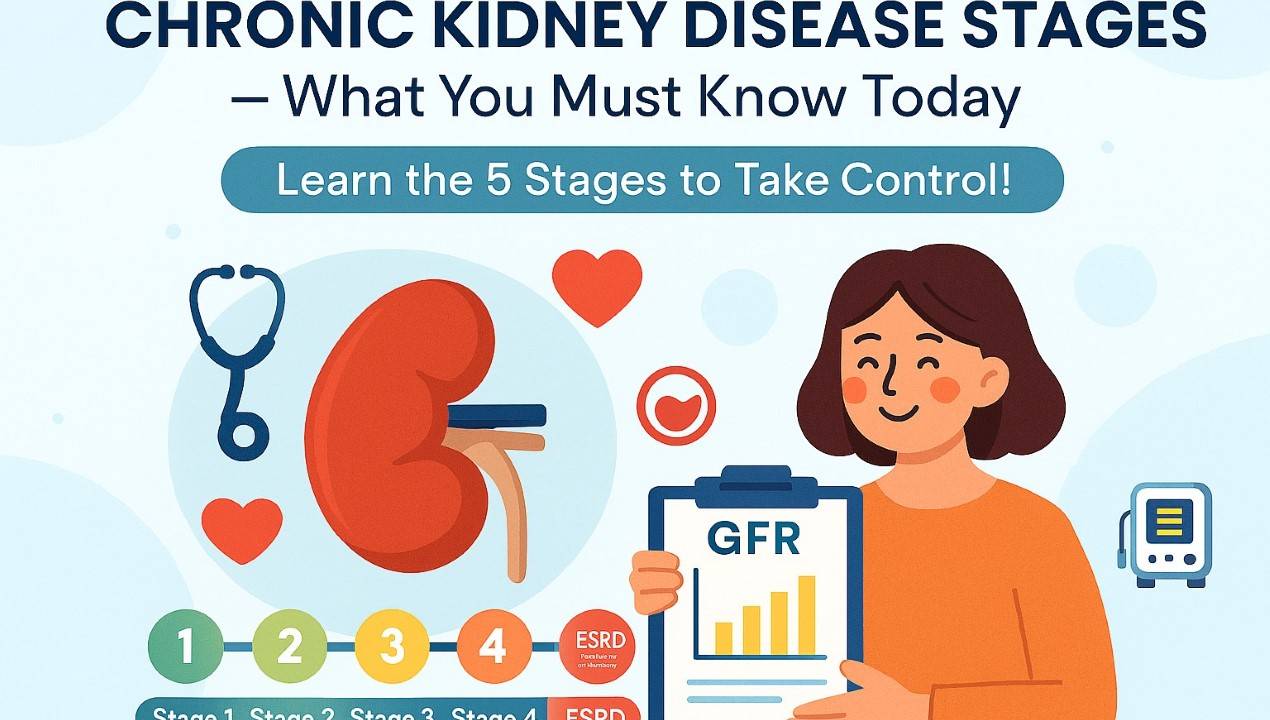
Chronic kidney disease stages show how much your kidneys are damaged. The kidneys filter waste from your blood and help your body stay well. When they don’t work well, it can cause problems. The good news? You can manage it with healthy habits, doctor visits, and treatments.
In this article, I’ll explain the chronic kidney disease stages, their symptoms, and how to live better. I’ve seen people take control of their health by understanding this, and I’m eager to share it with you in simple words!
What Are Chronic Kidney Disease Stages?
Chronic renal failure stages tell you how well your kidneys work. Doctors use a test called the glomerular filtration rate (GFR) measurement to check for kidney function decline. This test measures how much blood your kidneys filter. The disease moves through five stages, starting with mild and ending with severe.
Each stage shows how much care your kidneys need. I like to compare kidneys to car engines. If the engine slows down, you need to know how bad it is to fix it. The chronic kidney disease stages are like a report card for your kidneys. Let’s dive into each one!
Why Understanding Stages Helps You
Knowing your chronic kidney disease stage helps you:
- Understand how serious your condition is.
- Plan treatments with your doctor.
- Make changes to slow renal disease progression.
I’ve seen people feel empowered when they know their stage. It’s like having a guide for your health journey!
The Five Chronic Kidney Disease Stages
There are five CKD stages, based on your estimated glomerular filtration rate (eGFR). Let’s break them down in simple terms.
Stage 1: Mild Kidney Damage
In Stage 1, your kidneys have mild kidney damage but work normally. Your GFR is 90 or higher. You might not feel sick, but tests may show proteinuria in kidney disease (protein in your urine) or other kidney damage markers.
What to do:
- Eat a diet low in salt and sugar.
- Check your blood pressure often.
- Stay active with light exercise, like walking.
I’ve seen people in Stage 1 stay healthy for years by starting early. It’s like fixing a drip before it turns into a flood.
Stage 2: Mild Kidney Function Decline
Stage 2 shows a slight kidney function decline. Your GFR is 60–89. You may not feel symptoms, but tests might find urine albumin-creatinine ratio (uACR) issues, like protein in your urine.
What to do:
- Control blood pressure and blood sugar.
- Avoid medicines that harm the kidneys, like some painkillers.
- See your doctor for regular kidney health monitoring.
I’ve noticed that small steps in Stage 2 can slow CKD progression significantly.
Stage 3: Moderate Kidney Disease
Stage 3 chronic kidney disease is split into 3A (GFR 45–59) and 3B (GFR 30–44). Your kidneys are working less well, and you might notice CKD stage symptoms like:
- Feeling tired.
- Swelling in hands or feet.
- Needing to pee more often.
What to do:
- Follow a kidney health management plan.
- Work with a dietitian for a healthy diet.
- Take medicines as prescribed.
I’ve talked to people in stage 3 chronic kidney disease who felt better after changing their diet. It’s amazing how simple tweaks help!
Stage 4: Severe Kidney Impairment
In Stage 4, your GFR is 15–29, showing severe kidney impairment. Symptoms get stronger, like:
- Itchy skin.
- Shortness of breath.
- Loss of appetite.
What to do:
- Prepare for dialysis and transplant options.
- Follow your doctor’s advice closely.
- Limit foods high in potassium, like bananas.
I’ve seen how tough this stage can be, but doctors can guide you to the best treatment options by each CKD stage.
Stage 5: End-Stage Renal Disease (ESRD)
Stage 5, or end-stage renal disease (ESRD), means your GFR is below 15. Your kidneys barely work, and you may need dialysis treatment or a transplant. Symptoms include:
- Nausea or vomiting.
- Severe tiredness.
- Trouble breathing.
What to do:
- Start dialysis treatment (hemodialysis or peritoneal dialysis).
- Explore dialysis and transplant options.
- Stay positive with support from family or groups.
I’ve met people with ESRD who live active lives with dialysis. It’s inspiring to see their strength!
Symptoms Across Chronic Kidney Disease Stages
Each chronic kidney disease stage has different CKD stage symptoms. Early stages may be silent, but as kidney disease progresses, you might notice:
- Tiredness or low energy.
- Swelling in hands, feet, or ankles.
- Foamy urine (proteinuria in kidney disease).
- Frequent urination, especially at night.
- Itchy skin or cramps (in later stages).
I’ve seen people think these symptoms are just stress. If you notice them, get a kidney function monitoring test. A doctor can check your kidney damage markers.
Kidney Failure Risk Factors and Prevention
What Speeds Up CKD Progression Stages?
I have seen certain factors consistently accelerate renal disease progression:
Major accelerators:
- Uncontrolled diabetes (blood sugar >180 mg/dL regularly)
- High blood pressure (>140/90)
- Proteinuria in kidney disease
- Smoking and tobacco use
- Obesity and metabolic syndrome
- Frequent use of NSAIDs (ibuprofen, naproxen)
Protective factors that slow progression:
- Excellent blood pressure control (<130/80)
- Perfect diabetes management (A1C <7%)
- Kidney health management with specialists
- Regular exercise and a healthy weight
- Kidney-friendly diet modifications
- Avoiding nephrotoxic medications
How Doctors Diagnose Chronic Kidney Disease Stages
To find your chronic kidney disease stage, doctors use simple tests:
- Blood test for creatinine: Shows kidney function decline.
- Estimated glomerular filtration rate (eGFR): Measures how well your kidneys filter blood.
- Urine albumin-creatinine ratio (uACR): Checks for protein or blood in urine.
- Imaging tests: Like ultrasounds, to see your kidneys.
- Biopsy: Rarely, to find the cause.
I’ve seen how a quick blood test can catch chronic kidney disease stages early. Ask your doctor about kidney monitoring tests if you’re at risk, like if you have diabetes.
Complications of Chronic Kidney Disease Stages
CKD can lead to other health problems. These include:
- Heart disease and stroke
- Anemia
- Weak bones
- Fluid buildup
- Chronic renal failure stages leading to ESRD
Managing Chronic Kidney Disease Stages
Each chronic kidney disease stage needs specific care. Here’s how to manage them.
Lifestyle Changes for Kidney Health
Healthy habits can slow renal disease progression:
- Diet: Eat less salt, sugar, and processed foods. Choose fruits, vegetables, and whole grains. Limit protein if advised.
- Exercise: Walk or swim for 30 minutes most days.
- Quit smoking: It worsens chronic renal failure stages.
- No alcohol: Too much alcohol hurts your kidneys.
I’ve tested a diet with fresh veggies and felt more energy. It’s easy and helps kidney health management!
Medicines to Support You
Doctors may prescribe medicines to:
- Control blood pressure (like ACE inhibitors).
- Manage diabetes to avoid risk factors.
- Reduce swelling with diuretics.
- Lower cholesterol for heart and kidney health.
I’ve seen medicines help people stay out of dialysis treatment longer. Always follow your doctor’s advice.
Advanced Treatments for Later Stages
In later chronic kidney disease stages, you might need:
- Dialysis treatment: Hemodialysis (at a clinic) or peritoneal dialysis (at home) cleans your blood.
- Kidney transplant: A new kidney can improve your life, but it needs surgery and medicines.
I’ve talked to people on dialysis treatment who say it gave them a new start. It’s tough but doable!
Preventing Kidney Damage
You can protect your kidneys, even with chronic kidney disease stages. Try these tips:
- Drink plenty of water.
- Check blood pressure and blood sugar regularly.
- Avoid overusing painkillers like ibuprofen.
- Eat a diet low in salt and processed foods.
- Stay active to support kidney health monitoring.
I’ve seen these steps keep kidneys healthier for longer. They’re simple and effective!
FAQs About Chronic Kidney Disease Stages
Is Stage 3 Kidney Disease Curable?
Stage 3 chronic kidney disease is not curable, but you can manage it. With a kidney health management plan, medicines, and lifestyle changes, you can slow renal disease progression. I’ve seen people in Stage 3 live well for years with great care.
What Are the 5 Stages of CKD?
The five chronic kidney disease stages are:
- Stage 1: Mild kidney damage (GFR 90+).
- Stage 2: Mild kidney function decline (GFR 60–89).
- Stage 3: Moderate kidney disease (GFR 30–59).
- Stage 4: Severe kidney impairment (GFR 15–29).
- Stage 5: End-stage renal disease (ESRD) (GFR <15).
Each stage needs different treatment options for CKD.
How Long Can You Live with Chronic Kidney Disease?
You can live a long life with CKD stage symptoms! Early stages (1–3) can be managed for decades with diet, exercise, and medicines. Later stages may need dialysis and transplant options. I’ve seen people thrive with proper care.
What Foods Should You Avoid with Chronic Kidney Disease?
Avoid:
- Salty foods (chips, canned soups).
- High-potassium foods (bananas, oranges).
- Processed meats (sausage, bacon).
- Sugary drinks.
- High-protein foods (if advised).
A diet low in salt helps kidney health monitoring. Ask a dietitian for a plan.
Final Thoughts
Understanding chronic kidney disease stages gives you power over your health. From mild kidney damage to end-stage renal disease (ESRD), each stage has clear steps to manage it. I’ve seen how minor changes, like eating better or checking your GFR, can change lives.
Talk to your doctor, stay positive, and start today. You’re stronger than you think!

Health & wellness writer with 30+ years of experience in nutrition, fitness, and healthy aging. Founder of NextFitLife.com — evidence-based health guidance.