Published: October 10, 2025
Last updated: July 19, 2026
Next review: July 2027
Written and source-checked by: Adel Galal, Founder of NextFitLife
Review status: Editorially reviewed and source checked. This article has not been medically reviewed by a nephrologist, doctor, or registered dietitian.
Kidney Healthy Foods can help you build simple meals that support your kidneys, heart, blood pressure, and general health.
But there is no single food list for every person.
A food that works well for one person may not work for another. Your needs can change if you have chronic kidney disease, diabetes, high blood pressure, kidney stones, high potassium, high phosphorus, or dialysis treatment.
The safest plan is based on your blood tests, kidney function, medicines, health needs, and advice from your care team.
Quick Answer
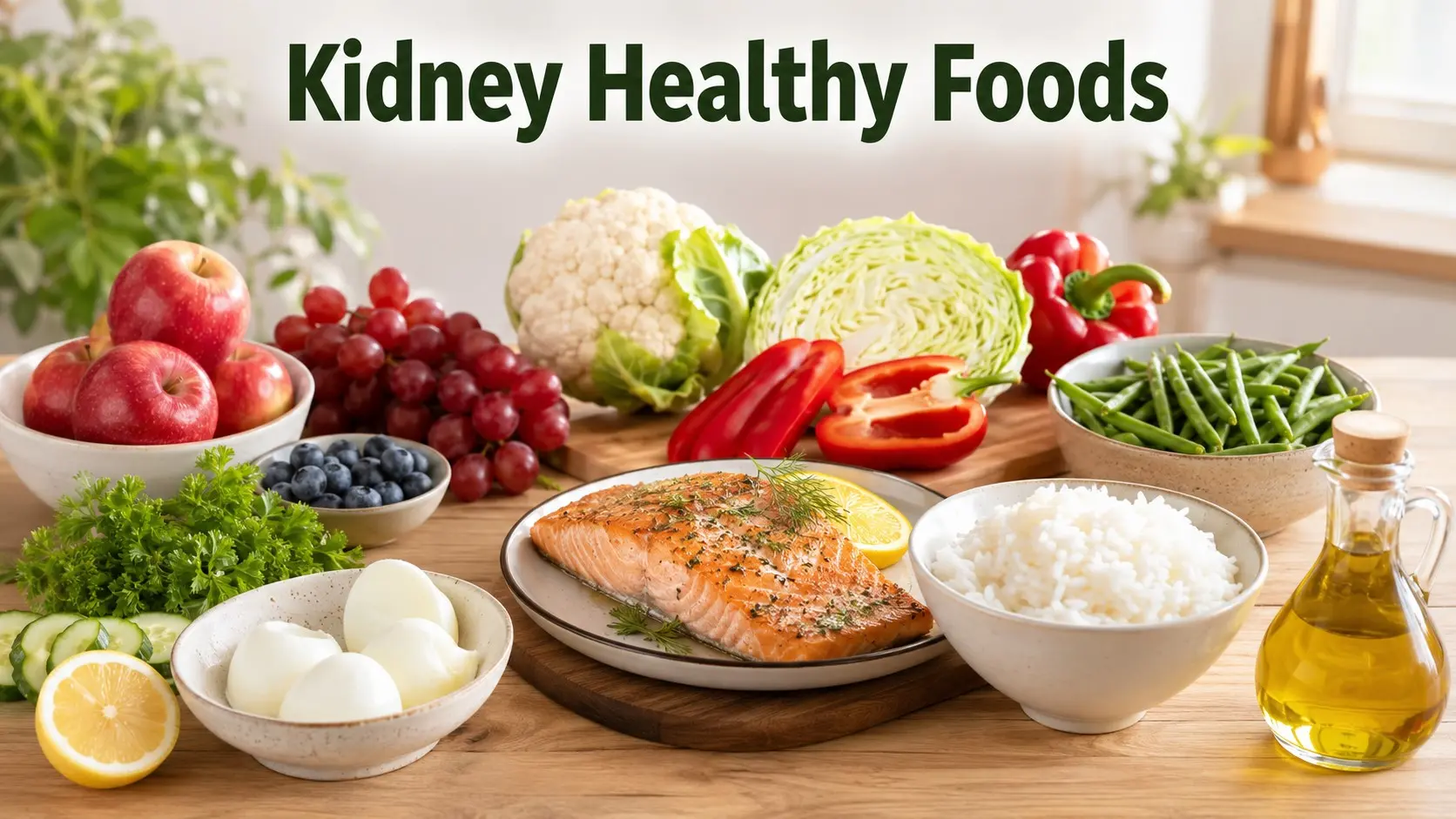
Kidney Healthy Foods often include apples, berries, grapes, cauliflower, cabbage, red peppers, green beans, egg whites, fresh fish, fresh chicken, rice, pasta, and olive oil. These foods may be easier to fit into some kidney eating plans. However, your personal limits for sodium, potassium, phosphorus, protein, and fluids must come from your doctor or renal dietitian.
Important Medical Note
This content is for general educational purposes and does not replace professional medical advice, diagnosis, or treatment. Consult an appropriately qualified healthcare professional for personal medical concerns.
This article explains published guidance and does not provide a personal clinical assessment.
Always consult qualified medical professionals for diagnosis and treatment of any health condition.
Do not begin a strict renal diet, fluid limit, low potassium plan, low phosphorus plan, or low protein plan unless your medical team tells you to do so.
Why Kidney Healthy Foods Matter
Your kidneys do many important jobs.
They remove waste and extra fluid from your blood. They help control blood pressure. They also help balance sodium, potassium, phosphorus, calcium, and other minerals.
Healthy kidneys can usually keep these levels in a safe range.
Damaged kidneys may not remove waste or extra minerals as well. This is why some people need a personal chronic kidney disease diet.
Food cannot repair kidney damage on its own. It also cannot replace medicine, testing, dialysis, or medical care.
A good food plan may still help you:
- Control blood pressure
- Control blood sugar
- Reduce extra sodium
- Manage swelling
- Support a healthy weight
- Get enough energy and protein
- Manage potassium and phosphorus when needed
- Reduce the amount of heavily processed food you eat
For more daily care steps, read our guide on how to protect the kidneys.
Does Everyone Need the Same Kidney Diet?
No.
This is one of the most important facts about Kidney Healthy Foods.
The right plan depends on your health.
| Health situation | Main food goal |
|---|---|
| No known kidney disease | Eat balanced meals, control sodium, drink enough fluid, and support healthy blood pressure and blood sugar. |
| Early chronic kidney disease | Follow your test results. Avoid excess sodium and excess protein. Do not limit potassium or phosphorus without a medical reason. |
| Advanced chronic kidney disease | You may need personal limits for sodium, potassium, phosphorus, protein, or fluids. |
| Dialysis | Protein needs are often higher. Fluid, sodium, potassium, and phosphorus needs depend on dialysis type and blood tests. |
| Kidney stones | The plan depends on the stone type and urine test results. It is not the same as a chronic kidney disease plan. |
Our kidney disease guide explains symptoms, causes, testing, and stages in simple words.
Key Nutrients in a Kidney Friendly Diet
A kidney friendly diet may look at five main areas.
1. Sodium
Sodium is a mineral found in salt and many packed foods.
Too much sodium can raise blood pressure. It can also increase thirst, swelling, and fluid buildup.
Common high sodium foods include:
- Fast food
- Processed meat
- Instant noodles
- Canned soup
- Salty snacks
- Pickles
- Stock cubes
- Ready made sauces
- Frozen ready meals
Choose fresh foods more often. Use garlic, onion, lemon, vinegar, herbs, ginger, pepper, and other salt free spices for taste.
These changes can help you eat more low sodium foods without making every meal bland.
2. Potassium
Potassium helps your nerves, heart, and muscles work.
Kidney disease and some medicines can make potassium too high or too low.
Do not cut out healthy fruit and vegetables just because they contain potassium.
A low potassium plan is only needed when your blood tests or care team say it is needed.
Foods that often contain more potassium include bananas, oranges, potatoes, tomatoes, avocado, dried fruit, beans, milk, yogurt, and some leafy vegetables.
Foods that may be easier to fit into some low potassium foods plans include apples, berries, grapes, pineapple, cabbage, cauliflower, peppers, cucumber, onions, and green beans.
Portion size still matters.
3. Phosphorus
Phosphorus helps build bones and cells.
Damaged kidneys may not remove extra phosphorus well.
High phosphorus can affect bones and blood vessels over time.
Phosphorus is found in dairy food, meat, fish, beans, nuts, seeds, and whole grains. These foods are not always bad. Your needs depend on your blood tests.
Added phosphorus may be a bigger concern. It is often found in heavily processed food and drinks.
Check ingredient lists for words that contain “phos.”
Examples include:
- Phosphoric acid
- Sodium phosphate
- Calcium phosphate
- Potassium phosphate
- Pyrophosphate
A dietitian can help you choose low phosphorus foods without making your diet too strict.
4. Protein
Protein helps your muscles, skin, blood, and immune system.
But protein also creates waste that the kidneys must help remove.
Some adults with chronic kidney disease who are not on dialysis may need to avoid eating too much protein.
People receiving dialysis often need more protein.
Do not copy another patient’s protein plan.
Your target depends on your body size, kidney stage, health, appetite, and treatment.
5. Fluids
Not everyone with kidney disease needs a fluid limit.
A limit may be needed if you have severe swelling, low urine output, heart failure, or dialysis treatment.
Fluid includes more than water.
It can include tea, coffee, milk, juice, soup, ice, gelatin, and frozen desserts.
Ask your medical team how much fluid is right for you.
18 Kidney Healthy Foods to Add to Simple Meals
The following foods are often used in kidney friendly meals.
They are not safe for every person in every amount. Use the portions given by your doctor or dietitian.
1. Apples
Apples give you fiber and natural sweetness. They are low in sodium. They are also lower in potassium than many tropical fruits.
Eat a small apple as a snack. You can also add apple slices to oats or a salad.
2. Blueberries
Blueberries contain fiber and plant compounds called antioxidants.
Add a small handful to cereal, oats, yogurt, or a fruit bowl when these foods fit your plan.
3. Strawberries
Strawberries are sweet, fresh, and easy to portion.
Use them with breakfast or as a simple snack.
4. Grapes
Grapes can fit many kidney food plans.
Wash them well and keep the portion small if you also need to manage blood sugar.
5. Pineapple
Pineapple is often lower in potassium than bananas and oranges.
Choose fresh pineapple or fruit packed in juice. Avoid products packed in heavy syrup.
6. Cauliflower
Cauliflower is one of the most useful foods good for kidneys.
You can steam it, roast it, mash it, or turn it into cauliflower rice.
Add garlic, lemon, pepper, or herbs instead of a salty sauce.
7. Cabbage
Cabbage is low in sodium and easy to use.
Add it to soup, salad, wraps, or a light stir fry.
8. Red Bell Peppers
Red peppers add color, crunch, and vitamin C.
Add them to eggs, salads, rice, pasta, wraps, or grilled meals.
9. Green Beans
Green beans make a simple side dish.
Steam them and add olive oil, lemon, garlic, or black pepper.
10. Cucumber
Cucumber adds crunch and water to a meal.
Use fresh cucumber in salad. Avoid very salty pickled cucumber if you need to lower sodium.
11. Onions
Onions add strong flavor without much sodium.
Use them in rice, eggs, soup, chicken, fish, pasta, or vegetable meals.
12. Egg Whites
Egg whites give high quality protein with less phosphorus than egg yolks.
Make an egg white scramble with peppers and onions.
13. Fresh Fish
Fish gives protein. Some fish also give healthy fats.
Choose fresh or plain frozen fish. Avoid fish covered in salty breading or heavy sauce.
Bake it with lemon, herbs, garlic, and a small amount of olive oil.
14. Fresh Chicken or Turkey
Fresh skinless chicken and turkey can be useful lean protein foods.
Choose fresh meat when possible. Processed and seasoned meat may contain a lot of sodium or phosphate additives.
15. Tofu
Tofu can work in a more plant based meal plan.
Its potassium and phosphorus can vary. Check the label and ask your dietitian about the right portion.
16. Rice
Rice is simple and easy to pair with vegetables and protein.
White rice may be useful when a person needs a grain with less phosphorus and potassium. Brown rice gives more fiber and may fit other kidney plans.
Your dietitian can help you choose the best type.
17. Plain Pasta
Plain pasta can form the base of a simple meal.
Add cabbage, peppers, onions, olive oil, herbs, and a suitable protein.
Avoid very salty ready made pasta sauces.
18. Olive Oil
Olive oil adds flavor and unsaturated fat.
Use a small amount in salad, vegetables, fish, chicken, rice, or pasta.
Are Bananas, Tomatoes, Potatoes, and Avocado Bad for Your Kidneys?
No food is always bad for every kidney patient.
Bananas, tomatoes, potatoes, and avocado are healthy foods. They also contain more potassium.
You may need smaller portions or different choices if your blood potassium is high.
You may not need to avoid them if your potassium is normal.
Never remove a long list of fruit and vegetables without checking your blood tests and asking your care team.
Foods That May Need Limits
The foods below may be harder to fit into some kidney plans.
The amount you can eat depends on your personal needs.
Very Salty Foods
- Processed meat
- Deli meat
- Sausage
- Instant soup
- Fast food
- Salty chips
- Pickles
- Stock cubes
- Ready made gravy
- Large amounts of soy sauce
Foods with Phosphate Additives
- Processed cheese
- Some dark cola drinks
- Processed meat
- Some frozen meals
- Some fast food
- Some baking mixes
- Some protein drinks
High Potassium Foods When Potassium Is High
- Bananas
- Oranges
- Orange juice
- Potatoes
- Tomatoes
- Avocado
- Dried fruit
- Large servings of beans
- Salt substitutes made with potassium chloride
These foods are not harmful to every person. Limit them only when your tests and medical plan show a need.
Heavily Processed Foods
Many heavily processed foods contain added sodium, phosphorus, sugar, and fat.
Examples include packed snacks, ready meals, processed meat, sweet drinks, and some fast food.
Try to choose fresh or lightly prepared foods more often.
Simple Kidney Healthy Foods Meal Ideas
These ideas can help you start a simple kidney diet meal plan.
They are examples only. Change the portions and foods to match your medical needs.
Breakfast Idea 1
- Egg white scramble
- Red peppers and onions
- One slice of toast
- A small serving of berries
Breakfast Idea 2
- A small bowl of oats if allowed
- Blueberries
- Cinnamon
- A suitable milk or dairy choice
Lunch Idea 1
- Fresh grilled chicken
- Cabbage and cucumber salad
- Rice
- Lemon and olive oil dressing
Lunch Idea 2
- Egg white and pepper wrap
- Fresh lettuce or cabbage
- Apple slices
- Water or another approved drink
Dinner Idea 1
- Baked fish
- Green beans
- Rice or pasta
- Garlic, lemon, and herbs
Dinner Idea 2
- Tofu or chicken
- Cauliflower
- Cabbage
- Red peppers
- A small amount of low sodium sauce
Simple Snack Ideas
- A small apple
- A small bowl of grapes
- Fresh berries
- Unsalted crackers
- A boiled egg or egg whites if allowed
- A suitable yogurt if dairy fits your plan
For broader food guidance, visit our Foods and Nutrition Hub.
Kidney Healthy Foods Shopping List
| Group | Foods to consider | What to check |
|---|---|---|
| Fruit | Apples, berries, grapes, pineapple | Potassium, portion size, and blood sugar |
| Vegetables | Cauliflower, cabbage, peppers, green beans, cucumber, onions | Added salt and sauce |
| Protein | Egg whites, fresh fish, chicken, turkey, tofu | Protein target, sodium, phosphorus, and portion size |
| Grains | Rice, pasta, bread, oats when allowed | Sodium, phosphorus, fiber, and blood sugar |
| Fats | Olive oil and other suitable unsaturated oils | Serving size |
| Flavor | Garlic, onion, lemon, vinegar, herbs, ginger, pepper | Avoid salt blends and potassium salt unless approved |
How to Read Food Labels for Kidney Health
Check the Serving Size
The numbers on the label are based on one serving.
You may eat more than one serving without knowing it.
Compare Sodium
Compare two similar products.
Choose the one with less sodium when it fits your plan.
Read the Ingredient List
Look for words that contain “phos” if you need to limit phosphorus.
Look for potassium chloride if you need to limit potassium.
Do Not Trust the Front of the Pack
Words such as natural, healthy, light, or plant based do not always mean a food is low in sodium, potassium, or phosphorus.
Always read the full label.
Check Fresh Meat
Some fresh looking chicken, fish, or meat may contain added salt or phosphate solutions.
Choose plain products when possible.
Can Food Detox or Clean the Kidneys?
No food, tea, drink, or juice can clean the kidneys.
Your kidneys already filter your blood.
A detox product cannot repair chronic kidney disease or kidney failure.
Some detox teas and herbs can cause dehydration. They may also affect medicines or damage the kidneys.
Be careful with:
- Detox teas
- Extreme juice plans
- Herbal kidney cleanses
- Large vitamin doses
- Potassium supplements
- Magnesium supplements
- Creatine products
- Unknown herbal powders
Ask a doctor or pharmacist before taking any supplement.
Read our guide on how to improve kidney function safely for realistic daily steps.
Common Kidney Diet Mistakes
Restricting Potassium Without a Blood Test
Not every kidney patient has high potassium.
Removing many fruit and vegetables without a reason can make your diet less balanced.
Using Salt Substitutes
Some salt substitutes use potassium chloride.
This may be unsafe when blood potassium is high.
Eating Too Little
A strict food plan can cause poor appetite, weight loss, weakness, and muscle loss.
A kidney plan should protect your nutrition.
Eating Too Much Protein
Large servings of meat and protein powders may not fit a plan for chronic kidney disease before dialysis.
Eating Too Little Protein During Dialysis
Dialysis can increase protein needs.
Do not keep following an old low protein plan after starting dialysis unless your kidney team confirms it.
Following a Plan from Social Media
Your kidney stage, blood tests, medicines, and health conditions are personal.
Another person’s plan may be unsafe for you.
Believing Healthy Means Unlimited
Even a healthy food can become too much when the serving is very large.
Portion size matters.
Kidney Healthy Foods for People with Diabetes
Diabetes and kidney disease often happen together.
A food plan must then manage both kidney needs and blood sugar.
Build meals with a suitable amount of carbohydrate, protein, vegetables, and fat.
Choose water or an approved unsweetened drink instead of sugary drinks.
Fruit is not forbidden. The type and amount should fit your blood sugar and potassium plan.
Do not skip meals or change diabetes medicine without medical advice.
Kidney Healthy Foods and High Blood Pressure
High blood pressure can damage the kidneys.
Kidney disease can also make blood pressure harder to control.
Reducing high sodium food can help many people.
Also take your blood pressure medicine as prescribed. Food cannot replace it.
Check sauces, breads, soups, snacks, processed meat, and restaurant meals. These foods can contain more sodium than you expect.
Kidney Healthy Foods for Kidney Stones
Kidney stones are not all the same.
The right food plan depends on the type of stone and your urine test results.
Many people with kidney stones are told to drink more fluid. This may not be safe if you also have heart failure, advanced kidney disease, swelling, or a prescribed fluid limit.
Do not stop eating all calcium food without advice.
Normal calcium from food may help lower the absorption of oxalate in the gut for some people with calcium oxalate stones.
Learn more in our kidney stones guide.
When to Work with a Doctor or Renal Dietitian
Ask for personal help before making major food changes if you have:
- Chronic kidney disease
- Kidney failure
- Dialysis treatment
- High potassium
- High phosphorus
- Diabetes
- High blood pressure
- Kidney stones
- Heart failure
- Swelling
- Low urine output
- Poor appetite
- Unplanned weight loss
- Pregnancy
- Medicine that affects kidney function or potassium
A renal dietitian can turn your test results into a safe food plan.
The goal is not to remove as many foods as possible.
The goal is to help you eat enough while keeping your blood levels in a safe range.
Conclusion: Start with Simple Kidney Healthy Foods
Kidney Healthy Foods can help you make meals that are fresh, simple, and lower in excess sodium.
Start with one small step today.
Choose a fresh meal. Read one food label. Use herbs instead of extra salt. Add a suitable fruit or vegetable. Then ask your doctor or renal dietitian which nutrients you personally need to watch.
Save this guide and share it with someone who wants to build safer kidney friendly meals.
Sources and References
- National Institute of Diabetes and Digestive and Kidney Diseases: Healthy Eating for Adults with Chronic Kidney Disease
- Kidney Disease Improving Global Outcomes: 2024 Chronic Kidney Disease Guideline Executive Summary
- National Kidney Foundation: Nutrition and Kidney Disease, Stages 1 to 5, Not on Dialysis
- Centers for Disease Control and Prevention: Diabetes and Kidney Disease, What to Eat
- American Kidney Fund: Kidney Friendly Eating Plan
Frequently Asked Questions About Kidney Healthy Foods
What are the best Kidney Healthy Foods?
The best Kidney Healthy Foods often include apples, berries, grapes, cauliflower, cabbage, red peppers, green beans, egg whites, fresh fish, fresh chicken, rice, pasta, and olive oil. The right foods and portions depend on your kidney function, blood tests, medicines, and treatment.
What foods help keep kidneys healthy?
Fresh fruit, vegetables, suitable protein, whole or refined grains that fit your needs, and unsaturated fats can support a balanced diet. It also helps to reduce excess sodium, sugary drinks, and heavily processed food.
What foods should people with kidney disease avoid?
Many people need to limit very salty processed food, fast food, processed meat, salty snacks, and products with phosphate additives. Some people may also need limits for high potassium foods, protein, dairy food, or fluids. These limits must follow blood tests and medical advice.
Are bananas bad for the kidneys?
Bananas are not bad for every person. They contain a lot of potassium. A person with high blood potassium may need a smaller portion or a lower potassium fruit. A person with normal potassium may not need to avoid bananas.
Is water the best drink for kidney health?
Water is a simple drink for many people. However, fluid needs vary. People with dialysis, low urine output, swelling, heart failure, or advanced kidney disease may need a personal fluid limit.
Can Kidney Healthy Foods repair damaged kidneys?
No food can promise to repair damaged kidneys. A suitable diet may support blood pressure, blood sugar, fluid balance, and nutrition. It does not replace medicine, testing, dialysis, or medical care.
Are eggs good for kidney health?
Eggs can fit some kidney eating plans. Egg whites give protein with less phosphorus than egg yolks. Your serving should match your protein and phosphorus needs.
Is olive oil good for the kidneys?
Olive oil is low in sodium, potassium, and phosphorus. It can be used in small amounts as an unsaturated fat. It should still be part of a balanced meal plan.
Do all people with kidney disease need low potassium foods?
No. Potassium needs depend on blood tests, kidney function, medicines, and dialysis type. Do not begin a low potassium diet unless your medical team recommends it.
What is a simple kidney friendly breakfast?
One simple idea is egg whites with red peppers and onions, one slice of toast, and a small serving of berries. The foods and portions should be changed to match your potassium, phosphorus, protein, sodium, and blood sugar needs.

Health & wellness writer with 30+ years of experience in nutrition, fitness, and healthy aging. Founder of NextFitLife.com — evidence-based health guidance.