Published on: August 8, 2025
Updated on: October 17, 2026
Written and source checked by: Adel Galal, Founder and Lead Writer at NextFitLife
Medical review status: This article has not been medically reviewed by a cardiologist, heart failure specialist, physician, pharmacist, registered nurse, dietitian, or other licensed healthcare professional.
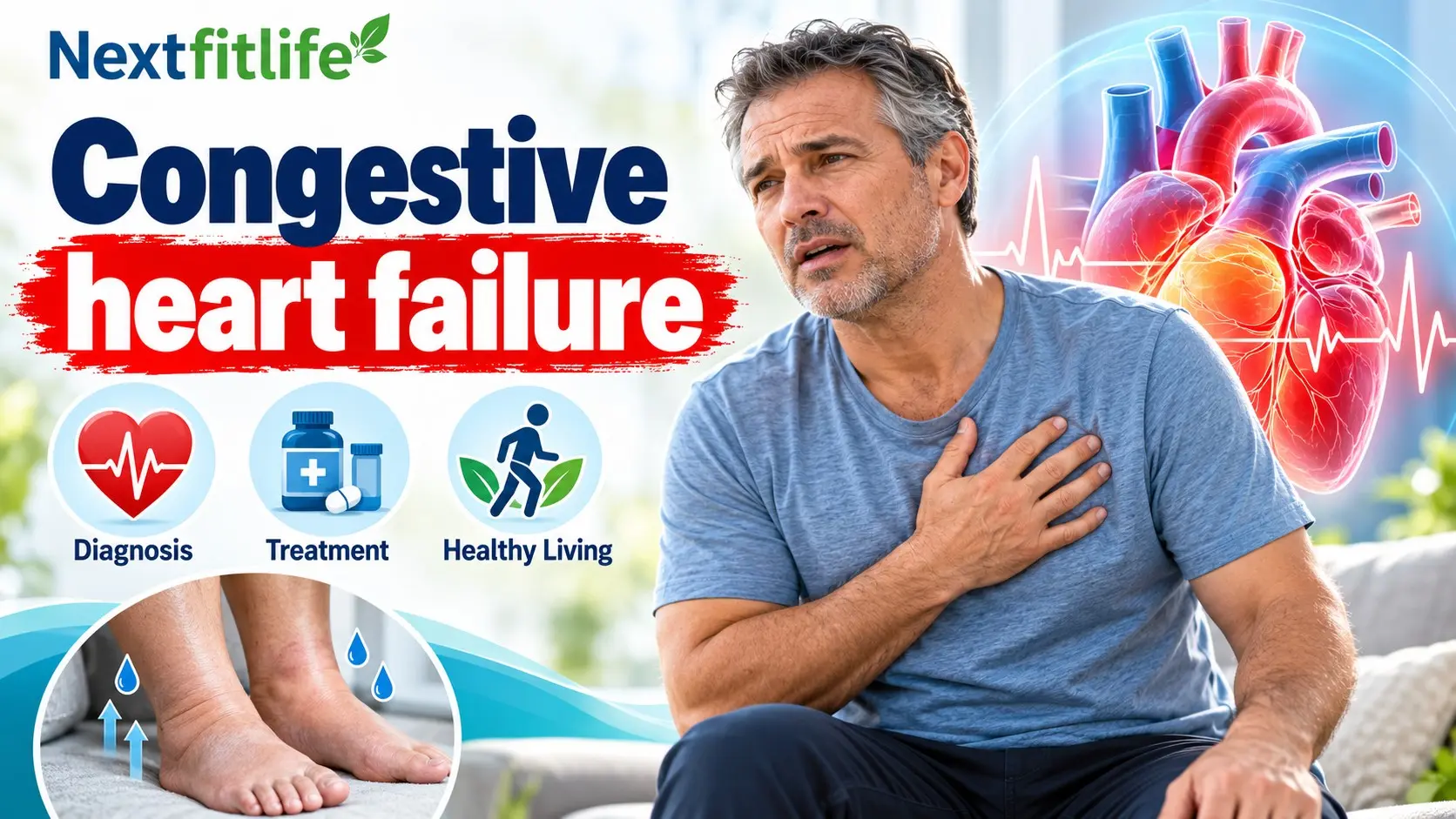
Congestive heart failure means the heart cannot pump, fill, or handle pressure well enough to meet the body's needs, and fluid may build up in the lungs or other tissues.
It does not mean the heart has stopped.
Some people have a weak heart muscle. Others have a heart that squeezes normally but has become too stiff to fill properly. Many people also develop fluid congestion, which can cause shortness of breath, swollen ankles, rapid weight gain, coughing, abdominal swelling, and difficulty lying flat.
Modern treatment can greatly improve symptoms and may reduce hospital stays and death for many people, but the treatment must match the type and cause of heart failure.
This article is for general information and education. It does not replace medical advice, diagnosis, or treatment.
If you develop new chest pressure or symptoms that could be a heart attack, see Signs of a Heart Attack. For broader heart care, visit the NextFitLife Heart Health Guide.
Table of Contents
- What congestive heart failure means
- 14 critical signs
- Shortness of breath
- Trouble lying flat
- Waking breathless
- Swollen feet and legs
- Fast weight gain
- Persistent cough
- Fatigue
- Weakness
- Reduced exercise ability
- Fast or irregular heartbeat
- Abdominal swelling
- Poor appetite
- Reduced urine
- Confusion or fainting
- Types of heart failure
- Reduced ejection fraction
- Preserved ejection fraction
- Improved ejection fraction
- Right sided heart failure
- Common causes
- Stages of heart failure
- How doctors diagnose it
- Modern treatment
- Four core medicine groups for reduced ejection fraction
- Modern treatment for preserved ejection fraction
- Diuretics and fluid control
- Devices and procedures
- Daily home monitoring
- Sodium, fluid, and potassium safety
- Exercise and cardiac rehabilitation
- Advanced heart failure
- Prevention
- Frequently asked questions
What Does Congestive Heart Failure Mean?
The term heart failure describes a condition in which the heart cannot meet the body's needs normally.
The problem may occur because the heart is:
- Too weak to pump enough blood
- Too stiff to fill normally
- Under too much pressure
- Affected by damaged valves
- Beating too fast, too slowly, or irregularly
- Damaged by another disease
The word congestive refers to fluid buildup.
When pressure rises inside the heart and veins, fluid can collect in:
- The lungs
- Feet
- Ankles
- Legs
- Abdomen
- Liver
- Neck veins
Not every person with heart failure has visible swelling.
Some mainly notice tiredness, breathlessness, or reduced exercise capacity.
Heart Failure Does Not Mean the Heart Has Stopped
This is one of the most important misconceptions to correct.
In heart failure, the heart is still beating.
It simply cannot pump or fill normally enough to meet the body's demands.
Cardiac arrest is different.
Cardiac arrest means the heart suddenly stops pumping blood effectively.
A person usually becomes unconscious and is not breathing normally.
Heart failure can increase the risk of cardiac arrest, but the two terms are not interchangeable.
14 Critical Signs of Congestive Heart Failure
Symptoms can develop slowly over months or years, or they can worsen quickly.
No single symptom proves that heart failure is present, because lung, kidney, liver, vein, blood, and other heart conditions can cause similar problems.
1. Shortness of Breath
Shortness of breath, also called dyspnea, is one of the most common symptoms.
At first, you may notice it while:
- Walking quickly
- Climbing stairs
- Carrying groceries
- Doing housework
As heart failure becomes more severe, breathlessness may happen with ordinary activities or even at rest.
2. Trouble Breathing When Lying Flat
Some people breathe comfortably while sitting but become short of breath after lying flat.
This is called orthopnea.
You may notice that you:
- Need more pillows
- Sleep partly upright
- Feel pressure or breathlessness after lying down
Needing more pillows than usual can be an early clue that congestion is increasing.
3. Waking Up Suddenly Breathless
Some people wake several hours after falling asleep with severe breathlessness.
This is called paroxysmal nocturnal dyspnea.
You may need to:
- Sit upright
- Stand
- Open a window
- Wait several minutes for breathing to improve
New nighttime breathlessness deserves medical attention.
4. Swollen Feet, Ankles, or Legs
Edema means swelling caused by excess fluid.
Heart failure can cause:
- Swollen feet
- Puffy ankles
- Tight shoes
- Deep sock marks
- Swollen lower legs
Swelling is often worse later in the day.
However, leg swelling also has many other causes, including vein disease, kidney disease, liver disease, medicine side effects, and blood clots.
5. Sudden Weight Gain
Fluid can increase body weight before swelling becomes obvious.
This is why some heart failure plans include daily weighing.
A rapid change can mean the body is holding extra fluid.
There is no single universal number that applies to every patient.
Some action plans tell patients to call after a gain of two or three pounds in one day or five pounds in one week, but your own heart failure team may give you a different limit.
Follow your personal threshold.
6. Persistent Cough or Wheezing
Fluid congestion in the lungs can cause:
- Persistent cough
- Wheezing
- A cough that is worse at night
- A cough that becomes worse when lying flat
Cough has many possible causes, including lung disease and infection.
7. Extreme Fatigue
Fatigue can happen when the heart cannot deliver enough blood to meet the body's needs.
Other factors can add to tiredness, including:
- Poor sleep
- Anemia
- Kidney disease
- Medication effects
- Loss of muscle strength
- Depression
- Low activity
Ordinary tasks may suddenly feel harder.
8. Weakness
Weakness may occur with fatigue but is not exactly the same.
A person may notice difficulty:
- Getting out of a chair
- Walking the usual distance
- Climbing stairs
- Completing household tasks
A sudden severe decline can signal worsening heart failure or another acute illness.
9. Reduced Exercise Ability
One early clue can be losing the ability to do what you normally do.
For example, you may notice that:
- Your usual walk takes longer
- You need more rest breaks
- Stairs suddenly feel difficult
- You become breathless doing simple chores
Changes in function are worth tracking, even if you do not have dramatic symptoms.
10. Fast or Irregular Heartbeat
Heart failure and abnormal heart rhythms can occur together.
Palpitations may feel like:
- Racing
- Fluttering
- Pounding
- Skipped beats
- An irregular pulse
Some abnormal rhythms can cause heart failure, while heart failure can also make rhythm problems more likely.
A very fast or irregular heartbeat with chest pain, fainting, or severe breathlessness is an emergency.
11. Swollen Abdomen or Feeling Full Quickly
Right sided congestion can cause fluid to collect in the abdomen.
You may notice:
- Bloating
- A larger waist
- Upper abdominal discomfort
- Feeling full after small meals
The liver can also become congested.
12. Loss of Appetite or Nausea
Abdominal congestion can make eating uncomfortable.
Reduced blood flow to the digestive system may also contribute.
Symptoms can include:
- Poor appetite
- Nausea
- Early fullness
- Weight loss in advanced disease
13. Reduced Urine
Kidney blood flow and fluid balance can change when heart failure worsens.
Some people notice less urine during worsening congestion.
However, urine output can also change because of dehydration, kidney disease, medication, or other illnesses.
A major drop in urine combined with severe illness needs urgent assessment.
14. Confusion, Dizziness, or Fainting
Reduced blood flow, low blood pressure, abnormal sodium, infection, kidney problems, and medicines can affect the brain.
Symptoms may include:
- Poor concentration
- Dizziness
- Sleepiness
- Confusion
- Fainting
Sudden confusion, collapse, or fainting should not be managed at home.
Heart Failure Symptoms at a Glance
| Symptom | Possible Meaning | Action |
|---|---|---|
| Mild breathlessness with activity | Reduced heart function or another heart or lung condition | Medical assessment |
| More pillows needed at night | Possible increasing lung congestion | Contact care team |
| Increasing leg swelling | Possible fluid retention | Follow heart failure action plan |
| Rapid weight increase | Possible fluid buildup | Use personal call threshold |
| Severe breathlessness at rest | Possible acute heart failure | Emergency care |
| Pink frothy mucus | Possible severe lung congestion | Emergency care |
| Chest pain or fainting | Possible heart attack or dangerous rhythm | Emergency care |
What Is Acute Decompensated Heart Failure?
Acute decompensated heart failure means heart failure symptoms suddenly become much worse.
A person may develop:
- Severe breathlessness
- Rapid fluid buildup
- Low oxygen
- Very high or low blood pressure
- Kidney problems
- Confusion
Possible triggers include:
- Heart attack
- Abnormal heart rhythm
- Severe high blood pressure
- Infection
- Pulmonary embolism
- Kidney injury
- Missed medicines
- Too much sodium or fluid
- Medicines that promote fluid retention
- Worsening valve disease
This can be life threatening.
Types of Heart Failure
Heart failure is not one identical condition in every patient.
Heart failure with reduced ejection fraction
HFrEF means the heart's main pumping chamber has reduced squeezing ability.
Historically, clinical guidelines and trials commonly use an ejection fraction of 40 percent or lower for this group.
The 2026 universal definition places greater emphasis on the whole clinical picture rather than treating one percentage as the only definition.
Heart failure with preserved ejection fraction
HFpEF often involves a heart that can squeeze out a normal looking percentage of blood but is stiff and does not fill normally.
Common associated conditions include:
- High blood pressure
- Obesity
- Diabetes
- Chronic kidney disease
- Atrial fibrillation
- Sleep apnea
A normal ejection fraction does not rule out heart failure.
Heart failure with improved ejection fraction
Some people once had reduced pumping strength but improve after treatment.
This is often called heart failure with improved ejection fraction.
Improvement does not automatically mean cure.
Stopping successful heart failure medicine can lead to relapse in some people, so treatment is usually continued unless the specialist advises otherwise.
Right sided heart failure
The right side of the heart sends blood to the lungs.
Right sided failure can cause:
- Leg swelling
- Abdominal swelling
- Neck vein swelling
- Poor appetite
- Liver congestion
Biventricular heart failure
This means both sides of the heart are affected.
Left Sided vs Right Sided Heart Failure
| Feature | Left Side | Right Side |
|---|---|---|
| Main congestion | Lungs | Body veins and tissues |
| Common symptoms | Breathlessness, cough, trouble lying flat | Leg swelling, abdominal swelling, poor appetite |
| Common relationship | Often begins from heart or vascular disease | Often develops after left heart failure or lung disease |
What Is Ejection Fraction?
Ejection fraction, or EF, estimates how much blood the left ventricle pushes out with each contraction.
An echocardiogram commonly measures it.
EF is useful, but it does not tell the whole story.
A person can have serious heart failure even when EF appears preserved.
Doctors also consider:
- Symptoms
- Heart structure
- Filling pressure
- Heart valves
- Right heart function
- BNP or NT proBNP
- Kidney function
- Exercise capacity
What Causes Congestive Heart Failure?
Heart failure often develops because another condition damages or overworks the heart.
Common causes include:
- Coronary artery disease
- Previous heart attack
- Long standing high blood pressure
- Heart valve disease
- Cardiomyopathy
- Atrial fibrillation and other abnormal rhythms
- Myocarditis
- Congenital heart disease
- Diabetes
- Chronic kidney disease
- Obesity
- Sleep apnea
- Thyroid disease
- Heavy alcohol use
- Some stimulant drugs
- Some cancer treatments
- Pregnancy related cardiomyopathy
- Cardiac amyloidosis
- Inherited heart muscle diseases
Why High Blood Pressure Can Lead to Heart Failure
High blood pressure forces the heart to pump against greater resistance.
Over time, the heart muscle may become:
- Thicker
- Stiffer
- Less able to relax
- Eventually weaker
Good blood pressure control can help prevent or delay heart failure.
How a Heart Attack Can Cause Heart Failure
A heart attack blocks blood flow to part of the heart muscle.
If enough muscle is injured, the heart may become weaker and pump less effectively.
This can lead to HFrEF.
Heart failure may develop:
- During the heart attack
- Shortly afterward
- Months or years later
Read Signs of a Heart Attack for emergency warning signs.
Heart Failure Stages
Heart failure staging looks beyond current symptoms.
Stage A
You are at risk of heart failure but do not have known structural heart disease or heart failure symptoms.
Examples of risk factors include:
- High blood pressure
- Diabetes
- Obesity
- Coronary artery disease
- Kidney disease
Stage B
Structural heart disease or certain abnormal heart findings are present, but heart failure symptoms have not developed.
This is sometimes called pre heart failure.
Stage C
Structural heart disease is present with current or previous heart failure symptoms.
Stage D
Advanced heart failure causes severe symptoms despite treatment and may lead to repeated hospital stays or the need for advanced therapies.
How Congestive Heart Failure Is Diagnosed
Symptoms alone cannot confirm heart failure.
Doctors combine several pieces of information.
Medical history
The clinician may ask about:
- Breathlessness
- Swelling
- Chest symptoms
- Weight changes
- Sleep position
- Exercise ability
- Heart disease history
- Family history
- Medicine use
Physical examination
The examination may include:
- Blood pressure
- Heart rate
- Oxygen level
- Lung sounds
- Heart sounds
- Neck veins
- Leg swelling
- Abdominal swelling
BNP or NT proBNP
These blood tests can support a heart failure diagnosis.
The result must be interpreted carefully because age, obesity, kidney disease, atrial fibrillation, and other conditions can change the level.
Electrocardiogram
An ECG can detect:
- Abnormal rhythms
- Previous heart injury
- Conduction problems
- Other electrical clues
Echocardiogram
An echocardiogram is one of the most important tests.
It can assess:
- Ejection fraction
- Heart size
- Heart wall movement
- Valve function
- Filling patterns
- Pressure estimates
- Right heart function
Other tests
Depending on the case, testing may include:
- Chest X ray
- Kidney tests
- Liver tests
- Thyroid tests
- Blood count
- Iron studies
- Cardiac MRI
- Coronary artery imaging
- Stress testing
- Heart rhythm monitoring
- Sleep study
- Genetic testing
- Right heart catheterization
How Is Congestive Heart Failure Treated?
Treatment has several goals:
- Reduce congestion
- Improve breathing
- Improve physical function
- Reduce hospital admissions
- Protect the heart and kidneys
- Treat the underlying cause
- Improve quality of life
- Help people live longer
Treatment is different for each patient.
Four Core Medicine Groups for Reduced Ejection Fraction
Modern HFrEF treatment often uses four major medicine groups when they are safe and appropriate.
1. ARNI or related renin angiotensin treatment
An ARNI such as sacubitril with valsartan is often preferred for suitable HFrEF patients.
ACE inhibitors or ARBs may be used when appropriate.
These medicines can reduce strain on the heart and improve outcomes.
2. Evidence based beta blocker
Certain beta blockers can:
- Slow the heart rate
- Reduce harmful stress hormone effects
- Improve heart function over time
- Reduce hospitalization and death
They are usually started and adjusted carefully.
3. Mineralocorticoid receptor antagonist
Medicines such as spironolactone or eplerenone can benefit suitable patients.
Kidney function and potassium usually need monitoring.
4. SGLT2 inhibitor
SGLT2 inhibitors were first developed for diabetes but are now important heart failure medicines.
They can benefit many heart failure patients even when diabetes is not present.
Modern Treatment for Preserved Ejection Fraction
HFpEF treatment has changed significantly.
It is no longer viewed as a condition with only fluid pills and blood pressure treatment.
Current treatment can include:
- SGLT2 inhibitors
- Diuretics for congestion
- Selected mineralocorticoid receptor antagonists
- Blood pressure treatment
- Selected ARNI or ARB treatment
- Management of atrial fibrillation
- Kidney disease treatment
- Diabetes management
- Sleep apnea care
- Exercise
- Weight management
For patients with obesity related HFpEF, modern metabolic treatment may also improve symptoms, exercise ability, and overall health in selected patients.
This must be prescribed and monitored individually.
What Do Diuretics Do?
Diuretics, often called water pills, help the body remove extra sodium and fluid.
They can improve:
- Breathlessness
- Leg swelling
- Abdominal congestion
- Lung congestion
Examples may include:
- Furosemide
- Torsemide
- Bumetanide
The dose depends on the patient's condition.
Why Potassium Needs Careful Monitoring
Heart failure treatments can push potassium in different directions.
Some diuretics can lower potassium.
ACE inhibitors, ARBs, ARNIs, and mineralocorticoid receptor antagonists can increase potassium.
Both very low and very high potassium can affect the heart rhythm.
Do not automatically take:
- Potassium tablets
- Electrolyte powders
- Potassium rich salt substitutes
without checking with the care team.
Should People With Heart Failure Limit Salt?
Too much sodium can make fluid retention worse.
Common high sodium foods include:
- Processed meats
- Canned soups
- Fast food
- Restaurant meals
- Packaged snacks
- Some breads
- Cheese
- Sauces
- Ready meals
The right sodium target should be individualized.
There is no need to turn every patient's diet into the same extreme sodium restriction.
Should You Restrict Water?
Not everyone with heart failure needs strict fluid restriction.
Some patients do, especially when:
- Congestion is severe
- Blood sodium is low
- Advanced heart failure is present
- The heart failure team has prescribed a limit
Other patients may not need a strict limit.
Do not force large amounts of water to “flush out” swelling.
Also do not severely restrict fluids unless instructed.
What Should You Eat With Heart Failure?
A heart healthy eating pattern usually emphasizes:
- Vegetables
- Whole fruits
- Beans
- Lentils
- Whole grains when suitable
- Fish
- Nuts
- Seeds
- Unsaturated fats
Limit excess:
- Sodium
- Added sugar
- Processed meat
- Highly processed foods
- Saturated fat
- Alcohol
If appetite is poor or weight is falling unintentionally, ask for dietitian support instead of simply eating less.
Can You Exercise With Congestive Heart Failure?
Many stable patients should remain physically active.
Appropriate exercise can improve:
- Walking ability
- Muscle strength
- Exercise tolerance
- Quality of life
The right plan depends on disease severity and stability.
Exercise may include:
- Walking
- Stationary cycling
- Light resistance training
- Cardiac rehabilitation
Do not exercise through:
- Chest pain
- Severe breathlessness
- Faintness
- Severe weakness
- New dangerous palpitations
What Is Cardiac Rehabilitation?
Cardiac rehabilitation is a supervised program that may combine:
- Exercise
- Heart education
- Medicine support
- Nutrition guidance
- Smoking cessation
- Stress management
Ask your cardiology team whether cardiac rehabilitation is appropriate for you.
Daily Weight Monitoring
Daily weight can help detect fluid buildup before symptoms become severe.
If your care team asks you to monitor weight:
- Use the same scale.
- Weigh yourself at about the same time each morning.
- Weigh after using the bathroom when practical.
- Weigh before breakfast.
- Wear similar clothing.
- Record the number.
Follow the personal weight change threshold given by your healthcare team.
A Simple Heart Failure Daily Check
Ask yourself each morning:
- Is my weight changing quickly?
- Am I more short of breath?
- Are my ankles more swollen?
- Do I need more pillows?
- Did I wake breathless?
- Is my cough worse?
- Am I urinating less?
- Am I more tired?
- Can I walk my usual distance?
- Do I have new palpitations?
A trend is often more useful than one isolated symptom.
A Green, Yellow, and Red Heart Failure Plan
| Zone | What You May Notice | What to Do |
|---|---|---|
| Green | Usual breathing, weight, swelling, sleep, and activity | Continue prescribed plan |
| Yellow | More swelling, more breathlessness, sudden weight change, more pillows, reduced urine, worse cough | Contact care team according to personal plan |
| Red | Severe breathlessness, chest pain, fainting, blue lips, confusion, pink frothy mucus, collapse | Call emergency services |
Medicines That Can Worsen Heart Failure
Some medicines can promote fluid retention or worsen kidney function.
Examples include some:
- NSAID pain relievers
- Diabetes medicines such as thiazolidinediones
- Heart rhythm medicines
- Steroid medicines
- Over the counter cold medicines
This does not mean every drug in these groups is forbidden for every patient.
Always let the clinician and pharmacist know you have heart failure.
Can Ibuprofen Be a Problem?
NSAIDs such as ibuprofen and naproxen can cause the body to retain sodium and fluid and can affect kidney function.
They may worsen heart failure in susceptible people.
Ask your clinician or pharmacist which pain relievers are safest for you.
Can Supplements Interact With Heart Failure Treatment?
Yes.
Supplements marketed for the heart can interact with prescription medicine or affect:
- Blood pressure
- Potassium
- Kidney function
- Heart rhythm
- Bleeding
Do not assume a product is safe because it is natural.
Bring a complete supplement list to medical visits.
Devices Used for Heart Failure
Implantable cardioverter defibrillator
An ICD can detect and treat certain dangerous heart rhythms.
It does not treat every heart failure symptom and is not needed by every patient.
Cardiac resynchronization therapy
CRT can help selected people whose lower heart chambers are not contracting in a coordinated way.
Eligibility depends on ECG findings, ejection fraction, symptoms, and other factors.
Pacemaker
A pacemaker can help when slow heart rhythms or conduction problems are contributing.
Procedures That May Treat the Cause
Some cases improve when the underlying heart problem is treated.
Options can include:
- Coronary angioplasty
- Coronary stent
- Bypass surgery
- Heart valve repair
- Heart valve replacement
- Rhythm ablation
- Cardioversion
The correct procedure depends on the cause.
Advanced Heart Failure Treatment
Stage D or advanced heart failure may cause severe symptoms despite good standard treatment.
Possible clues include:
- Symptoms at rest
- Repeated hospital admissions
- Severe exercise intolerance
- Low blood pressure that limits medicine
- Worsening kidney or liver function
- Need for intravenous medicine
Advanced options may include:
- Specialist heart failure programs
- Ventricular assist devices
- Heart transplant evaluation
- Continuous intravenous support in selected cases
- Palliative care
What Is a Ventricular Assist Device?
A ventricular assist device, or VAD, is a mechanical pump that helps the heart move blood.
It can be used:
- While waiting for a heart transplant
- As long term treatment in selected patients
A VAD requires specialist care and careful monitoring.
When Is Heart Transplant Considered?
A heart transplant may be considered when severe heart failure continues despite the best available treatment and the patient meets transplant criteria.
The evaluation considers:
- Overall health
- Heart failure severity
- Kidney and liver health
- Lung pressure
- Infection risk
- Cancer history
- Ability to follow lifelong treatment
Palliative Care Does Not Mean Giving Up
Palliative care focuses on symptom relief, communication, quality of life, and treatment goals.
It can be added alongside active heart failure treatment.
It may help with:
- Breathlessness
- Fatigue
- Anxiety
- Difficult treatment decisions
- Caregiver support
It is not limited to the last days of life.
Heart Failure During Pregnancy
Pregnancy changes heart function and changes which medicines are safe.
Peripartum cardiomyopathy is a form of heart muscle weakness that can develop late in pregnancy or after delivery.
Warning symptoms include:
- Unusual breathlessness
- Severe swelling
- Difficulty lying flat
- Palpitations
- Chest discomfort
- Fainting
These can overlap with normal pregnancy symptoms, so significant or rapidly worsening symptoms need prompt assessment.
Some common heart failure medicines are unsafe during pregnancy.
Never continue, stop, or start heart failure medicine in pregnancy without specialist guidance.
Can Heart Failure Get Better?
Yes, some people improve greatly.
Improvement depends on the cause.
Examples of potentially reversible contributors include:
- Some fast heart rhythms
- Some valve disorders
- Alcohol related cardiomyopathy
- Some forms of myocarditis
- Severe uncontrolled blood pressure
- Some pregnancy related cardiomyopathy
Even when heart function improves, ongoing follow up usually remains important.
Is Congestive Heart Failure Curable?
Heart failure is usually a long term condition rather than something cured with one medicine.
However, some causes can be corrected or partly reversed.
Modern treatment can:
- Improve symptoms
- Improve heart function
- Reduce hospital stays
- Slow progression
- Help some patients live longer
The outlook varies greatly from person to person.
Can People Live for Years With Heart Failure?
Yes.
Some people live many years with stable heart failure.
Others have more aggressive disease.
Outlook depends on factors such as:
- The cause
- Heart function
- Age
- Kidney function
- Blood pressure
- Heart rhythm
- Response to treatment
- Other medical conditions
Statistics from large groups cannot predict exactly what will happen to one person.
Can Heart Failure Cause Low Oxygen?
Severe fluid buildup in the lungs can interfere with oxygen exchange.
However, not every patient with chronic heart failure has low oxygen levels.
A normal home oxygen reading also does not prove heart failure is stable.
Symptoms and clinical assessment still matter.
Can You Have Heart Failure Without Swollen Legs?
Yes.
Some people mainly have:
- Breathlessness
- Exercise intolerance
- Fatigue
- Trouble lying flat
Visible leg swelling is not required for diagnosis.
Can You Have Heart Failure With a Normal Ejection Fraction?
Yes.
This is one of the most important modern heart failure concepts.
In HFpEF, the heart may squeeze out a normal percentage of blood but be too stiff to fill properly.
Doctors therefore use more than ejection fraction to diagnose heart failure.
Does Heart Failure Cause Chest Pain?
Heart failure itself does not always cause chest pain.
But coronary artery disease or a heart attack can cause both chest pain and heart failure.
New chest pressure, squeezing, heaviness, or pain should be treated seriously.
See Signs of a Heart Attack for more guidance.
Can Heart Failure Cause Dizziness?
Yes.
Possible causes include:
- Low blood pressure
- Abnormal heart rhythm
- Medication effects
- Low sodium
- Reduced circulation
- Dehydration
Repeated dizziness should be discussed with the care team.
Fainting needs prompt medical assessment.
Can Heart Failure Cause Frequent Urination at Night?
Yes.
Fluid that collects in the legs during the day can return to the circulation after lying down.
The kidneys may then produce more urine.
However, nighttime urination can also come from:
- Diabetes
- Prostate problems
- Sleep apnea
- Kidney disease
- Diuretic timing
Should You Sleep Sitting Up?
If you suddenly need to sleep upright because lying flat causes breathlessness, contact your heart failure team.
Using extra pillows may temporarily make breathing easier, but it does not treat worsening congestion.
Severe new breathlessness while lying down can need urgent care.
How to Help Prevent Heart Failure
Not every case is preventable, but many important causes can be reduced.
Helpful steps include:
- Control high blood pressure
- Manage diabetes
- Lower high LDL cholesterol when needed
- Do not smoke
- Stay physically active
- Maintain a healthy weight when appropriate
- Treat sleep apnea
- Limit excessive alcohol
- Avoid cocaine and other harmful stimulants
- Treat coronary artery disease
- Attend regular medical care
Common Congestive Heart Failure Mistakes
| Mistake | Why It Can Be Harmful | Better Approach |
|---|---|---|
| Stopping medicine when you feel better | Heart failure can return or worsen | Change treatment only with the care team |
| Taking extra diuretic without a plan | Can harm kidneys and electrolytes | Use written action plan |
| Drinking huge amounts of water for swelling | Can worsen fluid overload in some patients | Follow personal fluid advice |
| Using potassium salt substitutes freely | Some heart medicines can raise potassium | Ask clinician or pharmacist first |
| Ignoring rapid weight change | May be an early sign of fluid buildup | Track weight when instructed |
| Avoiding all exercise forever | Stable patients often benefit from safe activity | Follow individualized exercise guidance |
When Should You Call Your Heart Failure Team?
Follow your personal action plan for:
- Increasing breathlessness
- More swelling
- Sudden weight change
- Needing more pillows
- Waking breathless
- Reduced urine
- Worsening cough
- New dizziness
- Increasing fatigue
- Reduced appetite
- New palpitations
- A major drop in normal activity
When Is Congestive Heart Failure an Emergency?
Call emergency services for:
- Sudden severe breathlessness
- Breathlessness so severe you cannot speak normally
- Chest pain or pressure
- Fainting
- Collapse
- Sudden severe confusion
- Blue or gray lips
- Pink or bloody frothy mucus
- Stroke symptoms
- Very fast or irregular heartbeat with severe symptoms
- Severe weakness with cold clammy skin
Do not drive yourself when severely unwell if emergency medical transport is available.
Conclusion: Treat Heart Failure Early and Track Changes
Congestive heart failure is a serious condition, but modern care offers far more than fluid pills alone.
Treatment now includes medicines that protect the heart and kidneys, newer therapies for preserved ejection fraction, careful fluid management, rehabilitation, rhythm treatment, devices, valve and coronary procedures, and advanced therapies when necessary.
Your most useful daily action is to know your normal breathing, weight, swelling, activity, and sleep pattern. If those begin to change, contact your care team early. If severe breathlessness, chest pain, fainting, blue lips, confusion, or pink frothy mucus appears, call emergency services immediately.
References and Sources
- American Heart Association, American College of Cardiology, European Society of Cardiology, and World Heart Federation. Second Universal Definition of Heart Failure, 2026.
Provides the updated international definition, staging framework, heart failure categories, causes, and modern terminology.
https://professional.heart.org/en/science-news/expert-consensus-document-second-universal-definition-of-heart-failure-2026 - PubMed. AHA, ACC, ESC, and WHF Expert Consensus Document: Second Universal Definition of Heart Failure, 2026.
Open scientific record for the 2026 consensus definition and classification.
https://pubmed.ncbi.nlm.nih.gov/42366997/ - American College of Cardiology. Management of Heart Failure With Preserved Ejection Fraction: 2026 Expert Consensus Decision Pathway.
Covers modern HFpEF management including SGLT2 inhibitors, mineralocorticoid receptor antagonists, metabolic therapies, exercise, obesity, kidney disease, diabetes, and atrial fibrillation.
https://www.jacc.org/doi/10.1016/j.jacc.2026.06.018 - National Heart, Lung, and Blood Institute. Heart Failure.
Covers what heart failure means, causes, symptoms, diagnosis, complications, and long term management.
https://www.nhlbi.nih.gov/health/heart-failure - National Heart, Lung, and Blood Institute. Heart Failure Symptoms.
Covers breathlessness, fatigue, swelling, trouble lying flat, weight gain, abdominal symptoms, and serious complications.
https://www.nhlbi.nih.gov/health/heart-failure/symptoms - Mayo Clinic. Heart Failure Symptoms and Causes.
Updated September 25, 2026. Covers symptoms, emergency warning signs, causes, advanced heart failure, and prevention.
https://www.mayoclinic.org/diseases-conditions/heart-failure/symptoms-causes/syc-20373142 - Mayo Clinic. Heart Failure Diagnosis and Treatment.
Covers medicines, procedures, devices, lifestyle care, ongoing treatment, and advanced therapies.
https://www.mayoclinic.org/diseases-conditions/heart-failure/diagnosis-treatment/drc-20373148 - MedlinePlus. Heart Failure.
Covers symptoms, fluid buildup, diagnosis, medication, lifestyle care, cardiac rehabilitation, devices, and transplant treatment.
https://www.medlineplus.gov/heartfailure.html
Internal Links and Helpful NextFitLife Guides
- Heart Health Complete Guide
- Signs of a Heart Attack: Critical Warning Signs
- Right Side Chest Pain: Causes and Warning Signs
- Waking Up With Racing Heart: Causes and Red Flags
- Brisk Walking Heart Rate: Safe Zones and Warning Signs
- Heart Rate After Eating: Causes and Warning Signs
- Blood Pressure Higher at Night: Causes and Smart Checks
- How to Improve Blood Circulation Safely
- How to Improve Blood Circulation in Legs
- Foods That Increase Blood Flow
About the Author
Adel Galal is the Founder and Lead Writer at NextFitLife. He researches heart health, circulation, nutrition, fitness, healthy aging, and evidence based wellness and turns current medical and public health guidance into clear practical information for everyday readers.
I am not a doctor or licensed healthcare professional, and this content does not replace professional medical advice, diagnosis, or treatment. I share information based on extensive research, real life experience, and consultation with healthcare providers. Always consult a qualified healthcare professional for diagnosis, treatment, or guidance about any health condition.
Learn more about Adel Galal, NextFitLife, and the site's editorial approach on the About Us page.
Frequently Asked Questions
What is congestive heart failure?
Congestive heart failure means the heart cannot pump, fill, or handle pressure well enough to meet the body's needs and fluid may build up in the lungs or other tissues.
Does heart failure mean the heart has stopped?
No. The heart is still beating in heart failure. Cardiac arrest is the emergency in which the heart suddenly stops pumping effectively.
What are the main symptoms of congestive heart failure?
Common symptoms include shortness of breath, trouble lying flat, waking breathless at night, swollen feet or legs, rapid weight gain, cough, fatigue, weakness, reduced exercise ability, palpitations, abdominal swelling, and poor appetite.
Can heart failure happen without leg swelling?
Yes. Some people mainly have breathlessness, fatigue, reduced exercise tolerance, or trouble lying flat without obvious leg swelling.
Can you have heart failure with a normal ejection fraction?
Yes. In heart failure with preserved ejection fraction, the heart may squeeze normally but be too stiff to fill properly.
What is reduced ejection fraction heart failure?
Heart failure with reduced ejection fraction means the heart's main pumping chamber has reduced squeezing strength.
What is preserved ejection fraction heart failure?
Heart failure with preserved ejection fraction usually means the heart is stiff and fills poorly even though its pumping percentage appears preserved.
Can ejection fraction improve?
Yes. Some people improve significantly with treatment. Heart failure medicine is usually continued because symptoms and reduced heart function can return.
What causes congestive heart failure?
Common causes include coronary artery disease, heart attack, high blood pressure, valve disease, cardiomyopathy, abnormal heart rhythms, diabetes, kidney disease, myocarditis, sleep apnea, and some inherited conditions.
How do doctors diagnose heart failure?
Diagnosis may include symptoms, examination, BNP or NT proBNP blood tests, ECG, echocardiogram, blood tests, chest imaging, and further heart testing when needed.
What medicines are used for reduced ejection fraction heart failure?
Modern treatment often includes an ARNI or related medicine, an evidence based beta blocker, a mineralocorticoid receptor antagonist, and an SGLT2 inhibitor when appropriate.
What treatments are used for preserved ejection fraction heart failure?
Treatment can include SGLT2 inhibitors, diuretics for congestion, selected mineralocorticoid receptor antagonists, blood pressure treatment, metabolic care, exercise, and treatment of atrial fibrillation, kidney disease, diabetes, obesity, and sleep apnea.
What do water pills do for heart failure?
Diuretics help the kidneys remove extra sodium and water, which can reduce swelling and lung congestion. The dose must be monitored because too much can harm kidney function or electrolytes.
Should everyone with heart failure restrict fluids?
No. Fluid restriction should be individualized. Some people with severe congestion or low blood sodium need a limit, while others do not.
Should people with heart failure avoid salt?
Excess sodium can worsen fluid retention, so limiting high sodium foods is often helpful. The exact target should follow the patient's care plan.
Can people with heart failure exercise?
Yes. Many stable patients benefit from safe regular activity and cardiac rehabilitation. Exercise plans should match symptoms, fitness, and heart failure severity.
Can congestive heart failure get better?
Yes. Symptoms and heart function can improve greatly in some people, especially when the underlying cause is treatable and modern medicine is used correctly.
Is congestive heart failure curable?
It is usually a long term condition, although some causes can be corrected or partly reversed. Treatment can improve symptoms, reduce hospital stays, and improve survival.
Why should people with heart failure weigh themselves?
A rapid weight increase can be an early clue that fluid is accumulating. Patients should use the personal weight change threshold given by their healthcare team.
When is congestive heart failure an emergency?
Call emergency services for severe or sudden breathlessness, chest pain, fainting, collapse, blue or gray lips, sudden confusion, stroke symptoms, or pink or blood tinged frothy mucus.

Health & wellness writer with 30+ years of experience in nutrition, fitness, and healthy aging. Founder of NextFitLife.com — evidence-based health guidance.