
Published on: August 9, 2025
Updated on: October 17, 2026
Written and source checked by: Adel Galal, Founder and Lead Writer at NextFitLife
Medical review status: This article has not been medically reviewed by a cardiologist, physician, emergency medicine specialist, pharmacist, registered nurse, or other licensed healthcare professional.
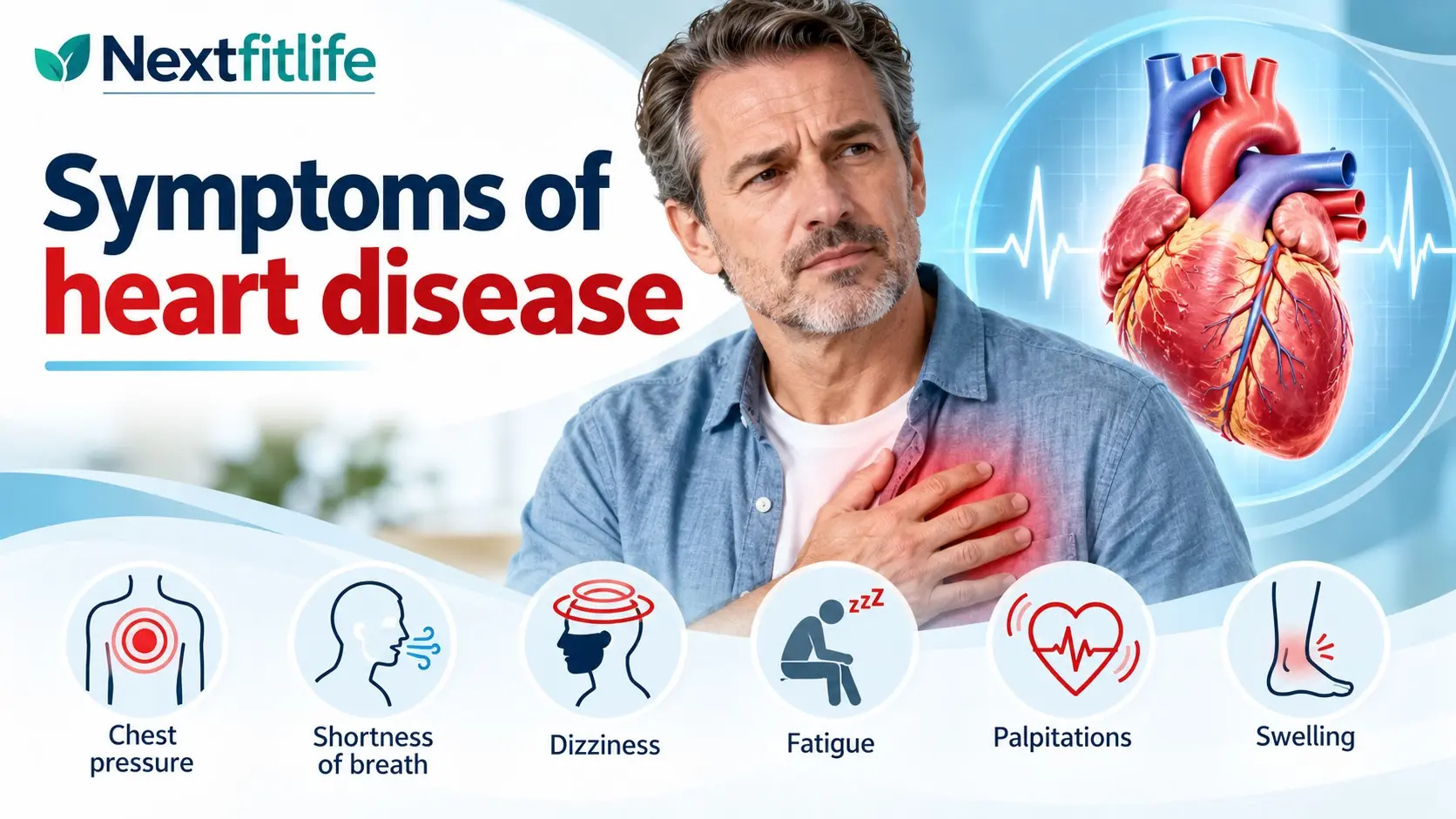
Symptoms of heart disease can include chest pressure, shortness of breath, unusual tiredness, palpitations, dizziness, fainting, swelling in the legs, reduced exercise ability, and discomfort in the arm, shoulder, back, neck, jaw, or upper stomach.
But heart disease is not one illness, so there is no single symptom list that fits everyone.
Coronary artery disease often causes chest discomfort during effort. Heart failure may cause breathlessness and swelling. Arrhythmias can cause a racing or irregular heartbeat. Valve disease may cause fatigue, fainting, chest discomfort, or shortness of breath.
Some heart disease causes no obvious symptoms until a serious event occurs.
This article is for general information and education. It does not replace medical advice, diagnosis, or treatment.
For a full overview of causes and prevention, read Heart Disease: Causes, Symptoms, Risk Factors, Prevention and Treatment. If your concern is an acute event, go directly to Signs of a Heart Attack.
Table of Contents
- What heart disease means
- 16 critical warning signs
- Chest pressure
- Shortness of breath
- Reduced exercise ability
- Unusual fatigue
- Palpitations
- Dizziness
- Fainting
- Arm or shoulder discomfort
- Jaw, neck, or back discomfort
- Cold sweating
- Nausea
- Swollen legs or ankles
- Trouble lying flat
- Waking breathless
- Abdominal swelling
- Sudden weakness or confusion
- Symptoms by type of heart disease
- Coronary artery disease
- Heart failure
- Arrhythmias
- Valve disease
- Cardiomyopathy
- Heart disease in women
- Heart disease in men
- Symptoms after age 50
- Silent heart disease
- Heart symptoms that mimic other conditions
- How heart disease is diagnosed
- Home monitoring and its limits
- Risk factors
- Prevention
- When to seek emergency care
- Frequently asked questions
What Does Heart Disease Mean?
Heart disease is a broad term for conditions that affect the heart.
The heart contains:
- Muscle
- Four chambers
- Four major valves
- An electrical system
- Coronary arteries
A problem in any of these areas can cause heart disease.
Common types include:
- Coronary artery disease
- Heart failure
- Arrhythmias
- Heart valve disease
- Cardiomyopathy
- Congenital heart disease
- Inflammatory heart disease
These diseases are different, so their warning signs can also be different.
Heart Disease vs Cardiovascular Disease
The terms are related but not exactly the same.
| Term | Meaning |
|---|---|
| Heart disease | Conditions affecting the heart itself, including arteries, muscle, valves, rhythm, and structure |
| Cardiovascular disease | A broader group affecting the heart and blood vessels, including heart disease, stroke, and peripheral artery disease |
| Coronary artery disease | Plaque disease affecting the arteries that supply the heart muscle |
| Heart failure | The heart cannot pump, fill, or handle pressure well enough to meet the body's needs |
16 Critical Symptoms of Heart Disease
The symptoms below do not prove heart disease by themselves.
Many have noncardiac causes.
The key is to look at the full pattern, how quickly symptoms began, what triggers them, whether they are getting worse, and which symptoms occur together.
1. Chest Pressure, Tightness, or Pain
Chest discomfort is one of the best known heart symptoms.
Heart related chest discomfort may feel like:
- Pressure
- Tightness
- Squeezing
- Heaviness
- Fullness
- Burning
- Aching
It may occur in the center or left side of the chest.
Chest discomfort from coronary artery disease may appear during exercise, emotional stress, cold weather, or another situation that increases the heart's need for oxygen.
Symptoms that reliably occur during exertion and improve after rest can be angina.
New chest discomfort at rest, pain that is getting worse, or discomfort that does not settle as expected can signal an emergency.
2. Shortness of Breath
Shortness of breath can occur with several heart conditions.
Possible causes include:
- Heart failure
- Coronary artery disease
- Heart attack
- Valve disease
- Arrhythmia
- Cardiomyopathy
You may first notice breathlessness while climbing stairs or walking quickly.
More serious disease can cause breathlessness with light activity or while resting.
Lung disease, anemia, infection, anxiety, low fitness, and many other conditions can also cause shortness of breath.
Severe or sudden breathlessness needs urgent assessment.
3. Reduced Exercise Ability
A drop in what you can comfortably do can be an early heart symptom.
You may notice that:
- Your usual walk feels harder
- You need more rest breaks
- You avoid stairs without realizing it
- Housework causes new breathlessness
- You cannot exercise as long as before
This is called exercise intolerance.
It can occur with coronary disease, heart failure, valve disease, cardiomyopathy, arrhythmias, and many noncardiac illnesses.
4. Unusual Fatigue
Everyone gets tired.
Heart related fatigue is more concerning when it is new, unexplained, severe, or linked with reduced physical ability.
You may notice:
- Exhaustion after routine tasks
- Needing much more rest
- Difficulty completing normal activities
- Fatigue paired with breathlessness
- Fatigue paired with chest symptoms
Anemia, thyroid disease, poor sleep, infection, depression, medicines, and many other conditions can also cause fatigue.
5. Palpitations or an Irregular Heartbeat
Palpitations describe awareness of your heartbeat.
You may feel:
- Racing
- Fluttering
- Pounding
- Skipped beats
- An irregular rhythm
Palpitations can come from harmless extra beats, stress, caffeine, fever, thyroid disease, anemia, medicines, or dehydration.
They can also come from an arrhythmia such as atrial fibrillation or supraventricular tachycardia.
Palpitations with chest pain, severe breathlessness, fainting, or near fainting deserve urgent medical care.
6. Dizziness or Lightheadedness
Heart problems can cause dizziness when blood pressure falls or the heart rhythm becomes too fast, too slow, or irregular.
Possible cardiac causes include:
- Arrhythmia
- Valve disease
- Heart failure
- Heart attack
- Cardiomyopathy
But dizziness is common and has many noncardiac causes.
Look at the full pattern.
Dizziness during exertion, with chest pain, with palpitations, or immediately before fainting deserves particular attention.
7. Fainting or Near Fainting
Syncope means a temporary loss of consciousness caused by reduced blood flow to the brain.
Many fainting episodes are not caused by heart disease.
Cardiac fainting is more concerning when it occurs:
- During exercise
- While lying flat
- Without warning
- With palpitations
- In someone with known structural heart disease
- In someone with a family history of sudden cardiac death at a young age
Unexplained fainting needs medical evaluation.
8. Arm or Shoulder Discomfort
Heart related discomfort can spread into:
- One arm
- Both arms
- One shoulder
- Both shoulders
The sensation may be aching, pressure, heaviness, or unusual discomfort.
It is most concerning when it happens with chest pressure, breathlessness, sweating, nausea, jaw discomfort, or weakness.
Do not assume only the left arm matters.
9. Jaw, Neck, or Back Discomfort
Coronary artery disease and heart attacks can cause discomfort outside the chest.
Possible locations include:
- Jaw
- Neck
- Upper back
- Between the shoulder blades
Muscle, joint, dental, and spinal problems are common causes too.
New unexplained discomfort becomes more concerning when paired with:
- Chest pressure
- Shortness of breath
- Cold sweat
- Nausea
- Arm discomfort
10. Cold or Clammy Sweating
A sudden cold sweat can happen during a heart attack or another serious cardiovascular event.
This is different from ordinary sweating after exercise or during hot weather.
Emergency evaluation is especially important when sweating occurs with:
- Chest discomfort
- Breathlessness
- Nausea
- Dizziness
- Sudden weakness
11. Nausea or Indigestion Like Symptoms
Heart trouble can sometimes feel like a stomach problem.
A heart attack may cause:
- Nausea
- Vomiting
- Upper abdominal discomfort
- Burning
- Indigestion like symptoms
Do not use antacids as a home test for new unexplained chest or upper abdominal discomfort.
If heart attack symptoms are possible, seek emergency care.
12. Swollen Ankles, Feet, or Legs
Edema means swelling caused by extra fluid in the tissues.
Heart failure can cause:
- Swollen feet
- Puffy ankles
- Tight shoes
- Deep sock marks
- Swollen lower legs
Swelling is not specific to heart disease.
Other possible causes include:
- Vein disease
- Kidney disease
- Liver disease
- Medicines
- Injury
- Blood clot
New swelling in only one leg with warmth, tenderness, or pain needs urgent assessment for a possible blood clot.
13. Trouble Breathing When Lying Flat
Some people with heart failure become breathless after lying flat.
This symptom is called orthopnea.
You may notice that you:
- Need extra pillows
- Sleep partly upright
- Feel breathless soon after lying down
A new need for extra pillows should not be dismissed as normal aging.
Learn more in Congestive Heart Failure.
14. Waking Up Breathless at Night
Heart failure can cause a person to wake suddenly during sleep feeling short of breath.
This is called paroxysmal nocturnal dyspnea.
The person may need to:
- Sit upright
- Stand
- Wait several minutes for breathing to improve
New nighttime breathlessness deserves medical assessment.
15. Abdominal Swelling or Feeling Full Quickly
Heart failure can cause fluid to collect in the abdomen.
You may notice:
- Bloating
- A larger waist
- Loss of appetite
- Feeling full after small meals
- Upper abdominal discomfort
This pattern is more common when congestion affects the right side of the heart.
16. Sudden Weakness, Confusion, or a Major Change in Function
Severe heart disease can reduce blood flow to the brain and other organs.
A person may appear:
- Very weak
- Confused
- Sleepy
- Cold and clammy
- Unable to complete normal tasks
Sudden confusion can also indicate stroke, infection, low blood sugar, medicine effects, or another emergency.
Do not try to diagnose sudden confusion at home.
Heart Disease Symptoms at a Glance
| Symptom | Possible Heart Problem | Urgency |
|---|---|---|
| Chest pressure with exertion | Coronary artery disease or angina | Needs medical assessment |
| New chest pressure at rest | Unstable angina or heart attack | Emergency |
| Breathlessness with swelling | Heart failure | Medical review, urgent if severe |
| Fluttering heartbeat | Possible arrhythmia | Assessment, emergency with fainting or chest pain |
| Breathlessness and fainting during activity | Possible valve disease or cardiomyopathy | Prompt assessment |
| Sudden collapse | Possible cardiac arrest or dangerous rhythm | Emergency |
Symptoms of Coronary Artery Disease
Coronary artery disease develops when plaque builds inside arteries that supply the heart.
It can develop silently for years.
When symptoms occur, the most common is angina.
Possible signs include:
- Chest pressure
- Chest tightness
- Chest heaviness
- Shortness of breath
- Neck discomfort
- Arm discomfort
- Reduced exercise ability
The exertion pattern matters
Symptoms caused by narrowed coronary arteries often appear when the heart works harder.
A useful pattern is:
That pattern deserves assessment even if the discomfort is mild.
When Coronary Symptoms Become an Emergency
Seek emergency care if chest symptoms:
- Begin at rest
- Become stronger
- Last longer than expected
- Occur more often
- Need less activity to appear
- Come with breathlessness, sweating, nausea, fainting, or spreading pain
If you think you may be having a heart attack, read Signs of a Heart Attack, but do not delay emergency care to finish reading.
Symptoms of Heart Failure
Heart failure means the heart cannot pump, fill, or handle pressure as well as the body needs.
Common symptoms include:
- Shortness of breath
- Trouble lying flat
- Waking breathless
- Leg swelling
- Sudden weight increase from fluid
- Fatigue
- Reduced exercise ability
- Cough
- Abdominal swelling
- Poor appetite
Heart failure does not mean the heart has stopped.
For the full treatment guide, read Congestive Heart Failure.
Symptoms of Arrhythmias
An arrhythmia means the heart rhythm is abnormal.
The heart may beat:
- Too quickly
- Too slowly
- Irregularly
- With extra beats
Possible symptoms include:
- Fluttering
- Pounding
- Racing heartbeat
- Skipped beat sensation
- Weakness
- Fatigue
- Breathlessness
- Dizziness
- Fainting
- Chest discomfort
Some arrhythmias produce no symptoms.
What Does Atrial Fibrillation Feel Like?
Atrial fibrillation, or AFib, is a common irregular heart rhythm.
It may feel like:
- Fluttering in the chest
- A rapid irregular heartbeat
- Thumping
- Weakness
- Breathlessness
- Dizziness
- Reduced exercise ability
Some people have no symptoms at all.
AFib matters because it can raise the risk of stroke and heart failure.
Symptoms of Heart Valve Disease
Heart valves make sure blood moves in the correct direction.
A valve can become too narrow or start leaking.
Possible symptoms include:
- Shortness of breath
- Fatigue
- Reduced activity ability
- Chest pain
- Palpitations
- Dizziness
- Fainting
- Swollen ankles
- Abdominal swelling
Valve disease can progress slowly.
This means a person may gradually walk less or avoid stairs and assume the change is simply aging.
Symptoms do not always match severity
A person can have significant valve disease with few symptoms.
Another person may have noticeable symptoms with less severe valve disease.
An echocardiogram is often central to diagnosis.
Symptoms of Cardiomyopathy
Cardiomyopathy is disease of the heart muscle.
The heart muscle may become:
- Weak
- Enlarged
- Thickened
- Stiff
Some forms are inherited.
Possible symptoms include:
- Shortness of breath
- Chest pain
- Fatigue
- Palpitations
- Dizziness
- Fainting
- Leg swelling
- Abdominal swelling
Some people with cardiomyopathy have no symptoms until the disease becomes more advanced.
What About a Heart Murmur?
A heart murmur is an unusual sound heard with a stethoscope.
It is a sign found during an examination rather than something you usually feel yourself.
Some murmurs are harmless.
Others point to valve disease, congenital heart disease, or another structural problem.
A murmur paired with breathlessness, chest discomfort, fainting, or reduced exercise ability needs proper evaluation.
Heart Disease Symptoms in Women
Women and men share many of the same heart symptoms.
One myth worth correcting is that women usually do not have chest discomfort during a heart attack.
Chest pain or discomfort remains the most common heart attack symptom in women too.
Women may also report:
- Shortness of breath
- Nausea
- Vomiting
- Shoulder discomfort
- Back discomfort
- Arm discomfort
- Jaw discomfort
- Unusual tiredness
- Weakness
- Lightheadedness
These symptoms may be dismissed as stress, indigestion, menopause, poor sleep, or aging.
New unexplained symptoms deserve attention regardless of sex.
Heart Disease Symptoms in Men
Men may develop:
- Chest pain or pressure
- Arm or shoulder discomfort
- Shortness of breath
- Palpitations
- Dizziness
- Fatigue
- Leg swelling
- Fainting
Men can also have subtle heart attacks and silent coronary disease.
The absence of dramatic chest pain does not make heart disease impossible.
Heart Disease Symptoms After Age 50
Aging raises cardiovascular risk, but new heart symptoms should not be dismissed as “just getting older.”
After age 50, pay attention to changes such as:
- Walking more slowly because of breathlessness
- Needing more rest
- New chest pressure during activity
- New irregular heartbeat
- New fainting
- Swollen ankles
- Reduced exercise tolerance
For prevention and screening guidance, read Heart Health After 50.
Can Heart Disease Be Silent?
Yes.
Some coronary artery disease develops without obvious symptoms.
Some arrhythmias also produce no symptoms.
High blood pressure and high cholesterol are often silent too.
This is why feeling well does not prove that cardiovascular risk is low.
Preventive care may include checking:
- Blood pressure
- Cholesterol
- Blood sugar
- Kidney function
- Smoking status
- Family history
Can High Cholesterol Cause Symptoms?
Usually not.
High LDL cholesterol can contribute to plaque buildup for years without making you feel different.
A blood test is the best way to know your cholesterol level.
Read High Cholesterol: Symptoms, Causes and Treatment.
Can High Blood Pressure Cause Symptoms?
Most high blood pressure causes no clear symptoms.
That is why it is often called a silent risk factor.
A normal feeling does not mean your blood pressure is normal.
Measure it correctly and follow the monitoring schedule recommended for you.
Diabetes and Heart Disease Symptoms
Diabetes increases cardiovascular risk.
Long term high blood glucose can damage blood vessels and nerves.
People with diabetes can develop:
- Coronary artery disease
- Heart attack
- Heart failure
- Stroke
- Peripheral artery disease
Nerve damage may also make heart attack symptoms less obvious in some people.
Read Diabetes and Heart Diseases for more detail.
Can Kidney Disease Affect the Heart?
Yes.
Heart and kidney health are closely linked.
Kidney disease can raise the risk of:
- High blood pressure
- Fluid overload
- Heart failure
- Coronary disease
Heart disease can also reduce kidney blood flow.
Swelling, fatigue, and breathlessness can occur in both heart and kidney disease, so testing may be needed.
See Kidney Disease Symptoms for kidney specific warning signs.
Can Poor Sleep Affect Heart Health?
Poor sleep does not usually produce a unique “heart disease symptom,” but sleep problems can affect cardiovascular risk.
Sleep apnea is especially important because it can contribute to:
- High blood pressure
- Abnormal heart rhythms
- Daytime fatigue
- Cardiovascular disease
If you snore loudly, stop breathing during sleep, wake choking, or remain exhausted despite enough time in bed, ask whether sleep apnea could be present.
Heart Disease or Anxiety?
Anxiety and panic can produce:
- Chest tightness
- Rapid heartbeat
- Sweating
- Dizziness
- Shortness of breath
- Trembling
Heart disease can produce many of the same symptoms.
That means new or severe chest symptoms should not automatically be labeled anxiety.
If the pattern could be cardiac, emergency assessment comes first.
Heart Disease or Heartburn?
Heartburn can cause chest burning and upper abdominal discomfort.
Heart related pain can also feel like burning or indigestion.
Features that can occur with a heart attack include:
- Chest pressure
- Arm discomfort
- Jaw discomfort
- Shortness of breath
- Cold sweat
- Nausea
- Weakness
Do not repeatedly use antacids to decide whether new unexplained chest pain is safe.
Heart Disease or Muscle Pain?
Muscle and rib pain often changes with:
- Movement
- Position
- Pressure on the area
That can make a muscle cause more likely, but it cannot reliably rule out heart disease.
Seek medical care when chest symptoms are new, severe, unexplained, triggered by exertion, or paired with other cardiovascular warning signs.
What Symptoms Suggest a Heart Attack?
A heart attack can cause:
- Chest pressure
- Chest squeezing
- Pain or discomfort in either arm
- Shoulder discomfort
- Jaw pain
- Neck pain
- Back pain
- Upper stomach discomfort
- Shortness of breath
- Cold sweat
- Nausea
- Dizziness
- Unusual fatigue
Symptoms may be mild and may come and go.
For a dedicated emergency guide, read Signs of a Heart Attack: Critical Warning Signs.
What Symptoms Suggest Heart Failure?
Think more about heart failure when symptoms include:
- Breathlessness during activity
- Breathlessness while lying flat
- Waking suddenly short of breath
- Swollen ankles
- Rapid fluid related weight increase
- Fatigue
- Reduced exercise ability
- Abdominal swelling
Heart failure symptoms can develop gradually or worsen quickly.
What Symptoms Suggest an Arrhythmia?
Think about a rhythm problem when symptoms include:
- Racing heartbeat
- Fluttering
- Irregular pulse
- Skipped beat sensation
- Dizziness
- Near fainting
- Fainting
- Sudden weakness
- Breathlessness
Rhythm disorders range from harmless extra beats to emergencies.
The symptom pattern and ECG are important.
What Symptoms Suggest Valve Disease?
Possible clues include:
- Breathlessness with activity
- Loss of exercise ability
- Unusual fatigue
- Chest discomfort
- Palpitations
- Dizziness
- Fainting
- Leg swelling
Valve disease may be present without obvious symptoms.
A murmur or abnormal echocardiogram may reveal it.
Can a Normal Heart Rate Rule Out Heart Disease?
No.
You can have coronary disease, valve disease, or heart failure with a normal resting heart rate.
A normal pulse is useful information, but it cannot prove the heart is healthy.
Can Normal Blood Pressure Rule Out Heart Disease?
No.
A normal reading does not rule out:
- Coronary artery disease
- Arrhythmia
- Valve disease
- Cardiomyopathy
- Heart attack
Blood pressure is only one part of cardiovascular assessment.
Can a Smartwatch Detect Heart Disease?
Wearables can be useful for tracking:
- Heart rate
- Some rhythm patterns
- Physical activity
- Selected ECG recordings on certain devices
They cannot safely rule out:
- Heart attack
- Coronary artery disease
- Heart failure
- Valve disease
Do not delay care because your watch says your rhythm or heart rate looks normal.
How Doctors Diagnose Heart Disease
There is no one test for every form of heart disease.
The choice depends on the symptoms and suspected condition.
Medical history
A clinician may ask:
- When symptoms began
- What triggers them
- What improves them
- How long they last
- Whether they are worsening
- Family history
- Smoking history
- Current medicines
Physical examination
This may include:
- Blood pressure
- Heart rate
- Oxygen level
- Heart sounds
- Lung sounds
- Leg swelling
- Foot pulses
Electrocardiogram
An ECG can identify many rhythm problems and can show signs of heart injury or strain.
Blood tests
Depending on the problem, tests may include:
- Troponin
- BNP or NT proBNP
- Cholesterol
- Blood glucose
- Kidney function
- Electrolytes
- Blood count
- Thyroid tests
Echocardiogram
An echocardiogram can assess:
- Pumping strength
- Valve function
- Heart size
- Wall movement
- Heart filling
- Pressure estimates
Heart rhythm monitoring
A Holter monitor, patch monitor, event recorder, or implantable monitor may be used when palpitations or fainting happen only occasionally.
Coronary testing
Selected patients may need:
- Exercise stress testing
- Stress imaging
- Coronary CT angiography
- Coronary calcium scoring
- Coronary angiography
Not every patient needs every test.
What Can You Monitor at Home?
Home measurements can provide useful information, but they do not replace diagnosis.
Depending on your medical history, you may track:
- Blood pressure
- Heart rate
- Body weight
- Symptoms
- Exercise ability
- Swelling
People with heart failure may be asked to weigh themselves every morning.
People with hypertension may be asked to keep a blood pressure log.
People with intermittent palpitations may be asked to note when episodes occur.
What a Home Device Cannot Tell You
A normal home reading does not automatically exclude heart disease.
A normal:
- Heart rate
- Blood pressure
- Pulse oximeter reading
- Smartwatch ECG
does not safely rule out coronary artery disease or heart attack.
Major Risk Factors for Heart Disease
Important cardiovascular risk factors include:
- High blood pressure
- High LDL cholesterol
- Smoking
- Diabetes
- Chronic kidney disease
- Low physical activity
- Unhealthy eating patterns
- Excess body fat in some people
- Sleep apnea
- Older age
- Family history
- Some inherited conditions
Some people develop heart disease despite having few obvious risk factors.
Why Family History Matters
A family history of premature heart disease can raise your risk.
Tell your clinician if a close relative developed heart disease at a young age.
Family history may point toward inherited problems such as:
- Familial hypercholesterolemia
- Cardiomyopathy
- Inherited arrhythmia syndromes
Can Heart Disease Be Prevented?
Not every type can be prevented.
Some heart diseases are inherited or present from birth.
But many major cardiovascular risks can be reduced.
A strong prevention plan includes:
- Do not smoke
- Control blood pressure
- Manage LDL cholesterol
- Manage diabetes
- Stay physically active
- Eat a heart healthy diet
- Protect sleep
- Reach a healthier weight when appropriate
- Limit excess alcohol
- Use prescribed medicines correctly
- Attend preventive healthcare visits
Heart Healthy Food Does Not Replace Diagnosis
Food matters for long term cardiovascular health, but food cannot diagnose or immediately treat acute heart symptoms.
A heart healthy eating pattern can include:
- Vegetables
- Whole fruit
- Beans
- Lentils
- Whole grains
- Fish
- Nuts
- Seeds
- Unsaturated fats
Read the Heart Healthy Foods Guide for a practical food plan.
How Much Exercise Supports Heart Health?
Regular movement supports:
- Blood pressure
- Blood sugar
- Fitness
- Body weight
- Cholesterol
- Heart and blood vessel health
Walking is a practical starting point for many adults.
Strength training can also support long term health.
If you already have chest discomfort, fainting, severe shortness of breath, known valve disease, uncontrolled arrhythmia, or another significant heart problem, ask for an individual exercise plan.
Common Mistakes With Heart Disease Symptoms
| Mistake | Why It Can Be Risky | Better Approach |
|---|---|---|
| Waiting for crushing chest pain | Serious heart events may begin mildly | Act on concerning symptom patterns early |
| Assuming breathlessness is aging | Valve disease and heart failure can progress slowly | Track changes in normal activity |
| Calling every palpitation dangerous | Many palpitations are benign | Assess frequency, rhythm, duration, and associated symptoms |
| Ignoring fainting during exercise | Can signal structural or rhythm disease | Get prompt medical assessment |
| Trusting a normal smartwatch | Wearables cannot rule out many serious heart conditions | Use symptoms and professional evaluation |
| Assuming women do not get chest pain | Chest discomfort remains common in women | Consider the complete symptom pattern |
When Should You Book a Medical Appointment?
Arrange an assessment if you notice:
- New chest discomfort during activity
- Unexplained breathlessness
- A steady decline in exercise ability
- Frequent palpitations
- Repeated dizziness
- Unexplained fainting
- Persistent leg swelling
- Breathlessness when lying flat
- Unusual ongoing fatigue
- A significant family history of heart disease
Earlier assessment can identify a treatable problem before symptoms become severe.
When Are Symptoms of Heart Disease an Emergency?
Call emergency services for:
- New chest pressure, squeezing, heaviness, or pain
- Chest discomfort that persists or returns
- Pain spreading to an arm, shoulder, back, neck, jaw, or upper stomach
- Severe shortness of breath
- Cold sweating with chest symptoms
- Sudden nausea with chest or upper body symptoms
- Fainting or collapse
- Severe palpitations with chest pain or fainting
- Blue or gray lips
- Sudden severe weakness
- Sudden confusion
Do not drive yourself when you are severely ill if emergency transport is available.
What if Someone Suddenly Collapses?
If an adult or teenager suddenly becomes unresponsive and is not breathing normally:
- Call emergency services.
- Begin CPR.
- If you are not trained in conventional CPR, use Hands Only CPR.
- Push hard and fast in the center of the chest.
- Use an AED as soon as one is available.
- Follow the AED voice instructions.
Do not rely on cough CPR or internet tricks.
Conclusion: Notice Changes, Not Just Dramatic Symptoms
Symptoms of heart disease can include chest pressure, breathlessness, palpitations, dizziness, fainting, swelling, fatigue, reduced exercise ability, and pain outside the chest.
The most useful clue is often a change from your normal pattern.
If walking suddenly feels harder, you start needing extra pillows, your heartbeat becomes persistently irregular, or exertion repeatedly causes chest pressure, arrange a medical assessment. If symptoms suggest a heart attack or another acute cardiovascular emergency, call emergency services immediately.
References and Sources
- Centers for Disease Control and Prevention. About Heart Disease.
Covers major types of heart disease, silent disease, heart attack symptoms, heart failure symptoms, rhythm symptoms, and cardiovascular risk factors.
https://www.cdc.gov/heart-disease/about/index.html - Centers for Disease Control and Prevention. About Coronary Artery Disease.
Covers coronary artery disease, plaque buildup, angina, shortness of breath, heart attack symptoms, and cardiovascular risk factors.
https://www.cdc.gov/heart-disease/about/coronary-artery-disease.html - National Heart, Lung, and Blood Institute. Coronary Heart Disease Symptoms.
Covers silent coronary disease, exertional chest discomfort, shortness of breath, neck discomfort, angina patterns, and heart attack warning signs.
https://www.nhlbi.nih.gov/health/coronary-heart-disease/symptoms - National Heart, Lung, and Blood Institute. Arrhythmia Symptoms.
Covers irregular or slow heartbeat, palpitations, chest discomfort, breathlessness, dizziness, fainting, fatigue, weakness, and emergency symptoms.
https://www.nhlbi.nih.gov/health/arrhythmias/symptoms - American Heart Association. Symptoms of Heart Valve Disease.
Covers shortness of breath, fatigue, weakness, activity limits, chest discomfort, palpitations, dizziness, fainting, and swelling linked with valve disease.
https://www.heart.org/en/health-topics/heart-valve-problems-and-disease/heart-valve-disease-risks-signs-and-symptoms/symptoms-of-heart-valve-problems - National Heart, Lung, and Blood Institute. Cardiomyopathy Symptoms.
Covers breathlessness, chest pain, fatigue, dizziness, fainting, palpitations, arrhythmias, and swelling from heart muscle disease.
https://www.nhlbi.nih.gov/health/cardiomyopathy/symptoms - American Heart Association. Warning Signs of a Heart Attack.
Covers chest discomfort, upper body discomfort, shortness of breath, sweating, nausea, irregular heartbeat, unusual fatigue, lightheadedness, and emergency action.
https://www.heart.org/en/health-topics/heart-attack/warning-signs-of-a-heart-attack - American Heart Association. Heart Attack Symptoms in Women.
Covers chest discomfort in women plus shortness of breath, nausea, back, shoulder, arm, jaw discomfort, weakness, and unusual fatigue.
https://www.heart.org/en/health-topics/heart-attack/warning-signs-of-a-heart-attack/heart-attack-symptoms-in-women
Internal Links and Helpful NextFitLife Guides
- Heart Disease: Causes, Symptoms, Risk Factors, Prevention and Treatment
- Signs of a Heart Attack: Critical Warning Signs
- Congestive Heart Failure: Symptoms, Causes and Treatment
- Heart Health After 50: Risks, Screenings and Prevention
- Diabetes and Heart Diseases: Risks, Prevention and Care
- High Cholesterol: Symptoms, Causes and Treatment
- Sleep and Heart Health
- Heart Healthy Foods: Cholesterol, Blood Pressure and DASH
- How to Improve Blood Circulation Safely
- How to Improve Blood Circulation in Legs
- Heart Pounding After Waking Up: Warning Clues
About the Author
Adel Galal is the Founder and Lead Writer at NextFitLife. He has written about health, fitness, nutrition, wellness, sleep, and healthy aging for more than 15 years and has maintained a personal interest in these subjects for more than 30 years. His work focuses on researching reputable sources and turning complex guidance into practical information that everyday readers can understand.
I am not a doctor or licensed healthcare professional, and this content does not replace professional medical advice, diagnosis, or treatment. I share information based on extensive research, real life experience, and consultation with healthcare providers. Always consult a qualified healthcare professional for diagnosis, treatment, or guidance about any health condition.
Learn more about Adel Galal, NextFitLife, and the site's editorial approach on the About Us page.
Frequently Asked Questions
What are the most common symptoms of heart disease?
Common symptoms include chest discomfort, shortness of breath, unusual fatigue, palpitations, dizziness, fainting, reduced exercise ability, leg swelling, and discomfort in the arm, shoulder, back, neck, or jaw.
What are the early symptoms of heart disease?
There is no single early symptom. Some people notice chest pressure during activity, unusual breathlessness, reduced exercise ability, fatigue, palpitations, or dizziness. Others have no clear symptoms.
Can heart disease have no symptoms?
Yes. Coronary artery disease and some arrhythmias can be silent, while high blood pressure and high cholesterol often cause no noticeable symptoms.
Is chest pain always the first sign of heart disease?
No. Some people first notice breathlessness, reduced exercise ability, palpitations, fatigue, swelling, dizziness, or fainting.
What does heart related chest pain feel like?
Heart related chest discomfort may feel like pressure, squeezing, heaviness, fullness, tightness, aching, or burning. It may occur during activity and improve with rest.
Can heart disease cause shortness of breath?
Yes. Heart failure, coronary disease, valve disease, cardiomyopathy, heart attack, and arrhythmias can all cause shortness of breath.
Can heart disease cause extreme tiredness?
Yes. Heart failure, valve disease, cardiomyopathy, arrhythmias, and heart attacks can cause unusual fatigue, although tiredness also has many noncardiac causes.
Are palpitations a sign of heart disease?
They can be. Palpitations may come from harmless extra beats or factors such as stress and caffeine, but they can also occur with arrhythmias such as atrial fibrillation.
When are palpitations dangerous?
Seek urgent care if palpitations occur with chest pain, severe breathlessness, fainting, near fainting, or sudden severe weakness.
Can fainting be caused by heart disease?
Yes. Arrhythmias, valve disease, and cardiomyopathy can cause fainting. Fainting during exercise, while lying flat, or with palpitations deserves prompt medical assessment.
Can swollen ankles mean heart disease?
Yes. Heart failure can cause swollen ankles and legs, but vein disease, kidney disease, liver disease, medication, injury, and blood clots can also cause swelling.
Why does heart failure make it hard to lie flat?
Fluid can shift toward the chest when a person lies down, which may increase lung congestion and make breathing harder.
What are symptoms of coronary artery disease?
Possible symptoms include chest pressure or tightness during exertion, shortness of breath, neck or arm discomfort, and reduced exercise ability. Coronary disease can also be silent.
What are symptoms of an arrhythmia?
Arrhythmias may cause fluttering, racing, skipped beats, dizziness, fainting, weakness, fatigue, breathlessness, or chest discomfort. Some cause no symptoms.
What are symptoms of heart valve disease?
Possible symptoms include shortness of breath, fatigue, chest discomfort, palpitations, dizziness, fainting, swollen ankles, and reduced exercise ability.
What are symptoms of cardiomyopathy?
Cardiomyopathy can cause breathlessness, fatigue, chest discomfort, palpitations, dizziness, fainting, and swelling. Some people have no symptoms at first.
Are heart disease symptoms different in women?
Women and men share many symptoms. Chest discomfort remains common in women, who may also experience shortness of breath, nausea, unusual fatigue, weakness, or back, shoulder, arm, or jaw discomfort.
Can a normal heart rate rule out heart disease?
No. Many forms of heart disease can be present while resting heart rate appears normal.
Can a smartwatch tell if I have heart disease?
A smartwatch may help track heart rate or selected rhythm patterns, but it cannot rule out coronary artery disease, heart attack, valve disease, or heart failure.
When should symptoms of heart disease be treated as an emergency?
Call emergency services for new chest pressure, severe shortness of breath, fainting, collapse, pain spreading to the arm or jaw, cold sweating with chest symptoms, severe palpitations with fainting, or another sudden serious cardiovascular symptom.

Health & wellness writer with 30+ years of experience in nutrition, fitness, and healthy aging. Founder of NextFitLife.com — evidence-based health guidance.

