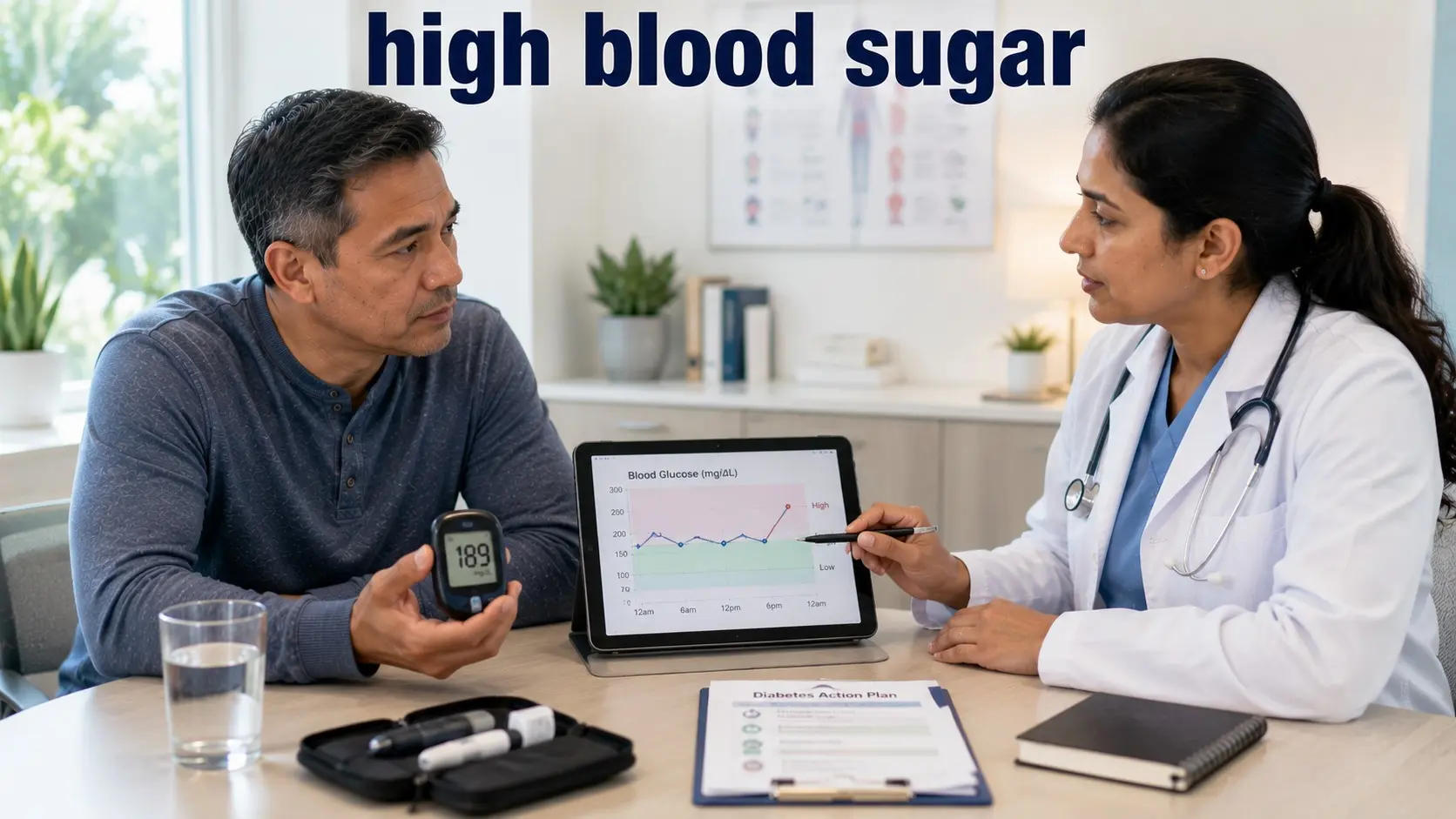
High Blood Sugar: What to Do Safely, When It Is an Emergency, and How to Lower It
Last updated: August 7, 2026
Next review: July 2027, or sooner if diabetes safety guidance changes
Written by: Adel Galal, Founder and Editor of NextFitLife
Review status: Written and source checked using current diabetes, blood-glucose monitoring, ketone, sick-day, and emergency-care guidance. This article has not been medically reviewed by an endocrinologist, diabetes specialist, certified diabetes educator, specialist diabetes nurse, or another licensed healthcare professional.
Reading time: About 18 minutes
Quick Answer: What Should You Do for High Blood Sugar?
High blood sugar, also called hyperglycemia, means your glucose is above the target range recommended for you. It may cause thirst, frequent urination, dry mouth, fatigue, headache, or blurred vision, although some people have no symptoms.
If you have diabetes, wash and dry your hands and repeat an unexpected finger-stick result. Follow your written correction or sick-day plan, take prescribed medicine exactly as directed, drink plain water if fluids are safe for you, and check for ketones when your plan recommends it.
Do not take extra insulin unless your prescribed correction plan tells you how much to take. Do not exercise when ketones are present or when you feel sick.
Seek urgent medical help for repeated vomiting, abdominal pain, fast or deep breathing, fruity-smelling breath, severe dehydration, new confusion, extreme sleepiness, difficulty breathing, or an inability to keep fluids down.
When high blood sugar is an Emergency
Call your local emergency number or go to the nearest emergency department, emergency room, or A&E department if you have:
- Fast, deep, laboured, or difficult breathing
- Breath that smells fruity or like acetone
- Repeated vomiting
- Severe or persistent abdominal pain
- New confusion, disorientation, or unusual behaviour
- Extreme drowsiness or difficulty waking
- Severe weakness, fainting, or collapse
- An inability to keep fluids down
- Signs of severe dehydration
- A seizure
- Very high blood or urine ketones
- High glucose with rapidly worsening illness
- Symptoms of diabetic ketoacidosis without a previous diabetes diagnosis
These symptoms may indicate diabetic ketoacidosis, known as DKA, hyperosmolar hyperglycemic state, known as HHS, severe dehydration, infection, or another medical emergency. CDC also advises emergency evaluation when blood sugar remains at 300 mg/dL, or about 16.7 mmol/L, or above, but serious symptoms or high ketones can require emergency care at lower glucose levels.
Do not drive yourself when you are confused, very drowsy, faint, or severely unwell.
Medical and Editorial Notice
This article was written and source- checked by Adel Galal, Founder and Editor of NextFitLife.
Adel is a health and wellness writer. He is not an endocrinologist, diabetes specialist, physician, specialist diabetes nurse, certified diabetes educator, pharmacist, registered dietitian, emergency clinician, or licensed healthcare professional.
This article is for educational purposes only. It cannot interpret your personal glucose or ketone result, calculate an insulin dose, diagnose diabetes, replace a sick-day plan, or decide whether you need emergency treatment.
Glucose targets, correction doses, ketone-testing thresholds, medicine instructions, and emergency plans differ between people. Follow the written plan provided by your diabetes team.
NextFitLife uses display advertising to support the website. Advertising does not determine the medical claims, medication cautions, emergency warning signs, source selection, or conclusions on this page.
Read the Editorial Policy, Medical Review Policy, Corrections Policy, and Medical Disclaimer.
What Is High Blood Sugar?
High blood sugar means more glucose is circulating in the bloodstream than is appropriate for the person’s current target range.
The medical term is hyperglycemia in American English and hyperglycemia in British English.
Glucose is an important source of energy. Insulin helps glucose move from the bloodstream into cells.
Blood glucose may rise when:
- The body does not make enough insulin
- The body does not respond effectively to insulin
- Insulin or another medicine was missed or was not absorbed properly
- Illness or stress hormones increase glucose production
- Food contains more carbohydrate than expected
- A medicine raises glucose
- An insulin pump or infusion set is not working correctly
One high reading is different from a pattern of repeated high readings. Both need to be interpreted in the context of the person’s diabetes type, treatment, meals, activity, illness, and personal targets. For broader day-to-day habit guidance, visit the General Wellness & Lifestyle Hub; lifestyle support does not replace prescribed diabetes treatment.
What blood sugar level is considered high?
There is no single number that is “high” for every person in every situation.
Your target depends on:
- Whether you have type 1, type 2, or gestational diabetes
- Your age
- Pregnancy status
- Your medicine and insulin plan
- Your risk of low blood sugar
- Kidney, heart, liver, or other health conditions
- The time since your last meal
- Whether you use a glucose meter or continuous glucose monitor
For many people using a continuous glucose monitor, a commonly used general target range is 70 to 180 mg/dL, or about 3.9 to 10.0 mmol/L. Your healthcare team may prescribe a different range.
A value above your personal range is a high reading. It does not automatically mean that an emergency is occurring.
Symptoms, ketones, illness, dehydration, pregnancy, and the direction of the glucose trend can be as important as the number itself.
How Do mg/dl and mmol/L Compare?
Blood glucose may be reported in:
- Milligrams per deciliter: mg/dL
- Millimoles per litre: mmol/L
To convert mg/dL to mmol/L, divide by 18.
To convert mmol/L to mg/dL, multiply by 18.
| mg/dL | Approximate mmol/L |
|---|---|
| 70 | 3.9 |
| 126 | 7.0 |
| 180 | 10.0 |
| 200 | 11.1 |
| 240 | 13.3 |
| 300 | 16.7 |
| 400 | 22.2 |
These conversions do not tell you what treatment to take. Use your personal diabetes action plan.
What Are the Symptoms of High Blood Sugar?
Possible early symptoms include:
- Increased thirst
- Frequent urination
- Waking at night to urinate
- Dry mouth
- Fatigue or weakness
- Headache
- Blurred vision
- Difficulty concentrating
- Feeling generally unwell
Symptoms may develop slowly, and some people have no obvious symptoms even when glucose is above target.
More serious symptoms include:
- Nausea or vomiting
- Abdominal pain
- Fast or deep breathing
- Fruity-smelling breath
- Severe dehydration
- Confusion
- Extreme sleepiness
- Collapse
What Causes High Blood Sugar?
Common causes include:
- Missing insulin or diabetes medicine
- Taking a smaller dose than prescribed
- An insulin pump, cannula, tubing, or infusion-set problem
- Insulin that has expired, overheated, frozen, or been stored incorrectly
- Eating more carbohydrate than expected
- Illness or infection
- Physical or emotional stress
- Reduced activity
- Some high-intensity exercise
- Steroid medicines
- Other medicines that affect glucose
- Dawn phenomenon
- Hormonal changes
- Dehydration
- Progression of diabetes or changing insulin needs
A high reading after food does not prove that one particular food caused the entire problem. For longer-term food, nutrient, and supplement education, see the Nutrition & Vitamins Hub, but do not use food or supplements as an acute treatment for severe hyperglycemia.
Repeated high readings should be reviewed with the healthcare team rather than managed through repeated guessing or self-directed dose changes.
Safe Steps to Take After a High Blood Sugar Reading
- Check how you feel. Look for vomiting, abdominal pain, deep breathing, confusion, severe weakness, or dehydration.
- Confirm an unexpected reading. Wash and dry your hands before repeating a finger-stick test.
- Review your glucose trend. Check whether the value is rising, falling, or stable.
- Follow your written diabetes plan. Use the correction or sick-day instructions given to you.
- Take prescribed medicine as directed. Do not double a dose or improvise an insulin dose.
- Check ketones when instructed. This is especially important during illness, with type 1 diabetes, or when glucose is very high.
- Drink plain water when safe. Avoid sugary drinks unless you are treating a confirmed low glucose level.
- Review possible causes. Consider missed medicine, illness, food, stress, pump problems, or damaged insulin.
- Recheck at the planned interval. Do not test every few minutes or take repeated correction doses too close together.
- Contact the diabetes team when readings remain high. Ask for help when the plan is not working or the cause is unclear.
High Blood Sugar Safety Table
| Situation | Safer response |
|---|---|
| One unexpected high finger-stick result | Wash and dry your hands, repeat the test, and review food, medicine, stress, and illness |
| CGM result does not match how you feel | Confirm with a finger-stick meter when your device instructions or care plan recommend it |
| High reading but you feel well | Follow your personal correction plan and recheck at the instructed time |
| High glucose during illness | Follow sick-day rules, monitor more often, maintain fluids as advised, and check ketones |
| Glucose is at least 240 mg/dL during illness | Check ketones according to current guidance and your personal care plan |
| Ketones are present | Do not exercise; follow the urgent ketone plan and contact the diabetes team |
| Vomiting, abdominal pain, fruity breath, or deep breathing | Seek emergency medical care |
| No diabetes diagnosis but repeated high readings | Arrange professional laboratory testing |
Should You Check a High Reading Again?
Repeat the test when a finger-stick result is unexpected or does not match how you feel.
For a Finger-Stick Meter
- Wash your hands with soap and water.
- Dry them completely.
- Use a fresh, unexpired test strip.
- Check that the strip container has been stored correctly.
- Use the meter according to the manufacturer’s instructions.
Sugar, fruit, food, lotion, or another substance on the fingers can produce an inaccurate result.
For a Continuous Glucose Monitor
A CGM measures glucose in fluid under the skin rather than directly in blood. There can be a delay when glucose is changing quickly.
Confirm the reading with a finger-stick meter when:
- The CGM result does not match your symptoms
- The sensor displays an error or unusual trend
- Your device instructions require confirmation
- Your treatment plan tells you to confirm before taking a correction
Read Home Diabetes Testing: Glucose Checks, A1C Questions, and When to Seek Care.
Should You Take Extra Insulin or Diabetes Medicine?
Only use extra rapid-acting insulin when your written correction plan tells you:
- Which glucose level requires a correction
- How to calculate the dose
- How long to wait before rechecking
- When another correction is safe
- When to check ketones
- When to call the diabetes team
Taking correction doses too close together can cause insulin stacking, which may lead to dangerous low blood sugar later.
Do not:
- Double a missed tablet dose unless the prescriber specifically instructed this
- Borrow another person’s insulin
- Use a correction formula found online
- Change basal insulin independently
- Stop insulin during illness without urgent professional advice
- Inject more insulin because the first dose does not appear to work immediately
People with type 1 diabetes need insulin to prevent ketone production. Follow the type 1 sick-day instructions provided by the diabetes team.
What if You Use an Insulin Pump?
Unexpectedly high glucose may result from:
- A dislodged cannula
- Bent tubing
- A blocked infusion set
- An empty reservoir
- Air in the tubing
- Damaged insulin
- A pump or sensor communication problem
Follow the pump-failure and ketone instructions supplied by your diabetes service and device manufacturer.
Can Drinking Water Lower High Blood Sugar?
Water helps replace fluid lost through frequent urination and can reduce the risk of worsening dehydration. If kidney disease affects your fluid plan, use the Kidney Health & Disease Hub for background education and follow your clinician’s individual fluid instructions.
However, water is not an emergency glucose-lowering treatment and does not replace:
- Insulin
- Prescribed medication
- Ketone checks
- A sick-day plan
- Professional medical care
Choose plain water or another sugar-free drink when you can drink safely.
Do not force large amounts of fluid if you:
- Have heart failure
- Have advanced kidney disease
- Have been prescribed a fluid restriction
- Are vomiting repeatedly
- Have difficulty swallowing
Follow individualized hydration advice from your medical team.
What Should You Eat When Blood Sugar Is High?
No food reliably lowers an active high glucose reading immediately.
Eating nuts, eggs, avocado, cinnamon, vinegar, or another food is not a substitute for prescribed treatment.
General steps may include:
- Avoid sugar-sweetened drinks
- Avoid adding an unplanned large carbohydrate portion
- Follow the meal plan connected to your insulin or medicine schedule
- Choose balanced portions when you can eat normally
- Do not skip all food when your medicine must be taken with meals
During illness, nausea, vomiting, pregnancy, or ketone production, food and fluid advice may differ. Follow your sick-day plan.
Does Apple Cider Vinegar Treat High Blood Sugar?
No. Apple cider vinegar is not an acute treatment for hyperglycemia, DKA, or HHS.
It can irritate the mouth, esophagus, and stomach, damage tooth enamel, interact with some medicines, and delay proper treatment if used as a replacement for medical care.
Does Cinnamon Lower Blood Sugar Immediately?
No. Cinnamon should not be presented as a rapid treatment for a high glucose reading.
Do not use cinnamon supplements or concentrated products instead of prescribed diabetes treatment.
Is It Safe to Exercise With High Blood Sugar?
Physical activity can lower glucose in some people by helping muscles use glucose and increasing insulin sensitivity.
However, exercise is not always safe during an acute high reading.
Do Not Exercise When:
- Ketones are present
- You have symptoms of DKA
- You are vomiting
- You are dehydrated
- You have severe abdominal pain
- You feel faint, confused, or extremely weak
- Your diabetes plan tells you not to exercise at that level
Exercise with ketones may cause glucose and ketone levels to rise further.
High-intensity exercise, sprinting, competitive activity, or heavy weight training can temporarily raise glucose because of stress hormones.
When you feel well, have no ketones, and your care plan permits activity, gentle movement may be reasonable. Do not use walking as a substitute for an insulin correction or emergency care.
When Should You Check for Ketones?
Ketones are chemicals produced when the body breaks down fat because it cannot use enough glucose for energy.
Ketone testing is particularly important for people with type 1 diabetes, but DKA can also occur in type 2 diabetes and in people using certain medicines.
Check ketones according to your written plan when:
- You are sick
- Your glucose remains high despite a correction
- You have nausea, vomiting, or abdominal pain
- You have fruity-smelling breath
- You are breathing more deeply than usual
- An insulin pump may not be delivering insulin
- Your glucose reaches the threshold specified by your team
Current CDC pages use slightly different general cutoffs: its blood-sugar management page advises ketone testing when a person is sick and glucose is 240 mg/dL, or about 13.3 mmol/L, or higher, while its DKA page advises checking when sick or glucose is 250 mg/dL, or about 13.9 mmol/L, or higher. Follow the threshold in your personal sick-day plan rather than treating either number as universal.
Blood Ketones Versus Urine Ketones
Blood ketone tests measure the current level of beta-hydroxybutyrate and may detect changes sooner.
Urine strips show ketones that have already passed into the urine, so they may lag behind current blood levels.
Follow the instructions for your test device and the action thresholds provided by your healthcare team.
What Is Diabetic Ketoacidosis?
Diabetic ketoacidosis, or DKA, occurs when there is not enough effective insulin and ketones build to dangerous levels, making the blood acidic.
DKA is most common in type 1 diabetes, but it can also occur in type 2 diabetes.
Possible DKA Symptoms
- High glucose, although it is not always extremely high
- High blood or urine ketones
- Thirst
- Frequent urination
- Dry mouth
- Nausea
- Vomiting
- Abdominal pain
- Fast or deep breathing
- Fruity or acetone-like breath
- Fatigue
- Sleepiness
- Confusion
DKA requires urgent hospital treatment with carefully monitored fluids, insulin, electrolytes, and treatment of the cause.
Do not try to treat severe DKA symptoms with water, food, exercise, vinegar, cinnamon, or an unplanned insulin dose.
Can DKA Occur Without Very High Blood Sugar?
Yes. This is sometimes called euglycemic DKA.
It is particularly important for people taking an SGLT2 inhibitor. Medicines in this group include products containing:
- Canagliflozin
- Dapagliflozin
- Empagliflozin
- Ertugliflozin
- Bexagliflozin
- Sotagliflozin
DKA can occur with glucose below the level usually expected for DKA.
Seek urgent medical care for nausea, vomiting, abdominal pain, unusual tiredness, dehydration, or fast breathing when taking an SGLT2 inhibitor, even if glucose is not extremely high.
Do not wait for a home glucose reading to become very high before seeking help.
Follow the medicine-specific sick-day and surgery instructions given by your prescriber. Do not stop or restart prescription medicine without professional guidance unless your written sick-day plan specifically instructs you.
What Is Hyperosmolar Hyperglycemic State?
Hyperosmolar hyperglycemic state, also called hyperosmolar hyperglycaemic state or HHS, is a life-threatening diabetes emergency.
It is more commonly associated with type 2 diabetes.
HHS involves:
- Extremely high blood glucose
- Severe dehydration
- Very frequent urination early in the illness
- Intense thirst
- Weakness
- Dry mouth and skin
- Vision changes
- Confusion
- Reduced alertness or unconsciousness
Ketones may be absent or only mildly elevated, which means a negative urine ketone test does not rule out HHS.
HHS requires hospital treatment.
What Is the Difference Between DKA and HHS?
| Feature | DKA | HHS |
|---|---|---|
| More commonly associated with | Type 1 diabetes, but can occur in type 2 | Type 2 diabetes |
| Ketones | Usually elevated | Often absent or only mildly elevated |
| Glucose | Usually high, but may be below 250 mg/dL in euglycemic DKA | Often extremely high |
| Typical development | May develop within hours or about one day | May develop more gradually |
| Common warning signs | Vomiting, abdominal pain, deep breathing, fruity breath, confusion | Severe dehydration, weakness, confusion, reduced consciousness |
| Required response | Emergency hospital care | Emergency hospital care |
What Should a Diabetes Sick-Day Plan Include?
Illness can raise glucose even when you are eating less.
A written sick-day plan should explain:
- How often to check glucose
- When and how to test ketones
- Which medicines to continue
- Which medicines may need to be paused
- How to use correction insulin
- How much fluid to drink
- What to do when you cannot eat normally
- When to contact the diabetes team
- When to use emergency services
General safety steps include:
- Monitor glucose more often than usual
- Check ketones according to the plan
- Continue insulin unless a qualified clinician directs otherwise
- Use fluids that match your glucose and sick-day instructions
- Record glucose, ketones, medicine, temperature, vomiting, and fluid intake
- Ask for help early if you cannot keep fluids down
Different medicines have different sick-day rules. Do not copy another person’s plan.
When Should You Contact Your Diabetes Team?
Contact your diabetes clinician, endocrinologist, specialist nurse, diabetes educator, GP, family doctor, or primary care clinician when:
- Glucose remains above the action level in your personal plan
- Repeated correction doses are not working
- Ketones are above the level specified in your plan
- You are sick and unsure how to adjust medicine or insulin
- You cannot identify why readings are high
- You suspect a pump or infusion-set problem
- You repeatedly wake with high glucose
- High readings occur at the same time each day
- You have repeated infections
- You are using steroids and glucose is rising
- You are pregnant or may be pregnant
- You have difficulty obtaining insulin, strips, sensors, or ketone supplies
Use emergency services rather than waiting for a routine call-back when severe symptoms are present.
What if You Do Not Have a Diabetes Diagnosis?
A high home glucose result does not diagnose diabetes by itself. The Medical Tests & Screenings Hub explains the difference between a home monitoring result and a diagnostic laboratory test.
Arrange professional assessment when:
- You have repeated high readings
- You have thirst and frequent urination
- You are losing weight without trying
- You have unexplained fatigue or blurred vision
- You have recurrent infections
- You had high glucose during pregnancy
- You are using steroid medicine
- You have strong diabetes risk factors
Seek urgent help if you have vomiting, abdominal pain, deep breathing, fruity breath, confusion, severe dehydration, or extreme drowsiness.
DKA may be the first sign of previously undiagnosed diabetes.
What Should You Do About High Blood Sugar During Pregnancy?
Pregnancy glucose targets are usually lower than general diabetes targets.
High glucose during pregnancy may affect the pregnant person and baby, so do not apply a nonpregnant adult correction plan unless the maternity diabetes team prescribed it.
Contact the maternity or diabetes team for:
- Repeated readings above the pregnancy target
- Vomiting or inability to eat
- Ketones
- Reduced fetal movement
- Concern about medicine or insulin doses
- Illness, fever, or dehydration
Seek urgent care for DKA symptoms. DKA during pregnancy may occur at lower glucose levels than expected.
Can a Home Glucose Meter Diagnose Diabetes?
No. A home meter or continuous glucose monitor is useful for monitoring, but diabetes diagnosis normally requires professional laboratory testing and clinical interpretation.
Common diagnostic tests include:
- A1C or HbA1c
- Fasting plasma glucose
- Oral glucose tolerance test
- Random plasma glucose when classic symptoms are present
| Laboratory test | Diabetes-range result | Important note |
|---|---|---|
| A1C or HbA1c | 6.5% or higher | Usually requires confirmation unless the clinical situation is clear |
| Fasting plasma glucose | 126 mg/dL, or 7.0 mmol/L, or higher | Usually repeated to confirm |
| Two-hour oral glucose tolerance test | 200 mg/dL, or 11.1 mmol/L, or higher | Usually repeated to confirm |
| Random plasma glucose | 200 mg/dL, or 11.1 mmol/L, or higher with classic symptoms | Requires professional assessment |
A1C may be less reliable in some situations, including certain anemias, hemoglobin variants, pregnancy, recent blood loss, kidney disease, or blood transfusion.
Can Stress Raise Blood Sugar?
Yes. Physical or emotional stress can increase hormones that signal the liver to release glucose.
Relaxation may support overall diabetes management, but deep breathing does not replace insulin, prescribed medicine, or emergency care.
How Can Repeated High Blood Sugar Be Prevented?
Long-term prevention depends on identifying the pattern rather than reacting to each reading in isolation. If weight management is part of your clinician-approved long-term plan, the Weight Management & Metabolism Hub covers that topic separately from emergency glucose care.
Helpful topics to review with the healthcare team include:
- Medication timing and adherence
- Insulin-to-carbohydrate ratios
- Correction factors
- Injection technique
- Insulin storage
- Pump and infusion-set technique
- Meal composition and carbohydrate portions
- Physical activity
- Sleep
- Stress
- Illness plans
- Steroid treatment
- Dawn phenomenon
- Menstrual-cycle or hormonal patterns
- CGM alerts and trend settings
Do not change multiple parts of the plan at once without professional guidance. This can make it difficult to identify what helped and may increase the risk of hypoglycemia.
Read How to Keep Diabetes Under Control: Monitoring, Food, Activity, and Medical Care.
What Should You Avoid Doing?
- Do not panic after one unexpected reading.
- Do not assume water will correct severe hyperglycemia.
- Do not take an unplanned insulin dose.
- Do not stack correction doses too closely together.
- Do not double a missed tablet dose without instructions.
- Do not exercise when ketones are present.
- Do not use vinegar, cinnamon, supplements, or detox products as emergency treatment.
- Do not eat a snack to “absorb” or lower high glucose.
- Do not stop insulin during illness without urgent professional advice.
- Do not rely only on glucose when DKA symptoms are present.
- Do not ignore vomiting, deep breathing, confusion, or severe dehydration.
- Do not drive when you are confused, faint, or severely unwell.
How Should You Prepare for a Diabetes Appointment?
Bring or record:
- Glucose-meter or CGM reports
- Dates and times of high readings
- Meal and carbohydrate information
- Medicine and insulin doses
- Ketone results
- Exercise timing
- Illness, infection, stress, or steroid use
- Pump or infusion-set changes
- Episodes of low blood sugar after corrections
- Your questions and concerns
Patterns over several days may be more useful than one isolated number.
What Questions Should You Ask Your Healthcare Team?
- What is my personal target range?
- At what level should I take a correction dose?
- How do I calculate the correction safely?
- How long should I wait before correcting again?
- When should I check ketones?
- What ketone result requires a phone call?
- When should I avoid exercise?
- What are my sick-day medicine instructions?
- Which medicines should never be stopped suddenly?
- What should I do if my insulin pump fails?
- Which symptoms require emergency care?
- What should I do if I cannot keep fluids down?
- How should I manage glucose while taking steroids?
- Could my CGM or meter be giving inaccurate readings?
- Do I need an A1C or another laboratory test?
Key Takeaway
High blood sugar should be managed with accurate monitoring, a personal diabetes plan, prescribed medicine, appropriate ketone testing, and timely medical support. For broader navigation, return to the NextFitLife Health Hub.
Water can help with hydration, but it is not a substitute for insulin or emergency treatment. Exercise may lower glucose in some people, but it is unsafe when ketones are present or the person feels unwell.
Never improvise an insulin dose or use apple cider vinegar, cinnamon, food, naps, or supplements as an acute treatment.
Vomiting, abdominal pain, deep breathing, fruity-smelling breath, severe dehydration, confusion, extreme drowsiness, or inability to keep fluids down require urgent medical help.
References and Authoritative Sources
Centers for Disease Control and Prevention: Manage Blood Sugar
Centers for Disease Control and Prevention: Diabetic Ketoacidosis
Centers for Disease Control and Prevention: Diabetes Testing
American Diabetes Association: Hyperglycemia
American Diabetes Association: Managing Ketones
American Diabetes Association: Diabetes and Planning for Sick Days
American Diabetes Association: Exercise, High Glucose, and Ketones
National Institute of Diabetes and Digestive and Kidney Diseases: Managing Diabetes
National Institute of Diabetes and Digestive and Kidney Diseases: Diabetes Tests and Diagnosis
NHS: Diabetic Ketoacidosis
MedlinePlus: Hyperglycemia
MedlinePlus: Diabetic Hyperglycemic Hyperosmolar Syndrome
Source review date: August 7, 2026
Frequently Asked Questions
What should you do when blood sugar is high?
Confirm an unexpected reading, check for emergency symptoms, follow your written correction or sick-day plan, take prescribed medicine exactly as directed, check ketones when instructed, and contact the diabetes team if the reading remains high.
Can drinking water lower high blood sugar?
Water can replace fluid lost through frequent urination and help prevent worsening dehydration. It is not a substitute for insulin, prescribed medicine, ketone testing, or emergency care.
Should you exercise when blood sugar is high?
Do not exercise when ketones are present or when you have vomiting, abdominal pain, dehydration, confusion, or other DKA symptoms. Gentle activity may be appropriate only when you feel well, have no ketones, and your personal plan permits it.
When should you check for ketones?
Follow your personal plan. Ketone testing is commonly recommended during illness, when glucose remains high despite correction, when a pump may have failed, or when symptoms such as nausea, vomiting, abdominal pain, fruity breath, or deep breathing occur.
What should you do if glucose is 240 mg/dL or higher?
If you are sick and glucose is at least 240 mg/dL, or about 13.3 mmol/L, current CDC guidance recommends checking for ketones. Follow your personal correction and sick-day plan and contact your clinician if ketones are elevated.
Should you take extra insulin for high blood sugar?
Only take a correction dose when your written diabetes plan tells you how to calculate it and how long to wait before taking another dose. Unplanned extra insulin can cause dangerous hypoglycemia.
Can apple cider vinegar lower blood sugar immediately?
No. Apple cider vinegar is not an acute treatment for hyperglycemia, DKA, or HHS and should not replace prescribed medication or professional medical care.
Can cinnamon lower blood sugar immediately?
No. Cinnamon should not be used as a rapid treatment for a high glucose reading or as a replacement for insulin or prescribed diabetes medicine.
What are the warning signs of diabetic ketoacidosis?
Possible DKA warning signs include high ketones, thirst, frequent urination, nausea, vomiting, abdominal pain, deep breathing, fruity-smelling breath, dehydration, sleepiness, and confusion.
Can DKA occur without extremely high blood sugar?
Yes. Euglycemic DKA can occur, particularly in people taking an SGLT2 inhibitor. Seek urgent care for vomiting, abdominal pain, unusual tiredness, dehydration, or fast breathing even if glucose is not extremely high.
What is hyperosmolar hyperglycemic state?
HHS is a life-threatening emergency involving extremely high glucose, severe dehydration, and often confusion or reduced consciousness. It is more commonly associated with type 2 diabetes.
Can a home glucose meter diagnose diabetes?
No. A home meter can identify a concerning reading, but diabetes diagnosis normally requires professional laboratory testing and clinical interpretation.
When should someone without diabetes contact a doctor?
Arrange medical testing for repeated high readings, thirst, frequent urination, blurred vision, unexplained weight loss, fatigue, or recurrent infections. Seek emergency care for vomiting, abdominal pain, deep breathing, fruity breath, severe dehydration, or confusion.
Is this article medically reviewed?
No. It was written and source-checked using authoritative diabetes and public-health guidance, but it has not been medically reviewed by a licensed healthcare professional.

Health & wellness writer with 30+ years of experience in nutrition, fitness, and healthy aging. Founder of NextFitLife.com — evidence-based health guidance.