Last updated: July 20, 2026
Next review: July 2027
Written and source-checked by: Adel Galal, Founder and Lead Writer at NextFitLife
Review status: Editorially reviewed and source checked. This article has not been medically reviewed by a doctor or registered dietitian.
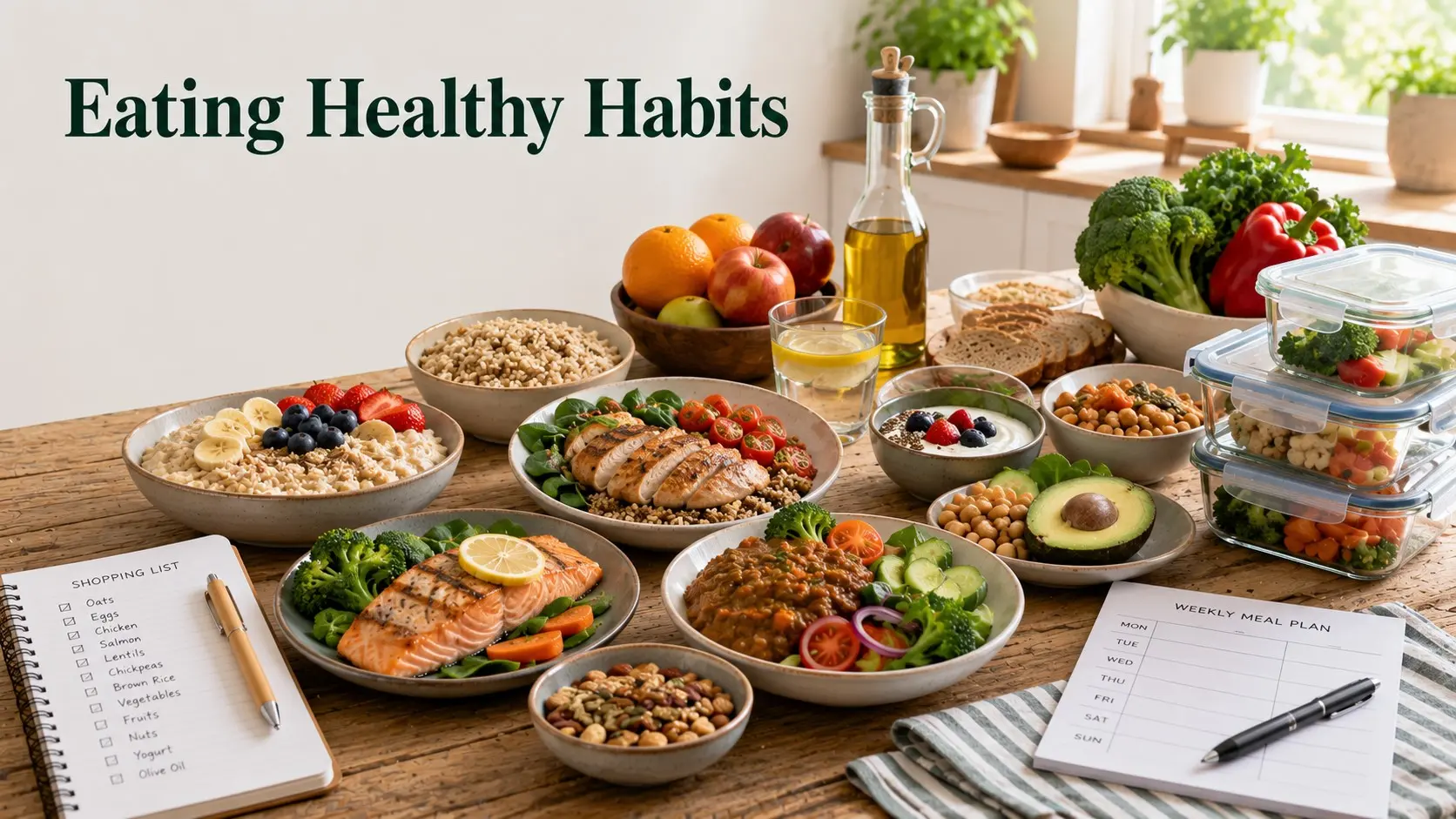
Eating Healthy Habits are the small food choices you repeat most often.
They are not a strict diet.
They are not a perfect meal plan.
They do not require expensive food.
They do not mean giving up every food you enjoy.
A useful habit might be adding vegetables to dinner.
It might be preparing breakfast the night before.
It might be checking the sodium in two cans of soup.
It might be drinking water instead of a sweet drink.
These actions may seem small.
But small actions are often easier to repeat.
Repeated actions can become sustainable habits.
A healthy eating pattern should provide enough energy, protein, fibre, vitamins, minerals, and fluid for your needs.
It should also fit your culture, family, health, budget, schedule, and food preferences.
You do not need to make every meal perfect.
You can build balance across the day and week.
This guide explains 20 realistic Eating Healthy Habits, simple meal ideas, food label tips, shopping steps, and a seven day action plan.
For a complete nutrition overview, visit the NextFitLife Healthy Eating Lifestyle Hub.
Quick Answer
The most useful Eating Healthy Habits include eating varied foods, adding vegetables and fruit, choosing fiber rich foods, including protein, using suitable fats, drinking water, planning simple meals, reading food labels, cooking more often, and allowing enjoyable foods without guilt.
Start with one small habit.
Repeat it until it feels normal.
Then add another habit.
A simple habit you can maintain is more useful than a strict plan you stop after a few days.
Important Medical and Nutrition Note
I am not a dermatologist or A doctor, and this content does not replace professional medical advice.
What I share comes from real life experience, extensive research, and consultation with healthcare providers.
Always consult qualified medical professionals for diagnosis and treatment of any health condition.
General healthy eating advice is not a medical meal plan.
Speak with a doctor or registered dietitian before making large food changes if you have diabetes, kidney disease, liver disease, heart disease, digestive disease, food allergies, swallowing problems, an eating disorder, or another medical condition.
You may also need personal guidance if you are pregnant, breastfeeding, under 18, underweight, recovering from illness, or taking medicine that affects appetite or blood sugar.
Seek support if food rules cause fear, guilt, binge eating, purging, fasting, or strong distress about your body.
What Do Eating Healthy Habits Mean?
Eating Healthy Habits are food actions that support your needs and can be repeated in real life.
They may include:
- Eating several food groups
- Choosing a variety of foods
- Adding vegetables and fruit
- Eating protein foods
- Choosing fiber rich carbohydrates
- Using suitable fats
- Drinking enough fluid
- Planning meals
- Reading labels
- Eating with attention
A healthy eating pattern is more important than one meal.
One salad does not create perfect health.
One dessert does not ruin your diet.
The full pattern matters.
Healthy Eating Should Be Flexible
Your meals may look different during work, travel, holidays, illness, family events, and busy weeks.
This is normal.
Flexibility helps a habit last.
Return to your usual pattern at the next meal.
Healthy Eating Should Be Personal
Your food needs can differ from another person’s needs.
Age, body size, activity, health, pregnancy, medicine, culture, allergies, and food access all matter.
No single menu is right for everyone.
Healthy Eating Is Not a Moral Test
Food does not make you a good or bad person.
You do not need to call food clean, guilty, forbidden, or cheating.
Use clear descriptions instead.
A food may be:
- Higher in fiber
- Higher in protein
- Higher in sodium
- Higher in added sugar
- More filling
- Less filling
- Useful for regular meals
- Enjoyed sometimes
How to Build a Balanced Meal
A balanced diet does not require perfect numbers at every meal.
Use this simple structure as a starting point.
- Add vegetables or fruit.
- Choose a protein food.
- Add a carbohydrate food.
- Add a suitable amount of fat.
- Choose water or another suitable drink.
| Meal part | Simple choices |
|---|---|
| Vegetables or fruit | Salad, cooked vegetables, berries, apples, oranges, or another suitable choice |
| Protein food | Eggs, fish, chicken, yogurt, beans, lentils, tofu, milk, or lean meat |
| Carbohydrate food | Potatoes, rice, oats, bread, pasta, beans, fruit, or whole grains |
| Suitable fat | Olive oil, avocado, nuts, seeds, or fat already present in the meal |
| Drink | Water, plain tea, coffee, milk, or a suitable fortified alternative |
You do not need every food group at every meal.
Try to build variety across the day or week.
Simple Breakfast Examples
- Eggs with vegetables and toast
- Plain yogurt with fruit and oats
- Oatmeal with milk, berries, and seeds
- Beans with tomatoes and bread
- Tofu with vegetables and potatoes
Find more ideas in our Healthy Breakfast Ideas Guide.
Simple Lunch Examples
- Chicken, rice, and vegetables
- Lentil soup with bread and fruit
- Tuna, potatoes, cucumber, and tomato
- Tofu, noodles, and vegetables
- Beans, salad, and a whole grain wrap
Simple Dinner Examples
- Fish, potatoes, and broccoli
- Chicken, rice, and salad
- Bean and vegetable pasta
- Tofu curry with rice
- Eggs, vegetables, and bread
20 Eating Healthy Habits That Can Last
1. Start with One Small Change
Trying to change everything in one day can feel hard.
Choose one clear action.
Examples include:
- Add one vegetable to dinner
- Prepare breakfast before bed
- Drink water with lunch
- Take fruit to work
- Compare two food labels
Repeat the habit for several days.
Add another step when the first one feels easier.
2. Add Foods Before Removing Foods
Restriction is not always the best first step.
Try adding a useful food.
Add vegetables to pasta.
Add beans to soup.
Add fruit to yogurt.
Add a protein food to breakfast.
Adding food can improve nutrition without making the plan feel strict.
3. Eat a Variety of Foods
No food provides every nutrient.
Dietary variety can help you get a wider range of vitamins, minerals, fiber, and protein.
Try changing one item each week.
You might change:
- The vegetable
- The fruit
- The bean
- The grain
- The protein food
- The herb or spice
Variety does not require rare or expensive foods.
4. Add Vegetables and Fruit
Vegetables and fruit provide water, fiber, vitamins, minerals, and plant compounds.
Fresh produce is useful.
Frozen and canned produce can also fit.
Choose canned fruit without heavy syrup when possible.
Choose canned vegetables with less sodium when available.
Simple ways to add produce include:
- Add spinach to eggs
- Add frozen vegetables to rice
- Serve fruit with breakfast
- Add tomatoes to a sandwich
- Add carrots to soup
Explore more ideas in the Fruits and Vegetables Hub.
5. Choose Fiber Rich Foods Often
Fiber rich foods include fruit, vegetables, beans, lentils, oats, whole grains, nuts, and seeds.
Fiber supports normal digestion.
It can also help a meal feel more filling.
Add fiber slowly if you currently eat very little.
A sudden large increase can cause gas or discomfort.
People with some digestive conditions may need personal fiber advice.
Visit the Gut Health and Digestion Foods Hub for related guides.
6. Include Protein at Main Meals
Protein foods support muscles, skin, blood, enzymes, and many body functions.
Useful choices include:
- Eggs
- Fish
- Chicken
- Lean meat
- Milk
- Yogurt
- Beans
- Lentils
- Tofu
- Tempeh
- Nuts
- Seeds
You do not need the highest possible protein intake.
You do not need protein powder at every meal.
Read our High Protein Foods Guide for more examples.
7. Use Healthy Fats in Suitable Amounts
Your body needs dietary fat.
Healthy fats can come from:
- Olive oil
- Avocado
- Nuts
- Seeds
- Fish
These foods can help meals taste satisfying.
They also contain a lot of energy in small amounts.
Use an amount that fits your needs.
You do not need to add oil, avocado, nuts, seeds, and nut butter to the same meal.
8. Drink Water Regularly
Water supports normal body functions.
Keep water nearby when this helps you remember to drink.
There is no one fixed water amount for every person.
Fluid needs change with:
- Body size
- Weather
- Activity
- Pregnancy
- Illness
- Medicine
- Kidney health
- Heart health
People with a prescribed fluid limit should follow their medical plan.
Lemon can add flavor.
It does not start the metabolism or detox the body.
9. Reduce Sugary Drinks Gradually
Soda, sweet tea, energy drinks, sweet coffee, and some juice drinks can provide a large amount of added sugar.
You do not need to change every drink at once.
Try one step:
- Choose a smaller size
- Use less syrup
- Mix sweet and plain drinks
- Replace one drink with water
- Choose plain tea or coffee
Honey, maple syrup, and brown sugar are still added sugars.
They are not automatically healthier replacements.
10. Compare Sodium in Similar Foods
Sodium can be high in sauces, ready meals, processed meat, bread, cheese, soup, snacks, and restaurant food.
Compare similar products.
Use herbs, garlic, lemon, vinegar, onion, pepper, and spices for flavor.
Salt is not evil.
Your body needs sodium.
The concern is a pattern that provides more than your body needs.
11. Choose Whole Grains and Other Fiber Rich Carbohydrates
Carbohydrates are an important source of energy.
Useful choices include:
- Oats
- Potatoes
- Brown rice
- Barley
- Quinoa
- Whole grain bread
- Whole wheat pasta
- Beans
- Lentils
White rice, white bread, and regular pasta can still fit.
You do not need to remove all refined grains.
Choose fiber rich options often and use foods that suit your digestion and culture.
12. Cook at Home More Often
Home cooking can help you choose ingredients, portions, and flavors.
It may also save money.
You do not need to cook every meal from scratch.
Useful shortcut foods include:
- Frozen vegetables
- Canned beans
- Canned fish
- Prepared salad
- Cooked grains
- Plain yogurt
- Whole grain bread
- Rotisserie chicken when sodium fits your needs
Processed food is not one single group.
Washing, freezing, cooking, canning, and fermenting are all forms of processing.
13. Plan a Few Repeat Meals
Meal planning does not mean controlling every bite.
It can reduce decisions on busy days.
Choose:
- Three breakfast ideas
- Three lunch ideas
- Three dinner ideas
- Two snack ideas
Repeat meals that work.
Change the vegetable, fruit, sauce, or seasoning for variety.
Visit the Meal Prep and Recipes Hub for planning ideas.
14. Prepare One Food in Advance
You do not need to prepare a full week of meals.
Prepare one useful food.
Examples include:
- Boiled eggs
- Cooked rice
- Roasted vegetables
- Beans
- Lentil soup
- Chicken
- Overnight oats
- Chopped fruit
One prepared food can make several meals easier.
Cool and store food safely.
15. Read Food Labels Without Fear
Food labels can help you compare packaged products.
Start with the serving size.
Then check nutrients that matter to you.
These may include:
- Added sugar
- Sodium
- Fiber
- Protein
- Saturated fat
- Calcium
- Vitamin D
Do not reject a food only because an ingredient name is unfamiliar or hard to pronounce.
Vitamin names and safe food ingredients can sound technical.
Use the full label and your health needs.
16. Eat with Attention
Mindful eating means noticing the food and your eating experience.
It does not mean eating perfectly slowly.
Try to notice:
- Taste
- Texture
- Hunger
- Comfort
- Fullness
- Whether you enjoy the meal
Put screens aside when this is practical.
Pause during the meal.
Eat more when you still need food.
17. Use Portion Awareness Instead of Tiny Portions
Portion awareness means noticing how much food you serve and whether it meets your needs.
It does not mean eating from the smallest plate.
It does not mean ignoring hunger.
Helpful steps include:
- Serve food on a plate or in a bowl
- Measure oil when estimating is hard
- Pause before a second serving
- Add more vegetables or protein when a meal is too small
- Save restaurant leftovers when useful
Your appetite can change with sleep, activity, illness, stress, and hormones.
18. Choose Snacks That Meet a Need
Healthy snacks are optional.
You do not need to snack at fixed times.
A snack can help when meals are far apart or your energy needs are higher.
Simple examples include:
- Fruit with yogurt
- A boiled egg
- Vegetables with hummus
- Cottage cheese with berries
- A small serving of nuts with fruit
- Whole grain toast with nut or seed butter
A snack does not need a health claim on the package.
19. Allow Enjoyable Foods Without Guilt
Dessert, bread, restaurant food, family recipes, and celebration foods can fit.
A flexible pattern is often easier to maintain than a rigid plan.
Enjoy the food.
Then return to your normal routine.
Do not punish yourself with fasting or excessive exercise.
20. Review, Repeat, and Adjust
Consistency does not mean doing the same thing perfectly every day.
It means returning to helpful habits.
Ask yourself:
- Which habit made life easier?
- Which habit felt too strict?
- Which meal kept me satisfied?
- Which food was wasted?
- What is one realistic next step?
Adjust your plan as your life changes.
Simple Food Label Guide
| Label part | What it tells you | How to use it |
|---|---|---|
| Serving size | The amount used for the nutrition numbers | Compare it with the amount you normally eat. It is not a personal recommendation. |
| Servings per package | How many label servings are in the package | A small package may contain more than one serving. |
| Added sugar | Sugar added during production or cooking | Compare similar drinks, yogurt, cereal, sauces, and snacks. |
| Sodium | The amount of sodium in one serving | Compare similar bread, soup, sauces, meat, and ready meals. |
| Fiber | Fiber in one serving | Use it when comparing cereal, bread, grains, and snacks. |
| Ingredient list | Ingredients listed from larger to smaller amounts by weight | Use it to check allergens, whole grains, sweeteners, and ingredients important to you. |
Eating Healthy Habits for Busy Days
Busy days need simple choices.
They do not need perfect meals.
Keep Fast Foods at Home
Useful options include:
- Eggs
- Canned beans
- Canned tuna or salmon
- Frozen vegetables
- Frozen fruit
- Plain yogurt
- Whole grain bread
- Microwave rice
- Soup
- Tofu
Use Simple Meal Formulas
Try:
- Protein plus vegetables plus rice
- Soup plus bread plus fruit
- Eggs plus vegetables plus toast
- Yogurt plus fruit plus oats
- Beans plus potatoes plus salad
Prepare Tomorrow’s Food Tonight
Pack fruit.
Fill a water bottle.
Prepare overnight oats.
Put leftovers in a lunch container.
Small evening actions can make the next day easier.
Eating Healthy Habits on a Budget
Healthy eating does not require luxury food.
Check What You Have
Look in the refrigerator, freezer, and cupboards before shopping.
Plan Around Affordable Foods
Useful choices may include:
- Oats
- Rice
- Potatoes
- Beans
- Lentils
- Eggs
- Frozen vegetables
- Seasonal fruit
- Canned fish
- Plain yogurt
Compare Unit Prices
A larger package is not always cheaper.
Compare the price by weight or volume when available.
Use Frozen and Canned Foods
Frozen vegetables and fruit can reduce waste.
Canned beans and fish can make meals faster.
Compare sodium, syrup, and added sugar.
Cook Once and Eat Twice
Make extra rice, soup, beans, vegetables, or chicken.
Use leftovers safely in another meal.
Eating Well Away from Home
Restaurant food, takeout, work meals, and family events can fit into Eating Healthy Habits.
Read the Menu Before You Go
Choose a few suitable options before you become very hungry.
Build a Balanced Order
Look for vegetables, protein, and a suitable carbohydrate food.
Ask for Simple Changes
You may ask for extra vegetables, sauce on the side, or a different side dish.
You do not need to change every part of the meal.
Save Food When Useful
Restaurant portions can be large.
Share a meal or save part for later when practical.
Enjoy the Social Meal
Food is also culture, family, friendship, and celebration.
One meal does not define your health.
Eating Healthy Habits and Emotional Eating
People eat for many reasons.
Hunger is only one reason.
You may also eat because of:
- Stress
- Boredom
- Celebration
- Comfort
- Habit
- Loneliness
- Food availability
These reasons do not make you weak.
Notice what you need.
You may need food.
You may need rest, comfort, movement, sleep, or support.
Seek professional help when emotional eating causes distress or loss of control.
Seven Day Eating Healthy Habits Plan
This plan uses one small action each day.
You can repeat a day or change the order.
| Day | Habit | Simple action |
|---|---|---|
| Day 1 | Add vegetables | Add one vegetable to lunch or dinner. |
| Day 2 | Add protein | Include eggs, yogurt, beans, fish, chicken, or tofu at one meal. |
| Day 3 | Choose water | Replace one sweet drink with water or an unsweetened drink. |
| Day 4 | Read a label | Compare sodium, added sugar, or fiber in two similar foods. |
| Day 5 | Prepare ahead | Prepare breakfast, lunch, or one useful ingredient for tomorrow. |
| Day 6 | Eat with attention | Eat one meal without a screen and notice taste and fullness. |
| Day 7 | Review the week | Keep the easiest habit and repeat it next week. |
Common Eating Healthy Habits Mistakes
Trying to Be Perfect
Perfection can make eating stressful.
Focus on a pattern you can repeat.
Changing Everything at Once
Large changes can feel difficult.
Start with one habit.
Removing Whole Food Groups Without a Medical Reason
Removing dairy, gluten, carbohydrates, fruit, or fats can create nutrient gaps.
Seek personal advice when a restriction is needed.
Believing Breakfast Is Required for Everyone
Some people feel better after breakfast.
Other adults prefer to eat later.
Your health, hunger, medicine, and schedule matter.
Using Meal Timing to Control Metabolism
Your metabolism does not stop because one meal is late.
Regular meal times may help some people manage hunger or medicine.
They are not a universal rule.
Judging Every Processed Food as Bad
Frozen vegetables, canned beans, yogurt, oats, bread, and canned fish are processed foods.
Judge the whole product.
Thinking Natural Sugar Does Not Count
Honey, syrup, coconut sugar, and brown sugar are still sugars.
They can fit, but they are not free foods.
Making Meals Too Small
A small salad or coffee may not provide enough food.
Add protein, grains, beans, potatoes, bread, or suitable fats.
Using Supplements Instead of Food
Supplements do not provide the full range of nutrients and food experiences found in varied meals.
Use supplements when they are needed and safe.
Giving Up After One Difficult Day
One unusual day does not erase your habits.
Begin again with the next meal.
When Eating Healthy Habits Need Personal Changes
Diabetes
Carbohydrate foods can affect blood sugar.
Follow your personal meal, medicine, and glucose monitoring plan.
Kidney Disease
Kidney conditions can change needs for sodium, potassium, phosphorus, protein, and fluid.
General healthy eating advice may not be suitable.
Food Allergies
Read ingredient and allergen labels carefully.
Do not try a food that is unsafe for you.
Pregnancy
Pregnancy changes nutrient and food safety needs.
Follow maternity advice about supplements, fish, caffeine, and unsafe foods.
Children
Children need enough food for growth.
Do not place a child on a restrictive diet without qualified pediatric care.
Older Adults
Older adults may need fewer calories but equal or greater amounts of some nutrients.
Protein, vitamin B12, vitamin D, calcium, fluids, and easy to eat foods may need attention.
Eating Disorders
Strict food tracking, fasting, and portion rules may be unsafe for someone with an eating disorder.
Seek specialized care.
Conclusion: Build Eating Healthy Habits One Step at a Time
Eating Healthy Habits do not need to be perfect.
They need to fit your real life.
Build meals with vegetables or fruit, protein foods, fiber rich carbohydrates, suitable fats, and water.
Use fresh, frozen, canned, and prepared foods in practical ways.
Plan a few repeat meals.
Read labels.
Eat with attention.
Allow enjoyable foods.
Adjust your habits when life changes.
Start today with one action.
Add vegetables to dinner.
Prepare breakfast for tomorrow.
Compare two food labels.
Or replace one sweet drink with water.
Save this Eating Healthy Habits guide and share it with someone who wants simple and realistic nutrition advice.
References and Sources
- World Health Organization: Healthy Diet Fact Sheet, updated January 2026
- United States Department of Agriculture and Department of Health and Human Services: Dietary Guidelines for Americans, 2025 to 2030
- Centers for Disease Control and Prevention: Healthy Eating Tips
- National Health Service: The Eatwell Guide
- United States Food and Drug Administration: What Is on the Nutrition Facts Label
Frequently Asked Questions About Eating Healthy Habits
What are Eating Healthy Habits?
Eating Healthy Habits are small food actions repeated over time. Examples include eating varied foods, adding vegetables, including protein, drinking water, planning meals, and reading food labels.
How do I start Eating Healthy Habits?
Start with one small action that fits your life. Add a vegetable to dinner, prepare breakfast, carry water, or compare two food labels. Repeat it before adding another change.
What are ten healthy eating habits?
Useful habits include eating varied foods, adding vegetables and fruit, choosing fiber rich foods, including protein, using suitable fats, drinking water, planning meals, reading labels, cooking more often, and eating with attention.
How long does it take to build Eating Healthy Habits?
There is no fixed number of days. Habits become easier through repetition. The best habit is one that fits your routine and can be continued.
Do I need to eat breakfast every day?
No. Some people feel better after breakfast. Other adults prefer to eat later. Hunger, health, medicine, work, and personal preference matter.
Do I need to stop eating sugar?
No. You do not need to remove all sugar. Compare added sugar in drinks, yogurt, cereal, sauces, and desserts. Reduce the largest sources gradually.
Are carbohydrates unhealthy?
No. Fruit, beans, oats, potatoes, rice, bread, and pasta all contain carbohydrates. Choose fiber rich sources often and portions that fit your needs.
Are processed foods always unhealthy?
No. Frozen vegetables, canned beans, yogurt, oats, bread, and canned fish are processed foods. Compare the full product instead of judging it from one word.
Can Eating Healthy Habits include dessert?
Yes. Dessert and other enjoyable foods can fit a flexible eating pattern. One food does not define your health.
Do I need to count calories?
No. Some people find calorie tracking useful, but it is not required for everyone. Meal structure, portions, hunger, and habits can also guide food choices.
How can I eat healthy on a small budget?
Plan a few meals, check food you already have, use beans, lentils, eggs, oats, rice, potatoes, frozen vegetables, and seasonal fruit, and reduce food waste.
What is a balanced meal?
A balanced meal may include vegetables or fruit, a protein food, a carbohydrate food, a suitable amount of fat, and water or another suitable drink.
What should I do after an unhealthy day?
Do not punish yourself. Return to your normal eating pattern at the next meal. One difficult day does not erase your habits.
Can Eating Healthy Habits help with weight loss?
They may support weight management, but no single habit guarantees weight loss. Sleep, activity, health, medicine, stress, genetics, and total food intake also matter.
When should I speak with a dietitian?
Seek personal advice if you have a medical condition, food allergy, digestive problem, eating disorder, pregnancy, unplanned weight change, or a diet that removes several food groups.

Health & wellness writer with 30+ years of experience in nutrition, fitness, and healthy aging. Founder of NextFitLife.com — evidence-based health guidance.