Last updated: July 24, 2026
Next review: July 2027, or sooner if MASLD nutrition or treatment guidance changes
Written and source- checked by: Adel Galal, Founder and Lead Writer at NextFitLife
Editorial expertise: Evidence-informed nutrition, fitness, weight-management, healthy-aging, and patient-education content
Medical review status: This article has not been medically reviewed by a hepatologist, gastroenterologist, physician, registered dietitian, pharmacist, or another licensed healthcare professional.
Reading time: About 23 minutes
Quick Answer: What is the best diet for fatty liver?
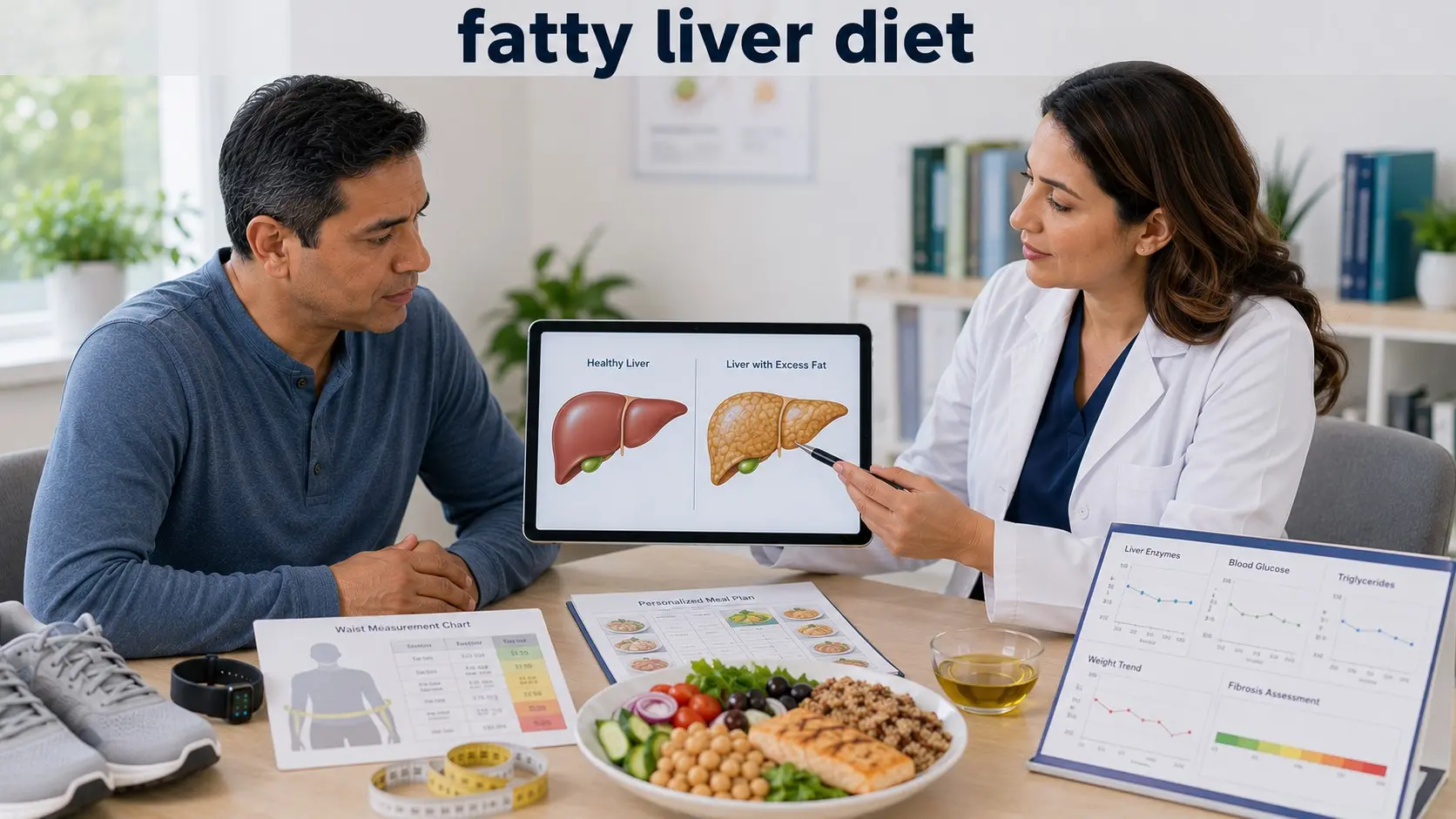
A fatty liver diet should focus on the overall eating pattern rather than one detox drink, supplement, or superfood. A Mediterranean-style plan built around vegetables, whole fruit, beans, whole grains, fish, suitable lean proteins, nuts, seeds, and unsaturated fats can support weight, blood glucose, triglycerides, cholesterol, and cardiovascular health.
Reduce sugary drinks, excess added sugar, oversized portions, frequent fried food, processed meat, and foods high in saturated fat. Alcohol advice should come from your healthcare professional because the safest amount depends on the cause and severity of liver disease.
If you have overweight or obesity, gradual and sustainable weight loss may reduce liver fat. A loss of roughly 5% to 10% of starting body weight may produce broader improvements in liver fat, inflammation, or fibrosis for some people, although results vary.
No food, lemon drink, tea, herb, or cleanse can detox the liver or guarantee reversal of liver damage. Medical assessment is needed to determine whether you have simple steatosis, MASH, fibrosis, cirrhosis, or another liver condition.
When Liver Symptoms Need Urgent Medical Care
Contact an urgent medical service if you develop:
- New yellowing of the skin or whites of the eyes
- Dark urine with pale stools
- Persistent vomiting
- Increasing abdominal swelling
- New or rapidly worsening leg swelling
- Significant unexplained weight loss
- Severe weakness or dehydration
- Persistent pain in the upper-right abdomen
- Fever with abdominal pain or jaundice
Call your local emergency number or go to the nearest emergency department, emergency room, or A&E department for:
- Vomiting blood
- Black, tar-like stools
- Confusion, severe drowsiness, or personality changes
- Fainting or collapse
- Severe abdominal pain
- Rapid abdominal swelling with pain or fever
- Severe shortness of breath
- Uncontrolled bleeding
These symptoms may indicate advanced liver disease, internal bleeding, infection, acute liver injury, or another medical emergency.
Medical and Editorial Notice
This guide was written, and source checked by Adel Galal, Founder and Lead Writer at NextFitLife.
Adel is a health and wellness writer. He is not a physician, hepatologist, gastroenterologist, registered dietitian, endocrinologist, pharmacist, emergency clinician, or licensed healthcare professional.
This article is for educational purposes only. It cannot diagnose fatty liver disease, interpret personal blood tests, calculate an individual calorie target, determine fibrosis stage, prescribe weight-loss treatment, or replace medical care.
Dietary needs vary according to liver-disease stage, body weight, diabetes, kidney function, food allergies, medicines, pregnancy, appetite, nutritional status, and other health conditions.
Do not stop medicine, begin fasting, use a liver cleanse, or start a supplement because of information on this page.
NextFitLife uses display advertising to support the website. Advertising does not determine the medical guidance, emergency warnings, dietary recommendations, sources, or conclusions on this page.
Read the Editorial Policy, Medical Review Policy, Corrections Policy, and Medical Disclaimer.
What Is Metabolic Dysfunction-Associated Steatotic Liver Disease?
Fatty liver linked with metabolic risk is now commonly called metabolic dysfunction-associated steatotic liver disease, or MASLD.
Older sources and many searchers still use:
- Nonalcoholic fatty liver disease
- NAFLD
- Metabolic fatty liver
- Fatty liver disease
MASLD involves excess fat in the liver together with one or more cardiometabolic risk factors, such as:
- Overweight or obesity
- Increased waist circumference
- Type 2 diabetes
- Prediabetes or insulin resistance
- High blood pressure
- High triglycerides
- Low HDL cholesterol
Fat in the liver is not simply a clogged filter. It is part of a metabolic process that can affect liver cells, blood glucose, blood fats, inflammation, and cardiovascular risk.
What Is the Difference Between MASLD and MASH?
| Condition | What it means | Possible concern |
|---|---|---|
| MASLD | Excess liver fat associated with metabolic dysfunction | May remain stable or progress depending on risk factors |
| MASH | Liver fat plus inflammation and liver-cell injury | Greater risk of fibrosis and cirrhosis |
| Fibrosis | Scar tissue develops in the liver | May progress through several stages |
| Cirrhosis | Advanced liver scarring and structural change | May cause liver failure, bleeding, fluid retention, or liver cancer |
MASH is the newer term for what was previously called nonalcoholic steatohepatitis, or NASH.
A person cannot reliably determine whether inflammation or fibrosis is present based only on symptoms or liver-enzyme results.
Can a Fatty Liver Diet Reverse Liver Damage?
Diet and lifestyle changes may reduce liver fat and, in some people, improve liver inflammation or fibrosis.
The likelihood of improvement depends on:
- How advanced the liver disease is
- Whether MASH or fibrosis is present
- Body-weight change
- Blood-glucose control
- Triglycerides and cholesterol
- Alcohol intake
- Physical activity
- Genetics
- Medicines
- Long-term consistency
Early liver fat may improve substantially. Advanced cirrhosis should not be described as something a meal plan can reliably reverse.
The safest goal is to reduce liver fat, lower metabolic and cardiovascular risk, prevent progression, and improve overall health rather than promising a cure.
How Is Fatty Liver Diagnosed and Staged?
Assessment may include:
- Medical and family history
- Alcohol-use history
- Medicine and supplement review
- Body weight and waist measurement
- Blood-pressure measurement
- Liver-related blood tests
- Blood glucose or A1C
- Cholesterol and triglycerides
- Liver ultrasound or another imaging test
- A fibrosis-risk calculation
- Liver elastography
- Liver biopsy in selected cases
ALT and AST
Alanine aminotransferase and aspartate aminotransferase are commonly called liver enzymes.
They may be elevated with liver-cell injury, but:
- Normal results do not rule out MASLD.
- High results do not prove that MASLD is the cause.
- The level does not reliably show fibrosis stage.
FIB-4
FIB-4 is a noninvasive fibrosis-risk calculation that commonly uses:
- Age
- AST
- ALT
- Platelet count
It can help identify people who may need additional fibrosis assessment, but it must be interpreted in the correct clinical context.
Liver Elastography
Elastography, including FibroScan in some clinics, estimates liver stiffness and may also assess liver fat.
Results may be affected by inflammation, food intake, body size, congestion, and other technical or medical factors.
Liver Biopsy
A biopsy is not needed for every person. It may be considered when the diagnosis is uncertain or when knowing the exact degree of inflammation and fibrosis would change treatment.
Why Trust This Fatty Liver Diet Guide?
This guide was researched and source-checked by Adel Galal, Founder and Lead Writer at NextFitLife.
Adel has more than 30 years of personal study and practical interest in nutrition, fitness, weight management, sleep, and healthy aging, along with more than 15 years of health and wellness writing.
He has published an interconnected collection of educational guides covering liver health, liver-supportive foods, metabolic health, weight management, visceral fat, blood glucose, and practical nutrition.
His work focuses on comparing established medical and nutrition sources, identifying misleading detox or miracle-cure claims, and translating complex guidance into practical steps for everyday readers.
This article was checked against guidance from the American Association for the Study of Liver Diseases, the National Institute of Diabetes and Digestive and Kidney Diseases, and the European Association for the Study of the Liver.
Adel is not a physician, hepatologist, gastroenterologist, registered dietitian, endocrinologist, pharmacist, or licensed healthcare professional. This guide provides education and does not replace diagnosis, testing, or individualized treatment.
What Are the Main Goals of a Fatty Liver Diet?
- Reduce excess calorie intake when weight loss is appropriate
- Reduce sugary drinks and added sugar
- Improve blood-glucose control
- Improve triglycerides and cholesterol
- Replace saturated fats with unsaturated fats
- Increase fibre-rich whole foods
- Support adequate protein and muscle mass
- Reduce cardiovascular risk
- Create eating habits that can be maintained long term
- Avoid rapid weight loss, malnutrition, and unsafe detox products
A liver-friendly eating plan should be nutritionally adequate, enjoyable, culturally appropriate, affordable, and realistic.
Is the Mediterranean Diet Good for Fatty Liver?
A Mediterranean-style pattern is one of the most practical eating approaches for MASLD.
It typically emphasizes:
- Vegetables
- Whole fruit
- Beans, chickpeas, and lentils
- Whole grains
- Fish
- Moderate portions of poultry, eggs, and dairy when suitable
- Nuts and seeds
- Olive oil and other unsaturated fats
- Herbs and spices
It limits:
- Sugary drinks
- Highly processed food
- Processed meat
- Frequent fried food
- Large portions of red meat
- Foods high in saturated fat
- Refined carbohydrates eaten in large portions
The Mediterranean diet is a flexible pattern, not a fixed list of Mediterranean recipes.
It can be adapted to Middle Eastern, North African, Asian, African, European, Latin American, vegetarian, and other cultural food traditions.
How Can You Build a Fatty Liver-Friendly Plate?
A practical meal formula is:
| Plate area | Food group | Examples |
|---|---|---|
| About one-half | Non-starchy vegetables | Broccoli, salad greens, peppers, courgette or zucchini, cabbage, cauliflower, green beans |
| About one-quarter | Protein | Fish, chicken, eggs, tofu, beans, lentils, plain yogurt, or another suitable protein |
| About one-quarter | High-fibre carbohydrate | Oats, barley, brown rice, quinoa, bulgur, whole-grain bread, beans, or lentils |
| Small portion | Unsaturated fat | Olive oil, nuts, seeds, avocado, or tahini |
Portion size should be adjusted to body size, weight goals, activity, hunger, diabetes treatment, and other medical needs.
What Foods Can You Eat With Fatty Liver?
Vegetables
Vegetables provide fibre, volume, vitamins, minerals, and a wide range of plant compounds.
Examples include:
- Spinach and other leafy greens
- Broccoli
- Cauliflower
- Cabbage
- Brussels sprouts
- Peppers
- Tomatoes
- Carrots
- Green beans
- Aubergine or eggplant
- Courgette or zucchini
No vegetable needs to be described as a liver detox food. The benefit comes from the overall dietary pattern.
Whole Fruit
Whole fruit provides fibre and is generally preferable to juice.
Examples include:
- Berries
- Apples
- Pears
- Oranges
- Peaches
- Plums
- Kiwi
Portions may need adjustment for diabetes, kidney disease, digestive conditions, or an individualized calorie plan.
Beans and Lentils
Beans, chickpeas, and lentils provide plant protein, fibre, and slowly digested carbohydrates.
They can be used in:
- Soups
- Salads
- Stews
- Whole-grain bowls
- Bean dips
Fish and Seafood
Fish can replace processed meat or large portions of fatty red meat.
Options include:
- Salmon
- Sardines
- Trout
- Mackerel
- Tuna
- Cod
Preparation matters. Baked, grilled, poached, or air-cooked fish adds less saturated fat than deep frying.
Whole Grains
Whole grains usually contain more fibre than refined grains.
Options include:
- Oats
- Barley
- Bulgur
- Brown rice
- Quinoa
- Whole-grain bread
- Whole-grain pasta
Nuts, Seeds, and Avocado
These foods provide unsaturated fat, but they are energy-dense.
Use moderate portions that fit your weight and calorie goals.
For a broader list of liver-supportive food ideas, read Foods Good for Liver: Best Foods, Tips, and Meal Ideas.
What Foods Should You Limit With Fatty Liver?
A fatty liver diet does not require perfection or a permanent ban on every treat.
Foods and drinks to reduce include:
- Soda and sweetened soft drinks
- Sweet tea
- Energy drinks
- Sugary coffee drinks
- Large quantities of fruit juice
- Candy and frequent large desserts
- Cakes, cookies, and pastries
- Deep-fried food
- Processed meat
- Frequent fast food
- Large portions of fatty meat
- Butter, shortening, and foods high in saturated fat
- Refined grains eaten in large portions
- Alcohol when your medical team advises limiting or avoiding it
Focus on frequency, portion size, total calorie intake, and what replaces the food rather than labelling every food as completely good or bad.
Why Are Sugary Drinks Important With Fatty Liver?
Sugary drinks provide calories quickly and usually create less fullness than solid food.
Common sources include:
- Soda
- Sweetened juice drinks
- Energy drinks
- Sweet tea
- Flavoured milk drinks
- Sweetened coffee beverages
- Large smoothies with syrups or added sugar
Replacing sugary drinks with water, sparkling water without added sugar, or unsweetened tea or coffee can reduce added sugar and total calorie intake.
Is Fruit Juice Healthy for Fatty Liver?
Fruit juice contains vitamins, but it delivers fruit sugar without the full fibre structure of whole fruit.
Whole fruit is more filling and is usually a better everyday choice.
A small juice serving may fit some meal plans, but it should not be used as a liver cleanse.
Which Fats Are Better for Fatty Liver?
A fatty liver diet does not have to be extremely low in fat.
The type of fat and total calorie intake matter.
Unsaturated Fat Sources
- Extra-virgin olive oil
- Nuts
- Seeds
- Avocado
- Fish
- Natural nut or seed butter
Foods Often High in Saturated Fat
- Butter
- Ghee used in large amounts
- Fatty processed meat
- Large portions of fatty red meat
- Full-fat cream
- Commercial pastries
- Some fast-food meals
- Coconut or palm fat used in large amounts
Olive oil can replace butter or shortening, but it is not prescribed as four tablespoons daily for everyone.
Use an amount that fits your calorie needs and weight goals.
How much protein do you need with fatty liver?
Protein helps maintain muscle, supports fullness, and may make gradual weight loss easier.
Suitable options may include:
- Fish
- Skinless poultry
- Eggs
- Beans
- Lentils
- Chickpeas
- Tofu or tempeh
- Plain yogurt
- Cottage cheese or another suitable dairy food
Protein needs vary according to age, body size, activity, kidney function, pregnancy, cirrhosis, appetite, and muscle mass.
People with cirrhosis should not begin a low-protein diet unless a qualified liver team has specifically prescribed it.
Frequent processed meats such as sausages, bacon, salami, and many deli meats are less-helpful choices because they may be high in sodium and saturated fat.
Are whole grains better than refined grains?
Whole grains usually provide more fibre and may produce a steadier blood-glucose response than highly refined grains.
However, portion size still matters.
Useful Swaps
| Instead of | Try |
|---|---|
| Sugary breakfast cereal | Plain oats with berries and nuts |
| Large white-bread portion | A smaller portion of whole-grain bread |
| Large serving of white rice | Brown rice, bulgur, barley, or a smaller mixed portion |
| Refined crackers | Whole-grain crackers with hummus or yogurt |
| Sweet pastry | Whole fruit with plain yogurt or nuts |
White rice or bread does not directly poison the liver. The concern is the overall pattern, portions, added sugar, total calories, fibre intake, and metabolic control.
Can Coffee or Tea Help Fatty Liver?
Coffee
Unsweetened coffee has been associated with better liver outcomes in some populations, but it is not a cure or a replacement for treatment.
Avoid turning coffee into a high-sugar dessert drink with:
- Flavoured syrups
- Whipped cream
- Large amounts of sugar
- Sweetened condensed milk
- Large amounts of high-fat creamer
Ask a healthcare professional about caffeine if you are pregnant or have heart-rhythm problems, severe anxiety, uncontrolled blood pressure, reflux, or interacting medicines.
Green Tea
Plain brewed green tea may replace a sugary beverage, but it should not be described as a liver cleanse or a treatment that removes liver fat.
Avoid concentrated green-tea extract supplements unless a qualified healthcare professional has reviewed the product because some concentrated extracts have been linked with liver injury.
Do You Need a Liver Detox for Fatty Liver?
No. The liver does not need a juice cleanse, detox tea, fasting program, lemon-water ritual, or supplement pack.
Your liver already processes nutrients, medicines, alcohol, and many waste products.
Detox products may cause:
- Dehydration
- Diarrhea
- Low blood sugar
- Malnutrition
- Medicine interactions
- Direct liver injury
- Delayed diagnosis or treatment
Does Lemon Water Remove Liver Fat?
No. Lemon water can be a low-calorie drink if it replaces soda, but it does not dissolve liver fat or reverse fibrosis.
Do Turmeric, Ginger, or Garlic Detox the Liver?
These may be used as ordinary food ingredients and can add flavour without excess sugar or salt.
They do not remove liver fat by themselves.
Concentrated supplements may have side effects or interact with medicines.
Can liver detox supplements be harmful?
Yes. Herbal and bodybuilding products can contain multiple ingredients, inaccurate doses, contaminants, or substances capable of causing liver injury.
Discuss every supplement with a physician or pharmacist.
How much weight loss may help fatty liver?
If you have overweight or obesity, gradual weight loss may reduce liver fat and improve metabolic health.
A sustained loss of roughly 5% to 10% of starting body weight may improve liver fat, inflammation, or fibrosis for some people.
| Starting weight | Approximate 5% loss | Approximate 10% loss |
|---|---|---|
| 70 kg or 154 lb | 3.5 kg or 8 lb | 7 kg or 15 lb |
| 90 kg or 198 lb | 4.5 kg or 10 lb | 9 kg or 20 lb |
| 110 kg or 243 lb | 5.5 kg or 12 lb | 11 kg or 24 lb |
These examples are not personal targets.
Your goal should be individualized according to:
- Current weight and waist circumference
- Medical history
- Diabetes treatment
- Muscle mass
- Age and frailty
- Eating-disorder history
- Liver-disease stage
What should you avoid?
- Crash diets
- Prolonged unsupervised fasting
- Very-low-calorie plans without medical supervision
- Laxative or diuretic weight-loss products
- Detox teas
- Severe carbohydrate or fat restriction without a nutritional reason
Rapid weight loss and poor nutrition may worsen liver and muscle health.
For a broader sustainable approach, read Natural Weight Loss: Safe Tips That Help Without Extreme Diets.
For information about abdominal fat, read Belly Fat Loss: The Complete Guide to Visceral Fat.
Can Exercise Reduce Liver Fat?
Regular physical activity can help reduce liver fat and improve insulin sensitivity, cardiovascular fitness, blood pressure, triglycerides, muscle strength, and weight management.
Many adults may aim for at least 150 minutes of moderate-intensity activity each week when medically appropriate.
A Balanced Weekly Activity Plan
- Brisk walking, cycling, swimming, or another aerobic activity on several days
- Strength exercise on two or more days when safe
- Less prolonged sitting
- Short movement breaks during the day
- Gradual progression rather than sudden, intense training
Exercise may benefit liver and metabolic health, even when the scale changes slowly.
Start more carefully if you have
- Chest pain or heart disease
- Severe breathlessness
- Advanced liver disease
- Balance problems
- Severe joint pain
- Uncontrolled blood pressure
- Diabetes treated with insulin or medicines that can cause low blood sugar
- Long-term inactivity
Stop exercising and seek medical advice for chest pain, fainting, severe breathlessness, confusion, or unusual weakness.
Should you drink alcohol with fatty liver?
Ask your healthcare professional whether any alcohol is safe for you.
The recommendation depends on:
- The cause of liver fat
- The amount and pattern of alcohol use
- MASH or fibrosis
- Cirrhosis
- Medicines
- Other liver conditions
- Personal history of alcohol-use disorder
People with cirrhosis, alcohol-associated liver disease, or another condition requiring abstinence should avoid alcohol completely.
People who do not currently drink should not start drinking for a claimed heart or liver benefit.
Anyone who may be physically dependent on alcohol should seek medical guidance before stopping suddenly because withdrawal can be dangerous.
Seven-Day Fatty Liver Diet Meal Plan
This sample plan uses Mediterranean-style principles. It is not a prescription and should be adjusted for calorie needs, diabetes medicines, kidney disease, cirrhosis, pregnancy, food allergies, cultural preferences, and nutritional status.
Day 1
Breakfast: Plain oats with berries, cinnamon, plain yogurt, and a small portion of walnuts.
Lunch: Lentil and vegetable soup with mixed salad and whole-grain bread.
Snack: Apple with a small portion of unsalted nuts.
Dinner: Baked salmon, steamed broccoli, and brown rice with lemon and herbs.
Day 2
Breakfast: Vegetable omelette with one slice of whole-grain toast.
Lunch: Chickpea, cucumber, tomato, parsley, and olive-oil salad.
Snack: Plain yogurt with a pear.
Dinner: Skinless chicken, roasted vegetables, and a small portion of bulgur.
Day 3
Breakfast: Plain yogurt with oats, berries, chia seeds, and no added syrup.
Lunch: Tuna and white-bean salad with leafy greens and a lemon dressing.
Snack: Carrot and pepper slices with hummus.
Dinner: Tofu and mixed-vegetable stir-fry with brown rice and a low-sodium sauce.
Day 4
Breakfast: Whole-grain toast with avocado and a boiled egg.
Lunch: Barley and vegetable soup with a side salad.
Snack: Orange or another whole fruit with a small portion of almonds.
Dinner: Grilled fish, green beans, and quinoa.
Day 5
Breakfast: Overnight oats with apple, cinnamon, and natural peanut or almond butter.
Lunch: Whole-grain wrap with grilled chicken or tofu, vegetables, and plain yogurt sauce.
Snack: Plain yogurt or an unsweetened alternative with berries.
Dinner: Lentil and vegetable stew with a small portion of brown rice.
Day 6
Breakfast: Scrambled eggs or tofu with tomatoes, spinach, and whole-grain toast.
Lunch: Mediterranean bean bowl with vegetables, quinoa, herbs, and a small amount of olive oil.
Snack: Pear with walnuts.
Dinner: Baked chicken or tempeh with cauliflower, carrots, and barley.
Day 7
Breakfast: Plain oats with banana slices, cinnamon, and seeds.
Lunch: Sardine, salmon, or chickpea salad with mixed vegetables and whole-grain bread.
Snack: Cucumber, carrots, or peppers with hummus.
Dinner: Vegetable and bean pasta sauce served over a moderate portion of whole-grain pasta with salad.
Drink Options
- Water
- Sparkling water without added sugar
- Unsweetened tea
- Unsweetened coffee when suitable
- Milk or an unsweetened alternative when compatible with your plan
Vegetarian Substitutions
- Replace chicken or fish with lentils, chickpeas, beans, tofu, or tempeh.
- Use plain Greek-style yogurt, eggs, or an appropriate fortified alternative.
- Combine legumes and whole grains across the day for varied protein sources.
Meal-Preparation Tips
- Cook beans, grains, and vegetables in batches.
- Wash and cut vegetables in advance.
- Prepare two simple dressings without added sugar.
- Freeze individual portions of soup or stew.
- Keep whole fruit visible and easy to reach.
- Buy unsalted nuts in small packages or portion them at home.
How do you read food labels for a fatty liver diet?
Check the Serving Size
The nutrient values may apply to a much smaller amount than the full package.
Review Added Sugar
Look for added sugar in:
- Breakfast cereal
- Flavoured yogurt
- Granola bars
- Sauces and dressings
- Drinks
- Packaged snacks
Check Saturated Fat
Compare similar products and choose options with less saturated fat when practical.
Look for Fibre
Whole grains, beans, vegetables, fruit, nuts, and seeds can increase fibre intake.
Check Sodium
Sodium matters for blood pressure and cardiovascular health, particularly when processed food is eaten frequently.
Read the Ingredient List
Ingredients appear in descending order by weight.
A product does not become healthy merely because the front label says:
- Natural
- Detox
- Clean
- Low fat
- Multigrain
- No refined sugar
How Long Does a Fatty Liver Diet Take to Work?
There is no reliable timetable for every person.
Changes in body weight, waist circumference, liver fat, blood glucose, triglycerides, liver enzymes, inflammation, and fibrosis may occur at different rates.
Some laboratory or metabolic changes may appear before imaging changes.
Normal liver enzymes do not prove that liver fat or fibrosis has resolved.
How may progress be monitored?
Your healthcare team may use:
- Body weight
- Waist circumference
- Blood pressure
- A1C or fasting glucose
- Triglycerides and cholesterol
- ALT, AST, and other liver tests
- Platelet count
- FIB-4 or another fibrosis score
- Liver ultrasound
- Elastography
- Specialist assessment
Do not judge success only by whether you feel more energetic. MASLD can remain silent even when fibrosis is present.
Does fatty liver require medicine?
Diet and physical activity are central to MASLD care, but some people also require medical treatment for:
- Type 2 diabetes
- Obesity
- High blood pressure
- High cholesterol or triglycerides
- Selected stages of MASH with fibrosis
- Another liver disease
- Cirrhosis complications
Medicine choice depends on fibrosis stage, other health conditions, local approvals, treatment availability, and specialist assessment.
Do not stop diabetes, cholesterol, blood-pressure, or weight-management medicine because you have fatty liver unless the prescriber advises it.
When Should You See a Liver Specialist?
A referral to a hepatologist or gastroenterologist may be appropriate when there is:
- A high or indeterminate fibrosis-risk result
- Abnormal liver tests that remain unexplained
- Evidence of advanced fibrosis or cirrhosis
- Low platelets
- An enlarged spleen
- Jaundice
- Abdominal fluid or increasing swelling
- Unexplained weight loss
- A suspected second liver disease
- Uncertainty about alcohol-associated or medicine-related liver injury
- Persistent symptoms despite initial evaluation
People with advanced fibrosis or cirrhosis may require monitoring for complications and liver cancer.
Common Fatty Liver Diet Mistakes to Avoid
- Do not rely on one superfood.
- Do not use lemon water as treatment.
- Do not begin a detox or juice cleanse.
- Do not take green-tea extract or herbal liver supplements without checking safety.
- Do not add several tablespoons of oil without considering calories.
- Do not remove all carbohydrates.
- Do not follow a crash diet.
- Do not assume normal ALT or AST means the liver is healthy.
- Do not promise that liver fibrosis will reverse.
- Do not ignore diabetes, blood pressure, cholesterol, or triglycerides.
- Do not drink alcohol without discussing safety when liver disease is present.
- Do not treat advanced liver symptoms with diet alone.
What Questions Should You Ask Your Healthcare Team?
- Do I have MASLD, MASH, or another liver condition?
- Do I have evidence of fibrosis?
- What are my ALT, AST, platelet, glucose, and triglyceride results?
- Should my FIB-4 score be calculated?
- Do I need elastography or specialist referral?
- Is weight loss appropriate for me?
- What is a safe weight goal?
- Should I see a registered dietitian?
- How should I manage diabetes or cholesterol?
- Is coffee suitable for me?
- Should I avoid alcohol completely?
- Are my medicines and supplements safe for my liver?
- How often should my blood tests be repeated?
- How will we know whether liver fat or fibrosis is improving?
- Which symptoms require urgent care?
Key Takeaway
A fatty liver diet works through a complete eating pattern, not through detox drinks or one special food.
A Mediterranean-style plan based on vegetables, whole fruit, beans, whole grains, fish or other suitable proteins, and unsaturated fats can support liver and metabolic health.
Reduce sugary drinks, excess added sugar, frequent fried food, processed meat, oversized portions, and foods high in saturated fat.
Gradual weight loss may reduce liver fat when overweight or obesity is present. Physical activity can help even before major weight loss occurs.
No food, lemon drink, green tea, turmeric supplement, or cleanse can guarantee reversal of liver damage.
Medical assessment is needed to distinguish simple liver fat from MASH, fibrosis, cirrhosis, or another liver disease.
References and Authoritative Sources
American Association for the Study of Liver Diseases: New MASLD Nomenclature
AASLD: Steatotic Liver Disease — Cutting Through the Fat
AASLD: MASLD Lifestyle and Risk-Assessment Practice Guidance
National Institute of Diabetes and Digestive and Kidney Diseases: NAFLD and NASH
NIDDK: Definition and Facts for NAFLD and NASH
NIDDK: Diagnosis of NAFLD and NASH
NIDDK: Treatment for NAFLD and NASH
NIDDK: Eating, Diet, and Nutrition for NAFLD and NASH
EASL–EASD–EASO Clinical Practice Guidelines on MASLD
Cleveland Clinic: Metabolic Dysfunction-Associated Steatotic Liver Disease
Source review date: July 24, 2026
Frequently Asked Questions
What is the best diet for fatty liver?
A Mediterranean-style diet emphasizing vegetables, whole fruit, beans, whole grains, fish or other suitable proteins, nuts, seeds, and unsaturated fats is a practical option for many people with MASLD.
Can a fatty liver diet reverse liver damage?
Diet and lifestyle changes may reduce liver fat and may improve inflammation or fibrosis in some people. They cannot guarantee reversal of advanced fibrosis or cirrhosis.
What is MASLD?
MASLD is metabolic dysfunction-associated steatotic liver disease. It is the newer term for fatty liver associated with cardiometabolic risk and was previously called NAFLD.
What is MASH?
MASH is metabolic dysfunction-associated steatohepatitis. It involves liver fat together with inflammation and liver-cell injury and was previously called NASH.
What foods are good for fatty liver?
Useful foods include vegetables, whole fruit, beans, lentils, whole grains, fish, suitable lean proteins, plain yogurt, nuts, seeds, avocado, and moderate portions of olive oil.
What foods should you avoid with fatty liver?
Limit sugary drinks, excess added sugar, frequent fried food, processed meat, fast food, oversized portions, and foods high in saturated fat. Alcohol advice should be individualized.
Can you reduce fatty liver in seven days?
No reliable seven-day plan can reverse fatty liver. Healthy changes can begin immediately, but liver fat, metabolic markers, inflammation, and fibrosis improve at different rates.
Does lemon water remove fatty liver?
No. Lemon water may replace a sugary drink, but it does not dissolve liver fat, detox the liver, or reverse fibrosis.
Do liver detox drinks work?
No detox drink has been proven to remove liver fat. Some detox products may cause dehydration, medication interactions, malnutrition, or direct liver injury.
Is coffee good for fatty liver?
Unsweetened coffee has been associated with better liver outcomes in some populations, but it is not a cure. Suitability depends on caffeine tolerance and other health conditions.
Is green tea good for fatty liver?
Plain brewed green tea may fit a healthy diet, but it does not cleanse the liver. Concentrated green-tea extracts may carry liver and medicine-interaction risks.
How much weight loss may help fatty liver?
For people with overweight or obesity, a sustained loss of roughly 5% to 10% of starting weight may improve liver fat, inflammation, or fibrosis, although individual results vary.
Can a thin person have fatty liver?
Yes. MASLD can occur without obesity. Genetics, diabetes, insulin resistance, body-fat distribution, medicines, diet, and other factors may contribute.
Can exercise reduce liver fat without weight loss?
Physical activity may improve liver fat, insulin sensitivity, cardiovascular health, and metabolic markers even when body weight changes slowly.
Should you avoid all fat with fatty liver?
No. A fatty liver diet does not have to be extremely low in fat. Replacing saturated fats with moderate portions of unsaturated fats is generally more useful.
Should you avoid all carbohydrates?
No. Whole grains, beans, vegetables, and whole fruit can fit a fatty liver diet. Focus on portions, fibre, added sugar, and the overall dietary pattern.
Can liver enzymes be normal with fatty liver?
Yes. Normal ALT and AST results do not rule out liver fat, MASH, or fibrosis. Risk assessment may require additional blood tests, fibrosis scores, imaging, or elastography.
Should you drink alcohol with fatty liver?
Ask your healthcare professional. People with cirrhosis, alcohol-associated liver disease, or another condition requiring abstinence should avoid alcohol completely.
Is this article medically reviewed?
No. It was written and source-checked using authoritative liver and nutrition guidance, but it has not been medically reviewed by a licensed healthcare professional.

Health & wellness writer with 30+ years of experience in nutrition, fitness, and healthy aging. Founder of NextFitLife.com — evidence-based health guidance.