

Flabby skin after weight loss happens when your skin stretches during weight gain and doesn’t bounce back after you lose the pounds. The good news? You can tighten it naturally with the right mix of exercise, nutrition, and skin care—plus some professional treatments if needed. Let me show you exactly how.
Introduction
Flabby skin after weight loss can be frustrating and emotional. You worked so hard to shed pounds—and now your skin may feel loose or saggy. But here’s the good news: you can improve firmness. By combining strength training, smart nutrition, skin-friendly habits, and professional treatment, you can achieve a smoother and more confident appearance.
What Causes Flabby skin after weight loss

To tackle loose skin, it’s helpful to understand why it occurs.
- When you gain weight, your skin stretches. But after weight loss, collagen and elastin (the proteins that give skin structure) may be damaged.
- Aging reduces your skin’s ability to make new collagen, making skin elasticity after weight loss worse.
- Rapid or very large weight loss gives your skin less time to shrink back.
- Genetics matter; how “springy” your skin was before is affected by how well it will bounce back.
- Other factors: sun exposure and smoking damage collagen and elastin, making sagging more likely.
- Research also suggests that after big weight loss (especially post-bariatric), collagen synthesis decreases, leading to long-term flaccid skin.
Why it’s more than appearance:
Loose skin can cause rashes, chafing, and infections in skin folds. Emotionally, it can hurt self-image and reduce comfort in clothes.
My Experience with Loose Skin
I lost a significant amount of weight over the past year. At first, I was overjoyed—but then I noticed my belly and arms weren’t shrinking like I expected. The skin felt soft and saggy.
I felt stuck. But instead of ignoring it, I tried a plan:
- Started strength training 3× a week to build muscle under the skin.
- My nutrition has changed: I’m consuming more protein, collagen-supporting foods, and plenty of water.
- Used a daily moisturizer + sunscreen — small but powerful.
- After 6 months, I added a non-surgical treatment (radiofrequency) for mild sagging.
Over time, I saw real change: my skin looked firmer, and I felt more confident. It wasn’t instant, but it was worth the effort. I like this approach because it’s realistic, gentle, and something I can maintain.
Natural Ways to Tighten Loose Skin After Weight Loss
Here are several practical, non-surgical methods that I’ve tried or researched — and they actually help.
Read also: Loose Skin After Weight Loss – Tighten Fast with Proven Tips
Strength Training: The Foundation
- Build muscle mass to “fill out” loose areas.
- Focus on compound exercises (squats, deadlifts, push-ups) at least 3× weekly.
- Increase weights or resistance gradually (“progressive overload”) to keep challenging your body.
Read more: Weight Loss Workouts: Burn Fat Fast!
Skin-Supporting Nutrition
- Eat plenty of protein: Whey, chicken, beans — your body needs amino acids for collagen repair.
- Include collagen-rich foods: bone broth, fish, and chicken.
- Load up on antioxidants: Fruits and vegetables high in vitamin C & E help protect skin structure.
- Don’t forget omega-3s: Foods like salmon and flaxseed support healthy, elastic skin.
- Drink water: Hydrated skin is more elastic.
Collagen Supplements — Do They Help?
- Some studies show that taking collagen peptides for 12 weeks can improve skin hydration and elasticity.
- But be cautious: not all research is equally strong. More independent studies are needed.
- Always speak with a healthcare provider before starting any supplement.
Skin Care Habits
- Moisturize daily to help the surface skin look smoother.
- Try massage or dry brushing, which can boost blood flow and support collagen production.
- Use sunscreen (SPF 30+) every day—UV damage damages collagen and worsens sagging.
Read also: Natural Skin Care Routine: The Secret to Clear Skin
Lifestyle Choices
- Stay hydrated.
- Avoid smoking (reduces collagen).
- Limit sun exposure or use sun protection.
- Sleep well — healing and collagen production happen when your body rests.
Non-surgical skin tightening options
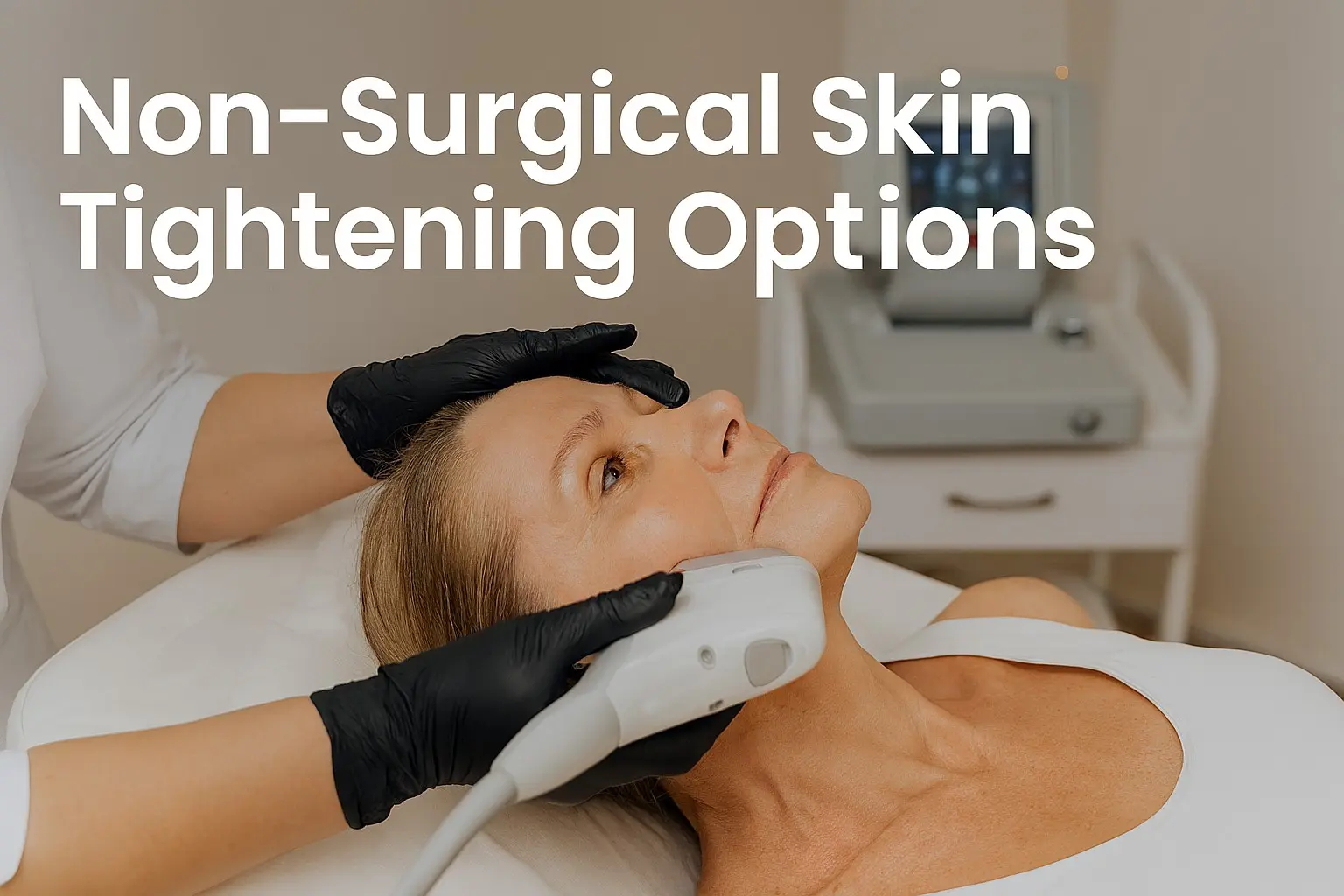
If natural strategies aren’t enough, there are advanced but non-invasive options. These non-surgical skin tightening options help stimulate collagen and firm skin without going under the knife.
- Radiofrequency (RF) therapy: Uses heat to encourage new collagen. It is very common and effective for moderate sagging.
- Ultrasound therapy: High-frequency sound waves trigger deeper collagen production.
- Microneedling: Tiny needles gently injure the skin surface. As skin heals, collagen rebuilds.
- Laser skin tightening: Uses light energy to promote skin firming.
Risks and Realities:
- These take multiple sessions for the best results.
- Results develop slowly — often months.
- While they don’t leave major scars, there can be redness, swelling, or discomfort.
When to Consider Surgical Options
Sometimes, surgery is the most effective way to remove excess skin after a big weight loss.
Common surgical procedures:
- Abdominoplasty (Tummy Tuck): Removes low belly sagging skin.
- Lower Body Lift: Addresses the belly, hips, thighs, and buttocks.
- Brachioplasty (Arm Lift): Removes sagging upper arm skin.
- Panniculectomy is a surgical procedure that eliminates the loose, overhanging skin—often called an “apron” — from the lower belly area.
Trade-offs to know:
- Recovery takes weeks to months.
- Scarring is real — but many surgeons work to minimize visible scars.
- Risks include infection, wound healing issues, or needing more than one surgery.
- Cost varies a lot based on your country, surgeon, and how much skin is removed.
Skin Tightening After Rapid Drug-Induced Weight Loss
A newer and increasingly common concern: rapid weight loss from GLP-1 drugs (e.g., Ozempic, Wegovy). Many people are now losing a lot of weight quickly, but their skin may not keep up, leading to more sagging than expected.
Here’s what’s important:
- Rapid loss via these drugs may reduce muscle mass more than fat, which worsens sagging.
- Doctors are now combining shorter-scar lifts with radiofrequency heating to tighten skin with less downtime.
- Nutrition is key: Rapid drug-driven loss can affect collagen production, so medical teams often recommend supplementing and optimizing diets before surgery.
- Timing is essential: Some surgeons suggest pausing GLP-1 therapy before skin surgery to improve healing.
Realistic 12-Week (3-Month) Plan to Firm Up Your Skin
Here’s a plan I recommend — and have used — to help tighten skin safely and effectively.
| Week | Focus | Actions |
| 1–4 | Set firm foundations | Strength train 3× per week, increase protein, hydrate well, start using moisturizer + sunscreen, wear compression clothes if needed. |
| 5–8 | Boost skin support | Gradually increase workout intensity, consider collagen supplements, and meet with a qualified skin professional for a non-surgical consult (RF/ultrasound). |
| 9–12 | Reassess and decide | Take progress photos, compare your skin, and decide whether to continue with non-surgical methods or talk to a plastic surgeon for surgical options. |
Tip: Document your skin changes with photos every 4 weeks — you’ll be able to see subtle improvement that way.
Common Myths & Mistakes to Avoid
- Myth: “Creams can remove loose skin completely.”
Reality: Most creams only help surface texture; they don’t rebuild deep collagen. - Myth: “The more weight I lose, the tighter my skin becomes.”
Reality: Losing too fast or too much can worsen sagging. - Mistake: Skipping sun protection.
Reality: UV rays can break down elastin and collagen, making saggy skin worse. - Mistake: Rushing into surgery too early.
Reality: Surgeons often recommend waiting until your weight is stable for several months to improve results and healing.
Key Takeaways
- Flabby skin after weight loss is common, especially after significant or rapid losses.
- It comes from collagen and elastin loss, genetics, age, and how fast you lose weight.
- Natural strategies like strength training, nutrition, hydration, and skin care help a lot.
- Non-surgical skin tightening options (RF, ultrasound, microneedling) can improve moderate sagging.
- For more serious sagging, surgical procedures may offer the best results — but with trade-offs.
- People losing weight via GLP-1 medications face unique skin challenges, and surgeons are adapting with new techniques.
- Tightening skin takes time: a 12-week plan + consistent care gives realistic progress.
FAQs About Flabby Skin After Weight Loss
Q: How can I tighten loose, saggy skin after weight loss?
A: Build muscle, eat well, hydrate, care for your skin, and consider non-surgical or surgical options if needed.
Q: What foods help tighten skin after weight loss?
A: High-protein foods, collagen-rich sources, fruits & veggies (vitamin C/E), and omega-3-rich foods support skin elasticity.
Q: What supplements help tighten skin?
A: Collagen peptides may help improve skin elasticity, but evidence is mixed. Talk to a doctor before use.
Q: Can sagging skin really firm up again?
A: Yes. Non-surgical treatments and strength training can help moderately. For significant sagging, surgery is often most effective.
Q: Is it possible to rebuild collagen in skin?
A: Yes — through resistance training, nutrition, and treatments (like RF or microneedling) that stimulate collagen production.
Conclusion: Your Journey to Firmer, Smoother Skin
Dealing with flabby skin after weight loss can feel like one more hurdle in your transformation journey. But it’s not something you just have to live with silently. With a balanced plan — combining strength training, skin-friendly habits, smart nutrition, and possibly medical options — you can improve skin firmness, texture, and confidence.
I’ve tried many of these methods myself, and I’ve seen small wins over time. What helped me most was consistency, patience, and a realistic mindset. If you combine effort with the right guidance, your skin can look almost as transformed as the rest of your body.
Take one step today: whether it’s starting strength workouts, setting up a skin-care routine, or booking a consultation with a specialist. Your skin deserves care just as much as you’ve cared for your health — and the results are worth it.
References
- Forbes Health – “How to Tighten Loose Skin After Weight Loss” (Forbes)
- Bariatric Journal – “Tighten Loose Skin” (Bariatric Journal)
- Nashville Liposuction Specialty Clinic – “Skin Tightening After Weight Loss: Options, Risks, & Recovery” (Nashville Liposuction Specialty Clinic)
- APM Health – “How to Tighten Skin After Weight Loss Naturally” (APM Health)
- Freedom From Diabetes – “How to Tighten Loose Skin After Weight Loss” (Freedom from Diabetes)

Adel Galal is a health and wellness writer with over 30 years of experience studying and writing about health, fitness, nutrition, and healthy living. He is the founder of NextFitLife.com, where he shares practical, evidence-based guidance to support long-term health at any age. Adel’s mission is simple:
to help people make smarter health choices that fit real life, at any age.