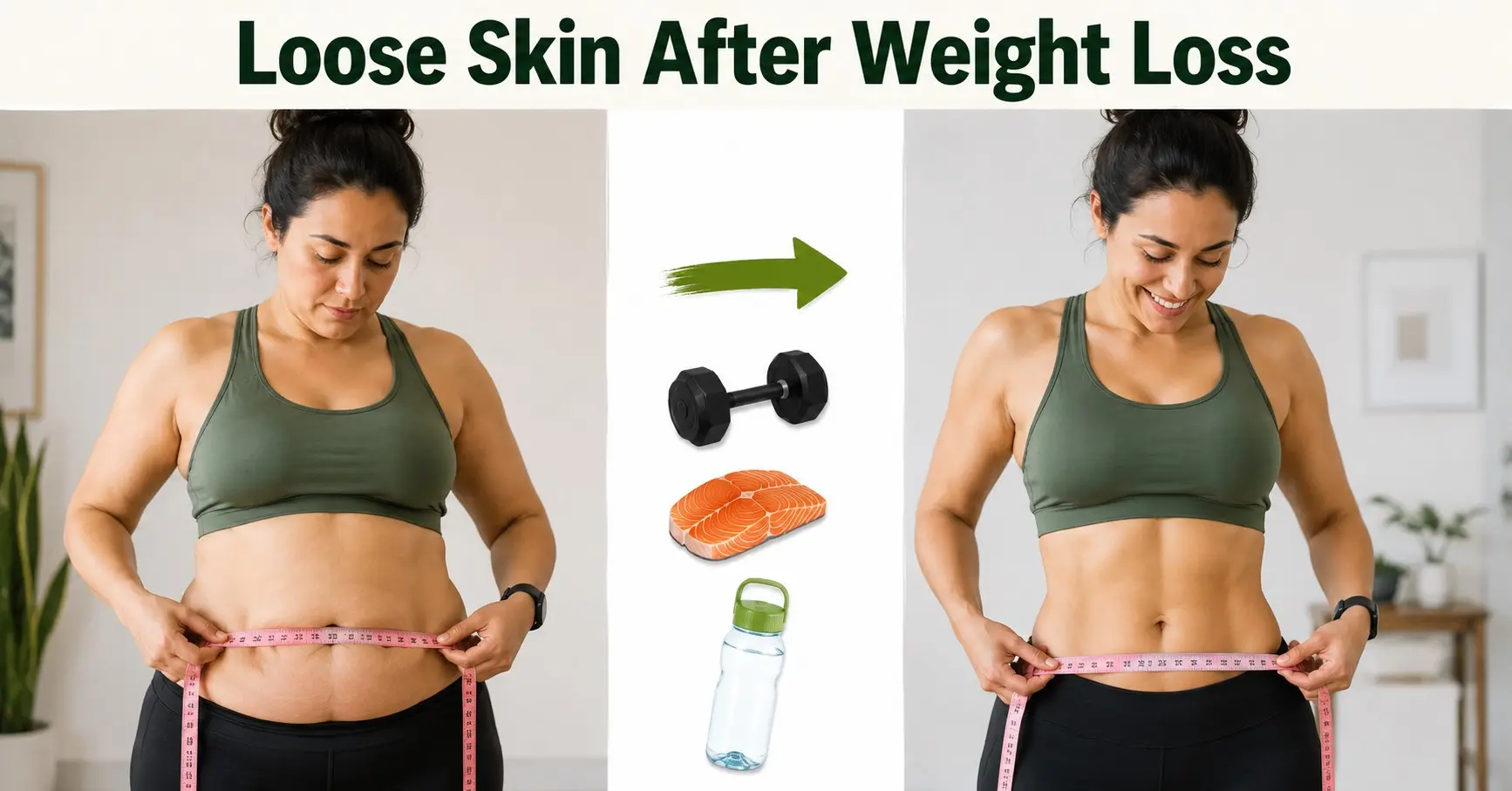
Last Updated: June 2026 — Fully updated and expanded. Merges all our loose skin, flabby belly skin, and skin tightening guides into one complete resource.
You worked hard to lose weight. You changed your diet. You exercised consistently. You reached your goal. And then you discovered that the skin around your belly, the skin that stretched to hold a larger body, did not fully spring back.
Loose skin after weight loss is one of the most emotionally difficult parts of the body transformation journey. It is frustrating because it feels unfair. You did the work. You made the change. And yet this physical reminder remains.
This guide covers everything honestly. Why loose belly skin happens, what affects how much you get, what you can realistically do about it through natural approaches, how to tighten flabby skin through exercise and nutrition, what skin care products and topical treatments help, and when medical treatments are worth considering. Best All-Natural Skin Care Routine
This guide replaces and consolidates our six previous articles on loose skin, flabby belly skin, and stomach skin tightening into one complete 2026 resource. Skin Health: The Complete Guide to Healthy, Clear and Youthful Skin
| WHAT THIS GUIDE COVERS | Why does loose skin happen after weight loss — the biology What determines how much loose skin you get Realistic expectations — what natural approaches can and cannot achieve How to tighten loose belly skin through resistance training The best diet to support skin tightening from the inside Topical treatments and skincare products with real evidence How to shrink belly skin and improve its appearance faster How to get rid of loose belly skin — the honest answer Medical and clinical skin tightening treatments and what they realistically achieve When surgery is the right option — and how to know |
Why Loose Skin Happens After Weight Loss - The Biology
Your skin is elastic. But elasticity has limits. When your body gains significant weight over time, fat deposits accumulate beneath the skin. The skin stretches to accommodate this. Inside the dermis — the deeper structural layer of skin — collagen and elastin fibres are put under sustained tension.
Over months and years of being stretched, these fibres are physically damaged. Collagen is fragmented. Elastin — the protein that gives skin its ability to spring back — loses its tension. The longer the skin is stretched and the greater the extent of stretching, the more significant this damage is.
When weight is lost, the fat underneath is gone. But the stretched, collagen-damaged skin does not automatically retract to fit the new body size. It is like a rubber band that has been stretched too far for too long — it no longer returns to its original shape.
What Determines How Much Loose Skin You Get
Not everyone who loses significant weight ends up with the same amount of loose skin. Several factors influence both how much loose skin develops and how much natural improvement is possible.
| Factor | Effect on Loose Skin | Can You Change It? |
| Amount of weight lost | The more weight lost, the more skin was stretched, and the more collagen damage occurred | No, but this is not a reason to avoid weight loss. The health benefits far outweigh the cosmetic concerns |
| How long the weight was carried | Skin stretched for 10 years sustains far more collagen damage than skin stretched for 1 year | No, but earlier weight loss gives better natural retraction outcomes |
| Age at time of weight loss | Younger skin has more elasticity and collagen density. Better natural retraction in your 20s vs your 50s | No — but this is relative, not absolute. Older skin still improves significantly |
| Speed of weight loss | Rapid weight loss gives skin no time to adapt. Slower loss — 0.5 to 1kg per week — allows more gradual retraction | YES — the pace of weight loss is one of the most controllable factors |
| Sun damage history | UV radiation destroys the collagen and elastin needed for retraction. Heavily sun-damaged skin retracts less | Partially — protect skin from now on with daily SPF |
| Smoking history | Smoking impairs collagen synthesis and reduces skin circulation. Slower and less complete retraction | YES — quitting immediately improves collagen production |
| Genetics | Some people naturally have more elastic, collagen-dense skin | No, but genetic factors explain individual variation, not lack of effort |
| Hydration | Chronically dehydrated skin loses elasticity faster and retracts less effectively | YES — consistent adequate hydration directly supports skin elasticity |
Setting Realistic Expectations: What You Can Actually Achieve
This is the most important section of this guide. False promises about natural skin tightening are everywhere online. The reality is more nuanced — and more hopeful than some suggest, but more limited than others claim.
| THE HONEST TRUTH ABOUT LOOSE SKIN | Skin continues to naturally tighten for UP TO 2 YEARS after reaching goal weight Most people evaluate their loose skin far too early — at 3 to 6 months post-loss Many people who consider surgery at 6 months are significantly happier at 18 to 24 months Resistance training does NOT directly tighten skin — it builds muscle UNDERNEATH that improves appearance No cream, serum or natural remedy can produce the structural skin tightening that surgery achieves For very large weight losses (50kg+), significant surgical skin removal is often the only effective option For moderate weight losses (10 to 30kg), lifestyle approaches produce meaningful visible improvement The belly area is the most affected and the slowest to respond to natural approaches |
How to Tighten Loose Belly Skin Through Resistance Training
Resistance training is the single most effective lifestyle intervention for improving the appearance of loose skin after weight loss. It does not directly tighten skin — but it builds muscle beneath the skin that transforms how it looks.
Think of it this way. Loose skin over fat is one visual picture. Loose skin over firm, developed muscle is a completely different one. The skin itself may not have changed, but the foundation beneath it has. This is why people who add significant muscle through resistance training after weight loss are often dramatically happier with their body appearance — even when the skin itself has not retracted.
The Best Exercises for Loose Belly Skin
| Exercise Category | Best Exercises | Why It Helps | Frequency |
| Core compound lifts | Deadlifts, squats, Romanian deadlifts | Builds total body muscle, including core and posterior chain. Creates the muscular foundation beneath the belly skin | 3 to 4 times weekly |
| Upper body compound | Rows, pull-ups, bench press, overhead press | Develops the surrounding torso musculature that gives the midsection a firmer overall appearance | 3 to 4 times weekly |
| Direct core work | Plank variations, hanging leg raises, cable crunches, ab wheel rollouts | Directly targets the rectus abdominis and transverse abdominis beneath loose belly skin | 2 to 3 times weekly |
| Progressive overload | Increase weight or reps each week | The progressive challenge is what drives continued muscle growth — without it, adaptation plateaus | Throughout training |
| Aerobic training | Brisk walking, cycling, swimming | Maintains the caloric deficit if still losing, supports cardiovascular health and circulation to skin | 3 to 5 times weekly |
The key principle: progressive overload. Your muscles must be progressively challenged over months to continue growing. A programme that does not get harder over time does not produce meaningful muscle growth. Work with a trainer initially if you are new to resistance training — correct technique matters both for results and for injury prevention.
Realistic timeline: meaningful muscle development that visibly improves the appearance of loose skin typically requires 6 to 12 months of consistent resistance training. This is not a quick fix. It is a genuine long-term body composition transformation strategy.
The Best Diet to Tighten Loose Skin from the Inside
Nutrition directly affects your skin's ability to produce new collagen, maintain elasticity, and repair itself. The right diet cannot substitute for the passage of time, but it creates the optimal conditions for the maximum natural improvement possible. Diet for Glowing Skin in 3 Days
Protein - The Foundation of Collagen Production
Collagen is a protein. Your body builds it from amino acids derived from dietary protein. Without adequate protein, collagen synthesis is impaired. After weight loss, when you are trying to build muscle and support skin repair simultaneously, protein needs are higher than usual.
Target 1.6 to 2.0 grams of protein per kilogram of body weight daily. For a 70kg person, that is 112 to 140g of protein per day. The best sources for skin repair and muscle building combined are: eggs (rich in proline and glycine — the primary amino acids in collagen), oily fish (omega-3 plus high-quality protein), chicken breast, Greek yogurt, legumes, and cottage cheese.
Vitamin C - Essential for Collagen Synthesis
Vitamin C is a required co-factor for prolyl hydroxylase, the enzyme that converts procollagen into mature, stable collagen. Without sufficient vitamin C, the collagen your body attempts to produce is structurally weak.
Eat vitamin C-rich foods daily: citrus fruits, kiwi, strawberries, bell peppers, broccoli, and dark leafy greens. These are your primary collagen-support foods alongside protein.
Hydration - The Most Overlooked Factor
Dehydrated skin has measurably lower elasticity. Even mild chronic dehydration — the kind most adults experience without noticing impairs skin turgor and the cellular processes that support collagen remodelling.
Drink 2 to 2.5 litres of water daily. If you exercise, add 500ml for every hour of training. This is one of the simplest and most consistently underrated skin health interventions available.
Additional Nutrients That Support Skin Repair
| Nutrient | How It Helps Skin | Best Food Sources |
| Zinc | Activates collagen synthesis enzymes. Anti-inflammatory. Supports wound healing and barrier repair | Pumpkin seeds, oysters, beef, chickpeas, cashews |
| Vitamin E | Lipid-soluble antioxidant in skin cell membranes. Works with vitamin C to protect collagen from oxidative damage | Almonds, sunflower seeds, olive oil, avocado |
| Omega-3 fatty acids | Reduce skin inflammation. Supports barrier ceramides. May improve skin elasticity | Salmon, sardines, mackerel, walnuts, flaxseed |
| Collagen peptides (supplement) | Hydrolyzed collagen peptides taken orally stimulate fibroblast collagen production — emerging clinical evidence | 10g hydrolyzed collagen peptide supplement daily with vitamin C |
| Silica | Supports collagen cross-linking and structural integrity | Oats, barley, green beans, lentils, and cucumber |
Topical Treatments That Help Tighten Loose Skin
No topical product can produce the structural skin tightening that surgery achieves. But certain ingredients have genuine clinical evidence for improving skin quality, elasticity, and collagen density, which produces real visible improvement over months of consistent use.
Retinol and Tretinoin: The Best-Evidenced Topical Option
Retinoids are the only topical category with consistent replicated clinical trial evidence for stimulating collagen production in skin. They activate fibroblast cells in the dermis to produce new collagen. They also accelerate skin cell turnover, improving texture and tone.
Most people use retinoids only on their face. But they work on the body skin too. Applying a retinol (0.1 to 0.5%) or prescription tretinoin to the belly area consistently over 6 to 12 months produces measurable improvements in skin thickness and collagen density — even in non-facial skin.
Apply nightly after cleansing. Start 3 nights per week to allow skin to acclimatize. Built for nightly use over 4 to 8 weeks. Always apply SPF to the area the next morning if it is exposed to sunlight.
Collagen Peptide Supplements - Emerging Evidence
Oral hydrolyzed collagen peptides taken at 10g daily have shown improvements in skin elasticity and hydration in several well-designed randomized controlled trials. Unlike topical collagen products (where collagen molecules are too large to penetrate skin), oral peptides are absorbed and appear to stimulate fibroblasts in the dermis to increase collagen production.
Take vitamin C for optimal collagen synthesis support. Results build over 3 to 6 months of consistent daily use.
Hyaluronic Acid - For Surface Hydration and Plumpness
Hyaluronic acid does not tighten loose skin structurally. But it significantly improves surface hydration and temporarily plumps the skin, making loose skin look less pronounced. Apply to slightly damp skin before any richer moisturizer, morning and evening.
Products That Are Overhyped
- Firming creams with caffeine produce a temporary tightening effect by mildly dehydrating the surface of skin. The effect is visible for a few hours and produces no lasting structural change
- Collagen creams applied topically, collagen molecules have a molecular weight of 300,000+ daltons, far too large to penetrate the stratum corneum. The collagen in these creams stays on the surface and washes off
- Body wraps produce temporary water loss from the skin surface. No lasting structural effect
- Massage alone - improves circulation and may support lymphatic drainage, which helps with the appearance of cellulite. Does not produce structural collagen change
How to Shrink Belly Skin - The Fastest Realistic Approach
Many people search for how to shrink belly skin fast or how to get rid of loose belly skin, looking for a quick solution. I want to be direct with you about what is realistic, while also making sure you know the genuine steps that produce the fastest possible natural improvement.
| Approach | Realistic Speed | Realistic Outcome | Best For |
| Resistance training 3-4x weekly | Changes visible in 3 to 6 months | Most effective natural approach. Build muscle that fills space under the skin | Everyone with loose skin — start immediately |
| High protein diet 1.6-2g/kg/day | Supports muscle building and collagen from day 1 — results in 3 to 6 months | Enables muscle building and collagen repair, which improves appearance | Everyone — combine with resistance training |
| Retinol applied nightly to the belly | Collagen improvement is measurable in 3 to 6 months. Visible at 6 to 12 months | Improves skin quality and thickness — genuine but slow | Best for mild to moderate loose skin. Most affordable ongoing option |
| Daily collagen peptides 10g | Skin elasticity and hydration improvement in 3 to 6 months | Support from the inside. Combines well with resistance training and retinol | Adults over 40, where collagen production has slowed more significantly |
| Wait 18 to 24 months post-loss | Continuous gradual improvement across the entire period | Skin continues to retract naturally — most people underestimate this | Everyone — patience is a genuine strategy, especially in the first 2 years |
| Non-surgical treatments (RF, HIFU) | Results appear from 3 to 6 months post-treatment | 20 to 40% improvement for mild-to-moderate laxity — meaningful but not dramatic | People want faster improvement than lifestyle alone, not ready for surgery |
| Surgical skin removal | Results of the immediate post-recovery | Definitive solution for significant loose skin — the only truly effective option for large amounts | Major weight loss of 40kg+ where natural approaches have plateaued |
The practical protocol for the fastest natural improvement is resistance training 3 to 4 times per week + protein at 1.6 to 2g/kg/day + daily retinol on the belly + collagen peptides + hydration + time. Applied consistently for 12 to 24 months, this produces the maximum improvement that natural approaches can achieve.
Medical and Clinical Skin Tightening Treatments - What They Actually Achieve
If natural approaches have been applied consistently for 12 to 24 months and you are still unhappy with loose belly skin, non-surgical and surgical medical options are worth considering. Here is an honest assessment of each.
Best Skin Tightening Treatments for Stomach 2026
Non-Surgical Skin Tightening Treatments
| Treatment | How It Works | Realistic Outcome | Best For | Sessions Needed |
| Radiofrequency (Morpheus8, Thermage, Venus Legacy) | RF energy heats the dermis, stimulating new collagen production over 3 to 6 months post-treatment | 20 to 40% improvement in skin laxity. Real but moderate. Works better for mild-to-moderate laxity. Younger skin responds better | Mild to moderate loose belly skin. People who want improvement without surgery | 3 to 6 sessions, 4 to 6 weeks apart |
| High-Intensity Focused Ultrasound (HIFU / Ultherapy) | Ultrasound energy is delivered to specific depths in the dermis and SMAS layer. Triggers collagen remodelling | Modest lifting and tightening over 3 to 6 months. Better evidence for the face and neck than the abdomen | Face, neck, and mild body skin laxity. Moderate loose skin | 1 to 2 sessions annually |
| Radiofrequency Microneedling (Morpheus8) | Combines microneedling channels with RF energy delivered deep into the dermis | Stronger collagen response than surface RF alone. Popular for abdominal skin tightening | Moderate loose abdominal skin post-weight loss or post-pregnancy | 3 to 4 sessions, 4 weeks apart |
| Cryolipolysis (CoolSculpting) | Freezes and destroys fat cells. NOT primarily a skin-tightening treatment | Reduces subcutaneous fat. May slightly worsen loose skin if significant laxity is already present | People with fat to reduce alongside mild skin laxity. NOT for those with predominantly loose skin and little fat | 1 to 3 sessions per area |
| Body contouring with combined RF and suction | Combines mechanical massage with RF energy — Vela shape, Boudreaux, Exilia | Modest improvement in skin laxity and body contour. Best for mild cases | Mild cellulite and skin laxity. Maintenance between other treatments | 6 to 10 sessions weekly |
Important - Non-surgical treatments produce real but moderate improvement. They are worth it for mild to moderate loose skin in people who respond well. For significant skin excess after major weight loss, they are unlikely to provide sufficient improvement without surgery.
Surgical Skin Removal - When It Is the Right Option
Surgery — specifically abdominoplasty (tummy tuck) or body lift procedures — is the only intervention that definitively addresses significant loose skin by physically removing excess. This is not failure. For people who have lost enormous amounts of weight, it is often the clinically appropriate and medically justifiable choice.
| Surgical Procedure | What It Addresses | Best For | Recovery |
| Mini abdominoplasty | Loose skin below the navel only. Smaller scar, less recovery | Mild to moderate lower abdominal skin only. Suitable post-moderate weight loss | 2 to 4 weeks |
| Full abdominoplasty (tummy tuck) | Full abdominal loose skin. Repositions navel. Tighten abdominal muscles if separated | Moderate to significant abdominal loose skin. Standard post-major weight loss procedure | 4 to 6 weeks |
| Circumferential body lift (belt lipectomy) | Full circumference of lower trunk — abdomen, flanks, lower back, and buttocks simultaneously | Very significant lower body loose skin after major weight loss (50kg+) | 6 to 8 weeks |
| Brachioplasty (arm lift) | Loose skin on the upper arms | Significant arm skin after major weight loss | 2 to 4 weeks |
| Thigh lift | Inner and outer thigh loose skin | Significant thigh skin excess | 3 to 5 weeks |
| CONSIDER SURGERY IF | Weight has been stable for at least 12 months — skin needs to be stable before operating You have maintained goal weight for at least 6 to 12 months (surgeons typically recommend this) Natural approaches have been applied consistently for 18 to 24 months without sufficient improvement Loose skin causes physical problems: skin infections or rashes under skin folds, hygiene difficulties, pain or discomfort The psychological impact of loose skin significantly affects your quality of life, despite healthy coping BMI is stable below 30 — most surgeons prefer a BMI under 30 for optimal results and reduced complications You are a non-smoker or have stopped smoking for at least 6 weeks pre-surgery |
The Belly Area: Why It Is Hardest and What to Focus On
The belly is the most commonly affected area after weight loss and also the slowest to respond to natural approaches. This is because:
- Greater extent of stretching — the abdomen accommodates the largest volume of fat storage, meaning skin here has typically been stretched the most
- Lower collagen density than facial skin — body skin has less collagen per unit area than facial skin and responds more slowly to treatments. 33 Best Foods That Help Skin Clear
- Post-pregnancy changes — for women, pregnancy on top of weight changes creates additional structural challenges, including muscle separation (diastasis recti) that compounds the appearance of loose belly skin
- Gravity — unlike arms or face, where gravity effects can be partially offset, abdominal skin is directly affected by gravitational pull
For the belly specifically, the most effective combination is heavy compound lifts (deadlifts, squats) for the posterior chain + core work for direct abdominal muscle + retinol applied nightly + collagen peptides + patience. The compound lifts matter more than isolated ab work because they develop the full musculature that gives the midsection structure.
8-Week Starter Plan - Exercise and Lifestyle for Loose Belly Skin
| Week | Exercise Focus | Nutrition Focus | Skincare |
| Weeks 1 to 2 | 3x compound lifting (squat, deadlift, row, press). 30-40 min sessions. Focus on technique. 3x 30-min walking | Calculate protein target: 1.6g per kg bodyweight. Track for 7 days to see your baseline | Begin retinol 0.1% on belly 3 nights per week. Start collagen peptides 10g daily |
| Weeks 3 to 4 | Add one more session. Increase weights slightly. Add direct core work: 3x plank, 3x hanging knee raise after main lifts | Hit protein target consistently. Add vitamin C foods daily. Drink at least 2L of water. Top 15 Foods for Healthy Skin | Increase retinol to 5 nights per week if there is no irritation. Continue collagen peptides |
| Weeks 5 to 6 | Progressive overload: all lifts should be heavier than week 1. Add cable core exercises. 4x per week training | Add zinc and omega-3 food focus. Consider a collagen supplement if not already using one | Continue nightly retinol. Add a hyaluronic acid morning body moisturizer |
| Weeks 7 to 8 | Continue progressive overload. The body should be visibly more muscular. First signs of appearance improvement | Maintain protein, hydration, and nutrient focus. This becomes your permanent eating pattern | Take comparison photos from week 1. Continue consistently. Evaluation for 3 months |
Key Takeaways - Loose Skin After Weight Loss
| SUMMARY | Loose skin occurs because collagen and elastin fibres are damaged during sustained stretching from weight gain Skin continues to tighten naturally for UP TO 2 YEARS after reaching goal weight — most people evaluate too early Resistance training is the single most effective lifestyle intervention — it builds muscle under loose skin Target 1.6 to 2g of protein per kg bodyweight daily to support both muscle building and collagen repair Vitamin C daily, adequate hydration, and zinc all support the collagen synthesis process Retinol applied nightly to the belly over 6 to 12 months produces genuine collagen improvement in the body skin Oral collagen peptides at 10g daily show emerging clinical evidence for improving skin elasticity Non-surgical RF and HIFU treatments produce 20 to 40% improvement for mild-to-moderate cases Surgery is the only definitive option for significant skin excess and is clinically appropriate for major weight loss The fastest natural approach: resistance training + high protein + retinol + collagen peptides + time |
References and Sources
1- Skin Elasticity and Collagen After Major Weight Loss — International Journal of Obesity
https://pubmed.ncbi.nlm.nih.gov/25906996/
Research. Use for: collagen and elastin damage from weight gain, natural retraction timeline, and factors affecting skin laxity post-weight-loss.
2- Resistance Training and Body Composition — Journal of Strength and Conditioning Research
https://pubmed.ncbi.nlm.nih.gov/21912291/
Research. Use for: resistance training builds muscle beneath loose skin, improving body composition and appearance, and progressive overload principles.
3- Oral Collagen Peptides and Skin Elasticity — Skin Pharmacology and Physiology RCT
https://pubmed.ncbi.nlm.nih.gov/24401291/
RCT. Use for: 10g daily hydrolyzed collagen peptides improve skin elasticity and hydration. 8-week randomized controlled trial evidence.
4- Retinoids and Skin Collagen Synthesis — Journal of the American Academy of Dermatology
https://pubmed.ncbi.nlm.nih.gov/16427381/
Clinical review. Use for: retinol stimulates collagen production in the dermis, including body skin, mechanism and evidence.
5- Non-Surgical Body Contouring and Skin Tightening — Aesthetic Surgery Journal
https://pubmed.ncbi.nlm.nih.gov/25810455/
Review. Use for: radiofrequency and HIFU realistic outcomes, 20-40% improvement, treatment protocols, and candidacy criteria.
Part of Our Skin Health Series
This article is part of our complete skin health resource. Read all skin health topics in our Complete Skin Health Guide or browse our Skin Health Resource Directory.
Adel Galal
Health and Wellness Writer | 30+ Years Personal Practice | Founder, NextFitLife.com
Adel Galal has studied skin health, body composition, and natural aging for over 30 years. At 58, he applies evidence-based nutrition, resistance training, and skincare practices daily. He is not a doctor or dermatologist. Everything here reflects personal research, experience, and published health guidance. Always consult a qualified professional before starting any new treatment or exercise programme.

Health & wellness writer with 30+ years of experience in nutrition, fitness, and healthy aging. Founder of NextFitLife.com — evidence-based health guidance.