
Updated on: October 13, 2026
Written by: Adel Galal, Founder and Lead Writer at NextFitLife
Review status: Researched and checked against current nutrition and healthy aging guidance. This article has not been medically reviewed by a doctor or registered dietitian.
Can food really help you age well? Yes, but not in the way many anti aging ads suggest.
No berry, spice, drink, or supplement can stop the clock. However, the foods you eat every day can support your heart, brain, muscles, bones, blood vessels, and metabolism as the years pass.
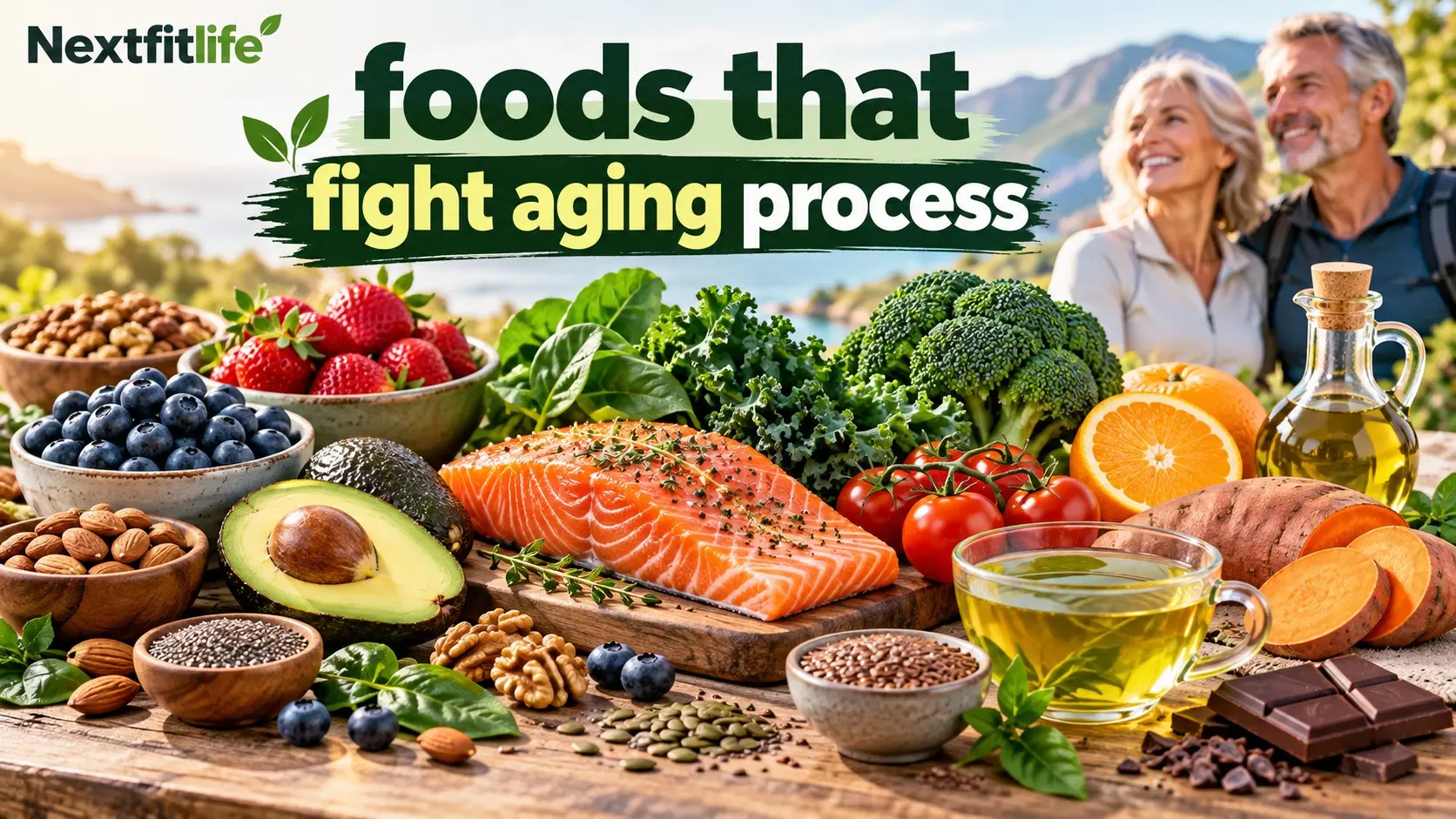
If you are looking for foods that fight aging process, the best approach is to build meals around colorful plants, whole grains, beans, nuts, seeds, healthy fats, and good sources of protein. Research on healthy aging consistently points toward this type of eating pattern rather than one magical superfood.
Quick answer: Some of the best foods for healthy aging include berries, leafy greens, extra virgin olive oil, walnuts, beans, lentils, salmon, sardines, whole grains, yogurt, tomatoes, broccoli, avocado, seeds, citrus fruit, sweet potatoes, green tea, and cocoa rich dark chocolate. The real benefit comes from eating them regularly as part of a balanced diet.
Important: This article is for general information and education. It does not replace medical advice, diagnosis, or treatment.
Table of Contents
- Can food really slow aging?
- 17 foods that support healthy aging
- What makes these foods useful?
- A simple healthy aging plate
- Foods to limit as you age
- How much matters?
- Supplements versus whole foods
- Frequently asked questions
- References and Sources
Can Food Really Slow the Aging Process?
Aging is normal. Food cannot stop it, reverse it, or make your body biologically young again.
What food can do is help lower some of the risks that become more important with age. A nutritious diet can support cardiovascular health, muscle strength, bone health, blood sugar control, digestion, and cognitive function.
A large 2025 study led by researchers from Harvard and other institutions found that people who followed healthy eating patterns in midlife were more likely to reach older age with good physical, cognitive, and mental health. Diets rich in fruits, vegetables, whole grains, legumes, nuts, and unsaturated fats performed especially well.
That is a much more useful way to think about anti aging foods. Do not ask which food makes you younger. Ask which foods help you stay healthier as you get older.
17 Proven Foods That Fight Aging Process Naturally
1. Blueberries and Other Berries
Blueberries, strawberries, blackberries, and raspberries bring color, fiber, vitamins, and plant compounds called polyphenols.
Blueberries are especially rich in anthocyanins. These pigments give berries their deep blue, purple, and red colors.
Research has linked anthocyanin rich foods with markers of cardiovascular and metabolic health. Berries are also easy to eat without adding much salt, saturated fat, or added sugar.
Simple ways to eat them:
- Add berries to oatmeal.
- Mix them into plain yogurt.
- Eat them with a small handful of walnuts.
- Use frozen berries when fresh fruit is expensive.
2. Spinach, Kale, and Other Leafy Greens
Leafy greens give you folate, vitamin K, carotenoids, fiber, and many other nutrients in a small serving.
Spinach and kale also contain lutein and zeaxanthin, plant pigments linked with eye health.
One useful goal is variety. Rotate spinach, kale, collard greens, arugula, and other greens rather than relying on one vegetable every day.
3. Extra Virgin Olive Oil
Extra virgin olive oil is one of the main fats used in the Mediterranean diet.
It provides monounsaturated fat as well as polyphenols. Replacing foods high in saturated fat with unsaturated fats is generally better for cardiovascular health.
Use olive oil on vegetables, salads, beans, and whole grains. You do not need to drink it by the spoonful. It is still calorie dense.
4. Walnuts and Other Nuts
Walnuts, almonds, pistachios, and other nuts provide healthy fats, plant protein, fiber, minerals, and vitamin E.
Walnuts are also a plant source of alpha linolenic acid, an omega 3 fat.
A small handful makes a simple snack. Choose unsalted nuts most of the time, especially if you are watching sodium intake.
5. Beans and Lentils
Beans and lentils deserve much more attention than they get in many “anti aging food” lists.
They provide plant protein, fiber, potassium, magnesium, and slowly digested carbohydrates. They can also replace some meals built around processed or fatty meat.
Try chickpeas, kidney beans, black beans, white beans, red lentils, or green lentils.
This makes legumes some of the most practical longevity foods because they are nutritious, filling, inexpensive, and easy to use in many cuisines.
6. Salmon, Sardines, and Other Fatty Fish
Fatty fish provide protein and the marine omega 3 fatty acids EPA and DHA.
These fats are well known for their role in cardiovascular health. Fish also supplies nutrients such as vitamin B12, selenium, and, in some varieties, vitamin D.
Salmon is popular, but sardines, trout, herring, and mackerel can also be good choices.
If you do not eat fish, you can still build a healthy diet around beans, lentils, nuts, seeds, whole grains, and other plant foods.
7. Oats and Other Whole Grains
Whole grains keep more of the grain kernel than refined grains do. That means they usually provide more fiber and nutrients.
Good choices include oats, barley, bulgur, brown rice, whole wheat, and quinoa.
Fiber supports bowel health and can help with cholesterol and blood sugar management when eaten as part of a healthy diet.
The National Institute on Aging recommends making at least half of your grain choices whole grains.
8. Plain Yogurt and Kefir
Yogurt can provide protein, calcium, vitamin B12, and other nutrients. Some yogurts also contain live cultures.
Protein and calcium matter as you age because muscles and bones need ongoing nutritional support.
Choose plain yogurt when possible. Flavored products can contain a surprising amount of added sugar.
Kefir is another fermented dairy option. If you cannot tolerate dairy, fortified soy products may provide useful alternatives.
9. Tomatoes
Tomatoes provide vitamin C, potassium, and lycopene.
Lycopene is a red carotenoid found in tomatoes, watermelon, pink grapefruit, and several other foods.
Cooked tomato products can be useful because heat makes some lycopene easier for the body to access. Just watch the sodium in packaged sauces.
10. Broccoli and Other Cruciferous Vegetables
Broccoli, Brussels sprouts, cauliflower, cabbage, and kale belong to the cruciferous vegetable family.
They provide fiber, vitamins, minerals, and plant compounds called glucosinolates.
Do not treat broccoli as medicine. Think of it as one part of a varied vegetable intake that supports overall nutrition.
11. Avocado
Avocado provides fiber, potassium, folate, vitamin E, and mostly unsaturated fat.
It works well as a replacement for foods rich in saturated fat, such as large amounts of butter or creamy processed spreads.
Add avocado to whole grain toast, beans, salads, eggs, or vegetable bowls.
12. Chia, Flax, Pumpkin, and Other Seeds
Seeds pack a lot of nutrition into a small amount.
Chia and flax provide plant omega 3 fats and fiber. Pumpkin seeds add magnesium, zinc, protein, and healthy fats.
Ground flaxseed is easier to use in oatmeal, yogurt, smoothies, or whole grain dishes.
Start with modest portions because large amounts of fiber can cause digestive discomfort if your body is not used to it.
13. Oranges and Other Citrus Fruit
Oranges, mandarins, grapefruit, lemons, and other citrus fruits provide vitamin C, folate, fiber, and flavonoids.
Whole fruit is usually a better everyday choice than juice because you keep the fiber and tend to consume less sugar at one time.
Vitamin C is also needed to make collagen, a protein used throughout the body, including skin and connective tissue.
Grapefruit can interact with some prescription medicines, so ask your pharmacist if you are unsure.
14. Sweet Potatoes
Sweet potatoes provide fiber, potassium, vitamin C, and beta carotene.
Beta carotene gives orange vegetables their bright color and can be converted to vitamin A in the body.
Try baking or roasting sweet potatoes rather than covering them with large amounts of sugar or butter.
15. Green Tea
Green tea contains catechins, a type of polyphenol. It can be an easy replacement for sugar sweetened beverages.
That does not make green tea a fountain of youth. Most benefits linked with tea come from studying patterns of intake and plant compounds, not from proving that one cup reverses aging.
Drink it plain or with a small amount of lemon if you enjoy it.
If caffeine affects your sleep, choose decaffeinated tea later in the day. Sleep is also important for healthy aging.
16. Dark Chocolate and Cocoa
Cocoa contains flavanols, plant compounds studied for effects on blood vessels and cardiovascular health.
The problem is that chocolate can also contain plenty of sugar, saturated fat, and calories.
Choose a small amount of dark chocolate with a high cocoa content, or use unsweetened cocoa in oatmeal or yogurt.
This is a pleasure food with useful plant compounds, not a reason to eat unlimited chocolate.
17. Eggs
Eggs provide high quality protein, vitamin B12, selenium, iodine, and choline.
Protein matters more with age because adults gradually lose muscle unless they support it with enough protein and regular physical activity, especially resistance exercise.
Eggs are useful because they are easy to prepare and combine well with vegetables, whole grains, beans, and other nutrient rich foods.
What Makes These Foods Useful for Healthy Aging?
These foods do not share one magic ingredient. Their value comes from several nutritional features working together.
| Nutritional Feature | Main Food Sources | Why It Matters |
|---|---|---|
| Fiber | Beans, oats, berries, vegetables, seeds | Supports digestion, blood sugar control, and heart health |
| Unsaturated fats | Olive oil, nuts, seeds, avocado, fish | Support cardiovascular health when replacing saturated fats |
| Protein | Fish, yogurt, eggs, beans, lentils, nuts | Helps maintain muscle and other body tissues |
| Polyphenols | Berries, olive oil, tea, cocoa | Plant compounds studied for cardiovascular and metabolic effects |
| Carotenoids | Leafy greens, tomatoes, sweet potatoes | Include compounds important for eye health and normal body function |
| Calcium | Yogurt, fortified alternatives, some leafy greens | Important for bones, muscles, and nerves |
The Bigger Secret: Your Whole Diet Matters More
This may be the most important part of the article.
Eating blueberries on Monday does not cancel a week filled with sugary drinks, processed meat, fried foods, and very little fiber.
The latest healthy aging research looks at dietary patterns. The strongest patterns share the same basic features. They contain plenty of vegetables, fruits, whole grains, beans, nuts, and healthy fats. They include good protein sources and limit highly processed foods.
This is one reason the Mediterranean diet appears so often in research on cardiovascular health and healthy aging.
A Simple Healthy Aging Plate
You do not need a complicated meal plan. Build most meals using this simple structure.
- Fill about half the plate with vegetables and fruit. Use several colors over the week.
- Add a whole grain or other high fiber carbohydrate. Oats, barley, brown rice, bulgur, or sweet potato can work well.
- Add a protein source. Choose fish, beans, lentils, yogurt, eggs, tofu, poultry, or another suitable protein.
- Add a source of unsaturated fat. Olive oil, nuts, seeds, or avocado are simple choices.
- Choose water or another low sugar drink. Tea and coffee can also fit for many adults.
A Sample Day Using These Foods
| Meal | Simple Example | Foods Included |
|---|---|---|
| Breakfast | Oatmeal with blueberries, yogurt, and walnuts | Whole grains, berries, fermented dairy, nuts |
| Lunch | Lentil salad with spinach, tomato, avocado, and olive oil | Legumes, greens, tomatoes, avocado, olive oil |
| Snack | Orange with a small handful of almonds | Citrus fruit and nuts |
| Dinner | Baked salmon with broccoli and sweet potato | Omega 3 fish, cruciferous vegetables, carotenoid rich vegetables |
| Optional treat | A small piece of dark chocolate with green tea | Cocoa flavanols and tea polyphenols |
Foods to Limit for Better Healthy Aging
Adding nutritious foods is only one side of the story.
Research also links higher intake of some ultra processed foods with a lower chance of healthy aging. That does not mean every packaged food is harmful. It means your regular eating pattern matters.
Try to limit:
- Sugary drinks
- Processed meats
- Large amounts of refined snacks
- Foods very high in added sugar
- Foods very high in sodium
- Frequent meals rich in saturated fat
The National Institute on Aging also advises older adults to choose foods lower in added sugar, saturated fat, and sodium while eating a wide variety of nutrient rich foods.
Do Antioxidants Stop Aging?
No. That claim is too simple.
Your body naturally makes reactive molecules during normal metabolism. It also has its own defense systems.
Fruits, vegetables, nuts, whole grains, tea, cocoa, herbs, and olive oil contain many compounds that interact with normal body pathways. Researchers study these compounds in relation to oxidative stress and chronic inflammation.
But eating more antioxidants does not mean you can directly measure how many years you have added to your life.
Whole foods remain a better focus than chasing a high “antioxidant score.”
Are Fresh Foods Always Better Than Frozen?
No.
Frozen berries, vegetables, and fish can be excellent choices. Frozen produce is often picked near peak ripeness and can make nutritious foods easier to keep at home.
Canned beans, tomatoes, salmon, and sardines can also work well. Look for lower sodium versions when available, and rinse canned beans if you need to reduce sodium.
A healthy eating plan must be practical enough to follow.
Do You Need Organic Foods for Healthy Aging?
No. You do not need to buy everything organic to build a nutritious diet.
The more important goal is eating enough fruits, vegetables, whole grains, legumes, nuts, and other nutrient rich foods.
Wash produce before eating it and choose foods that fit your budget.
Supplements Versus Whole Foods
A bottle of antioxidants cannot recreate everything found in a meal.
Whole foods contain combinations of fiber, protein, fats, vitamins, minerals, and plant compounds. They also replace less nutritious foods in your diet.
Supplements may be useful when a person has a diagnosed deficiency or a specific medical need, but more is not always better.
Some supplements can interact with medicines or become harmful at high doses. Talk with a healthcare professional before using supplements to treat a health problem or trying very high doses in the hope of slowing aging.
Healthy Aging Also Needs More Than Food
Nutrition is important, but it is only one part of aging well.
Regular movement, strength training, good sleep, not smoking, social connection, appropriate medical care, and managing blood pressure and other health risks also matter.
Think of food as one piece of a larger healthy aging plan.
Internal Links and Hub
- Foods That Fight Aging Process
- General Wellness and Lifestyle Hub
- Nutrition and Vitamins Hub
- About NextFitLife and Adel Galal
Conclusion: Foods That Fight Aging Process
The best foods that fight aging process are not miracle foods. They are everyday foods that help you build a better overall diet.
Start with berries, greens, beans, whole grains, nuts, seeds, olive oil, fish, yogurt, and colorful vegetables. Eat them regularly, vary your choices, and keep highly processed foods as a smaller part of your diet.
Your next step can be simple. Pick two foods from this list that you do not eat often and add them to your meals this week.
References and Sources
- National Institute on Aging. Healthy Eating As You Age: Know Your Food Groups.
https://www.nia.nih.gov/health/healthy-eating-nutrition-and-diet/healthy-eating-you-age-know-your-food-groups - National Institute on Aging. Healthy Eating, Nutrition, and Diet.
https://www.nia.nih.gov/health/healthy-eating-nutrition-and-diet - American Heart Association. What Is the Mediterranean Diet?
https://www.heart.org/en/healthy-living/healthy-eating/eat-smart/nutrition-basics/mediterranean-diet - Harvard T.H. Chan School of Public Health. Healthy Eating in Midlife Linked to Overall Healthy Aging.
https://hsph.harvard.edu/news/healthy-eating-in-midlife-linked-to-overall-healthy-aging/ - Vinci G, Davì F, Pellegrino T, et al. Main Dietary Patterns for Healthy Aging and Well Being. Nutrients. 2025.
https://pubmed.ncbi.nlm.nih.gov/40573120/
About the Author
Adel Galal is the founder and lead writer of NextFitLife. He has maintained a personal interest in health, fitness, nutrition, sleep, wellness, and healthy aging for more than 30 years and has more than 15 years of experience in health and wellness writing and research communication.
His work focuses on comparing credible sources, explaining health information in plain language, identifying uncertainty, and avoiding miracle claims.
I am not a dermatologist or a doctor, and this content does not replace professional medical advice. What I share comes from real life experience, extensive research, and consultation with healthcare providers. Always consult qualified medical professionals for diagnosis and treatment of any health condition.
Learn more about Adel, NextFitLife, the editorial approach, qualifications, and medical review policy at About Us.
Frequently Asked Questions
What are the best foods that fight aging process?
There is no food that stops aging. Foods that best support healthy aging include berries, leafy greens, beans, lentils, nuts, whole grains, olive oil, fatty fish, yogurt, seeds, tomatoes, and other colorful vegetables and fruits.
What is the number one food for healthy aging?
There is no single number one food. Overall diet quality matters more. If you want one useful place to start, add more vegetables, beans, nuts, whole grains, and unsaturated fats to your regular meals.
Can blueberries slow aging?
Blueberries provide fiber, vitamin C, and anthocyanins. They can be part of a healthy diet, but research does not show that blueberries alone stop or reverse aging.
What diet is best for healthy aging?
Research supports eating patterns rich in vegetables, fruits, whole grains, beans, nuts, seeds, and healthy fats. Mediterranean style eating is one well studied example.
What should I eat to support my brain as I age?
A balanced diet that includes leafy greens, berries, nuts, whole grains, legumes, fish, and unsaturated fats can support overall cardiovascular and brain health. No single food guarantees protection from cognitive decline.
Do anti aging foods remove wrinkles?
No food can erase wrinkles. Good nutrition supports normal skin function, but skin aging is also affected by genetics, sun exposure, smoking, sleep, hormones, and other factors.
Are antioxidant supplements better than antioxidant rich foods?
Not usually. Whole foods provide fiber, vitamins, minerals, healthy fats, and many plant compounds together. High dose supplements can also cause side effects or interact with medicines.
How can I start eating for healthy aging today?
Start small. Add one vegetable to lunch, replace a refined grain with a whole grain, use beans or fish as a protein choice, snack on nuts or fruit, and use olive oil instead of foods high in saturated fat when practical.

Health & wellness writer with 30+ years of experience in nutrition, fitness, and healthy aging. Founder of NextFitLife.com — evidence-based health guidance.

