Published: March 2024
Last updated: July 16, 2026
Next review: July 2027
Written by: Adel Galal, Founder and Lead Writer at NextFitLife
Review status: Editorially reviewed and checked against current NHS, RCOG, ACOG, and United States government health guidance. This page has not been medically reviewed by a doctor, midwife, pharmacist, or registered dietitian.
Reading time: About 18 minutes
Some drinks may help you stay hydrated.
Minor changes may reduce smells, hunger, and stomach discomfort.
Pregnancy nausea is often called morning sickness.
But it can happen in the morning, afternoon, evening, or all day.
It often starts early in pregnancy.
For many people, it improves between weeks 16 and 20.
For others, it lasts longer.
Mild nausea can often be managed at home.
Severe vomiting is different.
It may cause dehydration, weight loss, and poor nutrition.
It may be a condition called hyperemesis gravidarum.
This guide explains foods that fight nausea during pregnancy in the way people commonly use that phrase.
It focuses on foods that may feel gentle, safe fluid choices, smell control, ginger, vitamin B6, medicine safety, and warning signs.
Foods That Fight Nausea During Pregnancy - Quick Answer
Try small amounts of food often.
Do not wait until you feel very hungry.
Start with foods you can keep down.
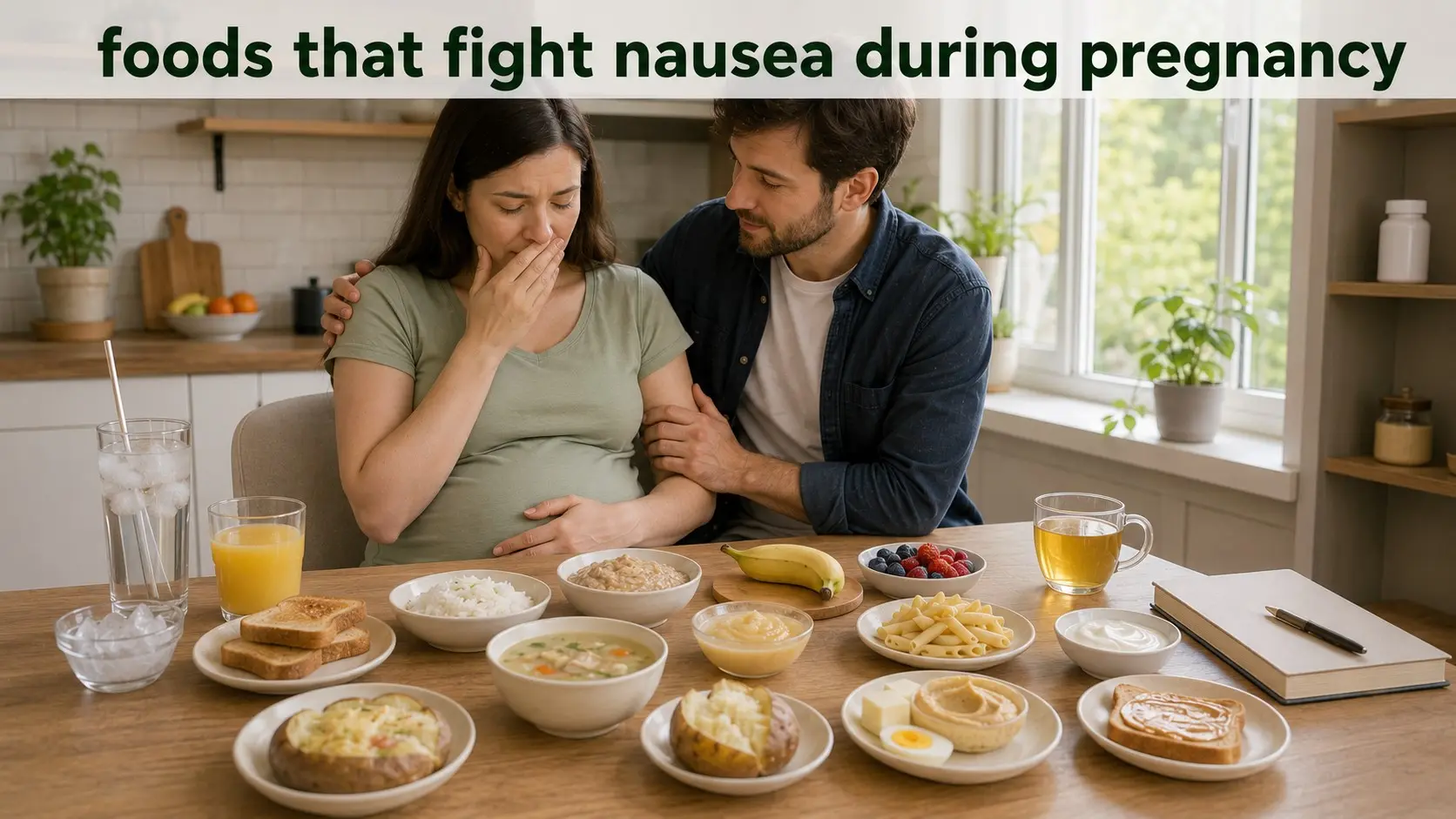
Options may include:
- Dry toast
- Plain crackers
- Rice
- Plain pasta
- Potatoes
- Oatmeal
- Bananas
- Applesauce
- Cold fruit
- Plain yogurt
- Eggs
- Soup
- Small cheese portions
- Nut butter on toast
Cold food may be easier when cooking smells cause nausea.
Take small sips of fluid often.
Ginger may help some people.
Ask a pharmacist before using ginger supplements.
Call your doctor or midwife if you cannot keep food or fluid down.
Editorial and Advertising Disclosure
This guide was written and editorially reviewed by Adel Galal.
Adel is a health and wellness writer.
He is not a doctor, midwife, obstetrician, pharmacist, or registered dietitian.
This page cannot assess your pregnancy.
It cannot diagnose the cause or severity of vomiting.
NextFitLife uses display advertising to support the website.
Advertising does not decide the advice, food choices, sources, or medical warnings on this page.
Read the
Editorial Policy,
Medical Review Policy,
and
Corrections Policy.
Important Pregnancy Sickness Warning
Food tips are for mild symptoms.
They are not enough for severe vomiting.
Call your doctor, midwife, maternity unit, or urgent care service if you:
- Cannot keep food or fluid down
- Have very dark urine
- Have not passed urine for many hours
- Feel weak, dizzy, or faint
- Are losing weight
- Have severe stomach pain
- Have a fever
- Vomit blood
Severe pregnancy sickness can cause dehydration and poor nutrition.
It may need medicine, fluids through a vein, and hospital care.
What Is Nausea and Vomiting in Pregnancy?
Nausea and vomiting in pregnancy is common.
It often begins between weeks 4 and 7.
It can happen at any time.
The name morning sickness can be misleading.
Some people feel sick all day.
Others feel sick only when they are hungry, tired, hot, or near a strong smell.
How Long Does It Last?
For most people, symptoms improve by week 20.
Some people feel better earlier.
Some continue to have symptoms later in pregnancy.
Does Mild Nausea Harm the Baby?
Mild to moderate nausea and vomiting do not usually harm the baby.
Severe symptoms need care.
Severe vomiting can cause dehydration, weight loss, and poor intake.
Other Causes Must Be Considered
Not all vomiting in pregnancy is morning sickness.
Other causes may include:
- A urinary infection
- A stomach infection
- Food poisoning
- Gallstones
- A stomach ulcer
- Migraine
- Medicine
- Another pregnancy problem
Vomiting that begins after week 16 should be discussed with a clinician.
How Foods That Fight Nausea During Pregnancy May Help
The phrase foods that fight nausea during pregnancy does not mean that food acts like medicine.
Food may help in simpler ways.
Food May Prevent an Empty Stomach
An empty stomach can make nausea worse for some people.
A small snack may help.
Plain Foods May Be Easier to Tolerate
Food with little spice and little fat may feel gentler.
Examples include rice, toast, crackers, potatoes, and pasta.
Cold Foods May Smell Less
Hot food often gives off more smell.
Cold meals may be easier when smell is a trigger.
Protein May Help You Feel Steady
A small protein food may help you feel satisfied.
It may also help you eat something more balanced.
Fluids Help Prevent Dehydration
Small sips may stay down better than a large drink.
Hydration is more important than eating a perfect meal.
Best Foods That Fight Nausea During Pregnancy
No list works for everyone.
Choose food based on what you can tolerate.
Food preferences may change from one day to the next.
| Food type | Examples | Why it may feel easier |
|---|---|---|
| Dry foods | Toast, crackers, breadsticks, rice cakes, plain cereal | They have little smell and may be easy to nibble. |
| Plain starches | Rice, pasta, potatoes, noodles, oatmeal | They provide energy and are often mild. |
| Cold foods | Cold fruit, yogurt, sandwiches, chilled pasta | They may produce less smell than hot food. |
| Protein foods | Eggs, yogurt, cheese, chicken, tofu, nut butter | Small amounts may help with hunger and nutrition. |
| Soft fruit | Banana, applesauce, melon, berries, canned fruit | They may provide fluid and energy. |
| Simple soups | Potato soup, noodle soup, chicken and rice soup | They may provide fluid, salt, and energy. |
Dry Toast and Crackers
Keep crackers near your bed.
Try one before you stand up.
Eat slowly.
Rice, Pasta, and Potatoes
These foods are high in carbohydrates.
They are often low in fat.
Use plain versions when sauces make nausea worse.
Oatmeal
Oatmeal is soft to adjust.
Make it with water, milk, or a safe fortified alternative.
Add a banana or a small amount of nut butter when tolerated.
Bananas and Applesauce
These foods are soft.
They have little smell.
They can be eaten in small amounts.
Plain Yogurt
Yogurt provides protein and calcium.
Use pasteurized yogurt.
Choose a dairy-free fortified option if needed.
Soup and Broth
Soup can provide fluid and energy.
Very strong smells may be a problem.
Try it warm rather than very hot.
Foods to Eat Before Getting Out of Bed
Morning movement may make nausea worse.
Try eating a small amount of dry food before standing.
Simple Bedside Options
- Plain crackers
- Dry toast
- Rice cakes
- Plain cereal
- Oatcakes
Keep food in a clean, closed container.
Take a few bites.
Wait several minutes before getting up.
Eat Again Soon
A bedside snack may not be enough for breakfast.
Try a small meal when you can.
Add protein when tolerated.
Protein Foods That May Ease Hunger-Related Nausea
Protein does not cure pregnancy sickness.
Small protein portions may help when hunger makes symptoms worse.
Gentle Protein Ideas
- Fully cooked egg
- Plain pasteurized yogurt
- Cottage cheese
- Pasteurized cheese
- Chicken
- Tofu
- Smooth nut butter
- Hummus
- Milk or a fortified soy drink
Pair Protein With Carbohydrate
Try:
- Toast with egg
- Crackers with cheese
- Apple with nut butter
- Yogurt with oats
- Rice with tofu
- Potato with cottage cheese
Use small portions.
Fatty protein meals may feel harder to digest.
Cold Foods for Smell-Sensitive Pregnancy Nausea
Cooking smells can trigger nausea.
Cold food may have less smell.
Cold Meal Ideas
- Pasteurized yogurt with fruit
- Cold cooked chicken sandwich
- Cheese and crackers
- Chilled pasta with vegetables
- Cold potato with cottage cheese
- Fruit with nut butter
- Overnight oats
Use Pregnancy Food Safety Rules
Keep cold food refrigerated.
Use pasteurized dairy.
Cook eggs, meat, poultry, and fish safely.
Follow local advice for deli meat and ready-to-eat chilled food.
Reduce Kitchen Smells
- Open a window
- Use a kitchen fan
- Ask someone else to cook
- Prepare food when nausea is lower
- Use a slow cooker away from the main room
- Choose cold meals
Safe Drinks for Pregnancy Nausea
Take small sips often.
Do not force a full glass at once.
Fluids to Try
- Cold water
- Water with lemon
- Ice chips
- Diluted juice
- Milk
- A fortified plant drink
- Clear soup
- An oral rehydration drink advised by a clinician
Try Drinking Between Meals
A large drink with food may make some people feel too full.
Try sipping between meals.
Use a Straw
A straw may help you take small sips.
It may also reduce the smell of the drink.
Watch Caffeine
Caffeine may make nausea, reflux, anxiety, or a fast heartbeat worse.
Count coffee, tea, cola, energy products, chocolate, and medicine.
Follow your local pregnancy caffeine limit.
Avoid Alcohol
Alcohol is not a nausea treatment.
The safest choice in pregnancy is to avoid it.
Does Ginger Help Pregnancy Nausea?
Ginger for pregnancy nausea may help some people.
It does not work for everyone.
Food Forms of Ginger
- Ginger tea
- Ginger biscuits
- Crystallized ginger
- Fresh ginger in food
- Ginger sweets
Check added sugar.
Check caffeine when ginger is mixed with tea.
Ginger Ale
Some ginger ale contains little real ginger.
It may also contain a lot of sugar.
Choose based on what you can tolerate.
Ginger Supplements
Do not assume that a concentrated supplement is the same as food.
Ask a pharmacist, doctor, or midwife before using ginger capsules or extracts.
Ginger may interact with medicine or affect bleeding risk in some people.
Vitamin B6 Foods and Pregnancy Nausea
Vitamin B6 is also called pyridoxine.
It is found in many foods.
Food Sources of Vitamin B6
- Chicken
- Fish
- Potatoes
- Bananas
- Fortified cereal
- Chickpeas
- Nuts
- Seeds
- Whole grains
Food can support normal vitamin B6 intake.
Eating more of one food is not the same as medical treatment.
Vitamin B6 Supplements
Vitamin B6 may be used as a treatment for nausea and vomiting in pregnancy.
The dose matters.
Do not combine a prenatal vitamin, a vitamin B6 tablet, and nausea medicine without checking the total amount.
Ask your doctor, midwife, or pharmacist before taking it.
Vitamin B6 and Doxylamine
A combination of vitamin B6 and doxylamine is used for pregnancy nausea.
It should be discussed with a qualified clinician.
Doxylamine may cause sleepiness.
Foods That May Make Pregnancy Nausea Worse
Triggers are personal.
Food that causes nausea today may be fine later.
Common Triggers
- Fried food
- Fatty meals
- Very spicy food
- Strong garlic or onion smells
- Large meals
- Very hot food
- Strong coffee
- Energy drinks
- Very sweet food
Avoid Personal Smell Triggers
Keep a short list of smells that cause symptoms.
Ask other people to avoid cooking them near you.
Do Not Make the Diet Too Strict
Avoiding every trigger can leave too little food.
Eat what you can tolerate.
Return to a wider diet as symptoms improve.
Food Safety Still Applies
Do not choose an unsafe pregnancy food only because it feels easier to eat.
Use pasteurized dairy.
Avoid raw meat, raw shellfish, and other foods restricted during pregnancy.
One-Day Plan With Foods That Fight Nausea During Pregnancy
This plan is only an example.
Choose foods you can tolerate.
Before Getting Out of Bed
Eat two plain crackers.
Take a few small sips of water.
Breakfast
Try oatmeal with a banana.
Or try toast with a fully cooked egg.
Morning Snack
Try plain yogurt with berries.
Or try crackers with cheese.
Lunch
Try rice with chicken and cooked carrots.
Choose a cold sandwich if hot food smells are a trigger.
Afternoon Snack
Try an apple with a thin layer of nut butter.
Or try a banana with milk.
Dinner
Try potato, fully cooked fish, and soft vegetables.
Or try plain pasta with tofu.
Before Bed
Try a small snack.
This may reduce early morning hunger.
Good options include toast, crackers, oatmeal, or yogurt.
What if Prenatal Vitamins Make You Feel Sick?
A prenatal vitamin may cause nausea.
Iron can be hard on the stomach for some people.
Do Not Stop It Without Advice
Folic acid and other nutrients are important.
Ask your doctor or midwife before stopping your prenatal vitamin.
Ask About Timing
Some people tolerate the vitamin better with food.
Some tolerate it better in the evening.
Follow the product instructions and your clinician’s advice.
Ask About Another Product
Your clinician may suggest another form, size, or iron amount.
Do not take two prenatal products together.
Keep Supplements Safe
Store iron and vitamins away from children.
An iron overdose can be dangerous.
Medicine for Nausea and Vomiting in Pregnancy
Food and rest may not be enough.
You do not have to suffer without help.
Several anti-sickness medicines can be used during pregnancy.
Speak With Your Maternity Team
Your doctor or midwife can check for another cause.
They can recommend medicine based on your symptoms and health.
Vitamin B6 and Doxylamine
This combination is used in pregnancy.
Use the product and dose recommended for you.
Other Medicines
Other pregnancy nausea medicines may be prescribed.
Some people need more than one medicine.
Do not use another person’s medicine.
Treatment Can Protect You and the Baby
Untreated severe vomiting can cause harm.
Your clinician can explain the benefits and side effects of treatment.
What Is Hyperemesis Gravidarum?
Hyperemesis gravidarum is severe pregnancy sickness.
It is more than ordinary morning sickness.
It may stop you from eating and drinking normally.
It may stop you from doing daily tasks.
Possible Signs
- Severe or repeated vomiting
- An inability to keep fluid down
- Dark urine
- Very little urine
- Strong thirst
- Dry mouth
- Dizziness
- Fainting
- Weight loss
- Extreme tiredness
Food Advice Is Not Enough
Do not try to manage severe symptoms only with crackers and ginger.
You may need:
- Anti-sickness medicine
- Blood tests
- Urine tests
- Fluids through a vein
- Vitamin treatment
- Nutrition support
- Hospital care
Eat What You Can Tolerate
During severe sickness, the first goal is to prevent dehydration and weight loss.
Do not feel guilty if your food choices are not perfect.
Return to a more balanced diet when you feel better.
Emotional Support Matters
Severe pregnancy sickness can affect mood, work, family life, and sleep.
Tell your health care team when you feel anxious, depressed, or unable to cope.
When Pregnancy Nausea Needs Medical Help
Contact Your Doctor or Midwife if You
- Cannot keep food or fluids down for 24 hours
- Have very dark urine
- Have not passed urine for more than eight hours
- Feel very weak, dizzy, or faint
- Have stomach pain
- Have a high temperature
- Vomit blood
- Have lost weight
- Vomiting starts after week 16
- Have pain when passing urine
- Symptoms stop you from doing normal tasks
Seek Urgent Care for
- Collapse
- Severe confusion
- Severe breathing trouble
- Chest pain
- Heavy bleeding
- Severe stomach pain
- A seizure
- Vomit that contains blood or looks like coffee grounds
Do not wait until your next normal appointment when symptoms are severe.
Common Pregnancy Nausea Myths
Myth: Morning Sickness Happens Only in the Morning
No.
It can happen at any time.
Myth: One Food Can Stop Pregnancy Nausea
No.
Foods help some people and not others.
Myth: Severe Vomiting Is a Normal Part of Pregnancy
No.
Severe vomiting needs medical care.
Myth: Ginger Is Always Safe Because It Is Natural
No.
Food amounts and concentrated supplements are different.
Myth: You Should Avoid Medicine During Pregnancy
No.
Pregnancy-safe medicines are available.
Untreated severe sickness can be harmful.
Myth: You Must Eat a Perfect Diet
No.
During severe nausea, eat and drink what you can tolerate.
Improve variety when symptoms settle.
Conclusion
The best foods that fight nausea during pregnancy are really foods that feel gentle and stay down.
Try small meals.
Use plain carbohydrate foods.
Add small protein portions.
Choose cold foods when smells are a trigger.
Take small sips often.
Ask before using ginger or vitamin B6 supplements.
Do not manage severe vomiting with food alone.
Start with one of these foods that fight nausea during pregnancy today, then call your doctor or midwife if you cannot keep fluids down or notice signs of dehydration.
References and Sources
- NHS. Vomiting and Morning Sickness.Open guidance about small meals, plain carbohydrate foods, cold foods, hydration, ginger, anti-sickness medicine, and warning signs.
- NHS. Severe Vomiting in Pregnancy.Open information about hyperemesis gravidarum, dehydration, weight loss, treatment, and hospital care.
- Royal College of Obstetricians and Gynecologists. Pregnancy Sickness and Hyperemesis Gravidarum.Specialist patient guidance about symptoms, food strategies, dehydration, safe medicines, assessment, and emotional support.
- American College of Obstetricians and Gynecologists. Morning Sickness.Professional guidance about food changes, vitamin B6, doxylamine, medicine, and severe nausea and vomiting.
- MedlinePlus. Morning Sickness.Open government supported guidance about crackers, small meals, protein foods, fluids, vitamin B6, medicine, and warning signs.
- Cambridge University Hospitals NHS Foundation Trust. Dietary Advice for Hyperemesis Gravidarum.Open dietitian guidance about eating little and often, tolerable foods, fluids, weight loss, and returning to a balanced diet.
Continue Reading on NextFitLife
Frequently Asked Questions
What are the best foods that fight nausea during pregnancy?
Foods that may feel easier include dry toast, crackers, rice, pasta, potatoes, oatmeal, bananas, applesauce, cold fruit, yogurt, eggs, and simple soup.
What should I eat first thing in the morning?
Try a plain cracker, dry toast, rice cake, or a small amount of dry cereal before getting out of bed.
How often should I eat when I feel sick?
Small meals or snacks every one or two hours may feel easier than enormous meals.
Why do cold foods help with pregnancy nausea?
Cold food often gives off less smell than hot food. This may help when cooking smells trigger nausea.
Does ginger help with nausea during pregnancy?
Ginger may help some people. Ask a pharmacist before using ginger supplements or concentrated products.
Can vitamin B6 help with pregnancy nausea?
Vitamin B6 is used as a treatment for nausea and vomiting in pregnancy. Ask your doctor, midwife, or pharmacist about the correct dose.
What should I drink when water makes me feel sick?
Try small sips of cold water, ice chips, diluted juice, milk, clear soup, or another safe drink you can tolerate.
Are protein foods helpful?
Small portions of egg, yogurt, cheese, chicken, tofu, hummus, or nut butter may help when hunger makes nausea worse.
What can I do if my prenatal vitamin causes nausea?
Ask your maternity team about taking it with food, changing the time, or using another product. Do not stop it without advice.
When is pregnancy nausea serious?
It is serious when you cannot keep food or fluid down, have dark urine, pass very little urine, feel faint, lose weight, or vomit blood.
What is hyperemesis gravidarum?
It is severe pregnancy sickness that can cause dehydration, weight loss, poor nutrition, and an inability to complete normal daily tasks.
Are anti-sickness medicines safe in pregnancy?
Several medicines are used during pregnancy. Your doctor or midwife can choose a suitable medicine based on your symptoms and health.
Is this article medical advice?
No. It provides general education. Your doctor, midwife, or maternity team should assess severe, lasting, or worrying symptoms.
Pregnancy and Medical Disclaimer
This content is for education only.
It does not replace antenatal care, diagnosis, medicine, hydration treatment, nutrition support, or emergency care.
This content is for general educational purposes and does not replace professional medical advice, diagnosis, or treatment. Consult an appropriately qualified healthcare professional for personal medical concerns.
Always consult qualified medical professionals for diagnosis and treatment of any health condition.
Contact your maternity team if you cannot keep food or fluid down, have dark urine, pass very little urine, feel faint, lose weight, have pain, fever, or vomit blood.

Health & wellness writer with 30+ years of experience in nutrition, fitness, and healthy aging. Founder of NextFitLife.com — evidence-based health guidance.