
Updated on: October 15, 2026
Written and source checked by: Adel Galal, Founder and Lead Writer at NextFitLife
Medical review status: This article has not been medically reviewed by a doctor, cardiologist, vascular specialist, registered dietitian, pharmacist, or other licensed healthcare professional.
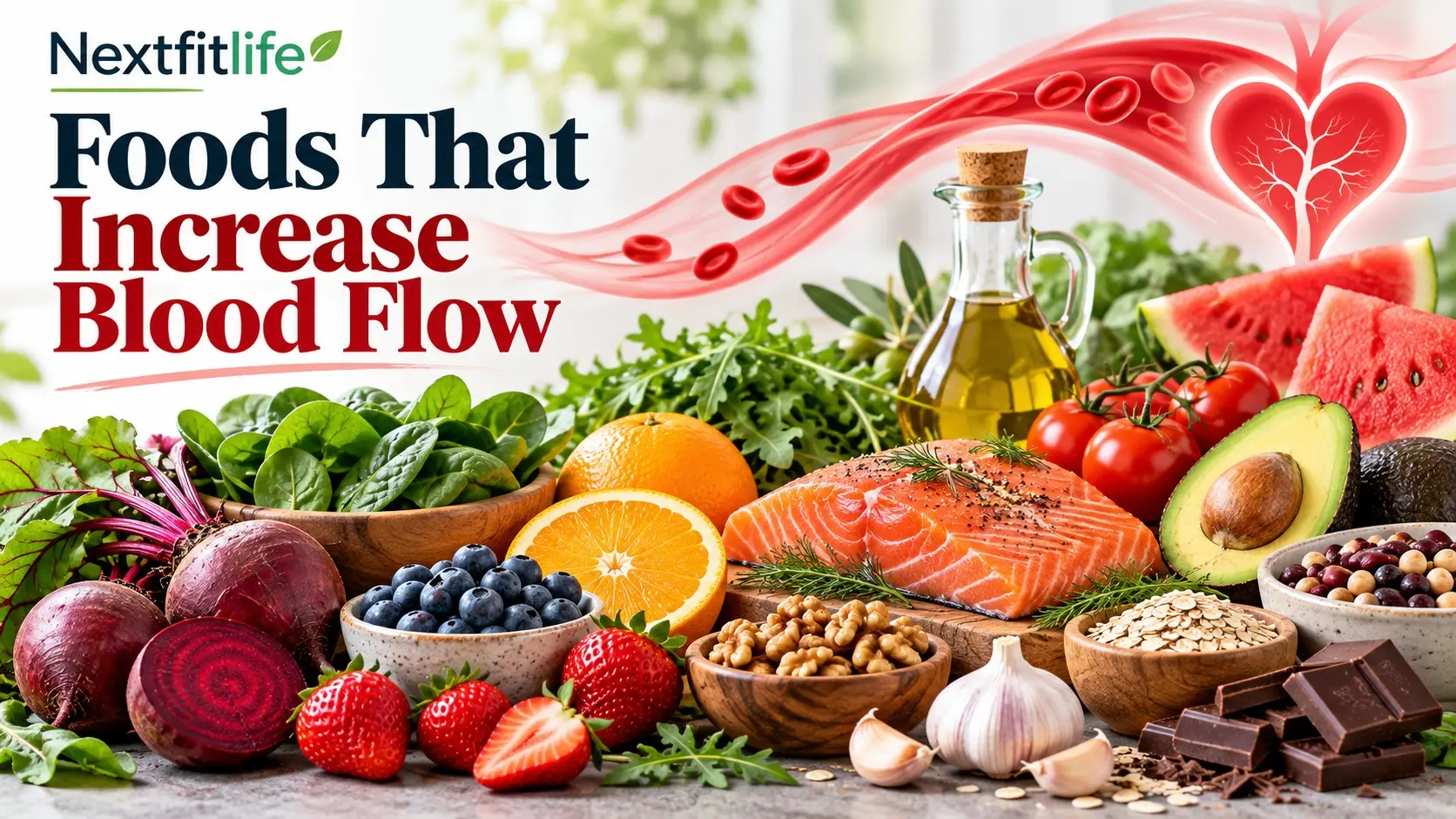
Foods That Increase Blood Flow do not work like medicine that instantly opens a blocked artery. But some foods can support healthy blood vessel function, nitric oxide production, blood pressure, cholesterol, and long term cardiovascular health.
The strongest choices include nitrate rich vegetables such as beets and leafy greens, berries, citrus fruit, fatty fish, walnuts, cocoa, extra virgin olive oil, legumes, and other foods found in a Mediterranean style eating pattern.
The goal is not to find one magic food. It is to build a pattern that helps your heart and blood vessels work well every day.
This article is for general information and education. It does not replace medical advice, diagnosis, or treatment.
If you have cold hands, leg heaviness, tingling, or concerns about circulation, also read How to Improve Blood Circulation Safely.
Table of Contents
- How food can support circulation
- 18 best foods for healthy blood flow
- Beets
- Spinach
- Arugula
- Berries
- Oranges and citrus fruit
- Salmon and oily fish
- Walnuts
- Extra virgin olive oil
- Dark chocolate and cocoa
- Pomegranate
- Tomatoes
- Watermelon
- Garlic
- Avocado
- Beans and lentils
- Oats and whole grains
- Seeds
- Colorful vegetables
- Which foods have the strongest evidence
- How nitric oxide fits into circulation
- What to eat in one day
- Foods that do not magically clear arteries
- Circulation mistakes to avoid
- When poor circulation needs medical care
- Frequently asked questions
How Can Food Support Blood Flow?
Blood flow depends on the heart, arteries, veins, tiny blood vessels, nerves, hormones, muscles, and many other systems.
Food can support this system in several ways.
Some vegetables provide dietary nitrate that the body can convert into nitric oxide. Nitric oxide helps blood vessels relax and plays an important role in normal vascular function.
Other foods contain polyphenols, flavonoids, omega 3 fats, potassium, fiber, and unsaturated fats that may support the lining of your blood vessels, called the endothelium.
Diet can also help manage blood pressure, cholesterol, blood sugar, and body weight. These factors matter because long term vascular health is about much more than how warm your fingers feel after one meal.
18 Best Foods That Increase Blood Flow
1. Beets
Beets are one of the best studied foods in discussions about circulation because they contain a large amount of dietary nitrate.
Your body can convert nitrate into nitric oxide through a series of steps. Nitric oxide helps blood vessels relax, which can support normal blood vessel function.
Randomized trials and meta analyses have found that nitrate and beetroot interventions can improve measures of endothelial function.
You can eat beets:
- Roasted
- Boiled
- Grated into salad
- Blended into suitable recipes
Beet juice has also been studied, but concentrated juice is not automatically better than eating vegetables as part of a balanced diet.
2. Spinach
Spinach is another useful nitrate rich vegetable.
It also provides folate, potassium, magnesium, carotenoids, and other nutrients that fit well into a heart healthy diet.
The old idea that spinach improves blood flow simply because it contains iron is too simplistic. Iron is essential for making hemoglobin, but eating extra iron does not make blood flow faster when you are not iron deficient.
The stronger reason to include spinach is its place in a vegetable rich eating pattern and its natural nitrate content.
3. Arugula
Arugula is one of the leafy vegetables that can provide dietary nitrate.
Its peppery taste makes it easy to add to:
- Salads
- Sandwiches
- Whole grain bowls
- Egg dishes
- Vegetable plates
You do not need to measure nitrate at home. Eating a variety of leafy vegetables is a simpler approach.
4. Berries
Blueberries, strawberries, blackberries, raspberries, and other berries contain anthocyanins and other polyphenols.
Research on anthocyanin rich foods suggests they may support endothelial function, including a measure known as flow mediated dilation.
Berries also provide fiber and can replace desserts that are high in added sugar.
Fresh and frozen berries are both useful options.
Add them to:
- Oatmeal
- Plain yogurt
- Whole grain cereal
- Fruit bowls
- Smoothies without excessive added sugar
5. Oranges and Other Citrus Fruit
Oranges, grapefruit, mandarins, lemons, and other citrus fruits contain vitamin C plus plant compounds called citrus flavonoids.
Clinical trials of citrus flavonoids suggest possible benefits for endothelial function.
That does not mean an orange instantly opens your blood vessels.
The benefit is better understood as part of a regular pattern of fruit and vegetable intake.
Whole fruit is usually a better everyday choice than large amounts of juice because it provides more fiber and is easier to portion.
6. Salmon and Other Oily Fish
Salmon, sardines, trout, mackerel, and some other oily fish provide omega 3 fatty acids.
Omega 3 fats are important in cardiovascular nutrition and have been studied for their effects on triglycerides, inflammation, heart rhythm, and endothelial function.
A systematic review of randomized trials found omega 3 supplementation improved flow mediated dilation, although study results varied.
Food provides more than omega 3 alone. Fish also supplies protein, vitamin B12, selenium, and other nutrients.
Choose cooking methods such as baking, grilling, or roasting rather than regularly deep frying fish.
7. Walnuts
Walnuts provide unsaturated fats, plant omega 3 called alpha linolenic acid, fiber, minerals, and polyphenols.
A 2026 systematic review of randomized trials found walnut intake improved flow mediated dilation, a measure of endothelial function, although it did not significantly lower overall blood pressure across all studies.
This is a good example of why circulation nutrition should be described carefully. Walnuts may support vascular function, but they are not a blood pressure drug.
A small handful can work well in oatmeal, yogurt, salads, or as a snack.
8. Extra Virgin Olive Oil
Extra virgin olive oil is a central part of the Mediterranean eating pattern.
It provides mostly unsaturated fat plus plant compounds known as phenolics.
The American Heart Association supports Mediterranean style dietary patterns that emphasize vegetables, fruit, whole grains, beans, nuts, fish, and non tropical plant oils such as olive oil.
Use olive oil to replace some sources of saturated fat rather than simply pouring large amounts on top of an unchanged diet.
For example, use it in:
- Salad dressings
- Vegetable dishes
- Bean meals
- Whole grain bowls
- Home cooking
9. Dark Chocolate and Cocoa
Cocoa contains flavanols, plant compounds studied for effects on endothelial function.
Meta analyses of randomized trials have reported improved flow mediated dilation after cocoa flavanol intake.
This does not turn every chocolate bar into a health food.
Many products contain large amounts of sugar, saturated fat, and calories while providing very different levels of cocoa flavanols.
If you enjoy dark chocolate, keep the portion modest and treat it as one small part of the overall diet.
10. Pomegranate
Pomegranate contains polyphenols and other plant compounds that have attracted attention in cardiovascular research.
The strongest message is not that pomegranate juice will instantly increase circulation.
Instead, pomegranate can be another colorful fruit in a plant rich diet.
Whole seeds provide fiber that juice does not.
If you prefer juice, keep portions sensible because juice can provide a lot of natural sugar quickly.
11. Tomatoes
Tomatoes provide potassium, vitamin C, and lycopene, a red carotenoid.
They fit naturally into Mediterranean style meals and can be eaten raw or cooked.
Tomatoes are useful because healthy circulation is supported by the overall diet rather than one isolated compound.
Add tomatoes to:
- Salads
- Bean dishes
- Whole grain pasta
- Egg meals
- Vegetable soups
12. Watermelon
Watermelon contains water, potassium, lycopene, and the amino acid citrulline.
Citrulline is involved in pathways that can contribute to arginine and nitric oxide production.
However, ordinary servings of watermelon should not be marketed as an instant circulation treatment.
Its main strength is that it is a hydrating fruit that fits well into a balanced eating pattern.
13. Garlic
Garlic has been studied for cardiovascular effects, especially blood pressure.
Meta analyses of garlic preparations in people with hypertension have reported blood pressure reductions, although these trials often used standardized garlic products rather than ordinary cooking amounts.
This difference matters.
Adding garlic to meals is a healthy way to add flavor without relying heavily on salt, but eating one garlic clove should not be treated as a replacement for blood pressure medicine.
14. Avocado
Avocado supplies monounsaturated fat, potassium, fiber, and several vitamins.
It is useful mainly because it can replace foods that contain more saturated fat.
Try avocado with:
- Whole grain toast
- Beans
- Salads
- Eggs
- Vegetable bowls
Healthy circulation benefits more from smart substitutions than from adding unlimited amounts of any high calorie food.
15. Beans and Lentils
Beans, lentils, chickpeas, and peas provide soluble fiber, plant protein, potassium, magnesium, and many other nutrients.
They fit both Mediterranean and DASH style eating patterns.
Regularly replacing some processed or fatty meats with legumes can improve the overall quality of the diet.
Useful choices include:
- Lentil soup
- Chickpea salad
- Black beans
- White beans
- Bean and vegetable stews
16. Oats and Other Whole Grains
Oats contain beta glucan, a type of soluble fiber known for helping lower LDL cholesterol when eaten regularly as part of a healthy diet.
Lowering unhealthy cholesterol supports long term artery health.
Other useful whole grains include:
- Barley
- Whole wheat
- Brown rice
- Bulgur
- Quinoa
This is a different mechanism from the temporary widening of a blood vessel. Both matter for cardiovascular health.
17. Seeds
Flaxseed, chia seeds, pumpkin seeds, sesame seeds, and similar foods provide combinations of fiber, healthy fats, magnesium, and plant compounds.
Ground flaxseed also provides alpha linolenic acid.
You do not need a large amount.
Add a modest portion to oatmeal, yogurt, salads, or other meals.
18. Colorful Vegetables
Broccoli, red peppers, carrots, cabbage, eggplant, and other colorful vegetables may not receive the same “circulation food” marketing as beets, but they belong on this list for an important reason.
Healthy blood vessels need an overall nutrient rich dietary pattern.
Vegetables provide fiber, potassium, vitamins, carotenoids, polyphenols, and many other compounds that work together.
The American Heart Association recommends dietary patterns rich in vegetables and fruit rather than chasing one superfood.
Which Foods Have the Strongest Evidence for Vascular Function?
| Food Group | Key Nutrients | Main Vascular Role | Evidence Strength |
|---|---|---|---|
| Beets and nitrate rich greens | Dietary nitrate | Nitric oxide pathway and endothelial function | Good direct evidence |
| Berries | Anthocyanins and polyphenols | Supports endothelial function | Good evidence |
| Citrus fruit | Flavonoids and vitamin C | May support endothelial function | Promising evidence |
| Fatty fish | EPA and DHA omega 3 fats | Supports cardiovascular and endothelial health | Good evidence |
| Walnuts | Unsaturated fat, ALA, polyphenols | May improve flow mediated dilation | Good evidence |
| Cocoa | Cocoa flavanols | May improve endothelial function | Good evidence with product variation |
| Mediterranean style foods | Fiber, unsaturated fats, polyphenols, minerals | Supports overall cardiovascular health | Strong pattern level evidence |
What Is Nitric Oxide and Why Does It Matter?
Nitric oxide is a signaling molecule made in the body.
One of its important jobs is helping the smooth muscle in blood vessel walls relax.
This process is called vasodilation.
Your body can make nitric oxide through more than one pathway. Dietary nitrate from foods such as beets and leafy greens can contribute to one of those pathways.
This does not mean nitrate rich food acts like a prescription vasodilator.
It means these vegetables can support normal vascular biology as part of a healthy diet.
What Is Endothelial Function?
The endothelium is the thin layer of cells lining the inside of your blood vessels.
It helps control:
- Blood vessel relaxation
- Blood clotting
- Inflammation
- Movement of substances between blood and tissues
Researchers often measure vascular response with flow mediated dilation.
This is why studies of beets, berries, walnuts, cocoa, citrus flavonoids, and omega 3 fats frequently report changes in flow mediated dilation rather than simply saying they “increase circulation.”
Do Foods That Increase Blood Flow Work Immediately?
Some foods can cause measurable short term changes in vascular function during controlled studies.
That does not mean you should expect your hands to warm instantly or a blocked artery to open after eating one meal.
The more useful goal is long term vascular support.
Regular healthy eating can help with blood pressure, cholesterol, blood sugar, inflammation, and weight. Those effects matter far more than chasing a temporary sensation of warmth.
A One Day Meal Plan for Healthy Circulation
Breakfast
Oatmeal topped with blueberries, walnuts, ground flaxseed, and plain yogurt.
Morning Snack
An orange or another piece of whole fruit.
Lunch
Chickpea, spinach, arugula, tomato, and beet salad with extra virgin olive oil and lemon.
Afternoon Snack
A small piece of dark chocolate with strawberries or another fruit.
Dinner
Baked salmon with roasted vegetables and a whole grain such as barley, bulgur, or brown rice.
Drinks
Water according to thirst and personal medical needs. Unsweetened tea or coffee can also fit for many adults.
This is only an example. You do not need to eat every food on the list in one day.
For a broader approach to food choices, visit the Healthy Eating Lifestyle Guide.
Does Water Increase Blood Flow?
Water is essential for normal circulation because blood contains a large amount of water and the body needs appropriate fluid balance.
But the phrase “water keeps your blood thin” is misleading.
Drinking extra water is not a treatment for blocked arteries, blood clots, or poor circulation.
Drink according to thirst and personal needs unless a healthcare professional has given you a specific fluid target.
People with heart failure, advanced kidney disease, or some other medical conditions may need individual fluid guidance.
What About Cayenne Pepper, Ginger, and Turmeric?
These spices can fit into a healthy diet, but their reputation as instant circulation boosters is stronger than the evidence for ordinary food amounts.
Cayenne contains capsaicin. Ginger and turmeric contain active plant compounds that are widely studied.
That does not mean adding a spoonful to a meal treats poor circulation.
Use spices mainly for flavor and variety.
Concentrated supplements are different from normal food amounts and may interact with medicines, especially blood thinners.
Do Oranges Increase Blood Flow?
Citrus fruit contains flavonoids that have been studied for vascular effects.
A 2024 systematic review of randomized trials found citrus flavonoid supplementation improved flow mediated dilation.
That is promising evidence for endothelial health.
It should not be translated into the claim that eating one orange instantly opens your arteries.
Can Dark Chocolate Improve Circulation?
Cocoa flavanols have some of the better evidence among individual food compounds for supporting endothelial function.
But chocolate products vary greatly.
A product can contain cocoa and still be high in sugar, saturated fat, and calories.
Think of dark chocolate as an optional small food rather than a treatment.
Do Walnuts Improve Blood Flow?
Walnuts are one of the better studied nuts for vascular function.
A 2026 meta analysis found that walnut intake improved flow mediated dilation across randomized trials.
The same analysis did not find a significant overall reduction in systolic or diastolic blood pressure.
This is why it is more accurate to say walnuts may support endothelial function rather than promising that they lower blood pressure for everyone.
Can Garlic Improve Circulation?
Garlic preparations have shown blood pressure effects in several trials involving people with hypertension.
However, many studies used standardized extracts or supplements, not a normal clove of garlic in dinner.
Use garlic freely in cooking if you enjoy it, but do not stop blood pressure medicine or replace treatment with garlic.
What Foods Are Best for Long Term Artery Health?
The best strategy is not a single food.
The American Heart Association supports eating patterns centered on:
- Vegetables
- Fruit
- Whole grains
- Beans and legumes
- Nuts
- Fish
- Poultry
- Non tropical plant oils
These patterns also limit excess sodium, added sugar, heavily processed food, refined carbohydrates, saturated fat, and processed meat.
Explore the Heart Healthy Foods Hub for more practical guidance.
Foods Do Not Clear Blocked Arteries
No beet, fruit, spice, drink, or supplement can safely “flush plaque” from your arteries overnight.
Artery disease is influenced by:
- LDL cholesterol
- Blood pressure
- Smoking
- Diabetes
- Genetics
- Age
- Physical activity
- Diet
- Prescribed treatment when needed
A healthy eating pattern can reduce cardiovascular risk. It does not replace medical treatment for established artery disease.
Other Ways to Support Healthy Blood Circulation
Walk Regularly
Movement is one of the most practical ways to support healthy circulation.
Walking activates leg muscles and supports cardiovascular fitness.
Break Up Long Sitting
Stand, walk, or move your ankles regularly when it is safe to do so.
Do Not Smoke
Smoking damages blood vessels and strongly increases cardiovascular and peripheral artery disease risk.
Manage Blood Pressure
High blood pressure damages arteries over time.
Manage Cholesterol
Healthy eating matters, but some people also need cholesterol lowering medicine based on their overall risk.
Manage Blood Sugar
Diabetes can damage blood vessels and nerves, especially in the feet.
For more information, see Diabetes and Blood Sugar Management.
Common Circulation Diet Mistakes
Looking for One Superfood
Your arteries do not respond to a top ten list in isolation.
The whole eating pattern matters.
Drinking Large Amounts of Juice
Beet or pomegranate juice may contain useful plant compounds, but large amounts can also add sugar or calories quickly.
Buying Supplements Instead of Food
Concentrated supplements can interact with medicine and are not automatically safer or more effective than food.
Ignoring Sodium
A diet can include berries, salmon, and beets while still containing far too much sodium from processed foods.
Using Food Instead of Medical Care
This is the most important mistake.
Leg pain with walking, wounds that heal slowly, one sided swelling, sudden limb symptoms, or chest pain should not be treated with a circulation smoothie.
When Does Poor Circulation Need Medical Care?
Arrange a medical assessment if you repeatedly have:
- Leg pain during walking that improves with rest
- A foot that is regularly much colder than the other
- Slow healing wounds
- Color changes in the feet or toes
- Persistent numbness or tingling
- Swelling that keeps returning
- Weak leg pulses
Conclusion: Build a Pattern, Not a Miracle Menu
The best Foods That Increase Blood Flow are foods that support healthy blood vessels over time. Beets and leafy greens provide dietary nitrate. Berries and citrus fruit provide flavonoids. Fish provides omega 3 fats. Walnuts, olive oil, legumes, oats, vegetables, and other whole foods strengthen the overall eating pattern.
No single food can repair a blocked artery or cure poor circulation.
Start with one practical change today. Add berries to breakfast, vegetables and beans to lunch, fish to a weekly meal, or replace some saturated fat with olive oil and nuts. Then combine those food choices with regular movement and good control of blood pressure, cholesterol, and blood sugar.
References and Sources
- American Heart Association. What Is the Mediterranean Diet?
Explains the heart healthy eating pattern built around vegetables, fruit, whole grains, beans, nuts, fish, and olive oil.
https://www.heart.org/en/healthy-living/healthy-eating/eat-smart/nutrition-basics/mediterranean-diet - PubMed. Effects of Inorganic Nitrate and Beetroot Supplementation on Endothelial Function.
Systematic review and meta analysis of randomized trials examining nitrate and beetroot effects on vascular function.
https://pubmed.ncbi.nlm.nih.gov/25764393/ - PubMed. Potential Benefits of Berry Anthocyanins on Vascular Function.
Reviews how berry anthocyanins may influence nitric oxide biology, oxidative stress, inflammation, and vascular function.
https://pubmed.ncbi.nlm.nih.gov/34346156/ - PubMed. Omega 3 Fatty Acids and Endothelial Function.
Systematic review and meta analysis of randomized trials examining omega 3 fatty acids and flow mediated dilation.
https://pubmed.ncbi.nlm.nih.gov/37859571/ - PubMed. Effects of Walnut Consumption on Blood Pressure and Endothelial Function.
2026 systematic review and meta analysis examining randomized walnut trials and measures of vascular function.
https://pubmed.ncbi.nlm.nih.gov/42619581/ - PubMed. Citrus Flavonoids and Endothelial Function.
Systematic review and dose response meta analysis of randomized trials examining citrus flavonoids and flow mediated dilation.
https://pubmed.ncbi.nlm.nih.gov/38561995/ - PubMed. Cocoa Flavanols and Human Endothelial Function.
Systematic review and meta analysis of randomized trials examining cocoa flavanols and flow mediated dilation.
https://pubmed.ncbi.nlm.nih.gov/31524216/
Internal Links and Helpful NextFitLife Guides
- How to Improve Blood Circulation Safely
- Heart Healthy Foods Hub
- Nutrition and Vitamins Hub
- Healthy Eating Lifestyle Guide
- Healthy Eating Lifestyle: Simple Habits That Last
- Nutrition Tips for Improving Your Health
- Diabetes and Blood Sugar Management
About the Author
Adel Galal is the Founder and Lead Writer at NextFitLife. He researches nutrition, cardiovascular health, fitness, blood circulation, vitamins, wellness, and healthy aging and turns current medical and public health guidance into clear practical information for everyday readers.
I am not a doctor or licensed healthcare professional, and this content does not replace professional medical advice, diagnosis, or treatment. I share information based on extensive research, real life experience, and consultation with healthcare providers. Always consult a qualified healthcare professional for diagnosis, treatment, or guidance about any health condition.
Learn more about Adel, the NextFitLife editorial approach, and how health information is researched on the About Us page.
Frequently Asked Questions
What are the best Foods That Increase Blood Flow?
The best choices include beets, leafy greens, berries, citrus fruit, oily fish, walnuts, olive oil, cocoa, beans, whole grains, tomatoes, and other vegetables. These foods support vascular health through different nutrients and plant compounds.
What food increases blood flow the fastest?
Nitrate rich foods such as beetroot can cause measurable short term changes in vascular function in some studies. However, food should not be used as an emergency treatment or as a way to open a blocked artery.
What fruit is best for blood circulation?
Berries and citrus fruit have some of the better evidence for vascular support because they contain anthocyanins and flavonoids. Pomegranate, watermelon, and tomatoes also provide useful plant compounds.
Do beets improve blood flow?
Beets contain dietary nitrate that the body can convert through pathways that support nitric oxide production. Randomized studies have found benefits for measures of endothelial function.
Do blueberries improve circulation?
Blueberries contain anthocyanins. Research on anthocyanin rich foods suggests they may improve vascular function, although they should be viewed as part of an overall healthy diet.
Does salmon improve circulation?
Salmon provides EPA and DHA omega 3 fats. Omega 3 intake supports cardiovascular health, and randomized trial data suggest benefits for endothelial function.
Does dark chocolate increase blood flow?
Cocoa flavanols have been shown in clinical studies to improve measures of endothelial function. Chocolate products vary widely, so a small amount of cocoa rich dark chocolate is more reasonable than treating candy as medicine.
Does garlic improve blood circulation?
Garlic products have shown blood pressure effects in some studies involving people with hypertension. Normal culinary garlic can fit a heart healthy diet, but it should not replace medicine or medical care.
Does water improve blood circulation?
Normal hydration is necessary for healthy body function, but drinking extra water does not clear blocked arteries, dissolve clots, or cure poor circulation.
Can foods clear blocked arteries?
No food can instantly clear plaque from an artery. A heart healthy diet can reduce cardiovascular risk over time, but established artery disease may also require medicine, procedures, or other medical treatment.
What should I avoid if I have poor circulation?
Focus on limiting smoking, excessive sodium, heavily processed foods, high amounts of saturated fat, excess added sugar, and prolonged inactivity. Your exact plan should depend on the cause of your circulation symptoms.
When should poor circulation symptoms be checked?
See a healthcare professional for repeated leg pain while walking, persistent numbness, color changes, slow healing wounds, or one foot that is consistently colder than the other. Sudden severe limb symptoms require urgent care.

Health & wellness writer with 30+ years of experience in nutrition, fitness, and healthy aging. Founder of NextFitLife.com — evidence-based health guidance.

