Last Updated: August 4, 2026
Next Review: August 2027, or sooner if major vascular guidance changes
Review Status: Editorially reviewed and source checked against current heart, vascular, physical activity, diabetes, and public health guidance
Many people search for how to improve blood circulation because their hands feel cold, their legs feel heavy, or their feet tingle after sitting.
Movement can help. Heart-healthy food can help. Stopping smoking can help. Blood pressure, cholesterol, and blood sugar care can help.
But poor circulation is not one disease.
Cold feet may come from narrow arteries, nerve damage, Raynaud phenomenon, thyroid disease, anemia, or simple cold exposure. Leg swelling may come from weak veins, medicine, heart failure, kidney disease, injury, or a blood clot. Pain during walking can be a sign of peripheral artery disease.
This guide merges the most useful information from the older How to Increase Blood Flow article into one safer and fuller resource. It removes unsupported promises. It also explains when home steps are useful and when medical care matters more.
Quick answer
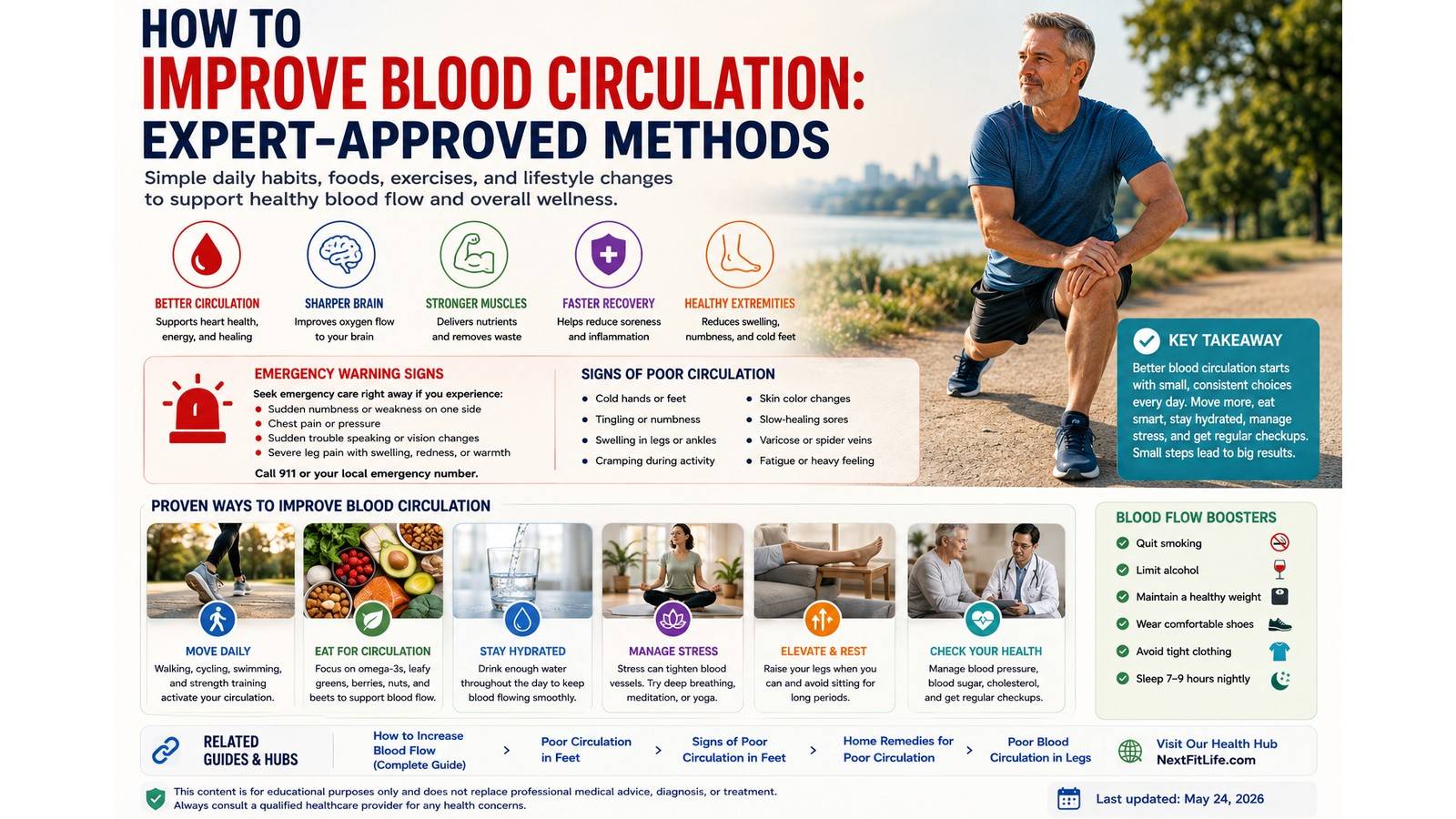
The best way to support healthy circulation is to move often, walk regularly, build leg strength, stop smoking, eat for heart health, manage blood pressure, cholesterol, and blood sugar, sleep well, and follow treatment for any diagnosed condition. These habits support the circulatory system, but they do not cure a blocked artery, a blood clot, severe vein disease, or heart failure.
Emergency warning
Call your local emergency number for chest pain, severe shortness of breath, fainting, stroke signs, coughing blood, one leg that suddenly becomes swollen and painful with breathing symptoms, or a hand, foot, arm, or leg that suddenly becomes cold, pale, blue, numb, weak, very painful, or hard to move.
Medical note: This content is for general educational purposes and does not replace professional medical advice, diagnosis, or treatment. Consult an appropriately qualified healthcare professional for personal medical concerns. What I share comes from actual life experience, extensive research, and consultation with healthcare providers. Always consult qualified medical professionals for diagnosis and treatment of any health condition.
What you will learn
- How blood circulation works
- What poor circulation can mean
- Which symptoms need urgent care
- How walking and exercise support blood flow
- How food, smoking, sleep, stress, and hydration fit into the plan
- When compression, elevation, warmth, or massage may be unsafe
- How diabetes, blood pressure, cholesterol, and weight affect vascular health
- Which tests may be used
- How doctors treat artery, vein, and clot problems
- How to build a simple daily circulation routine
What Is Blood Circulation?
Blood circulation is the movement of blood through the heart and blood vessels.
The heart pumps blood.
Arteries carry blood away from the heart. Veins carry blood back. Tiny vessels called capillaries deliver oxygen and nutrients to tissues.
Healthy blood vessel health depends on:
- A heart that pumps well
- Arteries that allow enough blood through
- Veins that return blood toward the heart
- Normal blood pressure
- Healthy cholesterol and blood sugar
- Working muscles
- Enough fluid for your personal needs
The body adjusts blood flow every minute.
More blood goes to working muscles during exercise. Skin blood flow changes with heat and cold. Blood vessels tighten or relax in response to nerves, hormones, medicine, stress, and illness.
What Does Poor Circulation Mean?
The phrase poor circulation is often used for several different problems.
Arterial circulation
Arterial circulation moves oxygen rich blood toward the tissues.
Narrow arteries can cause pain during walking, a cold foot, weak pulses, skin color changes, or a wound that heals slowly.
Venous return
Venous return moves blood back toward the heart.
Weak vein valves can cause swelling, heaviness, aching, varicose veins, itching, and skin changes near the ankle.
Nerve problems
Numbness, tingling, burning, and cold sensations can come from nerve damage even when blood flow is not severely reduced.
Heart and fluid problems
Heart failure, kidney disease, liver disease, and some medicines can cause swelling.
Blood clots
A clot can block a vein or artery. This can be urgent or life-threatening.
Because the causes are different, one home remedy cannot fix every symptom.
Signs That Blood Flow May Need a Medical Check
Potential signs include:
- Cold hands and feet
- Numbness or tingling
- Leg pain or cramping during walking
- Pain that improves with rest
- Pain in the foot while resting
- Heavy or tired legs
- Swelling in one or both legs
- Pale, blue, purple, red, or darker skin
- Shiny skin on the legs
- Hair loss on the lower legs
- Slow nail growth
- Weak or hard to feel foot pulses
- Slow healing cuts or sores
- Reduced walking ability
These symptoms can also have other causes.
Read the complete guide to poor circulation in feet for artery, vein, nerve, wound, and emergency signs.
When Poor Circulation Is an Emergency
Possible heart attack
Call emergency services for chest pressure, squeezing, heaviness, shortness of breath, cold sweat, nausea, faintness, or pain that spreads to the arm, jaw, back, neck, or upper stomach.
Possible stroke
Call for sudden face droop, arm weakness, speech trouble, confusion, sudden vision loss, severe loss of balance, or a sudden severe headache.
Possible pulmonary embolism
Call for sudden unexplained shortness of breath, chest pain that may worsen with breathing, a fast heartbeat, coughing blood, lightheadedness, or fainting.
Possible acute limb ischemia
Call for a limb that suddenly becomes cold, pale, blue, numb, weak, very painful, or hard to move.
Possible serious infection
Get urgent care for a foot wound with spreading redness, pus, fever, black tissue, an unpleasant smell, or rapidly increasing swelling.
Do not try circulation supplements, massage, heat, or exercise before urgent symptoms are assessed.
What Causes Poor Blood Flow?
Peripheral artery disease
Peripheral artery disease, called PAD, happens when plaque narrows arteries, most often in the legs.
PAD may cause leg pain while walking, cold feet, weak pulses, wounds, or no obvious symptoms.
PAD is also a warning about heart attack and stroke risk.
Smoking
Smoking damages blood vessels and increases PAD risk.
It also raises the risk of heart disease, stroke, and blood clots.
Diabetes
Diabetes can damage arteries and nerves.
Reduced feeling can hide injuries. Reduced blood flow can slow healing.
Read diabetes and heart diseases for the wider blood vessel risk plan.
High blood pressure
High blood pressure can damage artery walls over time.
Learn more in what causes high blood pressure and how to lower blood pressure safely.
High cholesterol
High LDL cholesterol can help plaque build inside arteries.
Treatment may include food changes, exercise, and medicine based on risk.
Vein disease
Weak vein valves can allow blood to pool in the legs.
This can cause swelling, aching, heaviness, skin changes, and venous ulcers.
Blood clots
Deep vein thrombosis may cause one sided swelling, warmth, pain, and color change.
Symptoms alone cannot confirm or rule out a clot.
Raynaud phenomenon
Raynaud phenomenon can make fingers or toes turn white, blue, and red during cold or stress.
Low activity
Muscle movement helps circulation.
Long sitting can reduce the calf muscle pump and make the legs feel heavy or stiff.
Heart failure and kidney disease
These conditions can cause fluid buildup and swelling.
New swelling with shortness of breath needs prompt care.
How to Improve Blood Circulation Safely
1. Walk regularly
Walking supports peripheral circulation, heart fitness, blood pressure, glucose control, and leg strength.
Most adults should work toward at least 150 minutes of moderate activity each week and strength work on two days.
Start with five or ten minutes when needed.
Try:
- A short walk after meals
- A walk during a work break
- Walking while taking a phone call
- A treadmill at a comfortable pace
- A supervised exercise program when PAD is diagnosed
Leg pain that starts during walking and eases with rest can be a sign of PAD. Do not assume that pain is only poor fitness.
2. Break up long sitting
Stand, walk, or move the ankles every thirty to sixty minutes when safe.
Small actions include:
- Ankle pumps
- Ankle circles
- Heel raises
- Toe raises
- Gentle marching
- Calf stretches
These movements support the calf muscle pump.
They do not treat a blood clot or severe PAD.
3. Build muscle strength
Strong muscles support movement, balance, glucose control, and daily function.
Simple choices include chair squats, step ups, wall push ups, resistance band rows, calf raises, and light carrying.
Use safe form. Build slowly.
Ask for advice before starting when you have chest symptoms, fainting, severe breathlessness, a foot wound, uncontrolled blood pressure, or known serious heart disease.
4. Use aerobic activity that fits your body
Cycling, swimming, dancing, and low-impact classes can support healthy blood flow.
Choose an activity you can repeat.
People with wounds, severe neuropathy, recent surgery, or heart disease may need a modified plan.
5. Stop smoking and nicotine
Stopping smoking is one of the strongest steps for vascular health.
Ask about:
- Nicotine replacement when suitable
- Prescription quit medicine
- Coaching
- Quit lines
- A plan for triggers
Do not replace cigarettes with an unreviewed nicotine product and assume the blood vessel risk is gone.
6. Manage blood pressure
Check blood pressure as advised.
Use the correct cuff size. Sit quietly. Record several readings.
Take medicine as prescribed.
Food, movement, sleep, alcohol limits, stress care, and medicine may all be part of the plan.
7. Manage cholesterol
Cholesterol treatment can reduce the risk of heart attack, stroke, and PAD complications.
A statin or another medicine may be recommended based on overall risk.
Do not stop cholesterol medicine because of a social media claim.
8. Manage blood sugar
Blood sugar care helps protect nerves and blood vessels.
People with diabetes should check the feet daily, wear suitable shoes, and get early care for any blister, cut, colour change, or swelling.
9. Eat for heart and vessel health
A healthy eating pattern supports arterial health, blood pressure, cholesterol, blood sugar, and weight.
Eat more:
- Vegetables
- Whole fruit
- Beans and lentils
- Whole grains when suitable
- Fish
- Nuts and seeds
- Olive oil and other unsaturated fats
Limit:
- Smoking and nicotine
- Processed meat
- Foods high in saturated fat
- Excess sodium
- Added sugar
- Heavy alcohol use
No single food opens a blocked artery.
Read foods that support blood flow for meal ideas and safety limits.
10. Drink enough for your needs
Water supports normal body function.
Dehydration may cause weakness, dizziness, headache, or cramps.
There is no one fixed amount for everyone.
People with heart failure, kidney disease, liver disease, or a fluid limit need a personal plan.
Water does not dissolve plaque or remove a clot.
11. Work toward a healthy weight when appropriate
Weight management can improve blood pressure, glucose, movement, sleep, and heart strain for some people.
Use a slow plan that protects muscle and nutrition.
Read the Complete Weight Loss Guide.
12. Protect sleep
Poor sleep can affect blood pressure, glucose, appetite, activity, and stress.
Most adults need at least seven hours of sleep.
Ask for help for loud snoring, choking in sleep, morning headaches, or severe daytime sleepiness.
Read the Sleep Deprivation Guide.
13. Manage stress without making false promises
Stress can affect blood pressure, sleep, smoking, food, and activity.
Slow breathing, walking, prayer, meditation, counselling, and social support may help with stress.
Relaxation can support health. It cannot remove an artery blockage.
Use the Self Care Habits Guide for a simple routine.
14. Keep the body warm, but avoid burns
Warm clothing can reduce cold-related blood vessel tightening.
Use loose socks and suitable shoes.
Do not use a heating pad or very hot water on numb feet.
People with neuropathy can be burned without feeling it.
15. Review medicines
Some medicines can cause swelling, dizziness, low blood pressure, or cold hands and feet.
Do not stop medicine on your own.
Ask a doctor or pharmacist to review:
- Blood pressure medicine
- Diuretics
- Hormone medicine
- Diabetes medicine
- Medicines that affect heart rate
- Supplements
Compression Socks: Useful Only for the Right Problem
Compression therapy can help some people with vein-related swelling.
It may be unsafe when arterial blood flow is severely reduced.
Ask for a circulation check before using strong compression when you have:
- A cold foot
- A pale or blue foot
- Pain during walking
- Rest pain
- A foot wound
- Weak pulses
- Diabetes with PAD
The size and pressure level also matter.
Leg Elevation: Helpful for Veins, Not Every Circulation Problem
Leg elevation may reduce swelling caused by vein problems or fluid buildup.
It may worsen pain from severe arterial disease in some people.
Stop and seek advice if elevation causes more pain, coldness, numbness, or color change.
Massage and Dry Brushing
Gentle massage can feel relaxing.
It may temporarily warm the skin.
It does not clear plaque or remove a blood clot.
Avoid massage when:
- One leg is suddenly swollen, red, warm, or painful
- A foot is cold, pale, blue, numb, or severely painful
- There is a wound, infection, or recent surgery
- The skin is fragile
Dry brushing is not a proven treatment for blocked circulation. It may irritate or injure delicate skin.
Hot and Cold Showers
Temperature changes affect surface blood vessels.
That does not mean contrast showers treat vascular disease.
Avoid very hot water when you have neuropathy, fragile skin, heart disease, fainting risk, or poor temperature sensation.
Cold exposure can trigger Raynaud symptoms.
Supplements and Vitamins for Circulation
Supplements are often marketed for microcirculation or blood flow.
Strong claims are common. Strong evidence is not.
Products such as ginkgo, garlic extract, vitamin E, cayenne, fish oil, and herbal blends may interact with:
- Blood thinners
- Blood pressure medicine
- Diabetes medicine
- Surgery and dental procedures
Iron should not be used unless a genuine need is found.
High-dose vitamins can cause harm.
Food comes first for most people.
How to Improve Blood Circulation During Travel
Long travel can increase leg stiffness and blood clot risk in some people.
During long trips:
- Move the ankles
- Stand and walk when safe
- Avoid tight clothing
- Drink normally
- Follow any personal clot prevention plan
Do not take aspirin only for travel unless a clinician tells you to do so.
People with recent surgery, cancer, pregnancy, a prior clot, or other risk factors may need personal advice.
How to Improve Circulation After 50
Aging can reduce muscle, movement, balance, and recovery.
It does not mean poor circulation is normal.
Adults over 50 can focus on:
- Walking
- Strength work
- Balance exercises
- Blood pressure checks
- Cholesterol care
- Blood sugar checks
- Foot care
- Smoking cessation
- Medicine review
New pain, wounds, swelling, cold feet, or reduced walking ability should not be dismissed as age.
How Doctors Test Blood Circulation
A clinician may examine:
- Skin color and temperature
- Foot and wrist pulses
- Swelling
- Wounds
- Varicose veins
- Nerve feeling
- Walking symptoms
Ankle brachial index
The ankle-brachial index compares blood pressure at the ankle and arm.
It is a common test for PAD.
Toe pressure
Toe pressure may help when ankle arteries are stiff, which can happen in diabetes or kidney disease.
Ultrasound
Doppler or vascular ultrasound can look at artery or vein flow.
Blood tests
Tests may include cholesterol, blood sugar, A1C, kidney function, blood count, and thyroid tests based on symptoms.
Heart tests
Chest symptoms, fainting, breathlessness, or suspected heart disease may lead to an ECG, echocardiogram, stress test, or other assessment.
Visit the Medical Tests and Screenings Hub.
Medical Treatment Depends on the Cause
Peripheral artery disease
Treatment may include smoking cessation, structured exercise, cholesterol medicine, blood pressure and diabetes care, selected antiplatelet medicine, and a procedure when blood flow is severely limited.
Vein disease
Treatment may include movement, elevation, prescribed compression, skin care, wound care, or a vein procedure.
Blood clots
Blood clots often need anticoagulant medicine and follow-up.
They are not treated with massage, water, or supplements.
Heart failure
Treatment may include medicine, sodium and fluid guidance, monitoring, and treatment of the cause.
Diabetes complications
Care may include glucose management, foot checks, wound care, pressure relief, infection treatment, and vascular assessment.
A Simple Seven Day Circulation Plan
Day 1
Take a ten-minute walk if it is safe. Note any pain, swelling, or colour change.
Day 2
Stand or move every hour. Add ankle pumps and heel raises.
Day 3
Add vegetables, beans, fish, or nuts to one meal.
Day 4
Check blood pressure if you have a monitor and know how to use it.
Day 5
Do a short strength session.
Day 6
Review smoking, sleep, hydration, and medicine habits.
Day 7
Check your feet and legs. Book a medical visit if symptoms keep returning.
Common Myths About Blood Circulation
Myth: Cold feet always mean blocked arteries
Cold feet have many causes.
Myth: Drinking more water opens arteries
Water supports normal function. It does not remove plaque.
Myth: Massage can break up a clot
Massage is not a clot treatment and may be unsafe.
Myth: Compression socks are safe for everyone
Compression may be unsafe with severe arterial disease.
Myth: A supplement can fix poor circulation
No supplement replaces diagnosis or proven treatment.
Myth: Pain is required for serious circulation disease
PAD and diabetic foot problems can occur with little pain.
My Research Approach
I have spent more than thirty years learning about health, fitness, nutrition, and healthy aging through personal practice and research.
Circulation is a medical topic. Personal experience is not enough.
I compare important safety points with official heart, vascular, diabetes, and public health guidance.
Fluid needs vary. Massage, cold showers, supplements and compression socks are not universal treatments, and no single food opens a blocked artery.
My aim is to make the safe steps easy to understand while making the warning signs clear.
Conclusion
Learning how to improve blood circulation starts with movement, walking, strength, heart healthy food, no smoking, good sleep, and control of blood pressure, cholesterol, and blood sugar.
These habits support the heart and blood vessels.
They do not replace treatment for PAD, a blood clot, severe vein disease, heart failure, infection, or a foot wound.
Choose one action today. Take a safe walk. Add movement breaks. Check your feet. Review your blood pressure. Or book an assessment for symptoms that keep returning.
Explore Related NextFitLife Guides
- Health Hub
- Heart and Cardiovascular Health Hub
- Medical Tests and Screenings Hub
- Poor Circulation in Feet
- Foods That Support Blood Flow
- Diabetes and Heart Diseases
- What Causes High Blood Pressure
- How to Lower Blood Pressure Safely
- Complete Weight Loss Guide
- Healthy Lifestyle Roadmap
- Sleep Deprivation Guide
- Self-Care Habits
- Heat Exhaustion Guide
References and Sources
- American Heart Association: How peripheral artery disease is treated with exercise, lifestyle changes, medicine, and procedures. Updated April 27, 2026. Open source
- Centers for Disease Control and Prevention: Adult physical activity guidance, including at least 150 minutes of moderate activity and two days of muscle strengthening each week. Open source
- National Heart, Lung, and Blood Institute: Peripheral artery disease treatment, including smoking cessation and exercise therapy. Open source
- National Heart, Lung, and Blood Institute: How smoking damages the heart and blood vessels and raises PAD risk. Open source
- Centers for Disease Control and Prevention: Blood clot symptoms, including deep vein thrombosis and pulmonary embolism warning signs. Open source

Adel Galal has more than thirty years of personal experience with health, fitness, nutrition, and healthy aging. He uses careful research and consultation with healthcare providers to explain complex topics in simple language.
Circulation problems, blood clots, PAD, wounds, and medicine are high-risk topics. This article was source-checked against current heart, vascular, and public health guidance. It was not medically reviewed by a named vascular specialist.
Frequently Asked Questions About Blood Circulation
What is the quickest safe way to improve blood circulation?
For many healthy adults, a short walk, ankle pumps, calf raises, or gentle movement can increase blood flow during the activity. These steps do not treat a blocked artery, blood clot, severe vein disease, or a heart problem. Sudden pain, color change, swelling, weakness, or shortness of breath needs medical care.
How much walking supports healthy circulation?
Most adults should work toward at least 150 minutes of moderate activity each week, plus muscle strengthening on two days. Start with short walks when needed. People with leg pain during walking, foot wounds, chest symptoms, severe breathlessness, or known vascular disease should ask for a personal plan.
Can drinking water improve blood circulation?
Water supports normal blood volume and can help when dehydration is present. It does not open a blocked artery or remove a blood clot. Fluid needs vary. People with heart failure, kidney disease, liver disease, or a prescribed fluid limit need individual advice.
Which foods are best for blood vessel health?
A heart healthy pattern may include vegetables, fruit, beans, lentils, whole grains, fish, nuts, seeds, and unsaturated fats such as olive oil. Food supports blood pressure, cholesterol, glucose, and weight, but no single food can clear a blocked artery.
Do compression socks improve circulation?
Compression can support venous return and reduce some forms of swelling. It may be unsafe when significant peripheral artery disease is present. A cold, pale, blue, numb, painful, or wounded foot should be checked before strong compression is used.
Does massage improve blood circulation?
Gentle massage may temporarily warm the skin or relax muscles, but it does not treat a blocked artery or blood clot. Avoid massage when one leg is suddenly swollen, red, warm, or painful, or when a limb becomes cold, pale, blue, numb, weak, or severely painful.
Can poor circulation be fixed naturally?
Healthy habits can support circulation and reduce risk, but they cannot cure every cause. Peripheral artery disease, blood clots, severe vein disease, heart failure, diabetes complications, infection, and wounds may need tests, medicine, specialist care, or a procedure.
What are warning signs of a circulation emergency?
Call emergency services for chest pain, severe shortness of breath, fainting, stroke signs, coughing blood, a swollen painful leg with breathing symptoms, or a limb that suddenly becomes cold, pale, blue, numb, weak, very painful, or difficult to move.
Can supplements improve blood circulation?
Supplements are not a replacement for diagnosis or proven treatment. Ginkgo, garlic extract, vitamin E, fish oil, and other products can interact with blood thinners or other medicines. Use supplements only after checking the need, safety, dose, and interactions with a qualified professional.
When should I see a doctor about poor circulation?
Arrange a medical assessment for repeated leg pain during walking, cold feet, numbness, colour changes, swelling, slow-healing wounds, weak pulses, reduced walking ability, or symptoms that keep returning. Seek urgent care for sudden or severe changes.

Health & wellness writer with 30+ years of experience in nutrition, fitness, and healthy aging. Founder of NextFitLife.com — evidence-based health guidance.