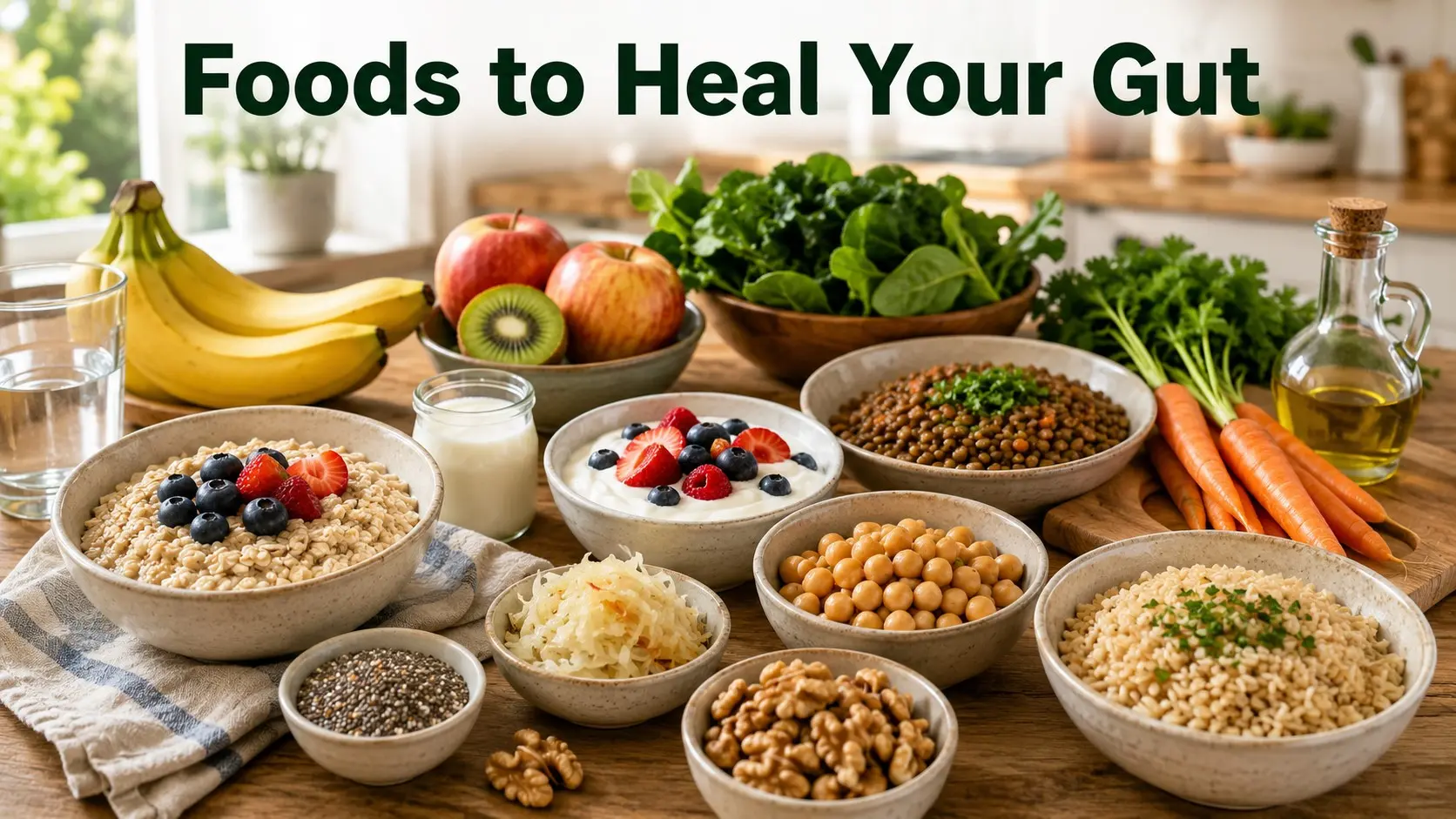
Published: Aug 15, 2023
Last updated: July 17, 2026
Next review: July 2027
Written by: Adel Galal, Founder and Lead Writer at NextFitLife
Review status: Editorially reviewed and source checked. This article has not been medically reviewed by a doctor or registered dietitian.
Reading time: About 15 minutes
Many people search for Foods to Heal Your Gut when they have gas, bloating, constipation, diarrhea, reflux, or stomach pain.
Food can support normal digestion. It can also help feed the tiny organisms that live in your digestive system. However, no single food can cure every gut problem.
The word heal can sound like a medical promise. This guide does not use it that way. Foods may support your gut, but they cannot cure celiac disease, inflammatory bowel disease, infections, ulcers, or other medical conditions.
The safest plan is often simple. Eat a wider range of foods that you tolerate. Add fibre slowly. Drink enough water. Try fermented foods in small amounts. Change one thing at a time.
This guide explains which gut health foods may help support digestion, how to add them safely, and when you should speak with a healthcare professional.
You can also visit the NextFitLife Gut Health and Digestion Hub for more guides about fiber, constipation, bloating, and fermented foods.
Important Medical Note
This content is for general educational purposes and does not replace professional medical advice, diagnosis, or treatment. Consult an appropriately qualified healthcare professional for personal medical concerns. I am also not a gastroenterologist, registered dietitian, pharmacist, or licensed nutrition professional.
This content does not replace professional medical advice. This article explains published guidance and does not provide a personal clinical assessment.
Always consult qualified medical professionals for diagnosis and treatment of any health condition.
Do not stop medicine, delay medical care, or begin a strict diet because of this article.
Quick Answer: What Are the Best Foods to Heal Your Gut?
The best choices are foods that give you fibre, nutrients, or live cultures without making your symptoms worse.
Useful choices may include:
- Oats
- Beans
- Lentils
- Vegetables
- Fruit
- Whole grains
- Nuts
- Seeds
- Plain yogurt with live cultures
- Kefir
- Some fermented vegetables
- Tempeh
- Miso
- Olive oil
- Water
These foods do not cure disease. They may form part of a balanced eating pattern that supports digestive health, bowel regularity, and a healthy gut microbiome.
What Does Gut Health Mean?
Your gut includes your stomach and intestines. It breaks down food, absorbs nutrients, moves waste, and helps protect your body.
Your intestines also contain bacteria, fungi, viruses, and other tiny organisms. Together, they form your gut microbiome.
Each person has a different microbiome. Diet, age, medicine, illness, sleep, stress, and the environment can all affect it.
This means there is no perfect food list for every person.
A food that helps one person may cause gas, pain, or diarrhea in another person.
Can Foods Really Heal Your Gut?
Foods to Heal Your Gut is a common search phrase. It should not be taken as a promise that food can cure a medical problem.
Food may help support:
- Normal digestion
- Regular bowel movements
- A wider range of gut microbes
- Healthy nutrient intake
- Better meal balance
- Comfort after eating
Food cannot replace medical treatment for conditions such as Crohn disease, ulcerative colitis, celiac disease, stomach ulcers, bowel infections, or cancer.
If your symptoms are strong, new, or ongoing, ask a qualified healthcare professional for help.
15 Foods to Heal Your Gut Safely
1. Oats
Oats contain soluble fibre. This fibre mixes with water and forms a soft gel.
It may help make stool softer and easier to pass. Some gut bacteria can also use oat fibre as food.
Start with a small bowl of cooked oats. Add banana, berries, or plain yogurt when you tolerate them.
A large serving may cause gas when you are not used to fibre. Add more slowly.
2. Beans
Beans provide fibre, plant protein, vitamins, and minerals. Their fibre may feed good gut bacteria.
Beans can also cause gas. This does not always mean they are harmful.
Start with two or three spoonfuls. Rinse canned beans well. Cook dried beans until they are soft.
Increase the amount only when you feel comfortable.
3. Lentils
Lentils are a simple source of fibre and plant protein. They may be easier to use than some larger beans.
Add a small amount to soup, rice, or cooked vegetables.
Red lentils become very soft when cooked. This texture may feel easier for some people.
4. Vegetables
Vegetables provide fibre, water, vitamins, minerals, and natural plant compounds.
Useful choices may include:
- Carrots
- Zucchini
- Spinach
- Green beans
- Eggplant
- Tomatoes
- Sweet potato
- Broccoli
Cooked vegetables may feel easier to digest than raw vegetables.
Broccoli, cabbage, onions, garlic, and cauliflower may cause more gas in some people. Try a small amount first.
5. Fruit
Fruit provides fiber, water, vitamins, and plant compounds.
Helpful choices may include:
- Bananas
- Kiwi
- Berries
- Oranges
- Grapes
- Apples
- Pears
Whole fruit usually gives you more fiber than juice.
Large amounts of fruit may cause gas or loose stool in some people. Spread fruit across the day instead of eating a large amount at once.
6. Bananas
Bananas contain fibre. Less ripe bananas may contain more resistant starch.
Resistant starch is not fully broken down in the small intestine. Some bacteria in the large intestine can use it.
A ripe banana may feel softer and easier to eat. A less ripe banana may feel harder for some people to digest.
Choose the level of ripeness that feels best for you.
7. Whole Grains
Oats, brown rice, barley, and whole-grain bread can add fibre to your meals.
Whole grains are useful fibre-rich foods, but they do not suit every person.
Barley, wheat, and rye contain gluten. People with celiac disease must avoid gluten under medical guidance.
Do not start a gluten-free diet before celiac testing when celiac disease may be present. Removing gluten first can affect the test result.
8. Chia Seeds
Chia seeds contain fibre and absorb water.
Start with one teaspoon. Mix the seeds into yogurt, oats, or water.
Drink enough fluid when you add more fibre.
People with swallowing problems or bowel narrowing should ask a healthcare professional before using large amounts of seeds.
9. Ground Flaxseed
Ground flaxseed provides fibre and useful fats.
Start with one teaspoon. Add it to oats, yogurt, or soup.
Ground flaxseed is often easier to use than whole flaxseed because the body may not break down every whole seed.
10. Nuts
Almonds, walnuts, peanuts, and other nuts provide fibre, protein, and useful fats.
Use a small handful as a snack. You can also add chopped nuts to oats or yogurt.
Large portions can feel heavy because nuts contain a lot of fat in a small amount.
Avoid nuts when you have an allergy.
11. Plain Yogurt With Live Cultures
Some yogurt contains live microorganisms. Check the label for words such as live cultures or active cultures.
Yogurt is one of the best-known probiotic foods. However, not every yogurt contains the same organisms.
Choose plain yogurt when you want less added sugar. Add fruit or oats for flavour.
Yogurt is not safe for someone with a milk allergy. People with lactose intolerance may or may not tolerate it.
12. Kefir
Kefir is a fermented milk drink. It may contain several kinds of live microorganisms.
Start with a small amount, such as one quarter of a cup.
A large amount may cause gas or loose stool when you are not used to it.
Check the label for added sugar. Avoid dairy kefir if you have a milk allergy.
13. Fermented Vegetables
Kimchi, sauerkraut, and some fermented pickles may contain live microorganisms.
These fermented foods may fit into a balanced diet, but not every fermented product contains proven probiotics.
Heat and pasteurization may reduce or remove live organisms.
Fermented vegetables may also contain a lot of salt. This can matter if you need to limit sodium.
Spicy kimchi may make reflux or stomach pain worse. Start with one spoonful.
14. Tempeh and Miso
Tempeh is made from fermented soybeans. It provides protein and fibre.
Miso is a fermented soybean paste. It can add flavour to soup, rice, or vegetables.
Cooking may reduce live organisms. The food can still provide useful nutrients.
Miso can contain a lot of sodium. Use a small amount when salt is a concern.
15. Water
Water supports normal digestion. It also helps fibre do its job.
There is no single amount that suits everyone. Your needs change with body size, activity, weather, pregnancy, medicine, and health.
People with heart, kidney, or liver disease may have a personal fluid limit. Follow advice from their medical team.
No drink can clean or reset your gut overnight. Read the NextFitLife guide to morning drinks for gut health for a closer look at common claims.
Prebiotic Foods and Probiotic Foods
Prebiotic foods contain fibre or other compounds that certain gut organisms can use.
Common examples may include:
- Oats
- Beans
- Lentils
- Bananas
- Apples
- Onions
- Garlic
- Asparagus
- Whole grains
Some of these foods may cause gas in people with IBS or a sensitive gut.
Probiotics are live microorganisms that provide a health benefit when used in the right amount.
Some yogurt and fermented foods may contain probiotics. However, a fermented food is not always a proven probiotic food.
The organism, strain, amount, storage, and product all matter.
Probiotic supplements are not needed by every person. Products can be very different from each other.
People with a weak immune system, serious illness, or complex medical needs should ask a doctor before taking a probiotic supplement.
Why Fibre Can Help Your Gut
Fibre is found mainly in plant foods.
Some fibre adds bulk to stool. Some fibre holds water. Some fibre is used by gut bacteria.
This can support bowel regularity and a varied, healthy gut microbiome.
Fibre may come from:
- Vegetables
- Fruit
- Beans
- Lentils
- Oats
- Whole grains
- Nuts
- Seeds
More fibre is not always better.
A sudden rise can cause gas, cramps, pain, or bloating. Add fibre in small steps.
You can find more examples in the NextFitLife high fiber foods chart for constipation.
How to Add Fibre Without Causing More Gas
Start with one slight change.
You may try these steps:
- Add two spoonfuls of beans instead of a full bowl.
- Add one teaspoon of seeds instead of several spoonfuls.
- Add one extra fruit instead of making a very large smoothie.
- Use cooked vegetables before trying a large raw salad.
- Drink enough fluid during the day.
- Keep the extra amount for several days before adding more.
Your body may need time to adjust.
Stop and seek advice if added fibre causes severe pain, vomiting, severe swelling, or an inability to pass stool or gas.
Foods to Heal Your Gut When You Feel Bloated
Bloating can come from gas, constipation, eating quickly, enormous meals, fizzy drinks, lactose intolerance, IBS, celiac disease, medicine, or other conditions.
No food can treat every cause.
Some people find these foods easier during a period of bloating:
- Cooked oats
- Rice
- Potatoes
- Bananas
- Eggs
- Cooked carrots
- Zucchini
- Plain yogurt when tolerated
Try smaller meals. Eat slowly. Reduce fizzy drinks for a quick test.
Read the NextFitLife guide to foods that may reduce bloating for more simple meal ideas.
Foods to Heal Your Gut During Constipation
Constipation may cause hard stools, pain, fewer bowel movements, or a feeling that stool has not fully passed.
Useful foods for constipation may include:
- Oats
- Beans
- Lentils
- Kiwi
- Pears
- Prunes
- Vegetables
- Ground flaxseed
- Chia seeds
Water and regular movement may also help.
Do not keep adding more fibre when constipation is severe or linked with vomiting, severe pain, blood, or an inability to pass gas.
Foods to Heal Your Gut During Diarrhea
Diarrhea can lead to water and salt loss.
Choose small meals and fluids that you can keep down.
Food choices may include:
- Rice
- Potatoes
- Oats
- Toast
- Bananas
- Soup
- Eggs
- Chicken
- Plain yogurt when tolerated
You do not always need to stop eating. Return to a varied diet as you feel better.
Severe diarrhea may require an oral rehydration solution. Water alone may not replace all lost salts.
Seek medical care for blood in stool, fever, severe pain, dehydration, ongoing vomiting, or diarrhea that does not improve.
Foods to Heal Your Gut With IBS
IBS can cause pain, bloating, constipation, diarrhea, or a mix of these symptoms.
There is no single IBS diet that helps everyone.
Some people may feel better with more soluble fibre. Others may need help finding food triggers.
A doctor or registered dietitian may suggest a low FODMAP diet for medically diagnosed IBS.
This diet has three steps:
- A short food restriction step
- A planned food testing step
- A personal long-term eating step
The first step is not meant to continue forever.
Foods are tested again so the final diet can include as much variety as possible.
Use help from a registered dietitian who understands IBS and the low FODMAP plan.
Foods That May Make Gut Symptoms Worse
Food is not bad because it causes symptoms in one person.
Common triggers may include:
- Very large meals
- A sudden rise in fibre
- Fried foods
- Very fatty meals
- Large amounts of alcohol
- Large amounts of caffeine
- Fizzy drinks
- Sugar alcohols
- Milk when lactose is not tolerated
- Very spicy foods
- Large portions of onions or garlic
- Large portions of beans
The amount can matter as much as the food.
A small serving may feel fine. A large serving may cause symptoms.
Should You Keep a Food and Symptom Diary?
A short diary can help you find patterns.
Write down:
- What you ate
- How much did you eat
- When you ate
- Your symptoms
- Your bowel movements
- Your stress level
- Your medicine
Change only one thing at a time.
Do not use the diary to fear food or remove many foods without help.
A strict diet can cause nutrient gaps and make eating stressful.
A Simple Three-Day Gut-Friendly Meal Plan
This plan is only an example. Change it for allergies, culture, budget, health, and personal tolerance.
Day One
Breakfast: Cooked oats with banana and plain yogurt.
Lunch: Lentil soup with bread and cooked carrots.
Dinner: Baked fish with potato and zucchini.
Snack: Kiwi or a small handful of nuts.
Day Two
Breakfast: Eggs with toast and cooked spinach.
Lunch: Rice with chicken and cooked vegetables.
Dinner: Tofu or tempeh with noodles and carrots.
Snack: Plain yogurt or fruit.
Day Three
Breakfast: Plain yogurt with oats, berries, and ground flaxseed.
Lunch: Chickpeas with rice and cooked vegetables.
Dinner: Chicken, potato, and green beans.
Snack: Banana or oatcakes.
Use smaller bean and seed portions when your current fiber intake is low.
For more ideas, read the NextFitLife gut friendly breakfast guide and these simple recipes for a healthy gut.
How to Build Gut-Friendly Meals
A simple meal can have four parts:
- A protein food
- A grain or potato
- A fruit or vegetable
- A small amount of useful fat
Simple gut friendly meals may include:
- Eggs, toast, and fruit
- Fish, potato, and cooked vegetables
- Chicken, rice, and zucchini
- Lentils, bread, and carrots
- Tofu, noodles, and spinach
- Yogurt, oats, and berries
The best meal is one that gives you nutrients and feels comfortable.
How Long Does It Take to Feel Better?
There is no fixed time.
Smaller meals or slower eating may help within days.
Constipation may take longer to improve. A new fiber routine may need several weeks.
Fermented foods may cause gas when you first add them. Start with a small amount.
Symptoms that continue or become worse should not be blamed only on food.
Common Gut Health Myths
One food can heal every gut problem
No. Treatment must match the cause of the symptoms.
Everyone needs a probiotic supplement
No. Benefits depend on the product, organism, strain, amount, condition, and person.
More fiber is always better
No. Too much fiber too quickly can cause gas, pain, and bloating.
All fermented foods contain probiotics
No. Processing, heat, and storage can change the live organisms in food.
Gluten is bad for everyone
No. People with celiac disease must avoid gluten. Most other people do not need to remove it without an obvious reason.
A juice cleanse repairs the gut
No. Your gut does not need a juice cleanse. Some cleanse products can cause diarrhea or dehydration.
Who Should Get Personal Nutrition Advice?
Speak with a doctor or registered dietitian before making a large diet change when you have:
- Celiac disease
- Crohn disease
- Ulcerative colitis
- Severe IBS
- A food allergy
- Kidney disease
- Liver disease
- Diabetes
- A history of bowel surgery
- A weak immune system
- Pregnancy
- Unplanned weight loss
Children and older adults may also need personal advice when digestive symptoms continue.
When to Seek Medical Care
Seek medical advice when symptoms are new, strong, frequent, or ongoing.
Get prompt medical care for:
- Blood in stool
- Black stool
- Severe stomach pain
- Constant stomach pain
- Ongoing vomiting
- An inability to keep fluids down
- Signs of dehydration
- Fever with digestive symptoms
- Unplanned weight loss
- Trouble swallowing
- Severe swelling of the abdomen
- An inability to pass stool or gas
- Severe diarrhea
- Symptoms that wake you often at night
Infants, children, pregnant people, older adults, and people with serious health conditions may need care sooner.
References and Sources
- National Institute of Diabetes and Digestive and Kidney Diseases: Eating, Diet, and Nutrition for Irritable Bowel SyndromeOpen guidance about fibre, gas, IBS, gluten, and low-FODMAP eating plans.
- National Institutes of Health Office of Dietary Supplements: Probiotics Fact Sheet for ConsumersOpen information about probiotic foods, supplements, possible uses, product differences, and safety.
- Monash University: Starting the Low FODMAP DietOpen guidance about the three-step low-FODMAP plan for medically diagnosed IBS.
- Harvard T H Chan School of Public Health: The MicrobiomeOpen information about fibre, prebiotic foods, fermented foods, and the role of diet in the gut microbiome.
- Johns Hopkins Medicine: Foods to Improve DigestionOpen guidance about whole grains, leafy vegetables, lean proteins, fruit, and food tolerance.
Conclusion: Foods to Heal Your Gut
Foods to Heal Your Gut should support your body without promising a cure.
Start with one small change. Add a little more fibre. Try one fermented food. Drink enough water. Use cooked food when raw food feels hard to digest.
Choose one meal from this guide today. Then track how you feel before making another change.
Internal Links and NextFitLife Hubs
- Gut Health and Digestion Hub
- Foods and Nutrition Hub
- High Fibre Foods Chart for Constipation
- Foods That May Reduce Bloating
- Gut Friendly Breakfast Ideas
- Recipes for a Healthy Gut
- Morning Drinks for Gut Health
Frequently Asked Questions About Foods to Heal Your Gut
What are the best Foods to heal your gut?
There is no single best food. Useful choices may include oats, vegetables, fruit, beans, lentils, nuts, seeds, yogurt, kefir, and other foods that give you fibre or nutrients and suit your digestion.
Can food really heal the gut?
No single food can heal every digestive condition. Food may support normal digestion, but infections, celiac disease, inflammatory bowel disease, IBS, and other problems may need medical treatment.
What foods help good gut bacteria?
Fibre-rich foods such as vegetables, fruit, beans, lentils, oats, whole grains, nuts, and seeds may feed certain gut bacteria.
Should I eat fermented foods every day?
You may include fermented foods when you tolerate them. Start with a small serving. Check the amount of salt and sugar. Remember that not every fermented food contains live probiotics.
Do I need a probiotic supplement?
Most people do not need a probiotic supplement for a balanced diet. Benefits depend on the exact organism, strain, amount, product, condition, and person.
Why do healthy foods make me bloated?
Fibre and fermentable carbohydrates can produce gas. Large portions or a sudden increase in fibre may cause bloating. Add these foods slowly.
Are bananas good for gut health?
Bananas provide fibre. Less ripe bananas may provide more resistant starch. The best level of ripeness depends on your personal tolerance.
Is a low FODMAP diet safe?
It may help some people with medically diagnosed IBS. It should be followed in three steps and should not remain highly restrictive forever. Professional guidance is recommended.
When should I see a doctor about gut symptoms?
Seek medical care for blood in stool, black stool, severe pain, ongoing vomiting, dehydration, fever, unplanned weight loss, trouble swallowing, or symptoms that do not improve.

Health & wellness writer with 30+ years of experience in nutrition, fitness, and healthy aging. Founder of NextFitLife.com — evidence-based health guidance.