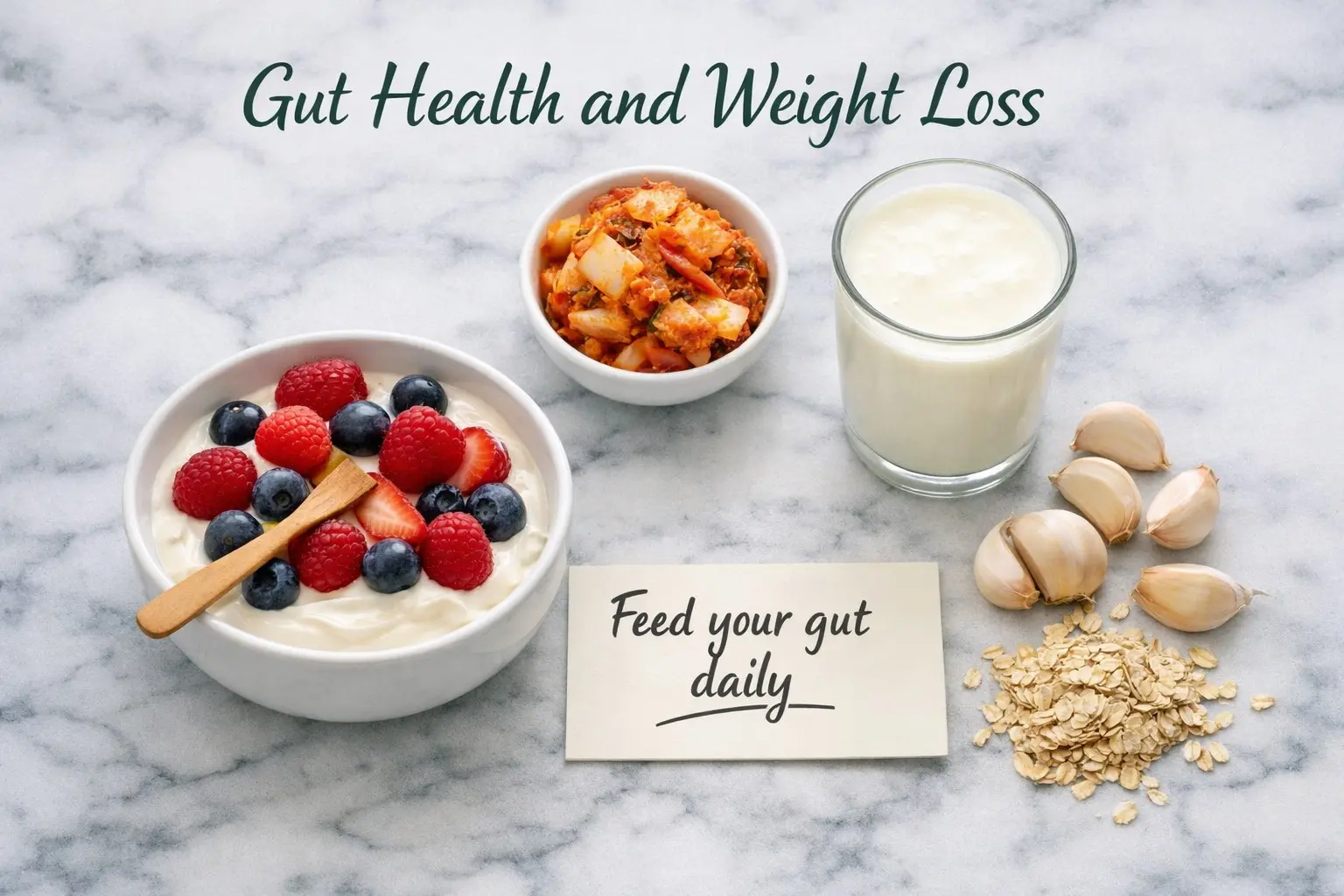
Gut health and weight loss are closely connected because the gut microbiome can influence hunger hormones, inflammation, blood sugar control, digestion, and how your body responds to food.
Your gut bacteria do not replace the basics of fat loss. A calorie deficit, enough protein, regular movement, sleep, and consistency still matter most. But your gut microbiome may help explain why two people can follow similar diets and experience different levels of hunger, cravings, bloating, inflammation, and weight-loss progress.
Who This Guide Is For
This guide is for adults who want to understand how digestion, gut bacteria, fibre, probiotics, and eating patterns may affect weight loss. It is especially useful if you struggle with belly fat, cravings, bloating, constipation, low energy, or weight-loss plateaus.
This article is part of the NextFitLife Foods & Nutrition Hub, the Gut Health & Digestion Foods Hub, and the Weight Loss & Metabolism Foods Hub.
For broader health guidance, see the Health Hub. For exercise support, see the Fitness Hub.
What You’ll Learn
- How gut bacteria may affect hunger, cravings, inflammation, and fat storage.
- Which foods best support gut health during weight loss?
- Whether probiotics actually help with weight loss.
- How fibre, fermented foods, sleep, stress, and ultra-processed foods affect the gut microbiome.
- A practical daily gut-health framework you can follow without extreme dieting.
What is the gut microbiome, and why does it affect weight loss?
What Lives in Your Gut?
Your gut is home to many species of bacteria and other microorganisms. Every person has a unique gut microbiome.
Some bacteria are helpful. They reduce inflammation, support insulin sensitivity, help digest fibre, and produce compounds that influence fullness hormones.
Other gut patterns may be less helpful. A disrupted gut environment can be linked to inflammation, cravings, poor digestion, and metabolic problems.
The balance of your gut microbiome does not determine your weight by itself, but it can influence how easy or difficult weight management feels.
How can the gut microbiome influence fat storage?
Gut bacteria produce substances called metabolites. These compounds can influence bile acid metabolism, inflammation, appetite, insulin sensitivity, and how the body handles energy.
Research has shown that gut bacteria are linked to obesity and metabolic health. In animal studies, transferring gut bacteria from an obese donor to germ-free mice increased body fat, suggesting the gut microbiome can play a causal role in weight regulation.
This does not mean gut bacteria are the only cause of weight gain. Calories, food quality, movement, sleep, medication, hormones, medical conditions, and lifestyle still matter. But gut health is one important part of the weight-loss picture.
Which Gut Bacteria Are Linked With Better Weight Control?
Are there specific bacteria linked to Lower Body Weight?
Some bacteria have been linked with healthier metabolic profiles.
Akkermansia muciniphila is one of the best-known examples. Higher levels have been associated with better metabolic health and healthier body weight patterns.
Christensenellaceae has also been associated with lower BMI and healthier inflammatory markers in some research.
Researchers continue to study other bacteria, including Turicibacter, that may play roles in metabolism and weight regulation.
The practical takeaway is simple: a diverse, balanced gut microbiome tends to support better metabolic health, while a disrupted gut environment may make weight management harder.
What Disrupts Your Gut Bacteria and May Promote Weight Gain?
Four common factors can harm gut microbiome balance:
- Ultra-processed foods: These are often low in fiber and high in refined starches, added sugars, unhealthy fats, and additives. They can reduce diet quality and microbial diversity.
- Antibiotics: Antibiotics can be necessary and lifesaving, but they may also disrupt beneficial bacteria. Always use them only as prescribed.
- Poor sleep: Sleep disruption can affect hunger hormones, stress hormones, food choices, and gut bacteria.
- Chronic stress: Stress can affect digestion, gut motility, cravings, and the gut-brain connection.
How Does Gut Health Affect Hunger and Appetite?
Do Gut Bacteria Control Hunger Hormones?
Gut bacteria can influence appetite signals through the compounds they produce when they ferment fibre.
Beneficial bacteria produce short-chain fatty acids. These compounds may help stimulate the release of fullness hormones such as GLP-1 and PYY.
GLP-1 is the same hormone pathway targeted by some modern weight-loss medications. Your gut can naturally support this pathway when you feed beneficial bacteria with fibre-rich foods.
This means better gut health may reduce hunger and cravings for some people. Not by willpower alone, but by improving the biological signals that help regulate appetite.
How to Improve Gut Health for Weight Loss
What Foods Best Support Gut Health and Weight Loss?
Two types of food matter most: fermented foods and prebiotic foods.
Fermented foods may add live beneficial bacteria or support a healthier gut environment.
| Food | How to Use? |
|---|---|
| Greek yogurt | 150 to 200g daily, if tolerated |
| Kefir | About 200ml daily, if tolerated |
| Kimchi | 1 to 2 tablespoons with meals |
| Sauerkraut | 1 to 2 tablespoons with meals |
| Tempeh | 100g several times per week |
Prebiotic foods nourish the beneficial microbes already living in your gut.
| Food | Why It Helps |
|---|---|
| Garlic and onions | Contain prebiotic fibers that feed beneficial bacteria |
| Oats | Provide beta-glucan fiber that supports gut and heart health |
| Slightly underripe bananas | Contains resistant starch that helps feed gut bacteria |
| Asparagus | Contains inulin, a prebiotic fiber |
| Jerusalem artichoke | One of the richest sources of inulin |
Does eating more fibre improve gut microbiome health?
Yes. Fiber is one of the most important dietary changes for gut health.
Beneficial gut bacteria ferment fibre and produce short-chain fatty acids. Without enough fibre, beneficial bacteria may decline, and gut diversity may suffer.
A practical target for many adults is around 25 to 40 grams of fiber per day, depending on tolerance and individual needs. Increase gradually to avoid bloating or discomfort.
For the full guide to the best fibre sources, see our high-fiber foods for weight loss guide.
Do Probiotics Help With Weight Loss?
What does the research say about probiotics for weight loss?
The evidence is promising, but modest.
Probiotics, prebiotics, and synbiotics may influence appetite hormones, inflammatory factors, and metabolic markers. Some studies show small weight-loss benefits, but probiotics are not a primary fat-loss treatment.
Some of the most studied strains for weight management include:
- Lactobacillus rhamnosus: studied for weight-management support, especially in some female populations.
- Lactobacillus gasseri: studied for possible abdominal fat reduction.
- Bifidobacterium lactis: studied for metabolic and digestive health markers.
The honest picture: probiotics may suppofor abdominalrt the gut environment, but they do not replace a calorie deficit, protein, fiber, exercise, sleep, and consistency.
Feeding your existing bacteria with fiber and prebiotic foods usually produces more sustainable results than relying on supplements alone.
What Is Leaky Gut, and Does It Cause Weight Gain?
Can Leaky Gut Really Make You Fat?
The connection between gut permeability, inflammation, and metabolic health is real, but it is still being studied.
“Leaky gut” refers to increased intestinal permeability. When the gut barrier is disrupted, bacterial fragments and other substances may trigger immune responses and inflammation.
Inflammation can worsen insulin resistance, increase fatigue, affect cravings, and make healthy habits harder to maintain.
However, leaky gut should not be used as a catch-all explanation for weight gain. If you have persistent digestive symptoms, unexplained weight changes, severe bloating, blood in stool, or chronic pain, speak with a qualified healthcare professional.
How to support your gut barrier naturally:
- Reduce ultra-processed foods and excess alcohol.
- Eat fibre-rich foods daily.
- Add fermented foods if tolerated.
- Manage stress with walking, breathing, or relaxation habits.
- Sleep 7 to 9 hours consistently when possible.
For the sleep guide that supports recovery and metabolism, see our sleep hygiene guide.
The Gut Health Diet for Weight Loss: What to Eat Every Day
What Should You Eat Daily to Support Gut Health and Weight Loss?
Use this simple daily framework.
- Eat a wide variety of plant foods each week. Gut bacterial diversity is linked with a varied intake of fruits, vegetables, legumes, whole grains, herbs, spices, nuts, and seeds.
- Eat one fermented food most days. Greek yogurt, kefir, kimchi, sauerkraut, or tempeh are good options if tolerated.
- Increase fiber gradually. Fiber feeds beneficial bacteria and supports fullness, digestion, and metabolic health.
- Eat polyphenol-rich foods. Berries, olive oil, dark chocolate, green tea, herbs, and colourful plants provide compounds that gut bacteria can transform into useful metabolites.
- Reduce ultra-processed foods. Replace more packaged snacks, sugary foods, and refined meals with whole-food meals built around protein, plants, and fiber.
Gut Health and Weight Loss Daily Action Plan
Use this practical plan for the next 14 days.
| Daily Habit | Simple Target | Why It Helps |
|---|---|---|
| Fiber | Add one high-fiber food to two meals | Feeds beneficial bacteria and improves fullness |
| Fermented foods | Add yogurt, kefir, kimchi, sauerkraut, or tempeh | Supports microbial diversity and digestion |
| Protein | Include protein at each main meal | Supports muscle fullness, and fat-loss consistency |
| Plant variety | Add one new fruit, vegetable, bean, herb, or seed | Improves nutrient and microbiome diversity |
| Sleep | Keep a consistent bedtime window | Supports hunger hormones and recovery |
| Movement | Walk 20 to 30 minutes most days | Supports digestion, blood sugar, and weight control |
Bottom Line on Gut Health and Weight Loss
Your gut microbiome is not separate from your weight-loss journey. It is part of it.
It can influence hunger hormones, inflammation, calorie extraction, blood sugar control, digestion, and how easy or difficult fat loss feels.
The good news is that diet and lifestyle can improve gut health. Eat more fibre-rich foods. Add fermented foods if tolerated. Eat a wider variety of plants. Reduce ultra-processed foods. Sleep well. Manage stress. Move daily.
Each change supports your gut. A healthier gut can make every other part of fat loss easier to maintain.
For more on the nutrition approach that supports both fat loss and gut health, read our high-fiber foods for weight loss guide, natural weight loss guide, and Weight Loss & Metabolism Foods Hub.
Related Guides on Gut Health, Weight Loss, and Nutrition
Gut health is only one part of sustainable fat loss. These related guides can help you build a more complete plan:
- High-Fiber Foods for Weight Loss
- Natural Weight Loss Guide
- Walking for Weight Loss
- Sleep Hygiene: Build Better Sleep Habits
- Gut Health & Digestion Foods Hub
- Foods & Nutrition Hub
FAQs About Gut Health and Weight Loss
How does gut health affect weight loss?
Your gut microbiome may affect weight loss through hunger hormones, inflammation, blood sugar control, digestion, and calorie extraction from food. Beneficial bacteria produce short-chain fatty acids that may support fullness hormones such as GLP-1 and PYY. A disrupted gut may increase inflammation and insulin resistance, which can make fat loss harder.
Do probiotics help with weight loss?
Yes, but modestly. Some research suggests probiotics may support small reductions in body weight or metabolic markers. However, probiotics are not a primary fat-loss too. Fibre-rich foods, prebiotic foods, fermented foods, protein, movement, and sleep are usually more important.
What foods improve gut health for weight loss?
Fermented foods such as Greek yogurt, kefir, kimchi, and sauerkraut may support gut health. Prebiotic foods such as oats, garlic, onions, asparagus, beans, lentils, and slightly underripe bananas feed beneficial bacteria. High-fibre foods help support fullness, digestion, and gut microbiome diversity.
What is Akkermansia, and does it help with weight loss?
Akkermansia muciniphila is a gut bacterium associated with better metabolic health in some research. People with obesity may have lower levels of Akkermansia. Fiber-rich foods, polyphenol-rich foods, regular exercise, and overall diet quality may help support a healthier gut environment.
How long does it take to improve gut health?
Some gut changes may begin within days or weeks of improving diet quality, fiber intake, sleep, and activity. However, lasting gut health depends on consistent habits over time, not a short detox or temporary supplement routine.
Sources and References
- PMC — The role of the gut non-bacterial microbiome and its impact on obesity, January 2026 https://pmc.ncbi.nlm.nih.gov/articles/PMC12723124/
- PMC — Effects of Lifestyle and Microbiota-Targeted Interventions on the Human Gut Microbiome, March 2026 https://pmc.ncbi.nlm.nih.gov/articles/PMC12926627/
- Gut Microbiota for Health — Key advances in gut microbiome research during 2025 https://www.gutmicrobiotaforhealth.com/key-advances-in-gut-microbiome-research-during-2025/
- PMC — Exploring the Impact of the Gut Microbiome on Obesity and Weight Loss https://pmc.ncbi.nlm.nih.gov/articles/PMC10368799/
- CDC — Healthy Weight, Nutrition, and Physical Activity https://www.cdc.gov/healthy-weight-growth/
- NHS — Probiotics https://www.nhs.uk/conditions/probiotics/
Last Updated: May 29, 2026 |
Reviewed by: Adel Galal, Health & Wellness Writer

Health & wellness writer with 30+ years of experience in nutrition, fitness, and healthy aging. Founder of NextFitLife.com — evidence-based health guidance.