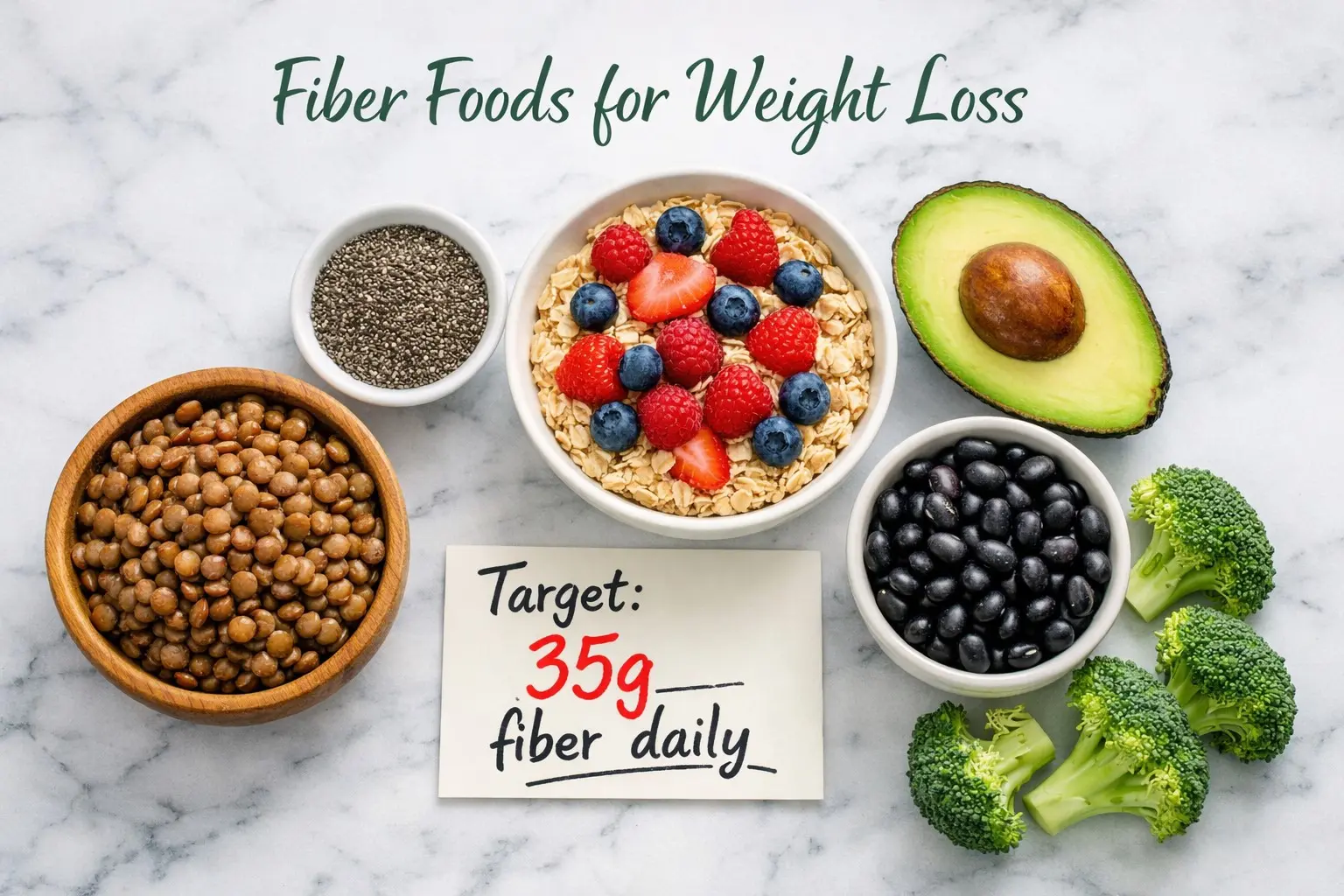
High-fiber foods for weight loss are one of the simplest ways to feel fuller, improve digestion, support gut health, and reduce overeating without following an extreme diet.
Fiber is not magic, and it does not replace a calorie deficit, protein, exercise, sleep, or consistency. But it can make weight loss easier by slowing digestion, improving fullness, supporting blood sugar control, feeding beneficial gut bacteria, and helping you eat more nutrient-dense foods.
Who This Guide Is For
This guide is for adults who want to lose weight in a realistic, food-first way by eating more filling meals. It is especially useful if you struggle with hunger, cravings, belly fat, constipation, blood sugar swings, or snacking between meals.
This article is part of the NextFitLife Foods & Nutrition Hub, the Weight Loss & Metabolism Foods Hub, and the Gut Health & Digestion Foods Hub.
For broader fat-loss support, see our complete weight loss guide and our gut health and weight loss guide.
What You’ll Learn
- Why fiber helps with fullness, cravings, gut health, and weight control.
- The difference between soluble and insoluble fiber.
- The best high-fiber foods for weight loss.
- How much fiber to eat per day.
- How to increase fiber without bloating or digestive discomfort.
- Whether fiber supplements are useful or not.
Why Do Fiber Foods Help With Weight Loss?
How Does Fiber Help You Feel Full?
Fiber helps with weight loss mainly because it increases fullness. High-fiber foods usually take longer to chew, fill more space in the stomach, and slow digestion.
This means you may feel satisfied with fewer calories. For example, a bowl with lentils, vegetables, and avocado usually keeps you fuller than a low-fiber refined snack with the same number of calories.
Fiber also helps reduce rapid blood sugar spikes and crashes. When blood sugar rises and falls quickly, cravings and hunger often increase. Meals with fiber, protein, and healthy fats tend to create steadier energy.
How Does Fiber Support Gut Health and Appetite Hormones?
Some types of fiber are fermented by beneficial gut bacteria. This process produces short-chain fatty acids, which may support gut health, inflammation control, insulin sensitivity, and appetite-regulating hormones such as GLP-1 and PYY.
This is one reason fiber connects weight loss with gut health. You are not just filling your stomach. You are also feeding the gut bacteria that help regulate digestion, metabolism, and fullness signals.
For a deeper explanation, read our gut health and weight loss guide.
Does a High-Fiber Diet Actually Help With Weight Loss?
Research has consistently linked higher fiber intake with healthier body weight, better blood sugar control, and lower risk of weight gain over time.
One important study found that each 10-gram increase in daily soluble fiber intake was associated with a reduction in visceral fat over several years. Visceral fat is the deep abdominal fat around the organs, which is more closely linked with metabolic health risks.
That does not mean fiber alone causes dramatic fat loss. But it does mean fiber is one of the most practical dietary changes you can make if you want to reduce hunger, improve diet quality, and support long-term weight control.
Soluble vs. Insoluble Fiber: Which Is Better for Weight Loss?
What Is Soluble Fiber?
Soluble fiber dissolves in water and forms a gel-like substance in the gut. This slows digestion, helps stabilize blood sugar, and supports fullness after meals.
Good sources of soluble fiber include:
- Oats
- Beans
- Lentils
- Apples with skin
- Pears
- Chia seeds
- Flaxseeds
- Avocado
- Psyllium husk
Soluble fiber is especially useful for appetite control, blood sugar stability, cholesterol support, and gut health.
What Is Insoluble Fiber?
Insoluble fiber does not dissolve in water. It adds bulk to stool, supports regular bowel movements, and helps food move through the digestive system.
Good sources of insoluble fiber include:
- Whole grains
- Brown rice
- Whole wheat foods
- Broccoli
- Cauliflower
- Kale
- Carrots
- Green beans
- Nuts and seeds
For weight loss, insoluble fiber helps because many high-fiber vegetables are high-volume and low-calorie. They fill the plate and stomach without adding many calories.
The Best High-Fiber Foods for Weight Loss
The best fiber foods for weight loss are not just high in fiber. They are also filling, nutrient-dense, easy to add to meals, and useful for gut health.
| Food | Fiber per Serving | Serving Size | Why It Helps Weight Loss |
|---|---|---|---|
| Lentils | About 15.6g | 1 cup cooked | High fiber and protein; very filling |
| Black beans | About 15g | 1 cup cooked | Supports fullness and blood sugar control |
| Chickpeas | About 12.5g | 1 cup cooked | Good for salads, bowls, and snacks |
| Chia seeds | About 10g | 2 tablespoons | Absorb liquid and expand in the stomach |
| Avocado | About 10g | 1 whole avocado | Fiber plus healthy fats for fullness |
| Kidney beans | About 11g | 1 cup cooked | Filling source of fiber, protein, and minerals |
| Artichoke | About 9g | 1 medium | Rich in prebiotic fiber |
| Oats | About 8g | 1 cup cooked | Contains beta-glucan soluble fiber |
| Raspberries | About 8g | 1 cup | Low-calorie fruit with high fiber |
| Flaxseeds | About 7g | 3 tablespoons ground | Fiber plus omega-3 fats |
| Pear with skin | About 5.5g | 1 medium | Easy high-fiber snack |
| Broccoli | About 5g | 1 cup cooked | High volume, low calorie, nutrient-dense |
| Quinoa | About 5g | 1 cup cooked | Fiber plus plant protein |
| Apple with skin | About 4g | 1 medium | Contains pectin, a soluble fiber |
| Sweet potato | About 4g | 1 medium | Filling carbohydrate with fiber |
| Almonds | About 3.5g | 1 oz / 28g | Fiber, protein, and healthy fats |
Best High-Fiber Foods by Meal
High-Fiber Breakfast Foods
- Oats with chia seeds and berries
- Greek yogurt with ground flaxseed and raspberries
- Whole-grain toast with avocado
- Smoothie with berries, spinach, chia seeds, and protein
- Beans with eggs and vegetables
For more breakfast ideas, read our healthy breakfast foods for weight loss guide.
High-Fiber Lunch Foods
- Lentil soup with vegetables
- Chickpea salad bowl
- Black bean and quinoa bowl
- Whole-grain wrap with vegetables and protein
- Vegetable chili with beans
For more meal ideas, see our healthy lunch ideas for weight loss guide.
High-Fiber Dinner Foods
- Salmon or chicken with broccoli and sweet potato
- Turkey or bean chili
- Lentil curry with vegetables
- Stir-fry with tofu, vegetables, and brown rice
- Big salad with beans, avocado, seeds, and lean protein
High-Fiber Snacks for Weight Loss
- Apple with almond butter
- Greek yogurt with chia seeds
- Roasted chickpeas
- Carrots with hummus
- Pear with a small handful of nuts
- Raspberries with cottage cheese or yogurt
How Much Fiber Do You Need Daily for Weight Loss?
What Is the Right Daily Fiber Target?
Many adults do not eat enough fibre. General recommendations are often around 25 grams per day for women and around 38 grams per day for men, depending on age and calorie needs.
For weight loss, a useful practical target is often:
| Goal | Daily Fiber Target | Best Approach |
|---|---|---|
| General health | 25 to 30g | Add fruits, vegetables, oats, and beans |
| Active weight loss | 30 to 35g | Include high-fiber foods at each meal |
| Higher-fiber gut-health plan | 35 to 40g if tolerated | Increase slowly and drink enough water |
Do not jump from 15 grams to 40 grams overnight. Your gut needs time to adapt.
How to Increase Fiber Without Bloating
What Happens If You Increase Fiber Too Fast?
If you increase fiber too quickly, you may experience gas, bloating, cramps, or constipation. This does not mean fiber is bad. It usually means your gut bacteria and digestive system need time to adjust.
The best approach is to increase fiber gradually.
| Week | Fiber Goal | Simple Change |
|---|---|---|
| Week 1 | Add 5g per day | Add berries, oats, or one extra vegetable serving |
| Week 2 | Add another 5g | Add beans, lentils, or chia seeds |
| Week 3 | Add another 5g if tolerated | Use whole grains or more legumes |
| Week 4 | Adjust based on comfort | Keep what works and reduce foods that trigger symptoms |
Drink enough water as fiber intake increases. Fiber absorbs water, so low fluid intake can make constipation worse.
For more on hydration during weight loss, see our water and weight loss guide.
Fiber and Gut Health: Why It Matters for Weight Loss
How Does Fiber Feed the Gut Microbiome?
Your gut bacteria use certain fibers as food. When beneficial bacteria ferment fiber, they produce short-chain fatty acids that may support gut barrier health, inflammation control, blood sugar regulation, and appetite signals.
This is why high-fiber eating supports more than bowel regularity. It can help build a healthier gut environment, which may make weight loss easier to maintain.
Fiber is especially useful when it comes from a variety of plant foods. Beans, lentils, oats, berries, vegetables, seeds, nuts, and whole grains all feed the gut in slightly different ways.
For more detail, read our gut health and weight loss guide.
Fiber Supplements vs. High-Fiber Foods
Should You Use a Fiber Supplement or Eat Whole Foods?
Whole foods should come first.
Fiber from whole foods comes with vitamins, minerals, antioxidants, water, protein, healthy fats, and other compounds that fiber supplements do not provide. A cup of lentils gives fiber, protein, iron, folate, and prebiotic compounds. A supplement gives mostly fiber.
That said, fiber supplements may help some people who cannot reach their target through food alone. Psyllium husk is one of the most studied options. It may support fullness, cholesterol, bowel regularity, and blood sugar control.
Use supplements carefully if you have digestive conditions, swallowing problems, medication timing concerns, or a history of bowel obstruction. Ask a healthcare professional if you are unsure.
7-Day High-Fiber Weight Loss Meal Framework
This is not a strict meal plan. Use it as a simple framework to build higher-fiber meals.
| Meal | Simple High-Fiber Option | Fiber Focus |
|---|---|---|
| Breakfast | Oats with chia seeds and berries | Oats, chia, raspberries |
| Lunch | Lentil soup with vegetables | Lentils, carrots, greens |
| Snack | Apple with almond butter | Apple skin, almonds |
| Dinner | Protein with broccoli and sweet potato | Broccoli, sweet potato |
| Gut-health add-on | Greek yogurt, kefir, or fermented vegetables | Fermented foods |
For a complete weight-loss approach, combine high-fiber foods with enough protein, daily movement, and better sleep. See our guide to losing weight without heavy exercise.
Common Mistakes When Adding More Fiber
- Increasing too fast: This can cause bloating, gas, and discomfort.
- Not drinking enough water: Fiber needs fluid to work well.
- Relying only on fiber bars: Whole foods are usually better than ultra-processed “fiber-added” products.
- Forgetting protein: Fiber helps fullness, but protein is still important for muscle and appetite control.
- Eating the same fiber foods every day: Variety supports a healthier gut microbiome.
Bottom Line on High-Fiber Foods for Weight Loss
High-fiber foods help weight loss by improving fullness, slowing digestion, supporting blood sugar control, feeding beneficial gut bacteria, and making meals more satisfying.
The best choices are simple whole foods: lentils, beans, chickpeas, oats, chia seeds, flaxseeds, raspberries, pears, apples with skin, broccoli, avocado, and sweet potatoes.
Start slowly. Add about 5 grams of fiber per day each week. Drink enough water. Combine fiber with protein and movement. Over time, this can make fat loss feel easier and more sustainable.
For more support, read our natural weight loss guide, walking for weight loss guide, and sleep hygiene guide.
Related Guides on Fiber, Gut Health, and Weight Loss
These guides can help you build a stronger nutrition plan around fiber, gut health, and sustainable fat loss:
- Gut Health and Weight Loss
- Natural Weight Loss Guide
- Water and Weight Loss
- Walking for Weight Loss
- Healthy Breakfast Foods for Weight Loss
- Healthy Lunch Ideas for Weight Loss
- Weight Loss & Metabolism Foods Hub
- Foods & Nutrition Hub
FAQs About High-Fiber Foods for Weight Loss
How does fiber help with weight loss?
Fiber helps with weight loss by increasing fullness, slowing digestion, supporting steadier blood sugar, feeding beneficial gut bacteria, and reducing the urge to overeat. High-fiber foods also tend to be more filling and nutrient-dense than refined low-fiber foods.
How much fiber should I eat per day for weight loss?
Many adults benefit from about 25 to 38 grams of fiber per day, depending on age, sex, calorie intake, and tolerance. For active weight loss, 30 to 35 grams per day may be a useful target for many people. Increase gradually to avoid bloating.
What are the best high-fiber foods for weight loss?
The best high-fiber foods for weight loss include lentils, black beans, chickpeas, chia seeds, oats, raspberries, pears, apples with skin, avocado, broccoli, flaxseeds, and sweet potatoes. These foods support fullness, gut health, and better diet quality.
Can too much fiber cause digestive problems?
Yes. Increasing fiber too quickly can cause gas, bloating, cramps, or constipation. Add fiber gradually, drink enough water, and adjust based on your tolerance. People with digestive conditions should ask a healthcare professional before making major fiber changes.
Are fiber supplements good for weight loss?
Fiber supplements such as psyllium husk may help some people feel fuller and improve bowel regularity, but whole foods should come first. Whole foods provide fiber plus vitamins, minerals, antioxidants, water, and other nutrients that supplements do not provide.
Sources and References
- Hairston KG et al. — Lifestyle factors and 5-year abdominal fat accumulation — Obesity, 2012 https://pubmed.ncbi.nlm.nih.gov/22058989/
- PMC — Longitudinal gut microbial signals associated with weight loss, July 2024 https://pmc.ncbi.nlm.nih.gov/articles/PMC11262244/
- PMC — Fiber, satiety, and weight management evidence review https://pmc.ncbi.nlm.nih.gov/articles/PMC12851882/
- CDC — Healthy Weight, Nutrition, and Physical Activity https://www.cdc.gov/healthy-weight-growth/
- NHS — How to get more fiber into your diet https://www.nhs.uk/live-well/eat-well/digestive-health/how-to-get-more-fibre-into-your-diet/
- Gut Microbiota for Health — Key advances in gut microbiome research during 2025 https://www.gutmicrobiotaforhealth.com/key-advances-in-gut-microbiome-research-during-2025/
Last Updated: June 10, 2026 |
Reviewed by: Adel Galal, Health & Wellness Writer


Health & wellness writer with 30+ years of experience in nutrition, fitness, and healthy aging. Founder of NextFitLife.com — evidence-based health guidance.