
Published on: March 2, 2025
Updated on: November 4, 2026
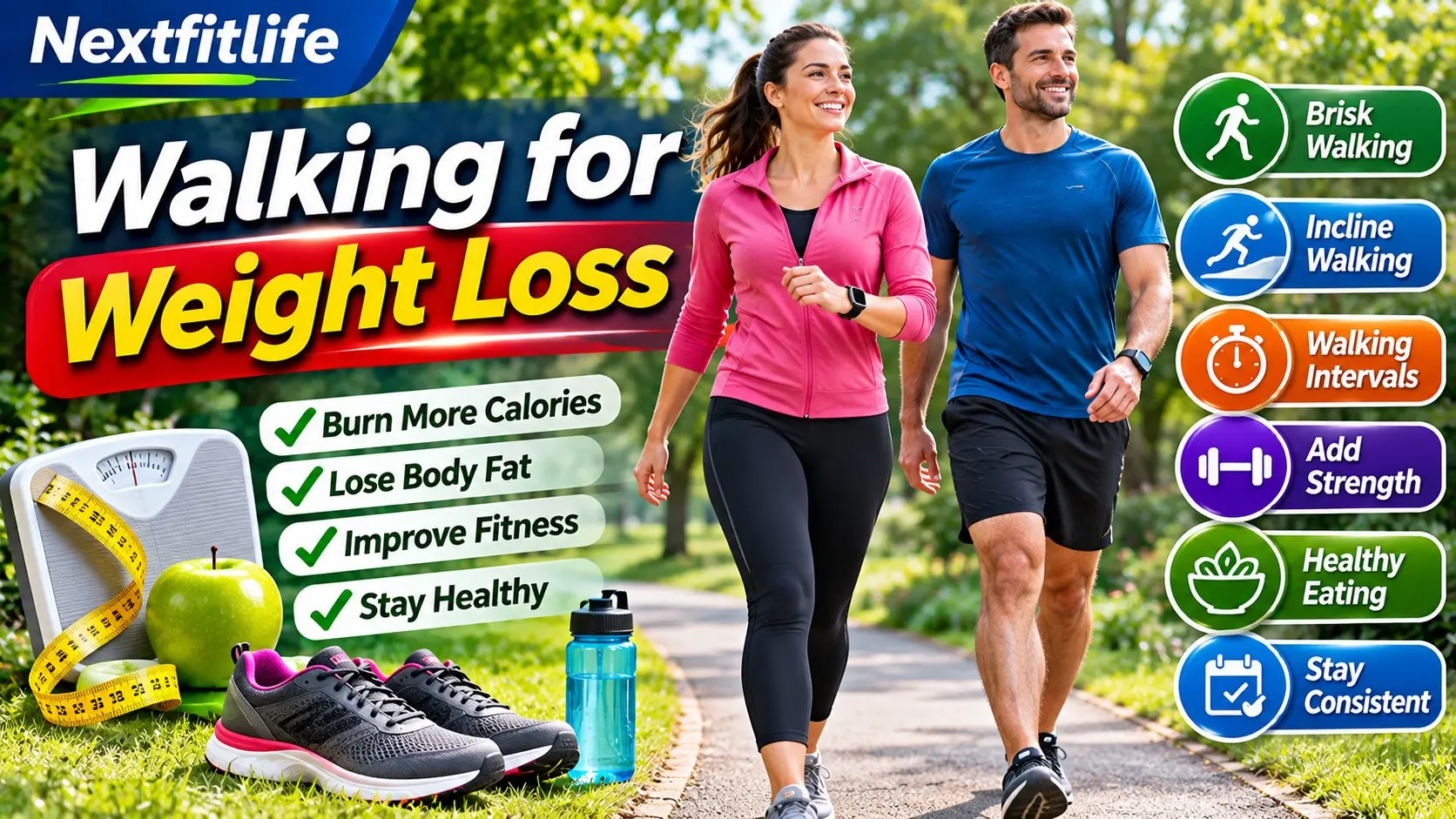
Walking for weight loss can work because walking increases daily activity and energy use without requiring expensive equipment or advanced fitness skills.
However, walking does not automatically guarantee fat loss. Body fat decreases when your overall routine creates a calorie deficit over time. Walking can help create that deficit, while food choices often have an even larger effect on total calorie intake.
The good news is that you do not need to run, walk 10,000 steps on your first day, or spend hours on a treadmill. A brisk 20 minute walk is a useful starting point, and you can increase time, pace, distance, hills, or frequency as your fitness improves.
This guide shows you exactly how to use walking for weight loss without turning it into an extreme challenge.
Important: This article is for general information and education. It does not replace medical advice, diagnosis, or treatment.
Table of Contents
- Quick Answer
- How Walking Supports Weight Loss
- How Much Walking You Need
- Do You Need 10,000 Steps?
- 11 Walking Strategies
- Best Walking Pace
- Walking Intervals
- Incline Walking
- Walking After Meals
- Beginner Walking Plan
- Four Week Progression
- Walking and Strength Training
- Calories Burned
- Walking for Adults Over 50
- Knee and Back Friendly Tips
- Weight Loss Plateaus
- Common Mistakes
- Conclusion
- References and Sources
- Explore More Fitness Guides
- About the Author
- Frequently Asked Questions
Quick Answer: Does Walking for Weight Loss Work?
Yes. Walking for weight loss can help when it increases your total activity enough to support an overall calorie deficit.
Walking works especially well because it is simple, low cost, easy to repeat, and easier to recover from than many hard workouts.
For many adults, the best approach is to:
- Walk regularly.
- Build toward a brisk pace.
- Increase total weekly walking gradually.
- Add hills or intervals when ready.
- Strength train twice each week.
- Eat in a way that supports a moderate calorie deficit.
- Track progress over several weeks.
For a broader weight management plan, see our Basic Weight Loss Tips and Weight Loss Strategies.
How Does Walking Help With Weight Loss?
Walking increases energy expenditure. In simple terms, your body uses energy while you walk.
CDC explains that increasing physical activity while reducing calorie intake can create the energy deficit needed for weight loss.
However, CDC also notes that most weight loss tends to come from reducing calorie intake. Regular activity becomes especially important when trying to maintain the weight you lose.
Walking can also help because it is easy to repeat often. A workout that you can do four or five times each week may be more useful than a very hard workout you avoid.
How Much Walking Do You Need for Weight Loss?
There is no exact walking time that guarantees weight loss.
Current adult activity guidance recommends at least 150 minutes of moderate intensity exercise each week for general health.
That could look like:
- 30 minutes on five days
- 25 minutes on six days
- Several shorter walks spread through the week
If weight loss or weight maintenance is the goal, some people may need more activity.
NIDDK notes that around 300 minutes of aerobic activity per week may be useful for people trying to lose weight or keep it off.
You do not need to start at 300 minutes. Build toward it gradually.
Do You Need 10,000 Steps a Day?
No.
The idea that every person must walk exactly 10,000 steps each day is too simple.
A large 2025 systematic review found that around 7,000 daily steps was linked with meaningful improvements across several health outcomes compared with very low step counts.
That does not mean 7,000 is a magic number either.
If you currently average 3,000 steps, moving toward 4,000 or 5,000 is progress.
If you already walk 8,000 steps comfortably, 10,000 may be a useful personal target.
Better goal: increase your activity from your current level instead of treating 10,000 steps as a pass or fail number.
11 Proven Walking for Weight Loss Strategies
1. Start From Your Current Step Count
Do not choose a random target before you know your normal activity.
Track your daily steps for several normal days.
If you average 4,000 steps, try adding about 500 to 1,000 steps rather than immediately forcing yourself to hit 12,000.
A gradual increase is easier to maintain and less likely to leave you sore.
2. Build Toward Brisk Walking
A casual stroll is still movement, but brisk walking can provide a stronger aerobic training effect.
Use the talk test.
At a moderate pace, you should be able to talk, but singing should feel difficult.
Your exact speed does not matter because one person's brisk pace may be another person's easy pace.
3. Walk Longer Before You Walk Much Harder
Beginners often benefit from increasing time before adding hills, speed, or weighted equipment.
For example:
- Week 1: 15 minutes
- Week 2: 20 minutes
- Week 3: 25 minutes
- Week 4: 30 minutes
This builds a base without making the plan too difficult too soon.
4. Add Walking Intervals
Walking intervals can increase intensity without requiring a full running workout.
Try:
- 2 minutes at a comfortable pace
- 1 minute at a faster pace
- Repeat for 20 to 30 minutes
Another option is to use landmarks. Walk faster from one streetlight to the next, then return to your normal pace.
5. Use Hills or Incline Walking
Incline walking can increase effort without forcing you to run.
Outdoor hills work well, or you can use a treadmill incline.
Start with a small incline and build gradually.
You do not need to hold the treadmill rails while using a very steep slope. If you need the rails to keep up, lower the incline or speed.
6. Walk After Meals
Walking after meals is an easy way to add movement without creating a separate long workout.
Try a 10 to 15 minute walk after lunch or dinner.
Two short walks during the day can sometimes fit a busy schedule better than one long session.
7. Add Steps to Normal Life
Not every step has to come from a formal workout.
You can:
- Walk during phone calls.
- Use stairs when practical.
- Park farther away.
- Take a short lunch walk.
- Walk while waiting for appointments.
- Take an evening walk with family.
These small changes increase physical activity across the whole day.
8. Combine Walking With Strength Training
Walking is excellent aerobic exercise, but it should not replace all resistance work.
Adults should also perform strength training on at least two days each week.
Strength training can support muscle and physical function while you lose weight.
Use our Strength Training and Muscle Building Guide if you need a starting plan.
9. Keep Food Intake in the Plan
A long walk does not cancel every high calorie meal.
Walking supports weight loss best when paired with healthy eating.
Build meals around:
- Vegetables
- Whole fruit
- Protein rich foods
- Beans and lentils
- Whole grains
- Sensible portions of healthy fats
Our Best Vegetables for Weight Loss guide gives simple meal ideas.
10. Track Weekly Trends
Your body weight changes from day to day because of water, food, sodium, hormones, and digestion.
Do not judge your walking plan from one weigh in.
Track:
- Weekly weight trends
- Waist measurement
- Average daily steps
- Walking time
- Walking pace
- How difficult the walk feels
You may become fitter before the scale changes much.
11. Make Walking Easy to Repeat
The best walking plan is the one that fits your life.
Choose a route you enjoy. Keep comfortable shoes ready. Walk at a time that usually works.
Consistency matters more than creating the most impressive walking workout on day one.
What Is the Best Walking Pace for Weight Loss?
There is no single speed that everyone should use.
Your walking pace depends on fitness, age, terrain, health, and walking experience.
The talk test is more useful than chasing a fixed treadmill number.
| Intensity | Talk Test | Use |
|---|---|---|
| Easy | You can talk and sing easily | Warm up, recovery, beginner walks |
| Moderate | You can talk but singing is difficult | Most brisk walking |
| Hard | Only short phrases feel comfortable | Short intervals for experienced walkers |
Walking Intervals for Weight Loss
Intervals make the same walk more challenging without requiring you to jog.
Try this simple 25 minute session:
- Walk easily for 5 minutes.
- Walk briskly for 2 minutes.
- Walk faster for 1 minute.
- Repeat the 2 minute plus 1 minute pattern five times.
- Walk easily for 5 minutes.
If the faster intervals feel too hard, make them shorter.
The goal is controlled effort, not exhaustion.
Is Incline Walking Better Than Flat Walking?
Incline walking is not automatically better, but it can increase effort at a slower speed.
That can be useful if you enjoy hills or want a stronger cardio challenge without running.
Start with:
- A gentle outdoor hill
- A low treadmill incline
- Short uphill intervals
Increase one thing at a time: duration, speed, or incline.
Is Treadmill Walking as Good as Outdoor Walking?
Both can work.
A treadmill gives you easy control over speed and incline.
Outdoor walking gives you changing terrain, fresh air, and a natural route.
The better option is the one you can do consistently.
Beginner Walking for Weight Loss Plan
| Day | Walking Plan | Goal |
|---|---|---|
| Monday | 20 minute brisk walk | Moderate activity |
| Tuesday | 10 minute easy walk after dinner | Daily movement |
| Wednesday | 25 minute brisk walk | Build endurance |
| Thursday | Easy walking or rest | Recovery |
| Friday | 20 minute brisk walk | Moderate activity |
| Saturday | 30 minute comfortable walk | Longer easy session |
| Sunday | Rest or gentle walk | Recovery |
Add two short strength sessions during the week when appropriate.
Four Week Walking Progression
| Week | Main Goal | Progression |
|---|---|---|
| Week 1 | Build the habit | 15 to 20 minute walks |
| Week 2 | Add time | 20 to 25 minute walks |
| Week 3 | Add brisk sections | Short faster intervals |
| Week 4 | Add volume | 30 minute walks or extra daily steps |
After four weeks, increase one variable at a time.
Can Walking Alone Build Muscle?
Walking trains your legs and helps physical function, especially if you are starting from a low activity level.
However, walking is not a complete replacement for progressive resistance training.
Adults should generally perform muscle strengthening activity on at least two days each week.
Simple options include:
- Chair squats
- Wall push ups
- Resistance band rows
- Step ups
- Dumbbell exercises
Our Low Impact Exercises to Burn Fat at Home guide combines low impact cardio and strength ideas.
How Many Calories Does Walking Burn?
There is no single accurate number.
Calories used during a walk depend on:
- Your body size
- Your speed
- Walking time
- Terrain
- Incline
- Fitness level
A heavier person walking uphill may use more energy than a lighter person walking slowly on flat ground.
Smartwatches and treadmills provide estimates, not exact measurements.
A better long term strategy is to track your walking time and progress rather than trying to “earn” food with calorie estimates.
Does Faster Walking Burn More Calories?
A faster pace usually increases energy use per minute, but that does not mean every walk should be as fast as possible.
Longer moderate walks may be easier to repeat.
A useful routine can mix:
- Easy walks
- Brisk walks
- Short faster intervals
- Hill walks
This gives you variety without making every day exhausting.
Can Walking Reduce Belly Fat?
Walking can support overall fat loss, and overall weight loss may reduce abdominal fat.
However, walking cannot choose where your body removes fat first.
No walking technique selectively burns stomach fat.
For nutrition guidance, read our Best Foods to Burn Belly Fat guide.
Is Walking Good for Adults Over 50?
Walking is a practical activity for many adults over 50 because it is easy to adjust.
You can change:
- Speed
- Distance
- Terrain
- Walking time
- Frequency
Research in older adults continues to associate habitual walking with better health outcomes.
Strength and balance training should also remain part of the weekly plan.
How to Make Walking Easier on Your Knees
If your knees are sensitive, begin with shorter walks on flatter ground.
You can also:
- Wear comfortable shoes.
- Increase distance slowly.
- Avoid suddenly adding steep hills.
- Use softer or even surfaces when available.
- Break a long walk into shorter sessions.
Persistent swelling, locking, instability, or sharp knee pain needs more attention than simple muscle soreness.
How to Walk With Lower Back Sensitivity
Use a pace and stride that feel natural.
Do not force a long stride because you think longer steps burn more calories.
If a long walk increases discomfort, try several shorter walks.
Stop and get medical advice if back pain comes with new weakness, severe numbness, loss of bladder or bowel control, or numbness around the groin.
What if Walking Stops Helping You Lose Weight?
A weight loss plateau does not mean walking has stopped being healthy.
Your body weight may change more slowly as your weight decreases.
Review:
- Food portions
- Liquid calories
- Snacks
- Average daily steps
- Walking intensity
- Walking duration
- Strength training
- Sleep
Then change one thing.
You might add another 10 minute walk, include short intervals, or reduce one regular high calorie extra.
Avoid reacting to a plateau with a crash diet.
Common Walking for Weight Loss Mistakes
Thinking 10,000 Steps Is Mandatory
It is not. Increasing from your own starting point matters.
Walking but Ignoring Food Intake
A calorie dense diet can outweigh the energy used during walking.
Starting With Too Much Too Soon
Build time and distance gradually.
Walking the Same Easy Route Forever
If your walk no longer challenges you, add time, speed, hills, or intervals.
Skipping Strength Training
Walking is valuable, but resistance exercise supports muscle and strength.
Trusting Calorie Trackers Too Much
Wearable calorie numbers are estimates.
Trying to Earn Food With Exercise
Walking should support your health, not become punishment for eating.
Ignoring Pain
Normal effort is different from sharp, worsening joint or chest pain.
When Should You Stop Walking?
Stop exercising and seek appropriate medical attention if you develop:
- Chest pain or pressure
- Fainting
- Severe unusual shortness of breath
- Sudden severe weakness
- New significant numbness
- Severe joint pain
- A major injury or fall
If you have a major medical condition or are returning to activity after illness or surgery, ask your healthcare professional what level of walking is suitable.
Conclusion
Walking for weight loss works best when walking becomes a regular part of a larger healthy routine. Start from your current activity level, build toward brisk walking, add time or intervals gradually, and combine walking with healthy eating and strength training.
You do not need a perfect 10,000 step day. You need a plan you can repeat.
Your next step: take a 20 minute walk today, record your steps, and use that number as your starting point. Over the next four weeks, increase your walking gradually instead of chasing an extreme target.
References and Sources
- Centers for Disease Control and Prevention. Physical Activity and Your Weight and Health. CDC explains how physical activity and calorie intake work together for weight loss and maintenance.
https://www.cdc.gov/healthy-weight-growth/physical-activity/index.html - Centers for Disease Control and Prevention. Adult Activity: An Overview. Current guidance recommends at least 150 minutes of moderate aerobic activity plus muscle strengthening work on two days per week.
https://www.cdc.gov/physical-activity-basics/guidelines/adults.html - National Institute of Diabetes and Digestive and Kidney Diseases. Tips for Starting Physical Activity. NIDDK explains the talk test, brisk walking, and higher activity targets for weight loss and maintenance.
https://www.niddk.nih.gov/health-information/weight-management/tips-get-active/tips-starting-physical-activity - Daily Steps and Health Outcomes in Adults. 2025 systematic review and dose response meta analysis. Around 7,000 daily steps was associated with meaningful health benefits compared with very low step counts.
https://pubmed.ncbi.nlm.nih.gov/40713949/ - Walking and Health Outcomes in Older Adults. 2026 systematic review and meta analysis of longitudinal research. Habitual walking was linked with better outcomes across mortality, function, disease, and psychological health.
https://pubmed.ncbi.nlm.nih.gov/42117327/
Explore More Weight Management Guides
- Basic Weight Loss Tips
- Weight Loss Strategies
- How to Shed Pounds Quickly
- Best Vegetables for Weight Loss
- Best Foods to Burn Belly Fat
- Low Impact Exercises to Burn Fat at Home
- How to Get Rid of Stress Belly
- NextFitLife Fitness Hub
- Fitness Program Guide
- Strength Training and Muscle Building Guide
- How to Increase Stamina for Running
- Injury Prevention Exercises
Frequently Asked Questions
Does walking for weight loss really work?
Yes. Walking increases physical activity and energy expenditure, which can help create the calorie deficit needed for weight loss. It works best when combined with a healthy eating pattern.
How long should I walk each day to lose weight?
There is no single perfect duration. Beginners may start with 15 to 30 minutes and build gradually. Adults should aim for at least 150 minutes of moderate activity each week, while some people may need more activity for weight loss or maintenance.
Do I need to walk 10,000 steps a day?
No. Ten thousand steps is not a universal requirement. Research shows meaningful health benefits at lower step counts, and increasing activity from your personal starting point is more important than chasing one fixed number.
Is 7,000 steps a day enough?
A large 2025 review found that around 7,000 steps per day was associated with meaningful health benefits compared with very low step counts. Your ideal step target depends on your goals, fitness, health, and starting activity level.
What walking pace is best for weight loss?
A brisk moderate pace is useful for many people. At moderate intensity, you should be able to talk but usually not sing comfortably. Your exact walking speed will depend on your fitness and terrain.
Is incline walking good for weight loss?
Incline walking can increase effort and energy use without requiring you to run. Start with a gentle incline and increase it gradually as your fitness improves.
Can walking reduce belly fat?
Walking can support overall fat loss, which may reduce abdominal fat over time. However, walking cannot selectively remove fat from the stomach.
Should I strength train if I walk every day?
Yes. Walking provides aerobic activity, while resistance training supports muscle and strength. Adults should generally include muscle strengthening activity on at least two days per week.
Why am I walking every day but not losing weight?
Your calorie intake may still match or exceed the energy you use. Review portions, drinks, snacks, walking intensity, total activity, sleep, and consistency before making a drastic change.
Is walking good for weight maintenance?
Yes. Regular physical activity is especially important for maintaining lost weight. The amount needed varies, and some people may benefit from higher weekly activity levels.

