Home
Published:
March 23, 2022
Last Updated:
August 16, 2026
Next Review:
August 2027, or sooner if major public health guidance changes
Written and source checked by:
Adel Galal,
Founder and Lead Writer of NextFitLife
Medical Review Status:
This article has not been formally reviewed by a physician, psychologist, dietitian, or another licensed healthcare professional.
It does not need a perfect morning.
Real self care is often much simpler.
You sleep.
You eat.
You move.
You rest.
You protect your time.
You talk to people you trust.
You ask for help when you need it.
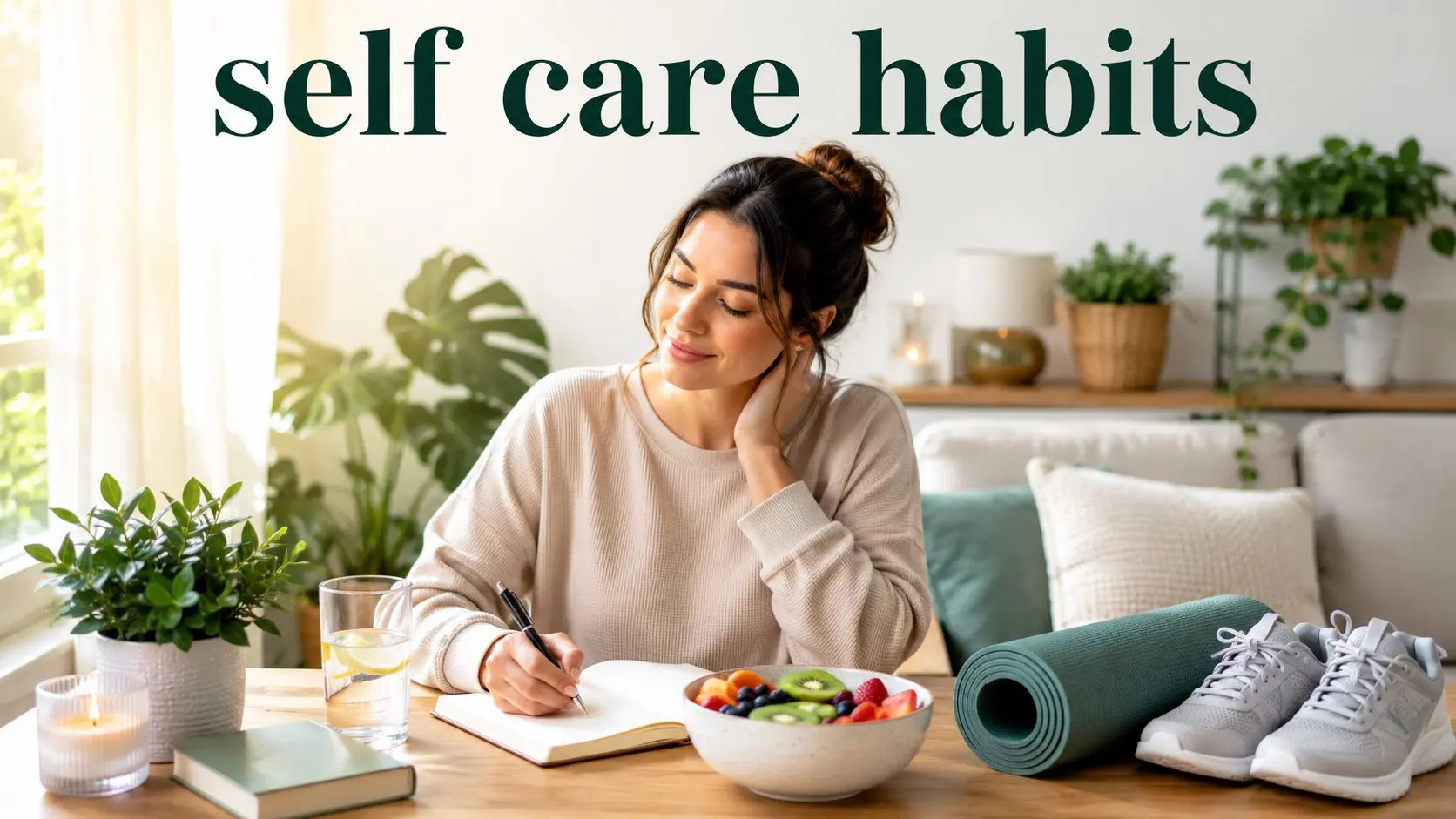
These small actions can become strong self care habits.
The World Health Organization describes self care as actions people, families, and communities use to promote and maintain health, prevent disease, and cope with illness.
Self care can happen with or without direct help from a healthcare professional.
But self-care does not replace healthcare.
It works beside it.
This guide gives you a simple self-care routine that can fit real life.
You do not need to do all 12 habits today.
Choose one.
Make it easy.
Repeat it.
Quick Answer: What Are Self Care Habits?
Self care habits are simple actions that help you care for your physical health, emotional health, energy, relationships, and daily needs.
They can include sleep, movement, nourishing food, hydration, stress management, healthy boundaries, social support, hobbies, rest, and suitable medical care.
Good self-care is not about doing more.
Sometimes it means doing less.
A useful self-care habit should make daily life more manageable, not more stressful.
Medical note:
I am not a dermatologist or A doctor, and this content does not replace professional medical advice. What I share comes from real-life experience, extensive research, and consultation with healthcare providers. Always consult qualified medical professionals for diagnosis and treatment of any health condition.
Self Care Habits at a Glance
- Protect enough time for sleep.
- Move your body regularly.
- Eat nourishing food without chasing perfection.
- Drink according to your needs.
- Give stress a healthy outlet.
- Protect your time with healthy boundaries.
- Take breaks from constant digital input.
- Build social connection.
- Make room for joy and hobbies.
- Use self-compassion instead of constant criticism.
- Keep up with suitable preventive care.
- Ask for professional help when self-care is not enough.
What Does Self Care Really Mean?
Self care is wider than relaxation.
It includes the choices you make to protect your health and function.
That can mean:
- Going to bed instead of scrolling for another hour
- Eating when your body needs food
- Taking a walk after sitting all day
- Saying no when your schedule is already full
- Calling a friend when you feel alone
- Taking prescribed medicine as directed
- Booking a health appointment you have delayed
- Resting when you are sick
- Getting mental health support when you need it
The WHO makes an important point.
Self care complements health services.
It does not replace them.
That is a useful way to think about daily wellness.
Is Self Care Selfish?
No.
Taking care of basic needs is not selfish.
You need sleep to think.
You need food to function.
You need rest to recover.
You need support when life becomes difficult.
Self care should not mean ignoring every responsibility.
It should help you meet your responsibilities without using every part of your energy.
Think of it as maintenance.
You are caring for the person who has to live your life.
12 Self Care Habits for Better Daily Wellness
1. Protect Your Sleep
Sleep is a basic form of self care.
CDC guidance says adults age 18 to 60 generally need at least seven hours each day.
Sleep needs change with age.
Your own needs can vary too.
Useful sleep habits include:
- Give yourself enough time for sleep
- Use a steady wake time when possible
- Get daylight during the day
- Move caffeine earlier if it affects sleep
- Make the bedroom quiet and comfortable
- Use a calm routine before bed
Do not treat sleep as time you must earn.
Do not keep cutting sleep to become more productive.
Poor sleep can make the next day harder.
Read the
Sleep Hygiene Guide
for a full routine.
You can also read
Sleep Science
to understand why sleep matters.
2. Move Your Body Regularly
Movement is not only about weight.
It supports your muscles.
It supports your heart.
It supports your bones.
It can also support mood and sleep.
CDC and WHO guidance support regular physical activity for adults.
You do not need to begin with a hard workout.
Try:
- A ten-minute walk
- Gentle stretching
- Chair squats
- Wall push-ups
- Cycling
- Swimming
- Dancing
- Gardening
- Simple strength exercise
If you are inactive now, start small.
Some movement is better than none.
For exercise ideas, visit the
NextFitLife Fitness Hub
.
3. Eat in a Way That Nourishes You
Food is care.
It should not become a daily test of whether you are good or bad.
A simple balanced eating pattern can include:
- Vegetables
- Fruit
- Beans
- Lentils
- Whole grains
- Eggs
- Fish
- Lean meat or poultry
- Tofu
- Yogurt or suitable alternatives
- Nuts
- Seeds
- Unsaturated oils
You do not need every food at every meal.
Look at the whole pattern.
Try to eat regularly enough that hunger does not become extreme.
If food causes fear, guilt, binge eating, purging, or severe restriction, talk with an appropriately qualified professional.
Explore the
Foods and Nutrition Hub
.
4. Drink According to Your Needs
Hydration matters.
But there is no single water number that fits every person.
Your needs can change with:
- Weather
- Activity
- Sweating
- Body size
- Food
- Pregnancy
- Medical conditions
Simple habits can help.
- Keep water where you can reach it
- Drink when thirsty
- Drink more when you lose more fluid
- Replace some sweet drinks with water
People with some kidney, liver, or heart conditions may need personal fluid advice.
5. Give Stress a Healthy Outlet
You cannot remove every source of stress.
You can build ways to recover.
Simple stress management tools include:
- Slow breathing
- Walking
- Prayer
- Quiet reflection
- Writing
- Music
- Talking with someone you trust
- Time outside
- Gentle stretching
You do not have to meditate.
Choose what helps your body and mind settle.
The NIH Emotional Wellness Toolkit also highlights healthy coping and supportive relationships as parts of emotional wellness.
Visit the
Mental Health and Wellness Hub
for more support.
6. Set Healthy Boundaries
Your time is limited.
Your energy is limited too.
Healthy boundaries help you decide what you can give.
A boundary can sound like:
- “I cannot do that today.”
- “I need time before I answer.”
- “I am not available tonight.”
- “I need a lunch break.”
- “That time does not work for me.”
- “I can help with this part, but not all of it.”
A boundary is not punishment.
It is information.
Good boundaries can protect sleep, family time, work focus, and emotional energy.
7. Take Digital Breaks
Your phone can be useful.
It can also fill every quiet moment.
Messages arrive.
News arrives.
Work arrives.
Comparison arrives.
A little digital wellness can create more mental space.
Try:
- Turn off notifications you do not need
- Keep one meal screen free
- Stop checking work messages at a set time
- Keep the phone away from your pillow
- Take a short walk without your phone
- Remove apps that mainly make you feel worse
You do not need to quit technology.
Use it on purpose.
8. Stay Connected to Supportive People
Self care is not always something you do alone.
Social connection matters for both mental and physical health.
CDC guidance highlights the value of supportive relationships and a sense of belonging.
Simple connection can look like:
- Calling a friend
- Eating with family
- Walking with someone
- Joining a hobby group
- Volunteering
- Joining a faith community
- Asking someone for help
Quality matters.
You do not need hundreds of friends.
You need relationships where support can move both ways.
9. Make Time for Joy
Self care is not only fixing problems.
Life also needs things you enjoy.
Try:
- Reading
- Cooking
- Gardening
- Music
- Art
- Walking outdoors
- Photography
- Sports
- Learning something new
- Spending time with pets
Your hobby does not need to produce money.
It does not need to become a side business.
Enjoyment can be enough.
10. Practice Self-Compassion
Self-compassion does not mean avoiding responsibility.
It means speaking to yourself without constant attack.
You can admit a mistake without calling yourself a failure.
You can have a difficult day without deciding that the whole week is ruined.
Try these questions:
- What do I need today?
- What made today harder?
- What helped me?
- What can I simplify?
- What is one useful thing I can do next?
A good self-care plan should not become another reason to criticize yourself.
11. Keep Up With Preventive Care
Self care also includes knowing when you need healthcare.
Suitable preventive care may include:
- Medical checkups
- Vaccines
- Blood pressure checks
- Dental care
- Eye care
- Age appropriate screening
- Medicine review
- Mental health care
The right schedule depends on your age, health, sex, family history, country, and risk factors.
Do not copy another person's screening schedule.
Ask what is right for you.
Visit the
Medical Tests and Screenings Hub
.
12. Ask for Help Before You Reach Your Limit
This may be one of the hardest self-care habits.
Many people wait.
They wait until stress becomes severe.
They wait until sleep is broken.
They wait until they cannot manage normal tasks.
Asking for help is not a failure.
Support can come from:
- Family
- Friends
- A doctor
- A therapist
- A counselor
- A dietitian
- A social worker
- A pharmacist
- A community service
The right person depends on the problem.
Self care includes knowing when you should not handle something alone.
Simple Self Care Checklist
You do not need every box every day.
Use this list to notice what your body and mind may need.
- I gave myself a reasonable chance to sleep.
- I moved my body.
- I ate something nourishing.
- I drank according to my needs.
- I took an actual break.
- I used a healthy way to manage stress.
- I protected at least one boundary.
- I had some time away from constant digital input.
- I connected with someone supportive.
- I did something I enjoyed.
- I spoke to myself with some kindness.
- I followed medical advice that applies to me.
- I asked for help when I needed it.
Do not use the checklist as a score.
Use it as a reminder.
Self Care for Busy People
You may not have an hour.
You may have five minutes.
That can still be useful.
Try a five-minute daily wellness routine.
- Walk outside
- Stretch your shoulders
- Drink water
- Take slow breaths
- Prepare a simple snack
- Write down your next three tasks
- Message someone you trust
- Close your eyes and rest without your phone
Small does not mean useless.
A small habit may be the habit you can actually keep.
A Simple Morning Self Care Routine
You do not need a five in the morning routine.
You do not need a cold shower.
You do not need ten steps.
Try three.
- Get some light.
- Drink if you are thirsty.
- Move for a few minutes.
If you eat breakfast, make it nourishing.
Then choose the most important task for the day.
A calm morning can be simple.
Self Care During the Workday
Work can take over the whole day if you let every request become urgent.
Build small pauses.
- Stand after long sitting
- Take a real lunch break when possible
- Look away from the screen
- Keep water nearby
- Walk for a few minutes
- Protect focus time
- Turn off unnecessary alerts
- Ask for help before a task becomes a crisis
Good work life balance does not always mean equal time.
It means work does not consume every part of life.
A Simple Evening Self Care Routine
The evening can help you leave the active part of the day.
Try:
- Eat a normal evening meal
- Take a gentle walk
- Write down unfinished tasks
- Prepare one thing for tomorrow
- Lower stimulation
- Put work away
- Use a calm activity
- Give yourself enough time for sleep
The goal is not a perfect night.
The goal is a clear ending to the day.
Self Care When You Feel Emotionally Overloaded
When feelings are heavy, keep self-care basic.
Do not force yourself to feel positive.
Start with the next safe action.
Try:
- Name what you feel
- Put your feet on the floor
- Slow your breathing
- Eat if you have not eaten
- Drink if you are thirsty
- Take a shower
- Reduce noise and screens
- Call someone safe
- Rest
This is emotional wellness at its most basic.
You are not trying to solve your whole life in one hour.
You are helping yourself get through the next part safely.
What Does Self Care Look Like During Burnout?
A bath may feel good.
But serious exhaustion may need more than a relaxing evening.
You may need:
- More rest
- A workload change
- Stronger boundaries
- Time away from work
- Help with caregiving
- Medical assessment
- Mental health support
- Better sleep
- Support from other people
Do not turn burnout into another personal failure.
Sometimes the problem is not that you need a better routine.
Sometimes the load needs to change.
Self Care Habits for Students
Students need self-care too.
Study does not improve when your body never rests.
Useful habits include:
- Sleep before exams
- Use planned study blocks
- Take real breaks
- Eat regularly
- Move during the day
- Ask academic questions early
- Reduce comparison with other students
- Use counseling or support services when needed
An all night study session may give you more hours awake.
It does not guarantee better learning.
Self Care Habits for Men
Self care is not weakness.
Men can also benefit from:
- Regular health care
- Physical activity
- Strength and mobility work
- Enough sleep
- Talking about stress
- Supportive friendships
- Less alcohol as a coping tool
- Mental health support when needed
Do not ignore pain, mood changes, severe fatigue, chest symptoms, or other persistent health concerns because you feel you should handle them alone.
Self Care Habits as You Get Older
Self care can change with age.
You may need to give more attention to:
- Strength
- Balance
- Mobility
- Protein and nutrition
- Sleep
- Medicine review
- Vision
- Hearing
- Dental care
- Preventive screening
- Social connection
The goal is not to stop aging.
The goal is to support function and quality of life.
Visit the
Healthy Aging and Longevity Hub
.
Does Self-Care Need to Cost Money?
No.
Some of the strongest self-care habits can be free.
Examples include:
- Walking
- Sleeping
- Calling a friend
- Stretching
- Reading
- Writing
- Sitting outside
- Turning off notifications
- Saying no to an extra commitment
- Resting
Self care does not become better because it is expensive.
Common Self Care Mistakes
- Trying to change everything at once
- Thinking self care must be expensive
- Using alcohol as your main stress tool
- Using food as your only comfort tool
- Scrolling for hours and calling it rest
- Skipping sleep to become more productive
- Ignoring needed healthcare
- Comparing your routine with influencers
- Using supplements instead of fixing basic habits
- Feeling guilty every time you rest
- Giving up because one day went badly
- Turning self care into another strict set of rules
Healthy habits should support life.
They should not take control of it.
How to Build a Self Care Routine That Lasts
Step 1: Find Your Main Need
Ask:
“What would help me most right now?”
Maybe it is:
- Sleep
- Food
- Movement
- Calm
- Connection
- Boundaries
- Medical care
Step 2: Make the Habit Small
Do not start with one hour.
Start with five or ten minutes.
Examples:
- Walk for ten minutes
- Stretch for two minutes
- Put your phone away a little earlier
- Add one vegetable
- Call one person
Step 3: Attach It to Something You Already Do
For example:
“After lunch, I will walk for ten minutes.”
Or:
“After brushing my teeth, I will stretch.”
Step 4: Make It Easy
Put your shoes near the door.
Keep water nearby.
Put fruit where you can see it.
Charge the phone away from bed.
Step 5: Review Instead of Judge
At the end of the week, ask:
- Did it help?
- Was it easy enough?
- What got in the way?
- Should I keep it?
Change the plan when the plan does not fit.
A Simple Seven Day Self Care Plan
Day 1: Sleep
Protect enough time for sleep tonight.
Day 2: Movement
Take a short walk or do another safe activity.
Day 3: Nourishment
Improve one meal.
Day 4: Stress Care
Use five quiet minutes for breathing, prayer, writing, or another calming activity.
Day 5: Boundaries
Say no to one thing you do not have capacity for.
Day 6: Connection
Call or meet someone who supports you.
Day 7: Review
Ask which habit helped the most.
Keep that one next week.
You do not need to keep all seven.
When Is Self Care Not Enough?
Self care has limits.
You should not try to manage every health problem alone.
Seek professional help for symptoms such as:
- Persistent depression
- Severe anxiety
- Panic attacks
- Severe or ongoing insomnia
- Eating disorder symptoms
- Substance use problems
- Trauma symptoms
- Severe exhaustion that affects daily life
- Unexplained physical symptoms
- Unsafe relationships or violence
- Symptoms that are severe or getting worse
Self care should support appropriate treatment.
It should not replace it.
When Do You Need Urgent Help?
Seek urgent medical or emergency help for serious symptoms such as:
- Severe trouble breathing
- Chest pain or severe chest pressure
- Fainting
- Sudden weakness or trouble speaking
- Uncontrolled bleeding
- A severe allergic reaction
- A seizure that does not stop
- Severe confusion
- Immediate thoughts of self harm or suicide
Do not rely on a self care routine during an emergency.
What I Have Learned About Real Self Care
I have spent more than fifteen years researching and writing about health, fitness, nutrition, sleep, and healthy aging.
I also bring more than thirty years of personal experience with fitness, nutrition, sleep habits, and daily wellness.
One thing has become clear to me.
The most useful routines are usually not the most impressive ones.
They are the ones you can repeat.
I do not think self-care should require a perfect morning, a large budget, expensive products, or a long list of rules.
I look at the basics.
Are you sleeping?
Are you eating?
Are you moving?
Do you have any time to recover?
Do you have people you can talk to?
Are you ignoring symptoms that need care?
Before focusing on NextFitLife, I spent twenty nine years in information technology management.
That background taught me to look for patterns, identify weak points, compare information, and solve problems one part at a time.
I use the same approach when I research wellness topics.
I compare public health guidance with practical daily life.
I also look for claims that make self care sound like a cure for medical problems.
It is not.
Good self care habits can support health.
They can make everyday life more manageable.
And they can help you notice when you need more support.
References and Sources
The main health guidance in this article was checked against these current public and open sources.
- World Health Organization.
Self Care for Health and Well Being.
Updated July 17, 2026.
This resource explains what self-care means and why it should complement rather than replace healthcare.
Open WHO self-care guidance
. - Centers for Disease Control and Prevention.
Health Benefits of Physical Activity for Adults.
Updated March 10, 2026.
Open CDC physical activity guidance
. - Centers for Disease Control and Prevention.
About Sleep.
Guidance on sleep needs, sleep quality, and healthy sleep habits.
Open CDC sleep guidance
. - National Institutes of Health.
Emotional Wellness Toolkit.
Reviewed July 24, 2026.
Guidance on coping, resilience, emotional health, and supportive relationships.
Open NIH Emotional Wellness Toolkit
. - Centers for Disease Control and Prevention.
Social Connection.
Guidance on supportive relationships, belonging, and social health.
Open CDC social connection guidance
.
These organizations do not endorse NextFitLife.
Conclusion
Good self-care habits are usually simple.
Sleep.
Move.
Eat.
Drink.
Rest.
Protect your time.
Stay connected.
Ask for help.
You do not need to rebuild your whole life today.
Your next step:
Choose one self care habit from this guide.
Practice it today.
Repeat it tomorrow.
Then build from there.
Editorial Policies and Trust
About the Author

Frequently Asked Questions About Self Care Habits
What are self care habits?
Self care habits are simple actions that help you care for your physical health, emotional wellness, energy, relationships, and daily needs.
Examples include sleep, movement, nourishing food, stress care, boundaries, social connection, and suitable healthcare.
What are the most important self care habits?
Strong foundations include enough sleep, regular movement, nourishing food, hydration, stress management, healthy boundaries, supportive relationships, rest, and getting professional care when needed.
Is self care selfish?
No.
Meeting basic physical and emotional needs is not selfish.
Good self-care can help you maintain the energy and health needed for everyday life and responsibilities.
How do I start a self-care routine?
Start with one small action.
Choose something easy enough to repeat.
For example, walk for ten minutes after lunch, put your phone away before bed, or call one supportive person.
How often should I practice self-care?
Some self care happens every day, such as sleep, food, movement, and basic hygiene.
Other actions may happen weekly or when needed.
There is no perfect schedule.
What is a simple daily self care checklist?
Check whether you slept, ate, moved, drank according to your needs, had a real break, managed stress, connected with someone, protected a boundary, and asked for help when needed.
Does self care need to cost money?
No.
Walking, resting, sleeping, calling a friend, stretching, reading, journaling, and setting boundaries can all be forms of self care that cost little or nothing.
Can self care help with stress?
Self care can support stress management through sleep, physical activity, relaxation, social support, boundaries, and recovery time.
It cannot remove every cause of stress.
Can self care improve mental health?
Healthy daily habits can support emotional wellness.
They do not replace therapy, medicine, crisis support, or other professional mental health care when those are needed.
What is emotional self care?
Emotional self-care means noticing feelings and responding in healthy ways.
It can include rest, writing, talking with someone, setting boundaries, relaxation, and professional support when needed.
What are good self care habits for busy people?
Keep them small.
Try a short walk, a proper meal, water, five quiet minutes, one screen break, a clear boundary, or a quick call to someone supportive.
What are good self care habits for students?
Useful student habits include sleep, regular meals, movement, study breaks, planning, social support, and asking for academic or mental health help early.
What are good self care habits for men?
Useful habits include regular health care, exercise, sleep, social connection, honest conversations about stress, limiting alcohol as a coping tool, and seeking help for physical or emotional symptoms.
Is rest a form of self care?
Yes.
Rest allows time for physical and mental recovery.
Rest does not need to be earned by reaching complete exhaustion first.
Are boundaries part of self care?
Yes.
Healthy boundaries can protect sleep, time, relationships, concentration, and emotional energy.
A boundary tells other people what you can and cannot reasonably do.
Can self care prevent burnout?
Healthy routines and boundaries may help reduce some sources of overload.
But burnout can also require workload changes, social support, rest, medical care, or mental health support.
When is self care not enough?
Get professional help when symptoms are severe, persistent, worsening, or interfering with normal life.
Self care should complement appropriate medical and mental health care, not replace it.
Medical Disclaimer
NextFitLife provides general educational information.
It does not provide medical advice, diagnosis, treatment, emergency care, or personal medical recommendations.
Always speak with an appropriately qualified healthcare professional about persistent physical or emotional symptoms, medical conditions, medicines, supplements, diet, exercise, or treatment decisions.
Do not delay medical care because of information you read online.

Health & wellness writer with 30+ years of experience in nutrition, fitness, and healthy aging. Founder of NextFitLife.com — evidence-based health guidance.