
NextFitLife Healthy Aging & Longevity
Published: March 2026
Last updated: August 7, 2026
Next editorial review: August 2027 or sooner if guidance changes
Medical review status:
This sub-hub page has not been medically reviewed. Individual articles identify a named qualified reviewer when a medical review has taken place.
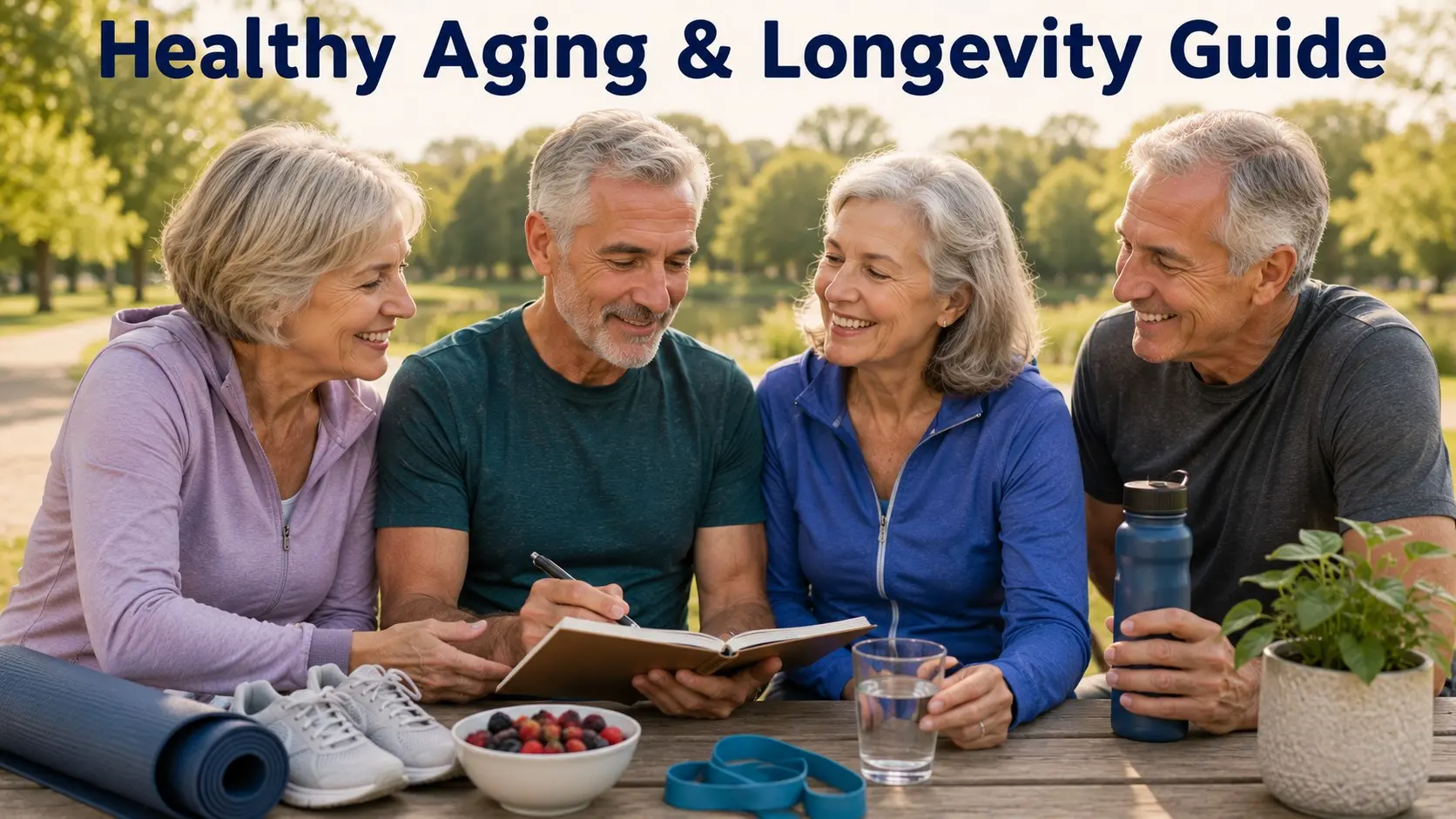
This Healthy Aging & Longevity sub-hub organizes NextFitLife guides about staying active, maintaining strength and mobility, eating well, reducing fall risk, supporting brain health, protecting vision, managing chronic conditions, and preserving independence as you get older.
Healthy aging is not about stopping aging or finding one food, supplement, exercise, or “anti-aging” protocol that guarantees a longer life. A more useful goal is healthspan: supporting health, function, independence, and quality of life for as long as possible.
Use this page to understand general healthy-aging topics and prepare questions for a qualified healthcare professional. It does not diagnose frailty, sarcopenia, dementia, osteoporosis, vertigo, diabetes, or another age-related condition.
Get prompt medical help for sudden changes
Sudden weakness, facial drooping, trouble speaking, sudden confusion, sudden severe dizziness, sudden vision loss, a severe new headache, chest pain, fainting, or severe shortness of breath can require emergency assessment.
After a fall, seek prompt medical care for severe pain, inability to bear weight, an obvious deformity, head injury symptoms, new confusion, loss of consciousness, or concern about a fracture.
New confusion in an older adult should not automatically be assumed to be dementia or “normal aging.” Sudden confusion can have urgent medical causes and needs prompt evaluation.
Choose a starting point
Select the topic closest to your goal.
Strength, mobility, and independence
Learn about aerobic activity, resistance training, balance work, recovery, and adapting exercise to your health and ability.
Falls and fracture prevention
Review balance, medicines, vision, hearing, footwear, home safety, osteoporosis, and what to do after a fall.
Nutrition for older adults
Explore protein, nutrient-dense meals, hydration, appetite changes, swallowing or dental problems, and supplement safety.
Brain and cognitive health
Understand memory changes, cardiovascular risk, hearing and vision, sleep, social engagement, and why dementia prevention should not be guaranteed.
Vision and chronic disease
Explore eye exams, diabetes, blood pressure, medicines, and other health conditions that can affect independence with age.
Longevity and supplement claims
Learn why “anti-aging,” “reverse aging,” and lifespan-extension claims need strong evidence and why supplements can interact with medicines.
Before choosing a healthy-aging article
- Check the article’s author, last-updated date, medical-review status, and topic-specific references.
- A page is medically reviewed only when it names the reviewer, relevant credentials, and review date.
- Normal aging varies. Persistent or rapidly changing memory, mobility, balance, weight, energy, vision, hearing, or mood changes deserve evaluation rather than being dismissed as “just age.”
- Do not start an intense exercise program after a long period of inactivity without considering heart, joint, balance, fracture, and medication-related risks.
- Do not use a supplement to diagnose or treat dementia, frailty, osteoporosis, arthritis, or another medical condition without professional guidance.
- Bring an up-to-date list of prescription medicines, over-the-counter medicines, and supplements to healthcare appointments because interactions and side effects become increasingly important when multiple products are used.
- A claim that a product or habit “reverses aging,” “adds years to life,” or guarantees dementia prevention should be treated skeptically unless supported by strong human evidence.
Healthy aging is about function, not perfection
Genetics influence aging, but many modifiable factors also matter. Regular physical activity, nutritious food, sleep, not smoking, management of chronic conditions, preventive care, medication review, mental health, hearing and vision care, and meaningful social activity can all support health and independence.
There is no single habit that guarantees longevity. The goal is to reduce avoidable risks while maintaining the ability to move, think, communicate, connect with other people, and manage daily life.
Core healthy-aging guides
Strength, mobility, balance, and physical activity
Physical activity is one of the strongest evidence-supported tools for healthy aging. It can support cardiovascular health, strength, balance, sleep, mood, mobility, and the ability to carry out daily activities.
Federal guidance generally recommends that older adults work toward at least 150 minutes of moderate-intensity aerobic activity each week, muscle-strengthening activity on at least two days, and activities that improve balance. The right amount and intensity should be adapted to health, fitness, mobility, and ability.
If you are not currently active, have osteoporosis, recurrent falls, heart or lung disease, severe arthritis, significant pain, or major balance problems, ask a healthcare professional or physical therapist how to start safely.
Falls and fracture prevention
Falls become more common with age, but they should not be treated as inevitable. Strength and balance training, medication review, vision and hearing checks, safer footwear, appropriate walking aids, and reducing hazards at home can all be part of a fall-prevention plan.
A previous fall is important information to share with your healthcare professional. Dizziness, low blood pressure, medicines, muscle weakness, foot problems, vision loss, hearing loss, and environmental hazards can all contribute to fall risk.
Fracture prevention also includes assessing bone health when appropriate. Osteoporosis can be present without symptoms until a fracture occurs.
Nutrition, protein, hydration, and appetite with age
Nutrition needs can change with age because of appetite, activity level, medicines, dental problems, swallowing difficulty, digestive conditions, kidney function, and changes in muscle mass.
Older adults benefit from nutrient-dense meals that provide adequate protein, fruits and vegetables, whole grains or other high-fiber carbohydrate sources, healthy fats, and appropriate sources of calcium, vitamin D, vitamin B12, and other nutrients according to individual needs.
There is no universal “longevity food.” Eating patterns matter more than one ingredient. Unintentional weight loss, poor appetite, difficulty chewing or swallowing, persistent nausea, or signs of malnutrition deserve professional assessment.
Brain health, memory, and cognitive aging
Cognitive health includes the ability to think, learn, remember, and manage everyday tasks. Some mild changes can occur with age, but dementia is not an inevitable part of aging.
Brain health is connected with physical health. Managing high blood pressure, diabetes, depression, and high cholesterol; staying physically active; getting enough sleep; treating hearing and vision problems; avoiding smoking; limiting harmful alcohol use; and reducing fall risk can support overall cognitive health.
Evidence for individual diets, supplements, brain-training products, or single “memory foods” is much less certain. Current NIA guidance does not recommend a vitamin or supplement specifically to prevent Alzheimer’s disease or other cognitive decline.
Memory loss that disrupts daily life, getting lost in familiar places, difficulty managing medicines or finances, significant personality changes, or rapidly worsening thinking should be discussed with a healthcare professional.
Vision, diabetes, medicines, and other health conditions
Healthy aging includes managing existing conditions rather than assuming every change is caused by age. Diabetes, cardiovascular disease, arthritis, osteoporosis, hearing loss, vision disease, depression, and medication side effects can all affect independence.
- Senior Eye Care: Vision Changes, Eye Exams, and Protecting Independence
- Diabetes in Older Adults: Monitoring, Medicines, Nutrition, and Safety
For more detailed guidance, visit the
Eye Health & Vision,
Bone & Joint Health, and
Diabetes & Blood Sugar Management
sub-hubs.
Longevity, “anti-aging,” and supplement claims
Longevity research is active and evolving, but consumer marketing often moves faster than the evidence. Be cautious when a product claims to reverse biological aging, extend lifespan, prevent dementia, restore youth, or reproduce the effects of exercise or calorie restriction.
Dietary supplements can cause side effects and can interact with prescription medicines. NIA also warns that many supplement advertisements promising better health or longer life have little or no science supporting those promises.
“Natural” does not mean safe, and more is not necessarily better. Before using an anti-aging, memory, sleep, joint, hormone, or longevity supplement, discuss the product and dose with a healthcare professional or pharmacist who knows your medicines and medical history.
Source standard for healthy-aging content
Important claims about exercise, falls, fractures, dementia risk, supplements, nutrition, medications, chronic disease, or lifespan should cite the exact government, professional, clinical, or research source used.
Core public reference sources for this topic include:
- National Institute on Aging: Healthy Aging
- National Institute on Aging: What Do We Know About Healthy Aging?
- National Institute on Aging: Exercise and Physical Activity
- National Institute on Aging: Falls and Falls Prevention
- National Institute on Aging: Cognitive Health and Older Adults
- National Institute on Aging: Dietary Supplements for Older Adults
- National Institute on Aging: Taking Medicines Safely as You Age
- MedlinePlus: Older Adult Health
These organizations do not endorse NextFitLife. Individual articles should cite the exact sources that support their claims.
Frequently asked questions
What is healthy aging?
Healthy aging means supporting physical, mental, and cognitive health while maintaining function, independence, social connection, and quality of life. It does not mean avoiding every age-related change.
Can a food or supplement make me live longer?
No food or supplement can guarantee a longer life. Healthy eating patterns can support cardiovascular, metabolic, bone, muscle, and brain health, but claims that one product extends lifespan need strong human evidence.
How much exercise should older adults get?
Federal guidance generally recommends at least 150 minutes of moderate-intensity aerobic activity each week, muscle-strengthening activity on at least two days, and balance activities. People should adapt activity to their health and ability rather than treating the target as all-or-nothing.
Are falls a normal part of aging?
Fall risk rises with age, but many falls can be prevented. Strength and balance exercise, medication review, vision and hearing checks, safer home environments, appropriate footwear, and treatment of dizziness or weakness can all help reduce risk.
Can dementia be prevented?
No strategy can guarantee prevention. Managing cardiovascular risk, staying physically active, getting enough sleep, treating hearing and vision problems, avoiding smoking, and maintaining overall health may help support cognitive health and may reduce some risks.
Do brain-training games prevent dementia?
Commercial brain-training products should not be presented as proven dementia prevention. Staying mentally and socially engaged may support well-being and cognitive health, but evidence for specific commercial programs is limited.
Should older adults take anti-aging supplements?
Not automatically. Supplements may be useful for a documented or likely nutrient need, but they can cause side effects and interact with medicines. Products promoted specifically for anti-aging or longevity should be judged by their evidence, not their marketing.
When should memory changes be checked?
Speak with a healthcare professional when memory or thinking changes interfere with daily activities, safety, medicines, finances, driving, communication, or familiar tasks. Sudden confusion requires prompt medical evaluation.
Is every article in this sub-hub medically reviewed?
No. An article is medically reviewed only when it clearly displays the reviewer’s name, relevant credentials, and review date. Otherwise, treat it as general educational content.
Editorial policies and contact
Use healthy-aging information safely
Healthy-aging advice can change according to mobility, frailty, medicines, falls, bone health, cognition, vision, hearing, kidney function, cardiovascular health, diabetes, appetite, and social circumstances. Use this directory to understand the options and prepare questions, not to replace individualized medical care.
Medical disclaimer
NextFitLife provides general educational information and does not provide medical advice, diagnosis, treatment, physical therapy, medication management, fall-risk assessment, dementia diagnosis, or personalized healthy-aging care. Consult an appropriately qualified healthcare professional about new symptoms, falls, memory changes, medicines, supplements, exercise, or treatment decisions.