
NextFitLife Women’s Health
Published: March 2026
Last updated: August 7, 2026
Next editorial review: August 2027 or sooner if clinical guidance changes
Medical review status:
This sub-hub page has not been medically reviewed. Individual articles identify a named qualified reviewer when a medical review has taken place.
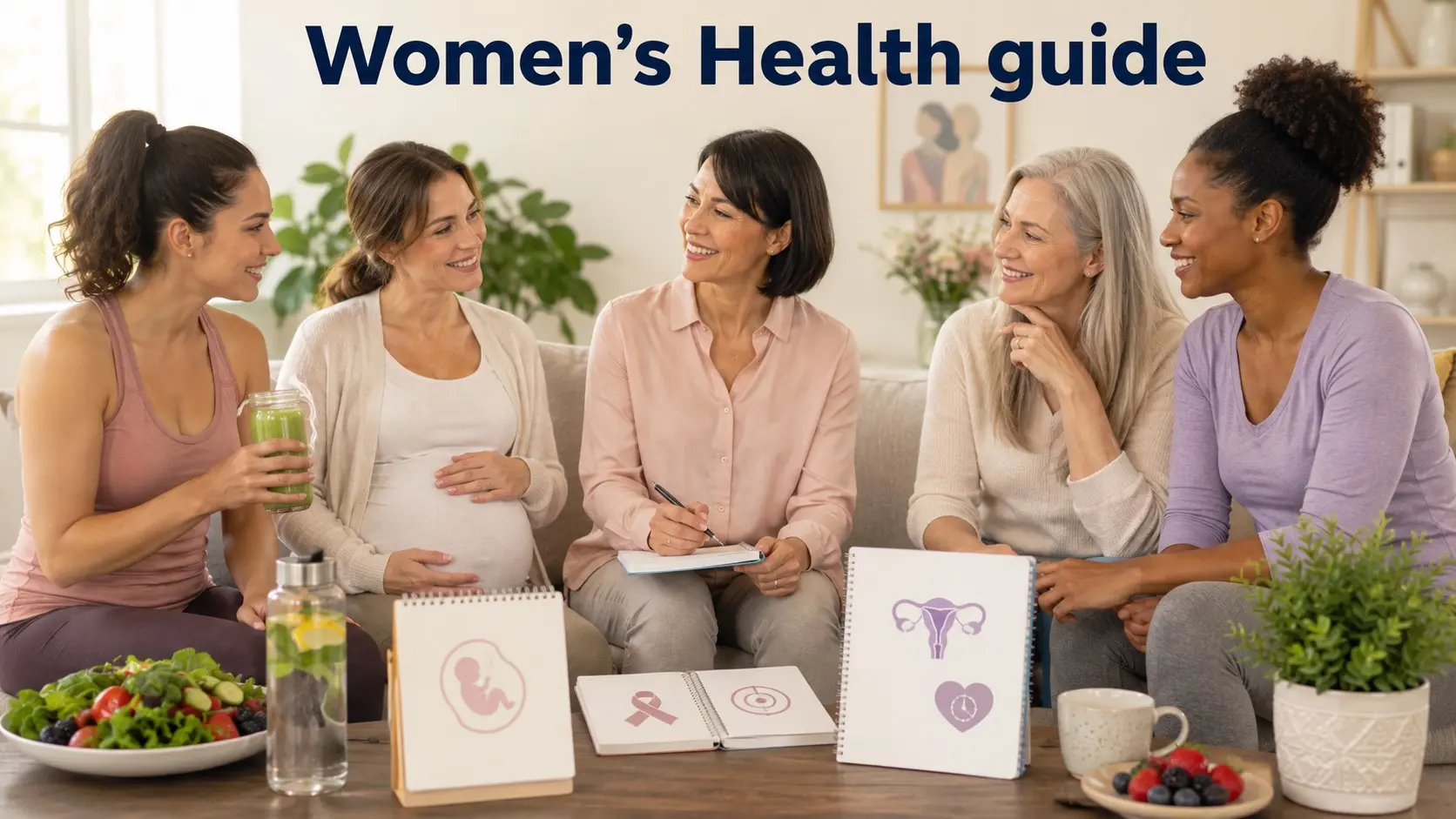
This Women’s Health sub-hub organizes NextFitLife guides about pregnancy nutrition, breastfeeding, postpartum recovery, perinatal mental health, breast health, menopause, menstrual symptoms, endometriosis, and preventive care.
Health needs change across life stages. Symptoms that are common during menstruation, pregnancy, postpartum recovery, perimenopause, or menopause can sometimes overlap with conditions that need evaluation. Use this page to understand general topics and prepare questions for a qualified healthcare professional rather than to diagnose yourself.
Pregnancy and postpartum warning signs deserve special attention
During pregnancy or after childbirth, seek urgent medical help for severe breathing difficulty, chest pain, fainting, seizure, severe or persistent headache, major vision changes, heavy bleeding, severe abdominal pain, or another symptom that feels dangerous or is rapidly worsening.
Postpartum preeclampsia can occur even after blood pressure was normal during pregnancy. A persistent headache, vision changes, shortness of breath, swelling of the face or hands, upper abdominal pain, nausea or vomiting, or a high blood-pressure reading after birth should be discussed urgently with the maternity or medical team.
Hallucinations, delusions, paranoia, severe confusion, mania, or thoughts of harming yourself or the baby after childbirth require immediate professional help. Postpartum psychosis is a psychiatric emergency.
Choose a starting point
Select the topic closest to your question.
Pregnancy nutrition and safety
Learn about balanced eating, prenatal vitamins, folic acid, iron, food safety, and why supplements should be discussed with an obstetric professional.
Postpartum recovery and mental health
Review high blood pressure after birth, postpartum depression, emergency warning signs, and when recovery symptoms need prompt care.
Breast health
Understand breast changes, breast-cancer warning signs, risk, screening, and why a new change deserves appropriate evaluation.
Perimenopause and menopause
Explore hot flashes, sleep, brain fog, vaginal and urinary symptoms, changing periods, treatment options, and postmenopausal bleeding.
Periods and pelvic symptoms
Learn what can be common during menstruation and when heavy bleeding, severe pelvic pain, or other changes need evaluation.
Endometriosis
Understand pelvic pain, painful periods, bowel or bladder symptoms, fertility concerns, diagnosis, and treatment options.
Before choosing a women’s health article
- Check the article’s author, last-updated date, medical-review status, and topic-specific references.
- A page is medically reviewed only when it names the reviewer, relevant credentials, and review date.
- Do not start, stop, or change prescription hormones, contraception, fertility treatment, antidepressants, blood-pressure medicine, or other medication because of an article.
- Food cannot diagnose or “balance” a hormone disorder on its own. Hormone symptoms need clinical context rather than a social-media checklist.
- Breast changes cannot be ruled in or ruled out as cancer by appearance, pain, age, or a home examination alone.
- Severe pelvic pain, abnormal bleeding, pregnancy-related symptoms, postpartum warning signs, or rapidly worsening symptoms should move you from self-care content to appropriate medical evaluation.
Pregnancy nutrition should support both mother and fetus
Pregnancy changes nutritional needs, but “eating for two” does not mean eating twice as much. A balanced eating pattern and a prenatal vitamin help supply nutrients needed for fetal development and maternal health.
ACOG recommends 600 micrograms of folic acid per day during pregnancy and advises a prenatal vitamin containing at least 400 micrograms of folic acid, ideally beginning before pregnancy. Iron needs also increase during pregnancy.
Pregnancy food safety matters. Raw or undercooked animal foods, certain high-mercury fish, unpasteurized products, and other higher-risk foods may need to be avoided or limited according to current obstetric and food-safety guidance.
Postpartum recovery includes physical and mental health
Recovery after childbirth is not limited to bleeding, pain, or feeding. Blood-pressure disorders, infection, blood clots, heavy bleeding, depression, and other complications can develop after leaving the hospital.
Postpartum preeclampsia most often develops within days after birth but can occur later. If you were told to monitor blood pressure at home, follow the thresholds and instructions given by your maternity team.
Postpartum depression is treatable
Mild “baby blues” are common in the first two weeks after childbirth. Symptoms that are severe, continue beyond the early postpartum period, or interfere with daily functioning can indicate perinatal or postpartum depression and deserve professional assessment.
For more mental-health guidance, visit
Mental Health & Wellness.
Breast changes, cancer awareness, and screening
Most breast changes are not cancer, but new or persistent changes should be assessed. Warning signs can include a new breast or underarm lump, swelling or thickening, skin dimpling or irritation, nipple pulling, nipple or breast pain, nipple discharge other than breast milk, and a change in breast size or shape.
Inflammatory breast cancer can cause rapid breast redness, swelling, warmth, heaviness, skin thickening or dimpling, or nipple changes and may not present as a typical lump. Rapidly developing breast changes deserve prompt medical evaluation.
For women at average risk, the current U.S. Preventive Services Task Force recommendation is mammography every two years from ages 40 through 74. People at higher risk may need a different screening strategy based on family history, genetic risk, previous chest radiation, prior breast findings, or other factors.
- Breast Cancer: Symptoms, Diagnosis, Treatment, and Questions to Ask
- Breast Cancer Risk Factors: Family History, Genetics, Age, Lifestyle, and Risk Assessment
For broader cancer information, visit
Cancer Awareness & Prevention.
Perimenopause and menopause are life stages, not hormone “imbalances” to self-diagnose
Perimenopause is the transition leading to menopause. Periods may become less predictable and symptoms can include hot flashes, sleep problems, mood changes, vaginal dryness, pain during sex, and urinary symptoms.
Menopause is reached after 12 consecutive months without a menstrual period or spotting when there is no other cause. Any vaginal bleeding after menopause should be assessed by a healthcare professional.
Routine hormone testing is not usually needed to identify the typical menopausal transition because hormone levels can fluctuate unpredictably. Testing can be useful in selected situations, such as possible premature or early menopause or when another condition is suspected.
Menopausal hormone therapy can help some symptoms, but the benefits and risks depend on the person, treatment type, dose, route, medical history, and timing. It should not be started from a generic online “hormone balance” plan.
Periods, bleeding, and pelvic symptoms
Menstrual cycles vary, and cramps, bowel changes, fatigue, and other symptoms can occur around a period. But very heavy bleeding, bleeding between periods, bleeding after sex, severe or worsening pelvic pain, fainting, pregnancy-related bleeding, or bleeding after menopause should not be dismissed as a normal period.
Persistent heavy bleeding can contribute to iron-deficiency anemia. Evaluation may consider pregnancy, fibroids, adenomyosis, endometriosis, bleeding disorders, medications, hormonal causes, and other gynecologic conditions.
Endometriosis can affect more than menstrual cramps
Endometriosis occurs when tissue similar to the lining of the uterus grows outside the uterus. Symptoms can include very painful periods, chronic pelvic or lower-back pain, pain during or after sex, bowel or urinary pain around menstruation, bleeding between periods, digestive symptoms, and fertility problems.
Symptoms alone cannot confirm endometriosis. Evaluation may include medical history, pelvic examination, ultrasound or other imaging, treatment trials, and in some situations laparoscopy. Treatment depends on symptoms, fertility goals, medical history, and personal preferences.
Chest pain, coughing blood, or shortness of breath around menstruation is uncommon and needs medical assessment rather than self-diagnosis as thoracic endometriosis.
UTIs belong in infection and urinary-health care
UTIs are common in women, but they are not primarily a “women’s wellness” condition. Burning urination, urinary urgency, lower-abdominal discomfort, fever, chills, nausea, vomiting, or back or side pain should be handled as urinary and infection symptoms.
For detailed UTI guidance, use
Infections & Immune Health
and
Kidney Health & Disease.
Women’s preventive care is individualized
Preventive care can include blood-pressure checks, vaccines, breast-cancer screening, cervical-cancer screening, bone-health assessment, cardiovascular-risk evaluation, and other services depending on age and individual risk.
There is no single screening schedule that applies to every woman. Pregnancy, age, family history, genetic risk, sexual and reproductive history, smoking, previous test results, medicines, and chronic conditions can change what is appropriate.
For screening-specific guidance, visit
Medical Tests & Screenings.
Source standard for women’s health content
Claims about pregnancy, postpartum complications, breastfeeding, contraception, hormones, menopause, endometriosis, breast cancer, medications, or screening should cite current obstetric, gynecologic, oncology, mental-health, public-health, or government guidance specific to the claim.
Core public reference sources for this topic include:
- ACOG: Healthy Eating During Pregnancy
- ACOG: Conditions to Watch for After Childbirth
- NIMH: Perinatal Depression
- CDC: Breast Cancer Symptoms
- CDC: Breast Cancer Screening
- Office on Women’s Health: Menopause
- Office on Women’s Health: Endometriosis
- MedlinePlus: Women’s Health
These organizations do not endorse NextFitLife. Individual articles should cite the exact sources supporting their specific claims.
Frequently asked questions
When should postpartum symptoms be treated as urgent?
Seek urgent medical help for severe or persistent headache, major vision changes, chest pain, breathing difficulty, fainting, seizure, heavy bleeding, severe abdominal pain, serious infection symptoms, or dangerous changes in mental state after childbirth.
What is postpartum psychosis?
Postpartum psychosis is a rare but serious psychiatric emergency that can cause hallucinations, delusions, paranoia, mania, or severe confusion after childbirth. It requires immediate professional care.
What breast changes should be checked?
A new breast or underarm lump, swelling, skin dimpling, redness, nipple pulling, non-milk nipple discharge, new persistent pain, or a change in breast size or shape should be discussed with a healthcare professional.
When does menopause officially occur?
Menopause is reached after 12 consecutive months without a period or spotting when there is no other cause. Any vaginal bleeding after menopause should be evaluated.
Do I need a hormone test to know whether I am in perimenopause?
Usually not. Hormone levels can fluctuate unpredictably during the menopausal transition, so symptoms and menstrual history are often more useful. Testing may be appropriate when menopause occurs unusually early or another condition is being considered.
Can food balance estrogen or treat a hormone imbalance?
Food supports overall nutrition but does not diagnose or reliably correct a hormone disorder by itself. Symptoms such as abnormal bleeding, infertility, severe hot flashes, pelvic pain, or other suspected hormonal problems need appropriate clinical assessment.
Can endometriosis be diagnosed from symptoms alone?
No. Symptoms can suggest endometriosis, but evaluation may include history, examination, imaging, treatment trials, and sometimes laparoscopy depending on the situation.
Is every article in this sub-hub medically reviewed?
No. An article is medically reviewed only when it clearly displays the reviewer’s name, relevant credentials, and review date. Otherwise, treat it as general educational content.
Editorial policies and contact
Use women’s health information safely
Women’s health advice changes according to age, pregnancy or postpartum status, menstrual history, contraception, breastfeeding, menopause stage, family history, cancer risk, medicines, symptoms, and chronic conditions. Use this directory to understand the basics and prepare questions, not to replace individualized obstetric, gynecologic, breast, mental-health, or preventive care.
Medical disclaimer
NextFitLife provides general educational information and does not provide diagnosis, treatment, prenatal or postpartum care, medication management, hormone therapy, contraception advice, cancer care, or individualized women’s healthcare. Consult an appropriately qualified healthcare professional about symptoms, medicines, pregnancy, postpartum recovery, bleeding, breast changes, screening, or treatment decisions.