Published on: June 2026
Updated on: October 20, 2026
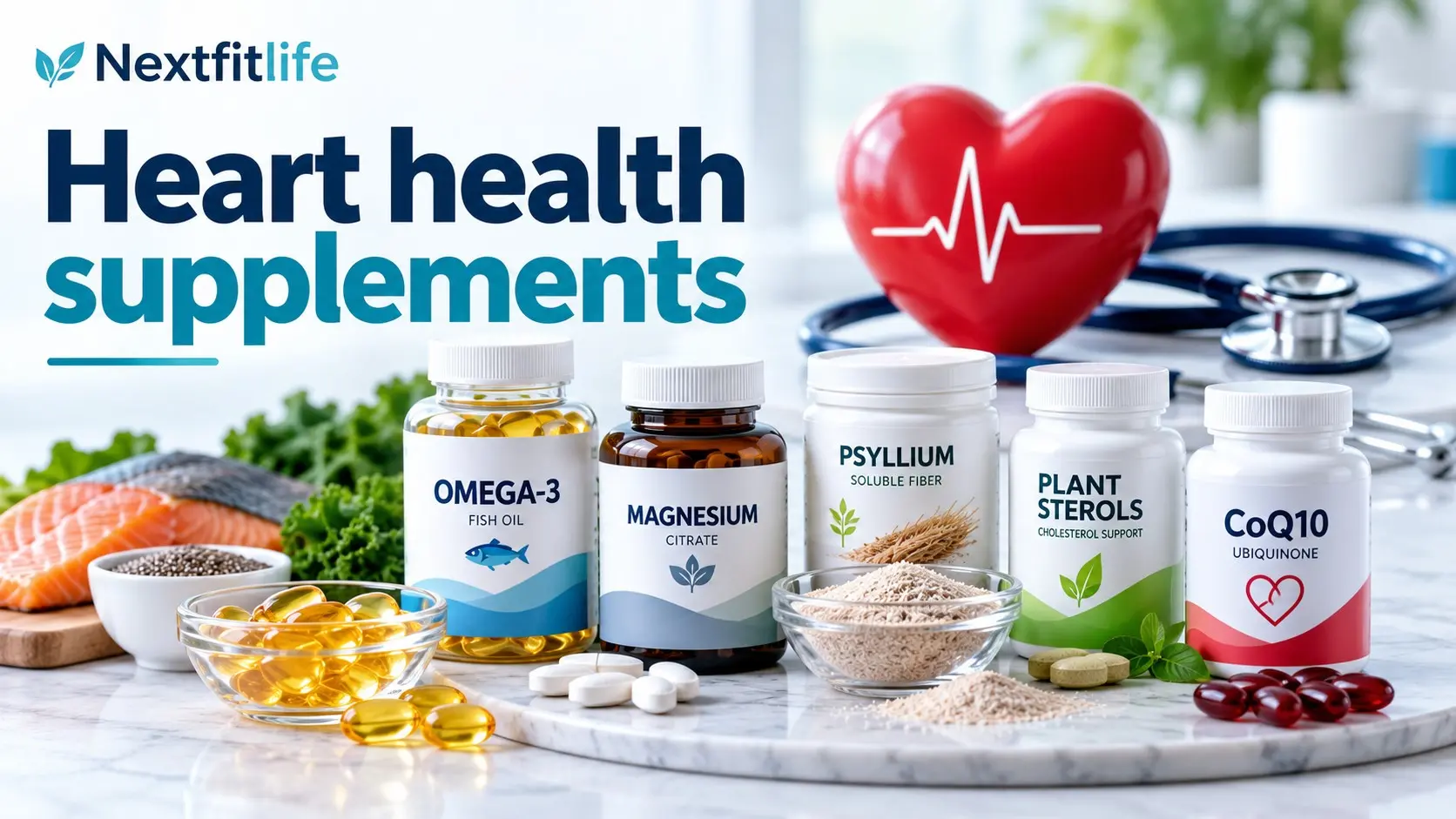
Heart health supplements are everywhere. Fish oil, magnesium, CoQ10, red yeast rice, berberine, vitamin D, niacin, plant sterols, garlic, and many more products promise better cholesterol, lower blood pressure, or a stronger heart.
Some can help with a specific problem. Many have much weaker evidence than the label suggests, and a few can interact with heart medicines or cause real harm.
The most important lesson is simple: a supplement should solve a defined problem. It should not replace a statin, blood pressure medicine, diabetes treatment, smoking cessation, exercise, sleep, or a heart healthy diet when those measures are needed.
Quick answer: The strongest supplement related evidence is situation specific. Prescription omega 3 medicine can help selected people with high triglycerides. Plant sterols and soluble fiber can lower LDL modestly. Magnesium may lower blood pressure a little, mainly when intake is low. Vitamin D, multivitamins, CoQ10, resveratrol, nattokinase, and many “heart formulas” have not been proven to prevent heart attacks in otherwise healthy adults. Red yeast rice can lower LDL, but its active ingredient acts like a statin and product quality is unpredictable.
Medical note: This article is for general information and education. It does not replace medical advice, diagnosis, or treatment.
I am not a dermatologist or a doctor, and this content does not replace professional medical advice. What I share comes from real life experience, extensive research, and consultation with healthcare providers. Always consult qualified medical professionals for diagnosis and treatment of any health condition.
Do Not Replace Heart Medicine With Supplements
This is the most important safety point in this guide.
Do not stop or replace prescribed treatment for:
- High blood pressure
- High LDL cholesterol
- Diabetes
- Atrial fibrillation
- Heart failure
- Coronary artery disease
- Previous heart attack or stroke
A supplement that changes a laboratory number is not automatically proven to prevent heart attack, stroke, or death.
Those are different standards of evidence.
Table of Contents
- How to judge a heart supplement
- 12 critical truths
- Omega 3 and fish oil
- Prescription EPA vs fish oil
- Plant sterols
- Soluble fiber and psyllium
- Magnesium
- CoQ10
- Red yeast rice
- Berberine
- Vitamin D
- Niacin
- Garlic
- Resveratrol and nattokinase
- Multivitamins
- Potassium supplements
- Supplement interactions
- Frequently asked questions
- References and Sources
How Should You Judge a Heart Supplement?
Ask four questions before buying it.
- What exact problem is it meant to treat?
- Does it improve a laboratory number or a real health outcome?
- Was it tested in people like you?
- Could it interact with your medicines or medical conditions?
This avoids a common mistake.
A supplement may lower LDL, triglycerides, or blood pressure slightly without ever being proven to reduce heart attacks or strokes.
Heart Health Supplements Evidence Table
| Supplement | Best Supported Use | Evidence Level | Main Caution |
|---|---|---|---|
| Prescription omega 3 | High triglycerides and selected high risk patients | Strong for specific indications | Not the same as ordinary fish oil |
| Standard fish oil | Raises EPA and DHA intake and can lower triglycerides | Mixed for cardiovascular event prevention | High doses may raise AFib risk in some high risk adults |
| Plant sterols | Modest LDL reduction | Good for LDL lowering | Not a statin replacement when medication is indicated |
| Psyllium | Soluble fiber and modest LDL reduction | Good | Needs enough fluid and medicine spacing |
| Magnesium | Correct deficiency and modest BP support | Limited to moderate | Kidney disease raises toxicity risk |
| CoQ10 | Selected uses under medical guidance | Inconclusive for most heart outcomes | Not proven to prevent heart attacks |
| Red yeast rice | May lower LDL when monacolin K is present | Biologically effective but unpredictable | Statin like adverse effects and variable content |
| Berberine | Possible modest lipid and glucose effects | Promising but not definitive | Many drug interactions |
| Vitamin D | Treat deficiency | Not effective for CVD prevention | Excess can cause toxicity |
| Niacin | Very limited modern cardiovascular role | Poor for added event prevention with statins | Flushing, liver, glucose, uric acid effects |
| Multivitamin | Fill selected nutrient gaps | Little or no CVD prevention benefit | Avoid unnecessary high doses |
12 Critical Truths About Heart Health Supplements
1. Prescription Omega 3 Is Not the Same as Store Bought Fish Oil
This is one of the most important corrections to make.
The REDUCE IT trial used 4 grams per day of prescription icosapent ethyl, a purified EPA medicine, in selected people who were already taking statins and still had elevated triglycerides.
That treatment reduced major cardiovascular events.
You cannot assume a regular bottle of mixed EPA and DHA fish oil will produce the same result.
2. Ordinary Fish Oil Does Not Prevent Heart Disease for Everyone
Standard omega 3 fatty acids can lower triglycerides.
But large trials of ordinary omega 3 supplements have often failed to show a clear reduction in combined cardiovascular events in generally healthy people or people with diabetes.
Fish as food has stronger support as part of a heart healthy dietary pattern.
3. More Fish Oil Is Not Automatically Better
High dose omega 3 treatment is not something to self prescribe.
Several large trials found a small increase in atrial fibrillation with 4 gram daily omega 3 regimens in people with cardiovascular disease or high cardiovascular risk.
This does not mean omega 3 is unsafe for everyone.
It means dose and indication matter.
4. Plant Sterols Can Lower LDL but They Are Not a Statin
Plant sterols and stanols reduce intestinal cholesterol absorption.
They can produce a modest reduction in LDL cholesterol.
That makes them a useful dietary tool for some people.
But a modest LDL change from a fortified food or supplement should not be confused with the cardiovascular outcome evidence available for statin therapy in high risk patients.
5. Soluble Fiber Is One of the Most Practical Options
Soluble fiber from oats, barley, beans, lentils, fruit, and psyllium can help lower LDL.
Psyllium supplements can be useful when food intake is not enough.
Unlike many exotic supplements, fiber also supports bowel health and fullness.
Take psyllium with enough fluid and separate it from medicines when instructed because it can affect absorption.
6. Magnesium Is Useful When You Need Magnesium
Magnesium is essential for normal nerve, muscle, glucose, blood pressure, and heart rhythm function.
However, that does not mean everyone benefits from a large magnesium supplement.
NIH data suggest supplementation lowers blood pressure only modestly.
Food sources include:
- Nuts
- Seeds
- Beans
- Whole grains
- Leafy green vegetables
7. CoQ10 Is More Overhyped Than Many People Realize
CoQ10 is important in cellular energy production and levels can fall during statin treatment.
This created the theory that CoQ10 should relieve statin muscle pain.
However, current NCCIH guidance says the overall scientific evidence does not consistently support CoQ10 for statin related muscle symptoms.
Evidence for preventing heart disease or treating heart failure is also inconclusive.
If statins cause muscle symptoms, discuss the symptoms with your clinician rather than adding CoQ10 and continuing without review.
8. Red Yeast Rice Is Basically an Unpredictable Statin Like Product
Red yeast rice can contain monacolin K, which is chemically identical to lovastatin.
That explains why some products lower LDL.
It also explains why they can cause statin like problems, including:
- Muscle injury
- Liver injury
- Kidney problems
- Drug interactions
The bigger problem is product consistency.
NCCIH reports enormous differences in monacolin K content between products, and labels often do not tell consumers how much is present.
Some products can also contain citrinin, a toxin that may damage the kidneys.
9. Berberine Is Interesting but Not a Substitute for Proven Therapy
Berberine has attracted attention for cholesterol, blood sugar, and weight.
Some meta analyses report modest improvements in LDL, triglycerides, glucose, and blood pressure.
But study quality is uneven, populations vary, and high quality cardiovascular outcome trials are lacking.
Berberine can also interact with medicines.
It should not replace a statin, diabetes drug, or blood pressure medicine that has already been recommended for you.
10. Vitamin D Does Not Prevent Heart Attacks
Low vitamin D levels are associated with poorer health in observational studies.
That led to hopes that supplementation might prevent heart disease.
Randomized trials did not confirm this.
NIH concludes that vitamin D supplements do not reduce overall cardiovascular disease risk, heart attack, stroke, arrhythmia, or cardiovascular death.
Treat vitamin D deficiency for the reasons it should be treated, but do not use vitamin D as a heart attack prevention supplement.
11. Niacin Improves Lipid Numbers Better Than It Improves Outcomes
Prescription dose niacin can lower triglycerides and raise HDL.
That once made it a popular cardiovascular therapy.
Large modern trials found that adding niacin to effective statin treatment did not meaningfully reduce cardiovascular events and increased adverse effects.
High dose niacin should not be taken casually as a supplement.
12. No Supplement Cancels a Poor Risk Profile
No bottle compensates for:
- Smoking
- Uncontrolled blood pressure
- Very high LDL
- Untreated diabetes
- Severe inactivity
- Persistent poor sleep
- Heavy alcohol use
A 2026 American Heart Association dietary statement continues to put the emphasis on the overall food pattern rather than pills.
Read our Mediterranean Diet and Heart Health guide for a food first approach.
Omega 3: What Actually Works?
Omega 3 is not one product.
Important forms include:
- EPA
- DHA
- ALA from plant foods
- Prescription EPA
- Prescription EPA and DHA products
- Standard fish oil supplements
These products should not be treated as interchangeable.
For High Triglycerides
Prescription omega 3 medicines can lower triglycerides substantially.
The American Heart Association supports 4 grams per day of prescription omega 3 fatty acids for management of high triglycerides under medical care.
For Preventing Heart Attacks
Evidence depends on the product and patient.
High dose prescription EPA reduced cardiovascular events in REDUCE IT, but another high dose trial using EPA plus DHA did not show the same cardiovascular benefit.
That is why “fish oil prevents heart attacks” is too broad.
Should Healthy People Take Fish Oil Every Day?
Not automatically.
The American Heart Association does not generally recommend omega 3 supplements for people who are not at high cardiovascular risk.
Eating fish and seafood as part of a balanced diet is preferred for many people.
Good choices include:
- Sardines
- Salmon
- Trout
- Mackerel
Plant Sterols and Stanols
Plant sterols resemble cholesterol in structure.
They compete with cholesterol for absorption in the intestine.
They are available in:
- Fortified spreads
- Some yogurt products
- Fortified drinks
- Supplements
NCCIH notes that plant sterol and stanol supplements taken with meals can reduce cholesterol.
They are best thought of as an LDL lowering add on, not a replacement for cardiovascular risk management.
Psyllium and Soluble Fiber
Fiber is often less exciting than a branded supplement, but it has practical advantages.
Soluble fiber can bind bile acids and help lower LDL cholesterol.
Food sources come first:
- Oats
- Barley
- Beans
- Lentils
- Apples
- Citrus fruit
A psyllium supplement can help close the gap when food fiber is insufficient.
Magnesium: Helpful but Not a Heart Cure
Magnesium plays a genuine biological role in heart rhythm and blood pressure regulation.
That does not prove more magnesium is better.
Supplementation appears to reduce blood pressure only slightly on average.
Extra magnesium may make more sense in someone with low intake or deficiency.
Magnesium Safety
Supplemental magnesium can cause:
- Diarrhea
- Abdominal cramping
- Nausea
People with impaired kidney function can accumulate magnesium and may develop dangerous toxicity.
Some antibiotics and other medicines also interact with magnesium.
Is Magnesium Glycinate the Best Form?
There is no good cardiovascular evidence showing that magnesium glycinate is universally the best heart supplement.
Different forms vary in absorption and gastrointestinal effects.
The important questions are whether magnesium is needed, how much elemental magnesium is being taken, and whether kidney function and medicines make supplementation safe.
CoQ10: Does It Help Statin Muscle Pain?
Results are inconsistent.
Some small studies have suggested benefit, while others have not.
NCCIH currently concludes that the overall evidence does not support CoQ10 as a reliable treatment for statin muscle pain.
If statin symptoms occur, the clinician may consider:
- Checking whether the symptoms are truly statin related
- Changing the dose
- Switching statins
- Checking thyroid or vitamin D status when appropriate
- Using another LDL lowering medicine if needed
Do not stop a statin on your own because of muscle discomfort.
Does CoQ10 Prevent Heart Failure or Heart Attacks?
The evidence is not strong enough to recommend CoQ10 as a standard cardiovascular prevention supplement.
Some heart failure studies are interesting, but the overall evidence remains uncertain.
It should not replace guideline directed heart failure therapy.
Red Yeast Rice: Natural Does Not Mean Safer
Red yeast rice is a perfect example of why the word “natural” can be misleading.
When it contains enough monacolin K to lower LDL, it is effectively exposing you to a statin like compound.
When it contains very little, it may not work.
You often cannot tell which type you bought from the label.
NCCIH reports more than a 60 fold difference in monacolin K between tested products.
Why Not Just Take Red Yeast Rice Instead of a Statin?
A prescription statin has:
- A known dose
- Manufacturing standards
- Large cardiovascular outcome trials
- Established monitoring
Red yeast rice products can vary widely in active ingredient and contamination.
If you need LDL lowering medicine, discuss evidence based treatment rather than assuming a supplement is safer.
Berberine: Promising but Overmarketed
Berberine may modestly improve:
- Blood glucose
- Insulin resistance
- LDL cholesterol
- Triglycerides
- Blood pressure
But these results mainly come from smaller or variable quality trials.
There is not the same level of evidence for preventing heart attacks and strokes that exists for proven cardiovascular medicines.
Berberine Safety
Possible side effects include:
- Nausea
- Abdominal discomfort
- Constipation
- Diarrhea
Berberine can interact with medicines and should not be used during pregnancy or breastfeeding.
Vitamin D and Heart Disease
Vitamin D is important for health, but supplementation has not been shown to prevent cardiovascular disease in the general population.
The large VITAL trial found no significant reduction in:
- Heart attack
- Stroke
- Cardiovascular death
If you are deficient, treat the deficiency.
Do not take very high doses because you think more vitamin D will protect your arteries.
Niacin: Why Raising HDL Did Not Solve the Problem
Niacin is a useful lesson in why improving a laboratory number is not enough.
It can:
- Raise HDL
- Lower triglycerides
- Lower LDL to some degree
Yet major trials such as AIM HIGH and HPS2 THRIVE failed to show the expected cardiovascular benefit when niacin was added to modern statin treatment.
Adverse effects included:
- Flushing
- Glucose problems
- Liver toxicity
- Muscle problems
- Gout
- Bleeding and infection signals in HPS2 THRIVE
Garlic Supplements
Garlic is a healthy food.
Garlic supplements have also been studied for cholesterol and blood pressure.
NCCIH reports that any cholesterol lowering effect is generally modest compared with prescription treatment.
Garlic supplements can also increase bleeding risk, especially when combined with anticoagulant or antiplatelet medicines.
Resveratrol
Resveratrol became popular because it is found in grape skins and red wine.
Laboratory research generated excitement, but strong human cardiovascular outcome evidence has not followed.
You do not need resveratrol pills or red wine to obtain plant polyphenols.
Eat fruit, vegetables, nuts, beans, and other plant foods instead.
Nattokinase
Nattokinase is an enzyme derived from fermented soybeans.
It is marketed for circulation and “natural blood thinning.”
Strong evidence showing that it prevents heart attack or stroke is lacking.
Because it may affect clotting, combining it with anticoagulants or antiplatelet medicines can be risky.
Do not use it as a replacement for prescribed anticoagulation in atrial fibrillation.
Multivitamins and Heart Disease
A multivitamin can help fill selected nutrient gaps.
It should not be sold as cardiovascular prevention.
NIH reviews conclude that multivitamin and mineral supplements have little or no effect on preventing heart attacks, strokes, or cardiovascular death in most people.
Potassium Supplements
Potassium rich foods can support healthy blood pressure.
Examples include:
- Beans
- Lentils
- Potatoes
- Fruit
- Vegetables
- Yogurt
Potassium tablets are different.
Too much potassium can cause dangerous heart rhythm problems.
Risk is higher with:
- Kidney disease
- ACE inhibitors
- ARBs
- Potassium sparing diuretics
- Some heart failure medicines
Do not add potassium supplements without checking your medical situation first.
What About Calcium Supplements?
Calcium is important for bone health.
But high dose calcium supplements should not be taken for heart protection.
When calcium is needed, food sources are often preferable.
People using supplements should make sure the total dose fits their actual need, especially when kidney stones, kidney disease, or other medical conditions are present.
The Food First Approach
A 2026 American Heart Association statement continues to emphasize a whole dietary pattern for cardiovascular health.
That means more:
- Vegetables
- Fruit
- Whole grains
- Beans and lentils
- Nuts and seeds
- Fish
- Healthy protein sources
- Unsaturated fats
And less:
- Highly processed food
- Excess sodium
- Added sugar
- Foods high in saturated fat
- Processed meat
Read our Heart Healthy Diet guide.
When a Supplement Makes Sense
A supplement makes the most sense when there is a clear reason.
Examples include:
- A documented nutrient deficiency
- Prescription omega 3 for high triglycerides in an appropriate patient
- Plant sterols to modestly lower LDL
- Psyllium to increase soluble fiber
- Magnesium when intake or levels are inadequate
The supplement should have a goal you can measure.
When a Supplement Is Probably Overhyped
Be skeptical when a product promises to:
- Clean arteries
- Dissolve plaque
- Reverse heart disease naturally
- Replace a statin
- Act as a natural blood thinner
- Prevent all heart attacks
- Lower cholesterol without lifestyle changes
These claims usually go far beyond the evidence.
Supplement and Medicine Interactions
| Supplement | Possible Concern |
|---|---|
| Fish oil | Discuss high doses with anticoagulant or antiplatelet therapy |
| Red yeast rice | Statin like interactions and muscle or liver toxicity |
| Berberine | Can affect metabolism of multiple medicines |
| Magnesium | Can reduce absorption of some medicines |
| Garlic | May increase bleeding risk |
| Potassium | Can cause dangerously high potassium with certain heart or kidney medicines |
| Nattokinase | Possible bleeding concern with anticoagulants |
How to Buy Supplements More Safely
- Choose a specific ingredient rather than a mystery blend.
- Check the exact amount of the active ingredient.
- Avoid extreme doses.
- Look for independent quality testing when available.
- Tell your doctor and pharmacist every supplement you use.
- Do not buy a supplement because an influencer calls it natural.
Heart Health Supplements Myths Worth Dropping
Myth 1: Fish Oil Prevents Heart Attacks for Everyone
No. Evidence depends on the formulation and patient. Prescription EPA in selected high risk patients is different from ordinary fish oil.
Myth 2: CoQ10 Always Fixes Statin Muscle Pain
No. Clinical trial results are inconsistent, and current NCCIH guidance does not consider the overall evidence convincing.
Myth 3: Magnesium Glycinate Is the Best Heart Supplement
No. Magnesium is essential, but supplementation has only modest blood pressure effects and should address an actual need.
Myth 4: Red Yeast Rice Is Safer Than a Statin
No. Products containing monacolin K can have the same types of muscle, liver, kidney, and interaction risks as lovastatin, while product strength can be unpredictable.
Myth 5: Vitamin D Prevents Heart Disease
No. Large randomized trials have not shown a meaningful cardiovascular prevention benefit.
Myth 6: Raising HDL With Niacin Protects the Heart
No. Large modern trials did not show improved cardiovascular outcomes when niacin was added to statin therapy.
Myth 7: Berberine Is Natural Ozempic for the Heart
No. Berberine has some promising metabolic data, but evidence quality is uneven and it is not a replacement for proven diabetes, weight, or cardiovascular treatment.
Myth 8: Multivitamins Prevent Heart Attacks
No. Most trials show little or no cardiovascular protection from routine multivitamin use.
Myth 9: Nattokinase Can Replace Blood Thinners
No. It has not been proven to replace anticoagulant treatment for atrial fibrillation, blood clots, or stroke prevention.
Myth 10: Natural Means Safe
No. Supplements can affect the liver, kidneys, blood pressure, heart rhythm, clotting, and medicine levels.
Myth 11: A Supplement That Lowers LDL Must Prevent Heart Attacks
No. Lowering a biomarker and proving fewer cardiovascular events are different levels of evidence.
Myth 12: More Supplements Mean Better Heart Protection
No. Taking many products increases cost, interaction risk, and the chance of excessive nutrient doses without proving extra benefit.
Conclusion: Heart Health Supplements Should Solve a Real Problem
Heart health supplements can have a place, but the useful ones are much more specific than supplement advertising suggests.
Prescription omega 3 therapy can help selected people with high triglycerides. Plant sterols and soluble fiber can modestly lower LDL. Magnesium can be useful when intake is inadequate. Other products, including CoQ10, vitamin D, niacin, berberine, and red yeast rice, need much more careful context.
The biggest mistake is treating supplements as an alternative to proven cardiovascular care.
Blood pressure treatment, statins when indicated, diabetes management, smoking cessation, exercise, sleep, and a good diet have far stronger evidence for reducing cardiovascular risk.
Your next step: look at every supplement you take and write down the exact reason for using it. If you cannot identify the problem it treats, the evidence supporting it, or how you will know it is helping, discuss whether you still need it with your healthcare professional.
Internal Links + Hub
- Heart Health 101
- Heart Healthy Diet
- Mediterranean Diet and Heart Health
- Foods for Heart Health and Cholesterol
- What Causes High Blood Pressure
- Heart Rate Guide
- Alcohol and Heart Health
- Heart Health and Hormones
- Diabetes and Heart Disease
About the Author
Adel Galal is a father of four, three sons and a daughter, and a grandfather of four, with 33 years of hands on parenting experience. He is the founder of Parnthub.com, based in Cairo, Egypt, where he shares practical guidance on feeding, development and family life from newborns to teenagers.
Adel is not a medical professional. Health articles cite trusted sources and are for general information only.
For more information about NextFitLife, its editorial approach, and content standards, visit the NextFitLife About Us page.
Frequently Asked Questions About Heart Health Supplements
What is the best supplement for heart health?
There is no single best supplement for everyone. The right choice depends on a specific problem. Prescription omega 3 may help selected people with high triglycerides, while plant sterols or soluble fiber can modestly lower LDL. Many people do not need a heart supplement at all.
Does fish oil prevent heart attacks?
Not for everyone. Standard fish oil has mixed evidence for preventing cardiovascular events. Prescription icosapent ethyl reduced cardiovascular events in selected high risk patients with elevated triglycerides who were already taking statins.
Is prescription EPA the same as fish oil?
No. Prescription icosapent ethyl is a purified EPA medicine used at a specific dose in selected patients. Store bought fish oil often contains varying amounts of EPA and DHA and should not be assumed to have the same cardiovascular effect.
Do plant sterols lower cholesterol?
Yes. Plant sterols and stanols can modestly reduce LDL cholesterol by reducing cholesterol absorption in the intestine. They are an add on to a heart healthy diet and do not replace statins when medication is needed.
Does magnesium help the heart?
Magnesium is essential for normal heart rhythm and blood pressure regulation. Supplements may lower blood pressure slightly, especially when magnesium intake is inadequate, but magnesium is not a general heart disease treatment.
Does CoQ10 help statin muscle pain?
The evidence is inconsistent. Some studies report improvement, while others do not. Current NCCIH guidance says the overall evidence does not clearly support CoQ10 for statin muscle pain.
Is red yeast rice safer than statins?
No. Red yeast rice can contain monacolin K, which is chemically identical to lovastatin. It can cause similar muscle, liver, kidney, and medicine interaction problems, while the amount in supplements can vary greatly.
Does berberine lower cholesterol?
Some studies suggest berberine can modestly improve LDL, triglycerides, blood sugar, and blood pressure, but study quality is variable and long term cardiovascular outcome evidence is limited. It can also interact with medicines.
Does vitamin D prevent heart attacks?
No. Large randomized trials have not shown that routine vitamin D supplementation prevents heart attacks, strokes, arrhythmias, or cardiovascular death. Vitamin D deficiency should still be treated for appropriate medical reasons.
Should I take niacin to raise HDL?
Not without medical guidance. Although niacin can raise HDL and lower triglycerides, large modern trials did not show added cardiovascular benefit when it was combined with effective statin therapy, and adverse effects can be significant.
Do multivitamins prevent heart disease?
Most studies show little or no reduction in heart attacks, stroke, or cardiovascular death from routine multivitamin use. They may still be useful for selected nutrient gaps.
Can supplements replace statins or blood pressure medicines?
No. Supplements should not replace proven cardiovascular medicines when those treatments are medically indicated. Discuss supplements with your doctor and pharmacist because some can interact with prescription drugs.
References and Sources
- NIH Office of Dietary Supplements. Omega 3 Fatty Acids: Health Professional Fact Sheet.https://ods.od.nih.gov/factsheets/Omega3FattyAcids-HealthProfessional/
- National Center for Complementary and Integrative Health. Red Yeast Rice.https://www.nccih.nih.gov/health/red-yeast-rice
- National Center for Complementary and Integrative Health. Coenzyme Q10.https://www.nccih.nih.gov/health/coenzyme-q10
- NIH Office of Dietary Supplements. Magnesium: Health Professional Fact Sheet.https://ods.od.nih.gov/factsheets/Magnesium-HealthProfessional/
- NIH Office of Dietary Supplements. Vitamin D: Health Professional Fact Sheet.https://ods.od.nih.gov/factsheets/VitaminD-HealthProfessional/
- National Center for Complementary and Integrative Health. High Cholesterol and Dietary Supplements.https://www.nccih.nih.gov/health/tips/high-cholesterol-and-dietary-supplements
- National Center for Complementary and Integrative Health. Berberine.https://www.nccih.nih.gov/health/in-the-news-berberine
- American College of Cardiology. HPS2 THRIVE: Niacin Therapy.https://www.acc.org/latest-in-cardiology/clinical-trials/2014/07/15/14/43/hps2-thrive
- American Heart Association. 2026 Dietary Guidance to Improve Cardiovascular Health.https://professional.heart.org/en/science-news/2026-dietary-guidance-to-improve-cardiovascular-health/
Medical disclaimer: I am not a dermatologist or a doctor, and this content does not replace professional medical advice. What I share comes from real life experience, extensive research, and consultation with healthcare providers. Always consult qualified medical professionals for diagnosis and treatment of any health condition.

Health & wellness writer with 30+ years of experience in nutrition, fitness, and healthy aging. Founder of NextFitLife.com — evidence-based health guidance.