Published on: September 30, 2026
Last updated: September 30, 2026
Written and source- checked by: Adel Galal, Founder and Lead Writer at NextFitLife
Medical review status: This article has not been medically reviewed by a doctor or cardiologist.
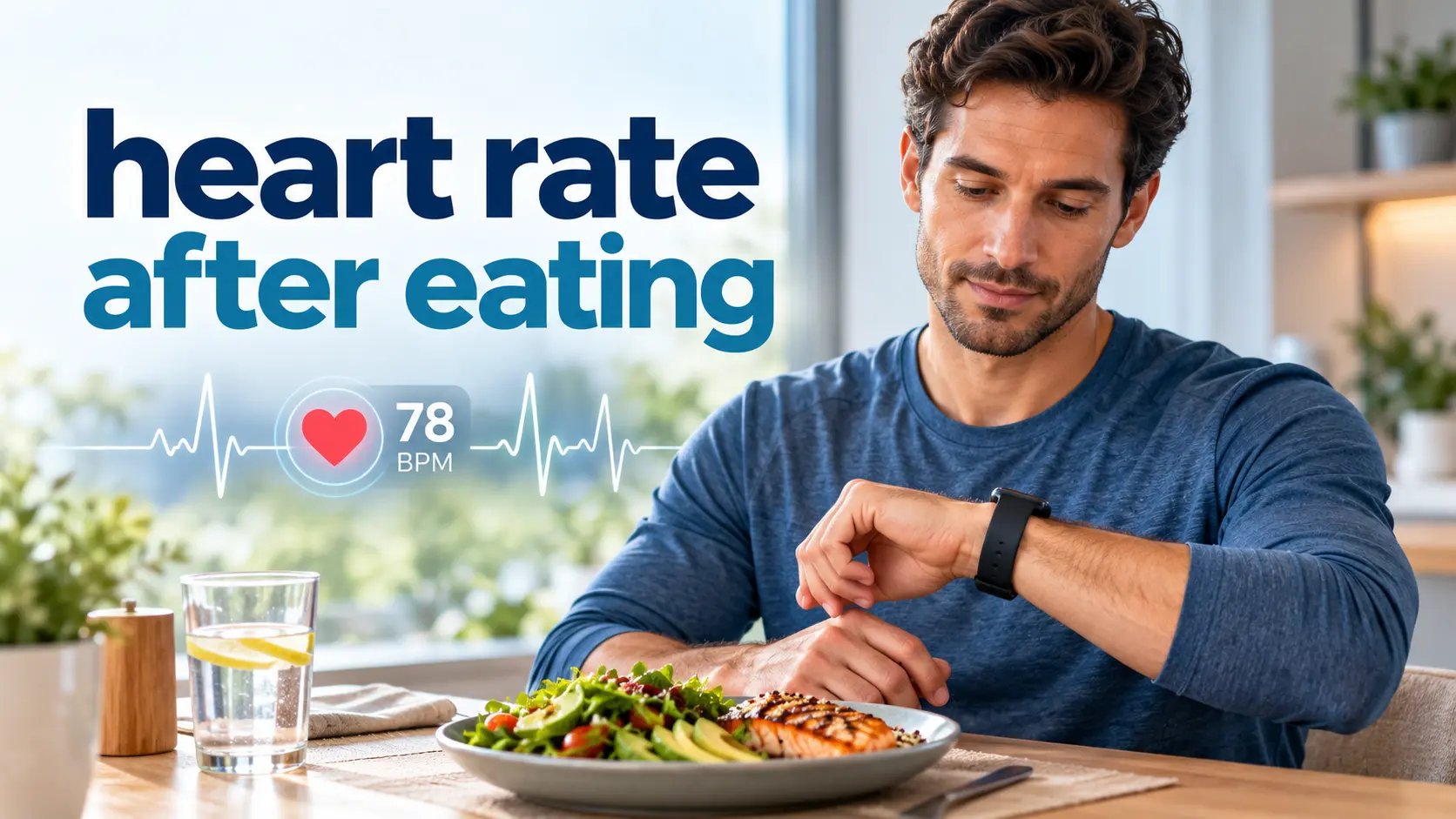
Your heart rate after eating can rise because digestion changes blood flow and cardiovascular activity. A small temporary change can be normal, but there is no single post meal heart rate that every healthy adult should hit.
What matters more is your normal baseline, how high the pulse goes, whether the rhythm feels regular, how long the change lasts, what you ate, and whether symptoms such as dizziness, chest discomfort, sweating, or breathlessness appear with it.
Quick Answer
Heart rate commonly rises after food because the digestive system needs more blood. There is no universal normal heart rate after eating. Meal size, carbohydrates, caffeine, alcohol, dehydration, blood sugar changes, medicines, POTS, blood pressure changes, anxiety, and abnormal heart rhythms can all affect the response.
Get Emergency Help for These Symptoms
Seek emergency medical care if a fast or unusual heartbeat comes with chest pain or pressure, severe shortness of breath, fainting, collapse, severe dizziness, confusion, or symptoms of a serious allergic reaction.
Do not wait for another smartwatch reading or another meal to see whether severe symptoms happen again.
Medical notice: This content is for general educational purposes and does not replace professional medical advice, diagnosis, or treatment. Consult an appropriately qualified healthcare professional for personal medical concerns. This article explains published guidance and does not provide a personal clinical assessment. Always consult qualified medical professionals for diagnosis and treatment of any health condition.
Table of Contents
- What Happens to Heart Rate After Eating
- Heart Rate vs Palpitations
- What Is a Normal Heart Rate After Eating?
- 13 Causes of a Fast Heart Rate After Eating
- Why Timing Matters
- What 100 or 120 BPM May Mean
- How to Measure Your Pulse Properly
- What to Track for Seven Days
- Can a Smartwatch Help?
- Tests a Clinician May Use
- Questions to Ask a Clinician
- When to Get Medical Help
- References and Sources
- Related NextFitLife Guides
- About the Author
- Frequently Asked Questions
What Happens to Heart Rate After Eating?
Eating is work for your body, even though you are sitting still.
Once food reaches the digestive tract, blood flow to the stomach and intestines increases. Your cardiovascular system adjusts so the digestive organs receive what they need while the brain and other organs continue getting enough blood.
Heart rate can rise as part of that adjustment.
A 2024 systematic review looked at 25 studies of cardiovascular changes after eating. All 19 studies that measured heart rate found a significant increase after food, but the size of that increase varied widely between studies.
The reported increase ranged from about 6% to 21%.
That does not mean your pulse “should” rise by a certain percentage. The studies used different meals, people, measurements, and conditions.
The useful lesson is simpler: a rise after food is real physiology, but the size of the rise varies.
Heart Rate and Heart Palpitations Are Not the Same Thing
This distinction matters.
Heart rate is the number of heartbeats measured in one minute.
Heart palpitations describe what your heartbeat feels like.
You may notice:
- Racing
- Pounding
- Fluttering
- Skipped beats
- Extra beats
- An irregular rhythm
- A strong heartbeat in the chest, throat, or neck
You can have a palpitation while the average heart rate is normal.
You can also have a genuinely fast pulse without feeling much at all.
The American Family Physician review of palpitations explains why clinicians try to connect the symptom with the actual rhythm rather than diagnosing a problem from the sensation alone.
What Is a Normal Heart Rate After Eating?
There is no single accepted normal heart rate after eating for every adult.
The American Heart Association describes a normal resting adult heart rate as 60 to 100 beats per minute. Tachycardia means a heart rate above 100 beats per minute while at rest.
But eating is a physiological event.
A reading taken after a meal cannot be interpreted from the number alone.
Consider:
- Your normal resting heart rate
- The size of the meal
- What you ate and drank
- Whether you were sitting or walking
- Stress or anxiety
- Body temperature
- Illness
- Medicines
- Hydration
- Your age and health
Do Not Chase One Internet Number
Some websites state that the average heart rate after eating should rise by exactly 10, 15, or 20 beats per minute. Research supports a post meal rise, but the size varies enough that one fixed number should not be treated as a home diagnostic rule.
13 Causes of a Fast or Elevated Heart Rate After Eating
1. Normal Digestion
The simplest explanation comes first.
Food increases blood flow to the digestive organs. Heart rate, cardiac output, and other cardiovascular measurements can change in response.
If the increase is mild, settles on its own, and causes no concerning symptoms, it may simply reflect normal digestion.
2. A Large Meal
A large meal creates a bigger digestive demand than a small snack.
More food also stretches the stomach and can make you more aware of your heartbeat.
If symptoms follow enormous meals but are much less noticeable after smaller portions, that pattern is useful information.
You do not need to starve yourself to test the idea. Record portion size along with your pulse and symptoms.
3. A High Carbohydrate Meal
Meal composition matters.
The 2024 systematic review found that several studies reported different cardiovascular responses depending on the food composition, with carbohydrate content influencing some post meal heart rate changes.
People with POTS may also find carbohydrate heavy meals harder to tolerate.
This does not make carbohydrates dangerous.
It means meal composition can change cardiovascular responses in some people.
4. Reactive Hypoglycemia
The timing here is different.
Reactive hypoglycemia means blood glucose falls after eating, usually within four hours.
Mayo Clinic lists a fast or uneven heartbeat among symptoms. Shaking, sweating, hunger, weakness, anxiety, dizziness, and headache may occur too.
Symptoms do not prove your glucose is low.
If you have diabetes and use insulin or medicine that can lower glucose, follow your prescribed glucose testing and treatment plan.
Read our Diabetes and Heart Diseases guide for more on glucose and cardiovascular health.
5. Dumping Syndrome
This cause matters most if you have had surgery involving the stomach or oesophagus.
Dumping syndrome happens when food moves into the small intestine too quickly.
Early dumping commonly starts about 10 to 30 minutes after a meal and may cause:
- Rapid heart rate
- Flushing
- Dizziness
- Nausea
- Abdominal cramps
- Diarrhoea
- Bloating
Late dumping can begin about one to three hours later and may include sweating, weakness, dizziness, and a rapid heartbeat related to low blood sugar.
Tell your clinician about any previous gastric bypass, stomach surgery, or other digestive operation.
6. Caffeine and Other Stimulants
Coffee with breakfast can make the meal look guilty when caffeine is the stronger clue.
Caffeine affects people differently. Coffee, tea, cola, chocolate, energy drinks, and some workout products contain stimulants that may make the heartbeat more noticeable.
Cleveland Clinic notes that moderate caffeine is not a universal palpitation trigger, but individual sensitivity varies.
Track the dose and timing instead of assuming all caffeine must be removed.
7. Alcohol
Alcohol can affect heart rhythm, blood vessels, hydration, and nervous system activity.
Some people notice palpitations after a meal only when alcohol is included.
Alcohol can also trigger atrial fibrillation in susceptible people.
If episodes occur after restaurant dinners or evening meals, note alcohol separately from the food.
8. Dehydration
Low fluid volume can make the heart beat faster as the body tries to maintain circulation.
Dehydration becomes more likely with:
- Hot weather
- Vomiting
- Diarrhoea
- Fever
- Heavy exercise
- Alcohol
- Not drinking enough
Drink according to normal thirst and health needs.
If you have heart failure, kidney disease, or a prescribed fluid restriction, follow your clinician's plan rather than generic hydration advice.
9. Postprandial Hypotension
Sometimes the important number after eating is blood pressure rather than heart rate.
Postprandial hypotension means blood pressure drops too much after a meal.
Normally, heart rate rises and blood vessels outside the digestive system tighten to help maintain pressure. In some people, especially some older adults or people with autonomic disorders, that compensation is not enough.
Possible symptoms include:
- Dizziness
- Lightheadedness
- Weakness
- Faintness
- Falls
If you become dizzy after meals, a clinician may want both heart rate and blood pressure readings before and after food.
10. POTS and Autonomic Nervous System Problems
POTS stands for postural tachycardia syndrome.
The NHS notes that symptoms can worsen with eating, especially carbohydrate rich meals.
POTS is mainly defined by an abnormal heart rate response to becoming upright, so a fast pulse after a meal alone does not diagnose it.
Symptoms can include:
- Palpitations
- Dizziness
- Near fainting
- Breathlessness
- Shaking
- Sweating
- Digestive symptoms
If this pattern sounds familiar, tell your clinician what happens when you stand as well as what happens after food.
11. Anxiety and Stress
Anxiety activates the sympathetic nervous system.
Your pulse can speed up, your breathing can change, and each heartbeat can feel stronger.
A stressful meal, fear about symptoms, panic, or repeatedly watching a heart rate monitor can increase awareness of the heartbeat.
Still, anxiety should not become the automatic explanation for a new or clearly abnormal rhythm.
Check the pattern first.
12. Medicines and Supplements
Think about what you take with the meal, not only what is on the plate.
Possible contributors can include some:
- Cold medicines
- Decongestants
- Asthma medicines
- Thyroid medicines
- Stimulants
- Weight management medicines
- Herbal products
- Energy supplements
- Diabetes medicines when they cause low glucose
Do not stop a prescribed medicine because one episode happened after eating.
Write down the medicine, dose, timing, meal, and symptoms, then review the pattern with your doctor or pharmacist.
13. An Abnormal Heart Rhythm
Food does not protect you from having an arrhythmia.
An episode that happens after dinner may still be an unrelated rhythm problem.
Possible rhythms include premature beats, atrial fibrillation, and SVT.
A useful clue is sudden onset and sudden stop.
For example, you are sitting quietly after eating and your pulse suddenly changes from its usual rhythm to a very fast steady rhythm. Ten minutes later it stops just as suddenly.
That pattern is worth describing to a healthcare professional.
An ECG or longer rhythm recording may be needed to identify what actually happened.
What About Thyroid Disease and Anemia?
These conditions may not be caused by the meal, but they can make a fast pulse easier to trigger or notice.
An overactive thyroid can raise heart rate.
Anemia reduces the blood's ability to carry oxygen, which can make the heart work harder.
Other medical causes of palpitations include fever, electrolyte problems, blood loss, and some heart conditions.
This is one reason recurrent symptoms deserve medical assessment rather than endless food elimination.
Why Does Timing After Eating Matter?
The clock can give useful clues.
| Timing | Questions Worth Considering | Other Clues |
|---|---|---|
| During the meal | Caffeine, anxiety, awareness of heartbeat, rhythm change | Pounding, fluttering, sudden onset |
| Minutes after eating | Normal digestive response, large meal, early dumping after relevant surgery | Fullness, flushing, abdominal symptoms |
| Within 1 to 2 hours | Digestion, blood pressure change, POTS pattern | Dizziness, posture related symptoms |
| About 1 to 4 hours later | Reactive hypoglycemia or late dumping in the right setting | Shaking, sweating, hunger, weakness |
| Random timing | Consider whether food is coincidence rather than the cause | Sudden episodes at unrelated times |
This table is not a diagnostic tool.
It is a way to describe your pattern more clearly.
Is a Heart Rate Over 100 After Eating Dangerous?
Not automatically.
The American Heart Association uses more than 100 beats per minute as the definition of tachycardia when the heart is beating too fast at rest.
Context still matters.
A reading of 102 after walking to the kitchen differs from a sudden sustained pulse of 140 while sitting quietly.
Pay closer attention when a rate above 100:
- Happens repeatedly while you are sitting quietly
- Is much higher than your normal baseline
- Does not settle
- Starts and stops suddenly
- Feels clearly irregular
- Comes with dizziness
- Comes with chest discomfort
- Comes with breathlessness
What Does a Heart Rate of 120 After Eating Mean?
Again, 120 is not a universal danger line.
If you have just walked, climbed stairs, become anxious, or had caffeine, the context changes the meaning.
A pulse around 120 that repeatedly appears while you are sitting quietly after meals deserves more attention, especially when it lasts, feels irregular, or causes symptoms.
Do not diagnose an arrhythmia from the number alone.
How Should You Measure Your Heart Rate After Eating?
Consistency gives the number meaning.
- Sit quietly before the meal.
- Rest for several minutes.
- Measure your heart rate.
- Record what you eat and drink.
- Stay aware of whether you are sitting, standing, or walking.
- If symptoms begin, record the heart rate again.
- Note whether the pulse feels steady or irregular.
- Write down how long the episode lasts.
Do not measure every minute.
The goal is to find a pattern, not to turn the meal into a heart monitoring test.
A Seven Day Heart Rate After Eating Log
| Track | What to Record |
|---|---|
| Before meal pulse | Heart rate after sitting quietly |
| Food | Major foods and approximate portion size |
| Drinks | Coffee, tea, energy drink, alcohol, water |
| Symptom timing | Minutes or hours after the meal |
| Heart rate | Measured rate during the episode |
| Rhythm | Steady, irregular, skipped, pounding |
| Posture | Sitting, standing, walking, lying down |
| Other symptoms | Dizziness, sweating, shaking, pain, breathlessness |
| Blood pressure | Only if you already have a reliable monitor and know how to use it |
| Glucose | Only if your medical plan already includes glucose monitoring |
| Medicines | Dose and timing around the meal |
A short structured log can be far more useful than dozens of random smartwatch screenshots.
Can a smartwatch help?
Yes, within limits.
A watch can help answer whether your heart rate truly increased when you felt pounding.
Some devices can also create a short single lead ECG.
Consumer devices can detect some rhythm problems, especially atrial fibrillation, but they can miss short episodes and create false alerts.
Save useful recordings for your healthcare professional.
Do not let a watch reassure you out of seeking care for serious symptoms.
Could a Food Allergy Cause a Rapid Heart Rate?
A serious allergic reaction changes the urgency completely.
Seek emergency care when a fast heartbeat after food comes with:
- Swollen lips
- Swollen tongue
- Throat swelling
- Trouble breathing
- Wheezing
- Trouble swallowing
- Severe dizziness
- Fainting
- A widespread rash with breathing or circulation symptoms
A rapid pulse can occur during anaphylaxis because blood pressure can fall.
What Tests Might a Clinician Use?
You do not need every heart test because your pulse changes after lunch.
The right tests depend on the pattern.
12 Lead ECG
An ECG records the electrical activity of the heart.
The American Family Physician review recommends a 12 lead ECG as part of the initial evaluation of palpitations.
Ambulatory Heart Monitoring
If the problem comes and goes, a Holter monitor, patch monitor, or event recorder may help capture the rhythm during a real episode.
Blood Tests
Depending on your symptoms and history, a clinician may check:
- Blood count for anemia
- Thyroid function
- Electrolytes
- Glucose
- Kidney function
- Other tests based on your history
Blood Pressure Before and After Eating
This can help if postprandial hypotension is suspected.
Standing Heart Rate and Blood Pressure
This may be useful when symptoms suggest POTS or another autonomic disorder.
Echocardiogram
An ultrasound of the heart may be ordered if the history, examination, or ECG suggests structural heart disease.
Questions to Ask a Clinician
- Is my measured heart rate unusual for my baseline?
- Does the pattern sound like sinus tachycardia or an arrhythmia?
- Should I have an ECG?
- Would a Holter monitor or patch monitor help?
- Should we check my blood pressure after meals?
- Could my medicines or supplements be contributing?
- Should I be tested for anemia?
- Should my thyroid be checked?
- Could glucose changes explain the timing?
- Does my pattern suggest POTS?
- Could previous stomach surgery make dumping syndrome possible?
- What symptoms should make me seek emergency care?
What Can You Try Safely While Waiting for an Appointment?
If you have no emergency symptoms, focus on simple observations rather than treating yourself for a condition you have not been diagnosed with.
- Eat slowly.
- Avoid unusually large meals.
- Notice whether caffeine changes the pattern.
- Notice whether alcohol changes the pattern.
- Stay normally hydrated.
- Record symptoms for several days.
- Take prescribed medicines exactly as directed.
Do not begin an extreme low carbohydrate diet, huge salt intake, excessive water intake, or new supplement routine just because your pulse changes after eating.
People with diabetes, kidney disease, heart failure, POTS, or another condition may need different advice.
When Should You Book a Medical Appointment?
Arrange a medical review if your fast heart rate after eating:
- Is new
- Keeps returning
- Occurs after most meals
- Is becoming more frequent
- Lasts longer than before
- Starts and stops suddenly
- Feels clearly irregular
- Is far above your normal resting rate
- Comes with dizziness
- Appeared after a new medicine
- Occurs when you already have heart disease
You do not need to prove the cause before making the appointment.
When Is It an Emergency?
Seek emergency medical care for a racing or abnormal heartbeat with:
- Chest pain or pressure
- Severe shortness of breath
- Fainting
- Collapse
- Severe dizziness
- Confusion
- New severe weakness
- Signs of a serious allergic reaction
If chest symptoms are part of the episode, read our Left Side Chest Pain guide for general education, but do not use an article to delay emergency assessment.
Conclusion
A change in heart rate after eating is often part of normal digestion, but the exact number is less useful than the surrounding pattern.
Track your baseline, meal, timing, measured pulse, rhythm, posture, and other symptoms. If the same unusual pattern keeps returning, take that record to a qualified healthcare professional instead of trying to diagnose yourself from one online heart rate chart.
If a racing heartbeat comes with chest pain, severe breathlessness, fainting, collapse, or a serious allergic reaction, seek emergency care.
References and Sources
- Gauer RL, Thomas MF, McNutt RA.
Palpitations: Evaluation, Management, and Wearable Smart Devices.
American Family Physician. 2024;110(3):259 to 269.
Covers palpitation assessment, ECG testing, rhythm monitoring, wearables, and emergency warning features.
https://www.aafp.org/afp/2024/0900/palpitations - Chikwetu L, Vakili P, Takais A, Younes R.
Central Hemodynamic and Thermoregulatory Responses to Food Intake as Potential Biomarkers for Eating Detection: Systematic Review.
Published 2024. Free full text through PubMed Central.
Covers research on post meal heart rate, cardiac output, stroke volume, meal composition, and variation between studies.
https://pmc.ncbi.nlm.nih.gov/articles/PMC11422732/ - Cleveland Clinic.
Heart Palpitations After Eating.
Covers palpitations, food and drink triggers, medicines, dehydration, symptom diaries, rhythm testing, and warning signs.
https://my.clevelandclinic.org/health/diseases/22416-heart-palpitations-after-eating - Mayo Clinic.
Reactive Hypoglycemia: What Can I Do?
Covers low blood glucose after meals, timing, symptoms, and the possible fast or uneven heartbeat associated with hypoglycemia.
https://www.mayoclinic.org/diseases-conditions/diabetes/expert-answers/reactive-hypoglycemia/faq-20057778 - NHS.
Postural Tachycardia Syndrome.
Covers POTS symptoms, meal triggers, carbohydrate related worsening, diagnosis, and treatment.
https://www.nhs.uk/conditions/postural-tachycardia-syndrome/ - Mayo Clinic.
Dumping Syndrome: Symptoms and Causes.
Covers early and late dumping, timing after food, rapid heart rate, glucose changes, and the relationship with stomach surgery.
https://www.mayoclinic.org/diseases-conditions/dumping-syndrome/symptoms-causes/syc-20371915
Related NextFitLife Guides and Health Hub
- NextFitLife General Wellness and Lifestyle Hub
- Heart Rate Recovery After Exercise
- Diabetes and Heart Diseases
- Sleep and Heart Health
- Left Side Chest Pain
- Heart Health After 50
About the Author
Adel Galal is the founder and lead writer of NextFitLife. He has more than 15 years of health and wellness writing and research communication experience and has maintained a personal interest in health, fitness, nutrition, sleep, and healthy aging for more than 30 years.
Before focusing full time on NextFitLife, Adel spent 29 years working in information technology management. His work involved data, information systems, structured review, planning, and problem solving. He applies this research and information skills when comparing health sources, while clearly separating them from medical qualifications.
This content is for general educational purposes and does not replace professional medical advice, diagnosis, or treatment. Consult an appropriately qualified healthcare professional for personal medical concerns. This article explains published guidance and does not provide a personal clinical assessment. Always consult qualified medical professionals for diagnosis and treatment of any health condition.
Learn more about Adel, NextFitLife, its editorial approach, and medical review standards on the About Us page.
Frequently Asked Questions
Is it normal for heart rate to increase after eating?
Yes. Research shows that heart rate commonly increases after food because digestion changes circulation and cardiovascular activity. The amount of increase varies, so there is no one post meal heart rate that is normal for everyone.
What is a normal heart rate after eating?
There is no established universal post meal range. Your baseline heart rate, meal size, food composition, activity, medicines, hydration, and health all affect the result. The pattern and symptoms are more useful than one number.
What is the average heart rate after eating?
Research shows that heart rate rises after meals, but studies report substantial variation. A 2024 systematic review found increases ranging from about 6% to 21% across the included studies, so those figures should not be turned into a personal target.
Why is my heart rate high after eating?
Possible reasons include normal digestion, large meals, caffeine, alcohol, dehydration, carbohydrate rich meals, glucose changes, postprandial hypotension, POTS, anxiety, medicines, dumping syndrome, or an abnormal heart rhythm.
Is a heart rate over 100 after eating dangerous?
Not automatically. More than 100 beats per minute is considered tachycardia when resting, but context matters after food. Repeated or sustained readings above your normal level deserve review when they occur while sitting quietly or come with symptoms.
Is a heart rate of 120 after eating too high?
The number must be interpreted with activity, baseline rate, duration, rhythm, and symptoms. A repeated pulse around 120 while sitting quietly after meals is worth discussing with a healthcare professional, especially if it is sustained or symptomatic.
Can sugar make my heart race after eating?
Glucose and insulin changes can contribute to symptoms in some people. Reactive hypoglycemia can occur within several hours after a meal and may cause shaking, sweating, weakness, dizziness, and a fast or uneven heartbeat.
Can POTS cause a rapid heart rate after meals?
Yes. Eating can worsen POTS symptoms, especially after carbohydrate rich meals. Post meal tachycardia alone does not diagnose POTS because the condition is mainly defined by an abnormal heart rate response to becoming upright.
Can dehydration raise heart rate after eating?
Yes. Dehydration can increase heart rate and make palpitations more noticeable. Illness, heat, exercise, vomiting, diarrhoea, and alcohol can increase dehydration risk.
Can a smartwatch diagnose the cause?
No. A smartwatch can provide useful heart rate data and some models record a short ECG, but consumer devices can miss rhythms or produce false alerts. A clinician should interpret repeated or concerning symptoms.
When should I see a doctor for a fast heart rate after eating?
Arrange medical review if the problem is new, recurrent, increasingly frequent, prolonged, irregular, much faster than your normal rate, or accompanied by dizziness or near fainting.
When is a fast heartbeat after eating an emergency?
Seek emergency care if it comes with chest pain, severe shortness of breath, fainting, collapse, severe dizziness, confusion, or symptoms of a serious allergic reaction.

Health & wellness writer with 30+ years of experience in nutrition, fitness, and healthy aging. Founder of NextFitLife.com — evidence-based health guidance.