First published: October 1, 2026
Last updated: October 1, 2026
Written and source- checked by: Adel Galal, Founder and Lead Writer at NextFitLife
Medical review status: This article has not been medically reviewed by a doctor, paediatrician, endocrinologist, registered dietitian, pharmacist, or other licensed healthcare professional.
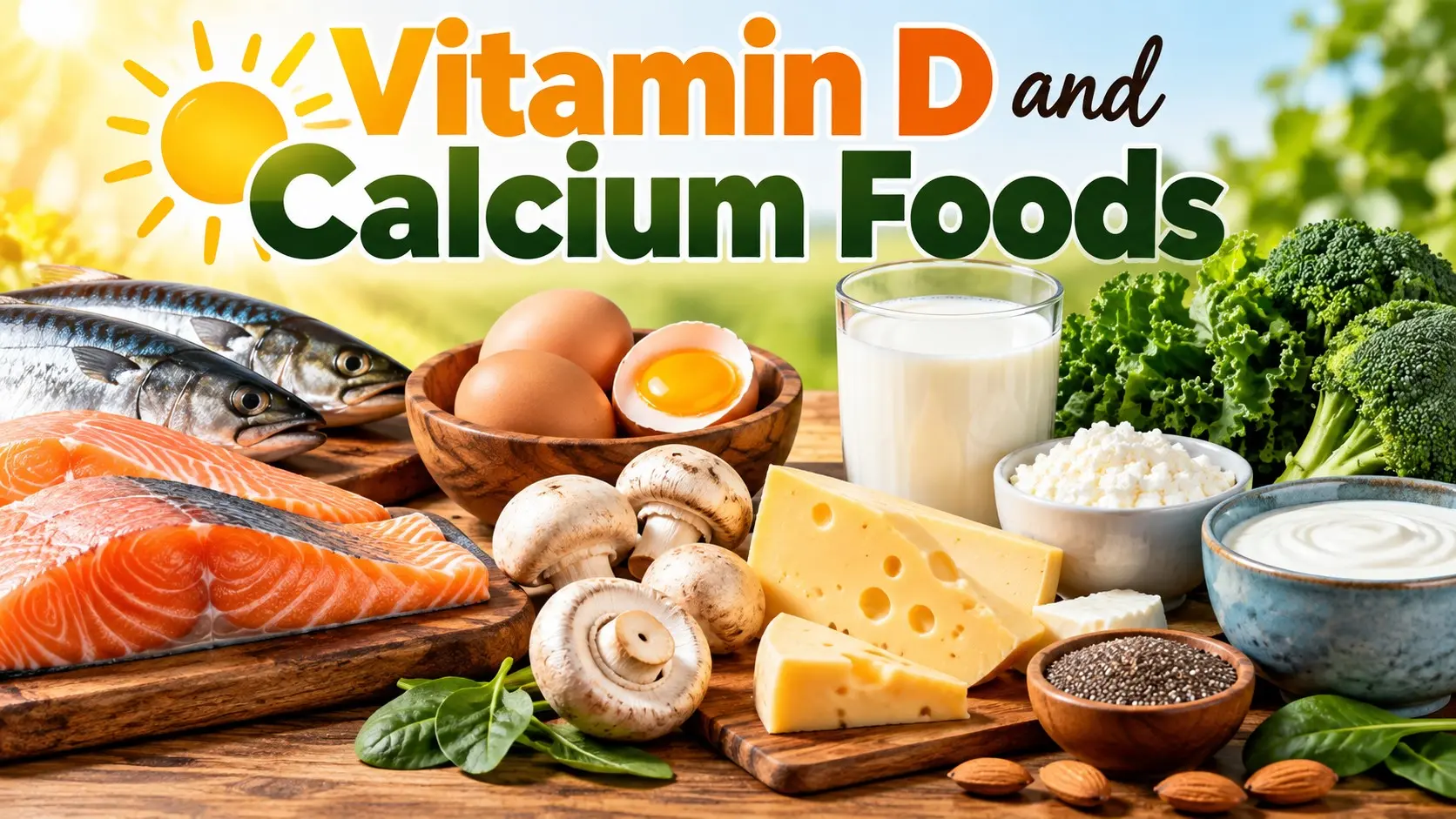
Vitamin D and calcium foods belong in the same conversation because calcium gives your body the mineral it needs for bones, teeth, muscles, and nerves, while vitamin D helps your body absorb that calcium.
The tricky part is that calcium is quite easy to find in food, but vitamin D is not. A practical diet therefore uses reliable calcium rich foods every day, adds the small number of useful vitamin D foods, and uses fortified foods or supplements when national guidance recommends them.
Quick Answer
The best vitamin D and calcium foods include oily fish, sardines or canned salmon with edible bones, milk, yogurt, fortified plant drinks, calcium set tofu, UV exposed mushrooms, eggs, and selected green vegetables. Vegetarians need to pay closer attention to fortified foods and mushrooms, while babies need age specific feeding and vitamin D guidance.
Medical notice: This content is for general educational purposes and does not replace professional medical advice, diagnosis, or treatment. Consult an appropriately qualified healthcare professional for personal medical concerns.
Table of Contents
- Why Vitamin D and Calcium Work Together
- How Much Adults Need
- 14 Smart Food Choices
- Foods That Provide Both Nutrients
- Why Calcium Absorption Matters
- Vegetarian and Vegan Choices
- Vitamin D and Calcium Foods for Babies
- Simple Meal Ideas
- Food vs Supplements
- Vitamin D and Calcium Safety
- Medicine Interactions
- Common Nutrition Mistakes
- References and Sources
- Related NextFitLife Guides
- About the Author
- Frequently Asked Questions
Why Do Vitamin D and Calcium Work Together?
Calcium is the most abundant mineral in the body. Most of it sits in bones and teeth, but your muscles, nerves, blood vessels, and heart also need calcium to work normally.
Vitamin D has a different job. It helps your intestine absorb calcium, which means low vitamin D can undermine bone health even when your diet contains enough calcium on paper.
Long term severe vitamin D deficiency can contribute to rickets in children and osteomalacia in adults.
Bone health is broader than these two nutrients, though. Protein, vitamin K, magnesium, physical activity, hormones, smoking, alcohol, medicines, and medical conditions also matter.
For more guidance, visit the NextFitLife Bone and Joint Health Hub.
How Much Calcium and Vitamin D Do Adults Need?
Nutrition targets differ between countries, so do not mix two national systems and assume the larger number must be better.
| Guideline | Calcium | Vitamin D |
|---|---|---|
| UK healthy adults | 700 mg per day | 10 micrograms per day |
| US adults age 19 to 50 | 1,000 mg per day | 15 micrograms or 600 IU |
| US adults over 70 | 1,200 mg per day | 20 micrograms or 800 IU |
The difference does not mean human bones work differently in the UK and US. National organisations use different methods and assumptions when they set reference values.
14 Smart Vitamin D and Calcium Foods
1. Salmon
Salmon is one of the most useful natural sources of vitamin D.
NIH nutrient tables list about 14.2 micrograms of vitamin D in a 3 ounce serving of cooked sockeye salmon.
Fresh salmon is not a major calcium source because the bones are normally removed, so pair it with yogurt, fortified milk, calcium rich vegetables, or another calcium food.
2. Trout
Trout can provide even more vitamin D per serving.
NIH data lists roughly 16.2 micrograms in 3 ounces of cooked rainbow trout, making trout one of the strongest ordinary food sources of vitamin D.
3. Sardines With Edible Bones
Sardines solve both sides of the problem better than most foods.
The fish provides vitamin D, while the small edible bones supply calcium. NIH lists about 325 mg of calcium in 3 ounces of canned sardines with bones.
If you enjoy sardines, they are one of the most efficient vitamin D and calcium foods available.
4. Canned Salmon With Edible Bones
Canned salmon with soft edible bones provides calcium as well as vitamin D.
NIH lists about 181 mg of calcium in a 3 ounce serving of canned pink salmon with bones.
Mash the soft bones into the fish rather than picking them out if you want the calcium benefit.
5. Milk
Milk is a reliable calcium food.
NIH lists roughly 276 to 299 mg of calcium per cup depending on fat content.
Vitamin D content depends on fortification and country, so check the label rather than assuming every milk contains the same amount.
6. Yogurt
Plain yogurt is one of the easiest ways to increase calcium intake.
NIH lists about 415 mg of calcium in an 8 ounce serving of plain low fat yogurt.
Vitamin D varies between products. Some yogurts are fortified and some are not, so check the nutrition label if vitamin D is one of your reasons for choosing it.
7. Cheese
Cheese provides calcium and protein.
NIH lists about 333 mg of calcium in 1.5 ounces of part skim mozzarella.
Cheese is not normally a major vitamin D source, and some varieties contain plenty of salt and saturated fat, so use it as one part of a balanced plan.
8. Fortified Soy and Other Plant Drinks
A good fortified plant drink can make a dairy free diet much easier.
NIH lists roughly 299 mg of calcium in one cup of calcium fortified soy milk.
Some products also contain vitamin D, vitamin B12, and iodine. Fortification varies widely, so read the label for:
- Calcium
- Vitamin D
- Vitamin B12
- Iodine
- Protein
- Added sugar
For broader nutrient guidance, visit the NextFitLife Nutrition and Vitamins Hub.
9. Calcium Set Tofu
Tofu can be excellent for calcium, but the way it is made matters.
NIH lists about 253 mg of calcium in half a cup of firm tofu made with calcium sulfate.
Tofu made with another coagulant may provide far less. Look for calcium sulfate or another calcium salt on the ingredient list and confirm the amount on the nutrition panel.
10. UV Exposed Mushrooms
Mushrooms are unusual because ultraviolet light can sharply increase their vitamin D content.
NIH lists about 9.2 micrograms of vitamin D in half a cup of raw white mushrooms exposed to UV light.
Ordinary mushrooms can contain very little, so look for terms such as “UV exposed,” “vitamin D enriched,” or an actual vitamin D value on the package.
11. Eggs
Egg yolks contain vitamin D.
One large egg provides only a modest amount, which means eggs should not be sold as a complete vitamin D solution.
They still fit well into a meal with fortified milk, yogurt, cheese, or another calcium source.
12. Kale, Broccoli and Bok Choy
These vegetables provide calcium without dairy.
The total calcium per serving is lower than in many dairy foods, but absorption is relatively good.
This makes them more useful for calcium than spinach, even though spinach can look impressive on a nutrient table.
13. Sesame Seeds and Tahini
Sesame and tahini contribute calcium, healthy fats, and other minerals.
They work well in vegetarian and vegan meals, especially when paired with chickpeas, vegetables, whole grains, or tofu.
They are not meaningful vitamin D sources, so combine them with a vitamin D food or fortified product.
14. Fortified Breakfast Cereals
Fortified cereal can provide calcium, vitamin D, or both.
The amount varies greatly between products, which means a cereal only belongs on a vitamin D and calcium list when the label shows meaningful fortification.
Choose one with reasonable added sugar and pair it with fortified milk or a suitable plant drink.
Which Foods Give You Both Vitamin D and Calcium?
This is more useful than keeping two completely separate food lists.
| Food or Pairing | Calcium | Vitamin D | Practical Use |
|---|---|---|---|
| Sardines with bones | High | Useful | Toast, salads, lunch |
| Canned salmon with bones | Useful | High | Sandwiches, fish cakes, salads |
| Fortified milk | High | Varies | Breakfast, drinks, cooking |
| Fortified plant drink | Can be high | Can be useful | Vegetarian and dairy free meals |
| Calcium tofu + UV mushrooms | High from tofu | High from suitable mushrooms | Vegetarian or vegan dinner |
Why Calcium Absorption Matters More Than the Label Number
A food can contain plenty of calcium without your body absorbing much of it.
This is called calcium bioavailability.
NIH reports calcium absorption of roughly 30% from dairy and many fortified foods.
Spinach is different because oxalic acid binds much of its calcium. NIH estimates that only about 5% of spinach calcium is absorbed, compared with about 27% from milk.
Kale, broccoli, and cabbage contain less oxalate and offer much better calcium availability.
Spinach is still healthy. I simply would not make it your main calcium strategy.
Vitamin D and Calcium Foods for Vegetarians
The calcium side of a vegetarian diet is usually manageable. The vitamin D side takes more planning.
Useful vitamin D and calcium foods for vegetarians include:
- Milk and yogurt for people who eat dairy
- Eggs
- Fortified plant drinks
- Fortified breakfast cereals
- Calcium set tofu
- UV exposed mushrooms
- Kale
- Bok choy
- Broccoli
- Sesame and tahini
- Beans and lentils
NHS vegan guidance lists fortified soy, pea, and oat drinks, calcium set tofu, sesame, tahini, pulses, broccoli, cabbage, and okra among useful calcium sources.
For vegans, vitamin D from food is particularly limited, which makes fortified products and appropriate supplements more relevant.
Do Plant Foods Provide Calcium as Well as Dairy?
Some do.
Calcium from lower oxalate vegetables such as kale and broccoli is absorbed quite well, while properly fortified plant drinks can provide calcium amounts similar to dairy milk.
But the word “plant” does not guarantee calcium.
An unfortified oat, rice, or almond drink can contain far less calcium or vitamin D than a fortified one.
Read the label.
Vitamin D and Calcium Foods for Babies
This topic needs different rules from adult nutrition.
Vitamin D and calcium foods for babies should not be planned by shrinking an adult meal plan.
For roughly the first six months, breast milk or first infant formula provides the core nutrition.
Vitamin D From Birth
NHS guidance says breastfed babies from birth to age 1 should receive a daily supplement containing 8.5 to 10 micrograms of vitamin D.
This includes babies who are partly breastfed.
Formula fed babies drinking at least 500 ml of infant formula per day normally do not need an additional vitamin D supplement because infant formula is already fortified.
Foods From Around Six Months
When a baby is developmentally ready for solids at around six months, suitable foods can include:
- Pasteurised full fat plain yogurt
- Pasteurised cheese
- Egg
- Fish with every bone removed
- Tofu
- Beans and lentils prepared in an age safe texture
- Broccoli and other suitable vegetables
Cow's milk can be used in cooking or mixed into food from around six months, but it should not be the main drink before 12 months.
For broader child nutrition guidance, see our Best Foods for Kids Guide and Foods for Kids Growth Guide.
Plant Drinks Are Not Infant Formula
Standard oat, almond, soy, and other plant drinks are not replacements for breast milk or first infant formula during the first year.
NHS guidance allows unsweetened calcium fortified alternatives such as soy, oat, or almond drinks as a main drink from age 1 as part of a balanced diet.
Children under age 5 should not be given rice drinks because of arsenic levels.
Does Sunlight Mean You Do Not Need Vitamin D Foods?
No fixed number of minutes in the sun works for everyone.
Vitamin D production changes with:
- Season
- Latitude
- Time of day
- Skin colour
- Age
- Clothing
- Time outdoors
In the UK, most people can make vitamin D from sunlight during spring and summer.
During autumn and winter, NHS guidance recommends that everyone consider a daily 10 microgram vitamin D supplement because sunlight is weaker and food sources are limited.
People with little sun exposure or darker skin may need supplementation throughout the year.
Do not deliberately let your skin burn to make vitamin D.
Four Easy Meal Ideas Using Vitamin D and Calcium Foods
Breakfast: Fortified Cereal Bowl
Use fortified cereal with fortified milk or a fortified plant drink.
Add fruit and nuts or seeds if you enjoy them.
This is one of the easiest ways to combine calcium with added vitamin D.
Lunch: Salmon and Greens
Use canned salmon with edible bones alongside kale, broccoli, or cabbage.
The salmon contributes vitamin D and calcium, while the vegetables add more calcium and other nutrients.
Vegetarian Dinner: Tofu and Mushroom Bowl
Use calcium set tofu with UV exposed mushrooms, bok choy, broccoli, and rice or another grain.
This is one of the strongest plant based combinations for both nutrients.
Snack: Yogurt and Fruit
Plain yogurt provides plenty of calcium.
Add fruit for fibre and flavour, then obtain vitamin D from fish, eggs, fortified foods, mushrooms, or an appropriate supplement elsewhere in the day.
Food or Supplements: Which Is Better?
For calcium, use food first when practical.
Food provides protein and other nutrients while making excessive intake less likely.
Vitamin D is different because natural food sources are limited.
That is why public health guidance can recommend vitamin D supplementation even for people who eat well.
A supplement should fill a real gap. It should not become a reason to keep increasing the dose.
How Much Calcium Supplement Can You Absorb at Once?
NIH says calcium from supplements is absorbed best in doses of 500 mg or less at one time.
If a larger daily dose has been medically recommended, splitting it can improve absorption.
Calcium carbonate is absorbed better with food, while calcium citrate depends less on stomach acid.
Supplements can also cause gas, bloating, or constipation in some people.
Can Too Much Vitamin D Be Dangerous?
Yes.
Too much supplemental vitamin D can raise calcium in the blood to unsafe levels.
Possible effects include:
- Nausea
- Vomiting
- Weakness
- Loss of appetite
- Excessive thirst
- Frequent urination
- Kidney stones
- Kidney damage
- Abnormal heart rhythms in severe cases
Vitamin D toxicity usually comes from excessive supplements rather than normal food.
The US adult tolerable upper intake level is 100 micrograms, or 4,000 IU, per day.
That is a safety ceiling for routine intake, not a daily target. A doctor treating a diagnosed deficiency may use a different dose for a limited period.
Can Too Much Calcium Be Harmful?
Yes.
Large supplement doses can cause digestive problems and may be unsuitable for people with certain kidney conditions or a history of some types of kidney stones.
NHS guidance says most adults should normally be able to get their required calcium from a varied diet.
If you already take more than one supplement, check the combined total rather than looking at each product separately.
Calcium Can Interact With Medicines
This is one reason not to take calcium supplements casually.
Calcium can reduce absorption of certain medicines.
For example, NIH guidance advises separating calcium carbonate from levothyroxine by at least four hours.
Calcium can also interact with some antibiotics and other medicines.
If you take daily medication, ask your pharmacist how to space it from a calcium supplement.
Do You Need a Vitamin D Blood Test?
The main blood marker used to assess vitamin D status is 25 hydroxyvitamin D.
Routine testing is not needed for every healthy person.
Testing is more relevant when deficiency is suspected, bone disease is present, absorption is impaired, or a healthcare professional has another clinical reason to check it.
Do not diagnose vitamin D deficiency from tiredness, muscle aches, or low mood alone because those symptoms have many possible causes.
Seven Common Mistakes With Vitamin D and Calcium Foods
1. Treating Spinach as the Best Calcium Vegetable
Spinach contains calcium, but much of it is bound by oxalate.
Kale, broccoli, and cabbage provide calcium that is easier to absorb.
2. Assuming Every Tofu Is High in Calcium
The calcium content depends on how the tofu is made.
Look for calcium sulfate or another calcium salt and check the nutrition label.
3. Assuming Every Plant Milk Is Fortified
Some are fortified and some are not.
Check the label for calcium and vitamin D.
4. Relying on Eggs Alone for Vitamin D
Eggs contribute vitamin D, but much less than fatty fish.
5. Treating Sunlight as a Precise Prescription
Vitamin D production changes with skin colour, season, latitude, time of day, and many other factors.
6. Giving Adult Supplements to Babies or Children
Children need age appropriate products and doses.
Keep all vitamin products safely out of children's reach.
7. Taking High Dose Vitamin D “Just in Case”
More vitamin D is not automatically better.
Very high intake can cause harm.
Who Needs More Individual Advice?
Talk with a doctor or registered dietitian if you:
- Have osteoporosis or osteopenia
- Have kidney disease
- Have recurrent kidney stones
- Have coeliac disease
- Have inflammatory bowel disease
- Have had bariatric surgery
- Have another condition affecting nutrient absorption
- Take long term steroids
- Take osteoporosis medicine
- Take levothyroxine
- Follow a highly restricted diet
- Are planning a vegan diet for a baby or young child
- Have diagnosed vitamin D deficiency
For more context on nutrients involved in bone health, read our Vitamin K2 Benefits Guide.
For related educational guides, visit our Food and Nutrition Hub.
Conclusion
Vitamin D and calcium foods are easier to plan when you stop searching for one perfect food.
Use milk, yogurt, fortified plant drinks, calcium set tofu, edible fish bones, and lower oxalate vegetables for calcium. Add salmon, trout, eggs, fortified foods, and UV exposed mushrooms for vitamin D.
Vegetarians should check fortification closely, while babies need age specific feeding and vitamin D advice rather than an adult meal plan.
Your next step is practical: look at tomorrow's meals and make sure at least two contain a reliable calcium source. Then identify where your vitamin D is coming from. If the answer is nowhere, follow the vitamin D supplement guidance that applies where you live or discuss your needs with a healthcare professional.
References and Sources
- NIH Office of Dietary Supplements.
Calcium: Fact Sheet for Health Professionals.
Detailed guidance on calcium requirements, calcium rich foods, calcium absorption, spinach and oxalate, calcium set tofu, fortified foods, supplements, and medicine interactions.
https://ods.od.nih.gov/factsheets/Calcium-HealthProfessional/ - NIH Office of Dietary Supplements.
Vitamin D: Fact Sheet for Health Professionals.
Detailed guidance on vitamin D requirements, salmon, trout, eggs, UV exposed mushrooms, deficiency, toxicity, supplements, and upper intake levels.
https://ods.od.nih.gov/factsheets/VitaminD-HealthProfessional/ - NHS.
Food for Healthy Bones.
UK guidance on calcium, vitamin D, dairy foods, fortified plant drinks, tofu, vegetables, vegan sources, and bone health.
https://www.nhs.uk/live-well/bone-health/food-for-strong-bones/ - NHS.
Vitamin D.
Official UK guidance on vitamin D requirements, autumn and winter supplementation, sunlight, and groups at higher risk of deficiency.
https://www.nhs.uk/conditions/vitamins-and-minerals/vitamin-d/ - NHS.
The Vegan Diet.
Guidance on vegan calcium sources including fortified plant drinks, calcium set tofu, sesame, tahini, pulses, and green vegetables.
https://www.nhs.uk/live-well/eat-well/how-to-eat-a-balanced-diet/the-vegan-diet/ - NHS Best Start in Life.
Vitamins for Babies.
Current guidance on vitamin D supplementation for breastfed babies and the 500 ml infant formula threshold.
https://www.nhs.uk/best-start-in-life/baby/baby-basics/caring-for-your-baby/vitamins-for-babies/ - NHS.
Your Baby's First Solid Foods.
Guidance on introducing solids at around six months, dairy foods, cow's milk in cooking, fish, eggs, tofu, breast milk, and infant formula.
https://www.nhs.uk/baby/weaning-and-feeding/babys-first-solid-foods/ - NHS.
Osteoporosis Treatment.
UK guidance covering calcium, vitamin D, and supplementation in people with osteoporosis.
https://www.nhs.uk/conditions/osteoporosis/treatment/ - Harvard T.H. Chan School of Public Health.
Calcium.
Evidence based overview of dairy and plant calcium sources, fortified foods, tofu, and calcium bioavailability.
https://nutritionsource.hsph.harvard.edu/calcium/
Related NextFitLife Guides and Hubs
- Nutrition and Vitamins Hub
- Bone and Joint Health Hub
- Vitamin K2 Benefits and Bone Health
- Best Foods for Kids
- Foods for Kids Growth
About the Author
Adel Galal is the founder and lead writer of NextFitLife. He writes practical health, nutrition, fitness, and healthy aging content using recognised medical, nutrition, government, and academic sources.
His nutrition work focuses on separating useful food advice from supplement hype. For vitamin and mineral articles, he compares current intake guidance, food composition, absorption, age related needs, and medication safety before turning the evidence into practical meal choices.
He does not diagnose vitamin D deficiency, osteoporosis, rickets, kidney disease, or another medical condition, and he does not prescribe individual supplement doses.
This content is for general educational purposes and does not replace professional medical advice, diagnosis, or treatment. Consult an appropriately qualified healthcare professional for personal medical concerns.
Learn more about Adel Galal and NextFitLife on the About Us page.
Frequently Asked Questions
What are the best vitamin D and calcium foods?
The best choices include sardines with bones, canned salmon with bones, fortified milk or plant drinks, yogurt, calcium set tofu, oily fish, eggs, UV exposed mushrooms, and lower oxalate green vegetables.
What foods contain both vitamin D and calcium?
Sardines with bones, canned salmon with bones, and some fortified milks or plant drinks provide both nutrients. Most foods are stronger in one nutrient, so combining foods across the day works well.
What food has the most vitamin D?
Fatty fish such as trout and salmon are among the strongest natural food sources. UV exposed mushrooms and fortified foods can also provide useful amounts.
What foods are highest in calcium?
Strong calcium sources include yogurt, milk, cheese, sardines with bones, fortified plant drinks, and calcium set tofu.
Does vitamin D help calcium absorption?
Yes. Vitamin D helps your intestine absorb calcium and supports normal calcium balance in the body.
Are eggs high in vitamin D?
Egg yolks contain vitamin D, but one egg provides only a modest amount. Eggs are useful as part of the diet but should not be your only vitamin D source.
Is spinach a good calcium source?
Spinach contains calcium, but much of it is poorly absorbed because oxalate binds the mineral. Kale, broccoli, and cabbage provide more bioavailable calcium.
Is tofu high in calcium?
It can be. Tofu made with calcium sulfate or another calcium salt can provide useful calcium, while tofu made with other coagulants may contain much less.
Which plant milk is best for calcium and vitamin D?
Choose a product fortified with both calcium and vitamin D. Also compare protein, vitamin B12, iodine, and added sugar on the label.
What are good vitamin D and calcium foods for vegetarians?
Useful choices include dairy foods if eaten, fortified plant drinks, calcium set tofu, UV exposed mushrooms, eggs, fortified cereals, kale, broccoli, tahini, beans, and lentils.
Can vegans get enough calcium?
Yes. Fortified plant drinks, calcium set tofu, sesame, tahini, pulses, broccoli, cabbage, kale, and fortified foods can provide calcium.
What vitamin D and calcium foods are safe for babies?
From around six months, suitable foods can include plain full fat yogurt, pasteurised cheese, egg, fish with every bone removed, tofu, beans, lentils, and suitable vegetables.
Do breastfed babies need vitamin D?
NHS guidance recommends 8.5 to 10 micrograms of vitamin D daily from birth to age 1 for breastfed babies.
Do formula fed babies need vitamin D drops?
Babies drinking at least 500 ml of fortified infant formula each day normally do not need an extra vitamin D supplement under NHS guidance.
Can babies drink cow's milk?
Cow's milk can be used in cooking from around six months, but it should not replace breast milk or infant formula as the main drink before 12 months.
Can babies drink plant milk?
Standard plant drinks are not substitutes for breast milk or first infant formula during the first year. Selected fortified alternatives can be used from age 1 as part of a balanced diet.
Can I get enough vitamin D from food alone?
It can be difficult because natural food sources are limited. UK guidance recommends considering a 10 microgram supplement during autumn and winter.
Should I take calcium and vitamin D together?
You need enough of both nutrients, but that does not mean everyone needs a combined supplement. Food may provide enough calcium while vitamin D supplementation follows national or medical guidance.
Can too much vitamin D be harmful?
Yes. Excessive vitamin D from supplements can raise blood calcium and cause kidney and other serious health problems.
Can calcium interfere with thyroid medicine?
Yes. Calcium supplements can reduce levothyroxine absorption. NIH guidance advises separating calcium carbonate and levothyroxine by at least four hours.
What is the easiest meal with vitamin D and calcium foods?
A simple option is fortified cereal with fortified milk or soy drink. Another is canned salmon with bones alongside calcium rich vegetables.

Health & wellness writer with 30+ years of experience in nutrition, fitness, and healthy aging. Founder of NextFitLife.com — evidence-based health guidance.