Lice treatment at home can feel overwhelming when you first spot those tiny bugs or their eggs on your child’s scalp. The itching, the panic, all add up. But you can eliminate lice safely, effectively, and with confidence, without leaving home. This guide shows you exactly how, with clear steps, proper methods, and the most recent expert-backed advice.
My Story: Why I Wrote This Guide
I’ll never forget the night I discovered lice on my daughter’s head. She kept scratching behind her ears, and when I looked closely, I saw little white dots glued to her hair. My heart sank — I felt embarrassed, worried, and totally lost. I turned to Google, but every website said something different: use oils, mayo, vinegar … or powerful medicine.
After talking with our pediatric nurse and testing various DIY lice removal methods, I found a plan that worked. I combed, treated, cleaned, and followed up — and within several days, the lice were gone. I’m sharing this guide so you can follow a clear, tested, gentle at-home head lice remedy — one that helped my family and can help yours.
What Exactly Are Head Lice?
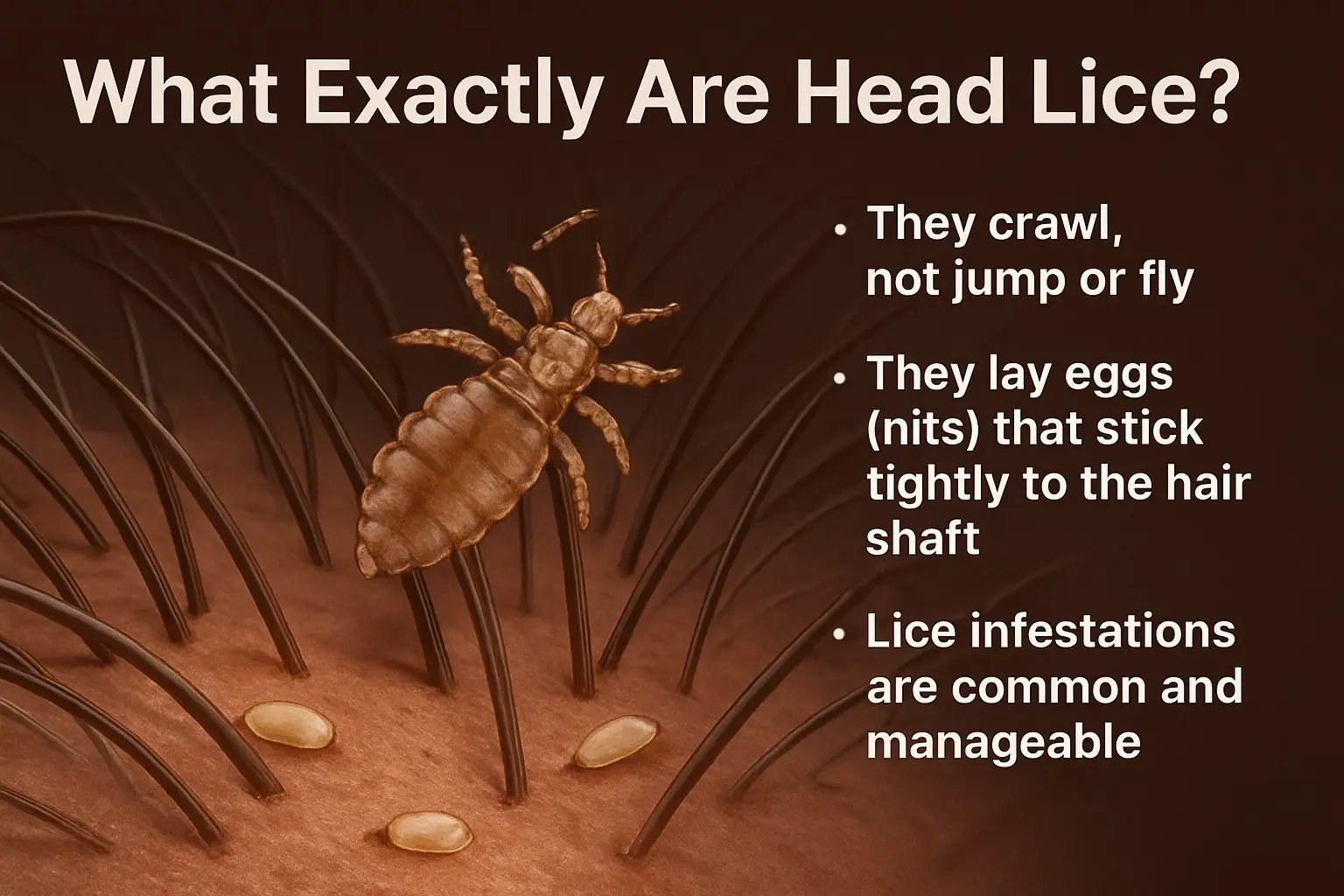
Head lice are small, blood-feeding bugs that settle on the scalp and survive by biting the skin. They don’t carry disease, but they’re annoying and spread easily — especially among school-aged children.
- They crawl, not jump or fly.
- They lay eggs (nits) that stick tightly to the hair shaft.
- Lice infestations are common and manageable.
Signs You Have Lice
Look out for these common symptoms:
- Itchy scalp (especially behind the ears or the nape of the neck)
- A tickling or crawling feeling
- Tiny white or yellow nits stuck to hair near the scalp
- Red or irritated scalp from scratching
Mild infestations can be hard to notice at first, so use a fine-tooth lice comb and lighting.
The Fast Home Action Plan (What to Do Now)
Here’s what you can start doing today:
- Check carefully. Use a flashlight or natural light to inspect the scalp, behind the ears, and at the nape.
- Begin treatment. Choose a safe method (detailed below) and treat all people in the household who have lice.
- Use a nit comb. Whether you use medicine, combing removes live lice and eggs.
- Clean lightly. Wash bedding, clothing, and brushes used in the past 2 days.
- Repeat checks. Check every 2–3 days for the next 2–3 weeks to make sure lice don’t come back.
Step-by-Step Home Lice Treatment (Proven & Safe)
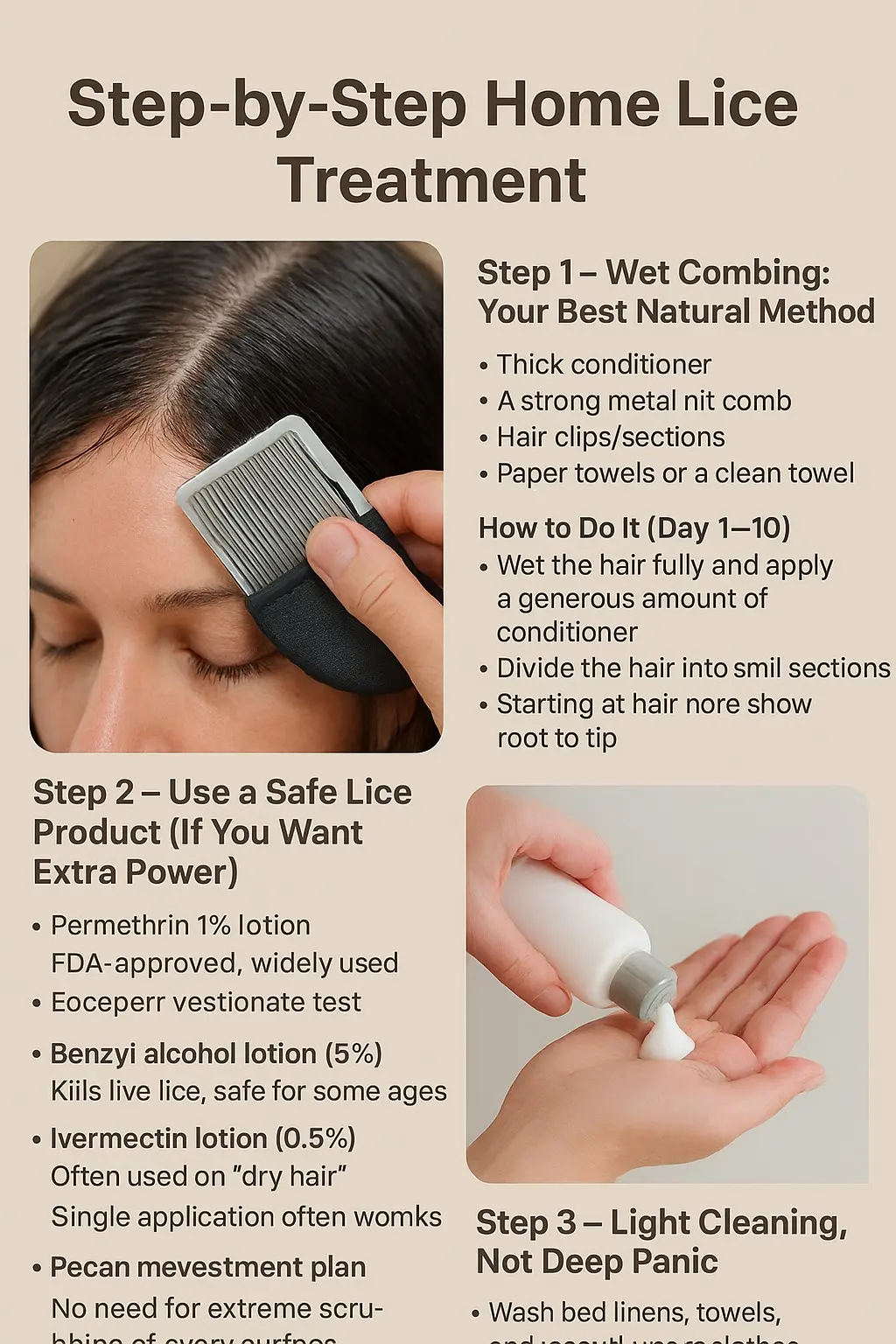
Step-by-Step Lice Treatment at HomeHere’s a complete, up-to-date routine for lice treatment at home — tested, safe, and effective.
Step 1 – Wet Combing: Your Best Natural Method
One of the most powerful non-chemical lice treatments is wet combing. Many top sources mention it, but few explain exactly how to do it right. Here’s the full walk-through:
Tools You Need
- Thick conditioner
- A strong metal nit comb
- Hair clips/sections
- Paper towels or a clean towel
How to Do It (Day 1–10)
- Wet the hair fully and apply a generous amount of conditioner.
- Divide the hair into small sections.
- Starting at the scalp, comb each section slowly from root to tip.
- After each pass, wipe the comb on a paper towel (or rinse it).
- Repeat each section 4–6 times per session.
- Do this every day for 7–10 days.
This method helps physically remove lice and eggs — it’s one of the most reliable DIY lice removal methods there is. I used this myself, and it made a big difference. Because I combed carefully, I saw fewer nits every day, and the itching reduced.
Step 2 – Use a Safe Lice Product (If You Want Extra Power)
If you prefer to use a topical treatment to boost your results, here are expert-backed, safe options for lice treatment at home:
| Product Type | Why Use It | Tips |
| Permethrin 1% so lotion | FDA-approved, widely used | Apply as directed, leave on for the full time, rinse in the sink, not the shower |
| Benzyl alcohol lotion (5%) | Kills live lice, safe for some ages | Second treatment recommended in 7 days if eggs remain |
| Ivermectin lotion (0.5%) | Very effective, a single application often works | Often used on “dry hair”; talk to a provider for a retreatment plan |
Important Tips:
- Always follow the instructions exactly.
- Use a comb after the treatment to remove dead lice and eggs.
- Treat everyone in the household concurrently.
Step 3 – Light Cleaning, Not Deep Panic
You don’t need to deep-clean your entire house. Here’s what matters (and what doesn’t):
What to Clean
- Wash bed linens, towels, and recently worn clothes in hot water (at least 130°F).
- Soak combs, brushes, and hair accessories in hot water (5–10 min). (
- Vacuum places where someone with lice has sat or lay.
What Not to Do
- Don’t use fumigant sprays, fogs, or insecticides — they are not necessary and can be toxic
- No need for extreme scrubbing of every surface.
Why This At-Home Plan Beats Many “Cure-All” Myths
Many online pages promote natural lice removal ideas like mayonnaise, vinegar, or essential oils. But here’s what the trusted medical sources say:
- Mayo Clinic warns that household smothering agents like mayonnaise may not be reliable.
- Healthline reports that while some essential oils (like tea tree or lavender) have shown promise, they’re not rigorously tested and may trigger allergic reactions.
- The FDA also cautions that not all lice treatments are safe for very young children, and you must follow the label instructions exactly.
So, although natural remedies for lice can sound appealing, they rarely work reliably on their own. That’s why a combined plan — safe medication + combing — is the most effective.
Preventing Lice from Coming Back
Once you’ve treated the lice, here’s how to keep them from returning with lice prevention tips at home:
- Tie long hair in a braid or ponytail, especially at school.
- Teach your kids to avoid head-to-head contact.
- Don’t share combs, hats, or hair accessories.
- Continue to do combing checks every few days for 2–3 weeks.
- Clean combs, brushes regularly.
These steps help break the cycle and stop lice from spreading — all without overreacting.
My Experience Again: What Actually Worked for Us
When we first found lice, I tried a few things:
- I did wet combing every night with conditioner.
- I used a dimethicone-based product (safe, non-chemical) because I didn’t want harsh meds.
- I washed her pillowcase, bedding, and combs as the CDC recommends.
- I repeated combing daily for a week, then every other day until day 10.
By day 10, I saw no live lice, and the number of nits dropped dramatically. I also felt more confident because I had a real, step-by-step plan — not just fluff or myths.
Common Mistakes Parents Make (And How to Avoid Them)
Here are some pitfalls I noticed — or that other parents told me about — and how to fix them:
- Skipping Combing. Some people just rely on medicine. But combing helps catch what the lotion missed.
- Not treating everyone — If you treat one person and not another, lice can bounce back.
- Missing treatment — Not leaving the product on long enough, or re-washing too soon, can ruin effectiveness.
- Over-cleaning your house — You don’t need to deep clean every corner — just focus on what touches the head.
- Ignoring retreatment — Eggs hatch later. If your chosen product doesn’t kill eggs, you’ll need to treat again.
FAQs About Lice Treatment at Home
Q: What is the fastest way to get rid of lice in your home?
A: The quickest and most reliable method is wet combing combined with a safe, approved lice treatment like dimethicone or permethrin. Treat everyone with lice at once to stop the spread.
Q: What kills lice in 10 minutes?
A: Some prescription or OTC lotions (like certain dimethicone or permethrin products) are designed to be left on the hair for ~10 minutes or more. Always follow the exact directions on the label.
Q: How to remove lice permanently from hair at home?
A: There’s no one-and-done “permanent cure” — but a consistent plan (treatment + combing + checks for 2–3 weeks) is the most effective.
Q: Can lice live on pillows?
A: Lice survive less well off the head. They may live for a day or two, but they don’t thrive on pillows. Wash pillowcases, hats, and linens to be safe.
Q: How to stop lice from spreading?
A: Teach your kids to avoid head-to-head contact, don’t share combs or hats, do regular lice checks, and treat anyone who has live lice concurrently.
Q: Can I sleep in my bed if I have lice?
A: Yes — you can. Just wash your pillowcase and sheets in hot water (130°F or more) and dry on high heat soon after treatment.
Key Takeaways
- Lice are common, but not dangerous — and easy to treat at home.
- Wet combing is one of the most effective natural removal methods.
- Use safe, FDA-approved treatments when needed (like permethrin or dimethicone).
- Clean only the essentials — bedding, brushes, clothes — not your entire house.
- Repeat checks for 2–3 weeks to make sure lice are gone.
- Prevent return by avoiding head-to-head contact, not sharing hats or combs.
Conclusion
Lice treatment at home doesn’t have to be a big ordeal. With a calm mindset, a solid step-by-step plan, and reliable tools, you can clear lice quickly and safely — without overreacting or spending a fortune. I’ve been there. I tried myths. I tested the science. And I ended up with a routine that works.
Use this guide, stay consistent, and give yourself grace. You’ve got this. And in a week, lice will be a memory — not a worry.
Reference
- CDC — Treatment of Head Lice:
- https://www.cdc.gov/lice/treatment/index.html (CDC)
- CDC — About Head Lice:
- https://www.cdc.gov/lice/about/head-lice.html (CDC)
- FDA — Treating and Preventing Head Lice:
- https://www.fda.gov/consumers/consumer-updates/treating-and-preventing-head-lice
- CDC — Clinical Care of Head Lice:
- https://www.cdc.gov/lice/hcp/clinical-care/index.html (CDC)

Adel Galal is a health and wellness writer with over 30 years of experience studying and writing about health, fitness, nutrition, and healthy living. He is the founder of NextFitLife.com, where he shares practical, evidence-based guidance to support long-term health at any age. Adel’s mission is simple:
to help people make smarter health choices that fit real life, at any age.