Published: Sep 16, 2025
Last updated: July 2026
Reviewed for accuracy: Editorially reviewed and fact-checked against nutrition, bone health, and medical sources
Reading time: 15–20 minutes
Calcium deficiency can be quiet at first. You may not feel pain. You may not feel weak. You may not know your body is low on calcium until a test or a bone problem shows it.
Calcium is a key mineral. Your body uses it for strong bones, teeth, muscles, nerves, blood clotting, and heart rhythm.
If you do not get enough calcium for a long time, your body may pull calcium from your bones. This can weaken bones over time. If your blood calcium becomes too low, symptoms can develop more quickly. This is called hypocalcemia.
This guide explains calcium deficiency symptoms, causes, risk factors, foods, vitamin D, tests, supplements, prevention tips, and red flags that need medical care.
For more nutrition and bone-health help, visit our Nutrition & Vitamins Hub, Bone & Joint Health Hub, and Health Hub.
Medical note: This article is for education only. It does not diagnose or treat calcium deficiency. Do not take high-dose calcium or vitamin D supplements without medical advice. Seek urgent care for seizures, chest pain, fainting, severe confusion, severe muscle spasms, trouble breathing, or symptoms that feel like an emergency.
Quick Answer - What is calcium deficiency?
Calcium deficiency can mean two things.
- Low calcium intake: You do not get enough calcium from food over time.
- Low blood calcium: Your blood calcium level is too low. This is called hypocalcemia.
Low calcium intake may not cause symptoms right away. But it can weaken bones over time.
Low blood calcium may cause symptoms such as:
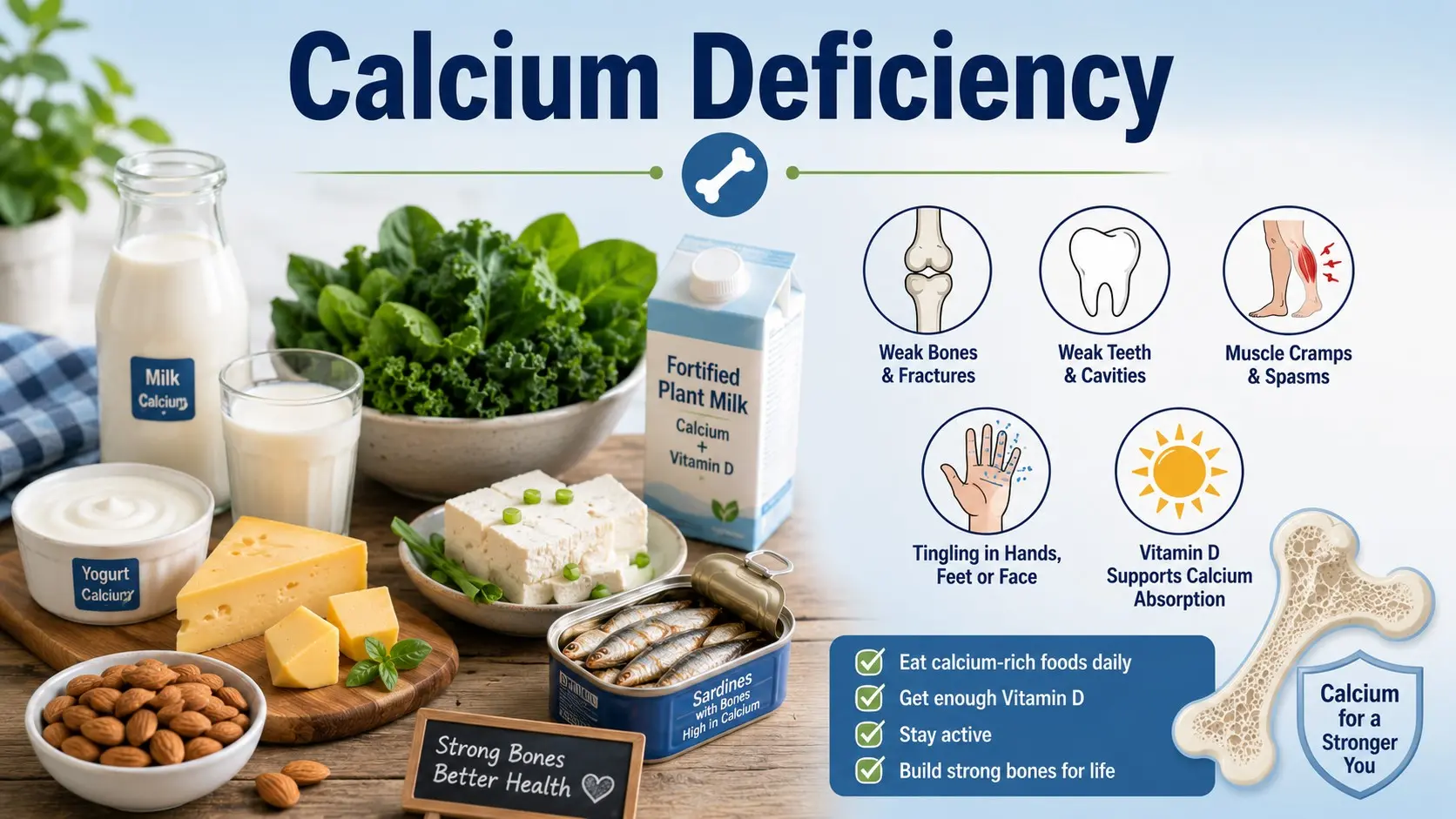
- Tingling in lips, tongue, fingers, or feet
- Muscle cramps
- Muscle spasms
- Numbness
- Fatigue
- Weakness
- Dry skin
- Brittle nails
- Tooth problems
- Bone pain
- Low bone density
- Confusion in severe cases
- Seizures in severe cases
- Abnormal heart rhythm in severe cases
Symptoms can have many causes. A blood test and medical review can help find the reason.
Calcium Deficiency vs. Hypocalcemia
These words are close, but they are not always the same.
Calcium Deficiency
This often means you are not getting enough calcium from food or supplements. It may affect bones slowly over months or years.
Hypocalcemia
This means the calcium level in your blood is low. It can happen from vitamin D deficiency, parathyroid problems, kidney disease, some medicines, low magnesium, or other medical problems.
You can have low calcium intake for a long time and not feel symptoms. Your body may take calcium from bones to keep blood calcium normal.
That is why tests matter.
Why Calcium Matters?
Your body needs calcium for many jobs.
Calcium helps with:
- Strong bones
- Strong teeth
- Muscle movement
- Nerve signals
- Normal heartbeat
- Blood clotting
- Hormone release
- Bone repair
Most calcium is stored in bones and teeth. Only a small amount is in the blood, but that blood calcium is very important.
How much calcium do you need?
Calcium needs depend on age, sex, pregnancy, breastfeeding, and health status.
General adult needs vary by country. NHS says adults need calcium daily and should usually be able to get it from food. NIH lists different recommended amounts by age and sex.
Ask a healthcare professional what is right for you if you:
- Are pregnant
- Are breastfeeding
- Are over 50
- Have osteoporosis
- Have kidney disease
- Have parathyroid disease
- Take long-term steroids
- Have digestive disease
- Follow a vegan diet
- Have had bariatric surgery
1. Tingling in Lips, Tongue, Fingers, or Feet
Tingling can be a sign of low blood calcium.
You may feel:
- Pins and needles
- Numbness
- Burning
- Tingling around the mouth
- Tingling in hands
- Tingling in feet
This can also happen from anxiety, nerve problems, vitamin B12 deficiency, diabetes, poor blood flow, or other causes.
Get medical advice if tingling is new, repeated, or linked with muscle spasms, weakness, confusion, or breathing trouble.
2. Muscle Cramps
Calcium helps muscles squeeze and relax. Low blood calcium may cause cramps.
Cramps may happen in:
- Legs
- Feet
- Hands
- Arms
- Back
- Face muscles
Cramps can also happen from dehydration, exercise, low magnesium, low potassium, medicine side effects, poor blood flow, or nerve problems.
Do not guess. If cramps are severe or keep coming back, get checked.
3. Muscle Spasms or Twitching
Low blood calcium can make nerves and muscles more excitable. This can cause spasms or twitching.
You may notice:
- Hand spasms
- Foot spasms
- Face twitching
- Muscle tightness
- Jerking movements
- Painful spasms
Severe spasms, spasms with trouble breathing, or spasms with confusion need urgent care.
4. Fatigue and Weakness
Calcium problems can make some people feel tired or weak. But fatigue is not specific. Many things can cause it.
Fatigue may come from:
- Poor sleep
- Low iron
- Low vitamin D
- Thyroid problems
- Diabetes
- Kidney disease
- Depression
- Infection
- Medicine side effects
If you feel tired often, ask about a full checkup. Do not assume it is only calcium.
5. Bone Pain or weak bones
Long-term low calcium intake can harm bone strength. The body may pull calcium from bones to protect blood calcium levels.
This may raise the risk of:
- Low bone density
- Osteopenia
- Osteoporosis
- Bone pain in some cases
- Fractures
- Slow bone recovery
Bone loss may not hurt at first. That is why bone checks matter for people at risk.
6. Easy Fractures
If bones become weak, fractures can happen more easily. A small fall may cause a wrist, hip, or spine fracture.
Ask about bone health if you have:
- A fracture after a small fall
- Loss of height
- Back pain with posture change
- Family history of osteoporosis
- Long-term steroid use
- Early menopause
- Low body weight
Calcium is one part of bone health. Vitamin D, protein, exercise, hormones, and medicines may also matter.
7. Tooth and Gum Problems
Calcium supports teeth. Long-term low calcium may affect dental health, but many tooth problems come from other causes too.
Possible clues may include:
- Weak teeth
- Tooth decay risk
- Gum problems
- Jawbone loss in some cases
- Tooth sensitivity
Dental health also depends on brushing, flossing, sugar intake, fluoride, saliva, dental visits, and other health conditions.
8. Brittle Nails
Brittle nails can happen with nutrition problems. But they are not a clear sign of calcium deficiency by themselves.
Brittle nails may also come from:
- Dryness
- Frequent hand washing
- Nail products
- Iron deficiency
- Thyroid disease
- Aging
- Skin conditions
If brittle nails happen with cramps, tingling, fatigue, hair changes, or other symptoms, ask about tests.
9. Dry Skin or Hair Changes
Some people with mineral or vitamin problems may notice skin or hair changes. But dry skin and hair loss are common and can have many causes.
Possible causes include:
- Dry weather
- Harsh soaps
- Thyroid disease
- Low iron
- Low vitamin D
- Stress
- Skin disease
- Medicine side effects
Do not treat dry skin as proof of calcium deficiency. Look at the full picture.
10. Mood or Memory Changes
Low blood calcium can affect the nervous system. In more serious cases, it may be linked with irritability, confusion, memory problems, or mood changes.
But mood and memory changes have many causes.
Get medical advice if symptoms are new, worsening, or linked with:
- Confusion
- Seizures
- Severe weakness
- Muscle spasms
- Medication changes
- Kidney or thyroid problems
11. Seizures
Seizures can happen with severe low calcium. This is serious.
Seek urgent medical care for any seizure, especially if it is new, lasts long, repeats, or happens with injury, pregnancy, fever, confusion, or trouble breathing.
12. Abnormal heart rhythm
Calcium helps control the heartbeat. Severe low blood calcium can affect heart rhythm.
Get urgent help for:
- Chest pain
- Fainting
- Severe dizziness
- Fast or irregular heartbeat with feeling unwell
- Shortness of breath
- Severe weakness
Heart symptoms should never be ignored.
What Causes Calcium Deficiency?
Calcium deficiency can happen for many reasons. Some are diet related. Some are medical.
1. Not eating enough calcium
This is a common reason. You may not get enough calcium if you rarely eat calcium-rich foods.
This can happen if you avoid:
- Milk
- Yogurt
- Cheese
- Fortified plant milks
- Calcium-set tofu
- Sardines with bones
- Salmon with bones
- Leafy greens
- Fortified cereals
If you avoid diary, you can still get calcium. You just need good swaps.
2. Vitamin D Deficiency
Vitamin D helps the body absorb calcium. If vitamin D is low, your body may not absorb calcium well.
Vitamin D can be low because of:
- Little sun exposure
- Darker skin tone
- Covering most skin outdoors
- Living in places with low sunlight
- Older age
- Digestive conditions
- Liver or kidney disease
- Some medicines
Ask your doctor if you need a vitamin D blood test or supplement.
3. Parathyroid Problems
The parathyroid glands help control calcium in the blood. If they do not make enough parathyroid hormone, calcium can drop.
This may happen after neck or thyroid surgery, autoimmune disease, genetic conditions, or other medical problems.
This needs medical care. Treatment often includes calcium and active vitamin D forms prescribed by a doctor.
4. Kidney Disease
The kidneys help manage vitamin D, calcium, and phosphorus balance. Kidney disease can affect calcium levels and bone health.
If you have kidney disease, do not take calcium, vitamin D, or mineral supplements without medical advice.
For more, read Kidney Disease Symptoms: Early Signs, Tests, Prevention, and Red Flags.
5. Low Magnesium
Magnesium helps the body manage calcium. Low magnesium can lead to low calcium in some cases.
Low magnesium may happen from poor intake, alcohol misuse, diarrhea, some medicines, or digestive problems.
Your doctor may check magnesium if your calcium is low.
6. Digestive problems and poor absorption
Some gut problems make it harder to absorb calcium, vitamin D, and other nutrients.
Examples include:
- Celiac disease
- Inflammatory bowel disease
- Long-term diarrhea
- Pancreatic problems
- Bariatric surgery
- Some bowel surgeries
If you have long-term gut symptoms, get medical advice.
7. Some Medicines
Some medicines can affect calcium, vitamin D, or bone health.
Examples may include:
- Long-term steroids
- Some seizure medicines
- Some diuretics
- Some cancer treatments
- Some osteoporosis medicines if calcium or vitamin D is too low
- Some medicines that affect stomach acid
Do not stop prescribed medicine on your own. Ask your doctor or pharmacist if a medicine could affect calcium.
8. Pregnancy, Breastfeeding, and Growth
Calcium needs can change during pregnancy, breastfeeding, teen growth, and older age.
Do not take high-dose supplements unless a healthcare professional advises it. The right dose depends on your diet and health.
Who Is at higher risk?
You may be more likely to have low calcium intake or low blood calcium if you:
- Avoid dairy without fortified swaps
- Follow a vegan diet without planning calcium
- Have vitamin D deficiency
- Have kidney disease
- Have parathyroid disease
- Had thyroid or neck surgery
- Have celiac disease or inflammatory bowel disease
- Had bariatric surgery
- Take long-term steroids
- Have an eating disorder
- Drink heavy alcohol
- Are older
- Have osteoporosis
Best Calcium-Rich Foods
Food is usually the best first step.
Dairy Foods
- Milk
- Yogurt
- Cheese
- Kefir
- Low-fat dairy options
Low-fat dairy can still contain calcium.
Non-Dairy Foods
- Calcium-set tofu
- Fortified soy milk
- Fortified oat milk
- Fortified almond milk
- Fortified breakfast cereal
- Sardines with bones
- Salmon with bones
- Collard greens
- Kale
- Bok choy
- Broccoli
- Beans
- Almonds
- Tahini
Check labels. Not all plant milks are fortified with calcium.
Simple Calcium Plate Ideas
Breakfast
- Yogurt with oats and berries
- Fortified cereal with milk or fortified soy milk
- Oatmeal made with milk or fortified plant milk
- Tofu scramble with greens
Lunch
- Sardine salad on whole-grain toast
- Bean and kale soup
- Chicken yogurt wrap
- Tofu and vegetable bowl
Dinner
- Salmon with bones in a salad or patties
- Tofu stir-fry with bok choy
- Lentil stew with leafy greens
- Vegetable omelette with a side of yogurt
Snacks
- Yogurt
- Cheese in a small portion
- Almonds
- Fortified plant milk
- Hummus with vegetables
Vitamin D and Calcium Work Together
Calcium and vitamin D work as a team. Calcium helps build and protect bones. Vitamin D helps your body absorb calcium.
Vitamin D may come from:
- Sunlight
- Oily fish
- Egg yolks
- Fortified foods
- Supplements if advised
Some people need vitamin D supplements. Ask a healthcare professional what is safe for you.
Calcium Supplements: When Are They Needed?
Some people need supplements. Some do not.
A supplement may be considered if:
- You cannot get enough from food
- You have osteoporosis
- Your doctor finds low calcium
- You have low vitamin D with low calcium
- You have parathyroid problems
- You had bariatric surgery
- You have a medical reason
Do not take high-dose calcium on your own. Too much calcium can cause side effects and may be unsafe for some people.
Possible side effects of calcium supplements
Calcium supplements can cause side effects in some people.
Potential side effects include:
- Constipation
- Gas
- Bloating
- Stomach upset
- Kidney stones in some people
- High calcium levels if too much is taken
- Medicine interactions
Ask a doctor or pharmacist if calcium supplements are safe with your medicines.
Calcium Supplement Safety Tips
- Ask before taking high doses.
- Do not take more than advised.
- Take it with food if the label says so.
- Split doses if advised.
- Drink enough water.
- Tell your doctor about kidney stones.
- Tell your doctor about kidney disease.
- Check medicine interactions.
Calcium can interact with some medicines, including some thyroid medicine, antibiotics, iron, and osteoporosis medicines. Timing matters.
How Calcium Deficiency Is Tested
A healthcare professional may use blood tests and other checks.
Tests may include:
- Total calcium blood test
- Ionized calcium blood test
- Albumin blood test
- Vitamin D test
- Magnesium test
- Phosphorus test
- Parathyroid hormone test
- Kidney function tests
- Bone density scan if bone loss is a concern
A calcium blood test checks calcium in the blood. But it does not always show how much calcium is stored in bones.
For test education, visit our Medical Tests & Screenings Hub.
How to Prevent Calcium Deficiency
Prevention is usually simple, but it must be steady.
1. Eat calcium-rich foods daily
Choose dairy or fortified non-dairy foods, leafy greens, tofu, beans, nuts, seeds, or fish with bones.
2. Get Enough Vitamin D
Vitamin D helps absorb calcium. Ask if you need a vitamin D test or supplement.
3. Move Your Body
Weight-bearing exercise helps bones stay strong.
Examples include:
- Walking
- Stairs
- Dancing
- Strength training
- Resistance bands
- Bodyweight exercises
4. Avoid Smoking
Smoking can harm bone health and overall health.
5. Limit heavy alcohol
Heavy alcohol can harm bones, nutrition, sleep, liver health, and fall risk.
6. Treat Medical Causes
Vitamin D deficiency, kidney disease, parathyroid problems, and gut disease need medical care.
7. Ask about bone density
If you are at risk of osteoporosis, ask if you need a bone density scan.
Calcium and Bone Health After 50
Bone loss becomes more common with age. Women after menopause have higher risk because estrogen drops. Men can also get osteoporosis.
Bone health needs:
- Enough calcium
- Enough vitamin D
- Protein
- Strength training
- Balance training
- No smoking
- Limited alcohol
- Fall prevention
- Medicine if prescribed
For more help, visit our Bone & Joint Health Hub.
Calcium Deficiency in Children and Teens
Children and teens need calcium for growth. Low calcium intake over time can affect bone building.
Parents can help by offering:
- Milk or fortified plant milk
- Yogurt
- Cheese
- Calcium-set tofu
- Leafy greens
- Beans
- Fortified cereals
- Fish with bones when suitable
Do not give supplements to children without medical advice.
Calcium Deficiency and vegan diets
A vegan diet can include enough calcium, but planning matters.
Good vegan sources include:
- Fortified soy milk
- Fortified oat milk
- Fortified almond milk
- Calcium-set tofu
- Fortified cereals
- Kale
- Bok choy
- Beans
- Almonds
- Tahini
Check labels. Organic plant milks may not always be fortified.
What Not to Do
- Do not ignore tingling, spasms, or seizures.
- Do not take high-dose calcium without advice.
- Do not take high-dose vitamin D without advice.
- Do not assume brittle nails prove calcium deficiency.
- Do not ignore bone fractures after small falls.
- Do not rely only on supplements and skip food.
- Do not use calcium supplements without checking medicine interactions.
- Do not start a strict diet that removes major calcium sources without a plan.
- Do not ignore kidney disease when choosing supplements.
When to See a Doctor
See a healthcare professional if you have:
- Repeated tingling
- Muscle cramps that keep coming back
- Muscle spasms
- Severe fatigue
- Bone pain
- Easy fractures
- Low vitamin D
- Known kidney disease
- History of parathyroid problems
- Digestive disease
- Symptoms after neck or thyroid surgery
- Concern about osteoporosis
Seek urgent care for seizures, fainting, severe confusion, severe spasms, trouble breathing, chest pain, or abnormal heartbeat symptoms.
Questions to Ask Your Doctor
- Do I need a calcium blood test?
- Do I need a vitamin D test?
- Should I check magnesium?
- Could my parathyroid glands be involved?
- Could my kidneys be involved?
- Do I need a bone density scan?
- How much calcium should I get each day?
- Can I get enough from food?
- Do I need a supplement?
- Which calcium supplement is safest for me?
- Can calcium interact with my medicines?
- Should I take vitamin D too?
Simple 7-Day Calcium Boost Plan
This is a safe food-first starter plan. Change it based on allergies, culture, budget, and medical advice.
Day 1: Check Your Intake
Write down your main calcium foods for one day.
Day 2: Add Breakfast Calcium
Try yogurt, milk, fortified plant milk, or calcium-set tofu.
Day 3: Add Greens
Add kale, bok choy, broccoli, or collard greens to one meal.
Day 4: Choose a Fortified Swap
Choose a calcium-fortified plant milk or cereal if you avoid dairy.
Day 5: Add Beans or Tofu
Try lentils, beans, chickpeas, or calcium-set tofu.
Day 6: Move for Bones
Walk, climb stairs, or do simple strength exercises.
Day 7: Plan a Test if Needed
If you have symptoms or risk factors, ask about calcium, vitamin D, and bone checks.
FAQ
What are the first signs of calcium deficiency?
Early low calcium intake may have no symptoms. Low blood calcium may cause tingling, numbness, muscle cramps, spasms, fatigue, or weakness.
Can calcium deficiency cause muscle cramps?
Yes. Low blood calcium can cause muscle cramps, spasms, twitching, or tingling. But cramps can also have many other causes.
Can calcium deficiency cause fatigue?
It can in some cases, but fatigue is not specific. Poor sleep, anemia, vitamin D deficiency, thyroid disease, diabetes, kidney disease, and stress can also cause fatigue.
Does calcium deficiency effect?
Calcium supports teeth and jawbone health. But tooth problems can also come from sugar, poor dental care, gum disease, low saliva, and other health issues.
What foods are high in calcium?
Calcium-rich foods include milk, yogurt, cheese, fortified plant milks, calcium-set tofu, sardines with bones, salmon with bones, leafy greens, beans, almonds, tahini, and fortified cereals.
Can I get calcium without dairy?
Yes. Non-dairy sources include fortified soy milk, fortified oat milk, calcium-set tofu, leafy greens, beans, almonds, tahini, and fish with bones if you eat fish.
Do I need vitamin D with calcium?
Vitamin D helps your body absorb calcium. Some people need vitamin D testing or supplements. Ask your healthcare professional what is safe for you.
Should I take calcium supplements?
Only take supplements if you need them and they are safe for you. Food is the best first step for many people. Ask a doctor or pharmacist if you take medicines or have kidney disease.
Can too much calcium be harmful?
Yes. Too much calcium from supplements can cause side effects and may be unsafe for some people. It can also interact with medicines.
When is low calcium urgent?
Seek urgent care for seizures, severe muscle spasms, fainting, severe confusion, trouble breathing, chest pain, or abnormal heartbeat symptoms.
Related Reading
- Nutrition & Vitamins Hub
- Bone & Joint Health Hub
- Health Hub
- Medical Tests & Screenings Hub
- Kidney Health & Disease Hub
- Healthy Lifestyle Roadmap: 14 Practical Tips for Better Health
- Effect of Unhealthy Lifestyle: Warning Signs, Health Risks, and How to Reset
- Kidney Disease Symptoms: Early Signs, Tests, Prevention, and Red Flags
- Low Cholesterol Diet Plan: NHS-Aligned Heart Health Guide
- Lower Blood Pressure: Safe Steps, Fast Tips, Symptoms, and Long-Term Control
Key Takeaway
Calcium deficiency can be quiet at first. Low calcium intake may weaken bones over time. Low blood calcium can cause tingling, cramps, spasms, numbness, fatigue, seizures, or heart rhythm problems in severe cases.
Food is the best first step for many people. Choose milk, yogurt, cheese, fortified plant milk, calcium-set tofu, leafy greens, beans, nuts, seeds, and fish with bones.
Vitamin D helps your body absorb calcium. Exercise helps bones stay strong. Supplements can help some people, but they are not safe for everyone.
If you have symptoms, kidney disease, parathyroid problems, vitamin D deficiency, easy fractures, or osteoporosis risk, ask a healthcare professional about testing and a safe plan.
Sources
- NIH Office of Dietary Supplements — Calcium Consumer Fact Sheet
- NIH Office of Dietary Supplements — Calcium Health Professional Fact Sheet
- NHS — Calcium
- Cleveland Clinic — Hypocalcemia
- British Dietetic Association — Calcium
- Mayo Clinic — Calcium and Calcium Supplements
- Bone Health & Osteoporosis Foundation — Calcium and Vitamin D

Health & wellness writer with 30+ years of experience in nutrition, fitness, and healthy aging. Founder of NextFitLife.com — evidence-based health guidance.