Published: Sep 17, 2025
Last updated: July 2026
Reviewed for accuracy: Editorially reviewed and fact-checked against nutrition, bone health, and medical sources
Reading time: 15–20 minutes
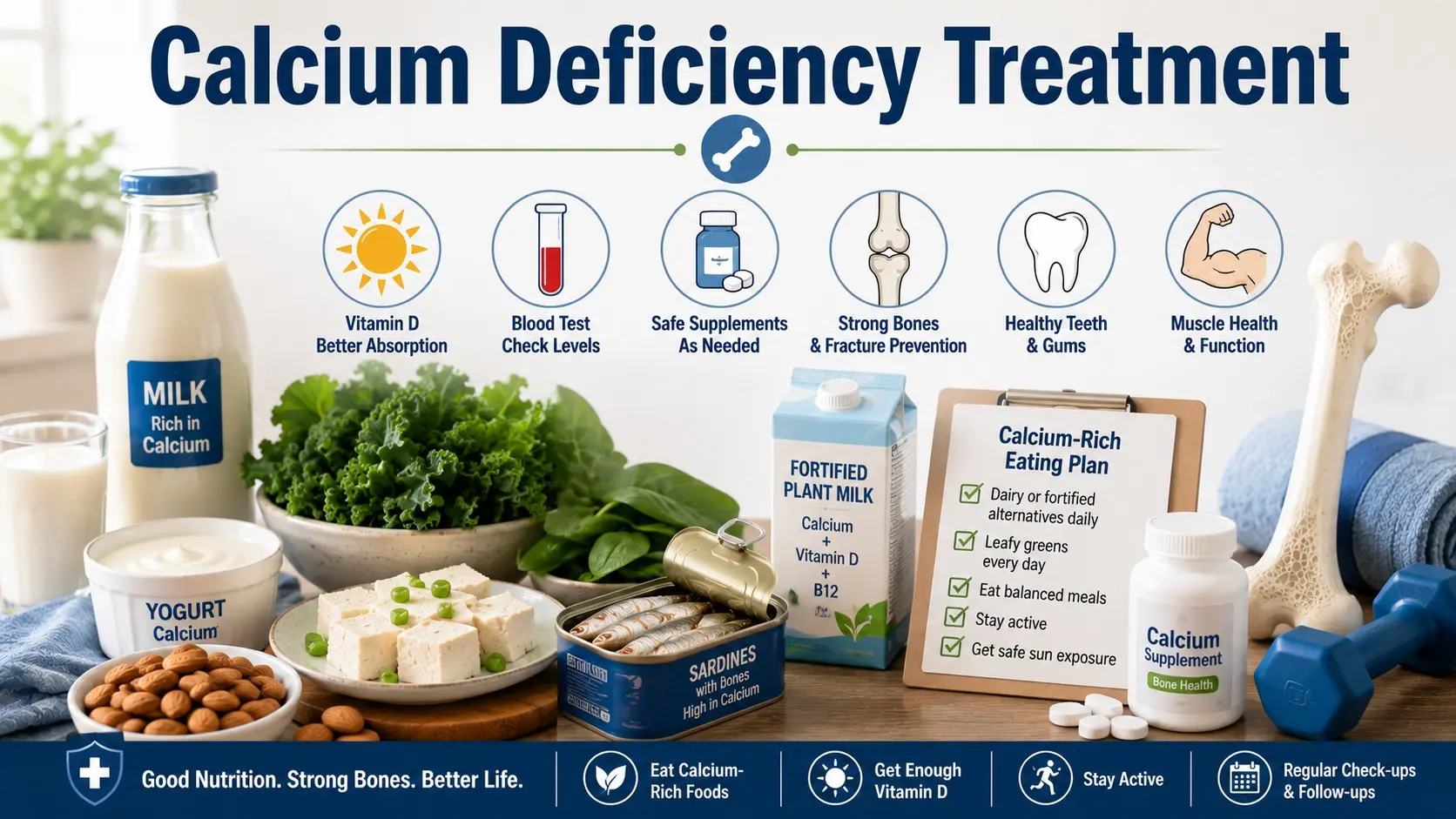
Calcium deficiency treatment is not the same for everyone. Some people need more calcium-rich food. Some need vitamin D. Some need supplements. Some need blood tests. Some need medical treatment for a health problem that is lowering calcium.
Calcium helps bones, teeth, muscles, nerves, blood clotting, and heart rhythm. Your body needs it every day.
But treatment must be safe. Taking too much calcium is not better. High-dose supplements can cause side effects. Calcium can also interact with medicines.
This guide explains what works, what to avoid, when food is enough, when supplements may help, why vitamin D matters, and when low calcium needs urgent medical care.
For more support, visit our Nutrition & Vitamins Hub, Bone & Joint Health Hub, and Health Hub.
Medical note: This article is for education only. It does not diagnose or treat calcium deficiency. Do not take high-dose calcium or vitamin D without medical advice. Seek urgent care for seizures, chest pain, fainting, severe confusion, severe muscle spasms, trouble breathing, or abnormal heartbeat symptoms.
Quick Answer: What is the best calcium deficiency treatment?
The best calcium deficiency treatment depends on why calcium is low.
Common treatment steps may include:
- Eating more calcium-rich foods
- Checking vitamin D
- Taking vitamin D if advised
- Using calcium supplements if food is not enough
- Checking magnesium
- Treating kidney, gut, thyroid, or parathyroid problems
- Reviewing medicines that may affect calcium
- Doing weight-bearing exercise for bone strength
- Getting a bone density scan if needed
- Repeating blood tests when advised
Food is often the best first step. Supplements can help some people. Medical treatment is needed if blood calcium is very low or symptoms are serious.
Calcium deficiency is not always a problem
People use the words “calcium deficiency” in different ways.
Low Calcium Intake
This means you do not consume enough calcium over time. It may weaken bones slowly. You may have no obvious symptoms at first.
Low Blood Calcium
This is called hypocalcemia. It means calcium in the blood is too low. It may cause tingling, cramps, spasms, seizures, confusion, or heart rhythm problems in severe cases.
Weak Bones From Long-Term Low Calcium
Your blood calcium may look normal, but your body may pull calcium from bones over time. This can raise the risk of low bone density and fractures.
That is why treatment starts with testing and cause-finding.
Step 1: Find the cause first
Do not treat calcium deficiency blindly. Ask why it is happening.
Potential causes include:
- Not eating enough calcium
- Low vitamin D
- Poor calcium absorption
- Kidney disease
- Parathyroid problems
- Low magnesium
- Digestive disease
- Bariatric surgery
- Long-term steroid use
- Some seizure medicines
- Some cancer treatments
- High alcohol intake
- Eating disorder history
The right treatment changes based on the cause.
Step 2: Get the Right Tests
A healthcare professional may check your calcium and bone health with tests.
Tests may include:
- Total calcium blood test
- Ionized calcium blood test
- Albumin blood test
- Vitamin D blood test
- Magnesium blood test
- Phosphorus blood test
- Parathyroid hormone test
- Kidney function tests
- Bone density scan if bone loss is a concern
A blood calcium test does not always show how strong your bones are. A bone density scan may be needed for osteoporosis risk.
For test education, visit our Medical Tests & Screenings Hub.
Step 3: Use food first when possible
Food is the safest first step for many people. Calcium-rich foods also bring protein, minerals, and other nutrients.
Good calcium foods include:
- Milk
- Yogurt
- Cheese
- Fortified soy milk
- Fortified oat milk
- Fortified almond milk
- Calcium-set tofu
- Sardines with bones
- Salmon with bones
- Kale
- Bok choy
- Collard greens
- Broccoli
- Beans
- Almonds
- Tahini
- Fortified cereals
Check labels. Not all plant milks are fortified with calcium.
Best Calcium-Rich Breakfasts
- Oats made with milk or fortified plant milk
- Yogurt with fruit and oats
- Fortified cereal with low-fat milk
- Tofu scramble with greens
- Smoothie with fortified soy milk and berries
- Whole-grain toast with tahini
Best Calcium-Rich Lunches
- Sardine salad on whole-grain toast
- Bean and kale soup
- Tofu bowl with bok choy
- Chicken yogurt wrap
- Chickpea salad with tahini dressing
- Lentil soup with fortified yogurt on the side
Best Calcium-Rich Dinners
- Salmon with bones in fish patties
- Tofu stir-fry with leafy greens
- Bean stew with collard greens
- Vegetable omelette with yogurt
- Chicken with broccoli and tahini sauce
- Lentil curry with calcium-fortified side drink
Step 4: Fix Vitamin D if it is low
Vitamin D helps your body absorb calcium. If vitamin D is low, calcium from food may not work as well.
Vitamin D may come from:
- Sunlight
- Oily fish
- Egg yolks
- Fortified foods
- Supplements if advised
Some people have a higher risk of low vitamin D.
This may include people who:
- Get a little sun exposure
- Cover most skin outdoors
- Have a darker skin tone
- Live in areas with low sunlight
- Are older
- Have a digestive disease
- Have kidney or liver disease
- Take certain medicines
Do not take high-dose vitamin D without advice. Too much vitamin D can raise calcium too high and cause harm.
Step 5: Check Magnesium Too
Magnesium helps the body manage calcium. Low magnesium can make calcium harder to correct in some cases.
Low magnesium may happen from:
- Low food intake
- Long-term diarrhea
- Heavy alcohol use
- Some medicines
- Digestive disease
- Diabetes in some cases
Your doctor may check magnesium if calcium is low, or symptoms keep coming back.
Calcium Supplements: When They May Help
Calcium supplements may help if food is not enough or if a doctor finds a medical need.
A supplement may be considered if you:
- Cannot get enough calcium from food
- Have osteoporosis or low bone density
- Have low blood calcium
- Have a vitamin D deficiency with low calcium
- Had bariatric surgery
- Have parathyroid problems
- Have a medical condition that affects absorption
- Are advised by your healthcare professional
Supplements are not needed for everyone. More is not always better.
Calcium Carbonate vs. Calcium Citrate
Two common forms are calcium carbonate and calcium citrate.
Calcium Carbonate
This form is common. It usually works best when taken with food because stomach acid helps absorption.
Calcium Citrate
This form can be taken with or without food. It may be used when stomach acid is low or when calcium carbonate is not tolerated.
Ask your doctor or pharmacist which type is best for you.
How to Take Calcium Supplements Safely
Use supplements carefully.
Safety tips:
- Ask before starting.
- Read the label.
- Check the amount of elemental calcium.
- Do not take more than advised.
- Split doses if your doctor recommends it.
- Take most calcium supplements with food.
- Drink enough water.
- Start low if supplements upset your stomach.
- Tell your doctor about kidney stones.
- Tell your doctor about kidney disease.
- Check medicine interactions.
Some people tolerate smaller doses better than one large dose.
Calcium Supplement Side Effects
Calcium supplements may cause side effects.
Possible side effects include:
- Constipation
- Gas
- Bloating
- Nausea
- Stomach upset
- Kidney stones in some people
- High blood calcium if too much is taken
- Medicine interactions
If side effects happen, talk to a healthcare professional. Do not keep increasing the dose.
Calcium can interact with medicines
Calcium can affect how some medicines work or are absorbed.
Ask your doctor or pharmacist if you take:
- Thyroid medicine
- Some antibiotics
- Iron supplements
- Osteoporosis medicines
- Some blood pressure medicines
- Digoxin
- Some seizure medicines
- Water pills
Timing matters. You may need to take calcium at a different time from some medicines.
Do you need vitamin D with calcium?
Often, yes. Calcium and vitamin D work together.
Calcium gives bones structure. Vitamin D helps the body absorb calcium.
You may need vitamin D if you:
- Have low vitamin D on a blood test
- Have little sun exposure
- Are older
- Have osteoporosis
- Have gut absorption problems
- Have kidney or liver disease
- Are advised by a doctor
But high-dose vitamin D is not safe for everyone. Ask before taking high doses.
What about a “calcium deficiency cure”?
The word “cure” can be misleading.
If your calcium is low because your diet is low, better food and safe supplements may correct it.
If calcium is low because of vitamin D deficiency, parathyroid disease, kidney disease, gut disease, or medicines, you need to treat the cause.
There is no one cure for everyone.
The proper goal is:
- Find the cause
- Correct low calcium safely
- Protect bones
- Prevent fractures
- Stop symptoms
- Avoid too much calcium
Severe low blood calcium needs medical care
Severe hypocalcemia is not a home-treatment problem.
Seek urgent care for:
- Seizures
- Severe muscle spasms
- Trouble breathing
- Chest pain
- Fainting
- Severe confusion
- Fast or irregular heartbeat with feeling unwell
- Severe weakness
Severe cases may need hospital treatment and calcium through a vein.
Treatment for Bone Loss or Osteoporosis
If calcium deficiency has affected bone health, your doctor may check for osteopenia or osteoporosis.
Treatment may include:
- Calcium-rich foods
- Vitamin D
- Strength training
- Balance training
- Fall prevention
- Stopping smoking
- Limiting heavy alcohol
- Bone medicines, if prescribed,
- Bone density monitoring
Calcium alone is not always enough to treat osteoporosis. Some people need medicine to lower fracture risk.
For more help, visit our Bone & Joint Health Hub.
Exercise for Stronger Bones
Bones need load. Safe movement can help bones stay strong.
Helpful exercises may include:
- Walking
- Stairs
- Dancing
- Strength training
- Resistance bands
- Bodyweight exercises
- Balance training
Start small. If you have osteoporosis, fractures, severe pain, or fall risk, ask for a safe exercise plan.
Fall Prevention Matters
Stronger bones are important. Fewer falls are important too.
Fall prevention tips:
- Remove loose rugs.
- Use good lighting.
- Wear safe shoes.
- Keep floors dry.
- Use handrails.
- Check vision.
- Review medicines that cause dizziness.
- Train balance if safe.
A small fall can cause a serious fracture when bones are weak.
Calcium Treatment for Vegans
A vegan diet can support calcium needs, but planning matters.
Good vegan calcium sources include:
- Fortified soy milk
- Fortified oat milk
- Fortified almond milk
- Calcium-set tofu
- Fortified cereal
- Kale
- Bok choy
- Collard greens
- Beans
- Almonds
- Tahini
Check labels. Some plant drinks are not fortified.
Calcium Treatment for People Who Avoid Dairy
You do not need dairy to get calcium. But you do need a plan.
Try:
- Fortified plant milk daily
- Calcium-set tofu
- Leafy greens
- Beans
- Almonds
- Tahini
- Fish with bones if you eat fish
- Fortified cereals
If you avoid dairy because of gas or diarrhea, lactose-free diary may also help some people.
Calcium Treatment in Kidney Disease
Kidney disease changes calcium, phosphorus, vitamin D, and hormone balance.
If you have kidney disease, do not start calcium or vitamin D supplements without medical advice.
You may need special blood tests and a kidney-safe plan.
For kidney warning signs, read Kidney Disease Symptoms: Early Signs, Tests, Prevention, and Red Flags.
Calcium Treatment After Thyroid or Neck Surgery
Some people develop low calcium levels after thyroid or neck surgery because the parathyroid glands are affected.
Symptoms may include:
- Tingling around the mouth
- Tingling in fingers
- Muscle cramps
- Hand spasms
- Weakness
- Anxiety-like feelings
Call your surgical team or healthcare professional if symptoms happen after surgery. This may need urgent testing and treatment.
Calcium Treatment for Children and Teens
Children and teens need calcium for growth. Treatment should be guided by a healthcare professional.
Food options may include:
- Milk
- Yogurt
- Cheese
- Fortified plant milk if suitable
- Calcium-set tofu
- Leafy greens
- Beans
- Fortified cereal
Do not give children calcium supplements unless a healthcare professional recommends them.
7-Day Calcium Deficiency Treatment Starter Plan
This plan is food-first. It is not a cure. Adjust it for your allergies, culture, budget, and medical needs.
Day 1: Check Your Intake
Write down your calcium foods for one day. Look for gaps.
Day 2: Add a Calcium Breakfast
Try yogurt, fortified plant milk, milk, tofu scramble, or oats made with fortified milk.
Day 3: Ask About Vitamin D
If you have risk factors, ask if you need a vitamin D blood test.
Day 4: Add Greens
Add kale, bok choy, broccoli, or collard greens to one meal.
Day 5: Add Beans, Tofu, or Fish With Bones
Choose beans, lentils, chickpeas, calcium-set tofu, sardines, or salmon with bones.
Day 6: Move for Bones
Walk, climb stairs, or do safe strength training.
Day 7: Review Tests and Supplements
If you have symptoms or risk factors, ask your doctor about calcium, vitamin D, magnesium, kidney function, and bone density checks.
What Not to Do
- Do not call one supplement a cure.
- Do not take high-dose calcium without advice.
- Do not take high-dose vitamin D without advice.
- Do not ignore tingling, spasms, or seizures.
- Do not ignore fractures after small falls.
- Do not take calcium at the same time as medicines without checking safety.
- Do not use supplements if you have kidney disease unless your doctor says so.
- Do not rely only on pills and skip food.
- Do not stop prescribed medicine on your own.
- Do not ignore symptoms after thyroid or neck surgery.
When to See a Doctor
See a healthcare professional if you have:
- Repeated tingling
- Muscle cramps that keep coming back
- Muscle spasms
- Severe fatigue
- Bone pain
- Easy fractures
- Low vitamin D
- Known kidney disease
- Parathyroid problems
- Digestive disease
- Symptoms after thyroid or neck surgery
- Concern about osteoporosis
- Low calcium on a blood test
Seek urgent care for seizures, fainting, severe confusion, severe spasms, trouble breathing, chest pain, or abnormal heartbeat symptoms.
Questions to Ask Your Doctor
- Is my blood calcium low?
- Do I need ionized calcium testing?
- Is my vitamin D low?
- Should I check magnesium?
- Should I check parathyroid hormone?
- Could my kidneys be involved?
- Could my medicines be lowering calcium?
- Can I fix this with food?
- Do I need a calcium supplement?
- Which calcium supplement is safest for me?
- How should I time calcium with my medicines?
- Do I need a bone density scan?
- How long before I repeat my tests?
FAQ
What is the best calcium deficiency treatment?
The best treatment depends on the cause. It may include calcium-rich foods, vitamin D, calcium supplements, magnesium correction, medicine review, and treatment of kidney, gut, thyroid, or parathyroid problems.
Can calcium deficiency be cured?
Sometimes low calcium can be corrected, especially if the cause is low intake or low vitamin D. But the word cure can be misleading. Some causes need long-term medical care.
What foods treat calcium deficiency?
Helpful foods include milk, yogurt, cheese, fortified plant milk, calcium-set tofu, sardines with bones, salmon with bones, leafy greens, beans, almonds, tahini, and fortified cereals.
Do I need vitamin D with calcium?
Vitamin D helps your body absorb calcium. If vitamin D is low, calcium treatment may not work well. Ask your healthcare professional if you need testing or supplements.
Are calcium supplements safe?
They can be safe when used correctly. But too much calcium can cause side effects, kidney stones in some people, high blood calcium, and medicine interactions. Ask before taking high doses.
Which is better, calcium carbonate or calcium citrate?
Calcium carbonate is usually taken with food. Calcium citrate can be taken with or without food. The best choice depends on your stomach, medicines, and health history.
How long does calcium deficiency treatment take?
It depends on the cause and severity. Blood calcium may improve faster with medical care. Bone strength may take months or longer to improve.
Can exercise help calcium deficiency?
Exercise does not replace calcium, but weight-bearing and strength exercises can help support bone strength when done safely.
When is low calcium urgent?
Low calcium can be urgent if you have seizures, severe muscle spasms, fainting, severe confusion, chest pain, trouble breathing, or abnormal heartbeat symptoms.
Should I take calcium if I have kidney disease?
Do not start calcium or vitamin D supplements with kidney disease unless your healthcare professional says it is safe. Kidney disease needs a special mineral plan.
Related Reading
- Calcium Deficiency: Causes, Symptoms, and How to Prevent It
- Nutrition & Vitamins Hub
- Bone & Joint Health Hub
- Health Hub
- Medical Tests & Screenings Hub
- Kidney Health & Disease Hub
- Kidney Disease Symptoms: Early Signs, Tests, Prevention, and Red Flags
- Healthy Lifestyle Roadmap: 14 Practical Tips for Better Health
- Effect of Unhealthy Lifestyle: Warning Signs, Health Risks, and How to Reset
- Low Cholesterol Diet Plan: NHS-Aligned Heart Health Guide
Key Takeaway
Calcium deficiency treatment works best when you know the cause.
Many people can start with calcium-rich foods, vitamin D checks, safe movement, and better bone habits. Some people need supplements. Some need medical treatment for low blood calcium, kidney disease, parathyroid problems, low magnesium, gut disease, or medication effects.
Do not take high-dose calcium or vitamin D without advice. More is not always better.
If you have tingling, cramps, spasms, low calcium on a test, easy fractures, kidney disease, or osteoporosis risk, ask a healthcare professional for a safe plan.
Sources
- NIH Office of Dietary Supplements — Calcium Consumer Fact Sheet
- NIH Office of Dietary Supplements — Calcium Health Professional Fact Sheet
- NHS — Calcium
- Cleveland Clinic — Hypocalcemia
- Mayo Clinic — Calcium and Calcium Supplements
- Bone Health & Osteoporosis Foundation — Calcium and Vitamin D
- NHS — Vitamin D

Health & wellness writer with 30+ years of experience in nutrition, fitness, and healthy aging. Founder of NextFitLife.com — evidence-based health guidance.