
Published: Jun 5, 2025
Last updated: July 2026
Reviewed for accuracy: Editorially reviewed and fact-checked against vascular, diabetes, heart-health, foot-care, and public-health sources
Reading time: 15–20 minutes
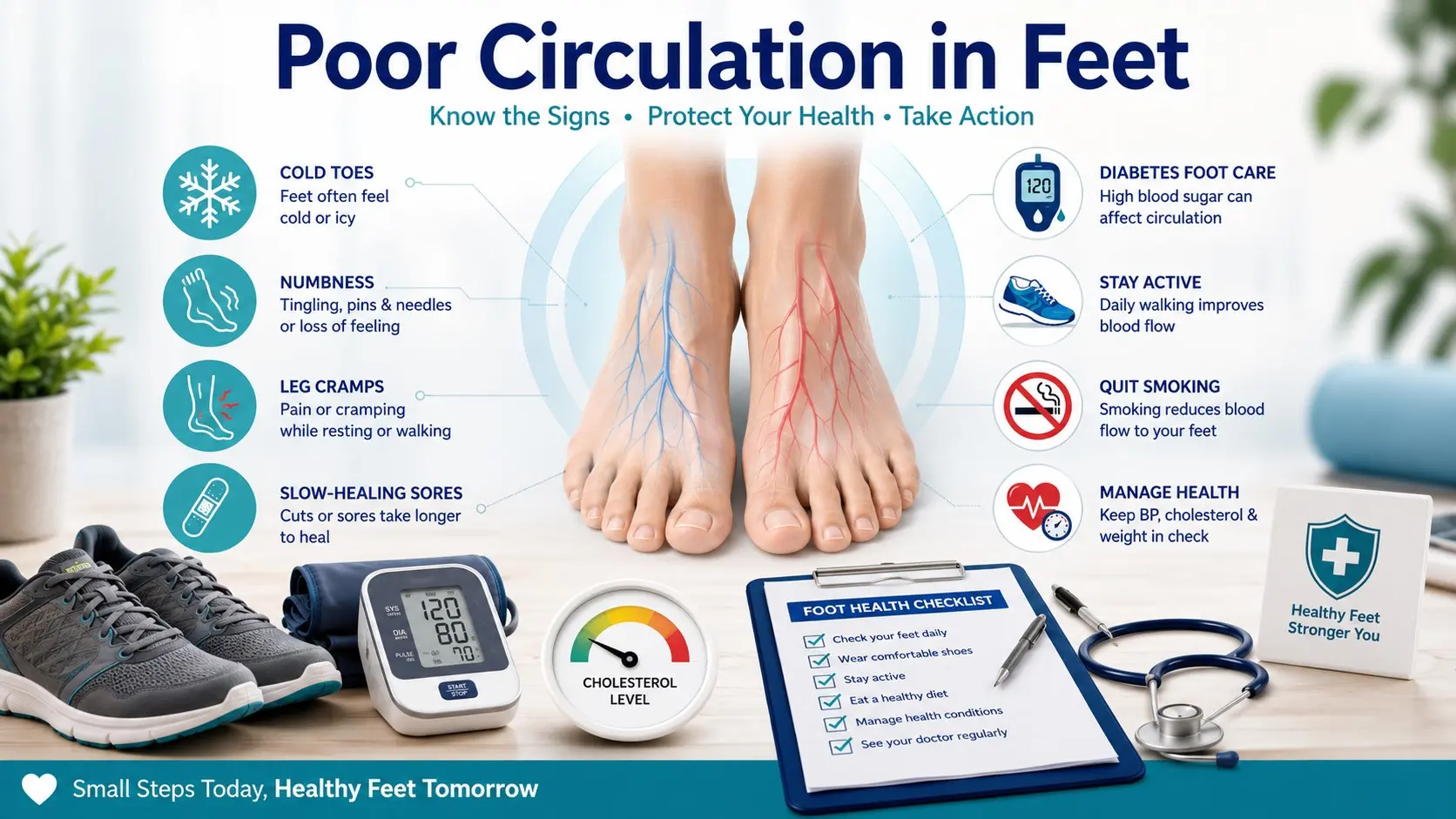
Poor Circulation in Feet can feel scary. Your feet may feel cold. Your toes may tingle. Your legs may cramp when you walk. Your skin may look pale, blue, red, purple, or darker than usual. A small sore may heal slowly.
Sometimes poor blood flow is mild. Sometimes it is a warning sign. It can be linked with peripheral artery disease, diabetes, smoking, high blood pressure, high cholesterol, blood clots, vein problems, Raynaud’s, and sitting too long.
This guide explains Poor Circulation in the feet, signs, causes, easy fixes, what not to do, and when to get urgent help.
For more help, visit our Heart & Cardiovascular Health Hub, Diabetes & Blood Sugar Management Hub, Pain Management & Conditions Hub, Medical Tests & Screenings Hub, and Health Hub.
Medical note: This article is for education only. It does not diagnose or treat Poor Circulation in Feet, peripheral artery disease, diabetic foot problems, blood clots, vein disease, Raynaud’s, neuropathy, infection, or any medical condition. Get urgent help if one foot suddenly becomes cold, pale, blue, numb, very painful, weak, hard to move, or different from the other foot. Also, get urgent help for chest pain, shortness of breath, sudden weakness, trouble speaking, or a swollen, painful calf.
Quick Answer: What Is Poor Circulation in Feet?
Poor Circulation in Feet means your feet may not be getting enough healthy blood flow.
This can happen when arteries are narrow, blood flow is blocked, veins do not move blood well, nerves are damaged, or a health condition affects blood vessels.
Common signs include:
- Cold feet
- Cold toes
- Numb feet
- Tingling feet
- Leg cramps when walking
- Pain that improves with rest
- Slow-healing cuts
- Foot sores
- Skin color changes
- Shiny skin
- Hair loss on legs or feet
- Slow toenail growth
- Weak pulse in the foot
- Swelling in feet or ankles
Some causes need medical care.
Do not ignore foot pain, wounds, colour changes, or numbness.
When Poor Circulation in Feet Is an Emergency
Get urgent medical help now if you have:
- One foot suddenly becomes cold
- One foot suddenly turns pale, blue, purple, black, or very dark
- You cannot feel your foot
- You cannot move your foot
- Sudden severe foot or leg pain
- Sudden numbness or weakness in one leg
- A foot wound with fever
- Black skin on the toes or foot
- Smelly pus from a wound
- Redness spreading from a wound
- A swollen, painful calf
- Shortness of breath with leg swelling
- Chest pain
- Trouble speaking or face drooping
These signs can mean a blocked artery, blood clot, infection, stroke, heart problem, or severe foot problem.
Do not wait.
Signs of Poor Circulation in Feet
The signs can be mild at first.
They can also come and go.
1. Cold Feet or Cold Toes
Cold feet can happen from the weather.
But if your feet are cold often, or one foot is much colder than the other, poor blood flow may be involved.
2. Numbness or Tingling
Numbness can come from poor blood flow, nerve problems, diabetes, back problems, or pressure on nerves.
Do not ignore numb feet, especially if you have diabetes.
3. Leg Pain When Walking
This is a classic sign of peripheral artery disease.
The pain may feel like:
- Cramp
- Ache
- Heaviness
- Tightness
- Fatigue
- Burning
It often happens in the calf, thigh, hip, buttock, or foot.
It often improves after rest.
4. Foot Pain at Rest
Pain at rest can be more serious.
It may feel worse at night or when lying down.
Get medical care if your feet hurt even when resting.
5. Slow-Healing Cuts or Sores
Blood helps wounds heal.
Poor blood flow can slow healing.
A sore that does not heal needs medical care.
6. Skin Colour Changes
Skin may look:
- Pale
- Blue
- Red
- Purple
- Gray
- Darker than usual
- Black in severe cases
Colour changes can be harder to see on brown and black skin.
Look also for temperature, pain, swelling, wounds, and skin texture.
7. Shiny or Tight Skin
Feet or legs may look shiny, smooth, or tight.
This can happen with poor blood flow or swelling.
8. Hair Loss on Legs or Feet
Less hair growth can be a sign of reduced blood flow.
It can also happen for other reasons.
9. Slow Toenail Growth
Toenails may grow slowly or become brittle.
This may be a sign of poor circulation.
10. Weak Pulse in the Foot
A doctor can check pulses in the feet.
A weak or missing pulse can point to poor blood flow.
11. Swelling in Feet or Ankles
Swelling can happen from vein problems, heart problems, kidney problems, liver problems, medicines, pregnancy, injury, or sitting too long.
One-sided swelling with pain can be a blood clot warning sign.
12. Wounds, Ulcers, or Infection
Foot ulcers are open sores.
They need medical care.
This is very important if you have diabetes.
Common Causes of Poor Circulation in Feet
Poor circulation can have many causes.
Sometimes more than one cause happens at the same time.
1. Peripheral Artery Disease
Peripheral artery disease is often called PAD.
It happens when the arteries in the legs become narrow or blocked.
This lowers blood flow to the legs and feet.
PAD can cause:
- Leg pain when walking
- Foot pain
- Cold feet
- Numbness
- Weak pulses
- Slow-healing sores
- Skin color changes
- Hair loss on legs
- Slow toenail growth
PAD can also raise the risk of heart attack and stroke.
So it needs medical care.
2. Diabetes
Diabetes can affect the feet in two big ways.
It can damage nerves.
It can also reduce blood flow.
This can make cuts, blisters, and sores harder to notice and harder to heal.
If you have diabetes, check your feet every day.
Call your doctor for any cut, blister, swelling, warmth, colour change, or sore.
For more help, read Type 2 Diabetes: Symptoms, Causes, and Smart Daily Care.
3. Smoking
Smoking harms blood vessels.
It can make poor circulation worse.
If you smoke, quitting is one of the best steps for your feet, heart, lungs, and brain.
Ask a doctor about support.
4. High Blood Pressure
High blood pressure can damage blood vessels over time.
It can also raise heart disease and stroke.
For more support, read What Causes High Blood Pressure? and How to Lower Blood Pressure Safely.
5. High Cholesterol
High cholesterol can help plaque buildup in the arteries.
This can reduce blood flow.
For more support, read High Cholesterol: Symptoms, Causes, and Treatment and Cholesterol-Lowering Tips.
6. Blood Clot
A blood clot can block blood flow.
A clot in a leg vein may cause:
- One-sided calf swelling
- Pain
- Warmth
- Redness or color change
- Tenderness
A clot can be dangerous.
Get urgent help for one-sided painful swelling, chest pain, or shortness of breath.
7. Varicose Veins and Venous Insufficiency
Veins carry blood back to the heart.
If veins do not work well, blood can pool in the legs.
This may cause:
- Swollen ankles
- Heavy legs
- Aching legs
- Visible veins
- Skin color changes
- Itchy skin
- Leg ulcers in some cases
Venous problems differ from blocked arteries.
A doctor can help tell the difference.
8. Raynaud’s Phenomenon
Raynaud’s can make fingers or toes change colour in cold or stress.
They may turn white, blue, red, purple, or feel numb and painful.
Keeping warm can help.
Ask a doctor if symptoms are severe, one-sided, painful, or causing sores.
9. Sitting Too Long
Sitting for many hours can make feet feel heavy, swollen, or cold.
It can also increase clot risk in some people, especially during long travel.
Move often if you can.
Stand, stretch, and walk for a few minutes.
10. Neuropathy
Neuropathy means nerve damage.
It can cause numbness, tingling, burning, or pain.
Diabetes is a common cause.
Other causes can include vitamin B12 deficiency, alcohol use, some medicines, back problems, and other health issues.
Nerve symptoms need medical review.
11. Footwear Problems
Tight shoes can reduce comfort and rub the skin.
They can cause blisters, pressure areas, and sores.
This is risky if you have diabetes, numbness, or poor circulation.
Wear shoes that fit well.
12. Heart, Kidney, or Liver Problems
Swollen feet can sometimes come from heart, kidney, or liver disease.
Get medical care if swelling is new, getting worse, one-sided, or linked with shortness of breath, chest pain, fatigue, or sudden weight gain.
Easy Fixes That May Help with Mild Poor Circulation
These steps can help support healthy blood flow.
They do not replace medical care.
1. Walk More Often
Walking helps the leg muscles work.
Start small.
Try 5 to 10 minutes if safe.
If you get leg pain when walking, stop and rest.
Tell your doctor. This can be a PAD sign.
2. Do Foot and Ankle Moves
Try simple moves while sitting:
- Ankle circles
- Toe curls
- Heel raises
- Toe raises
- Marching in place
Move gently. Stop if pain is severe.
3. Avoid Long Sitting
Stand or walk every 30 to 60 minutes if you can.
During travel, move your ankles and calves often.
4. Keep Feet Warm
Cold can make blood vessels narrow.
Wear warm socks.
Protect feet in cold weather.
Do not use hot water bottles or heating pads if your feet are numb or if you have diabetes.
5. Stop Smoking
This is one of the most important steps.
Smoking harms blood vessels and raises PAD risk.
Ask for help to quit.
6. Choose Shoes That Fit
Wear shoes that do not rub or squeeze.
Check inside shoes for stones, rough seams, or sharp areas.
This matters a lot if you have numb feet.
7. Check Your Feet Daily
Look at your feet every day.
Use a mirror if needed.
Check for:
- Cuts
- Blisters
- Red areas
- Swelling
- Cracks
- Color change
- Sores
- Drainage
- Warmth
If you have diabetes, foot checks are very important.
8. Manage Blood Sugar
If you have diabetes, blood sugar care helps protect nerves and blood vessels.
Follow your diabetes care plan.
Do not ignore foot symptoms.
9. Manage Blood Pressure and Cholesterol
Blood pressure and cholesterol affect blood vessels.
Ask your doctor about your target numbers.
Take medicine as prescribed.
10. Eat for Heart and Vessel Health
Try to eat more:
- Vegetables
- Fruit
- Beans
- Lentils
- Whole grains, if tolerated
- Fish
- Nuts
- Seeds
- Olive oil
Limit foods high in salt, added sugar, and saturated fat when possible.
For more food help, visit our Nutrition & Vitamins Hub.
11. Drink Water
Water helps the body work well.
It will not cure PAD or a blocked artery.
But dehydration can make you feel worse.
Ask your doctor about fluids if you have heart, kidney, or fluid restriction issues.
12. Ask About Supervised Exercise
For PAD, a doctor may suggest a supervised walking program.
This differs from random exercise.
It is planned and safe.
Ask your doctor if it is right for you.
What Not to Do
- Do not ignore foot wounds.
- Do not ignore one cold or blue foot.
- Do not smoke.
- Do not walk barefoot if you have diabetes or numbness.
- Do not use heating pads on numb feet.
- Do not soak feet in very hot water.
- Do not cut corns or calluses yourself if you have diabetes.
- Do not massage a swollen, painful calf.
- Do not wear tight shoes.
- Do not ignore leg pain that improves with rest.
- Do not stop blood pressure, cholesterol, blood thinner, or diabetes medicine without medical advice.
- Do not use supplements instead of medical care.
Poor Circulation in Feet and Diabetes
Diabetes foot care is very important.
Diabetes can cause nerve damage.
This can make it harder to feel pain.
Diabetes can also reduce blood flow.
This can make wounds heal slowly.
Daily steps:
- Check feet every day.
- Wash feet gently.
- Dry between the toes.
- Moisturize dry skin, but not between toes.
- Wear clean socks.
- Wear shoes that fit.
- Never walk barefoot.
- Trim nails carefully.
- See a foot doctor if you cannot trim nails safely.
- Call a doctor for any wound, swelling, redness, warmth, or colour change.
Do not wait for pain. Numb feet may not feel pain.
Poor Circulation in Feet at Night
Night pain can happen with severe PAD, neuropathy, cramps, restless legs, or other causes.
Pay attention to pain:
- Wakes you from sleep
- Happens when lying down
- Improves when you hang your leg down
- Comes with cold toes
- Comes with sores
- Comes with colour changes
These signs need medical care.
Poor Circulation in Feet vs Neuropathy
Poor circulation and neuropathy can feel similar.
They can also happen together.
| Feature | Poor Circulation | Neuropathy |
|---|---|---|
| Main issue | Blood flow | Nerves |
| Common feeling | Cold, cramps, pain with walking | Burning, tingling, numbness |
| Skin signs | Colour change, shiny skin, sores | May have loss of feeling |
| Diabetes link | Yes | Yes |
| Needs check? | Yes | Yes |
Ask a doctor to check both blood flow and nerve feeling.
Poor Circulation in Feet vs Cold Weather
Cold weather can make feet cold.
But poor circulation may be more likely if:
- Feet stay cold indoors
- One foot is colder than the other
- There is pain when walking
- There are wounds
- There is numbness
- Skin color changes
- You have diabetes
- You smoke
- You have a heart disease risk
When in doubt, get checked.
How Doctors Check Poor Circulation
A doctor may:
- Ask about symptoms
- Ask about smoking
- Ask about diabetes
- Ask about blood pressure and cholesterol
- Look at your feet
- Check skin colour and temperature
- Check pulses in your feet
- Check wounds or ulcers
- Check nerve feeling
- Order blood tests
- Do an ankle-brachial index test
- Order an ultrasound or imaging if needed
The ankle-brachial index compares blood pressure at the ankle and arm.
It can help check for PAD.
Treatment Options
Treatment depends on the cause.
Options may include:
- Walking program
- Stopping smoking
- Diabetes care
- Blood pressure treatment
- Cholesterol treatment
- Medicine to reduce clot risk if prescribed
- Wound care
- Foot care
- Compression stockings for some vein problems
- Procedures to improve blood flow in some PAD cases
- Treatment for blood clots, if present
Do not start compression stockings if you may have PAD unless a doctor says it is safe.
Compression can be unsafe in some people with poor arterial blood flow.
Simple 7-Day Foot Circulation Plan
This is not a cure.
It is a safe habit plan.
Day 1: Check Your Feet
Look for cuts, sores, swelling, colour changes, and temperature changes.
Day 2: Walk Gently
Walk for a few minutes if safe. Stop if pain is severe.
Day 3: Do Ankle Moves
Do ankle circles, toe raises, and heel raises while sitting.
Day 4: Check Your Shoes
Make sure shoes do not rub, squeeze, or create pressure spots.
Day 5: Support Blood Vessels
Take prescribed medicines. Avoid smoking. Eat a heart-friendly meal.
Day 6: Check Risk Factors
Think about diabetes, blood pressure, cholesterol, smoking, and family history.
Day 7: Book Care if Needed
Book a doctor visit if you have pain, numbness, cold feet, swelling, wounds, or colour changes.
Daily Foot Checklist
- Are both feet the same colour?
- Are both feet the same temperature?
- Do I have additional pain?
- Do I have numbness?
- Do I have tingling?
- Do I have swelling?
- Do I have a cut or blister?
- Do I have a sore that is not healing?
- Do my shoes fit well?
- Do I need to call a doctor?
Questions to Ask Your Doctor
- Could this be peripheral artery disease?
- Could this have diabetes nerve damage?
- Could this be a blood clot?
- Could this be a vain disease?
- Do I need an ankle-brachial index test?
- Do I need a foot exam?
- Do I need a diabetes test?
- Do I need cholesterol or blood pressure treatment?
- Is walking safe for me?
- Are compression socks safe for me?
- Do I need a vascular specialist?
- What symptoms indicate emergency care?
FAQ
What is poor circulation in the feet?
Poor Circulation in Feet means the feet may not be getting enough healthy blood flow. It can cause cold feet, numbness, tingling, pain, colour changes, swelling, and slow-healing sores.
What are the signs of poor circulation in feet?
Signs include cold toes, numbness, tingling, leg pain when walking, pain at rest, shiny skin, colour changes, hair loss on legs or feet, slow toenail growth, weak foot pulses, swelling, and wounds that do not heal.
What causes poor circulation in Feet?
Common causes include peripheral artery disease, diabetes, smoking, high blood pressure, high cholesterol, blood clots, vein problems, Raynaud’s, neuropathy, tight shoes, and sitting too long.
How can I improve circulation in my feet?
Helpful steps may include walking, ankle exercises, avoiding long sitting, keeping feet warm, stopping smoking, wearing good shoes, checking feet daily, and managing diabetes, blood pressure, and cholesterol.
Can poor circulation in Feet be serious?
Yes. It can be linked with PAD, diabetes foot problems, blood clots, infection, and heart or stroke risk. Foot wounds, colour changes, rest pain, or sudden cold, numb feet need medical care.
When should I worry about cold feet?
Worry if one foot is colder than the other, cold feet happen often indoors, or coldness comes with pain, numbness, colour changes, weak pulse, swelling, or a sore that does not heal.
Is walking good for poor circulation?
Walking can help many people, especially when guided safely. If walking causes leg pain that improves with rest, tell your doctor because this can be a PAD sign.
Are compression socks good for poor circulation?
Compression socks may help some vein problems, but they may not be safe for some people with poor arterial blood flow. Ask a doctor before using them if PAD is possible.
What should people with diabetes do for foot circulation?
People with diabetes should check feet daily, wear proper shoes, avoid walking barefoot, manage their blood sugar, and call a doctor for cuts, blisters, redness, swelling, warmth, colour changes, or slow-healing sores.
What symptoms need urgent care?
Urgent signs include sudden cold or blue foot, inability to feel or move the foot, severe pain, black skin, smelly pus, fever with a wound, swollen, painful calf, chest pain, or shortness of breath.
Related Reading
- Heart & Cardiovascular Health Hub
- Diabetes & Blood Sugar Management Hub
- Pain Management & Conditions Hub
- Medical Tests & Screenings Hub
- Health Hub
- Type 2 Diabetes: Symptoms, Causes, and Smart Daily Care
- How to Lower Blood Pressure Safely
- What Causes High Blood Pressure?
- High Cholesterol: Symptoms, Causes, and Treatment
- Cholesterol-Lowering Tips
- Healthy Lifestyle Roadmap: 14 Practical Tips for Better Health
Key Takeaway
Poor Circulation in Feet can cause cold feet, numbness, tingling, walking pain, swelling, colour changes, shiny skin, weak pulses, and slow-healing sores.
Common causes include PAD, diabetes, smoking, high blood pressure, high cholesterol, blood clots, vein disease, Raynaud’s, neuropathy, and prolonged sitting.
Easy steps can help. Walk if safe. Move your ankles. Avoid sitting for a long time. Keep feet warm. Stop smoking. Wear good shoes. Check feet daily. Manage diabetes, blood pressure, and cholesterol.
Get urgent help if one foot suddenly becomes cold, blue, pale, numb, painful, weak, hard to move, or very different from the other foot.
Sources
- NHS — Peripheral Arterial Disease
- NHS — PAD Diagnosis
- NHS — PAD Treatment
- CDC — About Peripheral Arterial Disease
- MedlinePlus — Peripheral Arterial Disease
- MedlinePlus — Peripheral Artery Disease of the Legs
- Mayo Clinic — Peripheral Artery Disease Symptoms and Causes
- Mayo Clinic — Peripheral Artery Disease Diagnosis and Treatment
- Cleveland Clinic — Peripheral Artery Disease
- American Heart Association — What Is Peripheral Artery Disease?
- NIDDK — Diabetes and Foot Problems
- American Diabetes Association — Foot Complications

Health & wellness writer with 30+ years of experience in nutrition, fitness, and healthy aging. Founder of NextFitLife.com — evidence-based health guidance.