Home
Published:
Original publication date retained in WordPress
Last Updated:
August 15, 2026
Next Review:
August 2027, or sooner if major sleep guidance changes
Written and source checked by:
Adel Galal,
Founder and Lead Writer of NextFitLife
Medical Review Status:
This article has not been formally reviewed by a physician or sleep medicine specialist.
Your body is changing.
Your heart rate changes.
Your hormones follow daily rhythms.
Your brain processes information.Good sleep helps you wake up ready to think, move and live.
Poor sleep can do more than make you tired.
It can affect attention, memory, mood, reaction time and physical health.
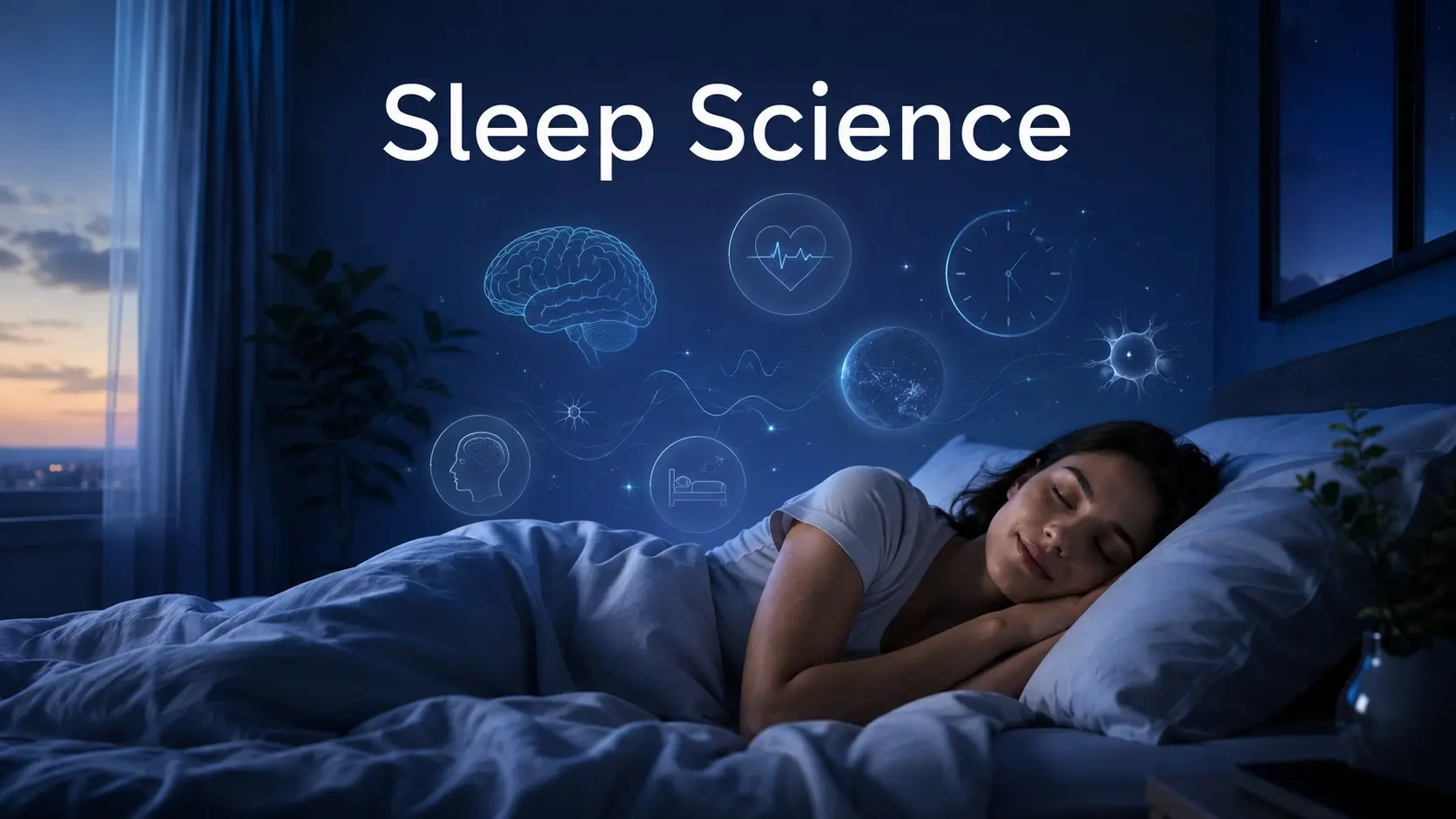
This guide explains sleep science in simple words.
You will learn how sleep works, why it matters,
how much sleep people need,
what happens during REM sleep and deep sleep,
what poor sleep can do,
and when a sleep problem needs medical care.
Quick Answer: Why Is Sleep Important?
The importance of sleep reaches almost every part of daily health.
Sleep supports brain function, learning, memory, mood,
heart health, metabolism, immune function,
physical recovery and daytime safety.
Good sleep health is not only about the number of hours you spend in bed.
You also need enough sleep duration,
good sleep quality,
and sleep at times that fit your body's natural rhythm.
For most adults, getting at least seven hours on a regular basis is an important starting point.
Medical note:
This content is for general educational purposes and does not replace professional medical advice, diagnosis, or treatment. Consult an appropriately qualified healthcare professional for personal medical concerns. This article explains published guidance and does not provide a personal clinical assessment. Always consult qualified medical professionals for diagnosis and treatment of any health condition.
Sleep Problems Are Common
Sleep problems affect many adults.
A CDC report published in April 2026 used data from the 2024 National Health Interview Survey.
It found that 30.5 percent of United States adults reported sleeping less than seven hours on average in a twenty-four-hour period.
The same report found that 15.4 percent had trouble falling asleep
and 18.1 percent had trouble staying asleep.
These numbers do not mean every person has a sleep disorder.
They do show why healthy sleep deserves the same attention as food, activity and other daily health habits.
What Is Sleep?
Sleep is a normal biological state.
You are less aware of the world around you,
but your brain and body are still working.
Sleep follows a repeating pattern through the night.
Your sleep cycle includes two main types of sleep:
- Non-REM sleep
- REM sleep
Each type has a different role.
You normally move through these stages several times during the night.
How Does Sleep Work?
Two main systems help control when you feel awake and when you feel sleepy.
Your Body Clock
Your body has internal clocks.
The main daily pattern is called the circadian rhythm.
It follows a cycle close to twenty four hours.
Light is one of the strongest signals for this system.
Morning and daytime light help tell your brain that it is time to be awake.
Darkness helps prepare the body for sleep.
Your Need for Sleep Builds While You Are Awake
The longer you stay awake, the stronger your need for sleep becomes.
A brain chemical called adenosine is linked with this process.
Adenosine builds while you are awake.
Caffeine can block some of its effects for a time.
This is one reason caffeine can make it harder to feel sleepy.
Melatonin and Darkness
Your body also uses the hormone melatonin as part of its daily timing system.
Melatonin levels normally rise in the evening as it becomes dark.
Bright light late at night can disturb this normal signal.
That does not mean every screen is automatically harmful.
The main goal is simple.
Give your body a clear difference between active daytime and calm nighttime.
What Are the Stages of Sleep?
Modern sleep science divides sleep into non-REM sleep and REM sleep.
Non-REM sleep has three stages.
Stage 1: Light Sleep Begins
Stage 1 is the change from being awake to being asleep.
It is usually easy to wake during this stage.
Stage 2: You Are Fully Asleep
In Stage 2, you are clearly asleep.
Your body moves deeper into rest.
You normally spend a large part of the night in this stage.
Stage 3: Deep Sleep
Stage 3 is known as deep sleep or slow wave sleep.
You usually get more deep sleep during the earlier part of the night.
Deep sleep is important for physical restoration and normal body function.
REM Sleep
REM means rapid eye movement.
During REM sleep, brain activity becomes more similar to waking brain activity.
Dreaming is common during REM sleep.
You usually get more REM sleep during the later part of the night.
How Long Is One Sleep Cycle?
According to the National Heart, Lung, and Blood Institute,
a sleep cycle commonly lasts about eighty to one hundred minutes.
Most people move through about four to six cycles during a night of sleep.
This is more accurate than thinking every sleep cycle is exactly ninety minutes.
Why Is Sleep Important for the Brain?
Your brain does not simply switch off when you sleep.
Sleep supports thinking, attention, learning and memory.
When sleep is too short or poor in quality,
it may become harder to:
- Focus
- Learn new information
- Make decisions
- Solve problems
- React quickly
- Remember information
- Control emotions
Sleep is also involved in memory consolidation.
That is the process that helps the brain organize and keep information after learning.
For a student, worker or anyone learning a new skill,
sleep is part of the learning process.
Staying awake all night to gain extra study time can reduce the quality of thinking the next day.
How Does Sleep Affect Mood and Mental Health?
Sleep and mental health are closely connected.
Poor sleep can make it harder to manage emotions.
You may feel more irritable.
You may find stress harder to handle.
You may have trouble focusing.
Ongoing sleep deprivation is also linked with depression and other mental health problems.
This relationship can work in both directions.
Anxiety, depression, stress and other health conditions can also make sleep harder.
If low mood, anxiety or sleep problems keep affecting your daily life,
talk with a qualified professional.
For more support, visit the
Mental Health and Wellness Hub
.
Why Is Sleep Important for Heart Health?
Sleep affects the heart and blood vessels.
During normal non REM sleep,
heart rate and blood pressure usually fall.
This gives the cardiovascular system a different pattern from daytime activity.
Regular poor sleep is linked with health problems such as high blood pressure,
heart disease and stroke.
This does not mean one bad night causes heart disease.
The concern is repeated poor sleep over time.
If you already have heart disease,
high blood pressure,
sleep apnea
or another medical condition,
sleep should be part of the conversation with your healthcare professional.
Explore the
Heart and Cardiovascular Health Hub
.
Does Sleep Support the Immune System?
Yes.
Sleep and immune function are connected.
Different parts of the immune system follow daily rhythms.
Ongoing sleep loss can change normal immune responses
and may make it harder for the body to respond to some infections.
It is better to say sleep supports normal immune function
than to claim that sleep can make your immune system unbeatable.
Sleep is one part of health.
Vaccines, nutrition, hygiene, medical care and other factors matter too.
Does Sleep Help the Body Recover?
Sleep supports normal physical recovery.
It is involved in tissue repair,
growth,
hormone patterns
and muscle recovery.
This matters for children,
adults,
athletes
and older adults.
Good sleep does not replace rest days,
good food,
safe training
or treatment for an injury.
It works with them.
How Does Sleep Affect Focus, Work and Driving?
The effects of poor sleep can appear quickly.
Sleep loss can slow reaction time.
It can increase mistakes.
It can make decisions harder.
It can also cause brief episodes called microsleeps.
A microsleep is a short moment of sleep that may happen while you think you are awake.
This can be dangerous during driving or other tasks that need constant attention.
If you are struggling to stay awake,
do not rely on willpower to drive safely.
10 Important Health Benefits of Good Sleep
The benefits of sleep are connected.
They do not happen as ten separate switches.
But this list makes the importance of sleep easier to understand.
- Better attention.
Enough sleep supports focus and reaction time. - Better learning.
Sleep helps the brain process new information. - Memory support.
Sleep supports memory consolidation. - Emotional control.
Good sleep makes it easier to manage daily stress and emotions. - Heart support.
Normal sleep is part of healthy heart and blood pressure function. - Metabolic support.
Sleep affects insulin response, appetite and energy regulation. - Immune support.
Sleep helps normal immune system activity. - Physical recovery.
Sleep supports normal repair and recovery. - Safer daytime performance.
Enough sleep supports alertness and reaction time. - Better daily function.
When you are rested, it is easier to work, learn, exercise and take part in daily life.
How Much Sleep Do You Need?
Sleep needs change with age.
They also vary from person to person.
The following ranges are general recommendations.
| Age | Recommended Sleep Each Day |
|---|---|
| Newborns, 0 to 3 months | 14 to 17 hours |
| Infants, 4 to 12 months | 12 to 16 hours including naps |
| Children, 1 to 2 years | 11 to 14 hours including naps |
| Children, 3 to 5 years | 10 to 13 hours including naps |
| Children, 6 to 12 years | 9 to 12 hours |
| Teens, 13 to 17 years | 8 to 10 hours |
| Adults, 18 to 60 years | 7 or more hours |
| Adults, 61 to 64 years | 7 to 9 hours |
| Adults, 65 years and older | 7 to 8 hours |
These numbers are useful guides.
They are not a personal prescription.
Some people may need more sleep during illness,
recovery
or periods of sleep loss.
Is Sleep Quality as Important as Sleep Duration?
Yes.
Seven or eight hours in bed does not always mean you had good sleep.
Good sleep quality also means that sleep is reasonably continuous
and leaves you feeling rested.
Signs that sleep may not be working well include:
- Taking a long time to fall asleep most nights
- Waking many times
- Waking very early and not falling back asleep
- Sleeping enough hours but still feeling exhausted
- Falling asleep during normal daytime activities
- Needing frequent naps because you cannot stay awake
Persistent problems deserve attention.
Can You Catch Up on Lost Sleep?
Extra sleep after a short period of sleep loss may help you feel better.
But it is not a perfect reset button.
Repeated lost sleep can create what researchers call sleep debt.
Sleeping longer on weekends may help with some tiredness,
but it does not replace a regular healthy sleep pattern.
Large changes between workdays and weekends can also disturb your normal timing.
The better goal is to protect enough sleep on most nights.
What Can Happen When You Do Not Get Enough Sleep?
One short night may make you tired and less focused.
Repeated sleep deprivation can have wider effects.
You may notice:
- Daytime sleepiness
- Slow reaction time
- Trouble concentrating
- Memory problems
- Irritability
- Low motivation
- More mistakes
- Difficulty making decisions
- More trouble managing emotions
Over time,
sleep deficiency is also linked with several chronic health problems.
Read the
Sleep Deprivation Guide
for a more detailed look at causes, symptoms and risks.
What Are Common Sleep Disorders?
Sometimes poor sleep is not caused by bad habits.
A health condition may be involved.
Insomnia
Insomnia can make it hard to fall asleep,
stay asleep,
or get sleep that feels refreshing.
Sleep Apnea
Sleep apnea causes repeated breathing problems during sleep.
Signs can include loud snoring,
gasping,
breathing pauses,
morning headaches
and strong daytime sleepiness.
Read more about
sleep apnea and breathing problems during sleep
.
Restless Legs Syndrome
Restless legs syndrome can cause an uncomfortable urge to move the legs,
often when resting at night.
Narcolepsy
Narcolepsy is a neurological sleep disorder that can cause severe daytime sleepiness.
Circadian Rhythm Disorders
Some sleep problems happen when your internal body clock and required sleep schedule do not match.
This can happen with shift work,
jet lag
or specific circadian rhythm disorders.
How Can You Improve Your Sleep?
The best first steps are usually simple healthy sleep habits.
Keep a Regular Sleep Schedule
Try to go to bed and wake up at similar times.
A steady schedule helps your internal body clock know when to expect sleep.
Get Daylight Earlier in the Day
Natural light helps support your circadian rhythm.
A morning or daytime walk can combine light and movement.
Make the Bedroom Calm
A good sleep environment is usually dark,
quiet
and comfortable.
You do not need an expensive mattress or special technology.
Reduce Bright Light Late at Night
Bright artificial light late in the evening can interfere with normal sleep timing.
If your phone, television or computer keeps you alert,
reduce use before bed.
Do not turn this into another source of stress.
A calm routine matters more than a perfect screen rule.
Watch Caffeine Timing
Caffeine can make you feel more alert.
It can also make sleep harder when used too late for your body.
If you struggle to sleep,
try moving caffeine earlier.
Be Careful With Alcohol
Alcohol may make you feel sleepy at first.
But it can disturb normal sleep later in the night.
Do not use alcohol as a sleep treatment.
Move During the Day
Regular physical activity can support sleep.
Choose an activity that is safe for your health and fitness level.
Create a Short Bedtime Routine
Your routine does not need to be long.
Try:
- Lowering the lights
- Reading
- Taking a warm shower
- Doing slow breathing
- Writing tomorrow's tasks on paper
- Listening to calm music
The aim of sleep hygiene is to make sleep easier,
not to create another perfect checklist.
For a focused guide, read
Sleep Hygiene: Practical Habits for Better Sleep
.
Are Naps Good or Bad?
A nap can help some people feel more alert.
But naps are not a full replacement for regular nighttime sleep.
Long or late naps may make bedtime harder for some people.
If you need long naps every day because you cannot stay awake,
talk with a healthcare professional.
The problem may be poor nighttime sleep,
a sleep disorder,
medicine,
or another health issue.
What About Night Shift Work?
Night work can make sleep harder because your work schedule may fight your natural circadian rhythm.
People who work nights may have trouble sleeping during the day
and staying alert during the night.
Helpful steps can include:
- Protecting a regular sleep period
- Making the bedroom dark and quiet
- Planning caffeine carefully
- Reducing interruptions during daytime sleep
- Using light at suitable times
- Talking with a healthcare professional when severe sleepiness continues
Read
How to Work Night Shift and Stay Healthy
for a focused guide.
What If You Are Tired but Cannot Sleep?
Feeling tired does not always mean sleep will come easily.
Stress,
anxiety,
caffeine,
pain,
medicine,
an irregular schedule
and sleep disorders can all play a role.
If this happens often,
do not keep adding random remedies.
Look for the cause.
Read
Tired but Can't Sleep?
for more information.
Can Relaxation or Meditation Help With Sleep?
Relaxation can help some people settle before bed.
Slow breathing,
quiet reflection,
gentle meditation
or another calm activity may help reduce mental activity before sleep.
These tools are not treatments for every sleep disorder.
If you want to try a simple relaxation approach,
visit the
Sleep Meditation Guide
.
A Simple Seven Night Sleep Reset
Night 1: Choose a Wake Time
Pick a wake time that fits your real schedule.
Try to keep it reasonably steady.
Night 2: Protect Enough Time for Sleep
Work backward from your wake time.
Make enough room for the sleep your age group generally needs.
Night 3: Move Caffeine Earlier
If caffeine may be affecting your sleep,
use it earlier in the day.
Night 4: Reduce Bright Evening Light
Lower bright light before bed.
Make the room feel different from daytime.
Night 5: Improve the Bedroom
Reduce unwanted light and noise.
Keep the room comfortable.
Night 6: Use a Short Calm Routine
Read,
stretch gently,
breathe slowly
or use another calm activity.
Night 7: Review How You Feel
Ask:
- Was it easier to fall asleep?
- Did I wake often?
- Did I wake feeling rested?
- Was I sleepy during the day?
Keep the changes that helped.
If serious sleep problems continue,
ask for professional help.
Common Sleep Myths
Myth: Everyone Needs Exactly Eight Hours
Sleep needs vary by age and person.
Seven or more hours is the general recommendation for many adults,
but individual needs differ.
Myth: You Can Train Yourself to Need Very Little Sleep
Repeated short sleep can still affect thinking,
reaction time
and health even when you feel used to the schedule.
Myth: Weekend Sleep Fixes a Week of Poor Sleep
Extra rest can help,
but it is not a full replacement for regular sleep.
Myth: Alcohol Is a Good Sleep Aid
Alcohol may cause sleepiness,
but it can disturb sleep later in the night.
Myth: More Sleep Is Always Better
Not always.
Needing much more sleep than usual,
especially when you still feel tired,
can sometimes point to a health or sleep problem.
When Should You See a Doctor About Sleep?
Talk with a healthcare professional if:
- You regularly cannot fall asleep
- You wake many times most nights
- You sleep enough hours but never feel rested
- You have severe daytime sleepiness
- You fall asleep during normal activities
- You snore loudly and stop breathing or gasp during sleep
- You wake with frequent morning headaches
- You have strong uncomfortable urges to move your legs at night
- Your sleep problem is affecting work, school, mood or driving
- You need sleep aids most nights
A qualified clinician can look for medical conditions,
medicine effects,
mental health factors
and sleep disorders.
Some people may need assessment by a specialist in sleep medicine.
When Is Sleepiness an Immediate Safety Problem?
Do not drive when you are struggling to stay awake.
Do not operate dangerous equipment when you are severely sleepy.
If someone is very hard to wake,
has severe breathing difficulty,
has blue or gray lips,
has a seizure,
or has another medical emergency,
seek urgent medical help.
What I Have Learned About Sleep Health
The more I research sleep,
the less I see it as a simple question of bedtime.
Sleep connects with light,
daily routines,
stress,
food,
exercise,
work schedules,
mental health
and medical conditions.
That is why I do not look for one secret sleep trick.
I look at the full pattern.
When I review a sleep topic for NextFitLife,
I compare public health guidance,
sleep medicine information,
government health resources
and research-based explanations.
I also look carefully for claims that sound stronger than the evidence.
Words such as cure,
guaranteed,
instant
and perfect usually need extra care in health writing.
In my own life,
a routine,
enough time for sleep,
movement during the day
and a calm end to the evening have been more useful than complicated sleep hacks.
I aim to make sleep science easier to understand
without making promises that good evidence cannot support.
References and Sources
The main health claims in this article were checked against these public sources.
- Centers for Disease Control and Prevention.
About Sleep.
Current guidance on sleep duration,
sleep quality
and healthy sleep.
Open CDC source
. - National Heart, Lung, and Blood Institute.
How Sleep Works: Why Is Sleep Important?
Open NHLBI source
. - National Heart, Lung, and Blood Institute.
Sleep Phases and Stages.
Information on non-REM sleep,
REM sleep
and sleep cycles.
Open NHLBI sleep stages source
. - National Institute of Neurological Disorders and Stroke.
Understanding Sleep.
Brain Basics resource covering sleep regulation,
sleep stages
and sleep disorders.
Open NINDS source
. - Centers for Disease Control and Prevention, National Center for Health Statistics.
Short Sleep Duration and Sleep Difficulties Among Adults: United States, 2024.
Published April 2026.
Open CDC 2026 report
.
These organizations do not endorse NextFitLife.
They are listed because their public resources support the sleep topics discussed in this guide.
Conclusion
The importance of sleep goes far beyond feeling rested in the morning.
Sleep supports your brain,
memory,
mood,
heart,
metabolism,
immune function,
recovery
and daytime safety.
You do not need a perfect sleep routine.
Start with the basics.
Give yourself enough time to sleep.
Use a steady schedule.
Get daylight during the day.
Keep the evening calmer.
Ask for help when sleep problems continue.
Your next step:
Choose one sleep habit from this guide tonight,
use it for the next seven nights,
and notice how you feel during the day.
Editorial Policies and Trust
About the Author

Frequently Asked Questions About Sleep Science and the Importance of Sleep
Why is sleep important for overall health?
Sleep supports brain function,
memory,
mood,
heart health,
metabolism,
immune activity,
physical recovery
and daytime alertness.
Getting enough good quality sleep is a basic part of overall health.
How much sleep do adults need?
Adults age 18 to 60 generally need at least seven hours of sleep each day.
Adults age 61 to 64 generally need seven to nine hours.
Adults age 65 and older generally need seven to eight hours.
Individual needs can vary.
What are the main stages of sleep?
Sleep has non REM sleep and REM sleep.
Non REM sleep has three stages.
Stage 1 is light sleep.
Stage 2 is established sleep.
Stage 3 is deep sleep.
REM sleep is a more active brain state in which dreaming is common.
How long is a sleep cycle?
A sleep cycle often lasts about eighty to one hundred minutes.
Most people move through about four to six sleep cycles during the night.
What is deep sleep?
Deep sleep is Stage 3 of non-REM sleep.
It is also called slow wave sleep.
It is part of normal physical restoration and is usually more common earlier in the night.
What is REM sleep?
REM means rapid eye movement.
During REM sleep,
brain activity becomes more similar to waking activity.
Dreaming is common,
and REM periods usually become longer later in the night.
What is the circadian rhythm?
The circadian rhythm is the body's roughly twenty-four-hour timing system.
Light,
darkness
and daily routines help tell the brain when to be alert and when to prepare for sleep.
Does sleep help memory?
Yes.
Sleep supports learning and memory.
It helps the brain organize new information through processes that include memory consolidation.
Can lack of sleep affect heart health?
Ongoing short or poor quality sleep is linked with problems such as high blood pressure,
heart disease
and stroke.
One bad night does not mean a person will develop heart disease,
but repeated poor sleep can be an important health issue.
Can poor sleep affect blood sugar and weight?
Yes.
Sleep can affect insulin response,
appetite,
food choices
and energy use.
Ongoing sleep deficiency is linked with obesity and type 2 diabetes,
but sleep is only one part of metabolic health.
Does sleep boost the immune system?
A better way to say it is that sleep supports normal immune function.
Sleep and immune activity are connected,
but good sleep cannot guarantee that you will not become ill.
Can I catch up on lost sleep during the weekend?
Extra sleep may help after a short period of sleep loss,
but weekend sleep does not fully replace a regular healthy sleep pattern.
A steady schedule is usually a better long term goal.
Why am I tired even after sleeping eight hours?
Sleep duration is only one part of sleep health.
Poor sleep quality,
frequent waking,
sleep apnea,
medicine,
stress,
mental health conditions
and other medical problems can leave you tired even after enough time in bed.
When should I see a doctor about poor sleep?
Ask for medical advice if sleep problems continue,
you have severe daytime sleepiness,
you regularly wake unrefreshed,
you have loud snoring with gasping or breathing pauses,
or sleep problems are affecting work,
mood
or driving.
What is the best first step for better sleep?
Start by protecting enough time for sleep
and using a reasonably steady wake time.
Then improve light exposure,
caffeine timing,
your bedroom
and your bedtime routine one step at a time.
Medical Disclaimer
NextFitLife provides general educational information.
It does not provide medical advice,
diagnosis,
treatment,
emergency care
or personal medical recommendations.
Always speak with an appropriately qualified healthcare professional about ongoing sleep problems,
medical conditions,
medicines,
supplements
or treatment decisions.
Do not delay medical care because of information you read online.

Health & wellness writer with 30+ years of experience in nutrition, fitness, and healthy aging. Founder of NextFitLife.com — evidence-based health guidance.