Published: Oct 15, 2024
Last updated: July 2026
Reviewed for accuracy: Editorially reviewed and fact-checked against digestive-health and medical sources
Reading time: 14–18 minutes
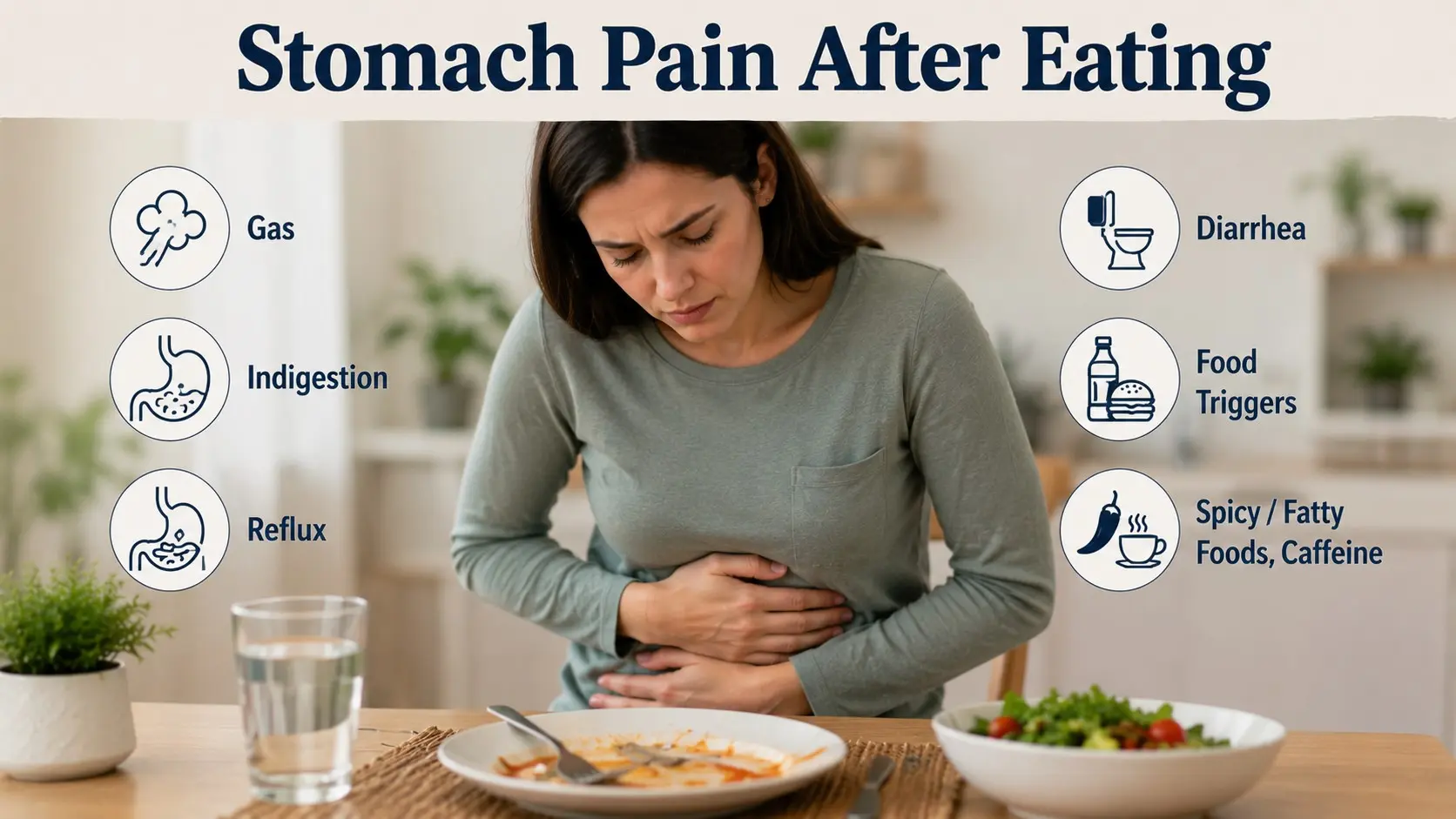
Stomach pain after eating can feel sharp, dull, burning, crampy, heavy, or tight. It may happen right after a meal. It may start one or two hours later. It may come with gas, bloating, burping, nausea, diarrhea, or a full feeling.
Most stomach pain after eating is not dangerous. It may happen from eating too fast, eating too much, gas, indigestion, reflux, constipation, stress, food intolerance, or a mild stomach bug.
But some pain needs care. Severe pain that keeps coming back, gets worse, or comes with fever, vomiting, blood in stool, black stool, weight loss, chest pain, dehydration, or long-lasting diarrhea should be checked by a healthcare professional.
This guide explains why stomach pain after eating happens, what quick steps may help, what it means when diarrhea happens after eating, and when to get medical help.
For more gut-health help, visit our Digestive Health & Gut Hub. You can also explore our Health Hub, Nutrition & Vitamins Hub, and Medical Tests & Screenings Hub.
Medical note: This article is for education only. It does not diagnose or treat any condition. If your pain is severe, keeps coming back, gets worse, or comes with blood, black stool, fever, vomiting, weight loss, chest pain, trouble breathing, dehydration, or diarrhea that lasts more than a few days, contact a healthcare professional.
Quick Answer: Why Does My Stomach Hurt After I Eat?
Your stomach may hurt after eating because your digestive system is working. Food, acid, fluid, air, and gas move through your gut. This can cause pain, pressure, or noise.
Common causes include:
- Eating too fast
- Eating too much
- Gas
- Indigestion
- Acid reflux
- Constipation
- Food intolerance
- Food allergy
- Stomach bug
- Food poisoning
- Irritable bowel syndrome, also called IBS
- Gallbladder problems
- Ulcers or stomach irritation
- Some medicines or supplements
- Stress or anxiety
If the pain is mild and goes away, simple steps may help. If it is strong, new, or keeps coming back, get medical advice.
Quick Fixes for Mild Stomach Pain After Eating
These steps may help with mild pain from gas, fullness, or indigestion.
- Sit upright.
- Take a slow walk.
- Sip warm water.
- Loosen tight clothes.
- Avoid lying flat right after eating.
- Try gentle belly breathing.
- Eat smaller meals next time.
- Eat slowly.
- Avoid fizzy drinks.
- Skip heavy, fried meals for a short time.
- Use the bathroom if you need to pass gas or stool.
Do not take many medicines at once. Ask a pharmacist or doctor if you are not sure what is safe for you.
When to See a Doctor
Speak with a healthcare professional if stomach pain after eating keeps coming back or affects your life.
Get medical advice if you have:
- Pain that gets worse
- Pain that does not go away
- Pain that keeps coming back
- Diarrhea that lasts more than a few days
- Vomiting that does not stop
- Fever
- Blood in stool
- Black or tar-like stool
- Blood in vomit
- Unexplained weight loss
- Trouble swallowing
- Ongoing bloating
- Signs of dehydration
- Pain after starting a new medicine
Seek urgent care if you have severe pain, chest pain, pain with shortness of breath, fainting, confusion, a hard swollen belly, heavy bleeding, or symptoms that feel like an emergency.
Stomach Pain After Eating vs. Normal Fullness
Normal fullness can happen after a large meal. It should fade. It should not feel severe.
Pain is different. Pain may feel like burning, cramping, stabbing, squeezing, or pressure. It may stop you from moving, working, sleeping, or eating.
Ask yourself:
- Does this happen after every meal?
- Does one food trigger it?
- Does it come with diarrhea?
- Does it come with vomiting?
- Does it wake me from sleep?
- Is there blood?
- Am I losing weight without trying?
If the answer is yes to any warning sign, get medical help.
1. Eating Too Fast
Eating fast can make you swallow air. It can also make you eat more than your stomach wants. This may lead to gas, burping, bloating, and pain.
Try this:
- Chew slowly.
- Put your fork down between bites.
- Drink slowly.
- Stop before you feel stuffed.
- Do not eat while rushing.
Small changes can make meals easier on your gut.
2. Eating Too Much
A very large meal can stretch the stomach. This can cause pressure, pain, reflux, burping, and sleep problems.
Try this:
- Eat smaller meals.
- Use a smaller plate.
- Pause halfway through your meal.
- Wait 10 minutes before taking more food.
- Avoid lying down after a large meal.
If you often feel out of control around food, ask for support. You do not have to handle it alone.
3. Gas and Bloating
Gas can cause pain after eating. It may feel like pressure, cramps, or moving pain. It may improve after burping, passing gas, or having a bowel movement.
Gas can be triggered by:
- Beans
- Lentils
- Onions
- Garlic
- Cabbage
- Broccoli
- Cauliflower
- Fizzy drinks
- Chewing gum
- Eating too fast
- Dairy if lactose is a problem
For more about gas and belly sounds, read Stomach Gurgling and Gas: Causes, Quick Fixes, and When to Worry.
4. Indigestion
Indigestion can cause pain or burning in the upper belly. It may happen during a meal or after a meal. You may feel full too soon. You may feel full for a long time after eating.
Common triggers include:
- Large meals
- Fatty meals
- Spicy food
- Alcohol
- Caffeine
- Stress
- Smoking
- Some pain medicines
Simple steps may help:
- Eat smaller meals.
- Eat slowly.
- Avoid trigger foods.
- Do not lie down right after meals.
- Limit alcohol.
- Ask a pharmacist or doctor about safe medicines.
Get medical advice if indigestion keeps coming back, is severe, or comes with weight loss, vomiting, trouble swallowing, anemia, black stool, or blood.
5. Acid Reflux
Acid reflux happens when stomach acid moves back up toward the throat. It can cause burning pain, sour taste, burping, cough, hoarse voice, or pain after eating.
Helpful habits may include:
- Eat smaller meals.
- Avoid lying down for 2 to 3 hours after eating.
- Raise the head of your bed if night symptoms happen.
- Limit trigger foods if they affect you.
- Avoid smoking.
- Limit alcohol.
Talk to a healthcare professional if reflux happens often or you need medicine often.
6. Constipation
Constipation can make the belly hurt after eating. When stool builds up, gas can get trapped. Food entering the gut can make cramps or pressure feel worse.
You may notice:
- Hard stool
- Straining
- Feeling blocked
- Feeling not fully empty
- Bloating
- Gas pain
What may help:
- Drink water.
- Walk daily.
- Add fibre slowly.
- Do not ignore the urge to go.
- Ask a doctor before using laxatives often.
Get medical advice if constipation is new, severe, painful, or comes with blood, weight loss, vomiting, or a swollen belly.
7. Food Intolerance
Food intolerance means your body has trouble handling food. It can cause pain, gas, bloating, diarrhea, or nausea.
Common examples include:
- Lactose intolerance from dairy
- Fructose intolerance from some fruits or sweeteners
- Sugar alcohol sensitivity from sugar-free gum or sweets
- Gluten-related symptoms in some people
- FODMAP sensitivity in some people with IBS
Do not cut out many foods at once. Keep a food diary. Test one possible trigger at a time. Ask a healthcare professional or dietitian if symptoms are strong.
8. Food Allergy
A food allergy can be serious. It may cause stomach pain, vomiting, diarrhea, rash, swelling, wheezing, or trouble breathing after eating a trigger food.
Get urgent help if you have:
- Trouble breathing
- Swelling of lips, tongue, face, or throat
- Wheezing
- Fainting
- Severe rash with illness
- Fast worsening symptoms after food
This can be an emergency.
9. Stomach Bug or Food Poisoning
A stomach bug or food poisoning can cause pain after eating. It may also cause diarrhea, vomiting, fever, cramps, and weakness.
What may help with mild symptoms:
- Drink fluids often.
- Use oral rehydration solution if needed.
- Rest.
- Eat simple foods when you can.
- Avoid alcohol.
- Wash your hands often.
Get medical advice if diarrhea or vomiting is severe, bloody, linked with high fever, causes dehydration, or lasts more than a few days.
10. IBS
IBS can cause belly pain after eating. It can also cause gas, bloating, diarrhea, constipation, or both.
IBS pain may:
- Come and go
- Improve after passing stool
- Get worse with stress
- Be triggered by certain foods
- Happen with bloating
- Happen with diarrhea or constipation
Do not assume it is IBS without medical advice. Other conditions can look similar.
11. Gallbladder Problems
The gallbladder helps store bile. Bile helps digest fat. Gallbladder pain may happen after fatty meals.
Pain may be felt:
- In the upper right belly
- In the middle of the upper belly
- Under the right ribs
- In the right shoulder or back
Get medical advice if pain is severe, keeps coming back, or comes with fever, vomiting, yellow skin, dark urine, or pale stool.
If you are comparing liver and gallbladder pain, read How to Differentiate Gallbladder and Liver Pain.
12. Ulcers or Stomach Irritation
Ulcers or stomach lining irritation can cause burning or gnawing pain. Pain may happen after eating or when the stomach is empty.
Possible triggers or causes include:
- H. pylori infection
- Frequent use of some pain medicines
- Smoking
- Alcohol
- Severe stress on the body
See a doctor if you have burning pain that keeps coming back, black stool, vomiting blood, weight loss, or trouble eating.
13. Medicines and Supplements
Some medicines and supplements can upset the stomach or cause diarrhea.
Possible triggers include:
- Antibiotics
- Iron
- Magnesium
- Some pain medicines
- Some diabetes medicines
- Some weight-loss medicines
- High-dose vitamins
- Protein powders
Do not stop prescribed medicine on your own. Ask your healthcare professional if pain started after a new medicine.
14. Stress and Anxiety
Stress can affect the gut. It can change how the gut moves. It can make pain, cramps, diarrhea, nausea, and bloating feel worse.
Simple stress steps:
- Breathe slowly for 2 minutes.
- Take a short walk.
- Eat without rushing.
- Stop scrolling while eating.
- Write down what is worrying you.
- Talk to someone you trust.
For more support, visit our Mental Health & Wellness Hub and read Self-Care Habits: 10 Evidence-Based Rituals to Elevate Your Lifestyle.
15. Pain and Diarrhea After Eating
Stomach pain and diarrhea after eating can happen when the gut moves too fast. This may happen after a trigger food, stomach infection, stress, IBS, food intolerance, or some medicines.
Possible causes include:
- Food poisoning
- Stomach bug
- Lactose intolerance
- IBS with diarrhea
- Celiac disease
- Inflammatory bowel disease
- Gallbladder removal in some people
- Bile acid diarrhea
- Medicine side effects
- Too much caffeine
- Sugar alcohols
If this happens once after a heavy or unusual meal, it may pass. If it happens often, keeps coming back, or comes with warning signs, speak with a healthcare professional.
Quick Relief for Pain and Diarrhea After Eating
For mild symptoms, try:
- Drink water often.
- Use oral rehydration solution if needed.
- Eat bland foods for a short time.
- Avoid greasy meals.
- Avoid alcohol.
- Avoid fizzy drinks.
- Pause dairy if it seems to trigger symptoms.
- Rest.
- Wash hands to avoid spreading infection.
Do not use anti-diarrhea medicine if you have bloody diarrhea, high fever, or suspected serious infection unless a healthcare professional says it is safe.
What Your Pain Location May Suggest
Pain location can give clues, but it cannot diagnose the cause.
Upper Belly Pain After Eating
This may be linked with indigestion, reflux, gastritis, ulcers, gallbladder issues, or gas.
Right Upper Belly Pain After Eating
This may be linked with gallbladder or liver-related issues, especially after fatty meals.
Lower Belly Pain After Eating
This may be linked with gas, constipation, IBS, diarrhea, food intolerance, or bowel movement changes.
Whole Belly Cramps After Eating
This may happen with gas, infection, food poisoning, IBS, or diarrhea.
Severe pain in any location needs medical care.
Foods That May Trigger Pain After Eating
Triggers are different for each person. Common triggers may include:
- Fried foods
- Very fatty meals
- Spicy foods
- Large meals
- Fizzy drinks
- Alcohol
- Coffee
- Dairy
- Beans and lentils
- Onions and garlic
- Wheat for some people
- Sugar-free gum or candy
- Very sweet foods
Do not remove many foods without a plan. A food diary is safer.
How to Keep a Food and Symptom Diary
A food diary can help you find patterns.
Write down:
- What you ate
- What time did you eat
- How much did you eat
- How fast did you eat
- Drinks you had
- Stress level
- Symptoms
- Stool changes
- How long pain last
Do this for 1 to 2 weeks. Bring it to your doctor if symptoms continue.
Gentle 24-Hour Plan After Mild Stomach Pain
This is not a cure. It is a calm reset for mild symptoms.
Morning
- Drink water.
- Eat a small, simple meal.
- Avoid heavy fried food.
Afternoon
- Take a short walk.
- Eat slowly.
- Avoid fizzy drinks.
Evening
- Choose a light dinner.
- Do not lie flat right after eating.
- Sleep on time.
If pain gets worse or warning signs appear, seek medical care.
Red Flags After Eating
Do not ignore these signs:
- Severe stomach pain
- Pain that gets worse fast
- Chest pain
- Shortness of breath
- Fainting
- Blood in stool
- Black stool
- Vomiting blood
- Fever
- Repeated vomiting
- Signs of dehydration
- Unexplained weight loss
- Trouble swallowing
- Ongoing diarrhea
- A hard, swollen belly
- Unable to pass stool or gas with pain
These symptoms need medical advice. Some need urgent care.
How Doctors May Check for Stomach Pain After Eating
A healthcare professional may ask about your pain, food, stool, stress, medicines, and medical history.
They may consider:
- Physical exam
- Blood tests
- Stool tests
- Tests for infection
- Tests for H. pylori
- Tests for celiac disease
- Liver and gallbladder tests
- Ultrasound
- Endoscopy
- Colonoscopy if warning signs are present
The right test depends on your symptoms. You may not need every test.
What Not to Do
- Do not panic after one mild episode.
- Do not ignore severe pain.
- Do not ignore blood in stool.
- Do not keep eating a clear trigger every day.
- Do not cut out many foods forever without advice.
- Do not use laxatives often without advice.
- Do not use anti-diarrhea medicine with blood or high fever unless a doctor says it is safe.
- Do not stop prescribed medicine on your own.
- Do not blame every symptom on stress.
Daily Habits That May Help Prevent Pain After Meals
- Eat slowly.
- Choose smaller meals.
- Drink water.
- Limit fizzy drinks.
- Walk after meals.
- Add fibre slowly.
- Reduce very greasy meals.
- Do not lie flat right after eating.
- Manage stress.
- Keep a food diary if symptoms repeat.
For a full lifestyle reset, read Healthy Lifestyle Roadmap: 14 Practical Tips for Better Health and Effect of Unhealthy Lifestyle: Warning Signs, Health Risks, and How to Reset.
FAQ
Why does my stomach hurt after eating?
It may be gas, indigestion, reflux, constipation, food intolerance, infection, IBS, or eating too much or too fast. If it keeps happening, speak with a healthcare professional.
How do I stop stomach pain after eating fast?
Sit upright, sip warm water, take a short walk, loosen tight clothes, avoid lying down, and eat smaller meals next time. Get care if pain is severe or keeps coming back.
Why do I get stomach pain and diarrhea after eating?
This can happen from food poisoning, a stomach bug, food intolerance, IBS, medicine side effects, caffeine, or some digestive conditions. See a doctor if it is severe, bloody, or lasts more than a few days.
Is stomach pain after eating serious?
It is often not serious if mild and short-lived. It is more concerning if severe, repeated, worsening, or linked with fever, vomiting, blood, black stool, weight loss, chest pain, or dehydration.
Can gas cause stomach pain after eating?
Yes. Gas can cause pressure, cramps, bloating, and moving pain. It may improve after burping, passing gas, walking, or having a bowel movement.
Can stress cause stomach pain after eating?
Yes. Stress can affect gut movement and sensitivity. It may make pain, cramps, bloating, nausea, diarrhea, or constipation worse.
What foods cause stomach pain after eating?
Common triggers include fried foods, large meals, spicy foods, fizzy drinks, alcohol, coffee, dairy, beans, onions, garlic, wheat for some people, and sugar-free products with sugar alcohols.
Should I see a doctor if my stomach hurts after every meal?
Yes. Pain after most meals should be checked, especially if it affects eating, causes weight loss, or comes with diarrhea, vomiting, blood, fever, or ongoing bloating.
What should I eat after stomach pain?
Choose simple foods you tolerate, such as toast, rice, bananas, soup, potatoes, oatmeal, or plain chicken. Drink fluids. Avoid heavy, greasy, spicy, or fizzy items until symptoms calm.
When is diarrhea after eating urgent?
It may be urgent if diarrhea is bloody, severe, linked with high fever, causes dehydration, happens with severe pain, or follows recent travel, antibiotics, or possible food poisoning.
Related Reading
- Digestive Health & Gut Hub
- Health Hub
- Nutrition & Vitamins Hub
- Medical Tests & Screenings Hub
- Stomach Gurgling and Gas: Causes, Quick Fixes, and When to Worry
- Bowel Cancer and Stomach Noises: What Symptoms Matter Most
- Colon Cancer Warning Signs: Symptoms That Should Be Checked
- How to Differentiate Gallbladder and Liver Pain
- Healthy Lifestyle Roadmap: 14 Practical Tips for Better Health
- Effect of Unhealthy Lifestyle: Warning Signs, Health Risks, and How to Reset
Key Takeaway
Stomach pain after eating is common. It may happen from gas, indigestion, reflux, constipation, eating too fast, food intolerance, infection, IBS, or stress.
Simple steps may help with mild pain. Eat slowly. Choose smaller meals. Walk after meals. Drink water. Avoid fizzy drinks. Track food triggers.
But do not ignore warning signs. Get medical help if pain is severe, keeps coming back, gets worse, or comes with fever, vomiting, diarrhea that lasts more than a few days, blood in stool, black stool, weight loss, chest pain, trouble swallowing, or dehydration.
Sources
- NIDDK — Indigestion
- NIDDK — Symptoms & Causes of Gas in the Digestive Tract
- Mayo Clinic — Indigestion Symptoms and Causes
- NHS — Stomach Ache
- NHS — Diarrhoea and Vomiting

Health & wellness writer with 30+ years of experience in nutrition, fitness, and healthy aging. Founder of NextFitLife.com — evidence-based health guidance.