Published: March 2026 Last Updated: April 2026
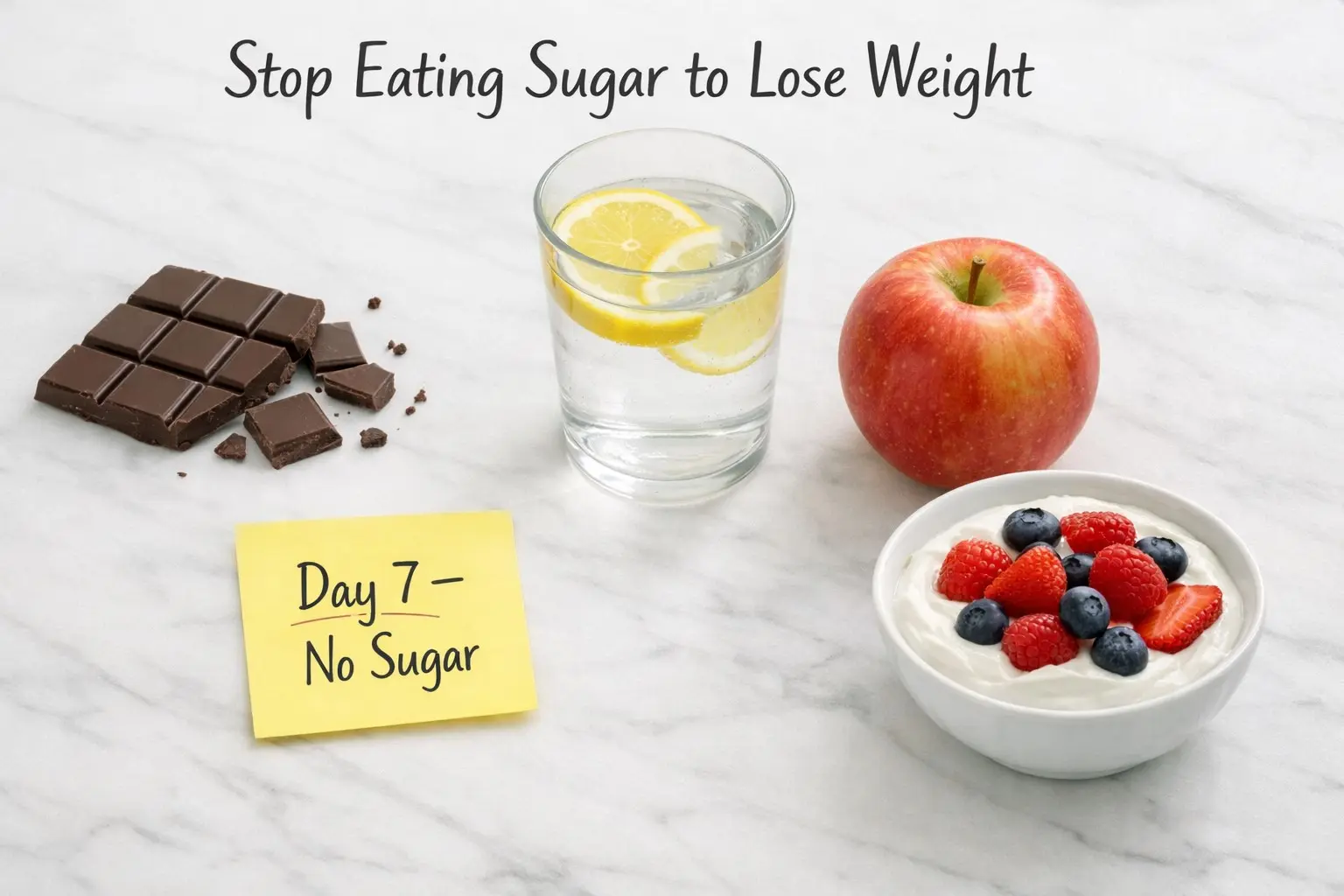
Stop Eating Sugar to Lose Weight Is the Single Fastest Dietary Change for Fat Loss
Not keto. Not intermittent fasting. Not cutting carbs entirely.
Reducing sugar, specifically added sugar and liquid sugar, produces the most immediate and measurable improvement in fat loss for most people. And unlike most dietary changes, the first results often appear within 7–10 days.
This guide gives you the science, the practical step-by-step plan, and the craving management strategies that work. This article is part of our complete weight loss guide, the evidence-based resource covering every aspect of sustainable fat loss.
How Sugar Drives Fat Storage and Weight Gain
H3: The Insulin-Fat Storage Connection
When you eat sugar — particularly refined sugar and high-fructose corn syrup, your blood glucose rises rapidly. When your pancreas's blood sugar levels are high, it releases insulin to regulate them.
Insulin acts as a storage hormone — once levels are high, your body halts fat burning and shifts into storing mode instead of using fat for fuel.
People who consume high amounts of sugar maintain chronically elevated insulin levels throughout the day, meaning they spend significantly less time in fat-burning mode, even if their total calories are the same.
Fructose Goes Directly to Your Liver as Fat
Not all sugars cause the same problem. Fructose, the form found in high-fructose corn syrup, fruit juice, and many processed foods, bypasses normal glucose metabolism and goes directly to the liver. Your liver converts excess fructose directly into fat, specifically visceral fat around your organs.
A 2009 study in the Journal of Clinical Investigation found that subjects consuming fructose-sweetened beverages gained significantly more visceral fat than those consuming glucose-sweetened drinks, even at identical calorie levels. This is why liquid sugar (juice, fizzy drinks, sweetened coffee) is particularly damaging for belly fat specifically.
Sugar Creates Genuine Cravings. It is not a weakness.
Research confirms that high sugar consumption alters dopamine pathways in the brain, creating reward responses like habit-forming substances.
When you try to reduce sugar and feel intense cravings, that is a neurochemical response — not a character flaw. Understanding this makes the first two weeks manageable rather than demoralizing.
Hidden Sugars - Where They Are Hiding
This is where most people fail. They give up obvious sweets but continue consuming large amounts of sugar through less obvious sources.
The 50+ Names for Sugar on Food Labels
Food manufacturers use dozens of names to obscure sugar content on ingredient lists:
| Category | Common Names |
| Direct sugars | Sucrose, fructose, glucose, dextrose, maltose |
| Syrups | High-fructose corn syrup, corn syrup, agave nectar, maple syrup, rice syrup |
| "Natural" sugars | Coconut sugar, date sugar, honey, molasses, fruit juice concentrate |
| Modified sugars | Maltodextrin, dextrin, evaporated cane juice |
Rule - If sugar appears in the first three ingredients, the product is high in sugar.
The Highest Hidden Sugar Sources
| Food | Hidden Sugar | Why It Surprises People |
| Flavoured yogurt (150g) | 15–20g sugar | Perceived as healthy |
| Fruit juice (250ml) | 25–30g sugar | "It's just fruit." |
| Granola bar | 12–18g sugar | Marketed as a healthy snack |
| Pasta sauce (half jar) | 12–15g sugar | Not sweet-tasting |
| Flavoured oat milk (250ml) | 15–20g sugar | Seen as a healthy swap |
| Sports drink (500ml) | 30–34g sugar | Marketed for fitness |
| Low-fat salad dressing | 8–12g per 2 tbsp | Fat removed, sugar added |
The WHO recommends limiting free sugars to less than 10% of total energy intake, ideally below 5%. For a 2,000-calorie diet, that is under 50g and ideally under 25g per day.
Most people consume 70–100g of added sugar daily without realizing it.
You can eat Top 50 Fat Burning Foods For Weight Loss
How to Stop Eating Sugar to Lose Weight - The 3-Week Step Plan
Week 1 - Eliminate the Obvious
Do not try to change everything at once. In week one, focus exclusively on eliminating the highest-affected sugar sources:
Remove completely
- All soft drinks and fizzy beverages
- Fruit juice of any kind
- Sweetened coffee drinks (lattes with syrups)
- Alcohol (high in sugar and calories — see our guide on weight loss habits)
- Sweets, biscuits, and confectionery
Replace with
- Water, sparkling water with lemon
- Black coffee or tea (unsweetened)
- Whole fruit instead of juice
This single step removes 300–500 calories of sugar per day for most people.
Week 2 - Address Hidden Sources
Now audit your regular meals for the hidden sugars identified above.
Read every label for one week
- Check total sugar per 100g: under 5g is low, over 15g is high
- Look for sugar in the first three ingredients
- Replace flavoured yogurt with plain Greek yogurt
- Swap pasta sauce with homemade versions (tinned tomatoes + garlic + olive oil)
- Replace granola bars with a handful of nuts
Build a low-sugar breakfast
- Plain Greek yogurt + berries + flaxseeds
- Eggs (any preparation) + vegetables
- Oats with cinnamon and a small amount of honey (not flavoured instant oats)
For high-protein, low-sugar breakfast options, see our guide to healthy breakfast foods for weight loss.
Week 3 - Reprogram Your Taste Preferences
Your taste buds genuinely adapt to lower sugar levels within 2–3 weeks. Foods that tasted normal will begin tasting overly sweet. This is neurological recalibration, and it is sustainable.
Actions in week 3
- Try bitter foods you previously avoided, such as dark chocolate (85%+), black coffee, and cruciferous vegetables
- Cooking more meals from scratch alone eliminates most hidden sugar
- Use spices for flavour instead of sweetness, such as cinnamon, vanilla, and cardamom
- Allow yourself one small, planned sweet treat per week. This prevents the binge-restrict cycle.
How to Beat Sugar Cravings Scientifically
Why Cravings Peak at Days 3–5
The most intense sugar cravings occur in the first 3–5 days of reduction. This is the neurochemical withdrawal phase as dopamine pathways readjust.
Knowing this in advance removes its power. Days 3–5 are uncomfortable but temporary. By day 7, most people report significantly reduced cravings.
Practical Craving Management Strategies
When a craving hits:
- Wait 15 minutes; most food cravings peak and pass in under 20 minutes
- Drinking water dehydration frequently mimics hunger and sweet cravings
- Eat protein with a small portion of cheese, eggs, or nuts to shut down sugar cravings effectively
- Walking for 10 minutes reduces craving intensity neurologically
- Identifying the trigger of boredom, stress, and fatigue is the most common craving driver
For the full psychology of food cravings and emotional eating, see our guide to stopping emotional eating.
Natural Sugar Alternatives - What Is Actually Safe
| Alternative | GI | Verdict |
| Stevia | 0 | Safe, well-studied, no effect on blood glucose |
| Erythritol | 0 | Safe for most, no blood glucose impact |
| Xylitol | 7 | Safe in moderate amounts, digestive issues in excess |
| Coconut sugar | 35 | Still sugar — just slightly lower GI |
| Honey | 58 | Still sugar — small amounts only |
| Agave nectar | 15–30 | Very high fructose — worse than table sugar |
Stevia and erythritol are the safest options for reducing sugar. Agave, marketed as healthy, is one of the worst choices because of its extreme fructose content.
What Happens to Your Body When You Stop Eating Sugar
| Timeline | What You Experience |
| Days 1–3 | Cravings, slight fatigue, and possible mild headaches |
| Days 4–7 | Cravings begin to decrease, and energy stabilizes |
| Week 2 | Reduced bloating, improved sleep quality begins |
| Week 3–4 | Noticeable weight loss, taste preferences shift |
| Month 2 | Improved skin clarity, more stable energy throughout the day |
| Month 3+ | Reduced visceral fat, improved blood sugar markers |
The bloating reduction in the first two weeks is significant and often one of the first visible changes people notice because fructose feeds gut bacteria that produce gas.
Stop Eating Sugar to Lose Weight - Important Points
- Sugar's main harm is through insulin elevation and fructose converting to visceral fat — not just calories
- Hidden sugars in "healthy" foods account for most people's excess intake
- The 3-week plan works: obvious sources first, hidden sources second, taste recalibration third
- Cravings peak at days 3–5, then reduce significantly
- Stevia and erythritol are safe sugar alternatives
- Agave nectar is worse than table sugar — avoid it
For a complete approach to belly fat reduction that builds on sugar reduction, see our guide to belly fat loss and how to lose belly fat naturally.
FAQs About Stop Eating Sugar to Lose Weight
Q: How quickly will I lose weight after cutting sugar?
Most people notice reduced bloating within 3–5 days. Measurable fat loss from reduced sugar intake typically becomes visible within 2–4 weeks of sustained reduction, particularly around the abdomen.
Q: Is fruit sugar the same as added sugar?
No. Whole fruit contains fructose, but also fiber that dramatically slows absorption, vitamins, minerals, and significant water content. The negative effects of fructose are primarily associated with isolated fructose and high-fructose corn syrup, not whole fruit eaten in normal quantities.
Q: Can I still lose weight if I eat some sugar?
Yes. Total calorie deficit is the primary driver of fat loss. Reducing sugar helps most people lose fat faster because it reduces insulin spikes, eliminates liquid calories, and reduces hunger — but small amounts of sugar within a calorie deficit will not prevent weight loss.
Q: What is the hardest sugar to give up?
Liquid sugar — soft drinks, juice, and sweetened coffee is typically the most difficult because it delivers sugar rapidly with no accompanying satiety. It also does not feel like eating, so people underestimate how much they consume.
Sources and References
- Hall KD et al. — Calorie for Calorie, Dietary Fat Restriction Results in More Body Fat Loss — Cell Metabolism, 2015 https://pubmed.ncbi.nlm.nih.gov/26278052/
- Stanhope KL et al. — Consuming fructose-sweetened beverages increases visceral fat — Journal of Clinical Investigation, 2009 https://pubmed.ncbi.nlm.nih.gov/19381015/
- WHO — Guideline: Sugars intake for adults and children, 2015 https://www.who.int/publications/i/item/9789241549028
- NHS — Sugar: the facts https://www.nhs.uk/live-well/eat-well/food-types/how-does-sugar-in-our-diet-affect-our-health/

Health & wellness writer with 30+ years of experience in nutrition, fitness, and healthy aging. Founder of NextFitLife.com — evidence-based health guidance.