Last Updated: August 3, 2026
Next Review: August 2027, or earlier if major guidance changes
Weight loss can feel confusing. One person says to cut carbs. Another says to fast. A third person promises that one drink will melt fat.
Most of these claims make the process harder than it needs to be.
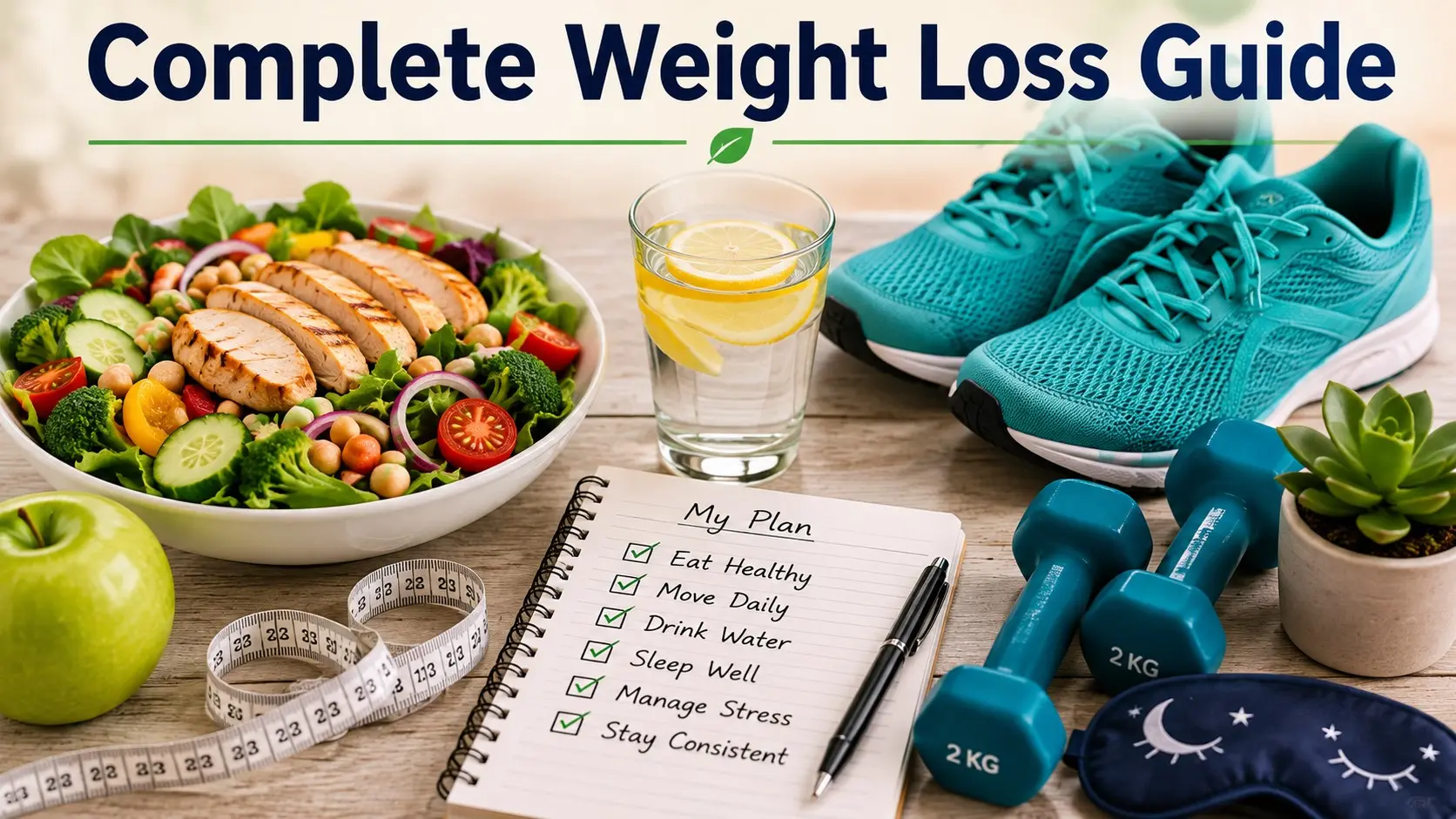
This complete weight loss guide gives you a clear road map. It explains how body weight changes. It shows how to build filling meals, move more, protect sleep, manage stress, track progress, and know when medical care is needed.
It also merges the most useful lifestyle advice from the older Weight Loss Lifestyle article into this one main guide.
Quick answer
Safe weight loss usually comes from a small and sustainable change in food intake, regular movement, enough protein and fiber, good sleep, stress care, and support. No one food burns fat. No detox resets metabolism. No plan works for every person.
Medical note: This content is for general educational purposes and does not replace professional medical advice, diagnosis, or treatment. Consult an appropriately qualified healthcare professional for personal medical concerns. What I share comes from actual life experience, extensive research, and consultation with healthcare providers. Always consult qualified medical professionals for diagnosis and treatment of any health condition.
What you will learn
- How weight loss works
- What a calorie deficit means
- How to build meals that control hunger
- Why protein, fibre, and food volume matter
- How walking and strength work support progress
- How sleep, stress, and daily habits affect weight
- How to review a plateau
- What to know about weight loss medicine and surgery
- How to track progress without obsession
- How to maintain weight after losing it
Who This Complete Weight Loss Guide Is For
This guide is for adults who want a safe and practical overview of weight management.
It may help if you are:
- New to weight loss
- Tired of strict diets
- Trying to lose weight after 40 or 50
- Managing belly fat
- Trying to break a plateau
- Using prescription treatment with medical care
- Trying to keep weight off
- Looking for simple food and movement habits
Weight loss is not right for every person.
Do not begin a restrictive plan without professional advice if you are pregnant, breastfeeding, under 18, underweight, recovering from illness, living with an eating disorder, or losing weight without trying.
This article belongs to the NextFitLife Fitness Hub, Weight Management and Metabolism Health Hub, Weight Loss and Metabolism Food Hub, and Foods and Nutrition Hub.
What Does Healthy Weight Loss Mean?
Healthy weight loss means improving health without using punishment, starvation, unsafe products, or extreme exercise.
A safe plan should:
- Provide enough nutrition
- Protect muscle and daily function
- Fit your health and medicine
- Use realistic goals
- Allow normal food and social life
- Include support when needed
- Be possible to continue
NIDDK says a strong program should use realistic goals, a healthy eating plan, physical activity, and long term support. An initial goal of losing 5 to 10 percent of starting weight over about six months may be useful for many adults.
This is not a rule for every person. Your goal may be smaller, slower, or focused on maintaining weight while health improves.
How Weight Loss Works
Food and drinks provide energy.
Your body uses energy for breathing, circulation, temperature, digestion, movement, exercise, and repair.
Body fat usually decreases when the body uses more energy than it receives over time.
This is called a calorie deficit.
The idea is simple. Real life is not.
Hunger, sleep, stress, medicine, health conditions, hormones, age, disability, food access, work, family duties, and the environment can all affect weight.
Weight management is not a test of character.
Read How Weight Loss Works for a deeper explanation of energy balance and body fat.
Scale weight is not the same as body fat
Your weight can move up or down because of:
- Water
- Salt
- Food in the digestive system
- Constipation
- Menstrual changes
- Muscle soreness
- Carbohydrate intake
- Medicine
One higher reading does not prove fat gain.
One lower reading does not prove that a plan is safe.
Look at the trend across several weeks.
How Fast Should Weight Loss Happen?
Many adults want a fast result. Fast loss can feel exciting. It can also be hard to maintain.
The CDC notes that gradual and steady weight loss is more likely to stay off than rapid loss.
A common pace for many adults is about one to two pounds each week. This range is not right for every person.
Your pace may be different because of:
- Starting body size
- Age
- Health conditions
- Medicine
- Nutrition needs
- Previous dieting
- Current activity
- Pregnancy or recovery needs
Rapid loss can increase the risk of muscle loss, nutrient gaps, fatigue, gallstones, and weight regain.
Read Healthy Rate of Weight Loss before setting a weekly target.
Calories and Portion Estimates
A calorie calculator gives an estimate. It does not measure your metabolism.
Energy needs can change with body size, muscle, age, sex, activity, health, and medicine.
Do not treat one calculator number as a medical prescription.
Calorie counting is optional
Some people find short-term tracking useful.
Other people do better with:
- A balanced plate
- Regular meals
- Portion awareness
- Fewer sugary drinks
- More home cooking
- Slow eating
- A simple food journal
Use the Calorie Deficit Calculator Guide as a starting estimate, not a command.
Stop tracking and seek support if counting creates fear, guilt, obsession, binge eating, or severe restriction.
The Best Eating Pattern for Weight Loss
There is no single best diet for every person.
A useful eating pattern should fit your culture, budget, health, work, appetite, and food preferences.
It should include enough food to support normal life.
It should also make a suitable calorie deficit easier to maintain.
Build meals around protein
Protein foods can help meals feel more filling. Protein also supports muscle, skin, organs, and repair.
Useful choices include:
- Eggs
- Fish
- Chicken
- Lean meat
- Plain yogurt
- Cottage cheese
- Beans
- Lentils
- Tofu
- Tempeh
- Edamame
The right amount depends on age, body size, activity, total food intake, and kidney health.
Read High Protein Foods for Weight Loss for practical meal options.
Add fiber rich food
Fiber rich foods can support fullness, bowel health, blood sugar, and cholesterol.
Choose:
- Vegetables
- Fruit
- Beans
- Lentils
- Oats
- Whole grains
- Nuts
- Seeds
Increase fibre slowly. Drink enough water unless you have a medical fluid limit.
Use food volume
Food volume means having a satisfying amount of food without making every meal very high in calories.
Vegetables, fruit, broth-based soup, beans, and potatoes can add volume.
Higher calorie foods can still fit.
Nuts, seeds, olive oil, avocado, cheese, and dried fruit provide useful nutrients. Their portions may need more attention.
Review drinks
Some drinks add many calories without much fullness.
These include:
- Soda
- Sweet tea
- Large flavored coffee
- Energy drinks
- Frequent juice
- Alcohol
Water can be your main drink.
Plain tea, coffee, milk, and fortified alternatives can also fit when suitable.
Review oils, sauces, and small bites
Cooking oil, dressings, sauces, nuts, cheese, spreads, and small bites can add energy quickly.
You do not need to ban them.
Measure them for a short time when portions are hard to judge.
A Simple Weight Loss Plate
This plate is a guide. It is not a medical diet.
| Plate part | Simple choices | Why it helps |
|---|---|---|
| Vegetables or fruit | Salad, broccoli, tomatoes, berries, apples | Fibre, water, nutrients, volume |
| Protein | Eggs, fish, chicken, yogurt, beans, tofu | Fullness and muscle support |
| Carbohydrate food | Potatoes, rice, oats, bread, beans, whole grains | Energy, fibre, and meal balance |
| Healthy fat | Olive oil, nuts, seeds, avocado | Taste, nutrients, and satisfaction |
Breakfast ideas
- Plain yogurt with fruit and oats
- Eggs with vegetables and toast
- Oatmeal with milk, fruit, and nuts
- Tofu with vegetables and potatoes
- Beans with tomatoes and bread
Lunch ideas
- Chicken salad with potatoes
- Tuna with rice and vegetables
- Lentil soup with fruit
- Tofu with vegetables and brown rice
- Beans with salad and bread
Dinner ideas
- Fish with vegetables and potatoes
- Chicken with salad and rice
- Lean meat with cooked vegetables
- Tempeh with vegetables and noodles
- Lentil curry with rice
Snack ideas
- Fruit with plain yogurt
- A boiled egg
- Vegetables with hummus
- Edamame
- Cottage cheese with berries
A snack is optional.
Do not add food only because the label says healthy, low carb, high protein, or metabolism friendly.
Meal Timing and Intermittent Fasting
Meal timing can help some people manage hunger and routine.
It does not replace food quality or total intake.
Some people feel best with three meals. Others prefer two meals and a snack.
Intermittent fasting can help when it reduces unplanned eating. It is not magic.
Fasting may be unsafe when you:
- Use insulin or medicine that can cause low blood sugar
- Are pregnant or breastfeeding
- Are under 18
- Have an eating disorder history
- Need food with medicine
- Have a serious medical condition
Choose a meal pattern that protects nutrition, sleep, medicine timing, blood sugar, and mental health.
Exercise for Weight Loss and Health
Exercise is useful even when the scale changes slowly.
It supports the heart, blood sugar, blood pressure, mood, sleep, strength, and weight maintenance.
Current guidance asks most adults to work toward at least 150 minutes of moderate activity each week.
Adults should also include muscle strengthening work on two or more days.
Start with less when needed.
Some movement is better than none.
Walking
Walking for weight loss is simple and flexible.
Start with ten minutes after one meal.
Build time or pace slowly.
Read Walking for Weight Loss for a practical plan.
Strength training
Strength training helps protect muscle during weight loss.
It also supports bone, balance, joints, and daily function.
Begin with:
- Chair squats
- Wall push ups
- Band rows
- Step ups
- Light presses
- Glute bridges
Use safe form. Stop for chest pain, faintness, or severe trouble breathing.
Diet or exercise
Food changes often create a larger calorie change.
Exercise supports health and maintenance.
The strongest plan often uses both.
Read Diet or Exercise for Weight Loss.
Sleep and Weight Loss
Sleep and weight loss are closely linked.
Poor sleep can raise hunger. It can make high-energy food more tempting. It can reduce activity and training quality.
Most adults need at least seven hours of sleep each night.
Try:
- A steady sleep time
- Morning light
- Less caffeine late in the day
- A dark and cool room
- Less screen use before bed
- A calm night routine
Ask for medical help for loud snoring, choking during sleep, morning headaches, or severe daytime sleepiness.
Read the Sleep Deprivation Guide.
Stress, Emotional Eating, and Weight
Stress can change appetite, sleep, food choices, and daily movement.
Emotional eating is not a lack of willpower. Food can become a quick way to manage sadness, anger, loneliness, boredom, or exhaustion.
Try:
- Writing down the feeling before eating
- Eating regular meals
- Taking a short walk
- Calling a trusted person
- Using slow breathing
- Keeping simple food ready
- Getting therapy when eating feels out of control
Read Self Care Habits for a calmer daily routine.
How to Build Habits That Last
The older Weight Loss Lifestyle article focused on daily habits. That message belongs in this main guide.
Results come from actions you can repeat.
Make the habit small
Walk for ten minutes.
Add one vegetable.
Prepare one lunch.
Go to bed twenty minutes earlier.
Use a clear cue
Walk after dinner.
Drink water when you start work.
Pack lunch after cleaning the kitchen.
Prepare the environment
- Keep fruit where you can see it
- Put walking shoes near the door
- Keep water near your desk
- Prepare protein foods in advance
- Put the phone away from the bed
Plan for hard days
Use a smaller version of the habit.
Five minutes is better than nothing.
One useful meal is better than waiting for a perfect week.
Return without punishment
A missed day does not ruin the plan.
Start again at the next meal or the next chance.
Read Weight Loss Motivation for help when motivation fades.
A Simple Seven Day Starter Plan
Day 1
Write one simple goal. Take a ten-minute walk.
Day 2
Add a protein food to each main meal.
Day 3
Replace one sugary drink with water.
Day 4
Do a short strength session.
Day 5
Add vegetables or fruit to two meals.
Day 6
Plan two meals for the next week.
Day 7
Review what felt easy. Keep one useful habit.
For more detail, read Weight Loss for Beginners.
Weight Loss After 40 and 50
Weight management can change with age.
Muscle may fall. Activity may change. Menopause, health conditions, sleep, medicine, and recovery can affect progress.
The answer is not a crash diet.
Focus on:
- Regular protein foods
- Strength training
- Walking and suitable cardio
- Sleep care
- Balance and mobility
- Health checks
- Slow progress
Read Weight Loss Tips for Adults Over 50.
Belly Fat and Weight Loss
You cannot force the body to remove fat from one area.
Situps can strengthen the core. They do not remove only belly fat.
Overall weight loss, movement, sleep, stress care, and strength work can reduce waist size over time.
Read the Complete Belly Fat Loss Guide.
How to Review a Weight Loss Plateau
A weight loss plateau is common.
It does not prove that your metabolism is broken.
Review:
- The weekly weight trend
- Portions
- Drinks
- Oils and sauces
- Weekend eating
- Daily movement
- Exercise
- Sleep
- Stress
- Medicine
- Current energy needs
Make one small change.
Give it time.
Read How to Review a Weight Loss Plateau.
Prescription Weight Loss Medicine
Weight loss medicine may be useful for selected people with obesity or weight related health conditions.
Medicine is not a personal failure.
It is also not a simple product to use without care.
Prescription treatment may affect appetite, digestion, blood sugar, hydration, the gallbladder, and other systems.
It may require changes to diabetes or blood pressure medicine.
NIDDK says weight management medicines work best with a lifestyle program.
The FDA warns that unapproved versions of GLP 1 medicines do not go through the same review for safety, effectiveness, and quality.
Use medicine safely
- Use a licensed prescriber
- Use an approved pharmacy
- Follow the correct dose
- Report severe side effects
- Review other medicines
- Plan enough protein and nutrition
- Keep follow-up appointments
- Do not share medicine
Do not buy a product because an influencer calls it the same as an approved medicine.
Metabolic and Bariatric Surgery
Bariatric surgery can be an effective treatment for selected people with severe obesity or serious weight-related conditions.
It is not cosmetic surgery.
It changes digestion, appetite, or both.
It requires:
- Specialist assessment
- Nutrition care
- Long-term vitamins when prescribed
- Regular blood tests
- Medical follow-up
- Support for eating habits and mental health
Surgery has benefits and risks. The decision belongs with a qualified bariatric team.
How to Track Progress Without Obsession
Use more than the scale.
You can track:
- Weekly weight trend
- Waist size
- How clothes fit
- Walking time
- Strength
- Blood pressure
- Blood sugar when advised
- Sleep
- Energy
- Food habits
Daily weighing is not required.
It may help some adults. It may harm others.
Use the method that supports calm and useful action.
How to Maintain Weight Loss
Weight maintenance needs its own plan.
Do not stop every useful habit when the target weight is reached.
Keep:
- Regular meals
- Protein and fiber
- Walking
- Strength work
- Sleep care
- Self monitoring
- Support
Expect small weight changes.
Use an action range instead of one perfect number.
When weight rises beyond your range, return to the basic habits early.
Common Weight Loss Myths
Myth: One food burns fat
No food removes body fat by itself.
Myth: Carbs always cause weight gain
Fruit, beans, oats, potatoes, rice, and whole grains can fit into a weight plan.
Myth: Eating after one set hour causes fat gain
Meal timing can affect hunger and routine. It does not replace total intake and food quality.
Myth: Detox drinks remove fat
Detox drinks do not replace the liver, kidneys, lungs, and digestive system.
Myth: You must feel hungry all day
Severe and constant hunger may mean the plan is too restrictive.
Myth: A plateau means metabolism is damaged
A plateau has many causes. It does not prove permanent damage.
Myth: Medicine means lifestyle no longer matters
Medicine usually works with food, movement, monitoring, and support.
Signs a Weight Loss Plan May Be Causing Harm
Stop and seek professional advice if the plan causes:
- Fainting
- Repeated severe dizziness
- Low blood sugar
- Persistent vomiting
- Severe dehydration
- Rapid unplanned weight loss
- Marked weakness
- Loss of normal function
- Loss of menstrual periods
- Hair loss with signs of poor nutrition
- Chest pain
- Palpitations
- Food fear
- Binge eating
- Purging
- Laxative misuse
- Compulsive exercise
- Social isolation around food
- Obsession with weight or body shape
NIMH explains that eating disorders are serious illnesses. They can affect people of any age, sex, body size, or appearance.
A person does not need to be underweight to need help.
When to Speak With a Qualified Professional
Get personal advice when you:
- Have diabetes
- Have kidney or liver disease
- Have heart disease
- Have gallbladder or pancreatic disease
- Use prescription medicine
- Are pregnant or breastfeeding
- Have an eating disorder history
- Are under 18
- Are losing weight without trying
- Have severe digestive symptoms
- Plan a very restrictive diet
- Plan to use weight loss medicine
- Have had bariatric surgery
Seek urgent medical care for chest pain, fainting, confusion, severe trouble breathing, severe weakness, repeated vomiting, or signs of severe dehydration.
My Experience With Weight Management
I have studied and practised health, fitness, and nutrition habits for more than thirty years.
I have seen many diet trends come and go.
The plans that last are rarely the most dramatic.
They use basic food. They include walking and strength work. They protect sleep. They allow normal life. They also change when age, health, or work changes.
At 59, I care about strength, energy, mobility, and long-term health more than a fast scale result.
I use research to check each claim. I also encourage readers to seek personal care when weight, medicine, symptoms, or eating behaviour becomes complex.
Conclusion
A complete weight loss guide should not promise a trick.
It should help you build a plan that fits your life.
Start with one balanced meal. Add one walk. Protect sleep. Review the trend. Ask for professional support when needed.
Choose one action from this page today. Repeat it for seven days. Then add the next useful step.
Explore NextFitLife Weight Loss Guides
Start With the Main Guides
Calories, Goals, and Progress
Food and Meal Support
High Authority References and Sources
- National Institute of Diabetes and Digestive and Kidney Diseases: Treatment for overweight and obesity, including behavior change, physical activity, medicine, and surgery. Open source
- Centers for Disease Control and Prevention: Steps for losing weight with a plan that includes food, activity, sleep, and stress care. Open source
- Office of Disease Prevention and Health Promotion: Current Physical Activity Guidelines for Americans. Open source
- United States Food and Drug Administration: Safety concerns about unapproved GLP 1 products used for weight loss. Open source
- National Institute of Mental Health: Eating disorders, warning signs, and the importance of early treatment. Open source
Adel Galal has more than thirty years of personal experience with health, fitness, nutrition, and healthy aging. At 59, he writes from lived experience, careful research, and consultation with qualified healthcare providers.
He is not a doctor, registered dietitian, pharmacist, or licensed weight management professional. His goal is to explain trusted health information in simple words and help readers prepare better questions for their healthcare team.
Frequently Asked Questions About Weight Loss
What is the safest way to lose weight?
Use a plan you can repeat. Build balanced meals, reduce portions that are easy to overeat, move often, sleep well, manage stress, and review progress over several weeks. Ask a qualified professional for personal advice when you have a medical condition or take medicine.
How fast should weight loss happen?
A gradual pace is easier to maintain for many adults. The right pace depends on starting weight, health, medicine, age, nutrition, and the treatment plan. Faster is not always safer or better.
Do I need to count calories?
No. Calorie tracking is one tool. You can also use a balanced plate, regular meals, portion awareness, fewer sugary drinks, and a food routine. Stop tracking if it causes fear, guilt, obsession, or severe restriction.
What foods help with weight loss?
Foods that provide protein, fibre, water, and useful nutrients can support fullness. Examples include vegetables, fruit, beans, lentils, eggs, fish, chicken, yogurt, tofu, oats, potatoes, and whole grains.
Is exercise required for weight loss?
Body fat can decrease through food changes alone, but movement supports health, fitness, sleep, mood, muscle, and weight maintenance. Walking and strength training are useful starting points for many adults.
Why does weight loss stop?
A plateau may happen because energy needs changed, portions grew, movement fell, hunger rose, water is hiding progress, medicine changed, or a health issue is present. Review the pattern before using a more restrictive plan.
Do weight loss medicines replace healthy habits?
No. Prescription medicines work best with nutrition, activity, monitoring, and long term support. They require medical screening and follow up. Do not buy or use an unapproved version.
When should I stop a weight loss plan?
Stop and seek advice for fainting, chest pain, repeated vomiting, severe weakness, dehydration, low blood sugar, loss of normal function, missed periods, food fear, binge eating, purging, or compulsive exercise.
How can I keep weight off after losing it?
Keep the habits that created progress. Continue regular meals, movement, strength work, sleep care, self monitoring, and support. Expect normal setbacks and return to the plan without punishment.

Health & wellness writer with 30+ years of experience in nutrition, fitness, and healthy aging. Founder of NextFitLife.com — evidence-based health guidance.