Publish 31 January 2026 Last Updated: February 2026
Your eyes need specific vitamins for eyes to stay healthy and work well. Without these nutrients, your vision can suffer.
This complete guide will teach you about the most important vitamins for eyes. You’ll learn:
- What each vitamin does
- How much do you need
- Best food sources
- Whether you need supplements
Let’s protect your vision with the right nutrients!
What You’ll Learn
✓ The 7 essential vitamins and minerals for eyes
✓ How each nutrient protects your vision
✓ Best food sources for each vitamin
✓ Daily amounts you need
✓ When to consider supplements
Why Vitamins Matter for Your Eyes
Your eyes work hard every day. They need vitamins for eyes to:
- See clearly
- Protect against damage
- Prevent disease
- Function properly as you age
Studies show the right nutrients can:
- Lower your risk of cataracts by 25%
- Slow macular degeneration
- Prevent night blindness
- Keep eyes moist
The National Eye Institute has proven that vitamins for eyes work. They did major studies called AREDS and AREDS2. These studies showed certain vitamins protect vision.
Top Vitamins for Eyes Health
→ Complete guide: Complete Guide to Eye Health: Vision Care, Prevention & Wellness
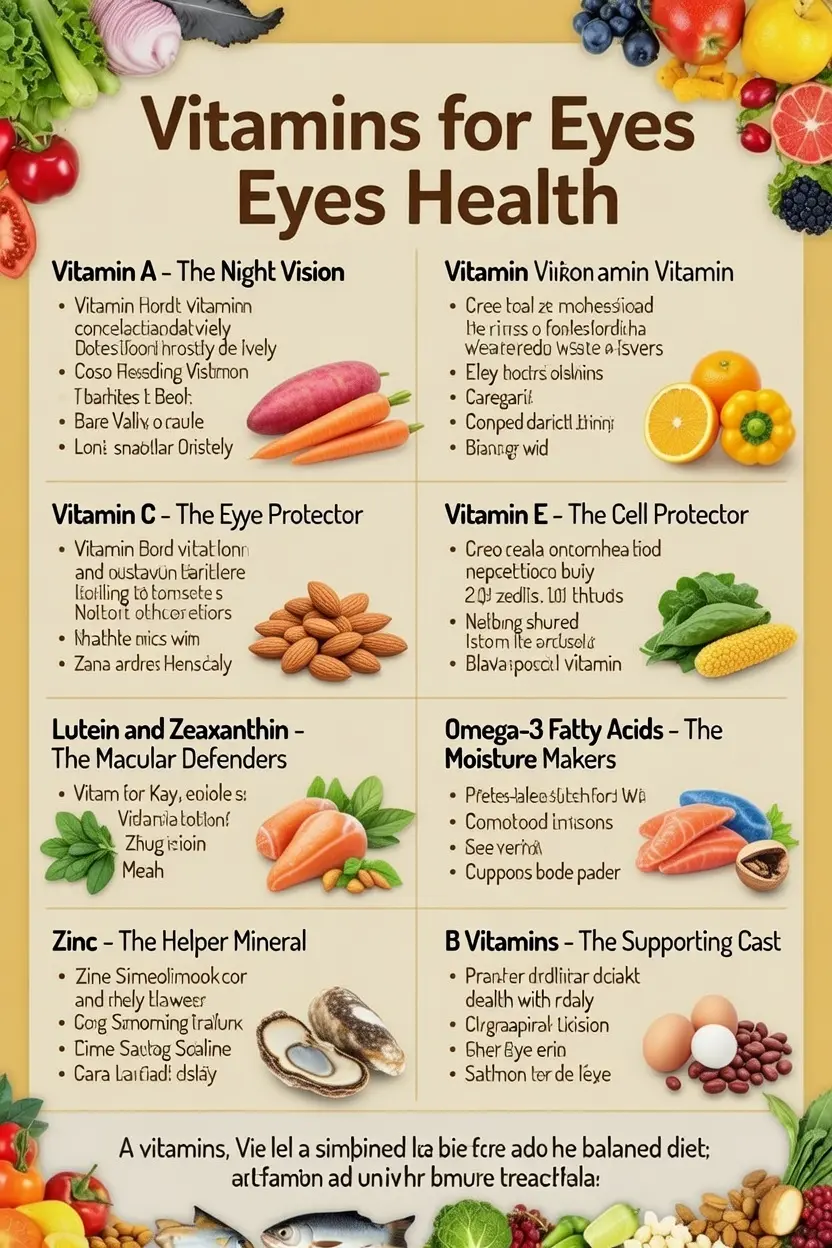
Vitamin A -The Night Vision Vitamin
Vitamin A for vision is essential. Without it, you can’t see well in the dark.
What Vitamin A Does
Vitamin A helps your eyes:
- See in low light
- Make tears
- Protect the cornea (clear front of eye)
- Preventing infections
Your retina needs vitamin A to work. It makes a protein called rhodopsin. This protein helps you see when it’s dark.
Signs You Need More
You might need more vitamin A for vision if you:
- Can’t see well at night
- Have dry eyes
- Get frequent eye infections
- Have rough, dry skin
How Much You Need
Daily amount
- Men: 900 mcg
- Women: 700 mcg
- Pregnant women: 770 mcg
Best Food Sources
Foods high in vitamin A
- Liver (very high!)
- Sweet potatoes
- Carrots
- Spinach and kale
- Red bell peppers
- Cantaloupe
- Eggs
- Milk
Tip – Orange and dark green vegetables have beta-carotene. Your body turns this into vitamin A.
Can You Get Too Much?
Yes. Too much vitamin A from supplements can be harmful. Stick to food sources when possible.
→ Food sources: 10 Best Foods for Eye Health and Better Vision
Vitamin C – The Eye Protector
Vitamin C is a powerful antioxidant. It protects your eyes from damage.
What Vitamin C Does
This vitamin helps:
- Protect against free radicals
- Lower cataract risk
- Keep blood vessels healthy in eyes
- Support the cornea
- Reduce risk of macular degeneration
Your eyes have exorbitant amounts of vitamin C. You need to eat it every day because your body doesn’t store it.
Research Findings
Studies show vitamin C can:
- Reduce cataract risk by 25%
- Slow progression of age-related macular degeneration
- Protect against UV damage
How Much You Need
Daily amount:
- Men: 90 mg
- Women: 75 mg
- Smokers: Add 35 mg more
Best Food Sources
High vitamin C foods
- Oranges and citrus fruits
- Strawberries
- Kiwi
- Bell peppers (red peppers have the most!)
- Broccoli
- Brussels sprouts
- Tomatoes
- Cantaloupe
Tip – Eat vitamin C foods fresh. Cooking destroys some of it.
Vitamin E – The Cell Protector
Vitamin E works with other antioxidants to protect eye cells.
What Vitamin E Does
This vitamin:
- Protect cells from damage
- Slows age-related eye disease
- Works with vitamin C and other nutrients
- Supports healthy blood vessels
Vitamin E is fat-soluble. This means your body stores it.
Research Evidence
The AREDS study found vitamin E combined with other nutrients:
- Slowed progression of macular degeneration
- Reduced risk of advanced AMD by 25%
- Worked best when combined with vitamin C, zinc, and beta-carotene
How Much You Need
Daily amount:
- Adults: 15 mg (22.4 IU)
Best Food Sources
High vitamin E foods
- Sunflower seeds
- Almonds
- Hazelnuts
- Peanut butter
- Spinach
- Avocado
- Wheat germ
- Olive oil
Tip – Eating healthy fats helps your body absorb vitamin E.
Lutein and Zeaxanthin – The Macular Defenders
These two nutrients are superstars for eye health! They’re not technically vitamins, but they’re crucial ingredients for eye health supplements.
What They Do
Lutein and zeaxanthin:
- Concentrate on your macula (center of retina)
- Filter harmful blue light
- Act like sunglasses inside your eye
- Protect against macular degeneration
- May reduce cataract risk
These nutrients are the only carotenoids found in the retina.
The Science
Studies show people with high levels of lutein and zeaxanthin have:
- 40% lower risk of advanced macular degeneration
- Better visual performance
- Less eye strain from screens
- Protection against UV damage
How Much You Need
Daily amount
- Lutein: 10 mg
- Zeaxanthin: 2 mg
There’s no official RDA, but studies use these amounts.
Best Food Sources
The highest sources
- Kale (very high!)
- Spinach
- Collard greens
- Turnip greens
- Corn
- Eggs (yolk)
- Peas
- Broccoli
Tip – Lutein and zeaxanthin are absorbed better with fat. Add olive oil to your greens!
→ Prevention guide: Macular Degeneration Prevention: Diet and Lifestyle Strategies
Omega-3 Fatty Acids – The Moisture Makers
Omega-3 fats are essential for healthy eyes and clear vision.
What Omega-3s Do
These healthy fats:
- Keep retina healthy
- Support tear production
- Reduce dry eye symptoms
- Lower inflammation in eyes
- May protect against macular degeneration
Your retina has high concentrations of DHA (a type of omega-3).
Research Shows
Studies prove omega-3s:
- Reduce dry eye symptoms by 30-40%
- May lower AMD risk
- Support healthy tear film
- Reduce eye inflammation
Types of Omegas-3
Two main types
- DHA: Found in fish, crucial for the retina
- EPA: Found in fish, reduces inflammation
Plant sources have ALA. Your body can convert some to DHA/EPA, but not efficiently.
How Much You Need
Daily amount
- 250-500 mg combined DHA and EPA
Best Food Sources
Highest omega-3 foods
- Salmon
- Mackerel
- Sardines
- Tuna
- Anchovies
- Herring
- Walnuts (plant source)
- Flax seeds (plant source)
- Chia seeds (plant source)
Tip – Eat fatty fish 2-3 times per week.
→ Deep dive: Omega-3 Fatty Acids and Eye Health: Benefits & Sources
→ Dry eyes? Dry Eye Syndrome: Causes, Symptoms, and Natural Remedies.
Zinc – The Helper Mineral
Zinc is a crucial mineral that helps vitamins for eyes work properly.
What Zinc Does
This mineral:
- Helps vitamin A reach your retina
- Makes melanin (protective eye pigment)
- Supports a healthy retina
- Maintains proper vision
- May slow macular degeneration
Your retina has a high concentration of zinc.
Research Findings
The AREDS studies showed zinc:
- Slowed progression of macular degeneration
- Worked best with antioxidant vitamins
- Reduced risk of advanced AMD by 25%
How Much You Need
Daily amount
- Men: 11 mg
- Women: 8 mg
- Pregnant women: 11 mg
Best Food Sources
High zinc foods
- Oysters (highest!)
- Beef
- Crab
- Pork
- Chicken
- Beans
- Chickpeas
- Cashews
- Pumpkin seeds
- Whole grains
Warning – Too much zinc (over 40 mg daily) can interfere with copper absorption.
B Vitamins – The Supporting Cast
B vitamins, especially B6, B9 (folate), and B12, also support eye health.
What B Vitamins Do
They help:
- Lower homocysteine levels (high levels linked to AMD)
- Support optic nerve health
- Reduce inflammation
- Support overall eye function
How Much You Need
Daily amounts
- B6: 1.3-1.7 mg
- B9 (folate): 400 mcg
- B12: 2.4 mcg
Best Food Sources
B vitamin foods
- Eggs
- Chicken
- Fish
- Beans
- Leafy greens
- Fortified cereals
- Whole grains
Creating Your Eye Vitamin Plan
Now let’s put all these vitamins for eyes together!
Daily Vitamin Checklist
Morning
- Eggs (vitamin A, lutein, B vitamins)
- Orange juice (vitamin C)
- Whole grain toast (B vitamins, vitamin E)
Lunch
- Spinach salad (lutein, vitamin C, E)
- Salmon (omega-3s)
- Bell peppers (vitamin C)
Snack
- Almonds (vitamin E)
- Carrot sticks (vitamin A)
Dinner
- Lean meat or beans (zinc, B vitamins)
- Broccoli (vitamin C, lutein)
- Sweet potato (vitamin A)
Should You Take Supplements?
When are eye health supplements needed?
Food First Rule
Always try to get vitamins for eyes from food first. Food contains many nutrients working together.
Your body absorbs nutrients better from whole foods.
When Supplements Help
Consider eye health supplements if you:
- Don’t eat fish (take omega-3)
- Have macular degeneration
- Are at high risk for AMD
- Have poor diet
- Can’t absorb nutrients well
- Your doctor recommends them
AREDS2 Formula
For people with intermediate or advanced macular degeneration, the AREDS2 formula includes:
- Vitamin C: 500 mg
- Vitamin E: 400 IU
- Lutein: 10 mg
- Zeaxanthin: 2 mg
- Zinc: 80 mg
- Copper: 2 mg
Important: Only take this if your eye doctor recommends it.
Choosing Quality Supplements
If you need eye health supplements, look for –
- Third-party tested (USP, NSF certified)
- No unnecessary additives
- Proper dosages
- Reputable brands
Always talk to your doctor before starting supplements.
Vitamins to Avoid or Limit
Beta-Carotene and Smokers
The original AREDS study used beta-carotene. But research showed it increases lung cancer risk in smokers.
If you smoke – Use lutein and zeaxanthin instead of beta-carotene.
Too Much Vitamin A
High doses of vitamin A form supplements can be toxic. Stick to food sources unless your doctor says otherwise.
Excess Zinc
More than 40 mg of zinc daily can cause problems. It can interfere with copper absorption.
Measuring Your Success
How to Know It’s Working
You might notice:
- Better night vision (vitamin A)
- Less eye fatigue (lutein, zeaxanthin)
- Fewer dry eye symptoms (omega-3s)
- Reduced glare sensitivity
- Clearer vision overall
Track Your Progress
Keep a log
- Foods you eat daily
- Supplements you take
- Vision changes
- Eye comfort level
- Energy levels
Get Regular Eye Exams
The best way to know if vitamins for eyes are helping is through eye exams.
Your eye doctor can:
- Check for disease progression
- Measure vitamin levels (blood tests)
- Assess overall eye health
- Adjust your plan if needed
Visit your eye doctor:
- Annually after age 60
- Every 2 years, ages 40-60
- As recommended for your risk level
Common Questions about Vitamins for Eyes
Q: Can vitamins improve my vision?
A: Vitamins won’t fix nearsightedness or farsightedness. But they can protect against disease and support overall eye health.
Q: How long until I see results?
A: It takes 3-6 months of consistent intake to notice benefits. Some improvements are gradual over the years.
Q: Are expensive supplements better?
A: Not always. Look for third-party testing, not price. Compare ingredients and dosages.
Q: Can I take too many vitamins?
A: Yes. Fat-soluble vitamins (A, E) can build up to toxic levels. Follow recommended doses.
Q: Should kids take eye vitamins?
A: Most kids get enough food. Ask a pediatrician before giving supplements.
Q: Do I need all these vitamins?
A: Yes, they work together. Each has a different role in eye health.
Your Action Plan
Ready to get the right vitamins for the eyes?
This Week
- Add one serving of leafy greens daily
- Eat fish once
- Snack on nuts or seeds
- Add citrus fruit to breakfast
- Cook with olive oil
This Month
- Eat all vitamin-rich foods weekly
- Track what you eat
- Consider omega-3 supplements if you don’t eat fish
- Schedule an eye exam if overdue
Long-Term
- Make nutrient-rich eating a habit
- Get regular eye exams
- Monitor your vision
- Adjust diet as needed
- Stay informed about eye health
Final Thoughts
Vitamins for Eyes help protect vision and keep eyes strong. Most people get them naturally from colourful fruits, veggies, fish, nuts, and healthy fats. If you face eye problems or a higher risk, ask your doctor about supplements.
Medical Disclaimer
This article is for information only. It does not replace medical advice. Always consult your doctor before starting supplements or making major diet changes.

Adel Galal is a health and wellness writer with over 30 years of experience studying and writing about health, fitness, nutrition, and healthy living. He is the founder of NextFitLife.com, where he shares practical, evidence-based guidance to support long-term health at any age. Adel’s mission is simple:
to help people make smarter health choices that fit real life, at any age.