Published on: February 10, 2026
Updated: October 19, 2026
If you want to prevent macular degeneration, the first thing to know is that no diet, vitamin, or lifestyle plan can guarantee that AMD will never develop. Age and genetics matter too.
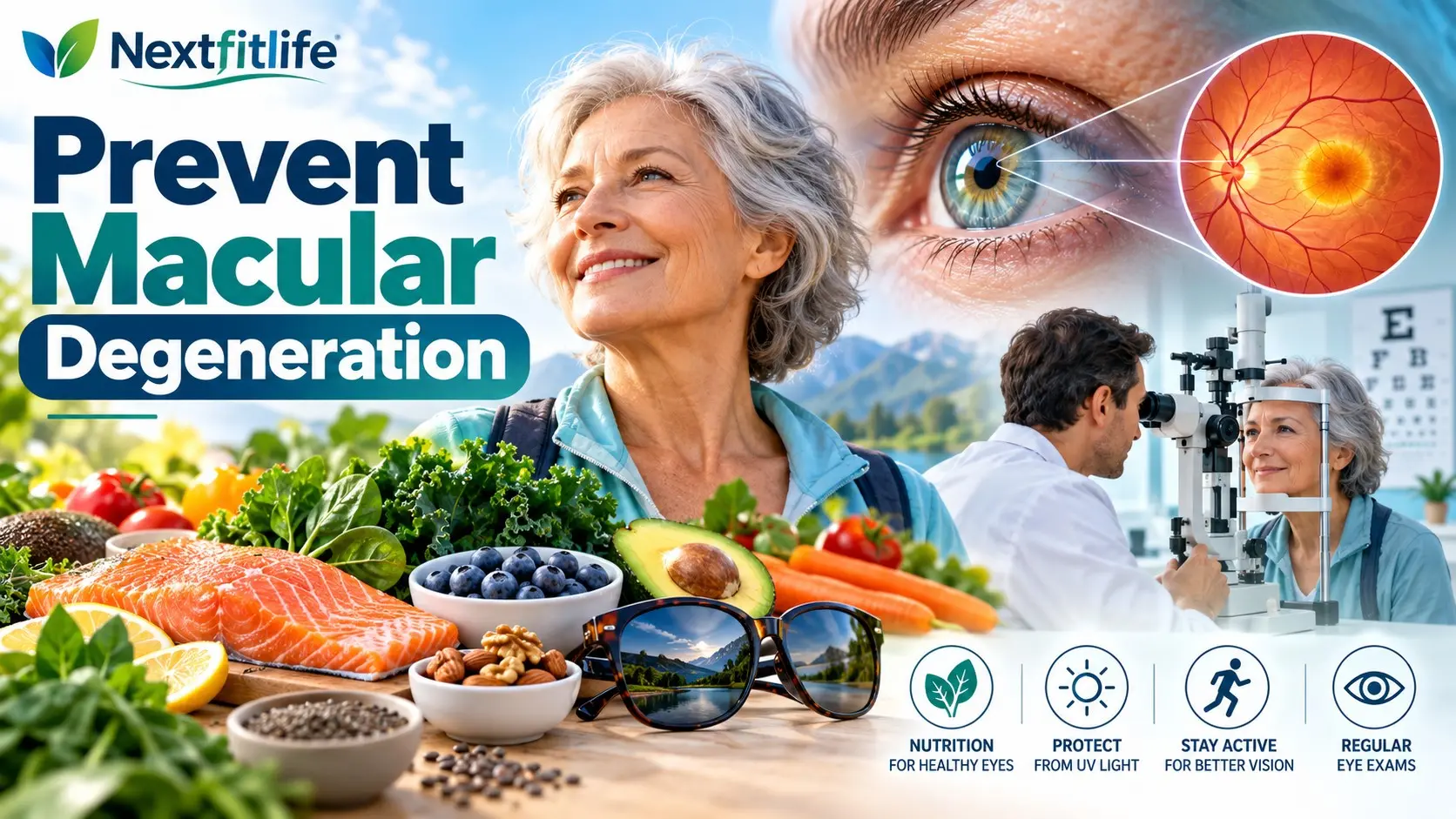
Still, several choices can lower risk or help protect vision over time. The strongest practical steps include not smoking, eating a nutritious diet rich in leafy greens and fish, staying physically active, managing blood pressure and cholesterol, and getting regular dilated eye exams.
Quick answer: You cannot completely prevent age related macular degeneration, but you can reduce avoidable risks. If AMD is already present, early monitoring and the right treatment can help protect central vision. AREDS2 supplements help certain people with intermediate or late AMD, but they do not prevent AMD from starting in a healthy eye.
Medical notice: This article is for general information and education. It does not replace medical advice, diagnosis, or treatment.
I am not a dermatologist or a doctor, and this content does not replace professional medical advice. What I share comes from real life experience, extensive research, and consultation with healthcare providers. Always consult qualified medical professionals for diagnosis and treatment of any health condition.
Get urgent eye care if straight lines suddenly look wavy, a new dark or blurry area appears in the center of your vision, or central vision changes quickly.
Also seek urgent care for sudden vision loss, a curtain over vision, many new flashes or floaters, or severe eye pain. Do not wait for diet changes or supplements to fix a sudden vision problem.
Table of Contents
- What Macular Degeneration Is
- Can AMD Really Be Prevented?
- 11 Proven Risk Reduction Steps
- Smoking and AMD
- Leafy Greens and Macular Pigment
- Fish and Omega 3 Foods
- Mediterranean Style Eating
- Exercise and Healthy Weight
- Blood Pressure and Cholesterol
- AREDS2 Supplements
- Who Should Not Take AREDS2
- Eye Exams and Early Detection
- Amsler Grid Monitoring
- UV Protection
- AMD Warning Signs
- References and Sources
- Frequently Asked Questions
What Is Age Related Macular Degeneration?
Age related macular degeneration, usually called AMD, damages the macula.
The macula is a small area near the center of the retina. It gives you the sharp central vision needed to read, drive, recognize faces, and see fine detail.
AMD usually affects central vision rather than side vision.
LSI: age related macular degeneration, AMD prevention, macular health, retinal health, central vision loss, AREDS2 vitamins, and AMD risk factors describe related parts of the same topic.
For a wider overview, visit the NextFitLife Complete Eye Health Guide.
Dry AMD and Wet AMD Are Different
AMD often begins as dry AMD.
Dry AMD can progress slowly through early, intermediate, and late stages.
Late dry AMD can develop into an advanced form called geographic atrophy, where retinal cells in the macula are lost.
Wet AMD, also called neovascular AMD, develops when abnormal blood vessels grow under the retina and leak fluid or blood.
| Feature | Dry AMD | Wet AMD |
|---|---|---|
| Main change | Progressive macular damage and retinal cell loss | Abnormal leaking blood vessels beneath the retina |
| Typical course | Often slower | Can change vision quickly |
| Central vision | Can gradually become blurred or lost | Can become distorted or blurred rapidly |
| Treatment | Depends on stage and type | Often treated with anti VEGF injections |
Can You Really Prevent Macular Degeneration?
Not completely.
AMD is influenced by age, genes, smoking, cardiovascular health, diet, and other factors.
You cannot change your age or family history, but you can change several important risks.
This makes the goal more realistic:
Lower the risks you can control, detect AMD early, and slow progression when treatment is available.
11 Proven Steps to Protect Your Macula
1. Do Not Smoke
If you smoke, quitting is one of the most important steps you can take for your eyes.
Smoking is strongly linked with AMD.
It exposes the retina and blood vessels to oxidative stress and other harmful effects while also increasing cardiovascular disease risk.
CDC reports that people who smoke are about twice as likely to develop AMD as people who do not smoke.
Read Smoking Eye Damage for a detailed look at smoking and vision.
2. Eat Dark Leafy Green Vegetables
Kale, spinach, collard greens, and similar vegetables are rich in lutein and zeaxanthin.
These carotenoids are naturally present in the retina and macula.
They are important components of macular pigment and can help filter short wavelength visible light while participating in antioxidant defenses.
Good Choices Include
- Kale
- Spinach
- Collard greens
- Swiss chard
- Broccoli
- Peas
- Egg yolks
You do not need to eat exactly one or two cups of cooked kale every day.
The stronger goal is to make dark leafy vegetables a regular part of your overall diet.
See Best Foods for Eye Health for more ideas.
3. Eat Fish as Part of a Healthy Diet
Fatty fish provides DHA and EPA, which are long chain omega 3 fats.
Some observational studies have linked diets rich in fish with lower AMD risk.
However, omega 3 supplements did not reduce AMD progression in AREDS2.
This distinction matters.
Food based dietary patterns can be associated with healthier outcomes without proving that one isolated supplement has the same effect.
Useful Fish Choices
- Salmon
- Sardines
- Trout
- Herring
- Atlantic mackerel
For the evidence on fish oil, see Omega 3 for Eyes.
4. Follow a Mediterranean Style Eating Pattern
A Mediterranean style diet is built around plants, fish, legumes, whole grains, nuts, seeds, and olive oil.
It limits heavily processed foods and usually includes less red and processed meat.
Research has linked stronger adherence to this eating pattern with lower risk of AMD progression.
That does not mean the diet guarantees protection.
Its strength comes from the total pattern rather than one special food.
Build Meals Around
- Vegetables
- Fruit
- Beans and lentils
- Whole grains
- Fish
- Nuts
- Seeds
- Olive oil
5. Stay Physically Active
Regular physical activity supports blood pressure, weight, blood glucose, cardiovascular health, and overall circulation.
Observational research has also linked physical activity with lower AMD risk.
The old article claimed that exercising three times a week cuts wet AMD risk by 70 percent. That is too precise for a general recommendation.
A more reliable goal is to follow normal physical activity guidance that fits your age and health.
Walking, cycling, swimming, and strength work can all count.
6. Keep Blood Pressure Under Control
High blood pressure affects blood vessels throughout the body, including the vessels that support the retina.
If you have hypertension:
- Take prescribed medicine correctly.
- Monitor your blood pressure as advised.
- Stay physically active.
- Follow your clinician's dietary advice.
- Keep medical appointments.
Do not stop blood pressure medicine because your readings improve.
7. Manage Cholesterol and Cardiovascular Risk
AMD shares some risk patterns with cardiovascular disease.
That does not mean lowering cholesterol is a direct AMD treatment, but keeping cardiovascular risk under control supports overall vascular health.
Discuss:
- Blood pressure
- Cholesterol
- Diabetes
- Smoking
- Weight
- Physical activity
with your healthcare team as appropriate.
8. Keep Diabetes Well Managed
Diabetes is best known for causing diabetic retinopathy, which is different from AMD.
However, good blood glucose control is still a major part of protecting long term eye health.
People with diabetes should get the eye examinations recommended by their diabetes and eye care teams.
Read Eye Health and Diabetes for a full guide.
9. Get Regular Dilated Eye Exams
Early AMD can cause no symptoms.
That makes eye examinations especially valuable.
A dilated examination allows an eye professional to look directly at the retina and macula.
Optical coherence tomography, often called OCT, may also be used when AMD is suspected or already diagnosed.
There is no single exam schedule that fits every adult.
Your schedule should depend on:
- Age
- AMD stage
- Family history
- Diabetes
- Other eye disease
- Your ophthalmologist's findings
10. Use AREDS2 Only When It Is Appropriate
AREDS2 is one of the strongest evidence based tools for slowing AMD progression in the right people.
It is also one of the most misunderstood.
AREDS2 does not stop healthy people from developing AMD.
It does not help people with early AMD in the way it helps people with more advanced stages.
National Eye Institute guidance says AREDS2 may help people with intermediate AMD in one or both eyes and people with late AMD in only one eye.
11. Monitor Known AMD for New Changes
If you already have AMD, your eye specialist may recommend home monitoring.
An Amsler grid is one simple tool that can reveal new distortion in central vision.
If straight lines suddenly look wavy, missing, bent, or broken, contact your eye doctor promptly.
Do not wait for your next routine appointment.
The AREDS2 Formula Explained
AREDS2 contains specific doses of antioxidants and minerals studied by the National Eye Institute.
| Nutrient | AREDS2 Amount | Purpose in Formula |
|---|---|---|
| Vitamin C | 500 mg | Antioxidant component |
| Vitamin E | 400 IU | Antioxidant component |
| Lutein | 10 mg | Macular carotenoid |
| Zeaxanthin | 2 mg | Macular carotenoid |
| Zinc | 80 mg | Mineral component studied in AREDS |
| Copper | 2 mg | Included because high zinc can affect copper status |
These are high supplement doses, not ordinary food targets.
Do not try to recreate AREDS2 by taking several random vitamins separately.
Who May Benefit From AREDS2?
According to the National Eye Institute, AREDS2 may help if you have:
- Intermediate AMD in one eye
- Intermediate AMD in both eyes
- Late AMD in one eye while the other eye has not reached late AMD
Your ophthalmologist should decide whether your retinal findings match the stages studied in AREDS and AREDS2.
Who Does Not Need AREDS2 for Prevention?
AREDS2 has not been shown to prevent AMD from starting in healthy eyes.
It has also not been shown to stop early AMD from becoming intermediate AMD.
That means a healthy adult should not start AREDS2 simply because they are over 50 or because a parent had AMD.
Talk with an eye professional first.
Current and Former Smokers Should Avoid the Old Beta Carotene AREDS Formula
The original AREDS formula contained beta carotene.
Beta carotene supplements increased lung cancer risk in people who smoked or previously smoked.
AREDS2 replaced beta carotene with lutein and zeaxanthin.
If you smoke or used to smoke, check the label carefully and use the newer AREDS2 formula when an eye doctor recommends supplementation.
Omega 3 Supplements Do Not Prevent AMD
This is another important update.
AREDS2 tested DHA and EPA, the main omega 3 fats in fish oil.
Adding them did not provide extra protection against advanced AMD.
This does not mean fish is unhealthy.
It means eating fish as part of a nutritious dietary pattern and taking fish oil capsules for AMD prevention are not the same recommendation.
Read Omega 3 for Eyes for the full evidence review.
Do Lutein and Zeaxanthin Prevent AMD?
Lutein and zeaxanthin are important retinal carotenoids.
Dietary intake of leafy green vegetables is associated with better eye health.
However, you should not interpret this as proof that taking stand alone lutein tablets prevents AMD in a healthy person.
The strongest supplement evidence comes from using lutein and zeaxanthin as part of the full AREDS2 formula in people with the AMD stages studied.
Best Foods for Macular Health
| Food Group | Examples | Useful Nutrients |
|---|---|---|
| Dark leafy greens | Kale, spinach, collards | Lutein, zeaxanthin, folate |
| Fish | Salmon, sardines, trout | DHA, EPA, protein |
| Colorful vegetables | Peppers, squash, broccoli | Carotenoids and vitamin C |
| Fruit | Berries, oranges, kiwi | Vitamin C and plant compounds |
| Nuts and seeds | Almonds, walnuts, sunflower seeds | Vitamin E and unsaturated fats |
| Legumes | Beans, lentils, chickpeas | Fiber, protein, zinc |
A Simple AMD Friendly Day of Eating
Breakfast
- Oatmeal with berries and walnuts
- Plain yogurt or another protein source
- Fruit
Lunch
- Spinach and chickpea salad
- Tomato and peppers
- Olive oil dressing
- Whole grain bread
Snack
- Fruit
- A small handful of nuts
Dinner
- Grilled salmon or trout
- Steamed greens
- Brown rice or another whole grain
- Colorful vegetables
You do not need to eat this exact menu.
The important part is the pattern.
What About Sugar and Refined Carbohydrates?
A diet dominated by highly refined carbohydrates and heavily processed foods is not the best pattern for cardiovascular or metabolic health.
That does not mean one slice of white bread causes AMD.
Focus on what you eat most often:
- Vegetables
- Fruit
- Legumes
- Whole grains
- Fish
- Nuts
- Healthy fats
rather than labeling individual foods as dangerous to the macula.
Does Being Overweight Cause AMD?
Body weight is one part of a wider metabolic picture.
Higher body weight can occur alongside high blood pressure, diabetes, low physical activity, and other health risks.
Instead of chasing a perfect number on the scale, focus on sustainable habits that improve cardiovascular and metabolic health.
Should You Wear Sunglasses to Prevent AMD?
UV blocking sunglasses are sensible for overall eye protection.
They help protect the eyes from ultraviolet exposure and are particularly important for reducing other forms of sun related eye damage.
However, evidence that sunglasses alone prevent AMD is less direct than the evidence for not smoking.
Wear sunglasses because protecting the eyes from strong UV exposure is good eye care, not because they guarantee AMD prevention.
Choose Sunglasses That
- Block 99 to 100 percent of UVA and UVB
- Fit comfortably
- Cover the eyes well
- Are worn with a brimmed hat during strong sun when practical
Family History Changes Risk, Not Destiny
AMD has an important genetic component.
If a parent or sibling has AMD, tell your eye professional.
Family history does not mean AMD is certain.
It does mean regular monitoring and modifiable risk factors become even more important.
Do You Need Genetic Testing for AMD?
Routine consumer genetic testing is not required to decide whether someone should take AREDS2.
Current supplement decisions are based mainly on the stage of AMD seen during an eye examination.
Do not change AMD supplements based only on a direct to consumer genetic result without discussing it with an ophthalmologist.
How to Use an Amsler Grid
An Amsler grid can help people with known AMD notice changes in central vision.
- Wear your usual reading glasses if needed.
- Use good lighting.
- Cover one eye.
- Look directly at the center dot.
- Notice whether lines look straight and complete.
- Repeat with the other eye.
Contact your eye professional promptly if you notice new:
- Wavy lines
- Missing lines
- Dark spots
- Distortion
- Blurred areas
The grid does not replace dilated eye examinations.
Do Healthy People Need to Use an Amsler Grid Every Week?
No universal rule says every adult without AMD should test weekly.
Home monitoring is most useful when an eye professional recommends it because AMD is already present or risk is elevated.
Early AMD Often Has No Symptoms
This is why relying only on your vision can be misleading.
According to the National Eye Institute, early dry AMD can have no symptoms at all.
Intermediate AMD can also be silent in some people.
A dilated eye examination can find changes before they become obvious in daily life.
AMD Warning Signs You Should Not Ignore
Later AMD can cause:
- Blurred central vision
- Straight lines appearing wavy
- A blurry or blank area near the center of vision
- Colors appearing less bright
- Difficulty seeing in low light
- Trouble reading
- Difficulty recognizing faces
New distortion deserves prompt eye care because wet AMD can progress quickly.
Can Wet AMD Be Treated?
Yes.
Wet AMD is commonly treated with medicines called anti VEGF drugs.
These medicines are injected into the eye and reduce the effects of abnormal leaking blood vessels.
Modern treatment can slow vision loss and preserve useful vision in many people.
The earlier a meaningful change is assessed, the better the opportunity to begin appropriate treatment.
What About Late Dry AMD?
Late dry AMD can include geographic atrophy.
Research and treatment options for geographic atrophy have changed in recent years, which makes specialist follow up important.
If you have advanced dry AMD, ask your retina specialist what monitoring and treatment options are appropriate for your specific pattern.
Can Diet Reverse AMD?
No.
A healthy diet can support overall eye and cardiovascular health, but it does not rebuild retinal cells already lost to advanced AMD.
Diet is best viewed as:
- A risk reduction tool
- A general health strategy
- Part of long term AMD management
It is not a replacement for treatment.
Can Supplements Restore Lost Vision?
No.
AREDS2 can slow progression in selected people, but it does not restore central vision that has already been lost.
If vision loss has occurred, low vision rehabilitation and assistive tools can also help people remain independent.
Common Myths About Preventing Macular Degeneration
Myth 1: You Can Completely Prevent AMD With Diet
False. Diet can influence risk, but age and genetics also matter.
Myth 2: Leafy Greens Cut Everyone's AMD Risk by Exactly 40 Percent
Too precise. Observational studies support diets rich in leafy greens, but one percentage cannot predict an individual's risk.
Myth 3: Fish Oil Prevents AMD
False as a supplement claim. Omega 3 supplements did not reduce AMD progression in AREDS2.
Myth 4: AREDS2 Prevents AMD in Healthy People
False. AREDS2 is for selected stages of AMD and does not prevent AMD from starting.
Myth 5: Anyone With a Family History Should Take AREDS2
False. Family history raises risk, but AREDS2 recommendations depend on retinal findings and AMD stage.
Myth 6: Exercise Cuts Wet AMD Risk by Exactly 70 Percent
Too strong. Regular physical activity is associated with healthier outcomes, but an individual should not expect one fixed reduction.
Myth 7: Sunglasses Alone Prevent AMD
Not proven. UV protection is good eye care, but the strongest modifiable AMD evidence centers on smoking, diet, cardiovascular health, and appropriate monitoring.
Myth 8: A Normal Looking Vision Test Means You Do Not Have Early AMD
False. Early AMD can have no symptoms.
A Practical AMD Risk Reduction Plan
This Week
- If you smoke, start a quit plan.
- Add a dark leafy green vegetable to several meals.
- Eat fish if it fits your diet.
- Check when your last comprehensive eye examination was.
- Know whether AMD runs in your family.
This Month
- Build more meals around Mediterranean style foods.
- Increase regular physical activity at a safe level.
- Check blood pressure if you have not done so recently.
- Review diabetes and cholesterol care if relevant.
- Buy proper UV blocking sunglasses.
Long Term
- Do not smoke.
- Keep regular eye appointments.
- Maintain a healthy dietary pattern.
- Stay active.
- Manage blood pressure and metabolic health.
- Use AREDS2 only if your eye professional recommends it.
- Report new central vision distortion quickly.
When Should You See an Eye Doctor?
Arrange an eye examination if you:
- Are noticing central blur
- See straight lines as wavy
- Need much more light to read
- Have trouble recognizing faces
- Notice colors becoming duller
- Have a strong family history of AMD
- Have already been told you have drusen or AMD
- Have diabetes or another major eye risk
Macular Degeneration Red Flags
| Warning Sign | Why It Matters | Action |
|---|---|---|
| New wavy straight lines | Can signal late or wet AMD | Prompt eye examination |
| New central dark spot | Possible macular damage | Prompt eye examination |
| Rapid central vision change | Wet AMD can change quickly | Urgent eye care |
| Sudden vision loss | Could be AMD or another retinal or vascular emergency | Emergency eye assessment |
| Curtain over vision or many new flashes and floaters | Possible retinal tear or detachment rather than AMD | Emergency eye care |
Key Takeaways
- You cannot guarantee that you will prevent macular degeneration.
- You can reduce several modifiable risks.
- Not smoking is one of the strongest actions you can take.
- Leafy greens provide lutein and zeaxanthin.
- Fish can be part of a healthy AMD friendly dietary pattern.
- Mediterranean style eating is associated with better eye and cardiovascular health.
- Regular physical activity supports overall risk reduction.
- Manage blood pressure, cholesterol, and diabetes when relevant.
- Early AMD can have no symptoms.
- Regular dilated eye exams matter.
- AREDS2 is for selected people with intermediate or late AMD.
- AREDS2 does not prevent AMD from starting.
- Omega 3 supplements did not reduce AMD progression in AREDS2.
- Current and former smokers should avoid the old beta carotene AREDS formula.
- New central distortion needs prompt eye care.
References and Sources
- National Eye Institute.
Age Related Macular Degeneration.
https://www.nei.nih.gov/eye-health-information/eye-conditions-and-diseases/age-related-macular-degeneration - National Eye Institute.
AREDS2 Supplements for Age Related Macular Degeneration.
https://www.nei.nih.gov/eye-health-information/eye-conditions-and-diseases/age-related-macular-degeneration/nutritional-supplements-age-related-macular-degeneration - National Eye Institute.
AREDS and AREDS2 Clinical Trials.
https://www.nei.nih.gov/eye-health-information/clinical-trials/age-related-eye-disease-studies-aredsareds2/about-areds-and-areds2 - American Academy of Ophthalmology.
Understanding Macular Degeneration.
https://www.aao.org/eye-health/diseases/amd-macular-degeneration - American Academy of Ophthalmology.
Diet, Nutrition, and Eye Health Supplements.
https://www.aao.org/eye-health/tips-prevention/diet-nutrition - Centers for Disease Control and Prevention.
Vision Loss, Blindness, and Smoking.
https://www.cdc.gov/tobacco/campaign/tips/diseases/vision-loss-blindness.html - NIH Office of Dietary Supplements.
Omega 3 Fatty Acids Fact Sheet.
https://ods.od.nih.gov/factsheets/Omega3FattyAcids-HealthProfessional/
Conclusion: Prevent Macular Degeneration by Reducing the Risks You Can Control
You cannot promise to prevent macular degeneration completely, because age and genetics play important roles. You can still make meaningful choices that protect your eyes.
Do not smoke. Eat plenty of vegetables, include fish and other nutritious foods, stay active, manage blood pressure and metabolic health, and keep regular eye appointments. If AMD is already present, ask your ophthalmologist whether AREDS2 and home monitoring are right for your stage.
Most importantly, act quickly if central vision suddenly becomes wavy, blurred, or distorted.
Internal Links + Hub
About the Author
Adel Galal is a father of four (three sons and a daughter) and a grandfather of four, with 33 years of hands on parenting experience. He is the founder of Parnthub.com, based in Cairo, Egypt, where he shares practical guidance on feeding, development and family life from newborns to teenagers. Adel is not a medical professional; health articles cite trusted sources and are for general information only.
Frequently Asked Questions
Can you completely prevent macular degeneration?
No. Age, genetics, and other factors cannot be controlled. However, not smoking, eating a nutritious diet, staying active, managing cardiovascular risks, and getting regular eye exams can help lower avoidable risk and support long term eye health.
What is the best thing you can do to prevent macular degeneration?
If you smoke, quitting is one of the strongest modifiable steps. A healthy dietary pattern, physical activity, blood pressure control, and regular dilated eye exams are also important.
What foods may help protect against macular degeneration?
Useful foods include dark leafy greens, fish, colorful vegetables, fruit, legumes, nuts, seeds, whole grains, and olive oil. A Mediterranean style eating pattern is a practical way to combine these foods.
Does fish oil prevent macular degeneration?
No. Omega 3 supplements did not reduce progression to advanced AMD in AREDS2. Fish can still be part of a healthy diet, but fish oil capsules should not be presented as an AMD prevention treatment.
Does AREDS2 prevent macular degeneration?
No. AREDS2 does not prevent AMD from starting. It can slow progression in selected people with intermediate AMD and in some people with late AMD in only one eye.
Who should take AREDS2 supplements?
People with intermediate AMD in one or both eyes or late AMD in only one eye may benefit. An ophthalmologist should confirm whether your retinal findings match the stages studied in AREDS and AREDS2.
Should healthy adults take AREDS2?
No evidence shows that AREDS2 prevents AMD in healthy eyes. Healthy adults should not take the high dose formula solely because of age or family history unless an eye professional recommends it for diagnosed AMD.
Does exercise prevent macular degeneration?
Exercise cannot guarantee prevention, but regular physical activity supports cardiovascular health and has been associated with lower AMD risk in observational research.
Does wearing sunglasses prevent AMD?
UV blocking sunglasses are good for overall eye protection, but evidence that sunglasses alone prevent AMD is less strong than the evidence for smoking cessation, healthy diet, cardiovascular risk control, and regular eye care.
Can diet reverse macular degeneration?
No. A healthy diet may support retinal health and may help lower risk or support long term management, but it cannot restore retinal cells already lost to advanced AMD.
What are the early signs of macular degeneration?
Early AMD often has no symptoms. Later symptoms can include central blur, straight lines appearing wavy, dark or blank central areas, reduced color brightness, and difficulty seeing in low light.
When is a change in vision urgent?
Get prompt eye care if straight lines suddenly become wavy, a new central dark or blurry area appears, or central vision changes quickly. Sudden vision loss, a curtain over vision, or many new flashes and floaters require emergency assessment.

Health & wellness writer with 30+ years of experience in nutrition, fitness, and healthy aging. Founder of NextFitLife.com — evidence-based health guidance.