Published: Nov 1, 2023
Last updated: July 18, 2026
Next review: July 2027
Written by: Adel Galal, Founder and Lead Writer at NextFitLife
Review status: Editorially reviewed and checked against current public health sources
Medical review status: This article has not been medically reviewed by a doctor or registered dietitian
Reading time: About 16 minutes
Vitamins for Strong Bones and Joints can support normal bone growth, muscle function, collagen production, and movement. However, no vitamin can rebuild damaged cartilage, cure arthritis, or replace treatment for osteoporosis.
Strong bones need more than one nutrient. They need calcium, vitamin D, protein, movement, and enough food. Healthy joints also depend on muscles, tendons, ligaments, cartilage, body weight, activity, age, injury history, and medical conditions.
This guide explains the nutrients that matter most. It also shows you which foods provide them, when supplements may be useful, and when bone or joint symptoms need medical care.
For more related guides, visit the NextFitLife Bone and Joint Health Foods Hub and the Nutrition and Vitamins Hub.
Important Medical Note
This content is for general educational purposes and does not replace professional medical advice, diagnosis, or treatment. Consult an appropriately qualified healthcare professional for personal medical concerns. I am also not a rheumatologist, orthopedic specialist, pharmacist, registered dietitian, or physical therapist.
This content does not replace professional medical advice. This article explains published guidance and does not provide a personal clinical assessment.
Always consult qualified medical professionals for diagnosis and treatment of any health condition.
Do not stop medicine, replace osteoporosis treatment, or begin large supplement does because of this article.
Quick Answer: What Are the Best Vitamins for Strong Bones and Joints?
The most important nutrients include:
- Vitamin D for calcium absorption and normal muscle function
- Vitamin K for normal blood clotting and bone proteins
- Vitamin C for normal collagen production
- Calcium for bone structure
- Magnesium for normal bone, muscle, and nerve function
- Protein for muscles and the structure of body tissues
Calcium and magnesium are minerals, not vitamins. They are included because they are important parts of a complete bone health plan.
Most people should begin with food. Supplements may help when food intake is low, a blood test shows a deficiency, or a healthcare professional recommends them.
Bones and Joints Are Not the Same
Bones give the body structure. They protect organs and store minerals.
Bone is living tissue. The body removes old bone and makes new bone throughout life.
Joints are places where two or more bones meet. Cartilage covers many joint surfaces. Muscles, tendons, ligaments, and joint fluid also help the body move.
A vitamin that supports bone does not always treat a joint problem.
For example, vitamin D helps the body absorb calcium. It does not repair torn cartilage or cure rheumatoid arthritis.
What Vitamins for Strong Bones and Joints Can and Cannot Do
A nourishing diet may support:
- Healthy bones
- Normal muscle function
- Normal collagen production
- Good calcium intake
- Normal movement
- A healthy body weight
- Recovery after normal activity
Vitamins cannot:
- Cure osteoporosis
- Reverse a fracture
- Rebuild worn cartilage
- Cure osteoarthritis
- Cure rheumatoid arthritis
- Treat gout attacks
- Repair a torn ligament
- Replace medicine, surgery, or physical therapy
Vitamin D for Strong Bones and Muscles
Vitamin D is one of the main vitamins for bone health.
It helps the body absorb calcium from food. It also supports normal muscle function.
Low vitamin D can lead to soft or weak bones. Severe deficiency may cause bone pain and muscle weakness.
Vitamin D sources include:
- Salmon
- Trout
- Sardines
- Mackerel
- Egg yolks
- Foods with added vitamin D
- Some mushrooms exposed to ultraviolet light
Many milk products and plant drinks have added vitamin D. The amount can vary. Check the food label.
Your skin can make vitamin D from sunlight. However, sunlight is not a risk free treatment. Too much ultraviolet exposure can harm the skin and raise skin cancer risk.
Do not use a fixed amount of sun exposure as a medical plan. Skin color, age, clothing, location, season, and health can change vitamin D production.
How Much Vitamin D Do Adults Need?
Common United States targets are:
- Adults aged 19 to 70 need about 15 micrograms or 600 IU each day
- Adults aged 71 and older need about 20 micrograms or 800 IU each day
Your personal need may be different.
A doctor may recommend a different amount if a blood test shows vitamin D deficiency, if you have osteoporosis, or if a health condition affects absorption.
Do not take a large dose without advice. Too much vitamin D can raise blood calcium and harm the kidneys or heart.
Calcium for Bone Structure
Calcium is not a vitamin. It is a mineral and a major part of bone.
Your body also uses calcium for muscles, nerves, blood clotting, and heart function.
If you do not get enough calcium for a long time, the body may take calcium from bone to keep blood levels stable.
Calcium-rich foods include:
- Milk
- Plain yogurt
- Cheese
- Fortified plant drinks
- Calcium set tofu
- Sardines with soft bones
- Canned salmon with soft bones
- Collard greens
- Kale
- Bok choy
- White beans
- Chia seeds
- Almonds
Read the full NextFitLife calcium-rich foods guide for more meal ideas.
How Much Calcium Do Adults Need?
Common United States targets are:
- Most adults aged 19 to 50 need about 1,000 milligrams each day
- Men aged 51 to 70 usually need about 1,000 milligrams each day
- Women aged 51 and older usually need about 1,200 milligrams each day
- Adults aged 71 and older usually need about 1,200 milligrams each day
These are general targets. Pregnancy, breastfeeding, kidney disease, digestive disease, medicine, and osteoporosis can change personal advice.
More calcium is not always better. Very large amounts can cause problems.
Vitamin K and Bone Health
Vitamin K helps the body make proteins used in blood clotting and bone.
Vitamin K1 is common in leafy green vegetables.
Vitamin K2 is found in some fermented foods and animal foods. The amount can vary.
Food sources include:
- Kale
- Spinach
- Collard greens
- Broccoli
- Brussels sprouts
- Cabbage
- Soybean oil
- Some fermented foods
- Eggs
- Some cheeses
Eating enough vitamin K supports normal health. This does not mean that a vitamin K2 supplement has been proven to prevent every fracture or treat osteoporosis.
People who take warfarin or another medicine affected by vitamin K should not make sudden, large changes in vitamin K intake.
You usually do not need to stop eating leafy vegetables. You may need to keep your intake steady and follow advice from your medical team.
For food examples, read the NextFitLife vitamin K2 guide.
Vitamin C for Collagen Production
Vitamin C helps the body make collagen.
Collagen is a protein found in skin, bone, cartilage, tendons, ligaments, and blood vessels.
This is why vitamin C is linked with collagen production.
It does not mean that taking a high dose of vitamin C will rebuild damaged cartilage.
Vitamin C foods include:
- Oranges
- Kiwi
- Strawberries
- Guava
- Bell peppers
- Broccoli
- Tomatoes
- Potatoes
- Cabbage
Most people can obtain vitamin C from fruit and vegetables.
Read the NextFitLife vitamin C foods guide for more choices.
Magnesium for Bones, Muscles, and Nerves
Magnesium is a mineral. It supports many body processes.
It is involved in normal muscle and nerve function. It is also part of the bone.
Magnesium-rich foods include:
- Pumpkin seeds
- Almonds
- Cashews
- Beans
- Lentils
- Whole grains
- Spinach
- Avocado
- Plain yogurt
- Dark chocolate in small portions
Food is a safe starting point for most people.
Magnesium supplements can cause diarrhea, nausea, and stomach cramps. Very large amounts can be dangerous.
People with kidney disease need special care because their kidneys may not remove extra magnesium well.
Learn more in the NextFitLife magnesium foods guide.
Does Vitamin B12 make bones stronger?
Vitamin B12 supports blood cells and the nervous system.
A serious deficiency can affect general health, balance, nerves, and movement.
Some studies have found links between low vitamin B12 and poor bone measures. A link does not prove that a B12 supplement prevents fractures.
People who have a B12 deficiency should receive suitable treatment.
Food sources include:
- Fish
- Meat
- Eggs
- Milk
- Yogurt
- Fortified foods
People following a vegan diet need a reliable B12 source.
Visit the NextFitLife B12-rich foods guide for more information.
Does Vitamin A Help Bones?
Vitamin A supports vision, immunity, growth, and other body functions.
Your body needs enough vitamin A. It does not need very large doses.
Too much preformed vitamin A from supplements or frequent large amounts of liver may harm bones and cause other health problems.
Do not take a high-dose vitamin A supplement unless a qualified healthcare professional recommends it.
Beta carotene from vegetables is a safer food source for many people.
Sources include carrots, sweet potato, pumpkin, spinach, and other colourful vegetables.
What About Vitamin E?
Vitamin E helps protect cells from oxidative damage.
It is found in nuts, seeds, plant oils, and some vegetables.
Vitamin E is needed for normal health, but supplements have not been proven to rebuild joints or cure arthritis.
Large supplement doses can raise bleeding risk, especially with some medicines.
Do Vitamins Treat Joint Pain?
Joint pain can have many causes.
These include:
- Osteoarthritis
- Rheumatoid arthritis
- Gout
- Injury
- Infection
- Bursitis
- Tendon problems
- Nerve problems
- Medicine effects
No single vitamin treats all these causes.
Correcting a true deficiency may support normal health. It may not remove pain caused by damaged cartilage, inflammation, infection, or injury.
Do not use a vitamin to delay a diagnosis.
Vitamins for Strong Bones and Joints With Osteoporosis
Osteoporosis makes bones weaker and more likely to break.
It often has no clear symptoms until a fracture happens.
Calcium and vitamin D are important parts of bone care. They may not be enough when a person has osteoporosis or a high fracture risk.
A doctor may also recommend:
- A bone density test
- Medicine that lowers fracture risk
- Strength and balance exercises
- Fall prevention
- Changes to smoking or alcohol use
- A review of medicines that affect bone
Do not replace prescribed osteoporosis medicine with a calcium or vitamin D supplement.
For meal support, visit the NextFitLife osteoporosis healthy diet guide.
Vitamins for Strong Bones and Joints With Osteoarthritis
Osteoarthritis affects the whole joint. It can involve cartilage, bone, muscles, and other tissues.
Vitamins do not cure it.
Helpful care may include:
- Suitable movement
- Strength exercises
- Weight management when needed
- Physical therapy
- Pain treatment
- Medical review
Some people try glucosamine or chondroitin.
Research results are mixed. It is still uncertain whether these supplements provide a meaningful benefit for most people with osteoarthritis.
They may also interact with medicine or affect blood sugar and bleeding risk.
Speak with a doctor or pharmacist before using them.
Do Collagen Supplements Help Joints?
Collagen is an important body protein.
Some studies have tested collagen supplements for joint symptoms. Results are not strong enough to promise that collagen will rebuild cartilage or prevent arthritis.
A supplement is not the same as collagen inside your joint.
Your digestive system breaks food proteins into smaller parts. The body then uses those parts where needed.
A balanced diet with enough protein and vitamin C supports normal collagen production.
Do Omega 3 Fats Help Joints?
Omega 3 fats are not vitamins.
They are found in salmon, sardines, trout, walnuts, chia seeds, and ground flaxseed.
Fish oil has been studied for inflammatory joint conditions. Results differ by condition, dose, and treatment plan.
Omega 3 foods can be part of a balanced diet. They should not replace arthritis medicine.
Fish oil supplements can raise bleeding risk or interact with medicine.
Daily Nutrient Targets for Adults
| Nutrient | Common Adult Target | Main Role |
|---|---|---|
| Calcium | Usually 1,000 to 1,200 milligrams | Bone structure and normal muscle function |
| Vitamin D | Usually 15 to 20 micrograms or 600 to 800 IU | Calcium absorption and normal muscle function |
| Vitamin K | About 90 micrograms for women and 120 micrograms for men | Blood clotting and normal bone proteins |
| Vitamin C | About 75 milligrams for women and 90 milligrams for men | Normal collagen production |
| Magnesium | About 310 to 320 milligrams for women and 400 to 420 milligrams for men | Normal bone, muscle, and nerve function |
These are common United States targets for healthy adults.
Your need may change with age, sex, pregnancy, breastfeeding, health, medicine, diet, and laboratory results.
A registered dietitian or doctor can help you set a personal target.
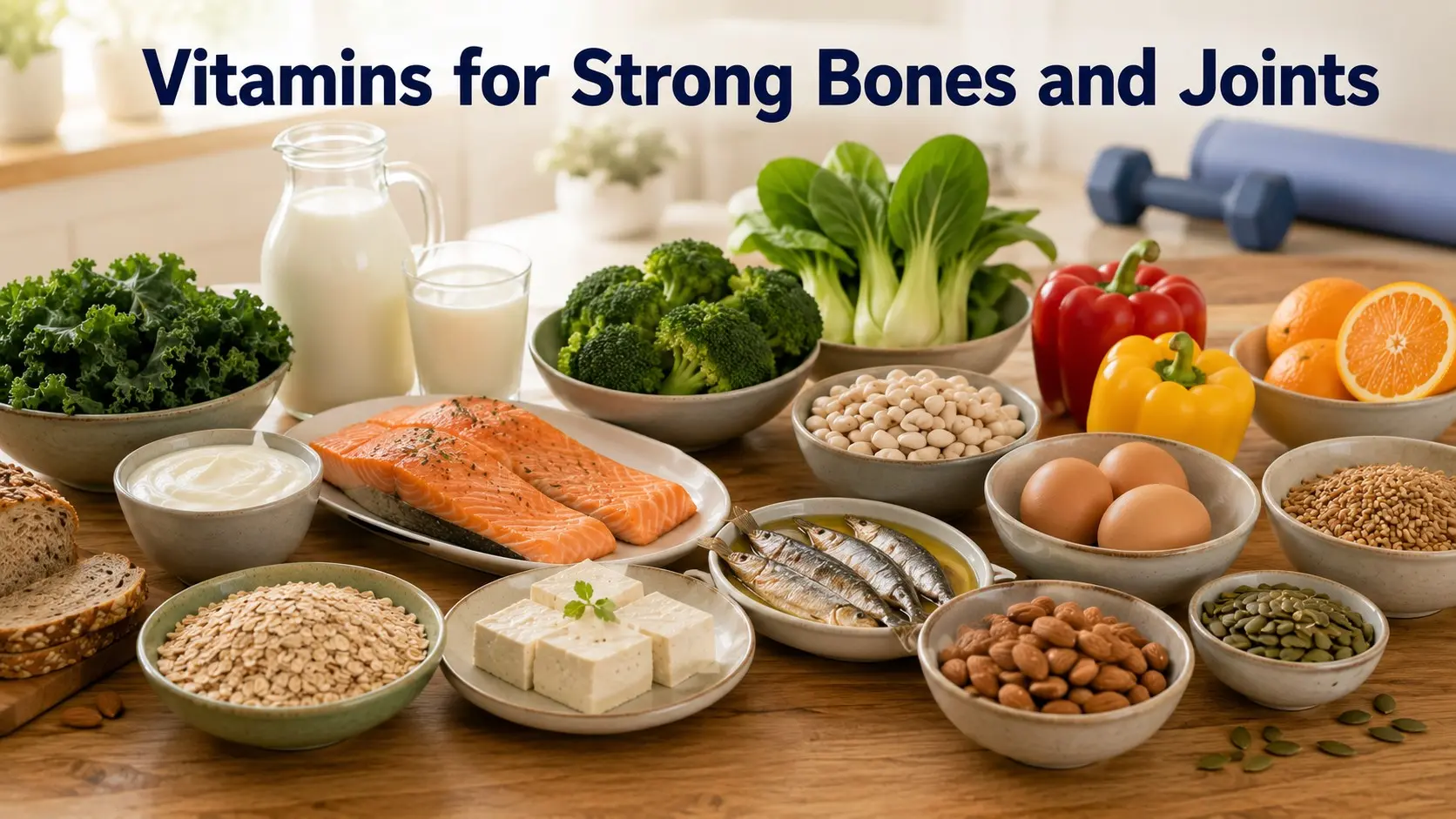
Best Foods for Strong Bones and Joints
A simple food pattern can provide many important nutrients.
Useful choices include:
- Plain yogurt for calcium and protein
- Fortified milk or plant drinks for calcium and vitamin D
- Salmon for vitamin D, protein, and omega 3 fats
- Sardines with bones for calcium, vitamin D, and protein
- Eggs for protein and a small amount of vitamin D
- Calcium set tofu for calcium and protein
- Beans and lentils for magnesium and protein
- Leafy greens for vitamin K and other nutrients
- Bell peppers and oranges for vitamin C
- Nuts and seeds for magnesium and healthy fats
- Whole grains for magnesium and energy
- Fruit and vegetables for vitamin C and a wider mix of nutrients
For a wider food plan, read the NextFitLife diet for strong bones and muscles.
A Simple Three-Day Bone and Joint Meal Plan
This plan is an example. Change it for allergies, culture, budget, health, and personal choice.
Day One
Breakfast: Plain yogurt with oats, berries, and chia seeds.
Lunch: White bean and kale soup with whole grain bread.
Dinner: Baked salmon with rice and broccoli.
Snack: An orange and a small handful of almonds.
Day Two
Breakfast: Eggs with whole-grain toast and cooked spinach.
Lunch: Calcium set tofu with bok choy and rice.
Dinner: Chicken with sweet potato and green beans.
Snack: Fortified milk or a fortified plant drink.
Day Three
Breakfast: Oats cooked with milk or fortified plant drink.
Lunch: Sardines or canned salmon with bread, tomato, and salad.
Dinner: Lentil stew with carrots and cooked greens.
Snack: Kiwi with plain yogurt.
Food First or Supplements?
Food is usually the best starting point.
Food provides many nutrients together. It also provides protein, fibre, and energy.
A supplement may be useful when:
- A blood test shows a deficiency
- Your food intake is very limited
- You have a condition that affects absorption
- You avoid important food groups
- You are at high risk of vitamin D deficiency
- Your doctor recommends calcium for osteoporosis treatment
- Pregnancy or another life stage changes your needs
A supplement is not automatically safe because it is sold without a prescription.
Supplement Safety
Read the full label before taking a supplement.
Look at the amount in each tablet and the number of tablets in one serving.
Check all your products. A multivitamin and a separate supplement may contain the same nutrient.
Speak with a doctor or pharmacist when you:
- Take prescription medicine
- Have kidney disease
- Have kidney stones
- Have high blood calcium
- Take warfarin
- Have heart disease
- Are you pregnant or breastfeeding
- Have surgery planned
- Use osteoporosis medicine
- Have a digestive condition
Calcium Supplement Safety
Calcium can affect the absorption of some medicines.
These may include some antibiotics, thyroid medicine, and osteoporosis medicine.
You may need to take them at different times.
Ask a pharmacist for the correct spacing.
Vitamin D Supplement Safety
Too much vitamin D can cause too much calcium in the blood.
This may lead to nausea, weakness, confusion, thirst, kidney stones, kidney damage, or an abnormal heartbeat.
Do not use repeated large doses without medical advice.
Vitamin K Supplement Safety
Vitamin K can affect warfarin.
Keep your food intake steady and follow advice from the clinician who manages your medicine.
Magnesium Supplement Safety
Magnesium supplements can cause diarrhea and cramps.
Very high amounts can affect the heart.
People with kidney disease need medical advice before taking them.
Exercise Is Also Needed for Strong Bones
Food alone cannot keep bones and joints strong.
Weight-bearing exercise places safe stress on bones. Examples include walking, climbing stairs, dancing, and some sports.
Resistance training uses muscles against weight or resistance. It can support muscles and bones.
Balance exercises may reduce falls.
Joint-friendly movement may include walking, swimming, cycling, and suitable strength work.
The best activity depends on your health and ability.
Ask a doctor or physical therapist before beginning a new plan when you have osteoporosis, a recent fracture, severe arthritis, poor balance, or ongoing pain.
Other Habits That Support Bones and Joints
- Eat enough protein and total food
- Avoid smoking
- Limit heavy alcohol use
- Maintain a weight that supports your health
- Use safe lifting methods
- Wear suitable shoes
- Reduce fall risks at home
- Treat medical conditions
- Review medicines that may affect bones
- Sleep well enough to support recovery
Very low-calorie diets can reduce protein and nutrient intake. They may also weaken muscles.
Who Is at Higher Risk of Weak Bones?
Risk may be higher when you:
- Are older
- Have gone through menopause
- Have a parent who had a hip fracture
- Have broken a bone after a minor fall
- Have a low body weight
- Smoke
- Drink large amounts of alcohol
- Take steroid medicine for a long time
- Have low vitamin D
- Have a condition that affects food absorption
- Have rheumatoid arthritis
- Have low activity
- Have frequent falls
A healthcare professional can decide whether you need a bone density test.
Signs That Need Medical Care
Speak with a healthcare professional about:
- Ongoing bone or joint pain
- Loss of height
- A curved upper back
- A fracture after a small fall
- Morning joint stiffness that lasts a long time
- Joint swelling
- Pain that affects sleep or movement
- Muscle weakness
- Frequent falls
- Numbness or tingling
- Possible vitamin deficiency
Seek prompt medical care for:
- A hot, red, swollen joint with fever
- Sudden severe joint pain
- A joint that looks out of place
- An inability to stand after a fall
- Severe pain after an injury
- New weakness or loss of feeling
- Back pain with loss of bladder or bowel control
Common Myths About Vitamins for Strong Bones and Joints
Myth: Calcium alone prevents every fracture
Calcium is important, but bones also need vitamin D, protein, movement, and medical care when fracture risk is high.
Myth: Vitamin D cures joint pain
Vitamin D treats deficiency when it is present. It does not cure every cause of joint pain.
Myth: Vitamin K2 sends all calcium into bones
This claim is too simple. Vitamin K supports normal bone proteins, but the body does not work like a switch.
Myth: Magnesium supplements fix every muscle cramp
Cramps have many causes. These include activity, nerve problems, medicine, poor circulation, and health conditions.
Myth: Collagen supplements rebuild cartilage
Current evidence does not support the promise that collagen supplements rebuild damaged joint cartilage.
Myth: A multivitamin replaces healthy food
A tablet does not provide protein, fibre, movement, or a complete eating pattern.
Five High Authority References and Sources
- National Institute of Arthritis and Musculoskeletal and Skin Diseases: Calcium and Vitamin D for Bone HealthOpen guidance about calcium, vitamin D, muscles, osteoporosis, food sources, and bone health.
- National Institutes of Health Office of Dietary Supplements: Calcium Fact Sheet for ConsumersOpen information about calcium needs, food sources, supplements, upper limits, interactions, and health effects.
- National Institutes of Health Office of Dietary Supplements: Vitamin D Fact Sheet for ConsumersOpen information about vitamin D needs, food sources, blood levels, supplements, safety, and interactions.
- National Institutes of Health Office of Dietary Supplements: Vitamin and Mineral Fact SheetsOpen consumer and professional information about vitamin K, vitamin C, magnesium, vitamin B12, vitamin A, vitamin E, and other nutrients.
- National Center for Complementary and Integrative Health: Osteoarthritis in DepthOpen evidence review covering osteoarthritis, movement, complementary care, glucosamine, chondroitin, and supplement limits.
Conclusion: Vitamins for Strong Bones and Joints
Vitamins for Strong Bones and Joints work best as part of a complete plan.
Eat calcium-rich foods. Get enough vitamin D. Include protein, vegetables, fruit, nuts, seeds, beans, and whole grains. Add safe strength and weight-bearing activity when you can.
Start today by choosing one calcium food and one vitamin D food. Then speak with a healthcare professional if you have ongoing pain, a fracture risk, or concerns about supplements.
Internal Links and NextFitLife Hubs
- Bone and Joint Health Foods Hub
- Nutrition and Vitamins Hub
- Foods and Nutrition Hub
- NextFitLife Health Hub
- Calcium Rich Foods Guide
- Vitamin K2 Benefits and Food Sources
- Magnesium-Rich Foods Guide
- Vitamin C Foods Guide
- Vitamin B12 Rich Foods Guide
- Diet for Strong Bones and Muscles
- Osteoporosis Healthy Diet Guide
Frequently Asked Questions About Vitamins for Strong Bones and Joints
What are the best Vitamins for Strong Bones and Joints?
Vitamin D, vitamin K, and vitamin C support functions linked with bones and connective tissue. Calcium, magnesium, protein, movement, and medical care also matter.
What is the most important vitamin for strong bones?
Vitamin D is very important because it helps the body absorb calcium. Strong bones still need enough calcium, protein, exercise, and other nutrients.
Can vitamins rebuild damaged joints?
No vitamin has been proven to rebuild damaged cartilage or cure arthritis. Vitamins can support normal body functions, but joint damage may need medical treatment and physical therapy.
Should I take calcium and vitamin D together?
Vitamin D helps the body absorb calcium. You may obtain both from food. Use supplements only when your healthcare professional recommends a suitable amount.
Is vitamin K2 needed with vitamin D?
The body needs both vitamin D and vitamin K. This does not mean that every person needs a combined supplement. Food may provide enough vitamin K, and supplements can interact with warfarin.
Does magnesium help bones and joints?
Magnesium supports normal bone, muscle, and nerve function. A magnesium supplement has not been proven to cure arthritis or rebuild cartilage.
Does vitamin C help cartilage?
Vitamin C is needed for normal collagen production. It does not mean that a large vitamin C dose can repair damaged cartilage.
Can a multivitamin prevent osteoporosis?
No. A multivitamin cannot replace calcium-rich food, vitamin D, protein, exercise, fall prevention, bone testing, or osteoporosis medicine when needed.
Are glucosamine and chondroitin good for joint pain?
Research results are mixed. It is uncertain whether they provide a meaningful benefit for most people with osteoarthritis. Ask a doctor or pharmacist before using them.
When should I see a doctor about bone or joint pain?
Seek medical advice for ongoing pain, swelling, stiffness, weakness, loss of height, or a fracture after a small fall. Get prompt care for a hot red joint, fever, severe injury, or an inability to stand.

Health & wellness writer with 30+ years of experience in nutrition, fitness, and healthy aging. Founder of NextFitLife.com — evidence-based health guidance.