Updated on: October 16, 2026
Written and source checked by: Adel Galal, Founder and Lead Writer at NextFitLife
Medical review status: This article has not been medically reviewed by a doctor, pulmonologist, infectious disease specialist, pediatrician, pharmacist, respiratory therapist, or other licensed healthcare professional.
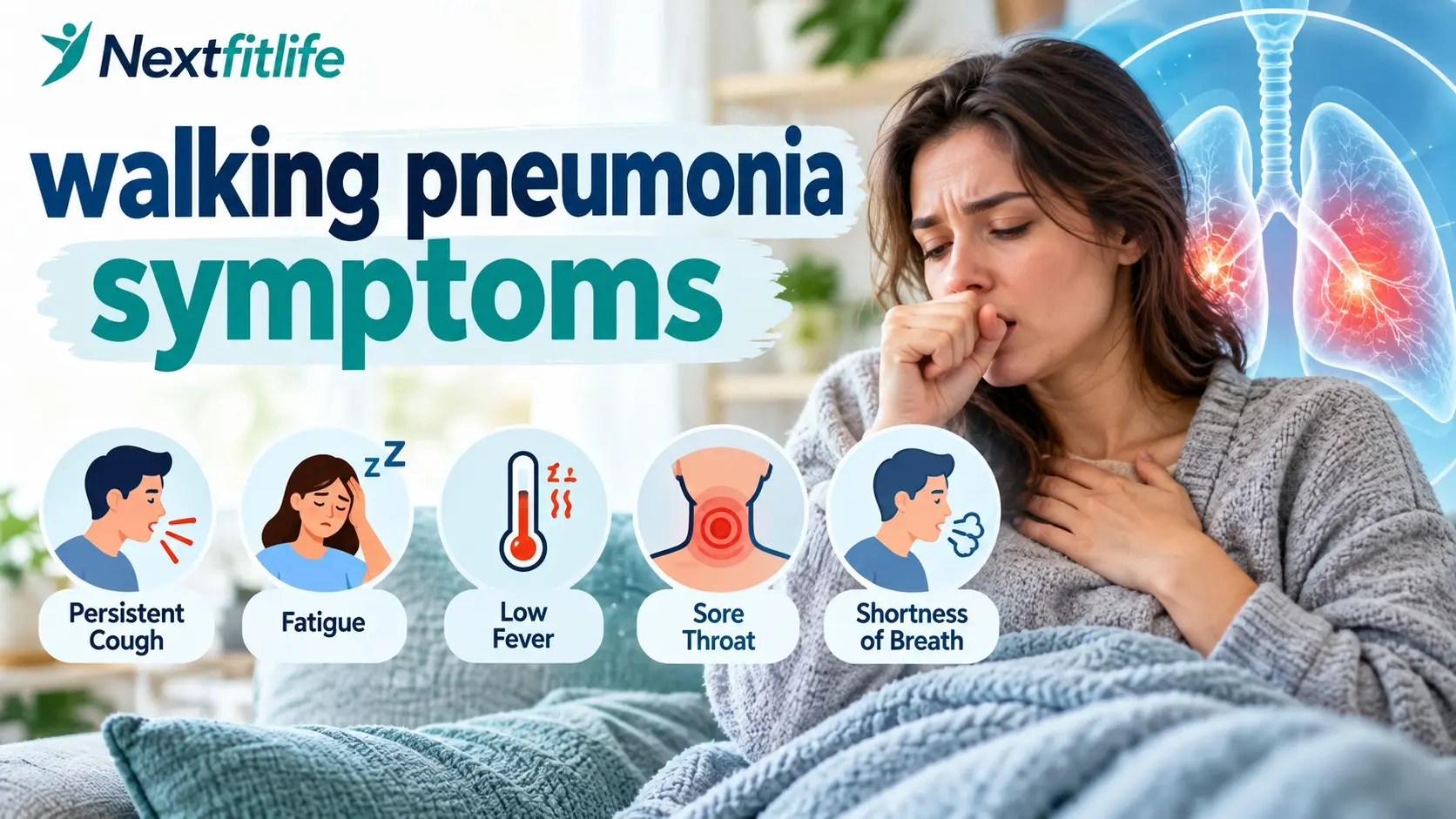
Walking pneumonia symptoms often start slowly. A persistent cough is common, along with fatigue, fever, headache, sore throat, chills, and sometimes shortness of breath. The illness can feel milder than classic pneumonia, which is why some people keep working, studying, or doing normal tasks while sick.
That does not mean it should always be treated as a minor cold.
This article is for general information and education. It does not replace medical advice, diagnosis, or treatment.
For a wider overview of cough, pneumonia, asthma, breathing symptoms, and lung testing, visit the NextFitLife Lung and Respiratory Health Hub.
Table of Contents
- What walking pneumonia really means
- 11 symptoms and warning clues
- Persistent cough
- Fatigue
- Fever and chills
- Sore throat
- Headache
- Shortness of breath
- Chest discomfort
- Slow symptom progression
- Mucus later in the illness
- Different symptoms in young children
- Symptoms that keep getting worse
- Walking pneumonia compared with a cold and flu
- How doctors diagnose it
- Antibiotic treatment
- Home recovery
- How long the cough can last
- Prevention
- Frequently asked questions
What Is Walking Pneumonia?
Walking pneumonia is an informal name for a milder form of pneumonia.
It is commonly associated with the bacterium Mycoplasma pneumoniae.
The name comes from the fact that some people feel well enough to remain up and active instead of staying in bed.
That description can be misleading, though.
You can still feel miserable, and some infections become more serious.
CDC describes most Mycoplasma pneumoniae infections as mild, but serious complications can occur.
1. A Persistent Cough Is the Classic Clue
The cough often starts gradually.
At first it may be dry. Over time, some people begin to produce a moderate amount of mucus.
A cough that keeps getting worse rather than fading is one reason people eventually seek care.
Do not use cough duration alone to diagnose pneumonia.
A lingering cough can also happen after a viral infection, with asthma, reflux, postnasal drainage, or other respiratory problems.
If your cough followed a recent viral illness, see Post Viral Cough: How Long Can It Last?
2. Fatigue Can Feel Out of Proportion to the Rest of the Illness
You may still be able to get out of bed, but ordinary tasks can feel harder.
Fatigue is common with respiratory infections, including walking pneumonia.
You may notice that:
- Work feels more tiring
- You need more rest
- Exercise becomes harder
- You feel drained by the end of the day
Fatigue alone does not prove pneumonia, but it matters when it appears with a worsening cough and fever.
3. Fever and Chills Can Occur, but Fever Is Not Always High
Walking pneumonia can cause fever and chills.
Do not rely on one specific temperature range to decide whether pneumonia is present.
Some people develop higher fever, while others have mild fever or little fever at all.
Older adults and people with weakened immune systems can also present differently from younger healthy adults.
The full pattern matters more than one thermometer reading.
4. Sore Throat Can Appear Early
A sore throat can make the illness look like an ordinary upper respiratory infection at first.
You may also have:
- Throat irritation
- A scratchy feeling
- Hoarseness
- Mild nasal symptoms
This overlap is one reason walking pneumonia is difficult to diagnose from symptoms alone.
5. Headache and General Malaise Are Common
Headache and a general feeling of being unwell can occur with Mycoplasma infection.
Muscle aches can happen too.
These symptoms overlap with influenza, COVID, and other respiratory infections, so they do not identify the germ by themselves.
6. Mild Shortness of Breath Can Occur
Walking pneumonia may cause shortness of breath.
CDC describes mild dyspnea as one possible feature of pneumonia caused by Mycoplasma.
Pay attention to whether normal activity suddenly feels harder.
For example:
- Stairs leave you unusually winded
- You need to pause during ordinary walking
- You feel unable to take a comfortable breath
- Your breathing becomes noticeably faster
Mild breathlessness deserves medical assessment when pneumonia is possible.
Severe or rapidly worsening breathlessness is different and needs urgent care.
7. Chest Discomfort Can Come From Coughing or Lung Inflammation
Some people develop chest discomfort or pain.
A long bout of coughing can strain chest muscles.
Pneumonia can also irritate tissue around the lungs, making breathing or coughing uncomfortable.
Do not assume all chest pain during an infection is harmless.
New severe chest pain, pressure, fainting, coughing blood, or significant breathlessness needs prompt medical assessment.
For a broader chest symptom guide, see Chest Pain on the Left Side.
8. Symptoms Often Build Slowly Instead of Hitting All at Once
This gradual pattern is one of the most useful clues.
CDC describes Mycoplasma illness as capable of progressing slowly, with a cough that becomes more persistent over time.
That can feel different from influenza, which frequently begins more suddenly.
Still, this is not a diagnostic rule.
Respiratory viruses, bacterial infections, and other illnesses can overlap.
9. A Dry Cough Can Become a Cough With Mucus
The cough is often dry early in the illness.
Later, some people produce a moderate amount of sputum.
The color of mucus cannot tell you with certainty whether the infection is bacterial or viral.
That is an important correction to a common internet myth.
Yellow or green mucus by itself does not tell you which antibiotic you need.
10. Young Children Can Look Different From Adults
Children younger than 5 can have a different pattern.
CDC lists possible symptoms including:
- Sneezing
- Stuffy or runny nose
- Sore throat
- Watery eyes
- Wheezing
- Vomiting
- Diarrhea
A young child may not describe breathlessness or chest discomfort clearly.
Watch how the child looks and behaves.
Difficulty breathing, blue or gray coloring, dehydration, or unusual sleepiness requires urgent assessment.
11. Getting Worse Instead of Better Is a Reason to Recheck the Diagnosis
Respiratory infections should be judged by their direction, not just the calendar.
Contact a healthcare professional if:
- Cough keeps getting worse
- Breathing becomes more difficult
- Fever returns after improving
- Chest pain develops or worsens
- You are becoming weaker instead of recovering
- New symptoms appear after treatment starts
MedlinePlus specifically advises medical review if symptoms worsen after improving.
Walking Pneumonia vs Cold vs Flu
The table below shows common patterns. It cannot diagnose the cause of your illness.
| Feature | Walking Pneumonia | Common Cold | Influenza |
|---|---|---|---|
| Onset | Often gradual | Often gradual | Often more sudden |
| Cough | Often persistent and worsening | Common but usually improves with the cold | Common |
| Fatigue | Common | Usually mild | Can be marked |
| Shortness of breath | Can occur | Not typical | Can occur, especially with complications |
| Sore throat and nasal symptoms | Can occur | Very common | Possible |
COVID and other respiratory infections can overlap with all three patterns.
Symptoms alone cannot reliably identify the germ.
How Soon Do Walking Pneumonia Symptoms Start After Exposure?
This infection can take time to appear.
CDC says symptoms of Mycoplasma pneumoniae infection can begin about 1 to 4 weeks after exposure.
That long incubation period can make it difficult to know exactly where the infection came from.
It also helps explain why outbreaks can spread through schools, colleges, households, hospitals, military settings, and other places where people spend long periods close together.
Is Walking Pneumonia Contagious?
Mycoplasma pneumoniae spreads through respiratory droplets.
An infected person can release the bacteria when coughing or sneezing.
Close, prolonged contact increases opportunity for spread.
CDC notes that outbreaks commonly occur in crowded settings such as:
- Schools
- College residence halls
- Hospitals
- Long term care facilities
- Military training facilities
- Correctional facilities
You can get Mycoplasma infection more than once.
How Is Walking Pneumonia Diagnosed?
There is no instant home test that confirms walking pneumonia.
A clinician usually starts with:
- Your symptoms
- How long they have lasted
- Your breathing
- Your heart rate and temperature
- Your medical history
- A lung examination
Chest X ray
A clinician may order a chest X ray when pneumonia is suspected.
The image can show areas of lung inflammation, although an X ray cannot always tell which germ caused the pneumonia.
Laboratory testing
If specific Mycoplasma testing is needed, a nose or throat sample can be sent to a laboratory.
CDC notes that many clinicians do not test specifically for Mycoplasma in mild or moderate cases.
Oxygen measurement
A clinician may measure oxygen saturation when breathing symptoms are present.
Do not use a normal home pulse oximeter reading as proof that a serious respiratory problem is impossible if symptoms are severe or worsening.
Does Walking Pneumonia Need Antibiotics?
Sometimes the wording here causes confusion.
Many mild Mycoplasma pneumoniae infections resolve without medicine.
However, CDC says healthcare professionals routinely treat pneumonia caused by Mycoplasma with antibiotics.
The correct drug depends on:
- Age
- Pregnancy status
- Allergies
- Other medicines
- Local resistance patterns
- How severe the infection is
Do not start leftover antibiotics or borrow them from someone else.
Why Penicillin Does Not Treat Mycoplasma Pneumonia
This is one detail that makes Mycoplasma unusual.
The bacterium does not have a cell wall.
Beta lactam antibiotics, including penicillin type medicines, work by attacking bacterial cell walls.
Because Mycoplasma has no cell wall, those medicines do not work against it.
This is one reason the exact cause of pneumonia can matter when treatment is not working as expected.
Which Antibiotics Are Used?
CDC lists several antibiotic classes that clinicians can use for Mycoplasma infection.
These include:
- Macrolides
- Tetracyclines for appropriate older children and adults
- Fluoroquinolones for selected adults
The choice is not something to make from an online list.
Age and pregnancy matter, and antibiotic resistance is another consideration.
Take the medicine exactly as prescribed.
What Can You Do at Home While Recovering?
Recovery care is simple, but useful.
Rest
Do not turn “walking pneumonia” into permission to keep doing hard workouts while sick.
Your body needs time to recover.
Drink enough fluids
Regular fluids can help prevent dehydration and may make respiratory secretions easier to clear.
You do not need to force yourself to drink water every hour on a rigid schedule.
Manage fever and discomfort safely
Common fever or pain medicines may help some people, but the right choice depends on age, pregnancy, kidney or liver problems, stomach disease, blood thinning medicines, and other health issues.
Ask a pharmacist or clinician if you are unsure.
Be careful with cough suppressants
Coughing can help clear mucus.
If cough is preventing sleep, ask a clinician or pharmacist which option is reasonable rather than trying to eliminate every cough.
How Long Does Walking Pneumonia Last?
There is no single recovery timeline.
CDC says symptoms can last for several weeks.
MedlinePlus notes that cough and weakness can persist for up to about a month in some untreated adults, while Mayo Clinic notes that cough can sometimes continue for longer.
The important part is direction.
A cough that is slowly becoming less frequent is different from a cough that is becoming harder, more painful, or paired with worsening breathlessness.
If the pneumonia itself has settled but the cough lingers, see Post Viral Cough: How Long? for a broader discussion of cough recovery after respiratory illness.
Can You Exercise With Walking Pneumonia?
Do not use the word “walking” as exercise advice.
If you have pneumonia, rest from hard training while you are actively ill.
Return gradually as fever resolves, breathing improves, energy returns, and your clinician says activity is appropriate.
Stop and seek assessment if activity causes:
- Marked shortness of breath
- Chest pain
- Dizziness
- Fainting
- Rapid worsening of symptoms
Who Has a Higher Risk of Serious Illness?
Most Mycoplasma infections are mild.
Some people deserve closer attention.
CDC lists increased risk of serious infection in people who:
- Are recovering from another respiratory illness
- Have asthma or another lung condition
- Have a weakened immune system
Older adults and people with significant heart or lung disease can also have more difficulty with pneumonia in general.
If you have asthma and respiratory infections repeatedly trigger breathing symptoms, see the Lung and Respiratory Health Hub.
When Should You Contact a Doctor?
Arrange medical assessment if you have:
- Persistent or worsening cough
- Fever with respiratory symptoms
- Shortness of breath
- Wheezing
- Chest pain with coughing or breathing
- Symptoms that worsen after initially improving
- Marked fatigue that is not improving
- A chronic lung condition with worsening symptoms
People with weakened immune systems should use a lower threshold for seeking medical advice.
When Is It an Emergency?
Seek urgent medical help for:
- Severe breathing difficulty
- Blue or gray lips, face, or fingernails
- Confusion
- Fainting
- Severe chest pain
- Significant coughing of blood
- Rapid deterioration
Do not wait for a chest X ray or Mycoplasma test before seeking emergency help when breathing is severely affected.
How Can You Reduce the Spread?
There is no vaccine specifically for Mycoplasma pneumoniae.
CDC recommends simple respiratory hygiene measures.
- Wash your hands
- Cover coughs and sneezes
- Avoid close contact with people when you are actively sick
- Do not share cups or eating utensils unnecessarily
- Clean frequently touched surfaces when appropriate
Good ventilation can also reduce buildup of respiratory particles in shared indoor spaces.
Do Flu, COVID, or Pneumococcal Vaccines Prevent Walking Pneumonia?
They do not specifically prevent Mycoplasma pneumoniae infection.
That does not make them unimportant.
Influenza, COVID, and pneumococcal disease can all cause or contribute to serious respiratory illness and pneumonia.
Stay up to date with vaccines recommended for your age and medical history.
Common Walking Pneumonia Mistakes
| Mistake | Why It Can Mislead You | Better Approach |
|---|---|---|
| Assuming mild symptoms mean it is only a cold | Walking pneumonia can start mildly | Watch the trend, cough, breathing, and duration |
| Using one fever range to diagnose it | Fever varies between people | Use the full clinical picture |
| Assuming green mucus proves bacterial pneumonia | Mucus color is not a reliable germ test | Use medical assessment when pneumonia is suspected |
| Taking leftover antibiotics | The drug may not treat the germ and can add resistance or side effects | Use antibiotics only when prescribed |
| Assuming penicillin treats Mycoplasma | Mycoplasma has no cell wall | Let the clinician choose an appropriate antibiotic |
| Going straight back to hard exercise | Breathing and energy may take time to recover | Return gradually as symptoms improve |
Conclusion: Watch the Direction of the Illness
Walking pneumonia symptoms can look deceptively mild at first, but a cough that steadily worsens, increasing fatigue, fever, chest discomfort, or shortness of breath deserves attention.
Do not diagnose the infection from mucus color, a single fever reading, or the fact that you are still able to walk around.
Your next step is simple: if the cough is worsening, breathing feels harder, or you are not recovering as expected, arrange a medical assessment. Severe breathing trouble, confusion, blue or gray coloring, or significant chest pain needs urgent help.
References and Sources
- Centers for Disease Control and Prevention. About Mycoplasma pneumoniae Infection.
Covers symptoms, incubation period, diagnosis, recovery, walking pneumonia, and treatment basics.
https://www.cdc.gov/mycoplasma/about/ - Centers for Disease Control and Prevention. Clinical Features of Mycoplasma pneumoniae Infection.
Covers gradual onset, cough, fever, headache, malaise, pneumonia symptoms, sputum, and differences in young children.
https://www.cdc.gov/mycoplasma/hcp/clinical-signs/ - Centers for Disease Control and Prevention. Clinical Care of Mycoplasma pneumoniae Infection.
Explains antibiotic treatment, Mycoplasma's lack of a cell wall, antibiotic classes, and antimicrobial resistance considerations.
https://www.cdc.gov/mycoplasma/hcp/clinical-care/ - Centers for Disease Control and Prevention. Causes and How Mycoplasma pneumoniae Spreads.
Covers respiratory droplet spread, crowded settings, high risk groups, prevention, and the lack of a specific vaccine.
https://www.cdc.gov/mycoplasma/causes/ - MedlinePlus. Mycoplasma Pneumonia.
Covers symptoms, chest imaging, laboratory tests, supportive care, antibiotics, recovery, complications, and when to contact a clinician.
https://medlineplus.gov/ency/article/000082.htm - Mayo Clinic. Walking Pneumonia: What Does It Mean?
Explains the term walking pneumonia, mild and gradual symptom patterns, cough duration, and common presentation.
https://www.mayoclinic.org/diseases-conditions/pneumonia/expert-answers/walking-pneumonia/faq-20058530 - American Lung Association. Pneumonia.
Covers pneumonia causes, symptoms, treatment, recovery, vaccination, and prevention.
https://www.lung.org/lung-health-diseases/lung-disease-lookup/pneumonia
Internal Links and Helpful NextFitLife Guides
- Lung and Respiratory Health Hub
- Post Viral Cough: How Long?
- Chest Congestion Without Cough
- Chest Pain on the Left Side
- Silent Asthma: Symptoms Without Obvious Wheezing
- Coughing Only at Night
- Cough After Breathing Cold Air
About the Author
Adel Galal is the Founder and Lead Writer at NextFitLife. He researches respiratory health, cough, asthma, pneumonia, fitness, nutrition, and everyday wellness and turns current medical and public health guidance into clear practical information for everyday readers.
I am not a doctor or licensed healthcare professional, and this content does not replace professional medical advice, diagnosis, or treatment. I share information based on extensive research, real life experience, and consultation with healthcare providers. Always consult a qualified healthcare professional for diagnosis, treatment, or guidance about any health condition.
Learn more about Adel, NextFitLife, and the site's editorial approach on the About Us page.
Frequently Asked Questions
What are the main walking pneumonia symptoms?
Common symptoms include a slowly worsening cough, fatigue, fever, chills, headache, sore throat, and sometimes shortness of breath. The cough may begin dry and later produce some mucus.
How quickly do walking pneumonia symptoms appear?
CDC says Mycoplasma pneumoniae symptoms can appear about 1 to 4 weeks after exposure. This is a longer incubation period than many people expect.
Does walking pneumonia always cause fever?
No. Fever is common, but its severity varies. Do not rule pneumonia in or out based only on one temperature reading.
Is walking pneumonia cough dry or wet?
The cough is often dry at first. It can later produce a moderate amount of nonbloody sputum.
Can you have walking pneumonia and still feel fairly normal?
Yes. Some people remain active because symptoms are milder than classic pneumonia. That is where the informal name walking pneumonia comes from.
Is walking pneumonia contagious?
Mycoplasma pneumoniae spreads through respiratory droplets produced when an infected person coughs or sneezes. Close and prolonged contact can increase the chance of spread.
Does walking pneumonia need antibiotics?
Many mild Mycoplasma infections resolve without medicine, but healthcare professionals routinely treat pneumonia caused by Mycoplasma with antibiotics. The drug chosen depends on age, pregnancy status, allergies, resistance, and other factors.
Why does penicillin not work for Mycoplasma pneumonia?
Mycoplasma bacteria do not have a cell wall. Beta lactam antibiotics such as penicillin target bacterial cell walls, so they do not work against Mycoplasma.
How long does walking pneumonia last?
Symptoms can last for several weeks. The cough may continue after other symptoms improve. Recovery time varies, so worsening symptoms or failure to improve deserves medical review.
Can children get walking pneumonia?
Yes. Children can develop Mycoplasma infections. Children younger than 5 may have wheezing, runny nose, sneezing, watery eyes, vomiting, or diarrhea rather than the more typical pattern seen in older children and adults.
Do you need a chest X ray for walking pneumonia?
Not everyone needs one. A clinician may order chest imaging when pneumonia is suspected or when symptoms, examination findings, or the course of illness make imaging useful.
Can a cold turn into walking pneumonia?
A cold and walking pneumonia are different infections, but respiratory illnesses can overlap and one infection can be followed by another. A cough that worsens instead of improving deserves reassessment.
Can walking pneumonia become serious?
Yes, although most Mycoplasma infections are mild. Serious complications can occur, especially in people with lung disease, weakened immune systems, or other health problems.
When should walking pneumonia symptoms be treated as an emergency?
Seek urgent care for severe breathing difficulty, blue or gray coloring, confusion, fainting, severe chest pain, significant coughing of blood, or rapidly worsening breathing symptoms.

Health & wellness writer with 30+ years of experience in nutrition, fitness, and healthy aging. Founder of NextFitLife.com — evidence-based health guidance.