Medical review status: Editorially reviewed against current WHO, NICE, ACOG, NIDDK, CDC, and USPSTF guidance. This article has not been medically reviewed by a physician, physiotherapist, gynecologist, neurologist, orthopedist, nephrologist, or other licensed healthcare professional.
Quick Answer: What Causes Lower Back Pain in Females?
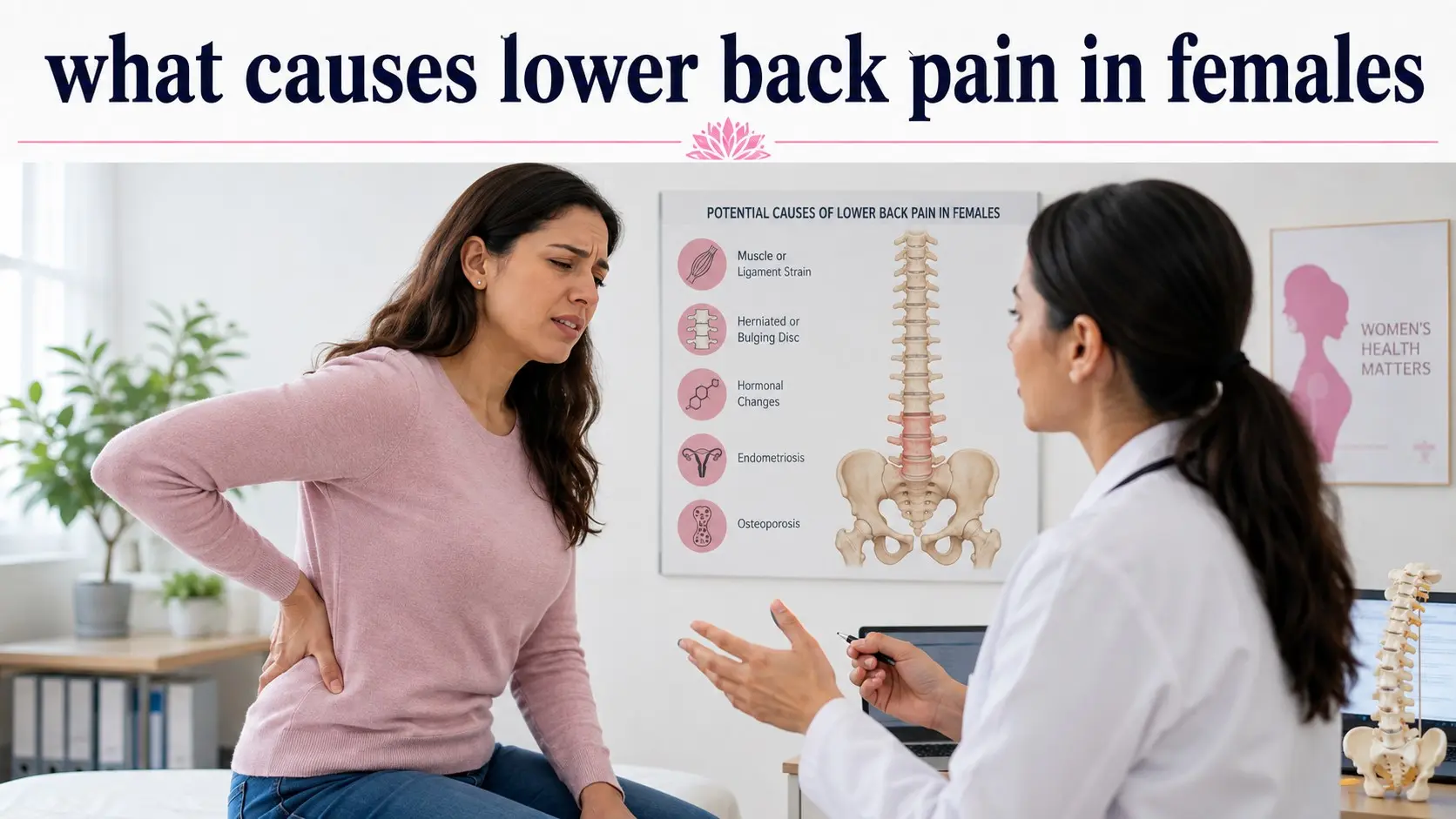
What causes lower back pain in females? In most people, the cause is still ordinary non-specific or mechanical back pain rather than a gynecologic disease. WHO estimates that about 90% of low back pain is non-specific, meaning no single dangerous structural disease explains it.
However, lower back pain can also come from sciatica, spinal arthritis, menstrual cramps, endometriosis, adenomyosis, fibroids, ovarian problems, pelvic infection, kidney stones or infection, pregnancy-related changes, ectopic pregnancy, or osteoporosis-related fracture.
The surrounding symptoms matter. Back pain with fever and painful urination suggests a different problem from cyclical pain around periods, one-sided leg pain with numbness, or pain during a possible pregnancy.
Lower Back Pain Red Flags: When to Get Urgent Help
Seek urgent or emergency medical assessment for lower back pain with any of the following:
- new difficulty starting urination, inability to urinate, or loss of bladder control
- new bowel incontinence or loss of bowel sensation
- new numbness around the genitals, inner thighs, buttocks, or “saddle” area
- rapidly worsening leg weakness, especially in both legs
- severe pain after significant trauma
- fever, chills, or feeling very unwell with back or flank pain
- known cancer with new severe, progressive, or night-time back pain
- possible pregnancy with vaginal bleeding, pelvic pain, fainting, dizziness, or shoulder pain
- sudden severe pelvic or abdominal pain
- heavy vaginal bleeding with weakness or fainting
New bladder or bowel dysfunction, saddle numbness, or major leg weakness can indicate cauda equina syndrome, a rare spinal emergency requiring immediate assessment.
Medical and Editorial Notice
This article is educational and cannot determine the cause of an individual's back pain. “Female” is used because it is the wording of the search query, while some causes below depend on reproductive anatomy, pregnancy status, menopause, age, and individual medical history.
Do not assume that pain is gynecologic simply because it occurs in a woman. Mechanical low back pain remains very common.
1. Non-Specific or Mechanical Lower Back Pain
This is the most common category.
WHO says about 90% of low back pain is non-specific. That means clinicians cannot confidently attribute the pain to one specific disease, fracture, tumor, or single damaged structure.
Episodes can follow:
- lifting or twisting
- an unfamiliar workout
- prolonged physical work
- long periods of inactivity
- a sudden increase in activity
Most acute episodes improve, although some recur or become persistent. Staying active within comfortable limits is generally more useful than prolonged bed rest.
2. Sciatica or a Herniated Disc
Sciatica refers to nerve-related pain that travels from the lower back or buttock into the leg. It may feel sharp, burning, electric, or shooting and may occur with tingling, numbness, or weakness.
A herniated disc is one possible cause, but sciatica can have other causes as well.
Seek urgent assessment if leg symptoms occur with new bladder or bowel problems, saddle-area numbness, or rapidly worsening weakness.
3. Arthritis, Degenerative Changes, or Spinal Stenosis
Age-related changes in the discs and joints of the spine can contribute to pain in some people. Spinal stenosis can narrow the space around nerves and cause back pain, leg pain, numbness, weakness, or symptoms that worsen with standing or walking.
Importantly, imaging findings such as disc degeneration are also common in people without pain. A scan finding should be interpreted together with symptoms and examination rather than assumed to be the cause automatically.
4. Period Pain and Menstrual Cramping
Menstrual cramps can be felt in the lower abdomen and lower back. ACOG notes that period pain may cause muscle cramps in the lower belly or back and can occur with nausea, vomiting, diarrhea, or headaches.
Typical period pain is often strongest around the start of menstruation.
Seek gynecologic assessment when pain becomes progressively worse, starts later after years of mild periods, causes major disability, occurs between periods, or comes with heavy or irregular bleeding.
5. Endometriosis or Adenomyosis
Endometriosis can cause pelvic, abdominal, or lower-back pain. It may also cause painful periods, pain during sex, painful bowel movements, painful urination, infertility, bloating, or fatigue.
Adenomyosis can also cause painful or heavy periods and pelvic pain.
A cyclical pattern can be an important clue, but back pain alone cannot diagnose either condition.
For the updated 2026 diagnostic pathway, read Uncommon Symptoms of Endometriosis.
6. Uterine Fibroids
Fibroids are benign growths of uterine muscle. ACOG lists dull, heavy, aching or sometimes sharp pain in the abdomen or lower back among possible fibroid symptoms.
Other clues can include:
- heavy or prolonged periods
- bleeding between periods
- pelvic pressure or fullness
- frequent urination
- constipation or rectal pressure
- pain during sex
Many fibroids cause no symptoms at all.
7. Ovarian Cysts or Ovarian Torsion
Most ovarian cysts are benign and many cause no symptoms. When symptoms occur, ACOG says cysts may cause a dull or sharp abdominal or pelvic ache.
A larger cyst can occasionally twist the ovary, called ovarian torsion, or a cyst can rupture or bleed. Sudden severe one-sided pelvic or abdominal pain needs urgent assessment, especially with nausea or vomiting.
Back pain alone is not a reliable way to diagnose an ovarian cyst.
8. Pelvic Inflammatory Disease
Pelvic inflammatory disease, or PID, is an infection of the upper reproductive organs. It is often related to sexually transmitted infections such as chlamydia or gonorrhea, although other bacteria can be involved.
CDC lists possible symptoms including:
- lower abdominal or pelvic pain
- fever
- unusual vaginal discharge
- pain or bleeding during sex
- burning with urination
- bleeding between periods
PID can be mild or even asymptomatic, so back or pelvic pain with these associated symptoms deserves medical assessment.
9. Kidney Stones or Kidney Infection
Kidney pain is often felt higher and more to one side than ordinary central low-back pain, although the locations can overlap.
Kidney Stones
NIDDK describes kidney-stone pain as sharp pain in the back, side, lower abdomen, or groin. It may come in waves and can occur with blood in the urine, urinary urgency, painful urination, nausea, or vomiting.
Kidney Infection
A kidney infection can cause back, side, or groin pain together with fever, chills, painful or frequent urination, nausea, vomiting, or cloudy or bloody urine.
Back or flank pain plus fever or urinary symptoms should be evaluated promptly.
For kidney guidance, visit the Kidney Health & Disease Hub.
10. Pregnancy-Related Back Pain
Back pain is common during pregnancy, particularly later in pregnancy.
ACOG explains that the growing uterus shifts the center of gravity, stretches abdominal muscles, changes posture, and increases work for the back muscles and joints. Pregnancy-related ligament changes can also contribute.
Supportive footwear, careful lifting, appropriately selected exercise, and heat or cold may help uncomplicated muscular pain.
During pregnancy, call the obstetric team when severe back pain persists or occurs with fever, burning during urination, vaginal bleeding, contractions, or other concerning symptoms.
11. Ectopic Pregnancy or Other Pregnancy Complications
If pregnancy is possible, lower back or pelvic pain should be interpreted differently.
ACOG lists low back pain, abnormal vaginal bleeding, and pelvic or abdominal pain among possible early symptoms of ectopic pregnancy.
Emergency symptoms can include:
- sudden severe abdominal or pelvic pain
- shoulder pain
- weakness
- dizziness
- fainting
A ruptured ectopic pregnancy can cause life-threatening internal bleeding.
Later in pregnancy, back pain with vaginal bleeding or fluid leakage can also be associated with obstetric complications such as preterm labor or placental problems and needs prompt obstetric assessment.
12. Osteoporosis and Vertebral Compression Fracture
Osteoporosis weakens bone and raises fracture risk. A vertebral compression fracture can cause sudden or persistent back pain, particularly in older adults or people with significant bone-loss risk.
The 2025 USPSTF recommendation supports osteoporosis screening for women age 65 or older and for postmenopausal women younger than 65 when clinical risk assessment indicates increased fracture risk.
Back pain after a relatively minor fall or lift deserves particular attention in someone with known osteoporosis, long-term corticosteroid use, or previous fragility fracture.
For broader prevention information, visit the Bone & Joint Health Hub.
Can Cancer or Infection Cause Lower Back Pain?
Yes, but these are much less common causes than ordinary non-specific back pain.
NICE recommends considering serious underlying causes such as cancer, infection, fracture, or inflammatory disease when symptoms or risk factors suggest them.
Back pain is more concerning when it is severe and progressive, accompanied by fever or systemic illness, follows significant trauma, occurs with major neurological deficits, or appears in someone with a current or previous cancer diagnosis.
How Do Clinicians Work Out the Cause?
The first step is usually the history and physical examination rather than an immediate scan.
Useful details include:
- where the pain is located
- whether it travels down one or both legs
- numbness, tingling, or weakness
- how suddenly the pain began
- recent lifting, exercise, fall, or injury
- menstrual timing and abnormal bleeding
- pregnancy possibility
- pelvic pain or pain during sex
- urinary symptoms or fever
- bowel and bladder function
- cancer, osteoporosis, infection, or medication history
Depending on the pattern, clinicians may use pregnancy testing, urinalysis, blood tests, pelvic examination, ultrasound, or other targeted tests.
Do You Need an X-Ray or MRI for Lower Back Pain?
Usually not at the beginning of an uncomplicated episode.
NICE recommends against routine imaging for low back pain or sciatica in non-specialist care unless serious underlying pathology is suspected. Imaging is more useful when the result is expected to change management.
This is because disc degeneration, bulges, and other scan findings are common even in people without back pain.
Imaging may become important when clinicians suspect fracture, cancer, infection, cauda equina syndrome, severe nerve compression, or another specific condition.
For broader testing guidance, visit the Medical Tests & Screenings Hub.
What Can Help Uncomplicated Lower Back Pain?
Management depends on the cause. For ordinary non-specific back pain, current guidance generally prioritizes staying active and restoring normal function.
Keep Moving
WHO and NICE support physical activity and exercise as part of low-back-pain management. Prolonged bed rest is generally not the goal.
Heat or Cold
A heat pack or cold pack can be used for short-term comfort if applied safely and not directly to unprotected skin.
Exercise or Physical Therapy
An individualized exercise program may help strength, mobility, confidence, and return to normal activities. Persistent or recurrent pain may benefit from professional rehabilitation.
Medicines
NICE allows oral NSAIDs for selected people with low back pain at the lowest effective dose for the shortest appropriate time, while considering gastrointestinal, cardiovascular, kidney, liver, age, pregnancy, and medication risks.
NSAIDs are not suitable for everyone, particularly during some stages of pregnancy or with certain kidney, bleeding, stomach, cardiovascular, or medication risks. Ask a clinician or pharmacist if you are unsure.
Manual Therapy
Massage or spinal manipulation may be considered as part of a broader plan that includes exercise. It should not replace evaluation when red flags are present.
WHO advises against routinely relying on opioid painkillers, traction, lumbar braces, and several other passive treatments for chronic primary low back pain.
Does Posture Cause Lower Back Pain?
There is no single “perfect posture” that prevents all back pain.
Long periods in one position, physically demanding work, and awkward lifting can contribute to symptoms in some people. Ergonomic changes and regular movement breaks may help, but posture should not be treated as the sole explanation for persistent pain.
Does Stress Make Lower Back Pain Worse?
Stress does not mean pain is imaginary.
WHO recognizes that chronic low back pain is influenced by physical, psychological, and social factors. Poor sleep, fear of movement, anxiety, low mood, work demands, and stress can affect how strongly pain is experienced and how easily someone returns to normal activity.
Persistent pain may therefore benefit from a combined physical and psychological approach rather than searching endlessly for a single damaged structure.
For mental-health guidance, visit the Mental Health & Wellness Hub.
Key Takeaway
What causes lower back pain in females is usually the same thing that causes it in other adults: non-specific mechanical pain.
But menstrual pain, endometriosis, adenomyosis, fibroids, ovarian problems, PID, kidney disease, pregnancy, ectopic pregnancy, and osteoporosis can also matter depending on the symptoms and life stage.
Do not self-diagnose the cause from location alone. The combination of pain pattern, menstrual or pregnancy history, urinary symptoms, fever, neurological symptoms, and other warning signs is more useful.
New bladder or bowel dysfunction, saddle numbness, severe weakness, fever with back pain, or pregnancy with pain and abnormal bleeding requires prompt medical assessment.
References and Authoritative Sources
- World Health Organization: Low Back Pain
- WHO: Guideline for Non-Surgical Management of Chronic Primary Low Back Pain
- NICE NG59: Low Back Pain and Sciatica — Assessment and Management
- NICE: Recognition and Urgent Referral for Suspected Cauda Equina Syndrome
- ACOG: Dysmenorrhea — Painful Periods
- ACOG: Diagnosis of Endometriosis — 2026
- ACOG: Uterine Fibroids
- ACOG: Ovarian Cysts
- CDC: Pelvic Inflammatory Disease
- NIDDK: Kidney Stones — Symptoms and Causes
- NIDDK: Kidney Infection — Symptoms and Causes
- ACOG: Back Pain During Pregnancy
- ACOG: Ectopic Pregnancy
- USPSTF: Osteoporosis Screening — 2025
Source review date: August 9, 2026
These organizations do not endorse NextFitLife.
Frequently Asked Questions About Lower Back Pain in Females
What is the most common cause of lower back pain in females?
Most low back pain is non-specific or mechanical rather than caused by a dangerous disease. WHO estimates that around 90% of low back pain is non-specific.
Can period cramps cause lower back pain?
Yes. Menstrual cramps can be felt in the lower abdomen and lower back. Severe or progressively worsening period pain may warrant evaluation for conditions such as endometriosis or adenomyosis.
Can endometriosis cause lower back pain?
Yes. Endometriosis can cause pelvic, abdominal, or lower-back pain, particularly when symptoms have a menstrual pattern. Back pain alone cannot diagnose endometriosis.
Can fibroids cause lower back pain?
Yes. ACOG lists dull, heavy, aching or sometimes sharp lower-back or abdominal pain among possible fibroid symptoms, often alongside bleeding or pelvic-pressure symptoms.
How can I tell kidney pain from ordinary back pain?
Kidney pain is often more one-sided and may occur higher in the back or flank. Kidney stones can cause severe wave-like pain and blood in urine, while kidney infection often causes fever, chills, urinary symptoms, nausea, or vomiting.
Can pregnancy cause lower back pain?
Yes. Back pain is very common during pregnancy because of changes in posture, abdominal muscles, weight distribution, joints, and ligaments.
Can lower back pain be a sign of ectopic pregnancy?
Yes. ACOG lists low back pain among possible ectopic-pregnancy symptoms. Pregnancy with abnormal vaginal bleeding or pelvic pain needs prompt assessment; severe pain, shoulder pain, weakness, dizziness, or fainting can signal rupture.
When is lower back pain an emergency?
Emergency warning signs include new bladder or bowel dysfunction, saddle numbness, severe or rapidly worsening weakness, severe trauma, or symptoms suggesting ruptured ectopic pregnancy. Fever with severe back or flank pain also needs prompt assessment.
Do I need an MRI for lower back pain?
Not usually for an uncomplicated new episode. NICE recommends against routine imaging in non-specialist care unless serious disease is suspected or imaging is expected to change management.
Should I rest in bed for lower back pain?
Prolonged bed rest is generally not recommended for ordinary non-specific low back pain. Staying active within tolerable limits and gradually returning to normal activity is usually preferred.
Does posture cause lower back pain?
Posture can influence comfort, but there is no single perfect posture that prevents all back pain. Regular movement, comfortable positioning, and sensible lifting habits are more useful than trying to maintain one rigid posture all day.
Is this article medically reviewed?
No. It was source checked against current WHO, NICE, ACOG, NIDDK, CDC, and USPSTF guidance but has not been medically reviewed by a licensed clinician.
Medical Disclaimer
NextFitLife provides general educational information. This article cannot diagnose mechanical back pain, sciatica, endometriosis, fibroids, kidney disease, pregnancy complications, spinal fracture, infection, cancer, or cauda equina syndrome and cannot replace professional or emergency medical assessment.

Health & wellness writer with 30+ years of experience in nutrition, fitness, and healthy aging. Founder of NextFitLife.com — evidence-based health guidance.