Published: March 2024
Last updated: July 21, 2026
Next review: July 2027, or earlier if major blood-pressure guidance changes
Written by: Adel Galal, Founder and Lead Writer at NextFitLife
Review status: Written and source checked by Adel Galal. Not medically reviewed by a doctor, cardiologist, pharmacist, obstetric clinician, nephrologist, or registered dietitian.
Update summary: Clarified blood-pressure emergencies, home measurement, the limits of beverages, and medicine and pregnancy cautions.
Reading time: About 18 minutes
If blood pressure is higher than 180 systolic and/or 120 diastolic, repeat the measurement correctly after at least one minute when no emergency symptom is present.
Call emergency services immediately when a severely high reading occurs with chest pain, shortness of breath, back pain, weakness, numbness, vision change, difficulty speaking, or another new and concerning symptom.
Do not wait for a drink to work.
Do not exercise to force the number down.
Do not take an extra medicine dose unless your prescriber gave you a specific plan for that exact situation.
Some drinks can fit a heart-healthy eating pattern over time.
Their effects are generally modest, variable, and much less important than accurate diagnosis, prescribed medicine, sodium reduction, the DASH eating plan, physical activity, sleep, and regular follow-up.
This guide explains emergency action, correct home measurement, reasonable everyday drinks, medicine safety, kidney and potassium cautions, and pregnancy warning signs.
What to Drink to Lower Blood Pressure Quickly: The Safe Answer
There is no emergency blood pressure drink.
Call emergency services now if a reading is higher than 180 systolic and/or 120 diastolic and you have:
- Chest pain
- Shortness of breath
- Back pain
- Weakness
- Numbness
- Vision changes
- Difficulty speaking
- Confusion
- Collapse
- A seizure
- Another new and severe symptom
Do not wait for the reading to fall on its own.
When no emergency symptom is present:
- Sit quietly.
- Wait at least one minute.
- Measure again using the correct technique.
- Contact your health care professional immediately if the reading remains severely high.
For daily hydration, plain water is usually a practical basic drink.
For long-term blood-pressure support, choose unsweetened drinks that fit the DASH pattern and your kidney, heart, diabetes, pregnancy, and medication needs.
Review and Advertising Disclosure
This guide was written and source checked by Adel Galal.
Adel is a health and wellness writer. He is not a doctor, cardiologist, pharmacist, nephrologist, obstetric clinician, emergency clinician, or registered dietitian.
This page cannot diagnose hypertension, identify organ damage, select medicine, or provide an emergency treatment plan.
NextFitLife uses display advertising to support the website. Advertising does not determine the drink choices, medical warnings, sources, or conclusions on this page.
Read the Editorial Policy, Medical Review Policy, and Corrections Policy.
Critical Blood Pressure Safety Warning
Do not try to treat a severely high reading with:
- Juice
- Water loading
- Vinegar
- Herbal tea
- Garlic or supplement products
- Exercise
- Someone else’s medicine
- An extra dose of your own medicine without instructions
A drink cannot determine whether the brain, heart, kidneys, eyes, lungs, or major blood vessels are being injured.
Only medical assessment can do that.
Call emergency services for a severely high reading with concerning symptoms.
Do not drive yourself when you feel severely unwell.
When High Blood Pressure Is an Emergency
Blood pressure is recorded with two numbers.
The upper number is systolic pressure.
The lower number is diastolic pressure.
Severe Hypertension Without Emergency Symptoms
A reading higher than 180 systolic and/or 120 diastolic is in the severe range.
When no new or concerning symptom is present:
- Wait at least one minute.
- Measure again correctly.
- Contact your health care professional immediately if it remains severely high.
The treatment may involve starting, restarting, or adjusting prescribed oral medicine under professional guidance.
Do not decide the dose yourself.
Hypertensive Emergency
Call emergency services when severely high blood pressure occurs with symptoms that may suggest acute organ injury, including:
- Chest pain
- Shortness of breath
- Back pain
- Weakness or numbness
- Vision change
- Difficulty speaking
- Confusion
- Collapse or seizure
Do not wait for the number to fall.
Symptoms Matter, but Hypertension Is Often Silent
Most chronic high blood pressure causes no obvious symptom.
A headache alone cannot confirm that blood pressure is the cause.
Likewise, feeling normal does not prove a severe reading is harmless.
How to Measure Blood Pressure Correctly at Home
An inaccurate technique can produce a misleading reading.
Use a validated automatic upper-arm monitor with the correct cuff size.
Wrist and cuffless wearable devices may be less reliable for diagnosis and treatment decisions.
Before Measuring
- Avoid exercise, smoking, nicotine, and caffeinated drinks for at least 30 minutes.
- Empty your bladder.
- Sit quietly for at least five minutes.
- Do not talk, text, or use the phone during the rest period or measurement.
Correct Position
- Sit in a chair with your back supported.
- Keep both feet flat on the floor.
- Do not cross your legs.
- Place the cuff on bare skin, not over clothing.
- Support the arm on a flat surface.
- Keep the middle of the cuff at heart level.
- Relax the hand and arm.
Take More Than One Reading
Take two readings one minute apart.
Record:
- Date and time
- Both blood pressure numbers
- Pulse
- Symptoms
- Recent medicine
- Anything unusual, such as pain, stress, illness, caffeine, or missed medicine
Bring the monitor and record to appointments so the health care team can check the device, cuff fit, and pattern.
What Does One High Reading Mean?
One reading is a snapshot.
It may be affected by:
- Incorrect cuff size
- Talking
- Pain
- Anxiety
- A full bladder
- Recent exercise
- Nicotine
- Caffeine
- Cold medicine
- Missed blood pressure medicine
- Acute illness
A single high value does not diagnose chronic hypertension.
A clinician confirms diagnosis using repeated measurements, home readings, ambulatory monitoring, or another appropriate method.
A severely high reading still needs the urgent steps described above.
Can a Drink Lower Blood Pressure Quickly?
A drink may produce a small short-term change in some people.
That effect is not reliable enough for emergency treatment.
The safer first question is:
Does this reading require urgent medical care?
A drink cannot replace:
- A repeat measurement
- An examination
- An electrocardiogram
- Blood or urine tests
- Stroke or heart assessment
- Prescribed medicine
Long-Term Support Is Different
Blood pressure management may include:
- Taking medicine as prescribed
- Following a DASH-style eating pattern
- Reducing excess sodium
- Choosing appropriate potassium-rich foods when medically safe
- Being physically active
- Managing sleep apnea when present
- Limiting or avoiding alcohol
- Not smoking or vaping
- Managing body weight when appropriate
- Treating kidney, endocrine, or other underlying conditions
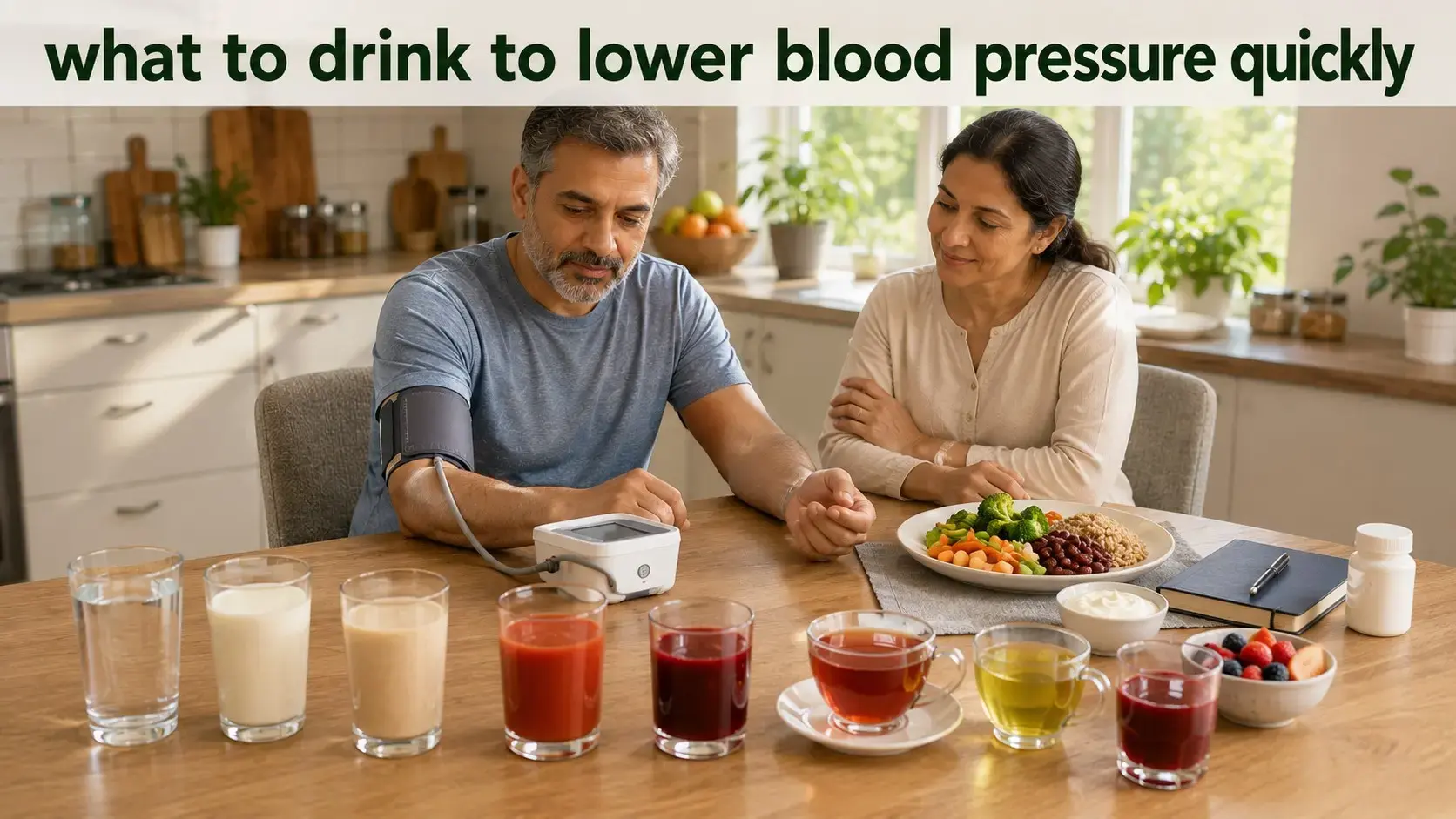
Drinks That May Fit a Blood Pressure-Friendly Pattern
These choices are not emergency treatments.
Evidence is stronger for the full eating pattern than for any one drink.
| Drink | How it may fit | Main caution |
|---|---|---|
| Water | Supports hydration and can replace sugary drinks | Do not force fluids if you have a prescribed restriction. |
| Low-fat or fat-free milk | Fits DASH and provides protein, calcium, and potassium | Kidney, lactose, calorie, and phosphorus needs differ. |
| Unsweetened fortified soy drink | Can provide protein and replace dairy | Check sugar, sodium, potassium, and fortification. |
| Low-sodium tomato or vegetable juice | May provide vegetables and potassium | Standard versions can be high in sodium, and potassium may be restricted. |
| Beetroot juice | Contains nitrate and may produce a modest change | Not an emergency treatment; concentrated shots may not suit everyone. |
| Unsweetened hibiscus tea | Limited evidence suggests a small effect | Herbal products may interact with medicine, and pregnancy safety is uncertain. |
| Unsweetened green or black tea | Limited evidence suggests a small effect over time | Caffeine can temporarily raise blood pressure in some people. |
| Pomegranate juice | May have a modest effect in some studies | Contains natural sugar; evidence is not strong enough for treatment. |
1. Water
Water is usually the simplest everyday drink.
It has no added sugar or caffeine.
It can replace soda, energy drinks, sweet tea, and sugary coffee drinks.
Water Does Not Treat a Severe Reading
A normal amount supports hydration.
Drinking several large glasses quickly does not provide a safe emergency treatment.
Excessive water intake can cause low blood sodium.
Fluid Restrictions
Some people with heart failure, kidney failure, dialysis, severe liver disease, or low blood sodium have a fluid limit.
Food, ice, soup, and drinks may all count toward that limit.
Follow the plan given by the treatment team.
2. Low-Fat Milk or Unsweetened Fortified Soy Drink
Low-fat and fat-free dairy products are included in the DASH eating pattern.
Plain milk can provide protein, calcium, potassium, and vitamin D when fortified.
Unsweetened fortified soy drink can be a practical alternative and often provides more protein than many other plant drinks.
Read the Label
Compare:
- Added sugar
- Sodium
- Protein
- Calcium
- Vitamin D
- Potassium
- Phosphorus additives when kidney disease is present
Almond, oat, rice, coconut, and other plant drinks vary widely.
They are not nutritionally interchangeable.
Kidney Disease
Milk and plant drinks can contain substantial potassium and phosphorus.
Choose products with a kidney dietitian when limits have been prescribed.
3. Low-Sodium Tomato or Vegetable Juice
A low-sodium vegetable drink may fit a DASH-style pattern.
Standard tomato and vegetable juices can contain a large amount of sodium.
Compare the actual amount per serving rather than relying only on front-label claims.
Whole Vegetables Still Matter
Juice usually provides less fibre than whole vegetables.
Use it as one choice, not a replacement for all vegetables.
Potassium Caution
Tomato and vegetable juices can be high in potassium.
Do not use them as a daily potassium treatment if you have kidney disease, heart failure, high blood potassium, or medicines that raise potassium.
4. Beetroot Juice
Beetroot contains nitrate.
The body can convert nitrate into nitric oxide, which affects blood-vessel tone.
Some studies suggest a modest blood-pressure effect.
The response varies and does not make beetroot juice an emergency treatment.
Practical Cautions
- Juice contains natural carbohydrate and sugar.
- Concentrated shots may provide a much larger nitrate dose than food portions.
- People with low blood pressure may feel dizzy.
- Kidney disease and kidney-stone history may affect suitability.
- Diabetes meal planning should include the carbohydrate.
- Multiple blood pressure medicines may increase the chance of low readings.
Beetroot may turn urine or stool pink or red.
Do not assume visible blood is caused by beetroot when bleeding is possible.
5. Hibiscus, Green, or Black Tea
NCCIH reports that evidence for roselle, green tea, and black tea is limited and that the average effects are small.
These drinks may fit as unsweetened beverages.
They do not replace medicine.
Hibiscus Tea
Hibiscus is an herbal product.
Discuss regular medicinal use with a pharmacist or clinician when you take:
- Blood pressure medicine
- Diabetes medicine
- Diuretics
- Several prescription medicines
Do not use daily medicinal amounts during pregnancy or breastfeeding without professional advice.
Green and Black Tea
Tea contains caffeine unless it is decaffeinated.
Caffeine may temporarily raise blood pressure in some people.
Avoid taking a large caffeine dose immediately before measuring blood pressure.
Avoid Licorice Root Tea
Real licorice root contains glycyrrhizin, which can raise blood pressure, lower potassium, and cause serious heart effects.
The risk is greater for people with hypertension, heart disease, kidney disease, or high sodium intake.
Read herbal-tea ingredient lists.
6. Pomegranate Juice
NCCIH reports that pomegranate juice or extract may help reduce blood pressure, but more research is needed.
Pomegranate juice is not an urgent treatment.
Use a Practical Portion
Juice contains natural sugar and little fibre.
Whole pomegranate seeds provide more fibre.
People with diabetes should count juice as carbohydrate.
Supplements and Extracts Are Different
Pomegranate extract, peel, root, and concentrated products are not equivalent to a normal serving of juice or fruit.
Discuss herbal extracts with a health care professional when you take prescription medicine.
7. Coffee and Caffeine
Caffeine can cause a temporary increase in blood pressure in some people.
The response varies with usual intake, dose, genetics, sleep, medicine, and health.
Before Measuring Blood Pressure
Avoid caffeinated drinks for at least 30 minutes before a home reading.
When the Reading Is High
Do not drink a large coffee or energy drink to cope with fatigue or anxiety while evaluating a severely high reading.
Usual Intake
Do not abruptly stop a large daily caffeine intake without considering withdrawal headache.
Discuss your normal intake with the treating clinician, especially if hypertension remains uncontrolled or caffeine causes palpitations.
Drinks and Products to Limit or Avoid
Energy Drinks
Energy drinks may contain large amounts of caffeine and other stimulants.
They can raise heart rate and blood pressure.
Avoid them when blood pressure is severely high.
Sugary Drinks
Soda, sweet tea, sweet coffee, fruit drinks, and many sports drinks add sugar and calories.
Water and unsweetened choices are more practical for daily use.
Large Amounts of Juice
Fruit juice is easy to drink quickly and contains little fibre.
A heart-healthy label does not make it unlimited.
Alcohol
Too much alcohol can raise blood pressure.
Do not begin drinking for heart health.
Alcohol can also interact with medicine and affect sleep.
High-Sodium Drinks and Broths
Broth, soup drinks, tomato juice, vegetable juice, electrolyte products, and some sports drinks can be high in sodium.
Read the label.
Licorice Root Products
Avoid medicinal licorice-root drinks and supplements when you have hypertension unless a clinician confirms that the product is appropriate.
“Detox” Drinks and Vinegar Shots
Detox teas, laxative drinks, vinegar shots, and supplement powders do not safely treat hypertension.
They may cause dehydration, low potassium, digestive injury, or medicine interactions.
The DASH Eating Plan Matters More Than One Drink
DASH means Dietary Approaches to Stop Hypertension.
NHLBI describes DASH as a flexible, balanced eating pattern that does not require special foods.
It emphasizes:
- Vegetables
- Fruit
- Whole grains
- Beans and peas
- Nuts and seeds
- Fish and poultry
- Low-fat or fat-free dairy
- Unsaturated vegetable oils
It limits:
- Excess sodium
- Sugar-sweetened drinks
- Sweets
- Fatty meat
- Full-fat dairy
- Tropical oils high in saturated fat
DASH can support blood-pressure reduction over time.
It does not replace emergency care or prescribed medicine.
A kidney, diabetes, allergy, pregnancy, swallowing, or calorie plan may require individual changes.
Potassium-Rich Drinks and Kidney Safety
Potassium supports normal nerve, muscle, and heart function.
Increasing dietary potassium may support blood pressure in some people.
More is not safe for everyone.
Who Is at Risk of High Potassium?
Ask a clinician before deliberately increasing potassium from juice, coconut water, supplements, salt substitutes, or electrolyte powders if you have:
- Chronic kidney disease
- Kidney failure or dialysis
- High blood potassium
- Heart failure
- Adrenal insufficiency
- Liver disease
- Type 1 diabetes
Medicines That May Raise Potassium
Examples include:
- ACE inhibitors
- Angiotensin receptor blockers
- Spironolactone
- Amiloride
- Other potassium-sparing diuretics
- Potassium supplements
Loop and thiazide diuretics can lower potassium in some people.
Do not guess whether you need more or less.
Use laboratory results and the treatment plan.
Blood Pressure Medicine Safety
Take blood pressure medicine exactly as prescribed.
Do not stop because one reading is normal.
The medicine may be the reason the reading is controlled.
Do not double a dose after one high reading unless the prescriber gave you explicit instructions for that exact situation.
Missed Doses
Read the medicine instructions or ask a pharmacist.
Different medicines have different missed-dose advice.
Products That Can Raise Blood Pressure
AHA lists several substances that may raise blood pressure or interfere with treatment, including:
- Caffeine
- Decongestants
- Nonsteroidal anti-inflammatory drugs such as ibuprofen and naproxen
- Some antidepressants and antipsychotics
- Systemic corticosteroids
- Some birth-control pills
- Stimulants
- Ephedra and similar products
- Recreational stimulants
- Alcohol
Do not stop a prescription product on your own.
Ask the prescriber or pharmacist about alternatives.
Bring a Complete List
Include:
- Prescriptions
- Nonprescription medicines
- Vitamins
- Minerals
- Herbal teas
- Dietary supplements
- Energy products
- Potassium salt substitutes
High Blood Pressure During Pregnancy and After Birth
Pregnancy uses different urgent thresholds.
ACOG defines severe hypertension in pregnancy as systolic pressure of 160 or higher and/or diastolic pressure of 110 or higher.
Do not try to lower a severe pregnancy reading with a drink.
Contact the maternity unit or emergency service immediately according to the care plan.
Possible Preeclampsia Warning Signs
Seek urgent medical assessment during pregnancy or after birth for:
- A severe or persistent headache
- Blurred vision, flashing lights, or visual spots
- Pain in the upper abdomen or below the ribs
- Sudden swelling of the face or hands
- Shortness of breath
- Nausea or vomiting that is new or severe
- Feeling suddenly very unwell
- A severe blood pressure reading
Preeclampsia can occur during pregnancy or postpartum.
It requires professional treatment.
Postpartum Care
Do not dismiss severe headache, vision change, chest pain, breathing difficulty, or high readings after delivery.
Follow the discharge instructions and contact the obstetric team urgently.
When to Seek Medical Help
Call Emergency Services Now
Call for emergency help when a reading is higher than 180 systolic and/or 120 diastolic with:
- Chest pain
- Breathing difficulty
- Back pain
- Weakness or numbness
- Vision change
- Difficulty speaking
- Confusion
- Collapse
- Seizure
- Another new and severe symptom
Contact a Health Care Professional Immediately
If no emergency symptom is present, wait at least one minute and repeat the reading correctly.
Contact the health care professional immediately if it remains severely high.
Arrange Routine Review
Arrange medical review when:
- Home readings stay above the target given to you
- Readings are repeatedly in the stage 1 or stage 2 range
- Blood pressure suddenly changes from your usual pattern
- Medicine causes dizziness or fainting
- You frequently miss doses
- The cuff or device may be inaccurate
High blood pressure often causes no symptoms.
Regular monitoring and follow-up matter.
Common Blood Pressure Drink Myths
Myth: Lemon Water Lowers Blood Pressure Immediately
No. Lemon water may support hydration but is not rapid treatment.
Myth: Beetroot Juice Treats a Hypertensive Crisis
No. Any average effect is too modest and unpredictable for emergency use.
Myth: More Water Always Lowers Blood Pressure
No. Excess fluid can be dangerous, especially in heart or kidney disease.
Myth: Red Wine Treats Blood Pressure
No. Alcohol can raise blood pressure and interfere with treatment.
Myth: Herbal Tea Is Always Safe
No. Herbal products can affect blood pressure, potassium, pregnancy, and medicine.
Myth: A Normal Reading Means Medicine Can Stop
No. Do not stop prescribed medicine without professional advice.
Myth: A High Reading Should Be Lowered as Fast as Possible at Home
No. Rapid unsupervised lowering can be dangerous. Follow emergency and clinician instructions.
Conclusion
The safe answer to what to drink to lower blood pressure quickly is that no drink should be used to treat a dangerous reading.
Call emergency services for a reading higher than 180 systolic and/or 120 diastolic with serious symptoms.
When no emergency symptom is present, repeat the measurement correctly after at least one minute and contact the health care professional immediately if it remains severely high.
For long-term support, choose water and unsweetened drinks that fit the DASH eating plan and your medical needs.
Take prescribed medicine exactly as directed.
Check the reading, assess symptoms, and follow emergency guidance before considering any beverage.
References and Sources
- American Heart Association. When to Call Emergency Services for High Blood Pressure. Current guidance for readings higher than 180 and/or 120, repeat measurement, severe hypertension, and emergency symptoms.
- American Heart Association. Home Blood Pressure Monitoring. Current guidance about validated upper-arm monitors, cuff size, preparation, positioning, repeated readings, and severe readings.
- American Heart Association and American College of Cardiology. Key Points From the 2025 High Blood Pressure Guideline. Current guidance about severe hypertension without acute target-organ damage.
- National Heart, Lung, and Blood Institute. DASH Eating Plan. Updated 2026 guidance about the balanced DASH pattern, sodium, vegetables, fruit, dairy, beans, nuts, fish, and oils.
- National Center for Complementary and Integrative Health. Hypertension. Official guidance explaining that complementary products, including tea and hibiscus, have limited evidence and generally small effects.
- National Center for Complementary and Integrative Health. Pomegranate. Current evidence and safety information for pomegranate juice and extracts.
- National Center for Complementary and Integrative Health. Licorice Root. Safety information about blood pressure, potassium, heart effects, pregnancy, and interactions.
- NIH Office of Dietary Supplements. Potassium Fact Sheet for Consumers. Information about kidney disease, hyperkalemia, ACE inhibitors, ARBs, and potassium-sparing diuretics.
- American Heart Association. Managing High Blood Pressure Medications. Guidance about prescribed medicine, supplements, decongestants, NSAIDs, caffeine, alcohol, and other substances.
- American College of Obstetricians and Gynecologists. Preeclampsia and High Blood Pressure During Pregnancy. Professional guidance about severe pregnancy hypertension and warning signs.
- United States Food and Drug Administration. Drug Interactions: What You Should Know. Consumer guidance about medicines, beverages, supplements, high blood pressure, and nasal decongestants.
Continue Reading on NextFitLife
Frequently Asked Questions
What should I drink to lower blood pressure quickly?
No drink safely treats dangerously high blood pressure. Check the reading correctly and follow emergency guidance rather than waiting for a beverage to work.
When is a high blood pressure reading an emergency?
Call emergency services when blood pressure is higher than 180 systolic and/or 120 diastolic with chest pain, breathing difficulty, weakness, numbness, vision change, speech difficulty, or another severe symptom.
What should I do if the reading is over 180 or 120 without symptoms?
Wait at least one minute, measure again correctly, and contact your health care professional immediately if the repeat reading remains severely high.
Does drinking water lower blood pressure immediately?
No. Water supports hydration but does not treat a blood pressure emergency. Excess fluid may also be unsafe for some heart or kidney conditions.
Can beetroot juice lower blood pressure?
It may produce a modest change in some people, but the response is not reliable enough for a dangerous reading or emergency.
Does hibiscus tea lower blood pressure?
Limited evidence suggests a small effect. Hibiscus should not replace prescribed treatment and may require medicine or pregnancy review.
Is pomegranate juice good for high blood pressure?
It may have a modest effect, but more research is needed. It is not an emergency treatment and it contains natural sugar.
Should I drink coffee when my blood pressure is high?
Caffeine may temporarily raise blood pressure in some people. Avoid caffeine for at least 30 minutes before measuring and avoid a large dose while assessing a severe reading.
Can alcohol lower blood pressure?
No. Too much alcohol can raise blood pressure and interfere with treatment. Do not begin drinking for heart health.
Should I take extra blood pressure medicine after a high reading?
Do not take an extra dose unless your prescriber gave you explicit instructions for that exact situation.
Can kidney patients drink potassium-rich juice?
Not without individualized advice. Kidney disease, heart failure, high blood potassium, and several medicines can make additional potassium dangerous.
What blood pressure is severe during pregnancy?
ACOG defines severe pregnancy hypertension as systolic pressure of 160 or higher and/or diastolic pressure of 110 or higher. Contact maternity or emergency care immediately.
Is this article medical advice?
No. It provides general education. A qualified health care professional should diagnose and treat high blood pressure.
Blood Pressure and Medical Disclaimer
This content is for educational and informational purposes only.
It does not replace professional blood-pressure measurement, diagnosis, prescription medicine, emergency treatment, pregnancy care, kidney care, or individualized nutrition advice.
Call emergency services for a severely high reading with chest pain, breathing difficulty, weakness, numbness, vision change, speech trouble, confusion, collapse, seizure, or another severe symptom.
Do not stop, start, double, or share blood pressure medicine because of this article.

Health & wellness writer with 30+ years of experience in nutrition, fitness, and healthy aging. Founder of NextFitLife.com — evidence-based health guidance.