Published: May 3, 2022
Last updated: July 2026
Reviewed for accuracy: Editorially reviewed and fact-checked against NHS, Cleveland Clinic, Harvard Health, CDC, MedlinePlus, and NIH-linked sources
Reading time: 15–20 minutes
Brain Fog can make simple tasks feel hard.
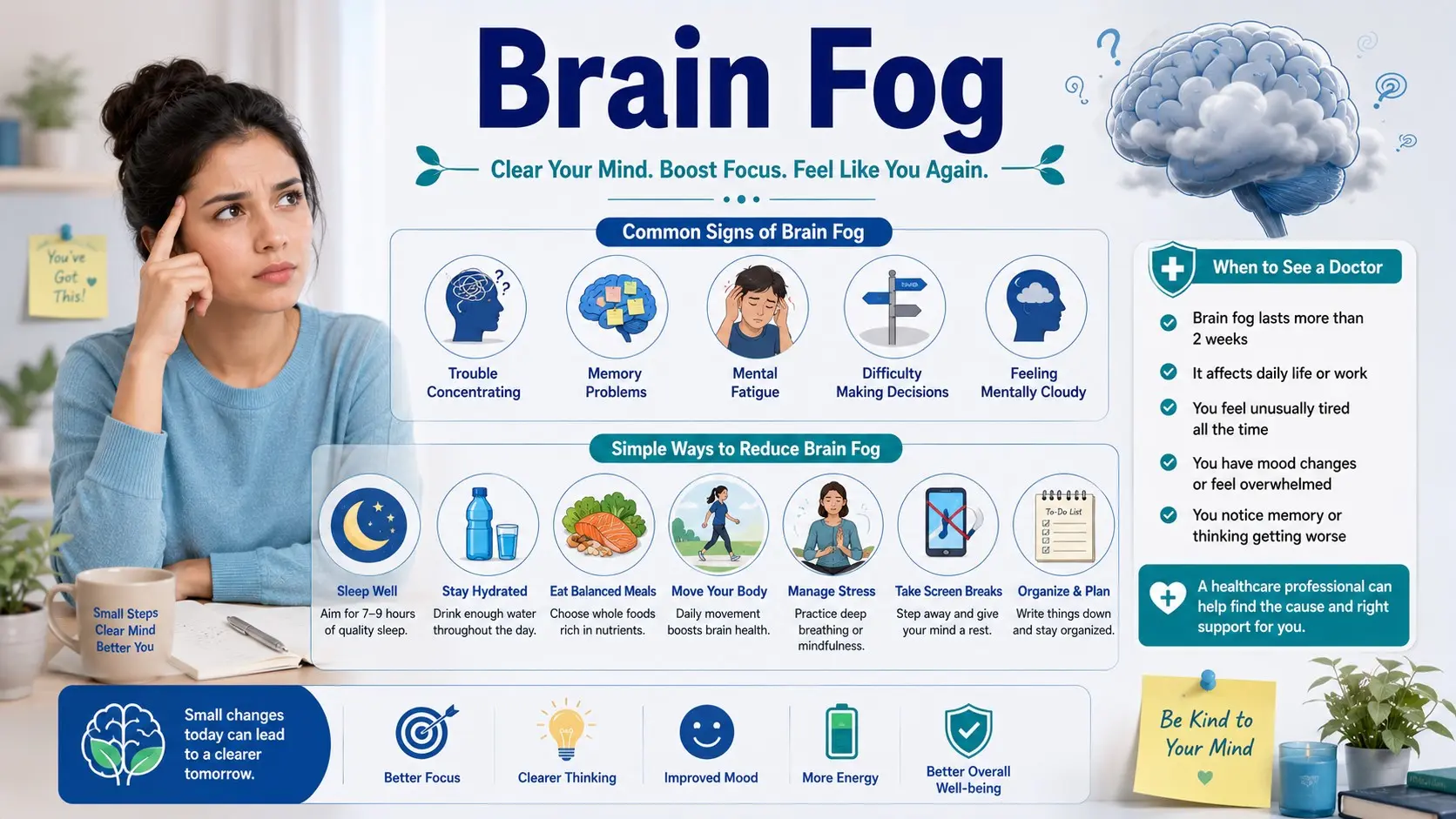
You may forget words. You may lose your train of thought. You may read the same line again and again. You may feel slow, tired, or spaced out.
Brain Fog is not a formal diagnosis. It is a way people describe cloudy thinking.
It can happen after illness. It can happen with poor sleep. It can happen with stress. It can happen with long COVID, menopause, vitamin problems, pain, some medicines, anxiety, depression, concussion, or other health issues.
This guide explains Brain Fog, common causes, red flags, NHS-style advice, and 12 simple strategies that may help you think more clearly.
For more help, visit our Mental Health & Wellness Hub, Healthy Aging & Longevity Hub, Nutrition & Vitamins Hub, Medical Tests & Screenings Hub, and Health Hub.
Medical note: This article is for education only. It does not diagnose or treat Brain Fog, long COVID, dementia, stroke, thyroid disease, vitamin deficiency, depression, anxiety, menopause symptoms, concussion, or any medical condition. Seek urgent care for sudden confusion, one-sided weakness, face drooping, trouble speaking, severe sudden headache, seizure, fainting, chest pain, severe shortness of breath, additional confusion after head injury, or thoughts of self-harm.
Quick Answer: What Is Brain Fog?
Brain Fog is a common way to describe cloudy thinking.
It may feel like:
- Poor focus
- Slow thinking
- Forgetfulness
- Lost words
- Mental tiredness
- Feeling spaced out
- Trouble planning
- Trouble reading
- Trouble following a chat
- Trouble doing normal work
Brain Fog can be short-term. It can also last longer if the cause is not treated.
The goal is to find the cause, lower triggers, and support the brain with better sleep, pacing, food, movement, stress care, and medical checks when needed.
Brain Fog NHS-Style Meaning
The NHS uses Brain Fog to describe problems with memory and concentration in some conditions, such as long COVID and ME/CFS.
NHS-related guidance often links Brain Fog with:
- Fatigue
- Poor sleep
- Pain
- Anxiety
- Low mood
- Long COVID
- Menopause
- ME/CFS
- Post-illness recovery
This page is not NHS-approved. It is NHS-aligned. That means it uses public NHS-style safety advice and trusted health sources.
Brain Fog Symptoms
Brain Fog can feel different for each person.
Common symptoms include:
- Trouble focusing
- Trouble remembering names
- Trouble finding words
- Forgetting why you entered a room
- Reading without taking in the words
- Feeling slow
- Feeling mentally tired
- Trouble making choices
- Trouble doing many tasks
- Losing your train of thought
- Feeling confused
- Needing more time to think
- Feeling worse after mental effort
Some people also have headaches, poor sleep, low mood, anxiety, dizziness, body aches, or fatigue.
When Brain Fog Needs Urgent Help
Get urgent medical help now if Brain Fog is sudden or comes with:
- Face drooping
- Arm weakness
- One-sided weakness
- Trouble speaking
- Fresh trouble walking
- Severe sudden headache
- Seizure
- Fainting
- Chest pain
- Severe shortness of breath
- New confusion after a head injury
- High fever with stiff neck
- Very low blood sugar symptoms if you have diabetes
- Thoughts of self-harm
Book a medical visit if Brain Fog:
- Lasts more than a few weeks
- Gets worse
- Affects work or school
- Affects driving or safety
- Starts after a new medicine
- Starts after a head injury
- Comes with weight loss
- Comes with night sweats
- Comes with low mood or anxiety
- Comes with numbness or tingling
- Comes with extreme tiredness
- Comes with heavy periods or signs of anemia
Common Causes of Brain Fog
Brain Fog can have many causes. Sometimes more than one cause happens at the same time.
Common causes include:
- Poor sleep
- Stress
- Anxiety
- Depression
- Long COVID
- Post-viral illness
- ME/CFS
- Menopause or perimenopause
- Low vitamin B12
- Low iron
- Low vitamin D in some people
- Thyroid problems
- Dehydration
- Blood sugar swings
- Some medicines
- Chronic pain
- Concussion
- Alcohol or drug use
- Too much screen load
- Not enough movement
A doctor can help check for treatable causes.
1. Poor Sleep
Sleep is one of the first things to check.
Poor sleep can make it hard to focus, learn, and remember.
Signs that sleep may be involved:
- You wake tired
- You sleep too little
- You wake often
- You snore loudly
- You wake gasping
- You feel sleepy in the day
- You need caffeine to function
Poor sleep can make Brain Fog worse. It can also make mood, pain, and stress feel worse.
2. Stress and Anxiety
Stress can make the brain feel busy and tired.
Anxiety can make it hard to focus. It can also make you scan for danger instead of staying with one task.
You may notice:
- Racing thoughts
- Tight chest
- Restless body
- Poor sleep
- Worry loops
- Trouble making choices
- Feeling overwhelmed
Brain Fog linked with stress often improves when the nervous system gets more rest and support.
3. Low Mood or Depression
Depression can affect thinking.
It can make focus, memory, and motivation harder.
Signs may include:
- Low mood
- Loss of interest
- Low energy
- Poor sleep
- Sleeping too much
- Slow thinking
- Feeling hopeless
- Appetite changes
Get help quickly if you feel unsafe or have thoughts of self-harm.
4. Long COVID
Brain Fog can happen after COVID-19.
People may notice:
- Poor concentration
- Forgetfulness
- Lost words
- Slow thinking
- Mental tiredness
- Symptoms that change day to day
- Worse symptoms after effort
Long COVID can also include fatigue, breathlessness, pain, dizziness, and sleep problems.
Pacing can help some people. Pacing means doing less than your crash point and taking planned rests.
5. ME/CFS and Post-Exertional Malaise
ME/CFS can cause deep fatigue and Brain Fog.
A key feature is post-exertional malaise. This means symptoms get worse after physical or mental activity.
The crash can happen hours or days later.
If you get worse after activity, do not push hard. Ask a healthcare professional about pacing.
6. Menopause and Perimenopause
Hormone changes can affect sleep, mood, and memory.
Some people notice:
- Brain Fog
- Lost words
- Poor memory
- Poor focus
- Hot flashes
- Night sweats
- Sleep problems
- Mood changes
Menopause Brain Fog can feel scary. But it can be linked with hormone changes, poor sleep, stress, and tiredness.
Ask a clinician about options if symptoms affect daily life.
7. Low Vitamin B12, Iron, or Folate
Low nutrients can affect energy and thinking.
Low vitamin B12 can cause memory, focus, nerve, and balance symptoms in some people.
Low iron can cause tiredness, weakness, dizziness, and poor stamina.
Ask about blood tests if you have:
- Strong fatigue
- Pale skin
- Dizziness
- Shortness of breath
- Numbness or tingling
- Sore tongue
- Heavy periods
- Vegan diet without B12 support
- Gut problems
Do not take high-dose supplements without advice.
8. Thyroid Problems
The thyroid helps control energy.
Low thyroid can cause slow thinking, tiredness, low mood, cold feeling, constipation, dry skin, weight gain, and heavy periods.
High thyroid can cause anxiety, poor sleep, racing heart, weight loss, sweating, and shaky hands.
A blood test can check thyroid levels.
9. Some Medicines
Some medicines can make thinking feel foggy.
Possible examples include:
- Sleep medicines
- Some pain medicines
- Some allergy medicines
- Some anxiety medicines
- Some depression medicines
- Some bladder medicines
- Some seizure medicines
Do not stop medicine on your own.
Ask your doctor or pharmacist if Brain Fog started after a new medicine or dose change.
10. Concussion or Head Injury
Brain Fog can happen after a concussion.
Signs may include:
- Headache
- Dizziness
- Nausea
- Light sensitivity
- Noise sensitivity
- Poor focus
- Memory problems
- Feeling slowed down
- Sleep changes
Get urgent care if confusion starts after a head injury, or if symptoms get worse.
11. Dehydration and Blood Sugar Swings
Not enough fluids can make you feel tired and foggy.
Skipping meals or eating mostly sugar can also affect focus in some people.
Signs may include:
- Headache
- Dizziness
- Dry mouth
- Dark urine
- Shaky feeling
- Low energy
- Irritability
Drink water and eat balanced meals with protein, fibre, and healthy fats.
12. Too Much Mental Load
Your brain can get overloaded.
This can happen with:
- Too many tabs
- Too many notifications
- Long work hours
- No breaks
- Multitasking
- Long screen time
- Too much news
- Poor boundaries
A simple system can help: one task, one list, one break at a time.
12 Simple Strategies to Clear Brain Fog
These steps do not replace medical care. They can support the brain while you look for the cause.
Strategy 1: Track Your Brain Fog
Start with a simple diary.
Write down:
- Sleep time
- Wake time
- Meals
- Water
- Caffeine
- Stress level
- Screen time
- Exercise
- Symptoms
- What made the symptoms worse?
- What helped?
After 1 to 2 weeks, patterns may appear.
You may see that brain fog gets worse after poor sleep, hard work, skipped meals, stress, or too much activity.
Strategy 2: Fix Sleep First
Sleep is a brain reset.
Try this for 7 nights:
- Wake up at the same time each day.
- Get morning light.
- Avoid caffeine late in the day.
- Stop screens before bed if possible.
- Keep the bedroom cool and dark.
- Use a wind-down routine.
- Do not work in bed.
Ask about sleep apnea if you snore loudly, wake gasping, or feel very sleepy during the day.
Strategy 3: Pace Your Energy
Pacing means saving energy before you crash.
This is important if brain fog is linked with long COVID, ME/CFS, or post-illness fatigue.
Try:
- Break tasks into small parts.
- Rest before you feel empty.
- Do hard tasks at your best time of day.
- Stop before symptoms flare.
- Use a timer.
- Plan recovery time.
Do not push through severe post-exertional crashes.
Strategy 4: Use the One-Task Rule
Multitasking can make Brain Fog worse.
Use one task at a time.
Simple steps:
- Pick one task.
- Set a timer for 15 to 25 minutes.
- Close extra tabs.
- Put your phone away.
- Work until the timer ends.
- Take a short break.
This is similar to the Pomodoro method.
Strategy 5: Move Gently
Movement can help blood flow, mood, sleep, and focus.
Start small.
Try:
- 5-minute walk
- Gentle stretching
- Easy cycling
- Light housework
- Slow yoga
- Chair exercises
If activity makes symptoms crash later, use pacing and ask for medical advice.
Strategy 6: Eat for Steady Energy
Your brain needs steady fuel.
Build meals with:
- Protein
- Fiber
- Healthy fats
- Colorful plants
- Whole grains if tolerated
- Water
Examples:
- Eggs with whole-grain toast
- Greek yogurt with berries
- Chicken with rice and vegetables
- Lentil soup
- Tuna salad with beans
- Oatmeal with nuts
Avoid long gaps without food if that makes you foggy.
Strategy 7: Drink enough water
Dehydration can make you feel slow and tired.
Try simple cues:
- Drink water after waking.
- Keep a bottle nearby.
- Drink with meals.
- Check urine colour.
- Add more fluids during heat, exercise, or illness.
Ask a doctor about fluids if you have heart, kidney, or fluid restriction issues.
Strategy 8: Lower Stress in Small Ways
You do not need a perfectly calm life.
You need minor breaks your brain can trust.
Try:
- Slow breathing for 1 minute
- Short walk
- Writing worries down
- Music
- Prayer or meditation
- Talking to a friend
- Stretching
- Quiet time before sleep
If anxiety or low mood is strong, ask for support.
Strategy 9: Reduce Screen and Notification Load
Too many alerts can split attention.
Try:
- Turn off non-urgent alerts.
- Check messages at set times.
- Use full-screen mode.
- Close extra tabs.
- Take eye breaks.
- Use paper for key notes.
- Keep your phone away during deep work.
Less input can mean clearer thought.
Strategy 10: Use memory supports
Do not rely on memory when brain fog is high.
Use tools.
- One daily list
- Phone reminders
- Calendar alerts
- Sticky notes
- Pill organizer if needed
- Labels
- Checklists
- Voice notes
This is not a weakness. It is smart support.
Strategy 11: Check Medicines and Blood Tests
If brain fog lasts, ask a clinician about checks.
Possible checks may include:
- Full blood count
- Iron or ferritin
- Vitamin B12
- Folate
- Thyroid test
- Vitamin D in some cases
- Blood sugar
- Liver and kidney tests
- Inflammation tests if needed
- Medicine review
The right tests depend on your symptoms and history.
Strategy 12: Know When to Ask for Help
Get help if brain fog is not improving.
Ask a doctor if:
- You cannot work or study normally
- You feel unsafe driving
- You forget important tasks
- You have new headaches
- You have numbness or tingling
- You have strong fatigue
- You have depression or anxiety
- You had a head injury
- Symptoms started after COVID or another illness
- Symptoms are getting worse
You do not need to wait until symptoms are severe.
Brain Fog vs Dementia
Brain Fog and dementia are not the same.
Brain Fog can feel like poor focus, slow thinking, or forgetfulness. It may change day to day. It may improve with rest, better sleep, treatment, or time.
Dementia usually causes ongoing decline over time. It may affect daily function, language, judgment, and independence.
Get checked if you or someone close to you notices:
- Memory getting worse over time
- Getting lost in familiar places
- Repeating the same questions often
- Trouble managing money
- Major personality changes
- Unsafe mistakes
- Confusion that keeps getting worse
Do not self-diagnose. Many treatable problems can look like memory decline.
Brain Fog After COVID
Brain Fog after COVID can feel frustrating.
Helpful steps may include:
- Pacing
- Rest breaks
- Sleep routine
- Simple planning
- Memory aids
- Gentle activity if tolerated
- Reducing overload
- Medical review if symptoms last
If symptoms get worse after effort, ask about post-exertional malaise and pacing.
Brain fog at work or school
You may need short-term changes.
Helpful changes include:
- Shorter focus blocks
- Written instructions
- Extra time
- Breaks
- Quiet work area
- Flexible deadlines
- Reduced multitasking
- Recorded meetings
- Task checklists
Ask for support early if brain fog affects performance.
What Not to Do
- Do not ignore sudden confusion.
- Do not drive if you feel unsafe.
- Do not push hard through post-exertional crashes.
- Do not blame yourself.
- Do not start high-dose supplements without tests or advice.
- Do not stop prescribed medicine without medical advice.
- Do not rely on caffeine instead of sleep.
- Do not use alcohol to relax your brain.
- Do not ignore depression or anxiety.
- Do not ignore brain fog after a head injury.
Questions to Ask Your Doctor
- What could be causing my brain fog?
- Could sleep be the cause?
- Could long COVID be involved?
- Could menopause or hormones be involved?
- Could low iron or B12 be involved?
- Could my thyroid be involved?
- Could a medicine be causing this?
- Do I need blood tests?
- Do I need a sleep study?
- Do I need help for anxiety or depression?
- Do I need concussion follow-up?
- What symptoms indicate urgent care?
- Can I exercise, or should I pace?
- How long should I wait before follow-up?
Simple 7-Day Brain Fog Reset Plan
This is not a cure. It is a gentle reset.
Day 1: Track Symptoms
Write down sleep, food, water, stress, and brain fog level.
Day 2: Fix Your Sleep Window
Pick a wake time. Keep it the same for one week.
Day 3: Use One-Task Blocks
Work for 15 to 25 minutes. Then take an abrupt break.
Day 4: Drink and Eat Steady
Drink water. Eat protein and fibre with meals.
Day 5: Move Gently
Take a short walk or stretch. Stop before symptoms flare.
Day 6: Reduce Screen Load
Turn off non-urgent alerts. Close extra tabs.
Day 7: Review and Decide
If brain fog is still strong, getting worse, or affecting safety, book medical care.
FAQ
What is brain fog?
Brain Fog is a common way to describe cloudy thinking. It may cause poor focus, slow thinking, forgetfulness, lost words, confusion, and mental tiredness.
Is brain fog a disease?
No. Brain Fog is not one disease. It is a group of symptoms. It can happen for many reasons, such as poor sleep, stress, illness, hormones, medicines, nutrient problems, or head injury.
What causes brain fog?
Common causes include poor sleep, stress, anxiety, depression, long COVID, ME/CFS, menopause, low B12, low iron, thyroid problems, dehydration, some medicines, chronic pain, concussion, and mental overload.
How do I clear brain fog fast?
There is no instant cure for every cause. Short-term help may include water, food, rest, fresh air, one-task focus, a short walk if tolerated, and a break from screens.
Can long COVID cause brain fog?
Yes. Long COVID can cause problems with memory and concentration, often called brain fog. It may also come with fatigue, breathlessness, pain, and sleep problems.
Can menopause cause brain fog?
Yes. Menopause and perimenopause can cause poor memory, poor concentration, sleep problems, mood changes, and brain fog in some people.
Can low vitamin B12 cause brain fog?
Low vitamin B12 can cause problems with memory, concentration, mood, balance, and nerve symptoms in some people. A blood test can help check this.
When should I worry about brain fog?
Worry if brain fog is sudden, getting worse, follows a head injury, affects safety, or comes with weakness, trouble speaking, severe headache, seizure, chest pain, fainting, fever, or self-harm thoughts.
What doctor should I see for brain fog?
Start with a primary care doctor. They can check sleep, medicines, blood tests, mood, hormones, long COVID, and other causes. They may refer you to a specialist if needed.
Can brain fog go away?
Yes. Brain Fog can improve when the cause is treated or supported. Some people need time, pacing, sleep repair, medical checks, therapy, medicine changes, or rehab support.
Related Reading
- Mental Health & Wellness Hub
- Healthy Aging & Longevity Hub
- Nutrition & Vitamins Hub
- Medical Tests & Screenings Hub
- General Wellness & Lifestyle Hub
- Health Hub
- Healthy Lifestyle Roadmap: 14 Practical Tips for Better Health
- Effect of Unhealthy Lifestyle: Warning Signs, Health Risks, and How to Reset
- Self-Care Habits: Simple Steps for Better Daily Health
- Health Screening 101: Simple Guide to Medical Tests
- Calcium Deficiency: Causes, Symptoms, and How to Prevent It
- Calcium Deficiency Treatment: Foods, Supplements, and Safe Care
Key Takeaway
Brain Fog can make thinking feel slow, cloudy, and tiring.
It can affect focus, memory, word-finding, planning, and daily tasks.
Common causes include poor sleep, stress, anxiety, depression, long COVID, ME/CFS, menopause, low B12, low iron, thyroid problems, dehydration, medicines, concussion, and overload.
Simple steps can help. Track symptoms. Sleep better. Pace energy. Do one task at a time. Move gently. Eat steady meals. Drink water. Lower stress. Reduce screen load. Use memory tools. Ask about blood tests and medicines. Get help when needed.
Seek urgent care for sudden confusion, stroke-like symptoms, seizure, severe headache, chest pain, fainting, confusion after head injury, or thoughts of self-harm.
Sources
- NHS — Long COVID
- NHS Inform — Long COVID: Brain Fog
- University College London Hospitals NHS — Understanding and Managing Brain Fog
- Newcastle Hospitals NHS — Managing Brain Fog
- NHS — Menopause and Perimenopause Symptoms
- NHS — ME/CFS Symptoms
- Cleveland Clinic — Brain Fog
- Harvard Health — Tips to Improve Concentration
- Harvard Health — Brain Fog, Memory, and Attention After COVID-19
- MedlinePlus — Pernicious Anemia and Vitamin B12 Deficiency Symptoms
- CDC — Sleep and Health
- NINDS — Traumatic Brain Injury

Health & wellness writer with 30+ years of experience in nutrition, fitness, and healthy aging. Founder of NextFitLife.com — evidence-based health guidance.